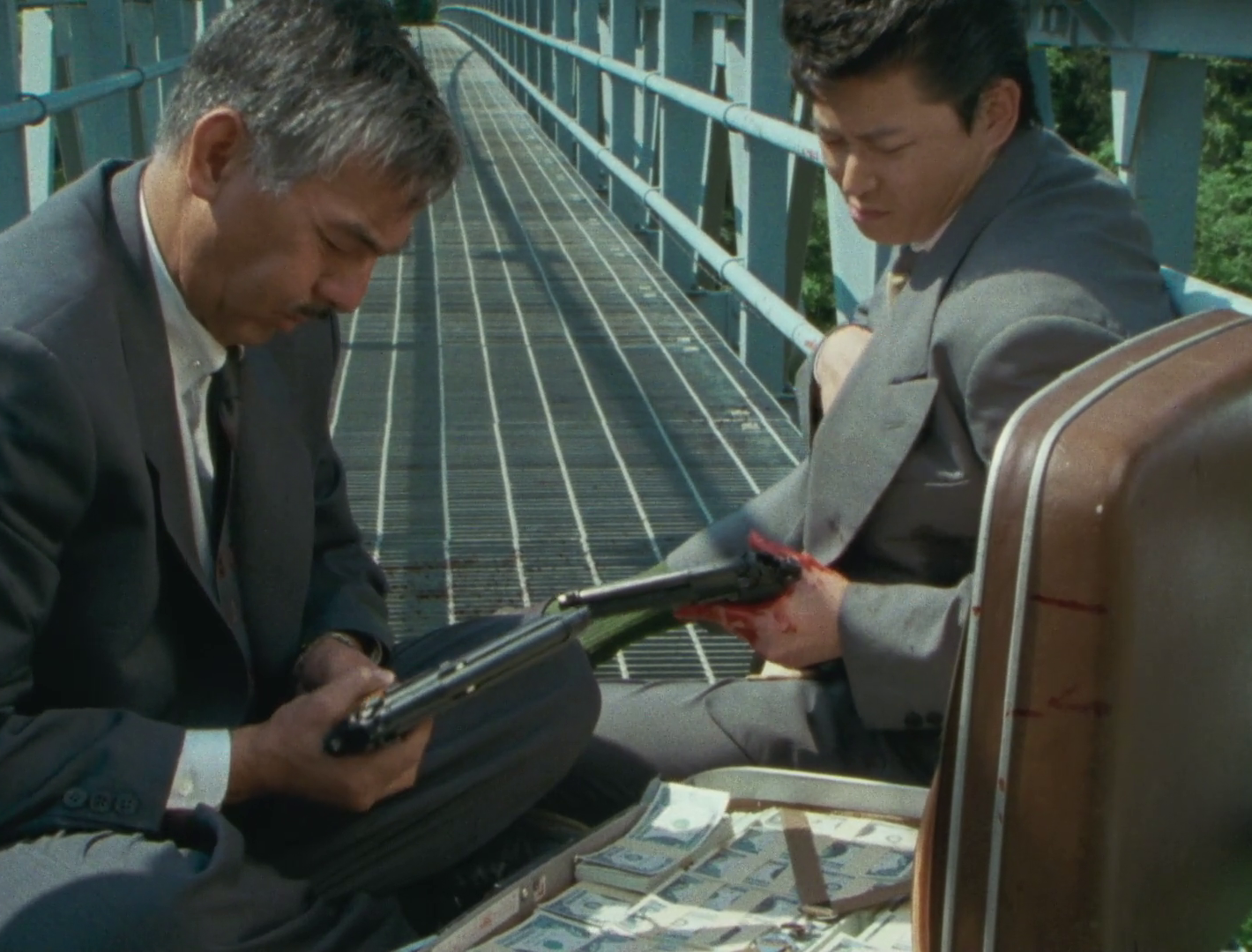
Danger Point: The Road to Hell (Danger Point: 地獄への道, Yasuharu Hasebe, 1991)

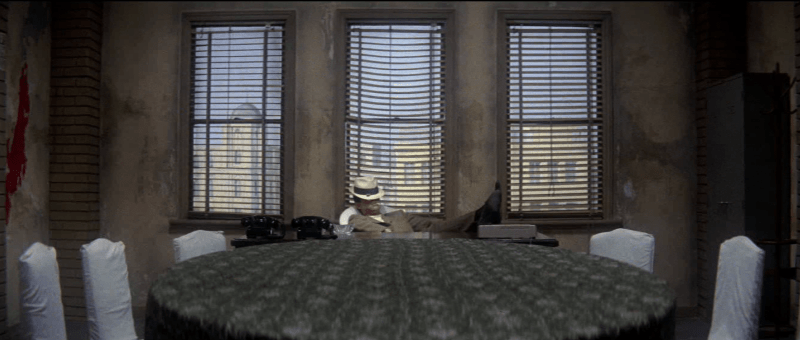
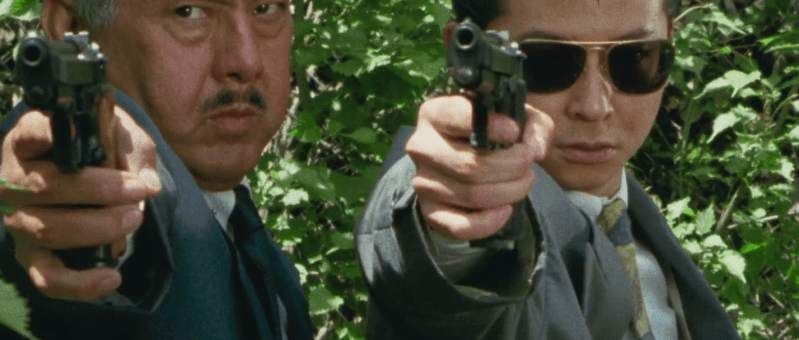
A pair of hitmen find themselves conflicted when their latest target dies gripping the photo of an innocent-looking nurse. Who was this man, what’s his relationship to the woman in the photo, and why did he have to die? Asking questions is taboo when you’re a hired killer, and you’re probably better off not knowing anyway, but there’s something that’s bugging veteran executioner Joji (Jo Shishido) and it’s not just the missing 20 million dollars.

Nikkatsu veteran Yasuharu Hasebe’s V-Cinema noir Danger Point (Danger Point: 地獄への道, Jigoku e no Michi) is a classic tale of nihilistic fatalism in which the bond between the two assassins is tested by the intervention of greed and mystery. Shishido’s Joji is the more old-fashioned of the pair yet fascinated by the mystery behind Sakai’s death, not necessarily wondering if he bears any culpability but confused about why he had to die despite not actually having the missing money. This puts Joji partially at odds with the younger Ken, a more dynamic and less morally ambivalent figure played by the contemporary star Show Aikawa who’d come to represent for V-Cinema what Shishido once had for Nikkatsu action. Together, the chase the various clues they’ve been given looking for the person behind the job and, of course, the missing money.

But the money presents a problem too. Ken begins to wonder if Joji will abandon him and take the prize for himself, though that doesn’t seem to be something that Joji is actively considering. The relationship between the two men is more brotherly than paternal, though Joji does scold Ken for his treatment of Yumi (Nana Okada), the nurse from the hospital and their key witness. He beats and sexually assaults her, though it’s less his lack of chivalry that Joji criticises than the wisdom of bringing a woman into their business. He’s suspicious of Yumi in a way Ken does not seem to be, though they both agree that eventually she’ll have to go before she does them any harm because now she knows too much.

Ultimately, the money turns out to be from a bank job in the Philippines that the American criminals were hoping to convert to US dollars in Japan, though predictably everyone wants the whole amount for themselves, not least Joji and Ken along with the kingpin’s horse-loving girlfriend Saeko (Miyuki Ono) who is playing her own side of the game. Neither Saeko nor Yumi do very well out of this particular affair and are each constrained by the men around them. While Yumi was apparently seduced and abandoned by corrupt cop Sakai, Saeko is hemmed in by her gangster boyfriend Takamura (Hideo Murota) and seeks escape through stealing the money with the help of Sakai, one way or another, at least. Though this world doesn’t seem to want to let either of them have it while the  men fight over the spoils in a desperate struggle to assert dominance over the situation.

As the ironic “Dead End” sign at the film’s conclusion implies, however, that chasing money is a fool’s errand and leads only to hell. A chase past the no entry signs into an industrial complex suggests that this world is not quite fully formed or in the process of falling apart. The ironic and strangely obvious product placement for Perrier sparkling mineral water might hint at a more sophisticated world the hitmen are on one level trying to inhabit, but in other ways their presence is incongruous. They belong to an earlier time as does this hidden world of bank robberies, smuggled cash, criminal gangs and fixers that seem out of place amid the tail end of the Bubble era. Or in that sense at least, perhaps it’s Japan heading for a crash desperately chasing the riches that seem only slightly out of reach. Nevertheless, there’s a genuine sense of mystery that leads Ken and Joji to their final destination in which they discover that it might not be greed that does for them after all, but in an odd way, love. Their desire for togetherness and fear of separation in the end can have only one conclusion and as much as it is the money that leads them to their doom, it’s loneliness and brotherhood that eventually seal their fate.
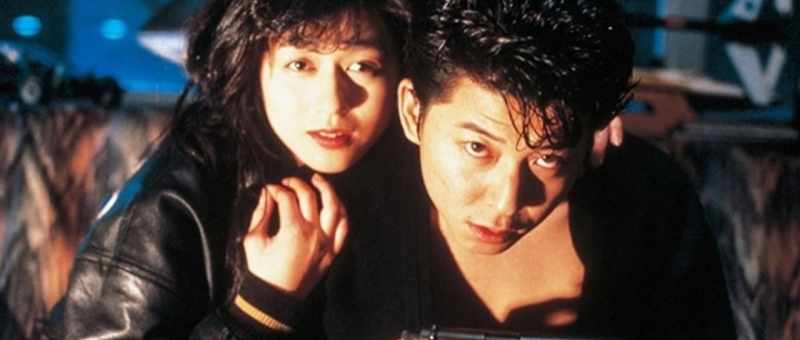
Neo Chinpira: Zoom Goes the Bullet (ネオ チンピラ 鉄砲玉ぴゅ~, Banmei Takahashi, 1990)

In the classic yazkua films of old, going to prison for the gang could be a badge of honour and one of the ways you could catapult yourself into the higher ranks. By the 1990s, however, the yakuza is a much depleted force and it seems few are willing to give up years of their lives on a point of honour for an uncertain reward. At least, that’s how it is for most of the gangsters at the centre of Banmei Takahashi’s Neo Chinpira: Zoom Goes the Bullet (ネオ チンピラ 鉄砲玉ぴゅ~, Neo Chinpira: Teppodama Pyu) , a slacker comedy in which a young hanger on faces a dilemma when he’s made the lookout on a squad sent to bump off a rival only for his squamates go to great lengths to injure themselves first so they won’t have to go through with it.

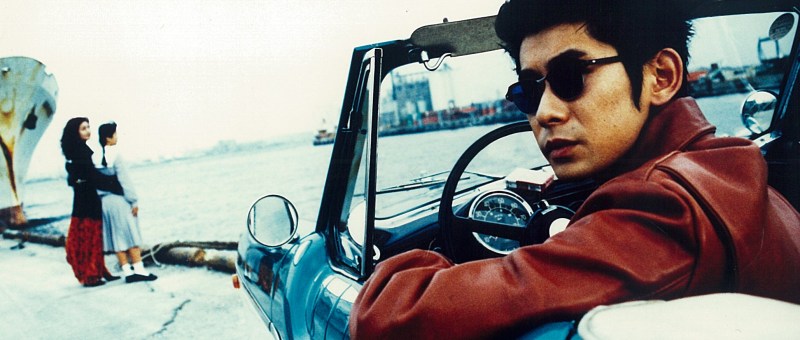
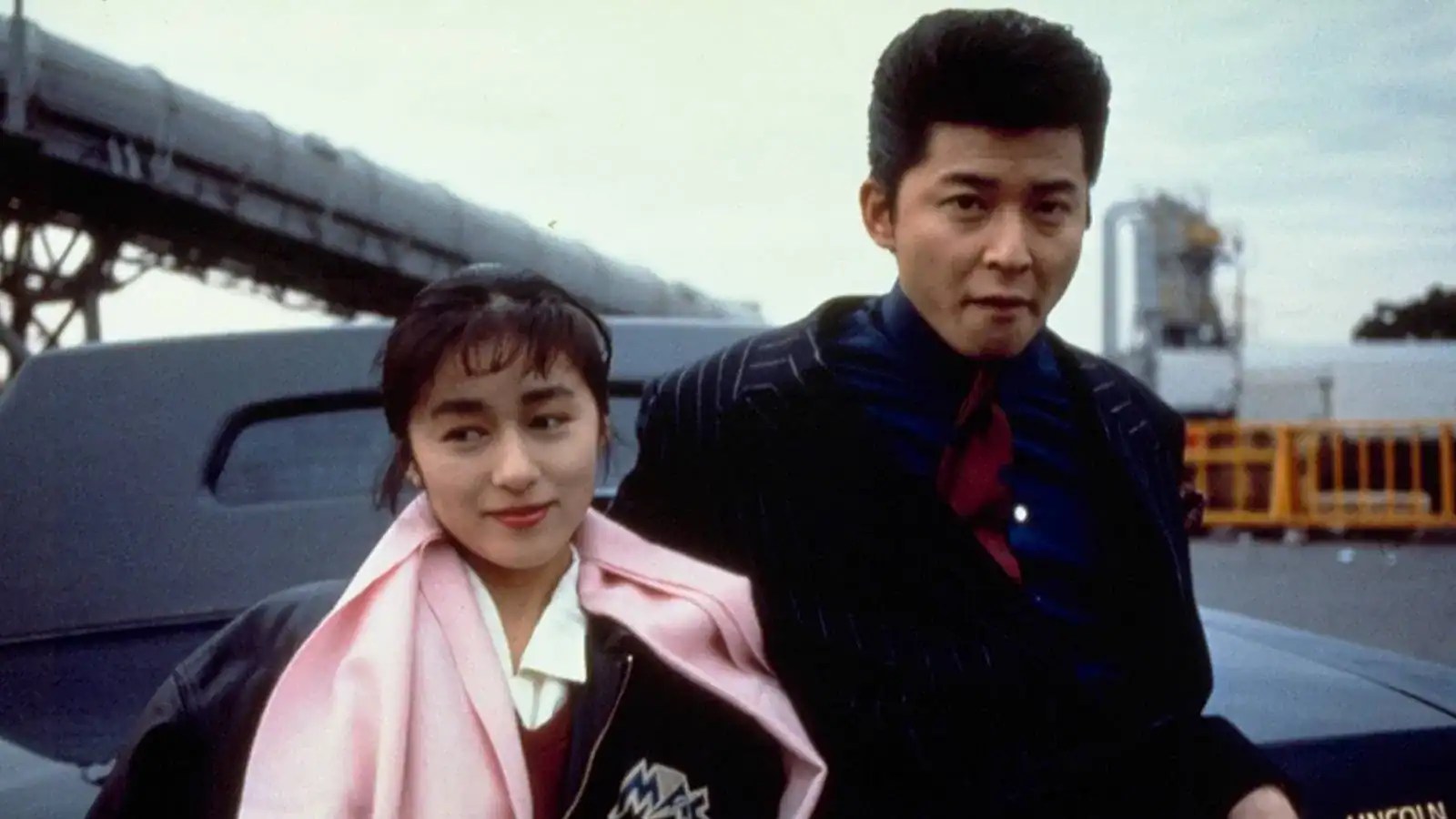
Junko (Sho Aikawa) is an unlikely hero. With a rockabilly quiff and a red jacket, he’s nominally the driver for gangster Yoshikawa (Toru Minegishi) which means he gets to drive his limo and act like a big man for a while making calls on his carphone. But as much as Junko shows off to his girlfriend Noriko, a hostess at a Korean bar, by instructing the landlady not to clear up his empty bottles because they’ll make a good weapon in an emergency, he’s otherwise something of a joke. The limo ends up getting “stolen” by a young woman who just likes American cars and sexually aroused by gunfire.

Even Yumeko (Chikako Aoyama) chuckles that Junko sounds like a girl when he says he wants to see the ocean while they’re driving around. “Junko” is ordinarily a girl’s name. He picked it up as a kind of hazing based on an alternate reading of his name kanji. She says the same thing again when he reveals he’s never brought a girl back to his place before, probably because it’s in a disused building he was given to manage where he’s surrounded by junk like an old barber’s chair and pinball machine while the figure of Humphrey Bogart in the Maltese Falcon looks down at him from a poster as if embodying his unattainable gangster dreams. As masculine icons go, Junko is also plagued by his uncle, Mizuta (Joe Shishido), a legendary gangster and representative of old school yakuza who take the code seriously and wouldn’t put up with people like Junko’s colleagues who engage in “zooming”, deliberately shooting themselves to get out of being ordered to carry out a hit. He’s not overly impressed by Junko either, unable to understand why he’d become an errand boy for a petty gangster rather than be his own boss as a small-time crook.

Junko’s dilemma is whether he’s really up to this task and will be to go through with it or will end up chickening out and injuring himself too. Crows are more cowardly than they seem, Yumeko explains in an obvious allegory for the yakuza. They pick a place and defend it as a group, while their numbers are way up lately so their individual turfs are shrinking. But now Junko’s all on his own and filled with uncertainty not knowing if he can pass this rite of passage and be accorded a man or will forever be trapped in a liminal space of adolescence never to be taken seriously or make any progress in his life. In an effort to toughen up, he swaps his red jacket for a suit and finally puts on a shiny leather overcoat, ripping off the buttons to bind it more tightly around him with the belt as if it were a kind of armour. 

Somehow the lighthearted ridiculousness of this world of bumbling yakuza and creepy corrupt cops lends an additional poignancy to Junko’s final gesture as he sets off on his path, not really believing he will return. He doesn’t even wait for the pictures he had taken at a photo booth. They won’t be much use to him where he’s going, but at the same time it’s like he’s treading water never quite getting closer to his destination but continuing along his long sad walk. Banmei Takahashi sticks firmly to his pink film roots, sticking in a weird sex scene at regular intervals as Yumeko becomes enraptured by pistols, but also has quite a lot of fun with his “uncool” gangsters and the lost young man who looks up to them while perhaps knowing that this image of stone cold masculinity only really exists in the movies.


The Trap (罠 THE TRAP, Kaizo Hayashi, 1996)

At the beginning of the final instalment of the Maiku Hama trilogy The Trap (罠, Wana), a strange-looking man dressed in a long overcoat and wearing a mask to hide a facial deformity tries to hire Maiku (Masatoshi Nagase) to look for himself. It’s a decidedly odd moment, and it seems that Maiku, who takes every job that comes, turns the man down because it’s just too weird though in a way his refusal to grant his request may contribute to the unfolding tragedy. If previous instalments saw Hayashi in Nikkatsu Noir and Fukasaku territory, this time around he seems to be channeling Seijun Suzuki in his intensifying surrealism and bold use of colour.

Indeed, in one sense, this is a tale of doppelgängers. We first see the strange man lurking outside the cinema standing so still that until he slowly turns his head we assume he is a statue. What we later realise is that he wanted Maiku to look for someone who was making use of his identity along with perhaps returning to him his own. Nagase too is playing a double role and Maiku is also searching for himself eventually confronted by the fact the man he’s been looking for has his own face. 

Nevertheless, as the film opens Maiku is riding high. He’s doing very well financially after making a name for himself saving a child from a burning building. His sister Akane has got into a prestigious college, and he’s fallen in love with a woman from the post office, Yuriko (Yui Natsukawa), who is mute but can hear. By contrast, box office lady Asa remarks that nothing good’s happened since Maiku got his police commendation for saving the child adding to the sense that things are going far too well for Maiku and probably quite likely to plunge the other way. There’s currently a serial killer on the loose who’s abducting young women, drugging them, and posing their bodies in public places. Unfortunately, Yuriko becomes a target for the killer(s) after a moment of kindness to someone who was being bullied in a park. 

An orphan raised in the church, Yuriko seems to be the embodiment of an otherwise absent purity. She tells Maiku off for gambling and generally tries to improve him as a person while he later acknowledges her willingness to sacrifice herself for others perhaps even at the cost of her own life. Her forgiving nature might help her overcome the fact that Maiku and the detectives effectively use her as bait on two separate occasions swooping in to save her only in the nick of time. This moral dichotomy reinforces a sense of tension in the city in which good and evil co-exist on different planes just as past and present had in the previous film and further transforms Yokohama into a mystical, haunted place of ever present dangers. 

The sense of surreality is further heightened by the casting of actor Tetta Sugimoto who starred in Stairway to the Distant Past as the man in red but here seems to be playing an idealistic rookie cop, again countering the cynicism of detective Nakayama (Akaji Maro) who just wants to cut corners and get the job done rather than get it done right. Thus when Maiku is framed as the killer, Nakayama indulges in his long standing grudge against him and is determined to nail Maiku despite rookie Kozu’s insistence that he couldn’t have done it because they were together at the time. When even fingerprints can be faked, there is no such thing as reliable evidence.

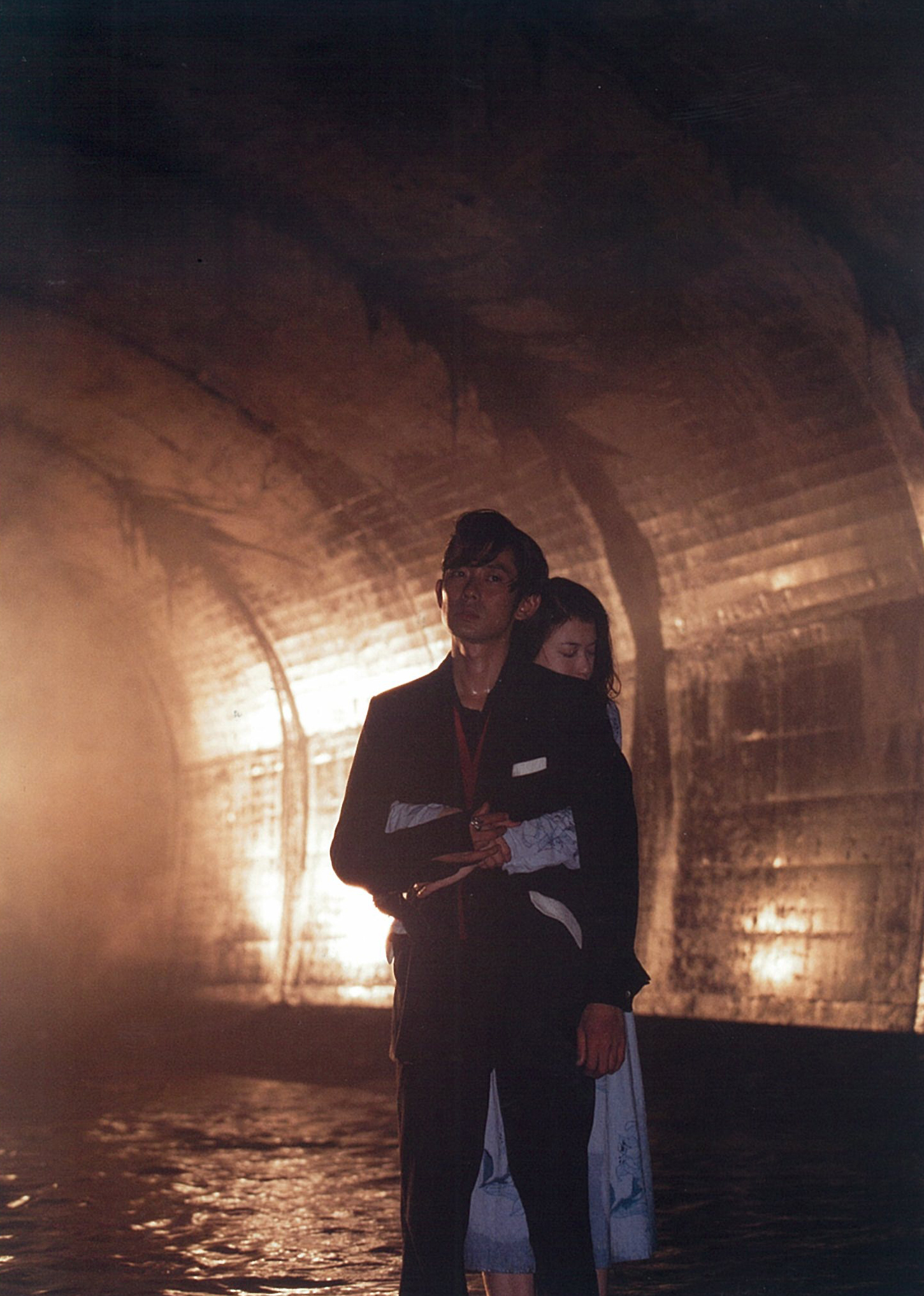
Hayashi once again makes fantastic use of colour from the expressionistic storm to the eerie, dreamlike closing sequence in which Maiku must face himself and battle his demons before being saved by the angelic Yuriko. Taking place in an atmospheric sewer tunnel, the climax has an oneiric atmosphere and surrealist edge as Miku confronts this man who has his own face only to lose the image of him at the critical moment and thereafter seemingly disappear himself. The moments after also have an unreal quality, a poster for the film we’re watching, The Trap, positioned behind Asa at the counter and Hai-Ping’s letter from the first film seemingly playing as part of the film screening in the cinema causing us to wonder if this too is a dream or fabricated future for one who will not return. Dark and disturbing in its implications, coloured by the real terror of living of Japan in the mid-90s which had just experienced a devastating earthquake and unprecedented terror attack, the film nevertheless displays the warmth of the Yokohama we’ve come to love with its cast of charming characters and cheerful atmosphere despite the eerie emanations at its centre.


The Trap screens 19th October at Japan Society New York.

Original trailer (no subtitles)

The Stairway to the Distant Past (遙かな時代の階段を, Kaizo Hayashi, 1995)

If The Most Terrible Time in My Life was channeling Nikkatsu Noir, Stairway to the Distant Past (遙かな時代の階段を, Harukana Jidai no Kaidan wo) sees Hayashi channel Fukasaku for a full-on confrontation with the legacies of the post-war era just as PI Maiku (Masatoshi Nagase) is forced to confront and attempt to cure the corrupted legacies of his own origins all while trying to save the city of Yokohama from drifting off to “another hell.” This time shooting in colour, Hayashi conjures a sense of mythic dread in the purple haze that hangs over a hidden city and the eerie blue of the path to get there.

But before all that, Maiku has fallen on such hard times his beloved car’s been repossessed and he’s stuck finding lost dogs for wealthy yet eccentric clients. Meanwhile, leader of New Japs gang Kanno (Shiro Sano) is running for political office while two of his underlings decide to freelance in order to take over the lucrative river trade which no one, not even the Taiwanese gang otherwise apparently in the ascendent, has ever dared to touch in fear of the mythic “White Man” who’s controlled the area since the post-war era with a ruthless efficiency that has seen any man challenge him not live to tell the tale. In the midst of it all is bigoted, and apparently pretty corrupt, policeman Nakayama (Akaji Maro) who first blackmails Maiku into helping him investigate a theft and smuggling ring on the river then apparently makes a deal with the White Man’s underlings who in turn blackmail him over his gambling debts but also claim they can make him chief of police if he chooses to play along.

Nakayama is a symbol of the rot in the contemporary city though he is in fact merely spineless, greedy, unpleasant and prejudiced. He asks Maiku for help because he’s hamstrung by the rules of policing which prevent him from doing the nefarious things he asks Maiku to do all of which leads to some pretty tragic consequences and a pair of orphaned children. The New Japs are perhaps a sign of further corruption still to come as Kanno tries to go legit as a politician but only as a means of increasing his influence and earnings. 

The river becomes a kind of nexus, the shore line between contemporary Japan and the “distant past” of the post-war era. Nakayama discovers that no one is technically policing it because it’s outside of everyone’s jurisdiction, while the White Man seems to have been in a position of unassailed power for half a century. As he later says, he’s the only one “living in the past” and perhaps quite literally so as Maiku has to transcend a literal stairway while guided by some kind of local prophet in order to travel to his world and finally risk his life to confront him. At the same time, Maiku is threatened by his own point of origin in the unexpected return of his mother, a now middle-aged stripper known as Dynamite Sexy Lily (Haruko Wanibuchi), who abandoned him and his sister and when he was just a child. 

Her name, along Maiku’s own, are perhaps hangovers from the Occupation era now even more out of place in a changed Japan. Making full use of the colour palate, Hayashi repeatedly flashes back to a pair of Lily’s red shoes as if signalling the unreality of the hidden city and the superimposition of past and present. His flashbacks to the late 1940s echo the cinematography of Fukasaku’s jitsuroku epics with their frenetic chases through black markets, but towards the conclusion the canted angles make it through to our era too and most particularly in the White Man’s lair, a blue-tinged industrial labyrinth that recalls the post-apocalyptic visions of a city still in ruins.

“Yokohama’s changed a lot,” Lily is told on her return and in fact several times after that. She likes it a little better now, the White Man no so much complaining that this city no longer has a place for him as if foreseeing his own eclipse and the oncoming end of an era. But then again, perhaps only the names have changed. All we’re left with is new gangsters with no code, and the White Man did at least stick to the rules even if he did so with ruthless authority. As for Maiku, his passage to the underworld seems to have brought him new clarity. His outfit now a little more sophisticated and mature, less an affectation borne of watching too many movies than an expression of himself. Nevertheless, Yokohama remains a small-town city, a cosy place with a generally friendly and easy going population albeit one with darkness hovering around the edges.


The Stairway to the Distant Past screens 18th/19th October at Japan Society New York.

Original trailer (no subtitles)

The Most Terrible Time in My Life (我が人生最悪の時, Kaizo Hayashi, 1994)

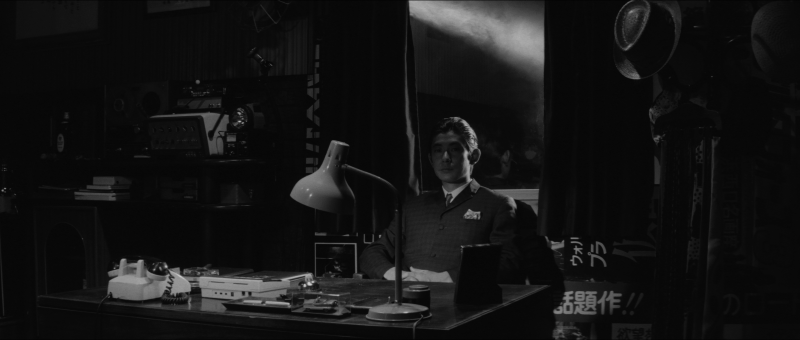
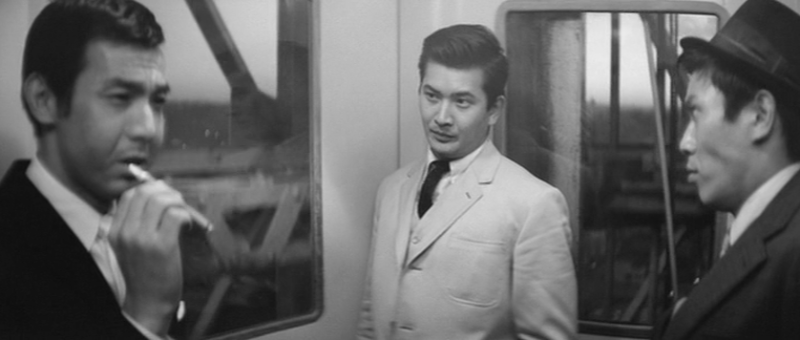
A Yokohama PI finds himself investigating a case of tragic brotherhood against the backdrop of a burgeoning gang war in Kaizo’s Hayashi’s retro crime movie The Most Terrible Time in my Life (我が人生最悪の時, Waga Jinsei Saiaku no Toki). In the first of three films featuring detective / cinema projectionist Maiku Hama (yes, that is his real name), Hayashi harks back to the Nikkatsu borderless action films of the 1960s along with classic noir while also exploring contemporary attitudes towards those not born in Japan. 

The force destabilising the local equilibrium is a gang that calls itself the “New Japs” and was founded by Zainichi Koreans who had acquired Japanese citizenship and now accepts members from other nations colonised by Japan who’ve also naturalised. The implication is that they’re agitating because the society still doesn’t fully accept them, something echoed by Maiku’s (Masatoshi Nagase) first client, a mister Kim, who says the police aren’t interested in his case because he’s a foreigner while when he actually encounters him Lieutenant Nakayama (Akaji Maro) does indeed make some quite prejudiced remarks. Hanging out in a mahjong parlour, Maiku comes to the aid of the waiter, Hai Ping (Yang Hai-Ping), newly arrived from Taiwan when he’s hassled by a racist customer noticing that the waiter’s actually carrying a knife under his shirt and might be about to ruin his life. 

Maiku loses a finger in the process (they sew it back on later), leaving Hai Ping to show up at his office with an improbably large amount of money Maiku refuses and then agrees to take when he hires him to find his brother De Jian (Hou Te-Chien) who came to Japan two years previously and has been missing ever since. Hai Ping’s relationship with De Jian speaks to Maiku because he’s also caring for his 16-year-old sister, their parents being absent from their lives just as Hai Ping and his brother were abandoned and then drifted into gang crime as a means of survival. He discovers that De Jian has married a Japanese woman of Chinese descent who like them was separated from her family which explains why she doesn’t speak any Chinese but was trotted out in a cheongsam as an exotic beauty when she was a sex worker which is how De Jian met her and got himself into trouble with gang when they ran away together. 

They are all in their way displaced people trying to get a foothold in Yokohama but finding varying degrees of success. A turf war is apparently about to break out between the Taiwanese and Hong Kong gangs, though we never actually see the one from Hong Kong only the New Japs and the Taiwanese who don’t actually fight but engage in vendettas with Hai Ping who is actually ordered to kill his own brother to prove his loyalty and atone for his crime. Maiku figures this out quite quickly and again tries to stop new his friend from making a huge mistake but not even he can prevent the fatalistic inevitability of the collision of all these competing honour codes and the implosion of a more literal kind of brotherhood in the face of that represented by the gang. 

Despite the film’s title, which in a meta touch flips around on the marquee of the cinema where Maiku has his office which is currently screening The Best Years of Our Lives, Maiku will have some far worse times in his life in subsequent films but the Yokohama we encounter here is a lived-in neighbourhood with its collection of quirky characters and strange goings on. The tone is humorous and ironic as Maiku’s friends have to chase a dog to get his finger back or Maiku’s taxi driver friend reads magazines while driving and changes hats in line with his role, but it has an underlying noirish sense of sadness for the world’s cruelty in the unfolding tragedies Maiku is powerless to prevent. Shooting in a crisp black and white, Hayashi pays tribute to Borderless action with a cameo from Jo Shishido as Maiku’s father figure while allowing Maiku to inhabit a world slightly out of time or existing only in the movies in which detectives are always hardboiled and the only way to be happy is to abandon all your hopes and dreams before the world can destroy them.


The Most Terrible Time in My Life screens 12th/18th October at Japan Society New York.

Original trailer (No subtitles)

A Tale of Sorrow and Sadness (悲愁物語, Seijun Suzuki, 1977)

Famously, Seijun Suzuki was let go by Nikkatsu in 1968 after studio bosses became fed up with his apparently “nonsensical” filmmaking. Exiled from the film world, Suzuki made do with TV work before making his comeback with, rather surprisingly, a media satire based on a manga by Ashita no Joe’s Ikki Kajiwara. A Tale of Sorrow and Sadness (悲愁物語, Hishu Monogatari) is at once a dissection of the fluctuating class and social systems of a nation entering an era of high prosperity and a condemnation of the consumerist corruptions of a society increasingly ruled by celebrity.

It is in the corporate that the corruption begins. With mild overtones of cold war paranoia, Nichei Fabrics is alarmed that a rival firm has brought on a top Russian gymnast as a brand ambassador and is convinced they need to find someone who can steal her thunder. Fashion co-ordinator Tadokoro (Masumi Okada) comes to the conclusion that they need a homegrown star and decides to make one by grooming a promising lady golfer to become both a champion and a minor celebrity after achieving an underdog victory in a prestigious tournament. 

One might ask weather society at large is likely to take much interest in who wins the Japanese Women’s Golf Tournament, but then everyone loves an underdog victory and Tadokoro seems to think he can make them care through carefully managed media manipulation. Golf is also, of course, thought of as an upperclass pursuit beloved by a new class of salaryman despite its origins, as sportswriter Miyake (Yoshio Harada) describes them, as a pastime invented by farmers to stave off boredom. Reiko (Yoko Shiraki), Miyake’s girlfriend whom he is in a way agreeing to sell to Tadokoro, is ostensibly a working class woman raising her orphaned little brother who discovered a natural talent for golf while working as a caddy for veteran male golfer, Takagi (Shuji Sano), now her mentor. She is not, however, a natural media star, something not helped by the brand’s decision to photograph her wearing wedge shoes and eventually a bikini on the green to showcase their leisurewear which she otherwise would not necessarily be wearing during a regular golfing tournament. 

The colour green ironically becomes a kind of harbinger of doom, caught in the reflection of psychotic stalker housewife Kayo (Kyoko Enami) and later that of Reiko herself while she is otherwise offered sickly green cocktails or projected against predominantly green backgrounds. The house that Nichiei build for her comes with a tiny putting green that more resembles the catwalk it eventually becomes in the crazed bacchanal organised by Kayo in which she orders the other neighbourhood housewives to strip a near catatonic Reiko of the few clothes she is still permitted to wear. The early photo shoot marked the beginning of a gradual erasure of her identity and its replacement by Reiko the star, to Tadokoro, and Reiko the champion golfer to Miyake. 

Much of Reiko’s golfing technique seems to centre on a kind of cosmic ordering, insisting that she is one with the ball which will land exactly where she envisages it while ignoring her competitor’s attempts to make conversation with her warning that a golfer’s career is long and it’s a bad idea to offend ones seniors. A moment with her stylist is chilling its similarity as she’s told to believe herself happy so that she can smile for the cameras with the otherwise vacant look of a manufactured celebrity. She repeats these mantras to herself constantly even as her own personality is overwritten in part by Nichei fabrics and in part by Kayo who jumps in front of her car while Miyake is driving and thereafter blackmails her into almost total servitude. 

The other housewives had objected to Reiko’s presence in describing her as “low-class” and suggesting that she must be some man’s mistress because it seems unlikely to them that a pro golfer could earn the kind of money to buy a house in their neighbourhood. Their opinion of her is confirmed in their complaints about her noisy garage door, though in truth Reiko doesn’t own the house it almost owns her given that it is provided for her by Nichiei so she can get to the studio to film the daytime show they’ve created for her which mainly seems to be about fashion rather than golf which she now has almost no time to practice despite Tadokoro’s plan for her to participate in a high profile contest against a top American golfer. A classic curtain twitcher, Kayo is taken with the idea of having a celerity living next door and, already ostracised by the other housewives for being a little odd, worms her way into her life eventually deriving a quasi-sexual thrill in being able to manipulate a famous face. “I’m the only one who knows her hair’s not real!” she squeals watching Reiko on TV with her new wig after hacking her hair off as a means of punishment for hitting her with the car. 

Kayo might be, in another way, the true victim of this system. Her life is obviously materially comfortable, but she’s trapped in the role of the conventional housewife while largely ignored by her salaryman husband and, as they have no children, left on her own all day with nothing to do. When she tells Reiko that she’s lonely and just wants a friend, it goes someway to explaining her otherwise bizarre behaviour as it also does for Reiko who later chuckles when Kayo randomly asks her to sleep with her husband as a favour replying that’s it’s fine “because we’re friends”. Reiko’s body, often caught by Suzuki naked in classical poses, is misused by just about everyone from Kayo to Nichei to Miyake, leaving her little more than a grinning mannequin completely hollowed out and devoid of all individuality. 

In some ways, Kayo’s decision to invite the neighbourhood women into Reiko’s home, letting them try on her clothes, drink her booze, and generally jump all over her nice new life, could be seen as an attack on everything she represents by these otherwise conservative women who resent her class transgression and independent success. Yet it’s also a very personal act of self-destruction in erasing this image of herself through that of Reiko which she has equally created. It’s another kind of self-destruction that ends the film and may be another kind of bid for freedom, an attempt to free Reiko from psychological disintegration at the hands of the consumerist society until it all quite literally goes up in smoke. A tale of sorrow and sadness indeed, Reiko is eventually consumed by the consumerist society, a little ball hit into its hole and unable to climb out, while the flames rise all around her.  


A Tale of Sorrow and Sadness Japan Society New York on Feb. 11 as part of the Seijun Suzuki Centennial.

Original trailer (no subtitles)

You’ll Fall For Me (君は僕をスキになる, Takayoshi Watanabe, 1989)

Two mismatched friends find themselves caught up in an ironic love square in Takayoshi Watanabe’s infinitely charming Christmas rom-com, You’ll Fall for Me (君は僕をスキになる, Kimi wa Boku wo Suki ni Naru). A bubble-era nonsense comedy filled with surreal humour and zany gags along with genuine heart, the film pits friendship against love but not only of the romantic kind as the two women each consider acts of selflessness in knowing that pursuing, or preventing the other from pursuing, their romantic destiny will necessarily cause each of them pain. 

Beginning in the summer the film opens with a bizarre incident in which mousy pudding-obsessed librarian Tomoko (Yuki Saito) thinks she sees her neighbour across the way, Chika (Kuniko Yamada), jump off the roof of a nearby building only it turns out to be a strange practical joke. Chika certainly has a flair for the dramatic along with an unusual personality that has made her something of an outcast at her office job while even her friendship with Tomoko seems somewhat one-sided with her constant refrains of “you’re my best friend!” which are generally met by a blunt reply from Tomoko of “we’re not friends”. In any case, Chika’s current dilemma is that she doesn’t have a date lined up for Christmas Eve and thinks she’s jinxed because she always seems to get dumped right before the big day, while Tomoko is rather shy and it seems had no expectations of getting a boyfriend anyway. 

Their prospective suitors are a couple of salarymen, the feckless son of a CEO, Kyosuke (Masaya Kato), and his nerdy best friend Junpei (Senri Oe) who like Tomoko is a spectacles wearer. The pair have a typical meet cute when they bump into each other at a crossing and knock each other’s glasses off, each ending up with the wrong pair and not realising until it’s too late. Meanwhile, at the office, Kyosuke is being pressured by his father (Jo Shishido) to embrace adult responsibility and meet a prospective candidate for an arranged marriage who looks suspiciously like Chika though Kyosuke never looks at the photo. To get him off his back, he says he’s dating a woman from the company. Because he’s just that popular, a stage event is organised at which Kyosuke is supposed to announce who it is he has his eye on but he scandalises just about everyone by naming Chika who wasn’t really in the running. 

In the opening scenes, however, the guys had been indulging in a bit of 80s excess dribbling champagne from a helicopter some of which had rained down on Tomoko as if anointing her from above. She ends up having a second meet cute, this time with Kyosuke, who accidentally hypnotises her to think she’s a dog leading her to then attack him. A similar thing happens to Chika who is looked after by Junpei after having too much to drink on a date with Kyosuke at a nightclub where Tomoko had also agreed to go on an awkward date with Junpei. Inconveniently, the entirely mismatched Kyosuke ends up falling for the mousy charms of Tomoko who at this point doesn’t know that he’s “dating” Chika.

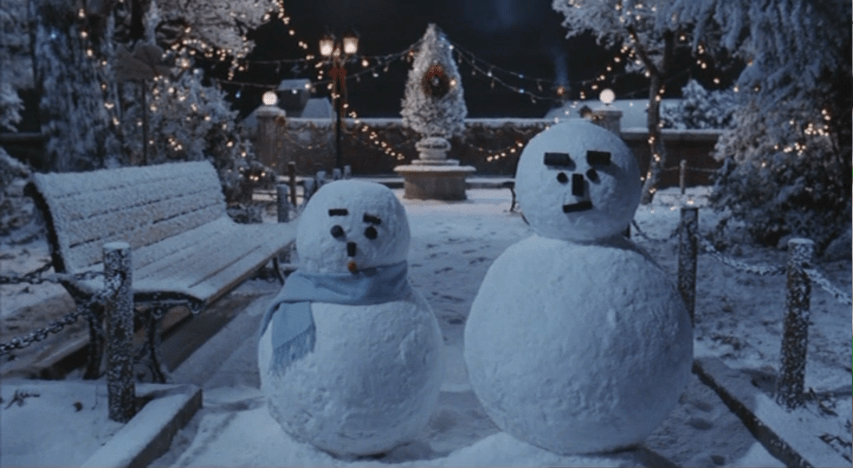
While the film presents an interesting picture of women in the workplace at the height of the bubble era, it also subtly undermines the prevailing consumerist culture of the age while preserving the romanticisation of Christmas. They two women each want to find a boyfriend to spend Christmas Eve with partly for reasons of social status and partly because they are simply quite lonely, Chika in particular very invested in her friendship with Tomoko while she, much more introverted, seems continually exasperated but despite herself allows Chika to dominate her existence. After becoming aware of their romantic conflict, the two women end up spending Christmas Eve together at a nice restaurant prioritising friendship over romance until one of them realises the other is unhappy and after discovering a note from their suitor asking them to meet in a local park chooses to spend the rest of the evening alone so her friend can go get her man. 

Then again, there’s a clear idea that Tomoko in particular is undergoing a kind of transformation signalling her shift away from Junpei by deciding to get contacts, putting on lipstick, and dressing in a slightly less mousy fashion while Chika’s attempt to become the sort of woman that Kyosuke would date by dressing and acting more like the other women in the office largely backfires. Meanwhile Kyosuke and Junpei are also changing, Kyosuke giving up his womanising ways and becoming more serious in his pursuit of Tomoko while Junpei comes to appreciate the vulnerable force of nature that is Chika. The film takes its title from Kyosuke’s attempt at hypnotising Tomoko into falling in love with him only to find that he’s the one who’s fallen under her spell as they move towards the anticipated Christmas Eve climax accompanied by the now classic song by Tatsuro Yamashita. Faced with the choice, the women do indeed choose friendship over love but discover that it isn’t really a choice at all because they both just want their friend to be happy even if it means a lonely Christmas for themselves as the ironic role reversal of the closing coda makes clear.


Original trailer (no subtitles)

Tatsuro Yamashita – Christmas Eve

Velvet Hustler (紅の流れ星, Toshio Masuda, 1967)

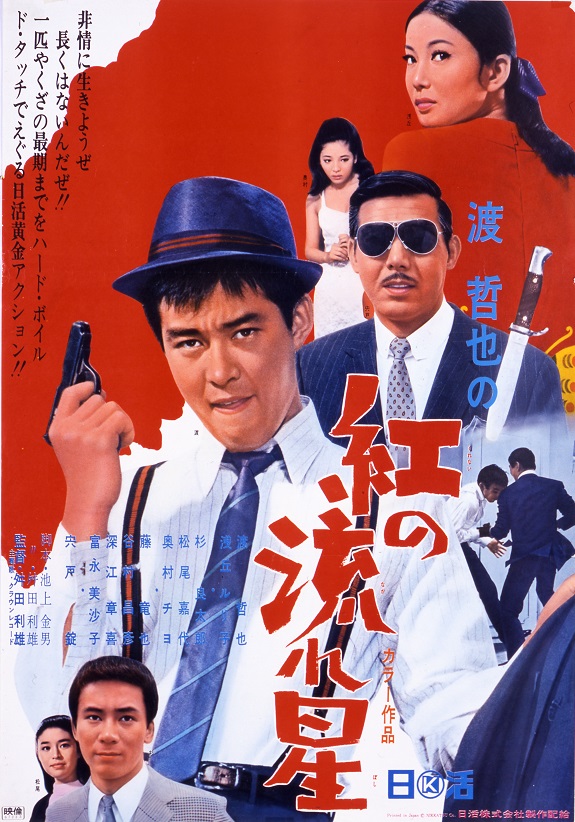
Perhaps overlooked in comparison with his better known contemporaries, Toshio Masuda was a bankable talent at Nikkatsu directing some of the studio’s biggest box office hits largely thanks to his long association with tentpole star Yujiro Ishihara. Nine years on from their collaborative debut Rusty Knife, however, times had perhaps begun to change. Featuring vibrant colour production design by Tokyo Drifter’s Takeo Kimura, a frequent Seijun Suzuki collaborator, 1967’s Velvet Hustler (紅の流れ星, Kurenai no Nagareboshi, AKA Like a Shooting Star) is a reworking of Masuda’s own Red Pier, itself inspired by Julien Duvivier’s 1937 French thriller Pepé le Moko, with Tetsuya Watari in the role originally filled by Ishihara. Apparently drawing inspiration from Godard’s Breathless, Velvet Hustler is a thoroughly post-modern retake, a parodic tale of gangster ennui and post-war emptiness in which rising economic prosperity has brought with it only despair. 

When we first meet petty gangster Goro (Tetsuya Watari), he’s coolly standing by, leaning on a fencepost like a bored gunslinger as he waits for the perfect getaway vehicle. Jumping into a fancy red convertible which it seems has already been stolen by the young man who parked it in this packed car park, the wires handily hanging striped and exposed, Goro barrels along the highway and and performs an infinitely efficient drive-by shooting on a rival gang boss. According to the man who hired him, Goro was only supposed to cause serious injury, not death, but as he points out if the guy insists on dying that’s hardly his problem. Taking his paycheque, Goro agrees to lie low in Kobe for the next six months after which his boss will come and get him. A year later, however, and he’s still there doing not much of anything, hanging out with the local kids and acting as a procurer dragging sailors on shore leave into gang-run clubs where Americans get into fights with Vietnamese émigrés. So desperate for escape are they that Goro’s underling even suggests they go to war, later thinking better of it when he remembers seeing horrific photos from the front.  

In a convenient but unsatisfying relationship with bar hostess Yukari (Kayo Matsuo), Goro explains that it’s not that he doesn’t like her, but he’s bored, “bored with fooling around with women”, but also of the business of living. The sun comes up, the sun goes down, and then it comes up again, every day all the same. His life has become completely meaningless and he has no idea what to do about it. He longs to go back to Tokyo, but is trapped in this strange Kobe limbo land, an end of the line sea port in which there is ironically no sense of escape. He doesn’t know it yet, but there’s a killer (Jo Shishido) on his trail, a killer who eventually reminds Goro that even if he kills him first another man will come. The bullets you fire are aimed squarely at yourself, Goro’s destiny is already set. There is only one way out of Kobe and it doesn’t lead back to Tokyo. 

Meanwhile, another possibility presents itself in the beautiful Keiko (Ruriko Asaoka), a temporary visitor from the capital looking for her missing fiancé presumed to have done a bunk with her father’s money. Keiko is a distinctly cool yet self-assured figure, generating an instant connection with the affable gangster at once reassured by a sympathetic mama-san that Goro is good but also warned that he’s still a yakuza and as such no good for a smart young woman like her. Keiko thinks that Tokyo is pretentious and boring, confused by Goro’s insistence on getting back there but like him perhaps in waiting. “I love you to death” she later ironically confesses while simultaneously insisting that men and women are different. There is no escape for her. Goro is tired of running but refuses to be handcuffed, choosing perhaps the only path to freedom presented to him. 

A nihilistic tale of gangster ennui in which life itself no longer has value, Velvet Hustler is a curiously cheerful affair despite its essential melancholy, Goro and Keiko sparring in a romantic war of attrition while he almost flirts with the dogged detective (Tatsuya Fuji) determined to bring him down. The kitschy production design gives way to Antonioni-esque shots of a strangely empty city while an ethereal sequence of dissolves eventually leaves the pair alone on the dance floor as if to imply their single moment of romance is but a brief dream of emotional escape. The trappings of post-war success are everywhere from Keiko’s elegant outfits to the cute red sports car and the weird club where Goro dad dances in front of his minions, not so much older than them but clearly out of place in this distinctly unhip seaside bar, but finally all there is is a dead end and an infinite emptiness the embrace of which is, perhaps, the only viable path to freedom. 


Temptation (誘惑, Ko Nakahira, 1957)

Ko Nakahira made his name with the seminal Sun Tribe movie Crazed Fruit, a nihilistic tale of bored, affluent post-war youth. Released a year later, Temptation (Yuwaku), adapted from a novel by Sei Ito, is in some ways its inverse pitting a melancholy widower harping on dreams of lost love against his relentlessly practical daughter for whom “Sex is life. Art is money” but finding in the end perhaps more commonality than difference save for the fact the youth of today may have no real dreams to betray. 

Now 55 years old, Sugimoto (Koreya Senda) is the proprietor of the Sugimoto Dried Goods store in upscale Ginza. Father to an only daughter, Hideko, now that his wife has passed away he finds himself carried back towards the past and is planning to turn the upstairs space in the store into a small gallery. For her part Hideko (Sachiko Hidari) and her coterie of artist friends are hoping to convince him to allow them to exhibit in the gallery for cheap, but he, slightly more conservative in his old age, views them all as low class Bohemians and fails to understand why Hideko hangs out with them in the first place. He has, it seems, an internal conflict symbolised by the beret he’s taken to wearing in which he is unable to let go of the broken dreams of his youth when he was a struggling artist forced to give up his first love, Eiko (Izumi Ashikawa), because he had no money or prospects while she eventually consented to an arranged marriage.  

The world of 1931 being very different, Sugimoto and Eiko never did anything beyond holding hands (later a key plot point), though in her parting letter she laments that she regrets not having let him kiss her and mildly berates him for not having been more forceful. A slightly uncomfortable sentiment, but diffidence seems to be the force defining Sugimoto’s life. At the store he finds himself dissatisfied with his senior salesgirl Junko (Misako Watanabe) whose brusque manner with customers and refusal to wear makeup he fears are harming sales, but is unable to say anything until his rather half-hearted attempt to talk to her provokes a mutual misunderstanding, he thinking she may be anxious about being fired and she wondering if he’s about to make a proposal. 

For unclear reasons, Junko seems to have a crush on Sugimoto, something which becomes a minor problem when he also becomes a target for Kotoko (Yukiko Todoroki), a middle-aged woman/insurance agent from Hideko’s floral arrangement class. Privy to their interior monologues, we can hear the two women squaring off against each other, Junko complaining that Kotoko is “meddling, talkative, and fat”, while Kotoko fires back that Junko wears “no makeup at all and is so stuck up” as they glare at each other through the shop window. Yet it’s not Sugimoto who eventually provokes a change in Junko, but another eccentric, struggling artist, Sohei (Shoji Yasui), who bluntly tells her that she is pretty and so should put some makeup on to bring it out. 

Junko later characterises this intervention as an act of salvation that sees her re-embrace her femininity, not only wearing makeup and having her hair styled but beginning to talk warmly with customers, improving the business but ironically giving Sugimoto the mistaken idea her friendly new demeanour may be partly for his benefit. For his part, Sohei, an unkempt artist suffering a seemingly permanent lice infestation, claims not to have cared very much about money or possessions which led him to accidentally abuse the generosity of his artist friends but has now been awakened, it seems, to a kind of consumerist mentality thanks to the interest of Junko and recognition of his art when some of Sugimoto’s old friends (well known artists Taro Okamoto, Seiji Togo, and critic Kimihide Tokudaiji) praise his paintings on seeing them in the gallery leading to them fetching a high price from prominent collectors. 

“The value of a work of art hinges on whether or not it sells” one of Hideko’s friends points out while she adds “We should be proud that art is profitable”, a sentiment that hugely offends Shohei (Ryoji Hayama), the beret-wearing leader of another artist circle the gang enlist to help them pay for the rental of the gallery. Though he concedes to Hideko’s argument that her father’s gallery is a business enterprise, not a charity, Shohei is somewhat horrified by the casual equation of art and commerce, shocked that the girls view their flower arranging as a practical more than an aesthetic skill. Still, in another irony it turns out that his talent is for business rather than art, shrewdly steering Sohei’s success rather than his own when it’s clear his work is the standout in the gallery. Just like Sugimoto had, he eventually resolves to give up his artistic dreams after falling in love with Hideko, planning to marry into her family and take over the Sugimoto store. She meanwhile, had described him as not good marriage material, “no poor painters for me, only rich men” but is apparently in favour of his selling out if only in that it ironically makes him more himself. 

As we discover there are more than a few reasons besides the beret that Sugimoto keeps feeling Shohei reminds him of someone else even as he finds himself wary of him, pointlessly trying to set Hideko up with someone more “suitable” just as she makes a point of inviting a series of alternative widowed, middle-aged ladies to the gallery opening not so much because she particularly objects to Kotoko but she’s worried her dad might get bamboozled into something without properly surveying his options. While Sugimoto remains maudlin and filled with regret though perhaps putting the past aside through a symbolic act of closure, the youngsters are cheerfully cynical, practical in the way the older generation are always telling them to be but are perhaps disappointed in them for not having dreams or aspirations beyond those of claiming or maintaining or their chosen status in life. “Art is money” Hideko is fond of saying, and it’s true enough in so much as money is an art and the one which seems at least to have captivated the post-war generation eagerly awaiting the advent of the consumerist revolution. 


The Dragon of Macao (マカオの竜, Mio Ezaki, 1965)

Dragon of Macao DVD coverNikkatsu’s “borderless” action was famously internationalist, but as Japan’s place on the world stage began to change in the mid-60s, it also betrayed a slight anxiety in the nation’s new status as a burgeoning economic power in the Asian sphere. The Dragon of Macau (マカオの竜, Macao no Ryu), while indulging in the genre’s characteristically xenophobic vision of China as an exporter of criminality, is another attempt to cash in on James Bond cool as its suave, British passport-carrying hero tries to wrestle a precious gem away from fiercely amoral “pirates” while protecting a betrayed young woman trying to avenge the death of her parents at the hands of duplicitous gangsters.

Set in the bustling port town of Yokohama, the film opens with the harbour patrol forcibly boarding a ship to look for smuggled gold. However, it turns out that the two men they’re searching are members of the patrol themselves on an undercover mission trying to expose organised crime while the guys dressed as policemen are actually members of a gang trying to steal a precious diamond. Fearing the operation blown, the gangsters’ plant offs the lot of them and makes off with the loot.

Meanwhile, “Dragon of Macau” Ryu (Akira Kobayashi) lurks about on the harbour while rival gangster Tsukada (Asano Sano) tries to get the police onside and convince them that someone else is targeting his operation though the police are apt to wonder if he staged the whole thing himself to get rid of the undercover agents. The truth, however, is that ambitious harbour punk Aizu (Jo Shishido) is after a precious diamond known as the “Himalyan Star” which is rumoured to be cursed seeing as everybody who’s come into contact with it has ended up dead.

Unsurprisingly, Aizu gets his hands on the gem from a Chinese broker, Chen, who warns him that two gangsters, Gordon and Boomerang, will do “anything” to get their hands on it. Ryu later turns up a bar run by Tsukada and gets into a bar fight with a series “damn foreigners”, sailors who’d had too much to drink and started hassling the staff. The “damn foreigners” quip is especially ironic seeing as we later discover Ryu is a British citizen who seems to have grown up in Hong Kong after being rescued by a British vessel when the boat he and his parents were travelling on was torpedoed during in the war. Introducing himself to Tsukada, Ryu says that he works for the aforementioned “Gordon”, presumably an imperialist Brit engaged in shady colonial shenanigans out of Hong Kong. The truth about “Ryu” at least turns out to be slightly different, but for the moment he’s a Bond-inspired unflappable agent of cool complete with a fancy white three-piece suit and a collection of gadgets (a cigarette lighter blowtorch, pistol that dispenses matchstick flares, and a tiny nail gun) that would be the envy of any cold war spy.

Not to be outdone, however, Aizu has his own share of surprises including the tiny dagger hidden in the cigarette which permanently hangs from his lip. Temporarily entering this land of intense amorality, Ryu plays along but retains his nobility and remains permanently one step ahead as he attempts to get his hands on the Himalayan Star and return it to its “rightful” owners. Aizu’s main gambit is weaponising women – Aizu’s sister is a plant working at Tsukada’s bar and apparently also his mistress, while he also makes use of another young woman, Nami (Yukiyo Toake), whose late father was a patron of his. She believes Tsukada is responsible for the deaths of her parents and is participating in the plan as revenge, but eventually falls for Ryu’s suave nobility and refuses to betray him when faced with Aizu’s continuing duplicity.

A few narrative machinations later, we’re told that Ryu is “a person without a motherland” but also that he has always been a force for “good” or at least order in that he wants the gemstone not for himself but to get it away from the gangsters and back to its “official” owners (which sort of ignores the fact that the stone was “stolen” from the eye of a Buddhist statue which is presumably why people think it’s “cursed”, and that his primary motivation is avoiding a giant insurance payout). Having fallen for Nami, he leaves her a message that he’d have liked to take her back to Macau but is unsure she’d be happy with someone like him, asking her to look after another young woman who came all the way from Hong Kong to warn him that Gordon and Boomerang have finally taken each other out.

Perhaps in contrast to Nikkatsu’s other international crime dramas, the “threat” turns out to be wholly homegrown in Aizu’s rapidly individualist stance that “life is cruel”, “mercy is for fools”, and those who stand in one’s way must be eliminated. The solution comes, paradoxically, from destabilising internationalism at the hands of a man who is both Japanese and not, speaks several languages, and works as an agent for colonising imperial powers to whom he eventually exiles himself, job done. A rip-roaring spy drama complete with modern day pirates and an extremely ineffectual police presence, The Dragon of Macau is a surprisingly complex effort from Nikkatsu’s “borderless” action strand which makes the case for Japan as a part of wider world rather than a isolated island fearful of losing out in an increasingly globalised environment.