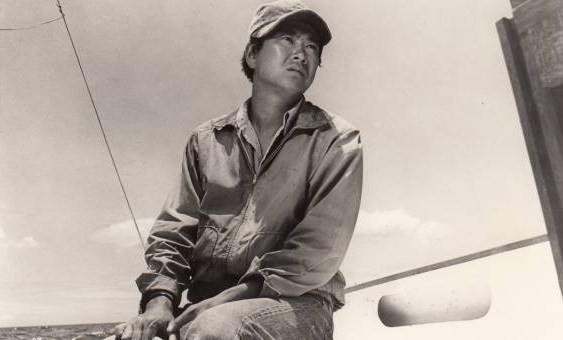
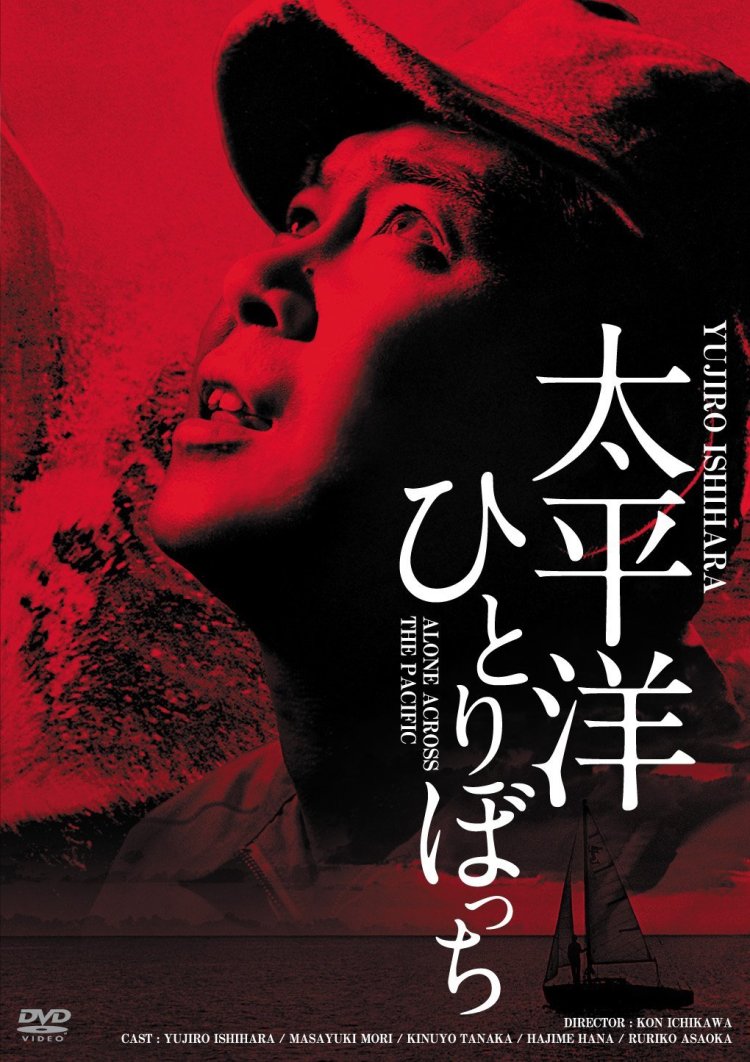
 Kon Ichikawa made two sorts of movies – the funny ones and the not so funny ones. Despite the seriousness of the title, Alone Across the Pacific (太平洋ひとりぼっち, Taiheiyo hitori-botchi) is one of the funny ones. Like many of Ichikawa’s heroes, Horie is a man who defies convention and longs for escape from the constraining forces of his society yet is unable to fully detach himself from its cultural norms. Based on the real life travelogue of solo sailor Kenichi Horie, Alone Across the Pacific is less the story of a man battling the elements, than a cheerful tale of a man battling himself in a floating isolation tank bound for the “land of the free”.
Kenichi (Yujiro Ishihara) is a strange man. He has few friends (aside from the family dog, Pearl) and is obsessed with the idea of running away to sea. Inspired by the tales of other intrepid sailors, his dream is to sail all alone across the Pacific Ocean from Osaka to San Fransisco. Despite the fact that it is illegal for small boats to leave Japanese waters (and that he is too impatient to wait for his passport to come through), Kenichi has custom made his own yacht, one without an engine, and has set off on his longed for voyage under the cover of darkness.
Rather than filming Kenichi’s journey naturalistically, Ichikawa opts for an adventurer’s tale as Kenichi provides an ironic voice over detailing some of his naive failings as a rookie sailor undertaking such a daunting mission. Each of Kenichi’s crises links back to a memory from his shore life, reminding us why he’s on this journey in the first place. Kenichi’s struggles are the same as many a young man in post-war Japan and, in fact, many of those previously played by the poster boy for youthful rebellion, Yujiro Ishihara. Unwilling to live a life hemmed in by the predetermined path of a job for life, wife, children and total social conformity, Kenichi longs to be free of his cultural baggage by abandoning his civility during a long process of isolation therapy free of overbearing fathers, fretting mothers, indifferent sisters and a generally noisy world.
Kenichi’s father (Masayuki Mori) is the very personification of authority, berating his son for his fecklessness and pointless obsession with sailing – a sport a working class boy like Kenichi can barely afford. Kenichi’s determination to achieve his goal sees him leave school early, take a job in his father’s workshop only to quit suddenly for a more lucrative one delivering luggage for a travel agents, and quitting that too to work full time on his boat. While his father huffs and puffs his mother (Kinuyo Tanaka) worries, hoping her mad son won’t really go through with it but knowing that he will.
When Kenichi finally reaches San Fransisco, he’s assaulted by congratulatory voices from all directions. Towed into harbour by a motor boat, Kenichi first has to deal with mundane problems like the customs patrol wanting to know if he’s got any fruit left on the boat before a crowd gathers to shake his hand asking where he’s come from and why, what he wants to do now, and praising him for his daring feat of solo sailing glory. In Japan however, things are different. Dragged out for an interview by the press, Kenichi’s worried mother avows that she’s just happy to know her son is safe while his father bows deeply and reassures everyone that he will absolutely put a stop to any such random acts of individualism his wayward son may attempt in the future.
Kenichi evades the twin pulls of his mother’s apron strings and his father’s handcuffs by taking off alone but even at sea he’s never free of his cultural programming, checking the wide empty ocean before removing his clothes and then stepping back down into the cabin to finish the job. Kenichi’s failure to acquire a passport is an ironic one seeing as part of what he’s running from is being Japanese but even as his quest is one for self determination it is also intensely selfish and self involved. In this Kenichi commits the ultimate act of individualism, caring nothing for the thoughts and feelings of others in the all encompassing need to achieve his goal. Kenichi may have found a home at sea, but on land he’s caged once again, a prisoner both of social conformity and his own need to defy it.
Available on R2 DVD from Eureka Masters of Cinema.
Original trailer (no subtitles)
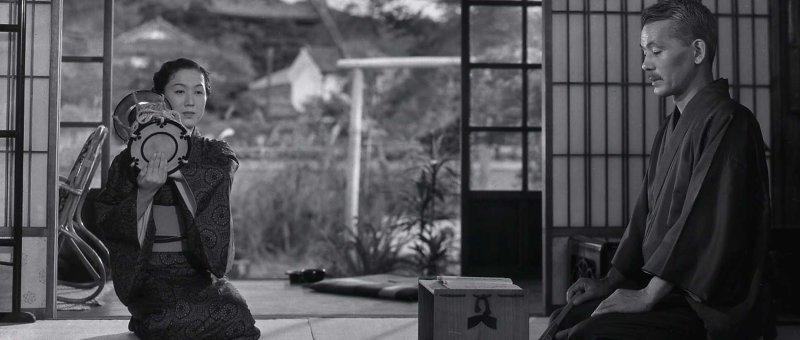
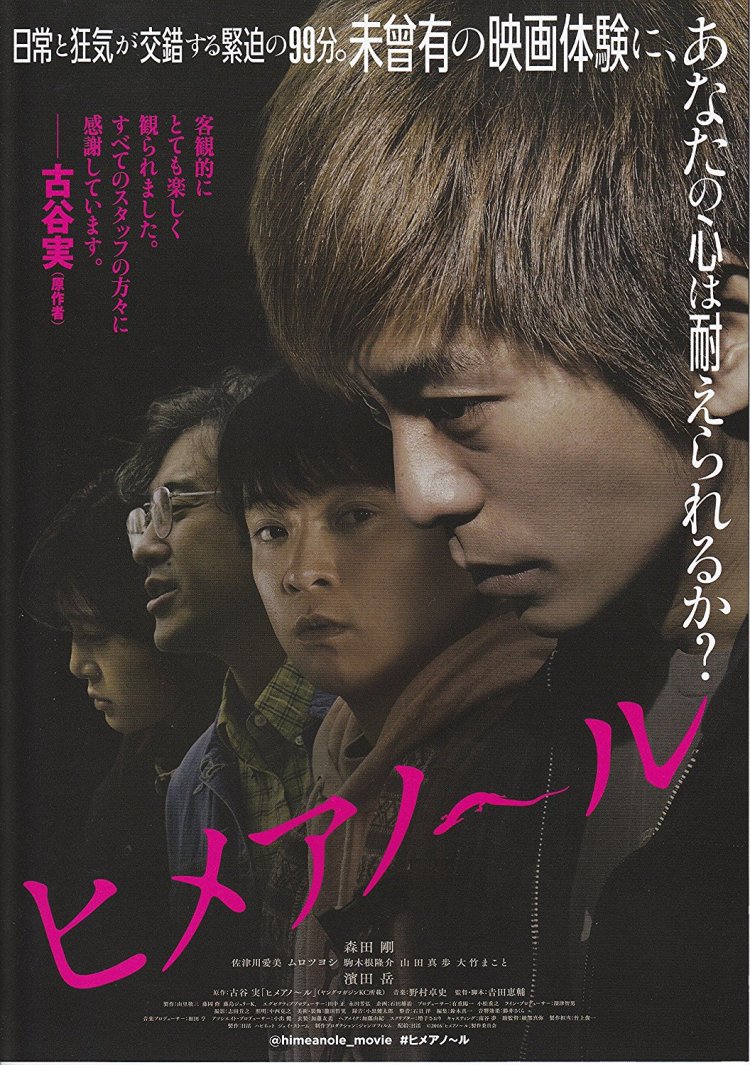 Some people are odd, and that’s OK. Then there are the people who are odd, but definitely not OK. Hime-anole (ヒメアノ~ル) introduces us to both of these kinds of outsiders, attempting to draw a line between the merely awkward and the actively dangerous but ultimately finding that there is no line and perhaps simple acts of kindness offered at the right time could have prevented a mind snapping or a person descending into spiralling homicidal delusion. To go any further is to say too much, but Hime-anole revels in its reversals, switching rapidly between quirky romantic comedy, gritty Japanese indie, and finally grim social horror. Yet it plants its seeds early with two young men struggling to express their true emotions, trapped and lonely, leading unfulfilling lives. Their dissatisfaction is ordinary, but these same repressed emotions taken to an extreme can produce much more harmful results than two guys eating stale donuts everyday just to ask a pretty girl for the bill.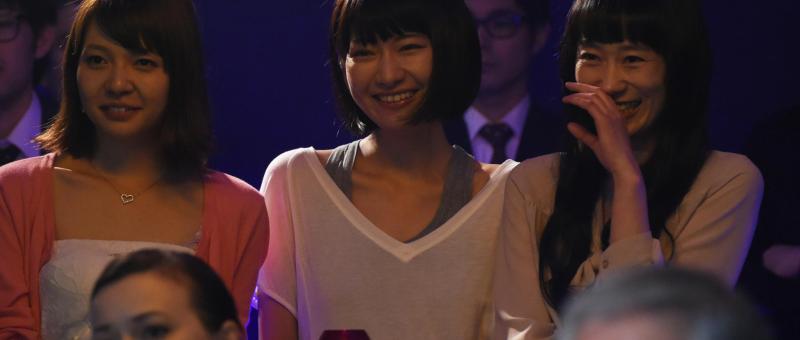
 Towards the end of the 60s and faced with the same problems as any other studio of the day – namely declining receipts as cinema audiences embraced television, Nikkatsu decided to spice up their already racy youth orientated output with a steady stream of sex and violence. The Roman Porno line took a loftier approach to the “pink film” – mainstream softcore pornography played in dedicated cinemas and created to a specific formula, by putting the resources of a bigger studio behind it with greater production values and acting talent. 40 years on Roman Porno is back. Kazuya Shiraishi’s Dawn of the Felines (牝猫たち, Mesunekotachi) takes inspiration from Night of the Felines by the Roman Porno master Noboru Tanaka but where Tanaka’s film is a raucous comedy following the humorous adventures of its three working girl protagonists, Shiraishi’s is a much less joyous affair as he casts his three lonely heroines adrift in Tokyo’s red light district.
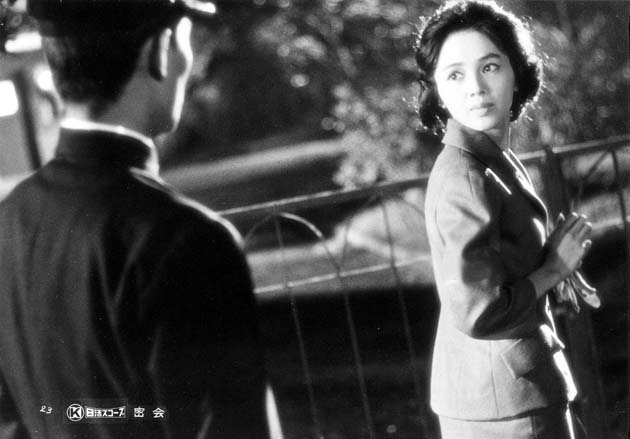 Aside from the genre defining Crazed Fruit which kick-started the era of the “seishun eiga” and, in its own way, the Japanese New Wave, Ko Nakahira has remained under seen and under appreciated outside of Japan. Completed just three years after the youth fuelled frenzy of Crazed Fruit with its freewheeling playboys and their speedboat crises, The Assignation (密会, Mikkai) is a much more measured, mature meditation on social constraint, guilt and the slow drip feed of poisonous thought. Nakahira wastes none of his characteristic energy in the necessarily tight 76 minute runtime, but this is an exercise in high tension as a pair of illicit lovers are suddenly confronted with their crime after accidentally witnessing a murder.
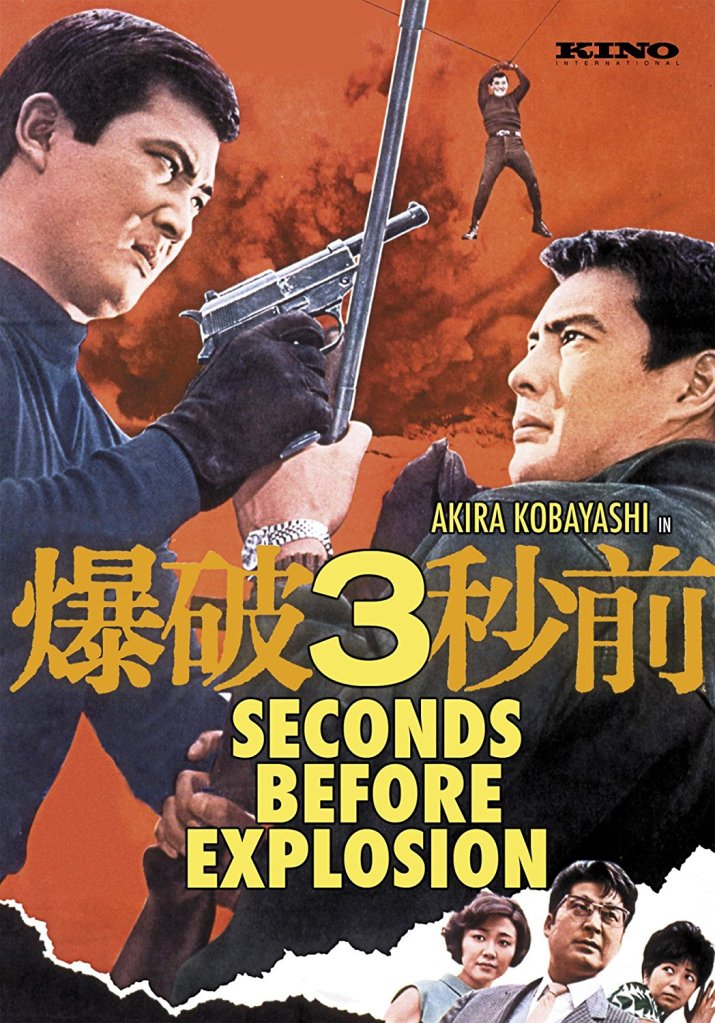 If Nikkatsu Action movies had a ringtone it would probably just be “BANG!” but nevertheless you’ll have to wait more than three rings for the Kaboom! in the admittedly cartoonish slice of typically frivolous B-movie thrills that is 3 Seconds Before Explosion (爆破3秒前, Bakuha 3-byo Mae). Once again based on a novel by Japan’s master of the hard boiled Haruhiko Oyabu, 3 Seconds Before Explosion is among his sillier works though lesser known director Motomu Ida never takes as much delight in making mischief as his studio mate Seijun Suzuki. What he does do is make use of Diamond Guy Akira Kobayashi’s boyish earnestness to keep things running along nicely even if he’s out of the picture for much of the action.
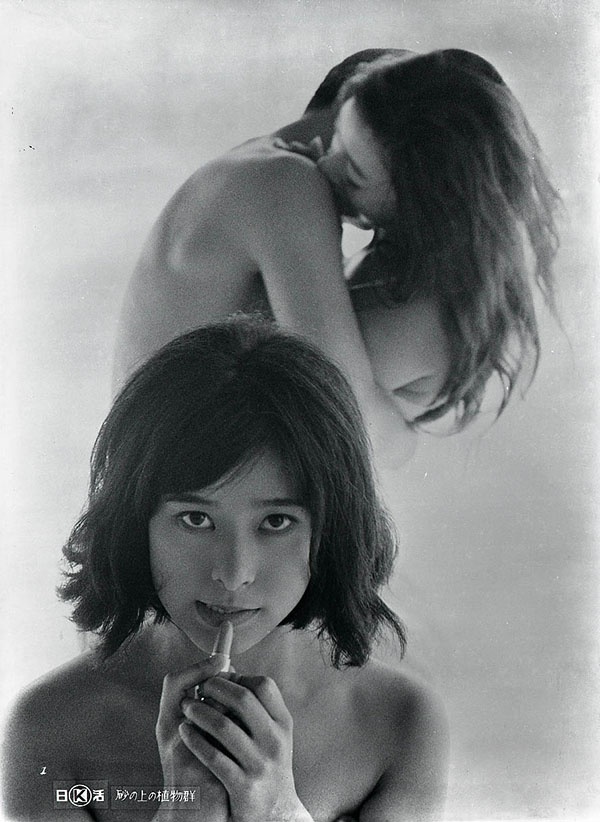 Despite being among the directors who helped to usher in what would later be called the Japanese New Wave, Ko Nakahira remains in relative obscurity with only his landmark movie of the Sun Tribe era, Crazed Fruit, widely seen abroad. Like the other directors of his generation Nakahira served his time in the studio system working on impersonal commercial projects but by 1964 which saw the release of another of his most well regarded films Only on Mondays, Nakahira had begun to give free reign to experimentation much to the studio boss’ chagrin. Flora on the Sand (砂の上の植物群, Suna no Ue no Shokubutsu-gun), adapted from the novel by Junnosuke Yoshiyuki, puts an absurd, surreal twist on the oft revisited salaryman midlife crisis as its conflicted hero muses on the legacy of his womanising father while indulging in a strange ménage à trois with two sisters, one of whom to he comes to believe he may also be related to.
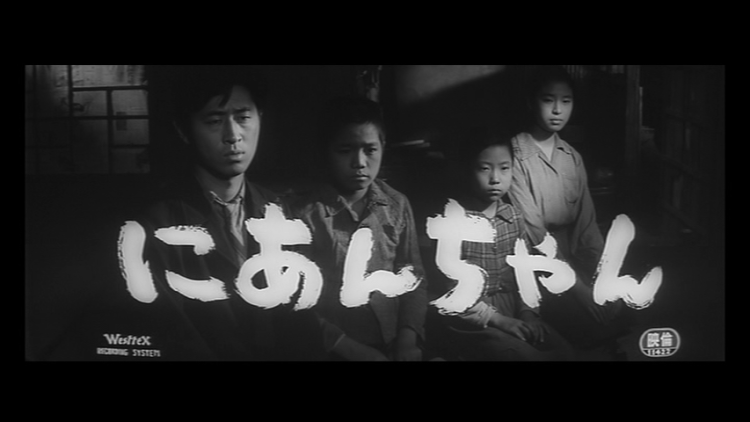 Like most directors of his era, Shohei Imamura began his career in the studio system as a trainee with Shochiku where he also worked as an AD to Yasujiro Ozu on some of his most well known pictures. Ozu’s approach, however, could not be further from Imamura’s in its insistence on order and precision. Finding much more in common with another Shochiku director, Yuzo Kawashima, well known for working class satires, Imamura jumped ship to the newly reformed Nikkatsu where he continued his training until helming his first three pictures in 1958 (Stolen Desire, Nishiginza Station, and Endless Desire). My Second Brother (にあんちゃん, Nianchan), which he directed in 1959, was, like the previous three films, a studio assignment rather than a personal project but is nevertheless an interesting one as it united many of Imamura’s subsequent ongoing concerns.
 Before Seijun Suzuki pushed his luck too far with the genre classic
 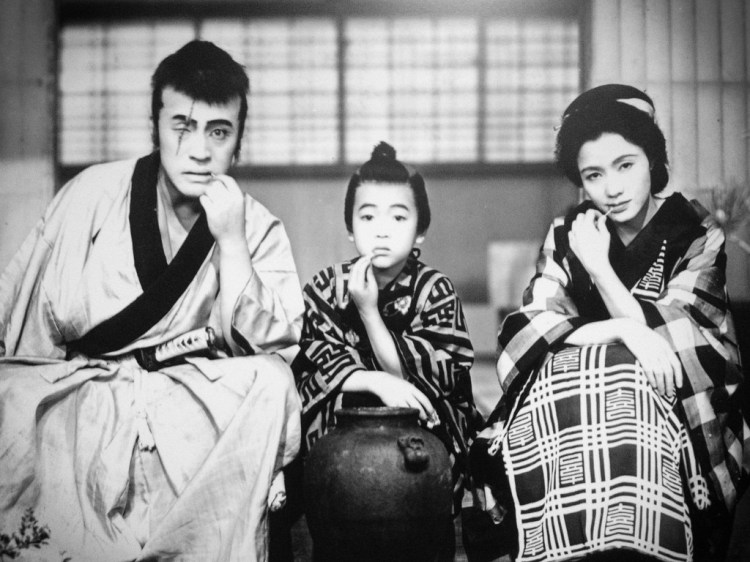 Sadao Yamanaka had a meteoric rise in the film industry completing 26 films between 1932 and 1938 after joining the Makino company at only 20 years old. Alongside such masters to be as Ozu, Naruse, and Mizoguchi, Yamanaka became one of the shining lights of the early Japanese cinematic world. Unfortunately, this light went out when Yamanaka was drafted into the army and sent on the Manchurian campaign where he unfortunately died in a field hospital at only 28 years old. Despite the vast respect of his peers, only three of Yamanaka’s 26 films have survived. Tange Sazen: The Million Ryo Pot (丹下左膳余話 百萬両の壺, Tange Sazen Yowa: Hyakuman Ryo no Tsubo) is the earliest of these and though a light hearted effort displays his trademark down to earth humanity.
 Windows on Worlds