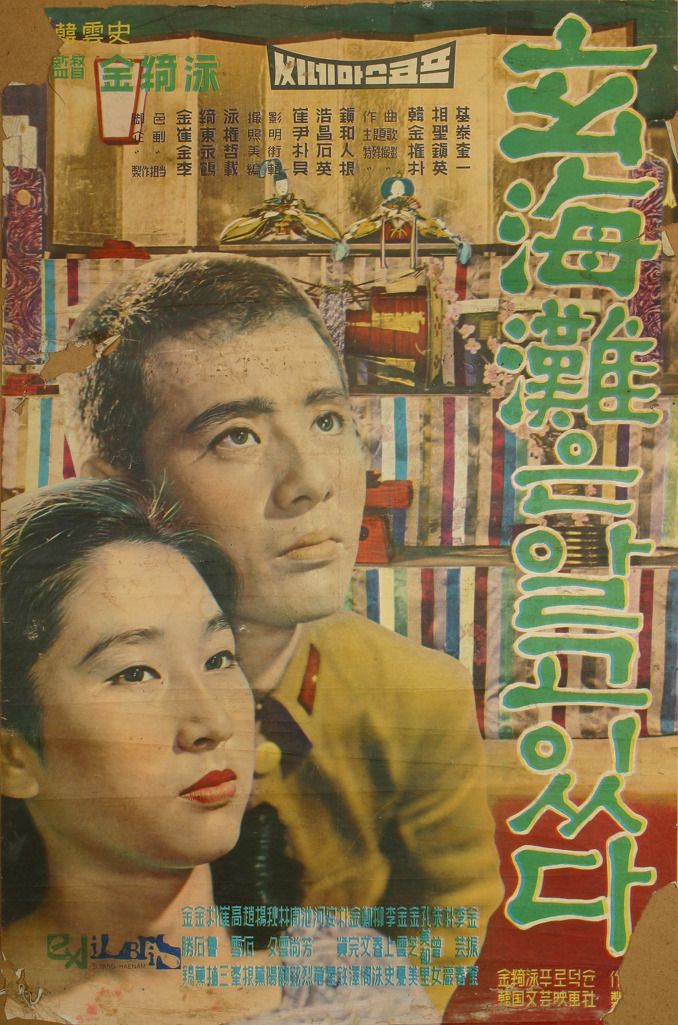
The Sea Knows (玄海灘은 알고 있다 / 현해탄은 알고 있다, Kim Ki-young, 1961)

The Sea Knows posterThe Korea of 1961 was a land in flux. The corrupt regime of Rhee Syngman had been brought to its knees following mass protests regarding the rigged 1960 elections but hopes for a new democracy were cut short when military General Park Chung-hee staged a coup, later declaring himself president for life and continuing his authoritarian rule until he was assassinated by one of his own subordinates. Kim Ki-young’s The Sea Knows (玄海灘은 알고 있다 / 현해탄은 알고 있다, Hyeonhaetaneun Algoitta) arrived perhaps at just the right time, ducking under the radar before the Motion Picture Law of 1962 would forever change the industry and if not prevent at least frustrate any attempt to discuss the controversial themes at the heart of Kim’s drama. The Sea Knows is, like much of Kim’s work, a tale of power and desire only this time on a wider scale as he examines the complicated relationship between Korea and Japan as mediated through romantic melodrama.

We open in 1944. Korean student Aro-un (Kim Wun-ha) has been conscripted into the Japanese army following an incident in which he embarrassed a high-ranking official (something which has made him a local hero at home). Despite the fact that Korea has been inducted into the Japanese empire and Koreans are now sons of the emperor too, the regular Japanese troops are not exactly grateful for service of their brethren from across the sea. Koreans are a pain, they decry. They’re always going on about justice and fairness. They won’t just shut up and take their lumps like regular Japanese soldiers. The “50 year tradition” of the Japanese army is to break the will of new recruits through violence, strip them of their individuality, and reduce them to a finely tuned hive mind.

Needless to say, Aro-un is not eager to comply. There’s a strong strain of homoeroticism in the strangely camp banter between the higher-ups. At the first inspection the commanding officer takes a good look at Aro-un, decides he resembles a “cute puppy” and recommends he come to his room to get some “biscuits”. Meanwhile a particularly sadistic NCO, Mori (Lee Ye-chun), pinches the chest of Aro-run’s judo champion friend Inoue (Lee Sang-sa) and decides he’ll not be an easy target – unlike the short and wiry Aro-un who is too righteous to know what’s good for him. Mori, an insecure and under qualified NCO, makes use of men like Aro-un to entrench his own position through the “50 year tradition” of military discipline. The humiliations mount until Aro-un is forced to lick Mori’s excrement encrusted boots in punishment for having failed to polish them to his satisfaction.

Yet, unlike in the majority of Korean films dealing with war and occupation, the Japanese are not universally bad – there are many just like Aro-un who are uncomfortable with the militarist line and are doing what they can to resist, albeit often passively. Aro-un’s university friend, Nakamura (Kim Jin-kyu), is just such a man, turning down the possibilities of promotion to avoid endorsing the regime while acknowledging that there is little more he can do to free himself from it. It’s through Nakamura that Aro-un meets his own source of salvation in the unlikely figure of a young Japanese woman – Nakamura’s sister Hideko (Gong Midori). Hideko originally betrays the common prejudice against Koreans in claiming that the perpetrators of a nearby robbery were most likely Korean seeing as Koreans can’t get jobs and therefore have no other options than to steal, though in retrospect perhaps her assertions were a more logical comment on poverty and entrenched oppression than they were on racial stereotyping.

Hideko is, as Aro-un later points out, a very unusual Japanese woman. A free spirit, she finds herself drawn to Aro-un and is committed to pursuing a course of true feeling over that laid down by the codes of her society, choosing his sensitivity over the brutalisation of her militarist nation. War, Aro-un muses philosophically, is about the manipulation of the present. Love is about the foundation of a future. Yet there is also something dark and imbalanced even in their otherwise pure romance as each finds themselves becoming a symbol of suffering and violence. Aro-un is drawn to Hideko’s unexpected warmth as she sheds tears for his suffering on hearing of his various degradations, seeing no difference in the tears of a Japanese woman and those of his Korean mother who each felt his pain as their own, but Hideko’s insistence on hearing of his latest humiliations almost takes on a sadistic quality as the pair become bound by suffering as much as by innocent connection.

Kim’s central tenet is a bold one for the increasingly volatile world of 1961, making a case for borderless connection over nationalistic chest thumping and championing the resilience of the human spirit as well as the enduring power of love as a counter to the horrors of war. War is, in another of Aro-un’s philosophical musings, just something that happens to you and makes enemies of those who might have been friends. Making extensive use of stock footage and model shots, Kim plunges Aro-un into a fiery hell from which only love and will can save him. An unexpectedly nuanced but no less harrowing tale of wartime brutalisation and spiritual resistance, The Sea Knows is an impassioned plea for humanity in an inhumane age in which there are no heroes and no villains, only victims and resistors caught in a vast web of power and madness.


The Sea Knows was screened as part of the Korean Cultural Centre’s Korean Film Nights 2018: Rebels with a Cause series. You can also watch it online for free courtesy of the Korean Film Archive’s YouTube channel. The existing print is, however, incomplete and badly damaged – four sequences in which there is picture but no sound or sound but no picture are missing / unsubtitled in the online version but are present in the restoration.

Lôi Báo (Victor Vu, 2017) [Fantasia 2018]

Lôi Báo posterThe world can be a strange place. Tam (Cuòng Seven) felt safe in his small town surrounded by his wife and son who were determined to support his artistic dream despite its long genesis, but a dark shadow is about to be cast over his otherwise pleasant existence that will threaten to destroy everything he has built. Victor Vu’s Lôi Báo is perhaps Vietnam’s first superhero movie but it’s also a familiar tale of a conflicted man entering middle-age learning to reaccept his responsibilities, both to his wife and son and to his society as he attempts to balance his desire to help others with that of protecting his family. With great power comes great responsibility as the saying goes and Tam is a responsible guy but the past is calling him and he’ll need to face it head on if he’s to put his fracturing family back together.

Six years after his critically acclaimed graphic novel Descendents of the Crossbow, comic book artist Tam has just come out of a period of writer’s block and is working on a new project – an American-style Superhero book about a pure hearted warrior for justice with intense fighting skills and extreme athletic ability. Not many people are convinced by Tam’s desire to create a Vietnamese superhero, but his family support him and that’s all that matters. In fact, they literally support him because his wife Linh’s (Tran Thi Nha Phuong) coffeeshop is the family’s sole source of income. Tam has a tendency to get lost in his work, which is one reason he’s been putting off seeing the doctor about a serious cough that just won’t go away. When he finally decides to get it checked out it’s already too late – he has terminal lung cancer and only a few months left to live. It’s at this point that his life starts to take a strange, unexpected turn. Uncle Ma (Huàng Son), an older man Tam thought was a farmer, is actually a secret mad scientist who has a hidden laboratory in his garden where he continues to research human head transplants. The obvious conclusion presents itself – Tam decides to undergo experimental surgery to abandon his cancer ridden body and move into a nice new model.

Lôi Báo is the latest in the long line of movies indulging in the thoroughly B-movie science of “Cellular Memory”. Illegal head transplantation is already somewhat unethical, but Tam and Ma acquired their donor body through less than ethical means by grabbing a guy who was mysteriously gunned down in a forest where Tam had just tried to commit suicide out of total despair. Of course, the dead “gangster” came with his own share of baggage which leaves Tam feeling much more impulsive had than he had done before and though he seems to have lost the ability to draw, Tam is thrilled that his new body seems to be a much stronger, faster model than his old one. Not quite able to leap tall buildings in a single bound, Tam can now scale them with little difficulty and lift heavy vehicles all alone. Now he no longer needs to draw superhero stories, he can be a hero for real fulfilling his lifelong dream of being able to save lives and protect the vulnerable from evil.

Only, his new body is not quite so altruistic as he once was, and Tam begins to get off on the fame his newfound heroism is bringing him even while it puts his family danger should anyone find out about all the illegal head transplantation action that’s been going down at uncle Ma’s. He also finds himself strangely drawn to a pretty young doctor who might have been something to the dead gangster, further distancing him from Linh and his son Bu. As expected, there was a little more to the gunfight in the woods than a gangster squabble and Tam will have to learn to put body and soul back together while also dealing with the ghosts of his past and a latent discomfort with the idea of being a husband and father which betrays a lack of faith in the idea of “family” itself.

With plenty of high octane action scenes, Lôi Báo more than does its home genre justice, creating a notably mature origin story for a new kind of superhero who accepts that perhaps he’s not the hero in this story after all. Justice is served, the family repaired, the past laid to rest and there might even be a new book in it too. It has been a busy a few months for Tam, but at least he’s learnt the true meaning of heroism – something which will place him in good stead during his eagerly awaited further adventures!


Lôi Báo was screened as part of Fantasia International Film Festival 2018.

Original trailer (English subtitles)

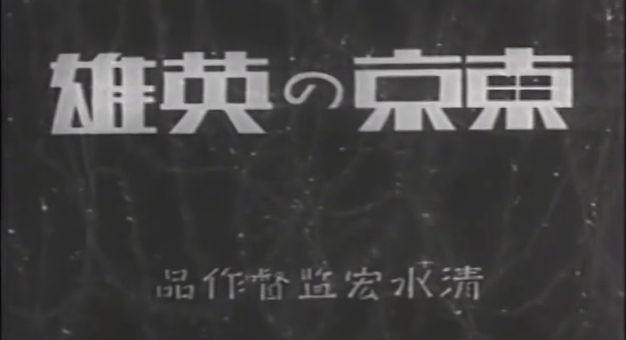
A Hero of Tokyo (東京の英雄, Hiroshi Shimizu, 1935)

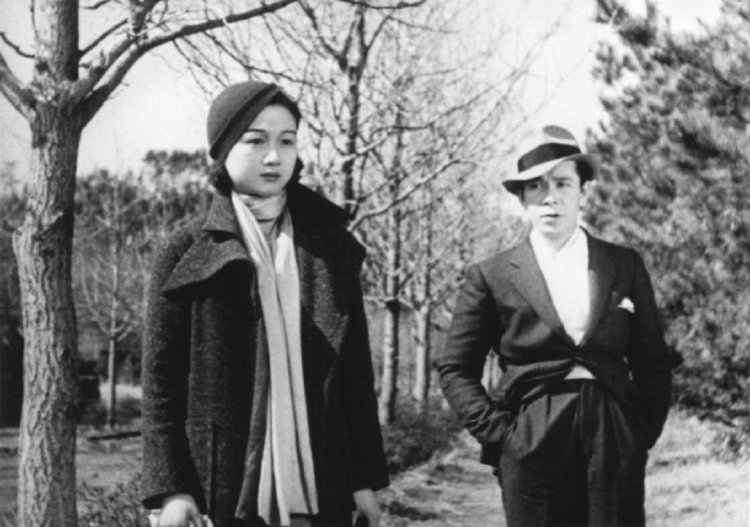
Hero of Tokyo still 1Hiroshi Shimizu’s ‘30s films, made against the backdrop of the increasingly censorious militarist regime, had an ambivalent attitude to Japan’s wider foreign policy, its economic impact, and prospects for the future. His final silent film, A Hero of Tokyo (東京の英雄, Tokyo no Eiyu), the title of which is perhaps either deceptive or mildly ironic, is among the bleakest of Shimizu’s depictions of a changing society he perhaps saw as increasingly corrupted by greed and inhumanity. A hahamono of sorts, Hero is not as crushing as Forget Love For Now, but ends on a note of frustrated ambiguity in which wrongdoing has been exposed and justice served but at a terrible cost, leaving the institution of the family itself and therefore the entire social order lying in pieces and broken beyond repair.

The film begins among Shimizu’s familiar milieu of small boys as they watch the trains that will eventually bring their fathers home to them coming and going. Some of the boys stay to play but eventually only one is left behind – Kanichi (Tomio Aoki), whose widowed father constantly works late and leaves him alone in the care of their maid. Kanichi’s father, Nemoto (Yukichi Iwata), is engaged in a local mining concern and, berated by the maid who reminds him that his son is often lonely, decides to marry again to bring order to his house. After placing an ad which states he is a widowed CEO with a good salary, Nemoto marries Haruko (Mitsuko Yoshikawa) – a widow with two children of her own, Hideo (Jun Yokoyama) and Kayoko (Mitsuko Ichimura). A short time later it is discovered that Nemoto’s business is a scam and he flees town leaving his family to face the music alone. Haruko, committed to raising all three children equally, must now find a way to support herself but as a woman with young children and few qualifications there are few jobs available to her. Soon she falls into bar work which may not be “respectable” but allows her to support her family.

10 years later, Haruko owns a fine suburban house and the children appear to be leading a fine middle-class life. Trouble begins when Kayoko (Michiko Kuwano) marries a nice middle-class young man only to be “sent back” soon after the wedding when his family find out about Haruko’s “shameful” past. Though Haruko had told the children that she worked “in a club where executives come to relax” when they were small, Kayoko is shocked and appalled to discover her mother is tainted with the stigma of the sex trade and even more so when her mother’s past threatens to destroy her future. Haruko begs her not to tell her brothers, but Hideo (Koji Mitsui) finds out from his girlfriend, who also dumps him on hearing the rumours, and goes off the rails. Only Kanichi (Mitsugu Fujii), the step-son, stands by the mother he regards as the “best in Japan”, feeling both profound gratitude and sorrowful empathy for the sacrifice she has made on his behalf.

At heart a hahamono, A Hero of Tokyo fits neatly into Shimizu’s career long interest in female oppression in casting Haruko’s trials as entirely caused by being badly let down by a patriarchal society. Having lost one husband and being betrayed by the second, Haruko is forced to stand alone in a society which refuses to forgive her for it. As a “married” woman, she can gain no “honest” work and the necessity to care for her children means that she cannot take a role in service which in effect means dedicating oneself to a family which is not one’s own. She lacks qualifications or connections and has no family to support her and so she is forced into the only remaining line of work available to women in her situation. Haruko makes a great success of herself and becomes an upright businesswoman running her own establishment even if she cannot be exactly proud of the achievement which does (to her own shame and regret) rely on the degradation of other women just like her, though she tries to do the best for them that she can.

Yet her children, as all ungrateful children of a hahamono, are unable to forgive her for the transgressions she was forced to make entirely for their benefit. Having cast their mother as a saint of elegance and decorum, they cannot accept this new information which renders her a mere woman at the mercy of a cruel society. Kayoko, having run away from home, ironically finds herself in the same, or perhaps a worse, position, becoming a streetwalker – by her own admission “famous” and an accidental subject for one of Kanichi’s episodes of investigative reporting as a rookie newspaper man. Meanwhile Hideo has crossed to the other side and joined the ranks of exploiters of women in joining a gang only to get himself into trouble for trying to leave it when he realises he has become a hired goon for one of Nemoto’s stooge companies. The children are “ruined” not by their mother’s “sin” but by the conservative society that forced her into it and by the paternal failures of Nemoto whose abandonment reduced them to dire desperation.

It is, in this sense, Haruko rather than Kanichi who is the “hero” of the title – valiantly battling against the prejudices and cruelties of the city whilst retaining her innate sense of honour decency and steadfastly shielding her children from suffering. Her attempt to protect them perhaps backfires, leaving them without the necessary perspective and humanitarian spirit to feel empathy for others rather than succumbing to the judgemental attitudes of the age. Thus both of the biological children are condemned to suffer in the very way Haruko suffered to prevent and then find themselves too ashamed to return to her. Only Kanichi who had already suffered in his childhood loneliness, in his shame for the transgression of his father, and his position as a step-son doubting his place in a family which was not his by blood, is able to accept and sympathise with his mother’s suffering and experiences only guilt and gratitude that she had chosen to sacrifice herself for his greater happiness.

Yet Kanichi’s role as the good son is also tainted by his filial opposition to his father as it necessarily conflicts with his desire for social justice as a crusading reporter. Kanichi’s desire to expose corruption is ultimately for the common good – to save innocent people being deceived by his father’s dishonourable scheming, but it’s also an act of revenge aimed squarely at a symbol of broken patriarchal responsibilities. In the various names Shimizu attaches to Nemoto’s sham businesses, he aligns him with the expansionist Japanese state which was currently attempting a similarly dishonourable attempt to sell the economic gains of its imperialist project built on the back of international exploitation and dishonesty. It is not just a father who has failed his family, but “the” father which is failing its people in leading them down a dark and disturbing alleyway in which honour and morality no longer have any currency.

Kanichi too profits from his father’s crime – his first bonus is a direct result of the exposé of his father’s company and so he also becomes part of a system of corruption. His actions, however, are not entirely accepted by Haruko who is ashamed and troubled by Kanichi’s crime against filial piety and therefore by his betrayal of the social codes which define his society. Kanichi has picked a side, but in doing so he has also damned himself and emerges not victorious but compromised. Despite the “happy” ending, in which justice has been done and the emotional bonds of the true family restored, the concluding scenes remain ominous as the newspaper boy delivers the sorry news all over town and ruptures the tranquil middle-class peace of Haruko’s once happy suburban home.


Claire’s Camera (La caméra de Claire / 클레어의 카메라, Hong Sang-soo, 2017)

Claire's Camera poster“I want talk about someone. About a man of 25, at the most. He is a beautiful man who wants to die before being marked by death. You loved him. More than that.” Hong Sang-soo channels Éric Rohmer through the aptly named Claire’s Camera (La caméra de Claire / 클레어의 카메라), but does so through the unexpected prism of Marguerite Duras whose poem is recited in French at the request of a sleazy Korean film director (Jung Jin-young) making a clumsy attempt to pick up the titular Claire (Isabelle Huppert) through an otherwise beautiful act of cross cultural interaction. The poem, like Claire’s polaroids, exists in an uncanny space – someone wants to tell us about a man we once loved as if we never knew him who wants to die before he is changed by death. Like Duras’ landmark exploration of the shock waves of imploding romance, Hong offers us life in fragments as Claire’s polaroids attempt to rewrite a half remembered history in order to make sense of a disordered present.

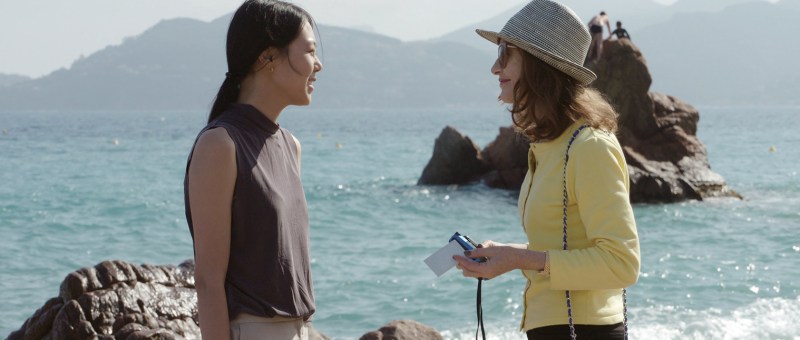
Film sales assist Man-hee (Kim Min-hee) is abruptly fired by her boss, Yang-hye (Chang Mi-hee), right in the middle of the Cannes film festival. Yang-hye offers no real reason why Man-hee has to go save that her perception of her has changed. She no longer feels that Man-hee is an “honest” person and as a person who values “honesty” she no longer feels comfortable working with her. Rather than lick her wounds back in Seoul, Man-hee decides to enjoy the rest of her time in Cannes as a kind of holiday which is how she ends up meeting Claire – an older French woman who is visiting the city for the very first time and has brought along her Polaroid camera to properly record the event.

Claire seems to pop-up here, there, and everywhere, dressed in an old-fashioned detective’s outfit of a stylish trench coat and trilby, snapping away like she’s gathering evidence about an international conspiracy. Striking up an awkward conversation with melancholy womanising film director So eventually brings her into the orbit of the three Koreans who are, we later realise, involved in an embarrassing workplace love triangle. Yet each time Claire appears, her photos don’t make sense – she has a photo of Man-hee wearing her trench coat that we never see her take while her other pictures seem generally out-of-order with the timeline as it has been presented to us.

The only way to change things, Claire intones, is to look at everything again very slowly. Ironically enough she offers the opportunity to do just that by means of instant photography, snapping a still frame of a painful memory in order to ruminate and reconsider. She claims she takes photographs as a means of being in the moment – after all, once you take the photo the subject is no longer the same. The act of being photographed has perhaps changed them, but more than that time has passed and we’re all seconds older now than we were before if perhaps no wiser. Yet looking at the photograph, literally looking at yourself from an external perspective, prompts a reevaluation of the past and perhaps changes the course of the present.

There is also, of course, a meta dimension to all this – as he had in The Day After and On the Beach at Night Alone, Hong muses on his own romantic difficulties in casting his real life love Kim Min-hee as a character with a near identical name while also ensuring that So is even more of a Hong stand-in than his usual leads. Man-hee has been unfairly dismissed because of an indiscretion with the drunken director who has had her fired, by his current girlfriend, out of a sense of embarrassment. Both Yang-hye and So are “shocked” by Claire’s photograph which frames her in a sultry pose wearing (they claim) much more makeup than usual, while So, spotting her at a party, goes into a semi-paternal rage about Man-hee’s (not really all that short) denim hot pants and generally “immodest” appearance. Berating her for a supposed lack of self-confidence, accusing her of “selling herself” and trying to catch the attention of men, So “directs” her to be more authentic. Which is quite something seeing as he is currently dressed in a borrowed tux in order to conform to social expectations.

Authenticity, or more directly “honesty”, becomes a running theme from Yang-hye’s instance that Man-hee is “dishonest” to a young filmmaker’s insistence that it’s hard to make an “honest” film. Claire, at least, seems to be embarking on a process of “honest” art even if nothing she says or does quite adds up. Light and bright and breezy, Claire’s Camera is Hong in Rohmer mode, wistful yet resigned and perhaps even hopeful. There’s a reason everyone seems to be so “reasonable” even in the most unreasonable of situations, other people’s feelings are not something that can be debated and are best accepted even if understood only retrospectively. Claire and her camera seem perfectly aware of that, silently observing in preparation for presenting evidence in a self inquisition, but doing so with kindness even in the knowledge that sometimes it’s easier not to look.


Claire’s Camera was screened as part of a teaser series for the upcoming London Korean Film Festival. The next screening in the series will be Gonjiam: Haunted Asylum at Picturehouse Central on 30th August.

International trailer (English subtitles)

Summer Explorers! 2018 – Japan Foundation London Free Screening Series Returns Aug. 12&18

summer explorers

Following their announcement of a “Pre-Summer Explorers” series of free film screenings, The Japan Foundation London has now announced the main event which will take place on 12th and 18th of August at the Courthouse Hotel and Regent Street Cinemas.

Sunday 12th August, Courthouse Hotel Cinema

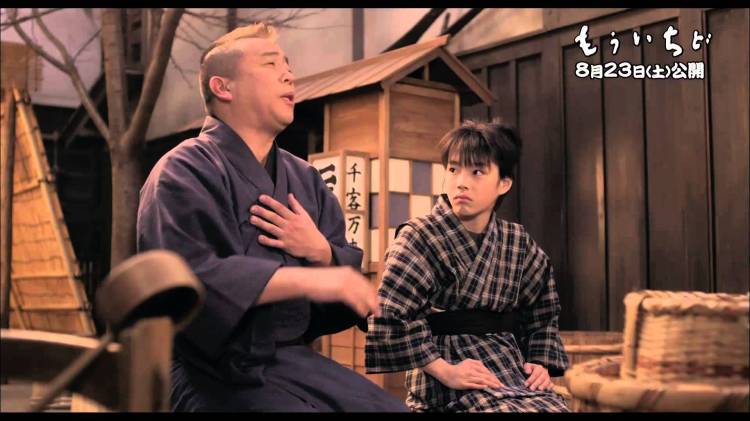
2pm / 6.40pm – His Master’s Voice

HIs Master's Voice still 1

A lowly rakugoka forced to give up his dreams returns home only to discover a new purpose through teaching rakugo to a sad little boy.

4.15pm – Giovanni’s Island

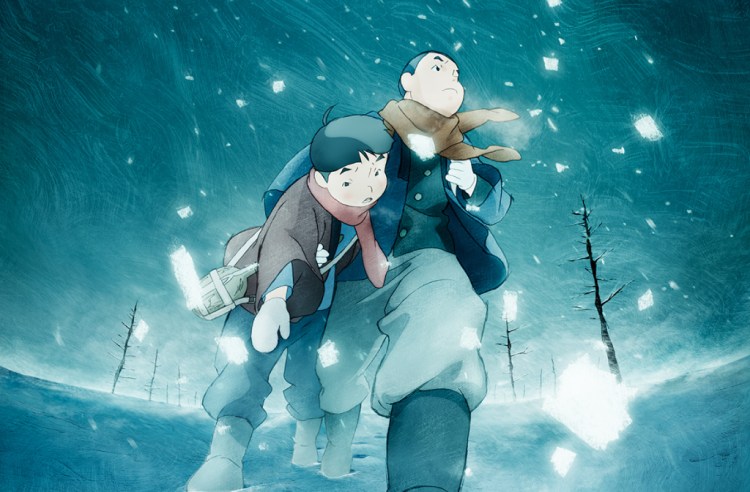
Giovanni's Island still 1Heart rending animation inspired by Kenji Miyazawa’s classic Night on the Galactic Railroad. Brothers Junpei and Kanta face the loss of their home when the northern island of Shikotan is reclaimed by Russian troops in the aftermath of the second world war.
Saturday 18th August, Regent Street Cinema

2.30pm – Chieri and Cherry

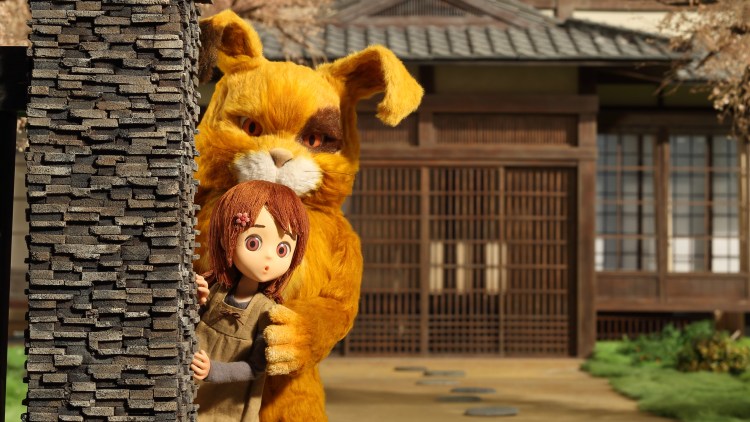
Chieri and Cherry still 1Charming puppet animation in which Chieri, who has recently lost her father, develops an intense bond with her stuffed toy, Cherry. Travelling to her grandmother’s house for her father’s funeral, Chieri experiences a fantastic adventure which helps her to cope with grief and fear of the future.
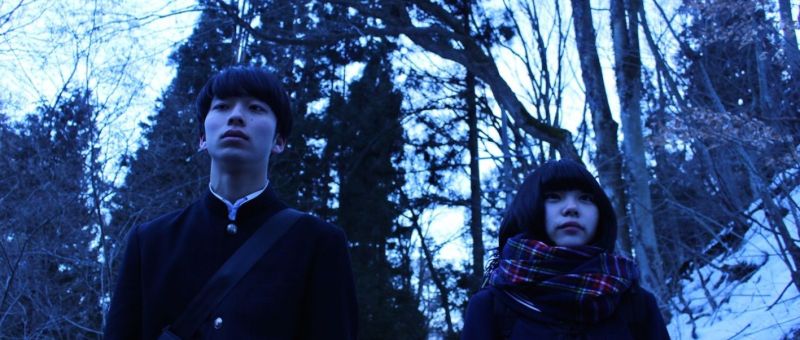
3.50pm – Cat Samurai

cat samurai still 1

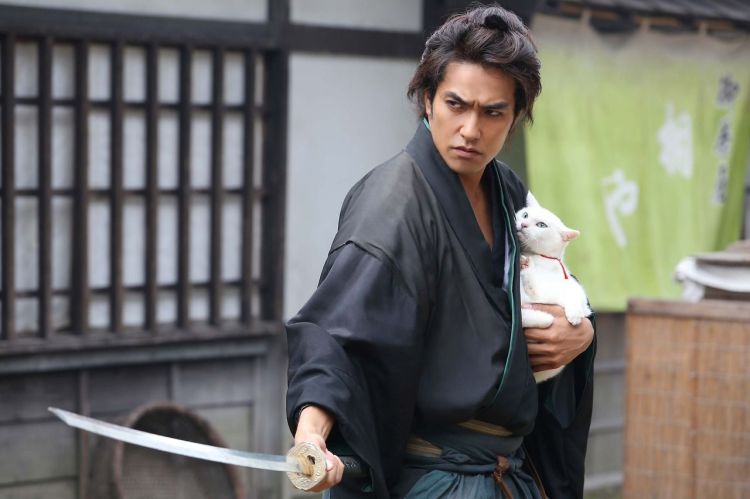
A mercenary ronin accepts a commission from dog loving yakuza to wipe out the chief pet of a cat loving clan but on being faced with the adorable creature cannot go through with it!

5.50pm – Oshin

Oshin still1

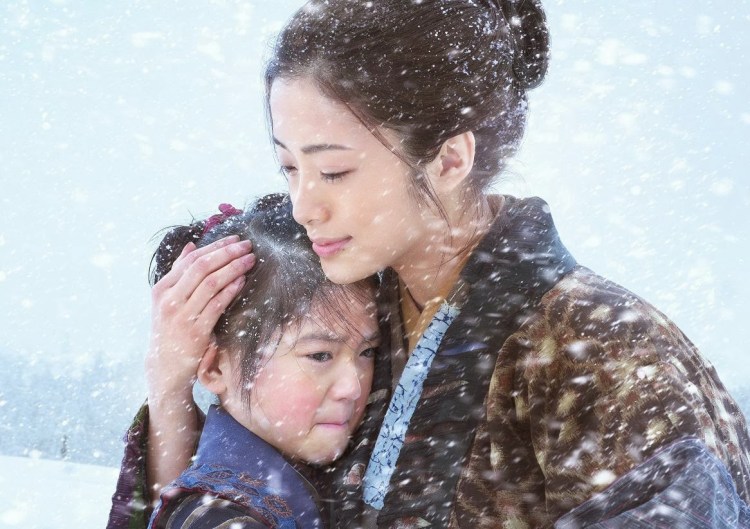
Retelling of the classic ’80s TV drama covering Oshin’s difficult childhood. 7-year-old Oshin is sold away from her poor family and sent to work in a lumber shop where she experiences cruel injustices, finally being falsely accused of stealing. Running away, Oshin ends up in the mountains living with a kind old man and a deserter from the army who begins to teach her how to read and write.

All the screenings are free to attend but must be booked in advance. You can find more information about the screening series on the Japan Foundation’s official website and eflyer and you can keep up with all the latest news via their Twitter Account and Facebook page.

Amiko (あみこ, Yoko Yamanaka, 2017) [Fantasia 2018]

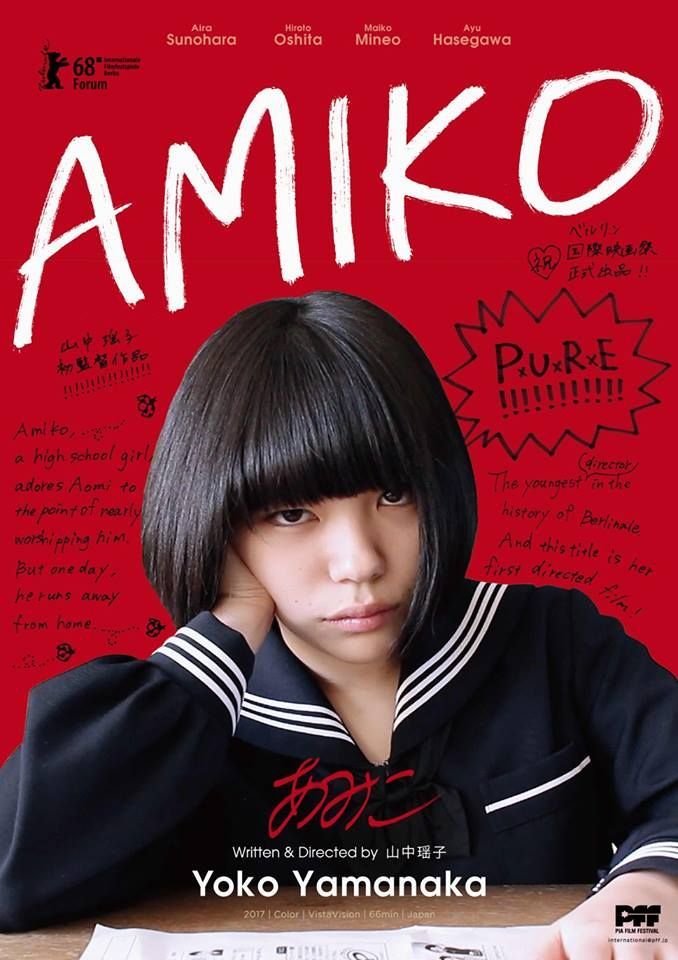
Amiko PosterSome meetings are pivotal, others merely seem so. To melancholy high school girl Amiko (Aira Sunohara), consumed by youthful ennui and a sense of the long dull years stretching out before her, Aomi (Hiroto Oshita) seemed like some kind of heaven sent emissary – a good looking guy who seems to share her existential despair, her taste in music, and her lack of motivation for the business of living. Yet the meeting comes to nothing. After a single night of walking and talking, baring their souls and confessing their anxieties, the pair never talk again. Amiko continues to pine for Aomi, turning him into some kind of absent god, though months have passed with no real contact save her semi-stalking of him online. Eventually, almost a year later, Amiko learns that her one true love has deserted her and run off to Tokyo with another girl. Stunned, she resolves to follow him in the hope of finding out why he chose to renounce all it was she thought they meant to each other to embrace the mediocrity he once claimed to hate.

Amiko is not completely alone, she has a best friend – Kanako (Maiko Mineo), though she confesses that deep down they don’t really understand each other. Aomi too seems to think that Kanako is closed off, not really trusting anyone and living a superficial life. Nevertheless, Kanako does at least provide Amiko with the opportunity to experience the regular high school girl world of gossiping about boys on the telephone and silently resenting other, more popular girls. Claiming that “ordinary poor souls” could never understand the innate connection between herself an Aomi, Amiko decides to keep her long night walk of the soul a secret from her best friend in order to secure its purity.

Amiko, based on their intimate conversation, is convinced that Aomi feels the same way she does, understands her intense sense of existential despair, and is just as bored and disconnected as she feels herself to be. Confessing that he doesn’t actually like sports, in fact he hates being outside, Aomi offers the excuse that it’s easier being told what to do than trying to figure things out on your own. Carried along by the fact he’s good at football and can’t quite find the energy to protest, Aomi drifts on a cloud of his own apathy – one of the cool set of handsome and aloof high school boys popular with those who like unattainable guys. Like Amiko he likes “deep” music, instantly recognising the Radiohead track on her phone, but eventually runs off with the kind of girl Amiko (not so) secretly despises – an airhead popular girl and the “embodiment of mass culture”.

Aomi’s betrayal isn’t just romantic heartbreak, but the severing of a spiritual connection which never really existed in the first place. Rather than deepen the engagement, Amiko opts to leave her night of connection as a mythic encounter, sanctified by its unique quality. Aomi therefore becomes a mythic figure, a composite of Amiko’s various projections of her ideal soulmate, mirroring her own sense of ideological purity. Her new god, however has feet of clay and after tracking him down in the city she’s forced to confront the distance between the image and the reality. Was their connection as real as she thought it was, or only superficial musing on a cool crisp night when there was nothing much else to do?

Deep into her teenage apathy, Amiko talks about those manic, one off days where you just might find yourself doing something crazy out of a sense of cosmic despair. Aomi puts this idea back on the table as a possible motive for his abrupt flight to the city, and Amiko’s random pursuit of him is perhaps its aftershock. Wandering around having mad adventures – joining in with a madman’s (Hisato Takahashi) condemnation of a world of lies and the non-existence of real love, testing the ability of Japanese people to dance spontaneously, and stalking Aomi’s girlfriend, Amiko begins to accept that she may have been mistaken in placing such cosmic importance on what may just have been an inconsequential night filled with accidental profundity. Preferring to maintain the “purity” of her ideal, Amiko remains trapped within her own sense of despair but with a new sense of clarity and a determination not to let the phoniness of the world destroy her essential self.


Amiko was screened as part of Fantasia International Film Festival 2018.

Original trailer (no subtitles)

The Vanished (사라진 밤, Lee Chang-hee, 2018) [Fantasia 2018]

The Vanished posterThe past refuses to die in The Vanished (사라진 밤, Sarajin Bam) – Lee Chang-hee’s remake of the 2012 Spanish thriller, The Body. Ghosts, of one sort or another, torment both of our male leads – a dogged policeman and increasingly unhinged husband, as they try to solve the mystery of a disappearing corpse whilst each battling a degree of latent resentment towards various forces of social oppression. A tale of conflicting bids for vengeance, The Vanished pits an emasculated trophy husband against a controlling career woman wife while the forces of order look on in disapproval but then all is not quite as it seems and perhaps this is not the story we first assumed it to be.

The horror-inflected tale begins in a morgue on a rainy night as a disinterested security guard becomes unexpectedly spooked by his surroundings. Discovering one of the trays open and a body missing, the guard panics and feels himself stalked by something undead before being clubbed on the back of the head and knocked out. Maverick cop with a traumatic past Woo Joong-sik (Kim Sang-Kyung) arrives on the scene and discovers the missing cadaver belonged to prominent businesswoman Yoon Seol-hee (Kim Hee-Ae). The cause of death is thought to have been a heart attack brought on by her workaholic lifestyle but Joong-sik isn’t so sure. He hauls in the “trophy husband” – improbably good-looking university professor and sometime employee of Seol-hee’s pharmaceuticals company, Jin-han (Kim Kang-Woo). Jin-han has come straight from the flat of his pregnant mistress and is understandably on edge as every move he makes only further incriminates him in the “death” of his wife.

Increasingly unhinged, Jin-han is certain that Seol-hee is not really dead and has embarked on an elaborate plan of revenge for his affair with a student, Hye-jin (Han Ji-An). Lee wastes no time in confirming that Jin-han had at least intended to do away with his wife. Jin-han was apparently no longer interested in her money and would have wanted a divorce but believed his wife to be a ruthless woman who would never willingly let him go. Using an experimental anaesthesia drug, he hoped to get rid of her undetected but now fears that she has somehow woken up and wants her revenge. What Jin-han wanted, he claims, was his freedom – Seol-hee, an older career woman, bought him with trinkets, belittles his work, and refuses him all agency. He was tired of playing the toy boy and wanted his life back and so he chose to reassert his manhood through murder.

Of course, all is not quite as it seems. Through Joon-sik’s investigations, Jin-han comes to believe that perhaps Seol-hee planned the whole thing – anticipating that he would try to use the drug against her and engineering a situation in which she would fake her own death just to get back at him. Whether a ghost or not, Seol-hee haunts him, threatens his happy future with the sweet and innocent Hye-jin who calls him professor and respects him as a learned man, and seems set to achieve her goal if only by driving Jin-han out of his mind with worry and confusion.

Meanwhile, Joon-sik is battling another series of oppressive presences in the form a grudge against “the wealthy” possibly relating to a mysterious traumatic incident from his past, and a boss who wants him to find the missing body as quickly as possible and then forget the whole thing given the fact that Seol-hee and Jin-han had been a “celebrity couple” which makes all of this quite embarrassing for everyone. The two men end up engaged in a cat and mouse game as Jin-han becomes convinced that he’s the real victim in all this and is at the centre of an elaborate conspiracy leaving his pregnant girlfriend alone and vulnerable, while Joon-sik continues to push him towards confessing that he took the body and hid it possibly in some kind of fugue state.

“The body” is perhaps a better title as the concept itself comes in for constant reappraisal and we gradually understand that not everyone is talking about the same thing, leaving aside the complete erasure of Seol-hee as a woman with a name who may have been murdered by a vengeful husband (as unpleasant as she is later shown to be) in favour of viewing her simply as a nameless corpse or grudge bearing ghost. Twists pile on twists and history rewrites itself, but the buried past will someday be unearthed and justice served, if with a side order of irony.


The Vanished was screened as part of Fantasia International Film Festival 2018.

Original trailer (Korean subtitles only)

Room Laundering (ルームロンダリング, Kenji Katagiri, 2018) [Fantasia 2018]

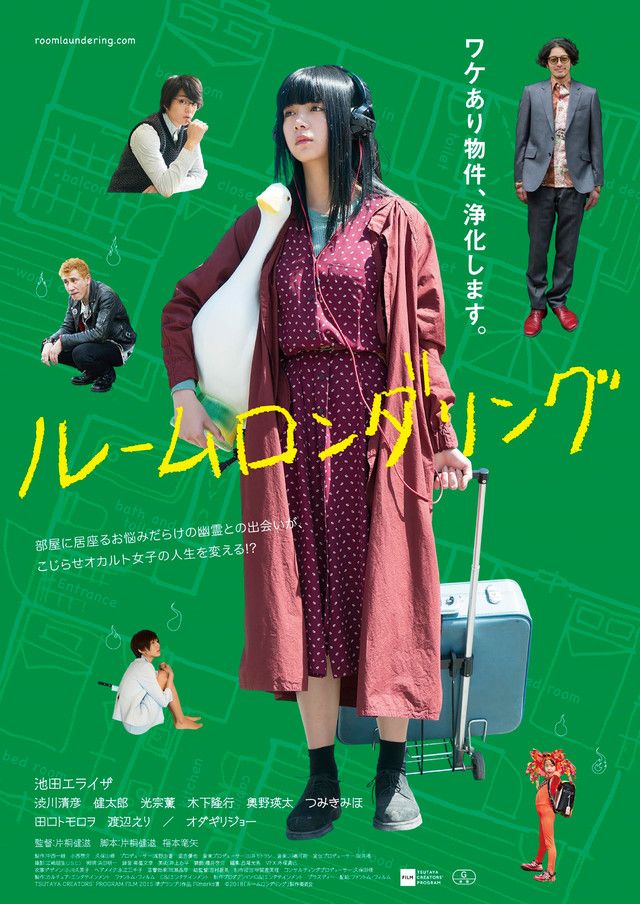
Room Laundering posterIn the olden days, when there had been a traumatic incident, holy people would be brought in to perform some kind of ritual to “purify” the air so life could go back to “normal”. These days people don’t believe in ghosts, or at least not in ghosts of that kind, but there is still a degree of discomfort involved in spending time in a place where something unpleasant has happened. Japanese rental laws state that a prospective renter/buyer should be informed if something untoward has occurred in the property, but the law only requires you to tell the next person in line. Therefore, if you can find a person willing to spend a few days in an apartment with a troubled past, they could be quite a useful asset to the unscrupulous estate agent.

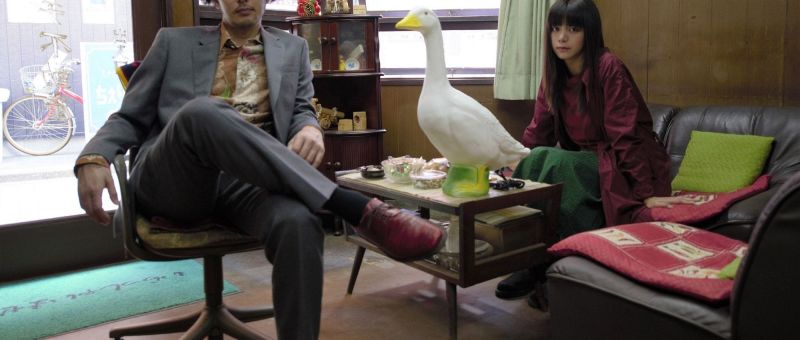
Miko Yakumo (Elaiza Ikeda) is just such a woman and has therefore found herself falling into a “room laundering” career thanks to her uncle Goro (Joe Odagiri), a roguish real-estate-broker-cum-underworld-fixer with a sideline in fake IDs for undocumented migrants. Miko’s father died when she was five, and her mother disappeared without warning a few years later leaving her with her grandmother who died when Miko was 18. She’s now 20 and is nominally in her uncle’s care but having dealt with so much loss and abandonment, she prefers to keep to herself, always closed off with a pair of headphones blocking her ears, speaking to no one. The apartment “job” therefore suits her well enough with its clear stipulation to avoid mixing with the neighbours, but there’s one big drawback. Miko has recently developed the ability to see ghosts which is sometimes a problem given the circumstances her new places of residence became vacant.

A tale of learning to deal with the past, Room Laundering (ルームロンダリング) takes its heroine on some long, strange journeys but despite its death laden themes and Miko’s emotional numbness it has its essential warmths even if they’re sometimes harder to see. Miko’s travels chart a course of modern loneliness as she encounters those who’ve found themselves passing away alone, in pain and in sadness – old ladies whose bodies weren’t found until they’d almost all rotted away, neglected children who starved to death after being abandoned, businessmen who killed themselves after getting into debt, a catalogue of human misery seemingly without end. Miko doesn’t find the ghosts scary because she thinks real people are scarier. They lie, and they leave, and they let you down. At least the ghosts will stick around even if you wish they wouldn’t.

Even so, interacting with the recently deceased begins to reawaken Miko’s sense of vitality. Drinking with (or more accurately on behalf of) an insecure punk rocker (Kiyohiko Shibukawa) who took his own life before sending off his demo tape proves an oddly fulfilling experience for the otherwise introverted young woman, while staying in the apartment of a murdered cosplayer (Kaoru Mitsumune) gives her a sense of purpose when she decides to help the unfortunate woman move on by unmasking the real killer. Meanwhile, she also breaks her non-fraternising rule to chat to the geeky boy next-door (Kentaro Ito) and starts to wonder if maybe not all the living are so bad after all.

In dealing with the legacy of abandonment while literally living a transient life, Miko is forced to confront the ghosts of her past and exorcise them in order to escape her self imposed limbo. Only by being on her own can she reach the realisation that she is not alone. Meanwhile, Uncle Goro’s originally shady looking services for migrants without the proper papers begin to look more altruistic than they first seemed. He, like Miko, is helping himself by helping others who are also trapped in a kind of limbo only a more prosaic earthbound one of rigid bureaucracies and xenophobic exploitation. Goro maybe a dodgy estate agent with a sideline in forcing grannies out of their homes to pave the way for “redevelopment” but at least he’s found a better system of room laundering than his colleague who generally just rents to foreigners and visa overstayers he can either evict or extort if things go wrong. It just goes to show a little bit of empathy goes a long way. After all, you’re a long time dead.


Room Laundering was screened as part of the Fantasia International Film Festival 2018.

Original trailer (no subtitles)

Bungee Jumping of Their Own (번지점프를 하다, Kim Dae-seung, 2001)

Bungee Jumping on theie own posterLove is a continuous stream, according to the debut film of Kim Dae-seung, Bungee Jumping of Their Own (번지점프를 하다, Bungee Jump Hada). The title may sound whimsical, but it’s less the physical act of fall and rebound we’re talking about here than a spiritual bounce, souls which spring from one body to another and eventually find their way home. Kim presents eternity as one great confluence and love as an enduring bond which survives not only death and time but transcends existence itself. Love is a spiritual cause, but, as the rather muddy philosophy goes on to suggest, perhaps not so free of social mores as it would like to believe itself to be.

In 1983 university student In-woo (Lee Byung-hun) meets the love of his life, Tae-hee (Lee Eun-ju), as she steals a place under his umbrella during a violent rainstorm. Shy and introverted, In-woo waits at the bus stop where Tae-hee abruptly left him hoping to see her again, finally encountering her by chance on his university campus. Despite his diffidence, the pair eventually become a couple and are very happy together but In-woo will shortly have to leave for his military service. He asks Tae-hee to meet him at the station, waiting once again only to be left alone on the platform as the trains fly by.

Flashforward 17 years to the start of a new millennium and In-woo is now a slick, confident man entering middle-age, married to someone else and with a small daughter of his own. He teaches high school and is the kind of inspirational teacher many dream of being, well-respected by his students for his patience and faith as he remains committed to stand up for them no matter what. In-woo might have thought he’d put the memory of Tae-hee to the back of his mind to go on living, but a strange young man, Hyun-bin (Yeo Hyeon-soo), begins to reawaken in him the buried memory of his first love. Seeing echoes of Tae-hee in the young male student, In-woo finds himself facing several different kinds of social and internal pressures to which he had previously given little thought.

Arriving in 2001, Bungee Jumping of Their Own is (sadly) one of the first “mainstream” films to touch on the theme of homosexuality, only the film itself is quite determined to negate any kind of homosexual reading into its central love affair – it is, after all, not “Hyun-bin” that In-woo is falling in love with, but the reincarnated soul of Tae-hee, which is to say a “female” soul and not a male one. Though Kim’s metaphor of existence as a great river through which love endures across time and societies ought to make gender and the physical body an irrelevance, same-sex love is relegated to an inappropriate absurdity. In a playful conversation about reincarnation in which In-woo and Tae-hee pledge their love to one another, In-woo jokingly asks what would happen if he were too were reincarnated as a girl, to which Tae-hee replies that they’d just have to wait for the next reincarnation. Despite the endurance of their love, it is apparently not viable outside of a traditional male/female pairing and any other iteration is tragedy to which the only solution is suicide and the hope for a quick reincarnation to find each other again in more socially appropriate forms.

Nevertheless, Kim does also do his best to criticise a still conservative society’s prejudice against homosexuality though this too has its problematic elements in unwittingly conflating two issues which ideally speaking are better not conflated. In-woo is a teacher falling in love with a boy who is not only a minor but also his student – a situation clearly inappropriate in any and all circumstances. However, the while the crusty old dinosaurs in the staffroom lament the new liberal society and fear being branded sex pests for leering at the girls, claiming it’s their own fault for “looking like that”, In-woo comes in for an especial level of vitriol targeted not at a pervy teacher but simply at a “gay” man while Hyun-bin is gradually ostracised by his friends simply for being the object of his affection and therefore tarred with the gay brush.

Meanwhile, the conflicted In-woo goes to see a doctor to correct his “sickness” only to be told that his responses indicate a “normal” heterosexual man with that caveat that he should also regard his interest in men as a “normal” part of life. Desperate to not to acknowledge his same-sex desire, In-woo becomes violent towards his wife in an effort to reinforce his masculinity, unwilling to discuss with her the real reasons their marriage has always been hollow – not his possible bisexuality, but that he has only ever loved Tae-hee and will only ever love Tae-hee in whichever form she appears.

In-woo makes a point of teaching his students that “different” does not mean “wrong” but it’s apparently not a lesson he’s able to internalise. Kim plays with dualities, idealises imperfect symmetries, and shows us that things which might seem “different” from one perspective are in essence the same, yet he walks back his message of acceptance to emphasise the importance of conforming to social norms rather than allowing the love between Tae-hee and In-woo to exist in the physical world in any other iteration than male/female. Nevertheless, Kim’s true intention of painting love as a continuous stream made possible by cosmic serendipity is a romantic notion difficult to resist and even if his reasoning proves occasionally hollow he has perhaps opened a door towards a greater understanding.


Bungee Jumping on Their Own was screened as part of the Rebels With a Cause series at the Korean Cultural Centre London.

Original trailer (no subtitles)

I Have a Date with Spring (나와 봄날의 약속, Baek Seung-bin, 2018) [Fantasia 2018]

I have a date with springIf the world was going to end tomorrow, which of your many anxieties would you most like to ease before you go? I Have a Date with Spring ( 나와 봄날의 약속, Nawa Bomnalui Yaksok) is, as its name suggests, a hopeful tale despite its apocalyptic pretence as its lonely film director hero learns to accept the looming presence of death in order to move beyond his creative block. He may need aliens and the promise of knowledge from beyond our world to do it, but in contemplating the many ways in which modern life is unsatisfactory, he can perhaps begin to envisage a world in which it might not be so bad to live.

Depressed director Lee Gwi-dong (Kang Ha-Neul) hasn’t made a film in 10 years. The last decade has seen him struggling with the same script, an apocalyptic tale of the end of the world in which three unhappy individuals are visited by omniscient aliens to help them celebrate their birthdays which happen to fall on the day before the Earth will be destroyed. Sitting in a forest on his own birthday, reminding us that he came here to work and not to die, Gwi-dong is shocked to receive a visitation from four mysterious campers, one of whom claims to be a fan of his earlier work.

The picture Gwi-dong (and by extension Baek Seung-bin) paints of modern Korean society is one marked by extreme loneliness and existential isolation. The death obsessed director is currently sporting a large cast on his arm apparently a result of an act of self harm committed in frustration regarding his own sense of disconnection and personal failure. The three “heroes” of his tales within a tale are all also shy, lonely, and increasingly withdrawn, no longer interested in finding escape from their personal imprisonment. A dreamy high school girl longs for the destruction of the world while a middle-aged professor laments his missed opportunities for romance and a harried housewife feels both guilt and regret in remembering she was once the leader of a militant feminist movement back in college.

Each of them is, like Gwi-dong, “celebrating” a birthday but due to their specific personal circumstances they are each celebrating alone as those close to them are either absent or have entirely forgotten. The aliens, not revealing the imminent destruction of the planet, promise each of them something special in return for trust and time but the gifts they deliver are perhaps not altogether welcome despite their original appearance. The lonely high school girl bonds with the middle-aged alien over a shared sense of childish glee in monsters and adventure, relieved simply to hear the word “friend” but still unsure whether she should trust him and follow his instructions. Meanwhile the housewife, ignored at home by her noisy child and indifferent husband, is glad to be recognised once again and have the power of her youth literally returned to her in the form of a gun but remains unsure if she should use it. The professor, on the other hand, is corrupted by his original encounter but grateful for his “mother’s” gift and commits himself to living fully and finding love despite the potential risks.

As the mysterious older lady at the campsite tells Gwi-dong, we’re all doomed anyway so we might as well go nicely, beautifully – if we can. Through each of his various stories, Gwi-dong learns to see the presence of death, the end of all things, as not such a bad thing after all. It will come, bidden not, and so there seems little point in worrying about it now. Suddenly his creative world expands. No longer thinking only of death he conjures hundreds of other universes each filled with their own stories, certain that one day “spring will come”. Oddly optimistic for a film about the end of the world, I Have a Date with Spring makes the case for reaching out in a sometimes cold world even if it risks being devoured by strange space crabs or suddenly developing painful boils (tiny bubbles of love?) all over your body. You have to go sometime, so you might just as well sit back and see what happens. The Earth is a beautiful place, enjoy it while it lasts.


I Have a Date With Spring was screened as part of Fantasia International Film Festival 2018.

International trailer (English captions/subtitles)