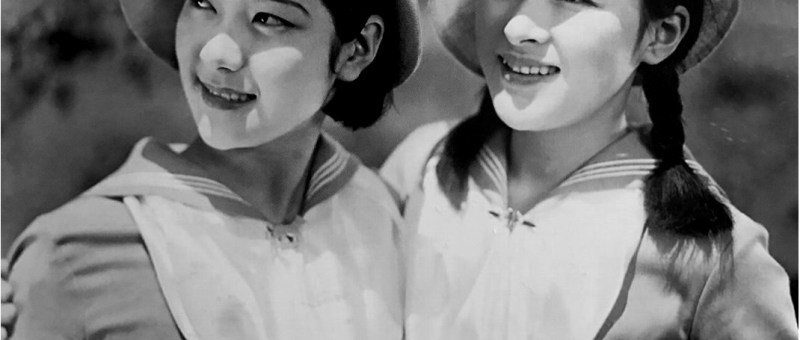
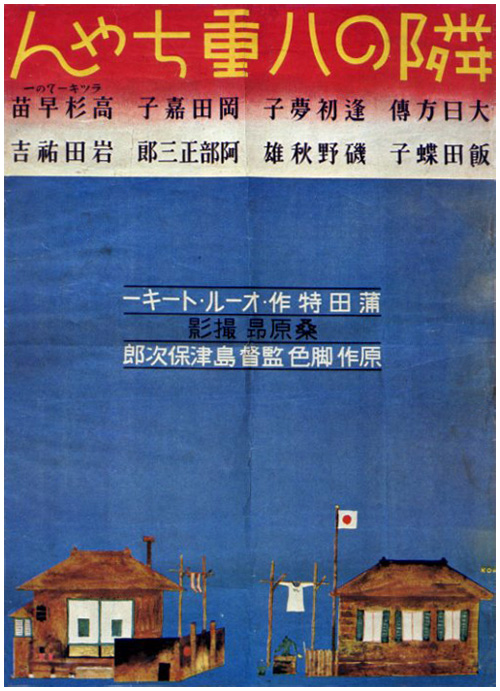
Retrospectively, Japan in the 1930s looks like a time of misery and darkness, permanently overshadowed by oppressive government and coming tragedy. However, life went on much as it had before with all its customary joys and sorrows. The films of Yasujiro Shimazu are indeed among the least politicised of the era (which might make them, in an odd way, among the most politicised) and Our Neighbour, Miss Yae (隣の八重ちゃん, Tonari no Yae-chan) is no exception in its presentation of the everyday easiness between two very close families and the burgeoning romance between the younger daughter and older son of each.
Notably, the film opens with a scene of intense suburbia as the brothers, middle-schooler Seiji (Akio Isono) and university student Keitaro (Den Obinata), play catch in the yard training for Seiji’s big game at which he has a shot at playing at the legendary Koshien stadium. As young men are want to do, they break next-door’s window but luckily Mrs. Hattori (Choko Iida) across the way is a nice woman who hardly minds, especially as this is such a regular occurrence that the families almost have an account with the local glazers.
The Hattoris and the Arais are so close that it’s no problem at all for Keitaro to jump the fence and hang out with Mrs. Hattori, who even offers to feed him, when he arrives home early to find himself locked out while his mother (Ayako Katsuragi) has gone shopping. Despite his ease in the Hattoris’ home, he is flustered when the girl next-door, Yae (Yumeko Aizome), gets back from a school with a friend in tow. Even more so when he overhears the two girls’ typically teenage conversation in which they briefly touch on Yae’s possible feelings for him while somewhat provocatively discussing breast size – something Keitaro awkwardly chastises Yae for when she returns to the living room in more comfortable clothing.
Shimazu dramatises Keitaro’s embarrassment through his ongoing clumsiness – first of all spilling tea on his floor cushion and attempting to hide it by folding the cushion in half and placing it oddly between thighs and calves, and then by tipping pickles everywhere while awkwardly trying to share them with Yae (much to the amusement of her perspicacious friend who has missed absolutely nothing in this series of awkward exchanges). Yae eventually tries to take the cushion back as it’s a good one only meant for “guests” (which she evidently does not regard Keitaro to be) only to discover his mishap with the tea which is something they can all have a good laugh over. Through all of this Keitaro and Yae seem almost like a young couple already, gently bickering but with real affection. It’s all very innocent but also flirtatious to the extent that the offer to darn a pair of socks almost seems like an elaborate metaphor but then really what could say true love better than a willingness to deal with someone’s stinky footwear?
Seiji is forced to recall his brother’s cute and innocent piece of flirtatious banter when commiserating with Yae’s melancholy older sister, Kyoko (Yoshiko Okada), who returns home unexpectedly after having apparently walked out on an unhappy marriage. An act unthinkable to her mother, Kyoko resolves to have a divorce on account of her husband’s improper relations with the maid and generally frivolous character. Keitaro jokingly said that if he had a wife he’d make her put his socks on for him everyday and she’d have to do it. Keitaro might have been joking, but there’s something in what he said and in Kyoko’s insistence that she doesn’t want to be so “submissive”, preferring to be alone rather than spend another second with a man for whom she has no respect.
Kyoko is, after a fashion, the film’s antagonist in that she begins to come between Yae and Keitaro, destabilising the easy relationship between the families by introducing unexpected tension into the otherwise happy Hattori home. Longing to return to a more innocent girlhood but mindful that she can no longer be as “pure” as Yae, Kyoko is torn between two different kinds of being. She takes on the male role, using her status and position in an attempt at seduction. Becoming a third wheel on Yae’s attempt to ask Keitaro out to the pictures, Kyoko buys the whole gang dinner at an expensive restaurant at which she gets roaringly drunk and falls asleep on Keitaro’s shoulder in the cab on the way home. Noticing Keitaro’s discomfort and irritated on a personal level, Yae asks her to move only for Kyoko to state, ironically, that as she’s paid for the evening she’s sure he can put up with it.
In any case, Kyoko becomes an unanswered question. She remains trapped, wanting her independence but unable to access it. She refuses to return to her husband, but finds scant support from her family who remain preoccupied with potential scandal and the difficult future prospects for a divorced woman. Despite Mrs. Arai’s reassurance that perhaps those things no longer matter so much to younger people, which both women seem to view as a positive development, Mrs. Hattori fails to see the effect her disapproval is having on her daughter’s mental state until it is too late.
Shimazu doesn’t seem to have much of answer for what to do about women like Kyoko save to leave the question dangling. He does not send her back to her (possibly abusive) husband or find a way for her to move past her difficult circumstances but allows her to become another lost woman whose sense of possibility has been gradually eroded by an oppressive society. Nevertheless, counter to her melancholy we have the girlish innocence of Yae who seems to be on a path of natural, easy connection with the straightforward Keitaro. Even so, her brief idyll is then ruptured by political interventions which might take her far away from her putative love. This potential disaster is eventually partially reversed, mimicking the familiar pattern that one family must be broken in order for another to be formed though in a somewhat perverse fashion that sees Yae become a temporary member of the Arai household but as something more like a sister.
This final intervention of the political is the only hint of external darkness. Shimazu’s vision of ordinary contemporary life is a cosmopolitan one filled with Hollywood glamour which references Fredric March and takes the gang to watch a fairly disturbing Betty Boop cartoon on the big screen while the boys dream of baseball glory and the parents look on mystified but happy. Yet despite the generalised happiness of the serene suburban world they inhabit, there is a mild note of disquiet presented by a deliberate lack of resolution which sends Yae, no longer a neighbour, skipping off happily into the future full of childish innocence while others make their way in a much less certain world.
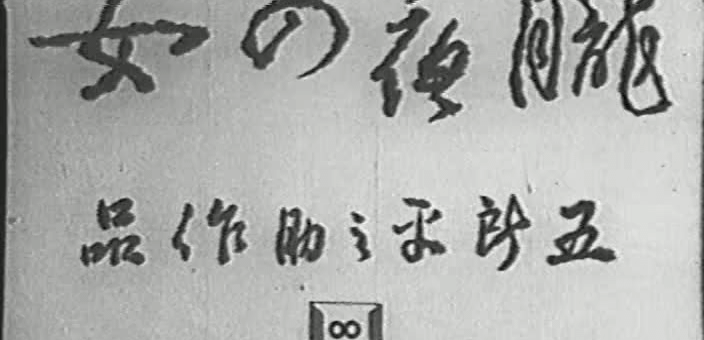

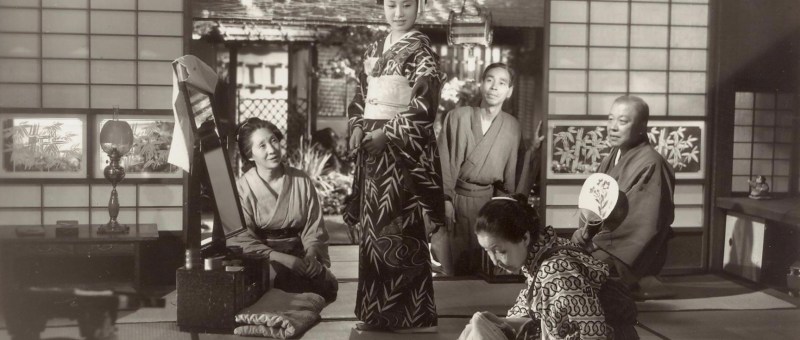
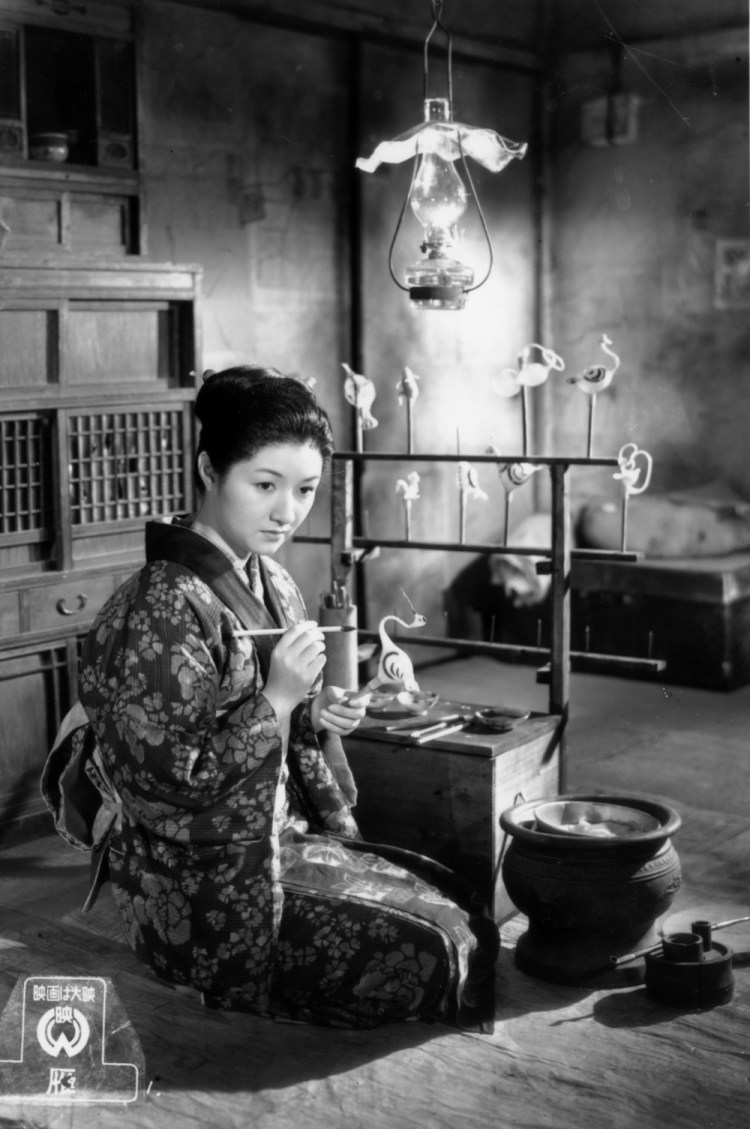 In the extreme turbulence of the immediate post-war period, it’s not surprising that Japan looked back to the last time it was confronted with such confusion and upheaval for clues as to how to move forward from its current state of shocked inertia. The heroine of Shiro Toyoda’s adaptation of the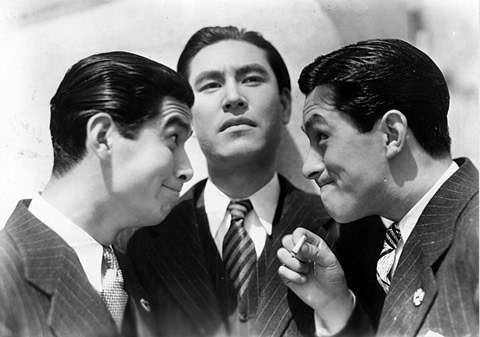
 Despite being at the forefront of early Japanese cinema, directing Japan’s very first talkie, Heinosuke Gosho remains largely unknown overseas. Like many films of the era, much of Gosho’s silent work is lost but the director was among the pioneers of the “shomin-geki” genre which dealt with ordinary, lower middle class society in contemporary Japan. Burden of Life (人生のお荷物, Jinsei no Onimotsu) is another in the long line of girls getting married movies, but Gosho allows his particular brand of irrevent, ironic humour to colour the scene as an ageing patriarch muses on retiring from the fathering business before resentfully remembering his only son, born to him when he was already 50 years old.
 The well known Natsume Soseki novel, Botchan, tells the story of an arrogant, middle class Tokyoite who reluctantly accepts a teaching job at a rural school where he relentlessly mocks the locals’ funny accent and looks down on his oikish pupils all the while dreaming of his loyal family nanny. Hiroshi Shimizu’s Nobuko (信子) is almost an inverted picture of Soseki’s work as its titular heroine travels from the country to a posh girls’ boarding school bringing her country bumpkin accent and no nonsense attitude with her. Like Botchan, though for very different reasons, Nobuko also finds herself at odds with the school system but remains idealistic enough to recommend a positive change in the educational environment.
