Yojimbo (用心棒, Akira Kurosawa, 1961)

“You’re not a bad guy after all” a previously hostile inn owner later concedes, finally seeing the method in the madness of a cynical wanderer who appears to take no side but his own but may in his own way be quietly fighting for justice in a lawless place. A samurai western set in an eerie ghost town beset by feuding gangsters whose presence has destroyed the local economy and lives of the frightened townspeople, Yojimbo (用心棒) subversively suggests that the world’s absurdity is best met with nihilistic amusement and healthy dose of irony. 

When the confused hero who later gives his name as Sanjuro (Toshiro Mifune) wanders into town, he is surprised to see a stray dog running past him with a human hand in its mouth. This is indeed a dog-eat-dog society in which a petty dispute between gang members has forced the townspeople to hide behind closed doors. The streets are empty and silent until the town’s only policeman darts out and requests a “commission” for recommending Sanjuro offer his services as a bodyguard to either of the two factions suggesting that brothel owner Seibei (Seizaburo Kawazu) is on the way out and upstart Ushitora (Kyu Sazanka) is the best bet. But Sanjuro does not particularly like the look of Ushitora’s gang which as is later revealed is largely staffed by desperate disreputables, convicts, and murderers. 

Sanjuro’s response is to laugh. He makes his money by killing and there are lots of people in this town the world would be better off without. He plays each side off against the other, knowing that they each need a man of his skill to break the stalemate but is rightfully mistrustful of both. First approaching Seibei, he overhears his cynical wife Orin (Isuzu Yamada) suggesting that they agree to his high fee but kill him afterwards so his services will effectively be free. Sanjuro’s plan is to antagonise both sides so they wipe each other out, freeing the town of their destructive influence. With violence so present on the streets, the townspeople are afraid to leave their homes and the only guy making any money is the undertaker. 

The trouble also means they can’t host the local silk fair which usually stimulates the town’s economy demonstrating the counter-productivity of the gangsters’ dispute in that no silk fair means no delegates and empty gambling rooms meaning the gangsters aren’t making any money either. Yet it’s also clear that it’s gambling that has corrupted the town and is disrupting the social order. A symptom of an economical shift, gambling offers a new path to social mobility amid the fiercely hierarchal feudal society in which the possibility of distinguishing oneself in warfare has also disappeared. Thus the young man Sanjuro encounters on the way into town argues with his father, rejecting the “long life of eating gruel” of a peasant farmer claiming he wants nice clothes and good food and has chosen to burn out brightly. Kohei (Yoshio Tsuchiya), a young father has also succumbed to the false hope offered by the gambling halls and lost everything, including his wife, to a greedy sake brewer turned silk merchant and local mayor thanks to his enthusiastic backing of Ushitora. 

“I hate guys like that” Sanjuro snarls, but it seems he also hates petty gangsters and everything they represent. “This town will be quiet now” he remarks before leaving, as if stating that his work here is done and the real purpose of it was clearing out the source of the corruption rather than taking advantage of the town’s plight for his own material gain. Yojimbo quite literally means bodyguard and is the service Sanjuro offers to each side interchangeably, but Sanjuro isn’t above betraying his clients or playing one off against the other. His final foe, Ushitora’s brooding brother Unosuke (Tatsuya Nakadai), wanders around with a pistol in his kimono as if to say the age of wandering swordsmen has come to an end but in the end is exposed as complacent in his superior technology, easily neutered by Sanjuro who even gives the gun back to him as if no longer caring whether he lives or dies merely amused to find out the answer much as he had been standing on a bell tower watching the factions pointlessly tussling below. Masaru Sato’s surprisingly cheerful score seems to echo his state of mind, seeing only humour in the absurdities of the feudal order and the futility of violence while Kurosawa’s camera roves around this windswept wasteland as Sajuro kicks the gates of hell shut and prepares to move on to the next crisis in a seemingly lawless society.


Yojimbo screens at the BFI Southbank, London on 18th & 23rd February 2023 as part of the Kurosawa season.

Original trailer (English subtitles)

Goodbye Cruel World (グッバイ・クルエル・ワールド, Tatsushi Omori, 2022)

Tatsushi Omori has had a rather strange career beginning with the incredibly grim Whispering of the Gods which was so controversial that the only way he could screen it was to set up a marquee in a park and put it on himself. Since then he has in recent years softened a bit with the incredibly charming Seto and Utsumi and heartwarming tea ceremony drama Every Day a Good Day. Goodbye Cruel World (グッバイ・クルエル・ワールド) returns to the nihilism of Omori’s earliest work, but with a layer of heavy irony in its self-consciously cool aesthetics. 

This is world is cruel indeed, pulling each of the worldweary protagonists into an inescapable hell of crime and violence. As the film opens, a car of full of criminals drives towards a love hotel where they plan to rob a bunch of yakuza in the middle of a money laundering exchange. If you have to rob someone, perhaps it’s fair enough to rob the yakuza but for obvious reasons it’s not a very good idea. Still, the fact is they accomplish the heist pretty easily not least because the yakuza are lazy and complacent. Not only could they not be bothered to change their meeting place like the boss told them, the lookouts didn’t even put up much of a fight. “Japan’s gone to hell,” “old-leftist gone bad” Hamada (Tomokazu Miura) sighs lamenting that no one does their job properly anymore.

Now in his 70s, Hamada waxes on his days as a student protestor while now a disillusioned old man who was previously dismissed from his position as a political secretary for cooking the books. In a last ditch bid to change the status quo, he later hatches on a plan to rob the secret campaign stashes of the incumbent conservative candidate whom he has also exposed for tax evasion and an affair with a bar hostess not to mention a general air of sleaze and corruption. The robbers’ main competition is a corrupt policeman who’s been working with the yakuza ever since he was foolish enough to accept a tip off from boss Ogata (Shingo Tsurumi) to arrest some of his rivals. 

Like everyone else, what Detective Hachiya (Nao Omori) wants is out but there is no out from this hellish world of crime. Anzai (Hidetoshi Nishijima) tried to go straight in the wake of anti-organised crime legislation but there are no second chances for ex-yakuza. He just wanted a normal life, but it’s hard to leave the yakuza world behind when you can’t even open a bank account and no wants to employ a former thug. Hachiya steals the money to buy himself a new life trying to resurrect his father-in-law’s failed hotel in a moribund seaside town where the other businessmen lament the decline of the local shopping area amid the economic complexities of the contemporary society. But he’s frustrated by the arrival of former associates, Iijima (Eita Okuno), who blackmails him over his yakuza past and poignantly says he’s done for the same reasons Anzai does the robbery, he just wants to be able to live together with his wife and child. 

Miru (Tina Tamashiro) says she came up with the idea of robbing the yakuza to escape sex work and is helped by hotel employee Yano (Hio Miyazawa) who dreams of running away with her. She says all she wants is sleep, while he wants to live comfortably in a quiet seaside town. Like the kids that hang round Hamada, they represent a kind of rebellious youth rejecting the corrupt authority of men like Anzai and Hachiya but are quickly slapped down. As Hachiya points out, the “grown-ups” took all the money and the only reason they’re not dead is that Ogata wants them to clean up their mess before they go by taking out the other gang members. During the robbery, Miru appears an unwilling participant so frightened that she cannot pry her fingers from the pistol when the sociopathic Hagiwara demands it back. But on her eventual murder spree/mission of revenge she’s an ice cold killer with vacant eyes trying to shoot her way out of existential malaise. 

Omori signals the degree to which they are all trapped by the ubiquity of retro nostalgia in the unlikely ‘70s getaway car and the soul music which plays on its sound system. Seeming to directly reference ‘90s Tarantino in musical choices, the film’s self-consciously cool aesthetic sometimes works against it even while hinting at the general sense of emptiness which envelops those caught in this hellish underworld. As Anzai later suggests, they are all the same, covered in blood with nowhere to go for there is no place for any of them in contemporary Japan. A bloody tale of nihilistic futility and self-destructive violence, Goodbye Cruel World suggests that there’s no way back from the purgatorial exile of an underworld existence.


Goodbye Cruel World screened as part of this year’s Japan Foundation Touring Film Programme.

Original trailer (no subtitles)
Thousand and One Nights (千夜、一夜, Nao Kubota, 2022)

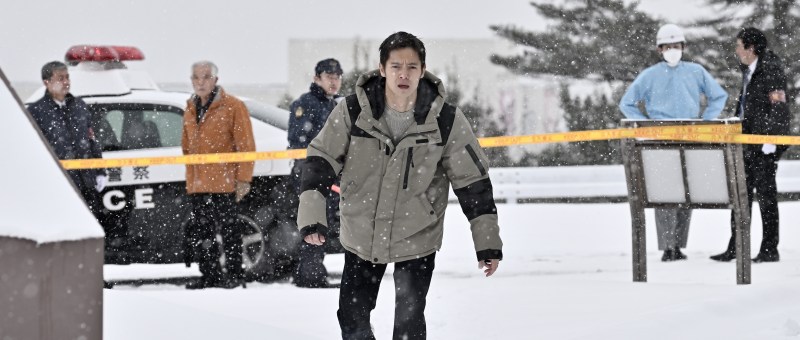
“I can reach the mainland by rowing boat, but why won’t my feelings reach you?” a plaintive song asks in Nao Kubota’s melancholy tale of perpetual longing and continual loss, Thousand and One Nights (千夜、一夜, Senya, Ichiya). A lingering ghost story, Kubota’s contemplative mood piece sees two women, one old and one young, take different paths in the wake of their abandonment but perhaps finding themselves no less unhappy when left with the unanswered questions of a sudden absence. 

On the island of Sado, fishwife Tomiko (Yuko Tanaka) has been waiting for her fisherman husband Satoshi to return home ever since he said he was “just going out for a bit” thirty years previously. Many in the community view her with a mixture of pity of revulsion, seeing her as close to madness in her refusal to accept that her husband will never come back to her. Meanwhile, the former mayor Taisuke now retired to take care of his bedridden wife, puts another young woman, Nami (Machiko Ono), whose husband Yoji (Masanobu Ando) similarly just went out for a bit two years ago and never came back, in touch with Tomiko hoping she can help her investigate what might have happened and if Yoji may be among the small number of presumed abductees taken from the island by the North Koreans. 

Sado does seem to have a large numbers of “missing” people, which in itself is not such an unusual phenomenon given how easy it can be in Japan to simply “evaporate” and start again somewhere else. The island was also the site of a handful of confirmed abductions by North Korea in the late 1970s, dangling another unanswered question in front of the women wondering if their husbands might have been spirited away and prevented from contacting them no matter how much they may have wanted to. Nami is herself third generation Zainichi Korean and wonders if that might have had something to do with Yoji’s disappearance, though in contrast to Tomiko her goal is less reunion than a simple desire to know why. She wants to give herself permission to move on, having drifted into a relationship with a besotted colleague (Takashi Yamanaka) she may not actually quite love but offers her a quiet and conventional life of security she’ll never now know with Yoji. 

Nami does, however, feel a degree of shame in her desire to put the past behind her as if she were betraying a romantic ideal in being unable or unwilling to give up her life in waiting as Tomiko has done. She fears Tomiko may resent her, but she doesn’t, not really only acknowledging that she’s made a different choice. Like Tomiko, Nami is left with unanswerable questions, wondering if Yoji simply walked out on her because he grew tired of the inevitability of their life together, if he was bored, or lonely or depressed. Perhaps he met someone else, had an accident and lost his memory, fell off a cliff or was killed in some other way and someone covered it up. Perhaps he’s dead, perhaps he’s in North Korea. Perhaps it’s all the same. 

While the community pities Tomiko in her martyrdom, they attempt to pressure her to move on by agreeing to marry local fisherman Haruo (Dankan) who has long carried a torch for her even since they were children. Yet in the irrationality of romantic longing, Haruo cannot understand why Tomiko will not give up on Satoshi even as he is unable to give up on her despite her frequent and unambiguous rejections of his overtures. There is a particularly unpleasant quality to his obsessive ardour as his mother (Kayoko Shiraishi) comes round to plead with Tomiko to marry her son and his work colleagues organise a kind of intervention asking her to give in because he’s going out of his mind. He runs her down, says she’s “withering away” and only he can save her while worryingly possessive and controlling even threatening suicide and later going missing at sea just to make her feel guilty and worry about him. 

Even Tomiko’s mother is suffering the pain of lost love, hugging her late husband’s prosthetic leg as she sleeps while excusing the drunken violence that Tomiko says left her with a lasting fear of men by explaining that the war changed him. Tomiko complains that no one ever tells her anything important and that they always leave, but equally refuses to reveal very much important to anyone else keeping her feelings largely to herself remaining something of an enigma, uncertain if her constant waiting is more habit than devotion. In all these tales of frustrated longing from Taisuke and his ailing wife to Satoshi’s parents who rarely talked of their son only for the father to tell the mother on her deathbed that he was still out playing, there is an inescapable loneliness in the essential inability of conveying one’s true feelings that leads some to simply make their exit without saying a word. 


Thousand and One Nights screens at New York’s IFC Center on Feb. 12 & 15 as part of ACA Cinema Project’s New Films From Japan.

Original trailer (no subtitles)
The Zen Diary (土を喰らう十二ヵ月, Yuji Nakae, 2022)

A romanticised idea of returning to the land has become a frequent motif in recent independent Japanese cinema as disillusioned youngsters crave freedom in simplicity but there’s no use denying the life of a mountain ascetic is not for everyone. Based on a 1978 essay by Tsutomu Mizukami, The Zen Diary (土を喰らう十二ヵ月, Tsuchi wo Kurau Junigatsu) is part foodie feature comfort film in the vein of The Little Forest and part melancholy contemplation on the cycle of life along with its inevitable end. 

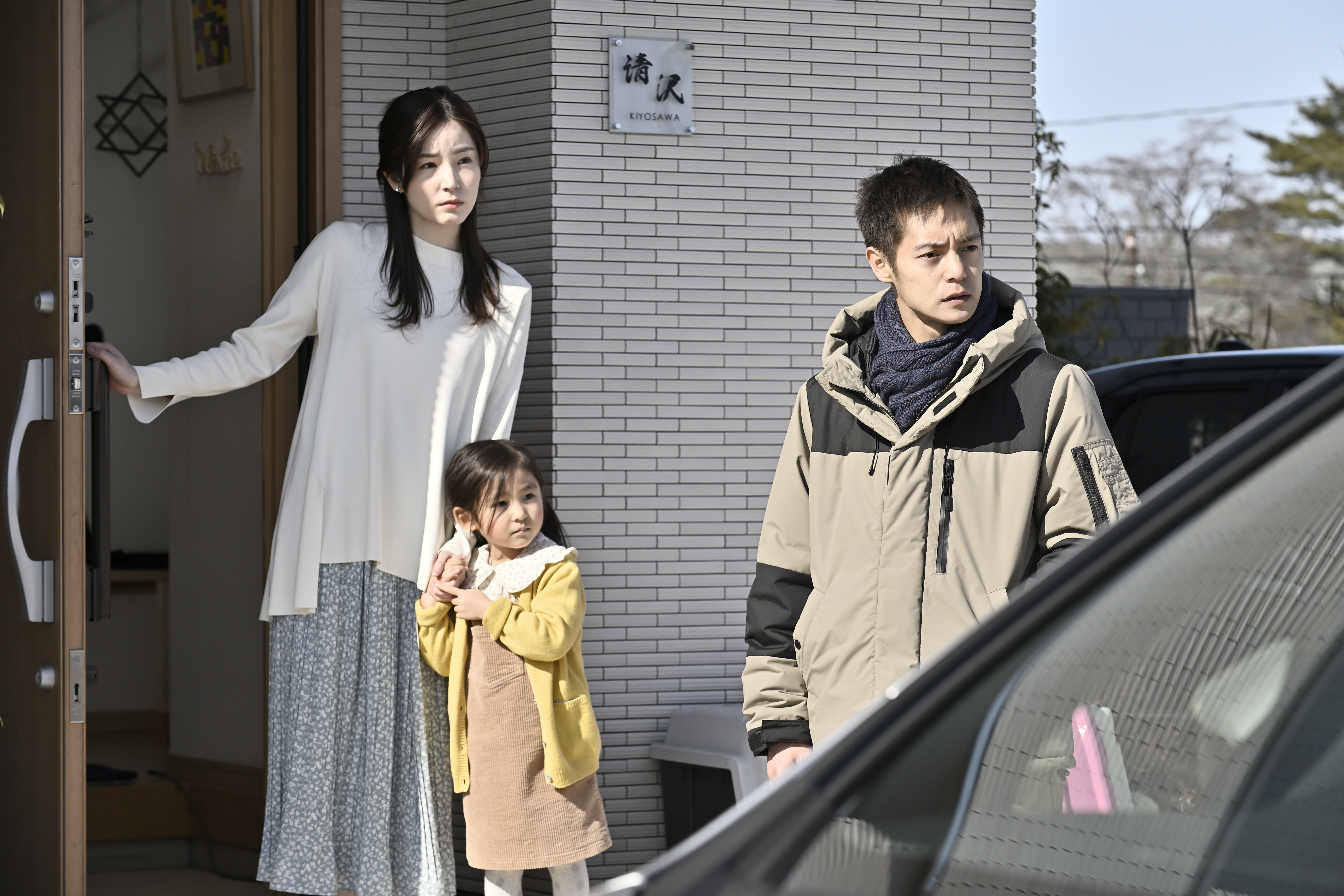
Ageing widower Tsutomu (Kenji Sawada) lives in a cabin in the mountains with his beloved dog and is mostly self-sufficient, growing his fruit and vegetables for the largely vegetarian temple food he learned to cook as a novice monk. His peaceful days are sometimes interrupted by the arrival of his editor, Machiko (Takako Matsu ), in search of his latest manuscript but otherwise intent on staying for meal made with the freshest produce lovingly prepared by Tsutomu. It’s clear that their relationship is no longer strictly professional, if otherwise ill-defined, but equally that Tsutomu’s mountain life could itself be seen as a kind of limbo in his inability to move on from the death of his wife 13 years previously. Her ashes still sit in a box on his altar long after most would have them interred much to his elderly mother-in-law Chie’s (Tomoko Naraoka) consternation. 

Chie is also a mountain ascetic living in a cabin not far from Tsutomu’s where she apparently supplies half the local area with home made miso paste. This life is hard enough for Tsutomu, but must be verging on the impossible for a woman of Chie’s age. Nevertheless, she perseveres while apparently estranged from her surviving son (Toshinori Omi) with whose wife she did not apparently get along. Because of this apparent disconnect, Tsutomu is for some reason held responsible for her existence despite not being a blood relative, while her son is confused by her lifestyle and more or less refuses to have anything to do with her. 

Still, like Tsutomu she had perhaps also come to understand that life is movement and the simple routine of tending crops and preparing sustenance is the engine that drives existence. Divided into a series of vignettes following the traditional divisions of the year, the film lingers on seasonal details as Tsutomu painstakingly washes and prepares his homegrown veg and pickles to prepare for the upcoming season. A series of brushes with death, however, throw him into a contemplative mood realising that his ascetic lifestyle is also a flight from the inevitable and a refusal to face his fear of mortality. “Who in this world lives for eternity?” a folk song asks, while Tsutomu meditates on the zen teachings of his Buddhist upbringing and his life as a novice monk raised in a temple from the age of nine until he ran away at 13.

His reflections are perhaps more in keeping with the 1978 of the original essay than they are the contemporary setting of the film but also hint at the absurdity of class inequality. The crematorium has two doors, only one of them ornate, yet everyone leaves the same way and we are all equal in the end. He was sent to the temple because his family were too poor to feed him, though his temple life stood him in good stead for self-sufficiency and gave him the capacity for solitude. Though his family had lived on the edges of a graveyard, his father made coffins for a living, and temple life is necessarily bound up with death, Tsutomu had lived in its shadow never making his peace with mortality. Yet the seasons will also progress towards winter, and Tsutomu with them as his life draws towards its inevitable conclusion.

In any case, the film’s final words are those of thankfulness for all that life has to offer as represented in the fruits of the earth, gratefully received by an enlightened Tsutomu. In keeping with its subject matter, the unfussy yet often picturesque photography brings out the pleasures of a life of simplicity and the human warmth often to be found within it while also reflecting the intense melancholy of Tsutomu’s contemplative solitude as he meditates not only on mortality but what it is to live in sync with the rhythms of the natural world.


The Zen Diary screens at New York’s IFC Center on Feb. 12 & 16 as part of ACA Cinema Project’s New Films From Japan.

International trailer (English subtitles)

A Tale of Sorrow and Sadness (悲愁物語, Seijun Suzuki, 1977)

Famously, Seijun Suzuki was let go by Nikkatsu in 1968 after studio bosses became fed up with his apparently “nonsensical” filmmaking. Exiled from the film world, Suzuki made do with TV work before making his comeback with, rather surprisingly, a media satire based on a manga by Ashita no Joe’s Ikki Kajiwara. A Tale of Sorrow and Sadness (悲愁物語, Hishu Monogatari) is at once a dissection of the fluctuating class and social systems of a nation entering an era of high prosperity and a condemnation of the consumerist corruptions of a society increasingly ruled by celebrity.

It is in the corporate that the corruption begins. With mild overtones of cold war paranoia, Nichei Fabrics is alarmed that a rival firm has brought on a top Russian gymnast as a brand ambassador and is convinced they need to find someone who can steal her thunder. Fashion co-ordinator Tadokoro (Masumi Okada) comes to the conclusion that they need a homegrown star and decides to make one by grooming a promising lady golfer to become both a champion and a minor celebrity after achieving an underdog victory in a prestigious tournament. 

One might ask weather society at large is likely to take much interest in who wins the Japanese Women’s Golf Tournament, but then everyone loves an underdog victory and Tadokoro seems to think he can make them care through carefully managed media manipulation. Golf is also, of course, thought of as an upperclass pursuit beloved by a new class of salaryman despite its origins, as sportswriter Miyake (Yoshio Harada) describes them, as a pastime invented by farmers to stave off boredom. Reiko (Yoko Shiraki), Miyake’s girlfriend whom he is in a way agreeing to sell to Tadokoro, is ostensibly a working class woman raising her orphaned little brother who discovered a natural talent for golf while working as a caddy for veteran male golfer, Takagi (Shuji Sano), now her mentor. She is not, however, a natural media star, something not helped by the brand’s decision to photograph her wearing wedge shoes and eventually a bikini on the green to showcase their leisurewear which she otherwise would not necessarily be wearing during a regular golfing tournament. 

The colour green ironically becomes a kind of harbinger of doom, caught in the reflection of psychotic stalker housewife Kayo (Kyoko Enami) and later that of Reiko herself while she is otherwise offered sickly green cocktails or projected against predominantly green backgrounds. The house that Nichiei build for her comes with a tiny putting green that more resembles the catwalk it eventually becomes in the crazed bacchanal organised by Kayo in which she orders the other neighbourhood housewives to strip a near catatonic Reiko of the few clothes she is still permitted to wear. The early photo shoot marked the beginning of a gradual erasure of her identity and its replacement by Reiko the star, to Tadokoro, and Reiko the champion golfer to Miyake. 

Much of Reiko’s golfing technique seems to centre on a kind of cosmic ordering, insisting that she is one with the ball which will land exactly where she envisages it while ignoring her competitor’s attempts to make conversation with her warning that a golfer’s career is long and it’s a bad idea to offend ones seniors. A moment with her stylist is chilling its similarity as she’s told to believe herself happy so that she can smile for the cameras with the otherwise vacant look of a manufactured celebrity. She repeats these mantras to herself constantly even as her own personality is overwritten in part by Nichei fabrics and in part by Kayo who jumps in front of her car while Miyake is driving and thereafter blackmails her into almost total servitude. 

The other housewives had objected to Reiko’s presence in describing her as “low-class” and suggesting that she must be some man’s mistress because it seems unlikely to them that a pro golfer could earn the kind of money to buy a house in their neighbourhood. Their opinion of her is confirmed in their complaints about her noisy garage door, though in truth Reiko doesn’t own the house it almost owns her given that it is provided for her by Nichiei so she can get to the studio to film the daytime show they’ve created for her which mainly seems to be about fashion rather than golf which she now has almost no time to practice despite Tadokoro’s plan for her to participate in a high profile contest against a top American golfer. A classic curtain twitcher, Kayo is taken with the idea of having a celerity living next door and, already ostracised by the other housewives for being a little odd, worms her way into her life eventually deriving a quasi-sexual thrill in being able to manipulate a famous face. “I’m the only one who knows her hair’s not real!” she squeals watching Reiko on TV with her new wig after hacking her hair off as a means of punishment for hitting her with the car. 

Kayo might be, in another way, the true victim of this system. Her life is obviously materially comfortable, but she’s trapped in the role of the conventional housewife while largely ignored by her salaryman husband and, as they have no children, left on her own all day with nothing to do. When she tells Reiko that she’s lonely and just wants a friend, it goes someway to explaining her otherwise bizarre behaviour as it also does for Reiko who later chuckles when Kayo randomly asks her to sleep with her husband as a favour replying that’s it’s fine “because we’re friends”. Reiko’s body, often caught by Suzuki naked in classical poses, is misused by just about everyone from Kayo to Nichei to Miyake, leaving her little more than a grinning mannequin completely hollowed out and devoid of all individuality. 

In some ways, Kayo’s decision to invite the neighbourhood women into Reiko’s home, letting them try on her clothes, drink her booze, and generally jump all over her nice new life, could be seen as an attack on everything she represents by these otherwise conservative women who resent her class transgression and independent success. Yet it’s also a very personal act of self-destruction in erasing this image of herself through that of Reiko which she has equally created. It’s another kind of self-destruction that ends the film and may be another kind of bid for freedom, an attempt to free Reiko from psychological disintegration at the hands of the consumerist society until it all quite literally goes up in smoke. A tale of sorrow and sadness indeed, Reiko is eventually consumed by the consumerist society, a little ball hit into its hole and unable to climb out, while the flames rise all around her.  


A Tale of Sorrow and Sadness Japan Society New York on Feb. 11 as part of the Seijun Suzuki Centennial.

Original trailer (no subtitles)
BL Metamorphosis (メタモルフォーゼの縁側, Shunsuke Kariyama, 2022)

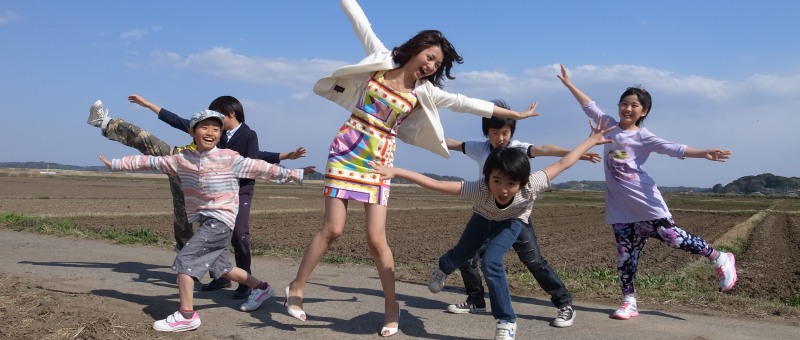
As the heroines of Shunsuke Kariyama’s charmingly heartwarming dramedy BL Metamorphosis (メタモルフォーゼの縁側, Metamorphosis no Engawa) introduce themselves to each other, the older, Yuki (Nobuko Miyamoto), reflects that their names mean “snow” and “sunshine” respectively though for much of the film their roles are reversed. 17-year-old Urara (Mana Ashida) is gloomy and introverted, diffident to the point of inertia and in danger of becoming resentful while the widowed 75-year-old Yuki is relentlessly cheerful despite her loneliness and the increasing effects of age. 

What brings about their serendipitous meeting is, strangely enough, BL manga which a curious Yuki picks up on a whim struck by the beauty of its artwork much to the embarrassment of secret BL fanatic and part-time bookshop girl, Urara. “BL” or “Boys’ Love” manga is a genre which focusses on romance between men but is largely written by and for a straight female audience. Readers have been termed or may term themselves fujoshi, which literally means “rotten girl” and hints at the disdain with which the genre is sometimes held explaining Urara’s intense sense of shame about her secret hobby. She keeps her substantial collection of BL manga in a cardboard box hidden behind several other boxes under the desk in her room where no one will find it, and when an enthusiastic Yuki takes her to a cafe for a few primers, Urara snatches the book from the table before the waitress can see it while two women snigger from behind struck by the incongruity of hearing an elderly lady speak so enthusiastically about a love story between teenage boys. 

Yuki is more open-minded than many might assume even if the lovely suburban house where she holds calligraphy classes is the peak of refined elegance. She’s exactly the sort of person you wouldn’t think would be into BL, but unlike Urara and perhaps because of her age she feels no embarrassment at all and asks her questions straightforwardly without shame. Her cheerfulness and positivity begin to rub off Urara who begins to wonder what it is she’s so ashamed of, why she resents the popular girlfriend of the childhood friend she may or may not have a crush on, and what it is she’s really afraid of pursuing in the course of her life. As the two women bond over over their shared interest a new connection develops that brings sunshine back into each of their lives along with a new sense of strength and possibility in a true tribute to intergenerational friendship. 

Yet the nature of their connection leads Urara, who had considerately brought out a stool for Yuki while searching for a book she wanted at the store, to forget that Yuki is not as young as she was and cannot necessarily accompany her as a friend of her own age might. She invites her to come to a large convention for self-published manga, but then begins to rethink on seeing pictures of the queues realising it might not be much fun for a 75-year-old woman with a couple of mobility problems to stand in line for hours on end just to walk around inside. Her sense of embarrassment in her thoughtlessness causes her to pull away from Yuki, only to come to regret it on returning to her home and finding it a little emptier as if a part of Yuki had already disappeared. 

Nevertheless, it’s Yuki’s encouragement that finally gives Urara the courage to write a manga of her own which is part fan fiction based on the BL manga they’d read together and a tribute to their friendship retold as a BL love story in which two people find each other and bring joy and happiness back into each other’s lives. Yuki ended up becoming a calligraphy tutor because she’d wanted to write a fan letter to the author of a manga she liked as a child but was ashamed of her handwriting and never sent it. The author stopped publishing a while later and she regretted not having told her how much the manga had meant to her. Similarly the author of the manga the pair read (Kotone Furukawa) is mired in creative difficulties and artistic doubt only to unexpectedly rediscover her confidence on coming across Urara’s fan fiction and realise that her work had touched someone and held meaning in their life. The film’s Japanese title translates more literally as “the engawa of metamorphosis” which refers to the small deck area looking on to Yuki’s beautiful garden where the pair often sit together sharing their love of manga, each somehow blossoming under the warm summer sunshine transformed by their friendship and ready to embrace the future.


BL Metamorphosis screened as part of this year’s Japan Foundation Touring Film Programme.

Original trailer (English subtitles)

Yamabuki (やまぶき, Juichiro Yamasaki, 2022)

The lives of a series of dejected souls in a moribund quarry town intersect in unexpected ways in a poetical drama from Juichiro Yamasaki, Yamabuki (やまぶき). The film takes it name from a colourful mountain flower which as someone later comments grows in the shade where no one can see, much like the sullen teenage girl whose mother named her after it because as she says “sunflowers face the sun but you don’t have to”. A tale of finding a place to root oneself in a rocky landscape the film has an understandably melancholy atmosphere but nevertheless eventually finds hope in perseverance or as one of the heroes finally sighs, “ask and ye shall receive”.

“This is my family” former Korean equestrian Chang-su (Kang Yoon-soo) beams on visiting a local ranch where his girlfriend’s daughter Uzuki is learning to ride. Chang-su explains that he was forced to give up horse riding after his father’s business went bust, implying at least that he’s from a formerly wealthy family in Korea with whom he seems to have few emotional ties. We see him send money abroad which seems to be intended to pay off loan sharks, presumably his father’s debts unwisely incurred by his failing business and perhaps the reason why Chang-su has come to Japan to work a manual job in a quarry. Most of the other workers are also economic migrants, many of them from the same area and conversing with each other in their own shared language though Chang-su seems to be the only Korean. After receiving the news that he’s to be made a regular employee rather than a casual worker, he starts to think that his life is back on track allowing him to once again ride a horse. 

But his hopes are suddenly dashed when his car is hit by falling rocks dislodged by police detective Hayakawa (Yota Kawase) trying to uproot a yamabuki flower to take home with him while his teenage daughter, Yamabuki (Kirara Iori), rolls her eyes and storms off. Reeling from the death of her war reporter mother in a Middle Eastern combat zone, Yamabuki is at odds with her father and searching for her own identity. She has begun hanging out with a group of protestors who stand silently at the roadside with prominent signage though their protests seem to take on many forms with no particular focus. One moment it’s the consumption tax and the next American presence in Okinawa or racism in contemporary Japan. This last one is met with a counter protest by a man shouting at them to go back where they came from, echoing the kind of othering and displacement felt by Chang-su who is let go from the quarry after the accident.

Just as Chang-su tries to anchor himself with his new family, Hayakawa tries to remake his in the absence of his wife while carrying on a kind of relationship with a Chinese sex worker equally displaced by the modern society and looking for a place to belong. As she points out, her mother came to Japan because at that time it looked like the future, but like the quarry town it now seems like the past. Her mother returned to the economic powerhouse of Shenzhen and has apparently become wealthy, though her half-Japanese daughter struggles to find a place for herself. As Chang-su reveals, “yamabuki” was also the name given to gold coins offered as bribes in the feudal era, lamenting the money-oriented nature of the contemporary society just as Yamabuki herself concludes that she wants her life to mean something and to feel present in every second of her existence. Her father had objected to the protests, but eventually tells her that she should be preparing for her independence and learning to be accountable to herself for her actions. She must have the courage of her convictions, as he lays out in a scene shot in the manner of a political rally and echoing Soviet realist cinema, so she can’t regret it later even if she one day changes her mind.  

They are all, in their ways, like the yamabuki rooting themselves in rocky ground and growing in the shade each discovering something new that allows them to continue despite the continual disappointment of their lives. Shot in a grainy 4:3 16mm, the film emphasises the aura of impossibility that enshrouds the town as if it were somehow trapped in the past, but equally lends it a kind of elegiac quality peppered with the colourful yellow of the yamabuki flowers which suggest that it is possible to blossom even under the constant gloom of a continually uncertain existence.


Yamabuki screens at New York’s IFC Center on Feb. 10 & 11 as part of ACA Cinema Project’s New Films From Japan. Director Juichiro Yamasaki will be present at each screening for a Q&A.

Original trailer (English subtitles)

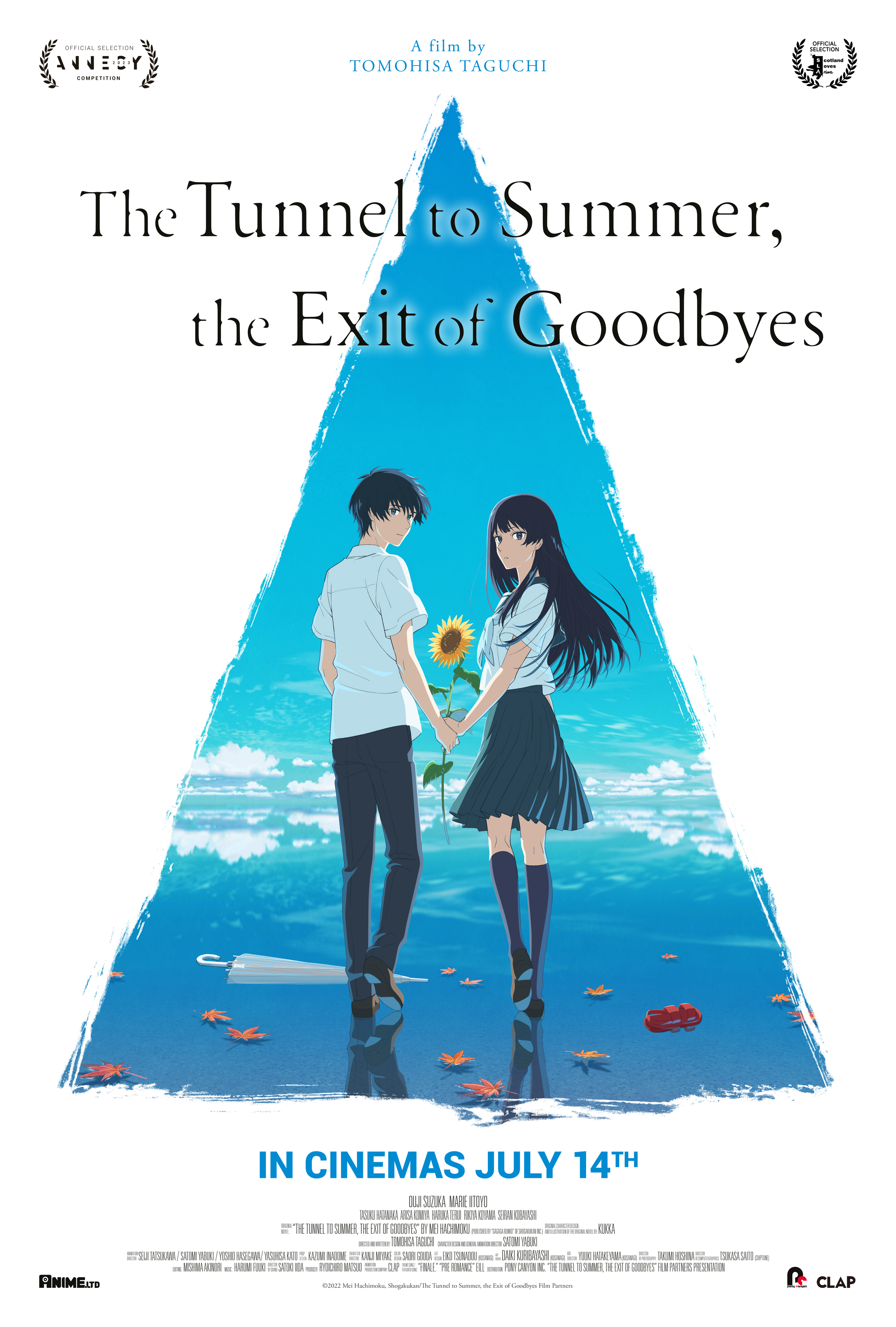
Carmen from Kawachi (河内カルメン, Seijun Suzuki, 1966)

(c)1966 Nikkatsu Corporation

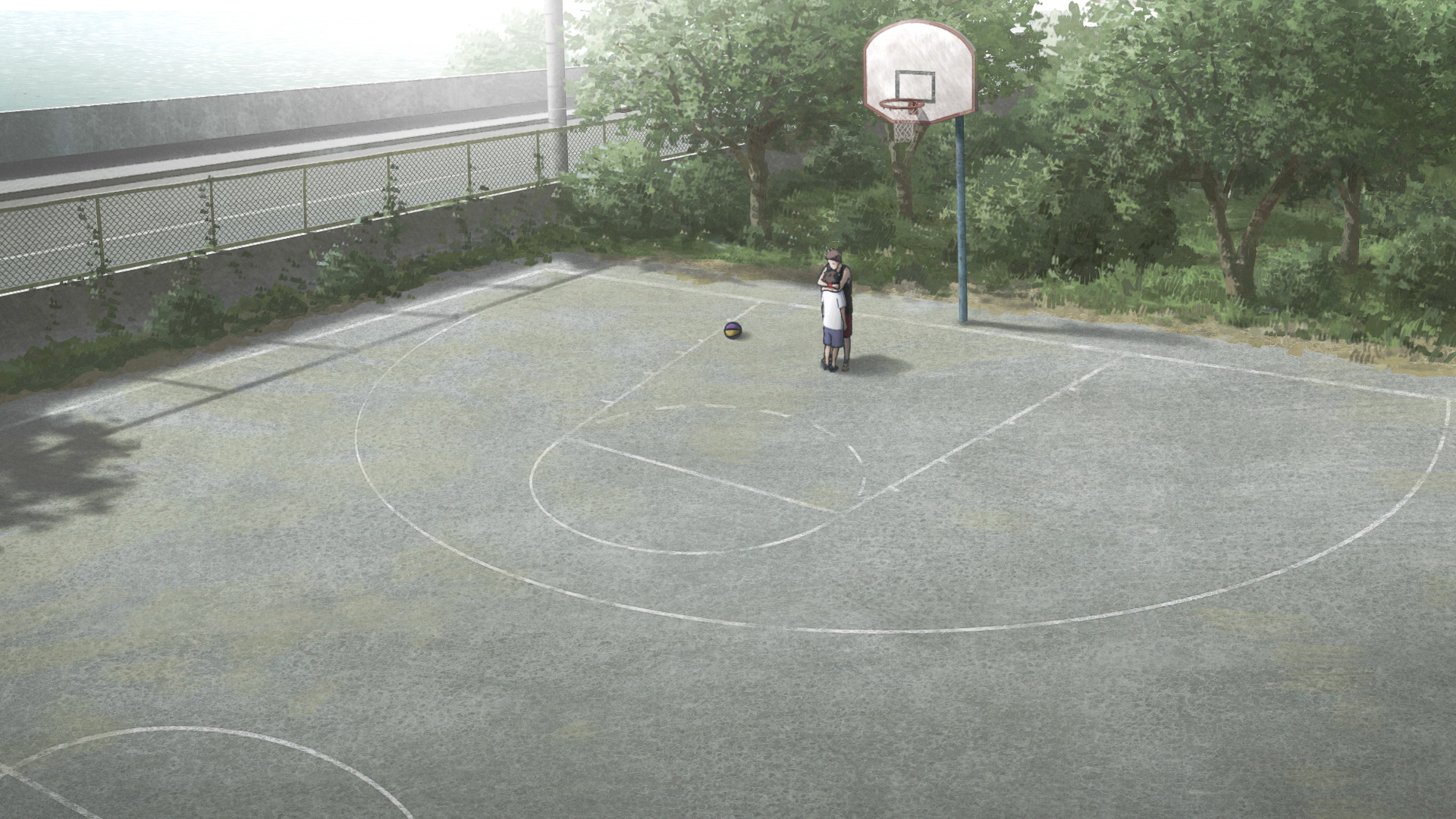
A naive girl from the mountains finds herself chasing consumerist success and urban independence only to encounter further exploitation before eventually transcending her subjugation and returning to the source of her trauma in an ironic picaresque from the characteristically anarchic Seijun Suzuki. Adapted from a novel from Toko Kon whose book also provided the source material for The Incorrigible, Carmen from Kawachi (河内カルメン, Kawachi no Carmen) loosely adapts Bizet’s classic opera but ironically discovers a much positive outcome for its relentlessly plucky heroine. 

In Kawachi, meanwhile, a rural mountain backwater near Osaka, Tsuyuko (Yumiko Nogawa) is a rather innocent young woman with a crush on the son of the local factory owner, Bon (Koji Wada), who seems to like her too but is equally diffident if presumably mindful of the class difference which makes a relationship between them unlikely to succeed. Tsuyuko’s friend tells her of a girl from school who now works in a cabaret bar in the city and has all the mod cons in her fancy apartment including an electric fridge, washing, machine, and double bed but Tsuyuko doesn’t seem to be too impressed. However, when a pair of local reprobates overhear her romantic conversation with Bon, they begin to feel resentful and decide to rape her. As they approach Tsuyuko, they are seemingly joined by a small crowd of men from the local area each chasing after her. On her return home, she simply bursts into tears but is greeted by an even worse sight, catching her mother (Chikako Miyagi) in a passionate embrace with a lecherous monk whose disgusting fisheye face continues to haunt her, a spectre both of a world of patriarchal exploitation and her own prudishness which is also coloured by the trauma of her rape. 

Tsuyuko is indeed followed around by various men who are all in their way disappointing in their desire to possess her body. “When a woman sleeps with a man just one time, the man thinks she belongs to him”, her school friend explains after she begins working in the bar in Osaka thinking that as her honour’s already lost she might as well try cabaret. Yet there is a kind of power play involved in the hostess life, the men all running after Tsuyuko who only has to stand still and can in fact manipulate them in turn. Then again, as soon as she starts work she ends up having too much to drink and sleeping with a sad sack salaryman who lied that he was also from Kawachi in an attempt to win her sympathy. Like many in the bar he thinks of her as a bumpkin still smelling of mountain soil and is disappointed she’s not a virgin but then becomes obsessed with her to the point of ruination. Kanzo (Asao Sano) embezzles a humiliatingly small amount of money from the financial company where he works and is fired, hanging out in the rain outside the bar just to catch a glimpse of Tsuyuko. Tsuyuko isn’t interested in him but ends up feeling bad about her role in his downfall and letting him move into her apartment where he becomes something like her wife, taking care of all the domestic arrangements and even ironing her smalls.

For all that, Kanzo’s not that bad. He’s a sweet, if pathetic, guy who takes her sudden announcement that she’s moving on with good grace explaining rather sadly that these have been the happiest days of his life but he never expected them to last. Rather than a jealous lover, he willingly lets her go even agreeing to put on a show of anger so she won’t feel bad about abandoning him. In many mays, Kanzo is one of the best men she’s going to meet, save perhaps wealthy artist Seiji (Tamio Kawaji) who seem to have no romantic interest in her but becomes a valuable friend and confident. Then again, it’s not just men. After taking a job as a model to try and move on from the cabaret life, she’s sexually harassed by a predatory lesbian boss who takes her in as a maid and then tries to force her attentions on her, possibly lacking the language for seduction in this less enlightened age. When Seiji had tried to explain that her boss is a lesbian, Tsuyuko had simply laughed and been unable to believe such a thing could be true.

Suzuki pulls back from the fashion entrepreneur’s home to frame it as a dollhouse stage set, Tsuyuko now merely another plaything but also herself playing a role in the newly aspirant society. She does so again when Seiji gets her the gig as a mistress for a loanshark who sets her up in a fancy apartment but only asks her to wander around in the nude apparently interested in little other than voyeurism. Tsuyuko only agrees because she continues to chase the dream of pure love with Bon whom she has reencountered by chance. He is now brought low as his factory has gone bust and he’s broke which dissolves the class difference between them. But Bon is also chasing an elusive dream, in his case of success back in Kawachi by building an onsen at the site of a mysterious waterfall no one has been able to find for decades. Just as Tsuyuko is forced to prostitute herself for Bon, Bon prostitutes himself for his dream in that as she discovers he is her partner in a porn shoot directed by the sleazy loanshark who quite clearly also gets off on the romantic drama in play and the destruction of the “pure” love between Bon and Tsuyuko. 

Part of Tsuyuko’s disillusionment had been caused by the discovery that not only was her mother sleeping with the creepy priest but that she was doing it for money and her father knew. Her troubles have largely be precipitated by male failure, firstly her father’s in his inability to support his family, secondly in the fragile masculinity of the local boys who assaulted her, and then finally in the weakness of Bon who chose his fleeting dream of local success over his love for her. Having inherited the loanshark’s riches after he is randomly killed in a plane crash, Tsuyuko discovers she no longer wants them and tries to free her mother from male exploitation by giving her money in part for a decent funeral for her father. Only then does she learn that her mother has already substituted her younger sister Senko (Ruriko Ito), forcing her to sleep with the priest and blaming Tsuyuko for it for having run away. 

Tsuyuko takes dark and destructive action to rid herself of the troublesome priest as if exorcising the roots of her trauma, no longer afraid of men or of sex but firmly in charge of herself and her body. Her mother is not, however, particularly happy to be emancipated if ironically expressing the same sentiment in that she need have no fear of loneliness or penury for she can always find company if she desires it. Unlike Carmen, Tsuyuko is not undone by toxic masculinity and frustrated male pride but eventually transcends them even if as her mother says she may never be free of the priest’s “dark magic” while she takes to the streets of Tokyo with a rose in her teeth looking, if not quite perhaps for love, then at least satisfaction. Brimming with the joie de vivre and anarchy that would later make him famous from the raucous club scenes to the ironic framing of the porno shoot and dramatic freeze frames as Tsuyuko finally loses her faith in men, Suzuki’s Carmen allows its pure hearted heroine not only to triumph over the forces that oppress her be they men or merely consumerism but to subvert them to her advantage.


Carmen from Kawachi screens at Japan Society New York on Feb. 10 as part of the Seijun Suzuki Centennial.

Original trailer (no subtitles)
Images: (c)1966 Nikkatsu Corporation

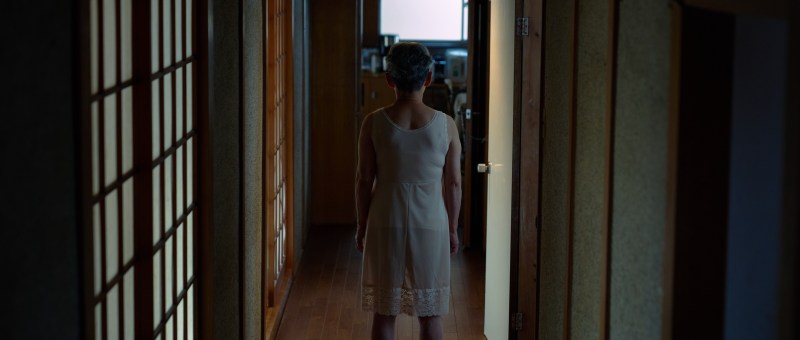
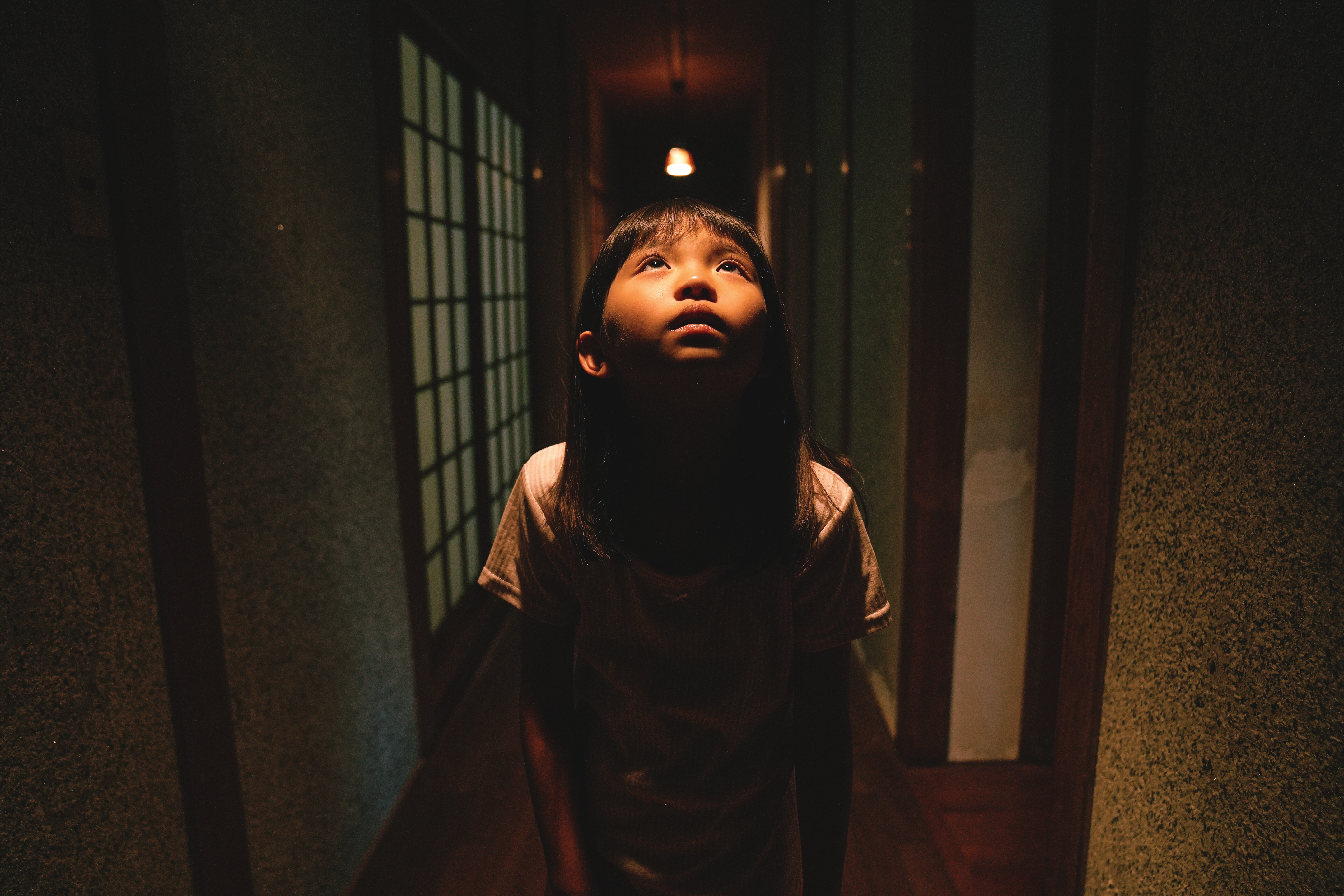
It Comes (来る, Tetsuya Nakashima, 2018)

According to a duplicitous folklorist in Tetsuya Nakashima’s anarchic horror film It Comes (来る, Kuru), monsters aren’t real. People made them up so they wouldn’t have to face an unpleasant reality. Farmers who had more children than they could feed invented a monster who came to claim their infants rather than have to live with the reality that they left them in the in the forest to die. As it turns out this monster may actually be “real”, but undoubtedly fuelled by the loneliness of a neglected child whose parents are burdened by their own particular legacy of parental toxicity. 

The mother of soon-to-be-married Hideki (Satoshi Tsumabuki) more or less says as much when he brings his fiancée to meet the family at a memorial service for his late grandfather. “Maybe it’s her upbringing” she snidely suggests, remarking that Kana (Haru Kuroki) is “a little gloomy” (which seems like an odd criticism to make of a guest at what is effectively a reenactment of a funeral). A strangely beaming Hideki keeps reassuring his fiancée that she’s “perfect” while she continues to worry about whether she’s a good fit seeing as she never knew a “real” family having been raised by a mother she regards as neglectful. But even at the couple’s wedding it’s clear that Hideki mostly ignores her, so obsessed is he with being the centre of attention. “Is it ever not about you?” one of the fed up guests eventually heckles, but it evidently never is. After setting up his “perfect” life in a “perfect” luxury flat and having a “perfect” baby, Hideki sets up a blog about being the perfect dad and barely helps with their small daughter Chisa driving Kana slowly out of her mind with his narcissistic self-obsession and thinly veiled emotional abuse. 

When the ghosts start coming, we might wonder if they reveal the truth or effect a distorted reality that leans in to otherwise unspoken dark thoughts, but Hideki really is as someone puts it all lies. When he’s persuaded to visit an “exorcist” she simply tells him to treat his wife and daughter properly to make the monster go away sending Hideki into a small moment of rage implying that he really does know what he is rather than having “forgotten” a cruel alter ego. In his charmed life, we might even wonder if he made some kind of deal with the devil which would explain his rather vacant smile though as it turns out it’s more like he’s cursed by a forgotten childhood encounter with an ancient forest spirit which hints at a deeper, older evil going all the way back to those farmers and the children they abandoned. 

Then again, it seems as if Hideki was rather spoiled as a child leaving him craving both attention and approval, while Kana is still struggling with resentment towards the mother she mainly had to parent herself and is afraid of becoming. Hideki snaps at her that she shouldn’t lose her temper with the baby because children remember, though as it turns out neither of them can really give their full attention to Chisa because of the realities of parenthood which among other things include constant anxiety and feelings of inadequacy. The parents are effectively haunted while cursed by their own toxic parental legacies that they will inevitably pass on to their daughter whether they mean to or not. 

It’s much the same for occult writer Nozaki (Junichi Okada) brought in to help solve the case with the help of his girlfriend, Makoto (Nana Komatsu), a bar hostess with psychic abilities. He once persuaded an old girlfriend to have an abortion because he was afraid of becoming attached to something he might eventually lose, and may be in a relationship with Makoto partly because she is unable to bear children for reasons connected to her frustrated love for her icy exorcist sister Kotoko (Takako Matsu) who like Nozaki wilfully distances herself from others to protect herself from the pain of loss. But as another shaman tells him, in a land of darkness where you no longer know right from wrong pain is the only truth. 

Nakashima shoots with a thinly veiled irony, vacillating between the ridiculousness of demonic spirits wreaking havoc in a well-appointed Tokyo apartment and the concession that there are indeed monsters in the world and as another infected suggests, they are we. Once again set at Christmas much like World of Kanako, Nakashima’s familial horror juxtaposes the season of goodwill with supernatural violence even as Kotoko marshals every power at her disposal from her roots in Okinawa shamanism to Buddhism and Christianity to hold back the latent evil born of a little girl’s loneliness. Meanwhile, he draws inspiration from classic J-horror and particularly the work of Nobuo Nakagawa in his green mists and swamp-based set piece in which Nozaki finds himself mired in a lake of life and death. Kotoko’s wounded eye and fear of mirrors hark back to Yotsuya Kaidan and the betrayed ghost of Oiwa, herself a victim of a man whose self-involved quest for approval cost her her life. At heart an interrogation of the parental bond the film eventually comes down on the side of family as Nozaki reclaims his frustrated paternity while a little girl dreams of nothing more sinister than a land of omurice. 


It Comes screened as part of this year’s Japan Foundation Touring Film Programme.

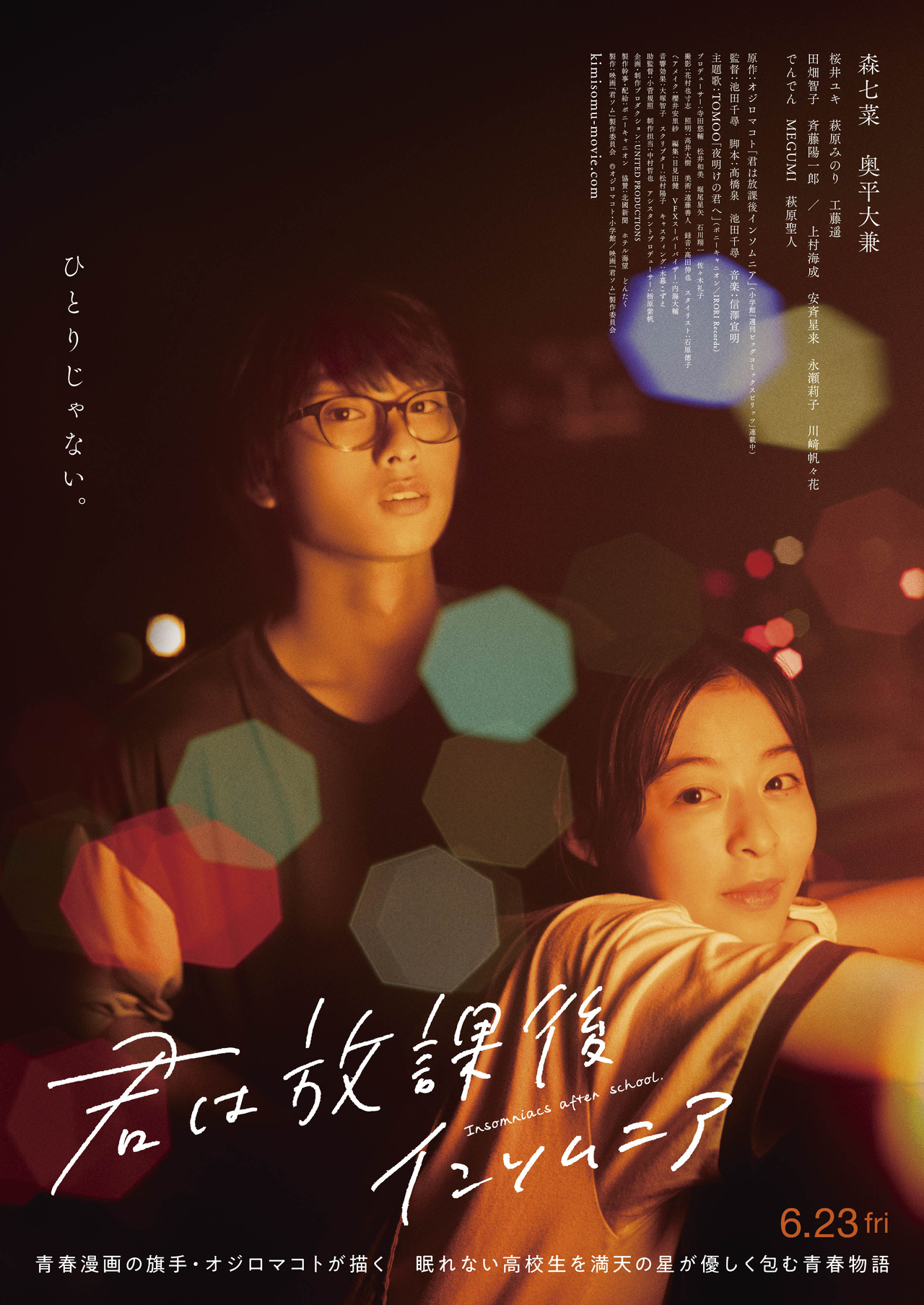
International Trailer (English subtitles)

I Live in Fear (生きものの記録, Akira Kurosawa, 1955)

Which of us is “crazy”, the man who lives in fear or the rest of us who live in its denial? By 1955, a decade had passed since the bombs fell on Hiroshima and Nagasaki, but even if the world seemed “peaceful” it was only superficial. The Korean War had “ended” in an uneasy truce only two years earlier and the world was already mired in a cold war which daily threatened to turn hot with both sides in possession of a nuclear deterrent. Akira Kurosawa’s I Live in Fear (生きものの記録, Ikimono no Kiroku) asks us if we can really say a man is “insane” if his life is ruled by a rational anxiety and if it is our refusal to accept the threat he sees which eventually drives him out of his mind. 

Our guide is gentle dentist Harada (Takashi Shimura) who has a sideline as a mediator at the family court. The case he has been called in on one particular afternoon is that of the Nakajima family which is attempting to have the ageing patriarch, Kiichi (a near unrecognisable Toshiro Mifune), declared legally incompetent on account of his increasing paranoia about nuclear attack and latent radioactivity. A wealthy self-made man and foundry owner, Kiichi has frittered away vast sums on harebrained schemes to keep himself and his family safe but after a plan to build a bunker in a remote area had to be abandoned, he’s set his heart on moving everyone to Brazil where he believes they will be safer. 

The problem is partly one of changing times as Kiichi, “despotic and selfish” as his son describes him, attempts to railroad his family into a safety they do not want or need. His two legitimate sons now operate the foundry and their lives are dependent on it, which is not to say that they are dependent on Kiichi, but if he goes through with selling the the foundry to finance his new life it will leave them all high and dry. It would be, to a certain way of thinking, the ultimate paternal betrayal but in Kiichi’s mind all he’s trying to do is “save” his family from an invisible threat. 

That family, meanwhile, is one he’s already undermined through patriarchal selfishness in fathering a series of illegitimate children he is also supporting financially but has never legally acknowledged. The parents of the illegitimate kids are worried that if the family succeeds in having Kiichi declared legally incompetent, his wife will get her hands on the purse strings and they’ll be left out in the cold. Kiichi, meanwhile, has an old-fashioned view of filial relations and never considers that the other kids might not want to come with him either even if it’s unexpectedly nice of him to include them, or that inviting your two mistresses to live in the same house as your legal wife might be awkward for all concerned. 

On the face of it, the case is open and shut. If a man causes his family to suffer through frittering money away on drink or pachinko, they would approve the motion to give another family member legal control over his finances. So why is it taking them so long to decide if Kiichi is a liability to his family or not? The problem is, his fear is entirely rational. It’s only its extent which is the problem. It’s perfectly understandable to be afraid of the ebola virus or brain-eating amoeba, but we can’t afford to spend every minute of every day consumed by fear and so they retreat into the background anxiety of our lives while we try to go on living. Yet, could it be that Kiichi has it right and we’re merely living in denial, sleepwalking into a preventable disaster while he alone has a plan for survival? 

“No place is safe” Kiichi’s son-in-law exasperatedly explains to him after he has taken drastic and somewhat ironic action, a kind of scorched earth policy designed to force his sons to follow him into a new world of safety. Pushed over the edge, Kiichi gets a rude awakening, realising that it was perhaps selfish of him only to think of salvation for his immediate family when his actions will essentially throw his workforce under the bus. Belatedly, he promises to find a way to take them to Brazil too, never realising that people have their own lives that aren’t so easily uprooted. He thinks Brazil is safer because the currents of the world seem to blow ill winds over Japan, but there are already more than enough nuclear bombs lying in warehouses to destroy the planet several times over. 

In any case, Kiichi has already destroyed his family through his various transgressions. They don’t want to go in part because they don’t particularly like him, are sick of his gruff authoritarianism, and resent his tendency to make unilateral decisions on their behalf. Strapped for cash he tries asking the illegitimate kids to return some of the money he gave them, but they too are insecure in their positions and cannot trust that they will continue to be provided for if Kiichi is deposed. Meanwhile, when Kiichi falls ill the legitimate children are only too quick to start discussing the inheritance in the absence of a will. Perhaps Kiichi isn’t much more to them than a walking wallet, all of which lends a rather poignant quality to his continual attempts to protect his family from the nuclear apocalypse in fulfilment of his fatherly duty even as he wagers their economic security to do so. 

If Kiichi is a Cassandra prophesying the end of the world, we won’t be here to be sorry we didn’t listen, but Harada and other more rational minds are shaken by the intensity of his vision. They cannot say that he is “mad” even if his anxiety has consumed his life, but nor can they allow him free rein to pursue his plans because they do not concern only himself but greatly affect the lives of others. They are forced to wonder if it isn’t we who are “insane”, quietly living our lives while all these preventable threats hover in the background, ignored. Kiichi’s mistake was perhaps that he wanted only to be “safe” in an unsafe world, not to cure it of its dangers. Few us are actively trying to eliminate ebola or brain-eating amoebas, just as few actively opposed an increasingly nuclear society, powerless as we are and were in the face of a greater threat. Perhaps Kiichi was the sanest one of all, retreating into a world of madness and infinite safety in a delusional bubble of survival in an otherwise crazy world.


I Live in Fear screens at the BFI Southbank, London on 6th & 13th February 2023 as part of the Kurosawa season.