City of Lost Things (廢棄之城, Yee Chih-Yen, 2020)

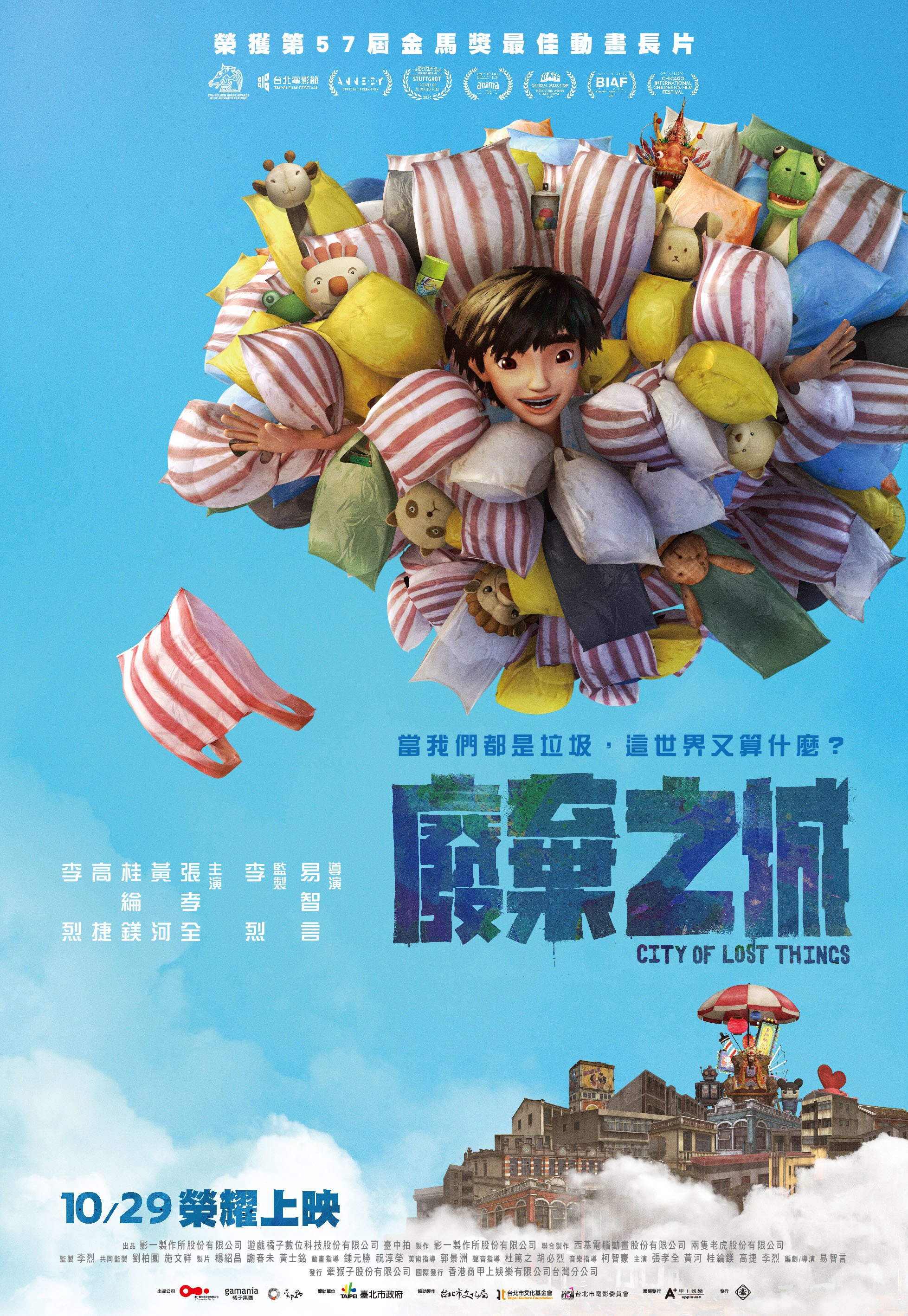
A traumatised teenage boy attempts to escape his sense of alienation by relegating himself to the literal junkyard of humanity in the first animation from Blue Gate Crossing’s Yee Chih-Yen, City of Lost Things (廢棄之城, Fèiqì zhī Chéng). Not to be confused with tragic noir Cities of Last Things, Chen’s eventually inspirational drama resounds with positive energy as the embittered hero determines to love himself a little more in order to find the place where he belongs, where he can he strong and beautiful and “turn into something not trash”, while remaining unafraid to explore the darker edges of his loneliness and desperation as he searches for connection and community. 

As he explains in the opening voiceover, 16-year-old Leaf (River Huang) doesn’t like it at home where it seems his mother drinks, nor does he like it at school, or on the streets where he becomes the victim of violence. Coming to the conclusion he has nowhere else to go, Leaf is almost swept away by a giant rubbish truck along with a host of “other” refuse, accidentally saving a sentient plastic bag imaginatively named “Baggy” (Joseph Chang) which gets stuck under his shirt. Baggy guides him to Trash City where unwanted and discarded items live in a kind of ghetto ruled over by an oppressive guardian deity statue, Mr. G (Jack Kao), who also looks quite like the figure of legendary Chinese general Guan Yu. Baggy explains to him that he and many of the other pieces of “trash” trapped in the city long to escape the “siege” in order not to be “quiet trash” anymore but find a place they can be beautiful, and strong, and love themselves a little more. 

In contrast to the heroes of most children’s animation, Leaf is not a particularly sympathetic character, his obvious self-loathing of which “Trash City” is perhaps a metaphor beginning to boil over into something dark and potentially dangerous. In Trash City he finds a source of eternal escape, not wanting to leave but to remain in this place where he can feel at home, unjudged, and unbothered by the adult world while accepted by those around him as an equal. This is one reason he clings so fiercely to his new friendship with Baggy, immediately anxious on discovering his plan to leave Trash City in realising it must necessarily mean that they will one day have to say goodbye. Not wanting to lose this new friendship and return to loneliness he finds himself taking the self-destructive step of snitching on his friends little realising the consequences of his actions. 

Yet if Trash City represents Leaf’s sense of depression is also perhaps functions as a political allegory through the oppressive rule of Mr. G who refuses Baggy and the others permission to leave though he does so apparently for their own safety in order to evade the “armoured trucks” which literally suck up dissidents and crush them like rubbish in their rear compactors. In escaping Trash City, however, what Leaf must overcome is his sense of powerlessness and inconsequaility to believe that there is a place for him where he can lead a happy life surrounded by people who love him rather than regarding himself as human “trash” rejected by and unworthy of regular society. 

Nevertheless, there’s a slightly less cheerful metaphor in play in the obvious ironic twist that the place they’re looking for is a recycling centre which points to an external transformation rather than the change from within implied by Baggy’s constant messages of the importance of learning to love one’s self a little more. It also gives rise some awkward humour as Leaf looks for his friend in plastic buckets and subway seats which eventually leads to a slightly inappropriate adult joke likely to confuse younger viewers while uncomfortably implying that people and things only have value when they’re transformed into something “useful”. While the animation style is relatively simple, the charming worldbuilding and innovative production design of the almost steampunk city with its mannequin lamp guards and disco-crazy white goods help to smooth over any sense of hollowness while the overarching story of growing self-acceptance as the path out of despair is a refreshing take on potentially destructive adolescent angst as the hero resolves to find his place in the world rather than exiling himself from it. 


City of Lost Things screened as part of this year’s New York Asian Film Festival.

Original trailer (English / Traditional Chinese subtitles)
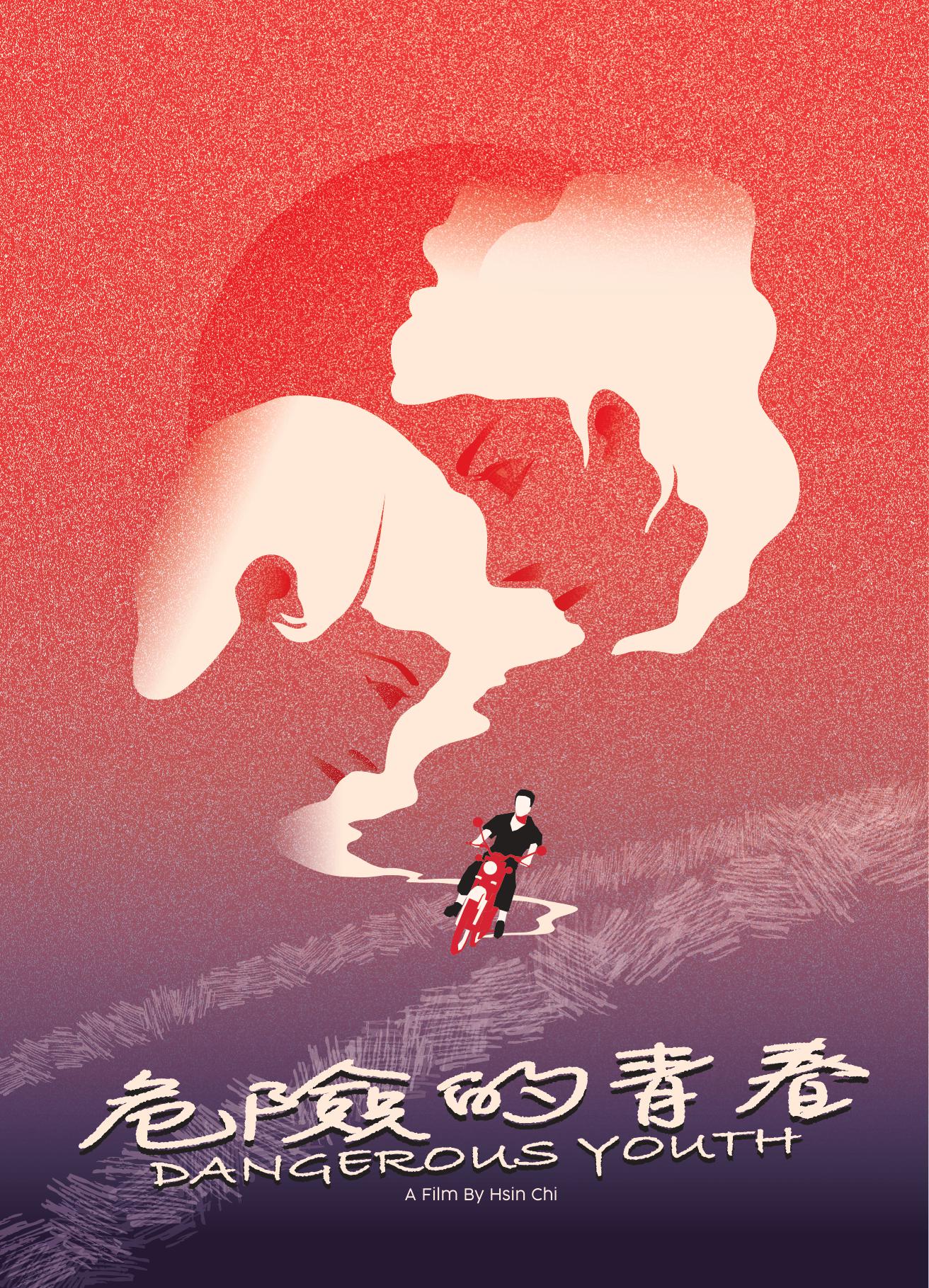
Dangerous Youth (危險的青春, Hsin Chi, 1969)

Increasing consumerism has begun to corrupt the minds of the young in Hsin Chi’s ultra contemporary Taiwanese-language drama Dangerous Youth (危險的青春). Unlike similarly themed youth movies from elsewhere such as Kim Ki-duk’s Barefooted Youth (1964, inspired by Ko Nakahira’s Doro Darake no Junjo) or Nagisa Oshima’s Cruel Story of Youth (1960), Hsin’s film is nowhere near as nihilistic as its title might suggest nor are its heroes as delinquent merely morally compromised as they attempt to navigate the changing society around them while feeling as if the things they want have been deliberately placed out of reach. 

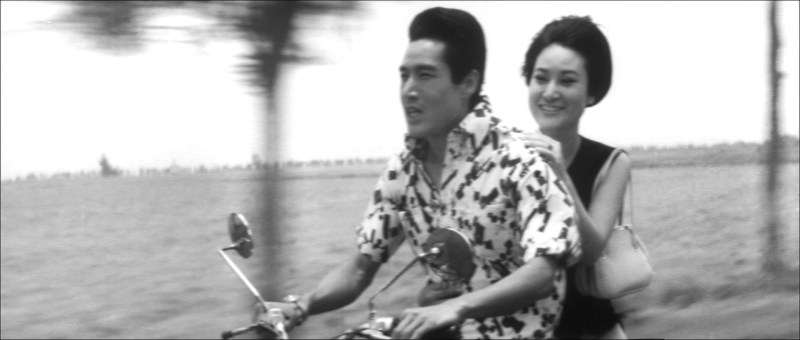
As the film opens, Khue-guan (Shih Ying) is cheerfully riding on his motorcycle with his current girlfriend on the back behind him, only the trip comes to an abrupt halt when the bike, a symbol of his freedom and independence, gets a flat tire. The pair pull over to a roadside garage to get it fixed and wait in a nearby cafe where they’re served by waitress Tsing-bi (Cheng Hsiao-Fen) who happens to be the owner’s daughter. While they’re waiting, Khue-guan’s girlfriend contemptuously dumps him, complaining that his bike is always breaking down and she’s decided to marry a financially secure engineer while attempting to palm Khue-guan off on Tsing-bi who ironically has a haircut quite like hers and is dressed almost identically. Khue-guan tries to change her mind, but she reminds him that marriage is “a woman’s meal ticket” so why would she or anyone else for that matter marry a poor delivery boy if a better offer came along? 

Khue-guan innocently insists that if they stay together and work hard they’ll be rich someday too, but his girlfriend has no desire to wait and no inclination to strive. It’s this ideology of working class aspiration that if you just buckle down and play by the rules you can one day have a comfortable life that is at the centre of the film’s ideological conflict, Khue-guan himself later hearing the same words from Tsing-bi when she refuses to become the mistress of the wealthy widower Mr. Tshi (Chen Tsai-Hsing) but having become so jaded that he no longer believes them only to be apparently converted when a work colleague gives him the same advice that he should give up on the boss’ sexually liberated daughter and find someone who loves him with whom he can work together to build a happy family home. 

The happy family home, a conventional middle-class success story, was Khue-guan’s small dream at the beginning of the film before his girlfriend’s slight caused him to lose his way. His crisis is also one of threatened masculinity, feeling himself inferior by virtue of a poverty he does not know how to escape lamenting to an old friend that only college men like him can find good jobs in the changing, increasingly white collar society. In a minor role reversal, it’s clear that women have gained increasing freedom and agency and in fact here hold the power as reflected in the masculinised figure of boss’ daughter Giok-Sian (Kao Hsing-Chih) who runs a hostess bar and refuses to get married instead living a sexually liberated life without romantic attachment. Part of Tsing-bi’s resentment towards her mother (Su Chu) stems from her sexually active love life in which it seems she too has the upper hand. In a repeated motif, we see Tsing-bi’s mother hand money to her lover so he can take time off work, something Tsing-bi later does to Khue-guan who without quite thinking about it has begun to live through her exploitation only objecting when offered money by Giok-Sian who rejects his romantic overtures interested only in bodily satisfaction. 

This gender imbalance is later “corrected” towards patriarchal norms as Giok-Sion is finally forced to accept that she is in love with Khue-guan just at the moment he receives his epiphany that the way he’s been living is wrong, love is more important than money, and he needs to get back on the straight and narrow to earn success by working hard rather than exploiting others. Nevertheless, there is plenty of toxic masculinity in the air, the friends of the ageing Mr. Tshi apparently mocking him for his literal impotence, his masculinity questioned in the absence of a female sexual partner. Though as we discover Mr. Tshi is simply lonely having lost his wife and seemingly having no children, asking Tsing-bi only for cuddles and companionship. There is something distinctly uncomfortable in the way that Tsing-bi is thrown at Mr. Tshi like a like live chicken into a pit of crocodiles by Giok-Sian, her father, and his friends each of whom are trying to curry favour for business advantage by exploiting her. With her short hair and tendency to wear pinafore dresses, not to mention often carrying around teddy bears and oversize dolls, the 20-year-old and extremely naive Tsing-bi seems even younger than she is, an innocent little girl misused by an increasingly corrupt society. 

Even so Tsing-bi remains the least corrupted of the youngsters, clinging to her love for Khue-guen never realising he too is just using her for easy money even as she ironically throws his own words back at him in suggesting they marry, work hard, and raise a happy family together. Though it was her consumerist desires that originally set her against her mother in her yearning for current fashions and sophisticated city life, she never really wanted the money only Khue-guan while ironically mimicking her mother’s behaviour in accidentally making him a kept man. The reset which occurs at the film’s conclusion at once restores traditional gender roles but also perhaps shifts them in stressing the need of the couple to work “together” even if that sentiment might imply a greater equality than is in reality in play. Nevertheless, perhaps for reasons of censorship (which might also explain why despite the film’s obvious Taiwan setting frequent references are made to Hong Kong landmarks) the conclusion is not as bleak as one might assume from the rather nihilistic, moral panic implications of the title as the young couple are finally placed back onto the “correct” path of honest hard work which is also in its own way a capitulation to their own exploitation at the centre of an expanding, increasingly capitalistic society. 


Dangerous Youth streams in the UK until 31st October as part of this year’s Taiwan Film Festival Edinburgh.

Trailer (Traditional Chinese / English subtitles)

Peony Birds (牡丹鳥, Huang Yu-Shan, 1990)

Two women struggle with inter-generational conflict and the changing Taiwanese society in Huang Yu-Shan’s melancholy familial drama, Peony Birds (牡丹鳥, Mǔdan Niǎo). Perhaps the love birds of the title, mother and daughter find themselves at odds partly through a series of misunderstandings but also in the strange reversals of their social outlook, the older woman eventually becoming a successful industrialist rejecting the patriarchal social codes of her upbringing while the younger remains prudish and resentful, unfairly blaming her mother for her father’s early death. 

The film opens with two children accidentally releasing a pair of caged birds before the camera lights on the melancholy figure of Ah-chuan (Su Ming-ming), absentmindedly embroidering beneath a large picture which appears to be of herself. The portrait, a source of contention with her husband Cheng, will follow her throughout her life a symbol of herself as a young woman with choices falling in hopeless love with a Japanese-speaking doctor, Kuo, who never gave her a second glance and later married someone else. Seemingly on the rebound, Ah-chuan consented to an arranged marriage to the wealthy son of a rice merchant who thinks himself a member of the local aristocracy, forever throwing around his money and reminding people of his good name, but the marriage is unhappy Cheng frustrated that his wife loves someone else and Ah-chuan unable to let go of her idealised image of Kuo. Soon enough, Cheng drowns, falling into the river stumbling around in a drunken stupor. As they pull his body out of the water, doting daughter Shu-chin remembers her father bitterly exclaiming that her mother loved someone else and, noticing the comforting arm of childhood friend Chin-shui on her shoulder, assumes it must be him.  

It’s this fundamental misunderstanding that continues to colour the frustrated relationship between the two women, the grown-up Shu-chin (Vivian Chen Te-Yung) childishly complaining that Ah-chuan failed in her wifely responsibilities and has never been a mother to her, blaming her for Cheng’s death while criticising her commitment to her career almost as a betrayal of womanhood. By this point, Shu-chin is in her 20s and has a job as a record producer, later attempting to push her mother towards retirement claiming her salary is enough to support both her and her artistic brother but eventually leaving home entirely after beginning an affair with an unsuitable man defiantly ignoring Ah-chuan’s attempts to convince her she is making a huge mistake. 

Meanwhile, Chin-shui resurfaces in their lives having become a wealthy real estate magnate, a career we saw him start back in the village by taking advantage of the post-war land reforms to buy up the redistributed estates of formerly noble families, some of it Cheng’s. In some ways, former sharecropper Chin-shui is a villainous Lopakhin intent on paving over the beautiful Taiwanese countryside with towering high rise buildings, a symbol of the nation’s transformation from agrarian economy to financial powerhouse and of the hollowness it implies. Yet Ah-chuan’s business is floundering partly she claims because of protectionist US trade laws leaving her at the mercy of men like Chin-shui who, though not the man in her heart, has long carried a torch for her despite knowing of her impossible, unrequited love for Dr. Kuo. Shu-chin finds herself in a similar position in her affair with free-spirited colleague Li Kang whose previous girlfriend attempted to take her own life, discovering the mutability of his affections after he becomes famous with one of his solo compositions, while also drawn to a more suitable match in the more traditional Yi-cheng who eventually pledges his love to her, offering to make her a home explaining that having a home is what gives the young confidence to wander. 

Yet “home” is what Shu-chin continually rejects, yearning for her childhood in a more rural, quasi-feudal Taiwan while misunderstanding the tragedy of her parents’ toxic romance, only latterly reawakening to her mother’s love for her and discovering a new sense of security in a changing Taiwan as Ah-chuan frees them both in literally setting fire to the frustrated hopes of the past, reminding her “It’s always been our home”. A touching story of two women finally coming to understand each other while learning how to live in a changing society, Huang Yu-Shan’s maternal drama eventually bridges a generational divide as mother and daughter finally flee the coop but choose to fly together. 


Peony Birds streams in the UK 25th to 31st October as part of this year’s Taiwan Film Festival Edinburgh.

Clip (English subtitles)

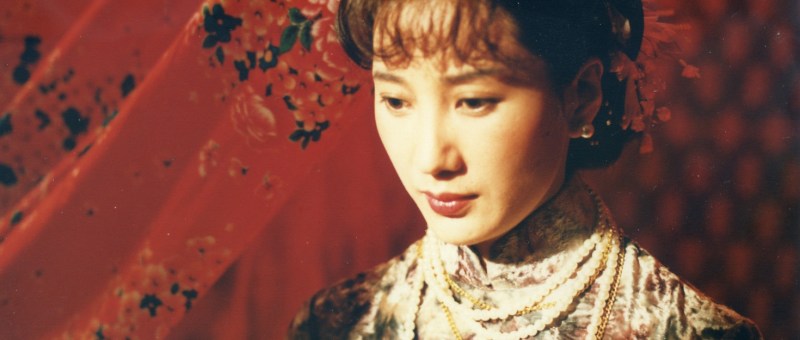
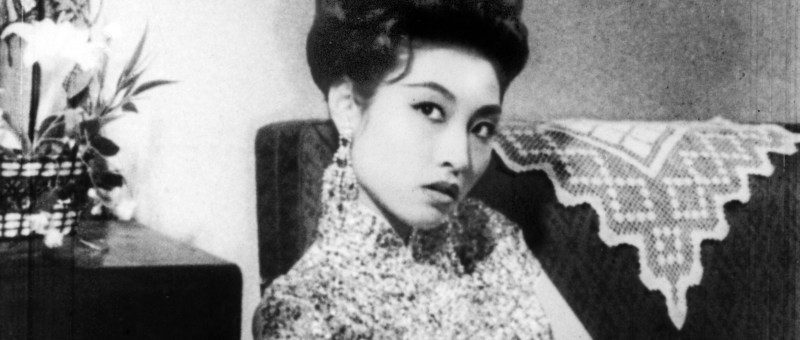
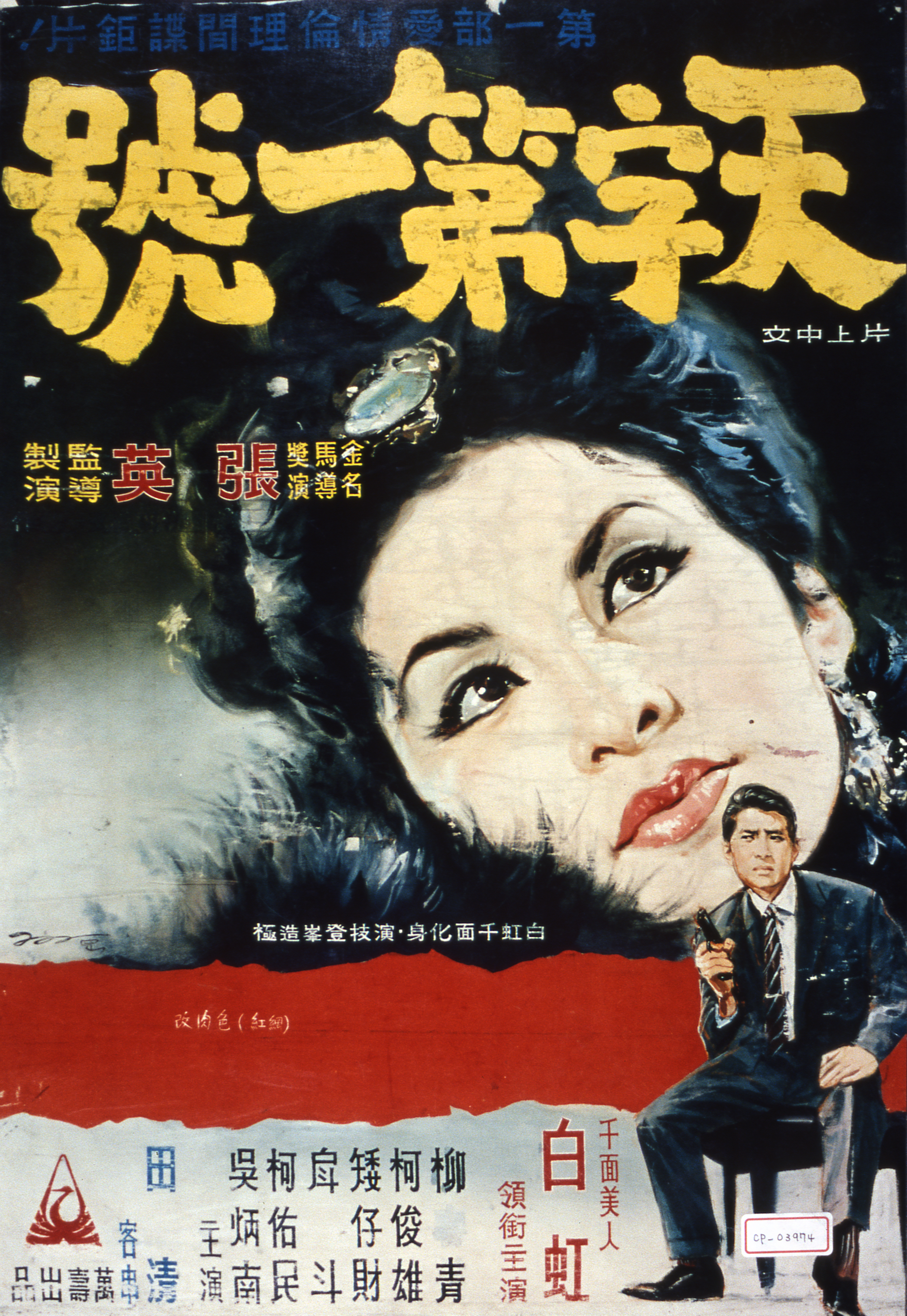
The Best Secret Agent (天字第一號, Chang Ying, 1964)

“The Japanese have destroyed our family. You must avenge me” a dying father instructs his daughter, his words somewhat ironically echoing the ideology of the ruling regime in hinting at the national trauma of exile and separation. Arriving in the wake of Bond mania, Chang Ying’s The Best Secret Agent (天字第一號) is, incongruously enough, a Taiwanese-language remake of an earlier film from 1945 set in Shanghai amid the Anti-Japanese Resistance movement, but at heart is less a tale of espionage and intrigue than a romantic melodrama in which a capable woman sacrifices romantic love for the patriotic and filial while perhaps subversively finding true freedom and independence. 

As Tsui-ying’s (Pai Hung) father (Ko Yu-Min) later explains, not wishing to be enslaved they fled from the Japanese but are forced to degrade themselves with public performances in the market square, the old man stooping to beating his daughter when the show fails to please the audience. A kindhearted man from the crowd, Ling-yun (Ko Chun-Hsiung), comes to her defence but Tsui-ying forgives her father blaming the Japanese for the misfortune which has befallen them. Soon after, Tsui-ying’s father is killed during an airstrike using his dying breath to ask for vengeance. After becoming a nightclub singer in Shanghai, Tsui-ying ends up running into Ling-yun again and the pair fall in love but she is also working as a spy and is ordered to break up with him in order to capitalise on the attraction a prominent collaborator, Chao-chun (Tien Ching), feels for her. Reluctantly she obeys, Ling-yun going abroad to study while she eventually becomes Chao-chun’s wife only to discover some years later that Chao-chun is actually Ling-yun’s uncle. 

The central melodrama revolves around the impossible love of Tsui-ying for Ling-yun, a love that she must willingly sacrifice in order to fulfil her role as a daughter both to her literal father and to her country. There is also however a degree of awkward comedy in Ling-yun’s continual discomfort that he must now refer to Tsui-ying as his aunt, their love now a further taboo in taking on a quasi-incestuous quality. Continually pained, she must keep her cover identity intact unable to explain to Ling-yun why she left him, encouraging him to think of her as a cold and heartless woman while watching him romancing his cousin, Ai-li (Liu Ching), whom she has come to genuinely care for as a maternal figure despite there being very little difference between them in age. 

What she apparently doesn’t know despite being a cunning mastermind is that almost everyone in her house is also a spy. As the famed Heaven No. 1, Tsui-Ying plays the cooly elegant wife of a diplomat cosying up to the Japanese but her activities perhaps owe more to the Basil Rathbone Sherlock Holmes movies than they do to the ever popular Bond, a late montage sequence showing her in a series of disguises from a wise old man to anonymous soldier and cheerful shoeshine boy while an early slapstick set piece sees the Resistance hide a pistol inside a roast duck in order to assassinate the Japanese advisor at dinner, the plan almost foiled by Chao-chun’s fiddling with the lazy Suzan. 

Everything is indeed the fault of the Japanese, but it’s Chao-chun, the collaborator who is the true villain even in his bumbling cluelessness, a quality also reflected in his idiot police chief Captain Wan who consistently fails to capture any Resistance members despite Chao-chun repeatedly ordering him to. In another bumbling piece of verbal humour, Captain Wan (Hu Tou) simply repeats the speech he’s just had criticising him for incompetence verbatim to his own subordinates while not doing much of anything himself. They are both, fairly obviously, outclassed by Tsui-ying playing the part of the clueless society bride lounging around in her furs and mediating in-house disputes while simultaneously plotting to bring them both down once they’ve outlived their usefulness. Though she is forced to give up what is most important to her, her love for Ling-yun, what she discovers is perhaps a transgressive sense of freedom and independence in her life as a master spy not otherwise available to an ordinary woman as she pursues her revenge for the death of her father.

Nevertheless, she is also orphaned both literally and metaphorically forced into a life of wandering. The separation of the lovers, blamed on the Japanese, is symbolic of that between the two Chinas as echoed in Tsui-ying’s melancholy love song and no doubt appealing to the prevailing ideology of the ruling regime save for the implication of fatalism as Tsui-ying and Ling-yun pursue exile in opposing directions. Even so with its fantastically compelling heroine, ironic humour, and atmosphere of intrigue tempered with melancholy romance, The Best Secret Agent more than lives up to its name as the master spy effortlessly completes her primary mission even if sacrificing her heart in the process. 


The Best Secret Agent streams in the UK 25th to 31st October as part of this year’s Taiwan Film Festival Edinburgh.

Trailer (Traditional Chinese subtitles only)

A Touch of Zen (俠女, King Hu, 1971)

“A man has his code” a late villain explains in King Hu’s radical Buddhist wuxia epic, A Touch of Zen (俠女, Xiá Nǚ), justifying his villainy with weary fatalism as a matter dictated by the world in which he lives and of which he is merely a passive conduit. Based on a story by Pu Songling, Hu’s meandering tale begins as gothic horror yet ends in enlightenment parable that in itself reflects the values of Jianghu as a warrior monk achieves nirvana in the apotheosis of his righteousness. 

Hu begins however with slowly mounting tension as lackadaisical scholar Gu Shengzhai (Shih Chun) begins to notice something strange going on in the sleepy rural backwater where he lives. There are several strangers in town from the recently arrived pharmacist Dr Lu (Xue Han), to the blind fortune teller Shi (Bai Ying), and a young man who stops into his shop to have a portrait done (Tien Peng) but is behaving somewhat suspiciously. Shengzhai has also noticed unexpected activity at a house opposite his long thought to be “haunted”, activity which turns out to be caused by a young woman, Miss Yang (Hsu Feng), living in penury with her bedridden mother. 

Shengzhai is often described as feckless or immature, his mother (Zhang Bing-yu) constantly complaining that he refuses to take the civil service exam and has stubbornly wasted his life with “pointless” study while they live harsh lives with little comfort. Shengzhai is, however, an unconventional jianghu hero who has rejected a world of courtly corruption in order to live by his own principles even if that means a poor but honest existence. In a sense he becomes a man through his brief relationship with Yang who turns out to be a noblewoman on the run from the East Chamber after being sentenced to death because of her father’s attempt to expose the corruption of a high ranking eunuch. After he and Yang enjoy a single night of passion in the middle of a thunderstorm, Shengzhai becomes determined to protect her and reveals he has spent much of his life studying military strategy, but he also fully accepts Yang’s agency and right dictate her future walking back his claim of feeling duty-bound because they are “almost married” to be content to help “even as a friend”. 

Nevertheless, there is something of boyish glee in the machinations of his trickery, repurposing the gothic horror of the “haunted” fort as a means to “demoralise” the enemy. His second antagonist, Men Da (Wang Rui), refuses to take the rumours, ably spread by Shengzhai’s gossipy mother panel to panel through a series of expanding split screens, seriously describing them as something only “ignorant country folk” would believe but later falls victims to Shengzhai’s elaborate setup. After his victory, Shengzhai walks through the fort laughing his head off playing with the lifeless mannequins he positioned as ghosts and idly tapping various traps and mechanisms, but it’s not until he leaves the ruined building and ventures outside that he realises the true cost of his childish game in the rows of bodies stretching out and around before realising Yang is nowhere to be found. Shengzhai becomes a man again, forced to accept the consequences of his actions, but also defiant, ignoring advice and instruction on leaving home in search of a woman who asked him not to look for her. 

As he later discovers, Yang and her retainer have renounced the world for a monastic life returning to the Buddhist temple in which Yang learned martial arts during her two years of exile under the all powerful master Hui Yuan (Roy Chiao) who is now it seems close to achieving enlightenment though that won’t stop him helping Yang deal with her “unfinished business”. Like the heroes of jianghu, Yang removes herself from a world of infinite corruption though in this case to pursue spiritual enlightenment and thereafter forgoes her revenge, acting in defence only rather striking back at Eunuch Wei or the East Chamber. At the film’s conclusion, Hui Yang’s act of compassion brings about his betrayal but through it his enlightenment. Struck, he bleeds gold blood and sits atop a rocky outcrop as the sun radiates around his head in a clear evocation of his transcendence witnessed at a distance even by Shengzhai alone and placed once again in a traditionally feminine role literally left holding the baby but perhaps freed from the web of intrigue in which he had been trapped spun all around him just like that weaved by the spider in the film’s gothic opening. 

Stunningly capturing the beauty of the Taiwanese countryside with its ethereal rolling mists and sunlit forests, Hu’s composition takes on the aesthetic of a classic ink painting finding Shengzhai lost amid the towering landscape while eventually veering into the realms of the experimental in the transcendent red-tinted negative of spiritual transition. For Hu’s jianghu refugees, there can be no victory in violence only in the gradual path towards enlightenment born of true righteousness and human compassion.


A Touch of Zen streams in the US until Sept. 28 as part of the 13th Season of Asian Pop-Up Cinema.

International restoration trailer (English subtitles)

Secrets of 1979 (弓蕉園的秘密, Zero Chou, 2021)

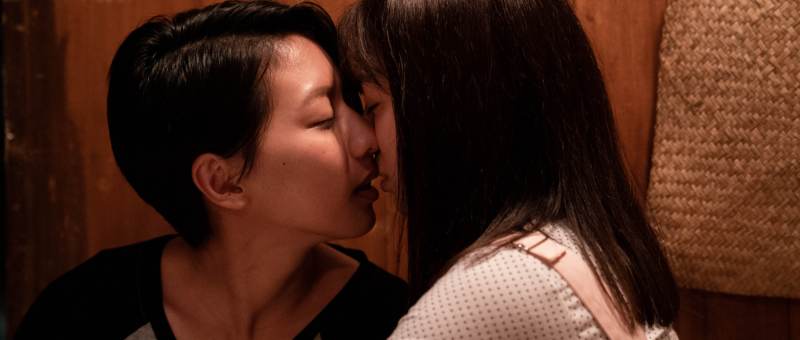
Love is a political act in the latest film from Zero Chou, Secrets of 1979 (弓蕉園的秘密, Gōng Jiāo Yuán de Mìmì). As history repeats itself, a now ageing woman is called back to the past on witnessing the Hong Kong democracy protests triggering memories of the Kaohsiung Incident and her youth fighting for political freedom in martial law Taiwan. Chou’s betrayed heroine dreams of a future in which all voices can be heard and all loves embraced, a future that in some senses may have come to pass, yet tragically too late for some forced to believe that their love must forever remain a secret. 

Malaysian student Shu-lan (Daphne Low) falls for Kuan (Chen Yu), the daughter of a banana plantation owner majoring in art as part of a teacher training programme. The pair draw closer while sharing a room, and a bed though partly because those two things are mainly the same, over the summer while Shu-lan takes a job at the farm but their innocent romance is soon overshadowed by the revelation that Kuan’s brother Siu (Hsu Yu-ting) has become involved with the movement against martial law producing a magazine critical of the government. Though they could never know it, their love will lie at the centre of a political divide, cruelly used against them even while they commit themselves to the battle for freedom and human rights. 

Soon after the film opens, a young man walks into Shu-lan’s classroom with application forms to join the nationalist governing party of the martial law one party state, the KMT. The idea does not seem popular among the students, but some are interested if treating it with a degree of irony explaining that they’d only be joining to take advantage of the generous perks which include free travel back to your hometown to vote and access to scholarships, or else because it may be advantageous in their future careers. Shu-lan is fiercely disinterested and attempts to politely decline, but the recruiter, Chih-hsiang (Sean Sun), has an obvious crush on her and won’t take no for an answer thrusting a form into her hand to think about later while lowkey resentful as she distances herself from him to leave with Kuan. 

Kuan, meanwhile, has just been subjected to an unpleasant grilling in her art class when she tried to stand up for a painter rumoured to be gay provoking a homophobic rant from several of her classmates who then openly mock her for being a lesbian. Perhaps surprisingly the rumour of homosexuality does not cause either of the girls particular problems with the authorities or their fellow students save for further irritating the extremely creepy, generally evil, and cruelly manipulative fascist Chih-hsiang who views it as merely another bargaining chip in his pointless quest to convince Shu-lan who has no interest in men (or members of the KMT) to go out with him. The problems that Shu-lan faces which are partly set up by Chih-hsiang so he can save her from them, are largely to do with her status as a foreign national and involvement with politics accused of collaborating with communists for listening to Chinese folk songs sent by her teacher in Malaysia. 

These are all reasons, along with her treatment at the hands of the authorities, that eventually convince her she must renounce her love for Kuan in order to keep her safe in fear that she too will be implicated as a politically suspicious person. Prior to that, she’d been learning Taiwanese and hoped to stay living on the banana farm with Kuan whose family seem relatively relaxed about the relationship, only for their love to be stamped out by oppressive authoritarianism and the machinations of a petty and jealous man. The bookending sequences set in the present day and featuring a Kuan who seems much older than a woman who’d only be in her mid-60s remind us that though Taiwan may have become a relatively progressive place in which same-sex marriage has been legalised, the battle is never really won as the young people of Hong Kong too campaign for freedom and democracy. But Kuan is left only with her secrets and her sadness stuck in the summer of 1979 and a love never to be told. 


Secrets of 1979 screens at Lexi Cinema on 21st September as part of this year’s Queer East. It is also available to stream in many territories via GagaOOLala.

Original trailer (English subtitles)

A Leg (腿, Chang Yao-sheng, 2020)

“Life is long. We all have some regrets.” a grieving widow is told by a disingenuous doctor in full damage limitation mode. He’s not necessarily wrong, nor is his advice that the widow’s pointless quest to retrieve her late husband’s amputated limb has little practical value though of course it means something to her and as he’d pointed out seconds earlier a physician’s duty is to alleviate suffering of all kinds. Apparently inspired by the true story of director Chang Yao-sheng’s mother, A Leg (腿, Tuǐ) is in many ways a story of letting go as the deceased man himself makes a presumably unheard ghostly confession while his wife attempts to do the only thing she can in order to lay him to rest. 

Husband Zi-han (Tony Yang) is in hospital to deal with a painful, seemingly necrotic foot which eventually has to be amputated in a last ditch attempt to cure his septicaemia. “Keep the leg and lose your life, or keep your life and lose the leg” the otherwise unsympathetic doctor advices wife Yu-ying (Gwei Lun-mei) in a remark which will come to seem ironic as, unfortunately, Zi-han’s case turns out to be more serious than first thought and he doesn’t make it through the night. Grief-stricken, Yu-ying leaves in an ambulance with the body but later turns back, determined to retrieve the amputated foot in order that her husband be buried “complete” only it turns out that it’s not as simple as she assumed it would be. 

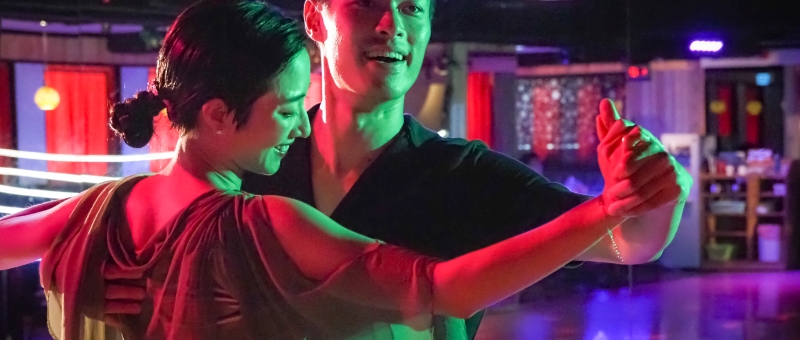
The loss of Zi-han’s foot is all the more ironic as the couple had been a pair of ballroom dancers. As Yu-ying makes a nuisance of herself at the hospital, Zi-han begins to narrate the story of their romance which began when he fell in love with a photo of her dancing in the window of his friend’s photography studio. Explaining that, having died, he’s reached the realisation that everything beautiful is in the past only he was too foolish to appreciate it, Zi-han looks back over his tragic love story acknowledging that he was at best an imperfect husband who caused his wife nothing but pain and disappointment until the marriage finally broke down. He offers no real explanation for his self-destructive behaviour save the unrealistic justification that he only wanted Yu-ying to live comfortably and perhaps implies that his death is partly a means of freeing her from the series of catastrophes he brought into her life. 

Given Zi-han’s beyond the grave testimony, the accusation levelled at Yu-ying by his doctor that the couple could not have been on good terms because Zi-han must have been ill for a long time with no one to look after him seems unfair though perhaps hints at the guilt Yu-ying feels in not having been there for her husband when he needed her. As we later discover, however, this is also partly Zi-han’s fault in that he over invested in a single piece of medical advice and resisted getting checked out by a hospital until he managed to sort out an insurance scam using his photographer friend, wrongly as it turned out believing he had a few months slack before the situation became critical and paying a high price for his tendency to do everything on the cheap. Nevertheless, Yu-ying’s quest to reattach his leg is her way of making amends, doing this one last thing for the husband whom she loved deeply even though he appears to have caused her nothing but misery since the day they met. 

In order to placate her, the slimy hospital chief offers to have a buddhist sculptor carve a wooden replica of Zi-han’s leg made from wood destined for a statue of Guan-yin goddess of mercy but Yu-ying eventually turns it down, struck by the beauty of the object but convinced that turning it to ash along with her husband’s body would be wrong while believing that wood ash and bone ash are fundamentally different. She regrets having ticked the box on the consent form stating she didn’t want to keep the “specimen”, never for one moment assuming that her husband would not recover. Despite their dancing dreams, she thought the leg was worth sacrificing against the long years they would have spent together after, though this too seems a little unlikely considering the state of their relationship prior to her discovery of Zi-han’s precarious health. Zi-han meanwhile is filled with regret for his continually awful behaviour and the obvious pain he caused his wife. Getting his leg back allows him to begin “moving on” while doing something much the same for Yu-ying though his afterlife pledge about the endurance of love seems a little trite given how he behaved while alive. A little more maudlin than your average quirky rom-com, A Leg nevertheless takes a few potshots at a sometimes cold, cynical, and inefficient medical system, inserting a plea for a little more empathy from a pair of unexpectedly sympathetic police officers, while insisting that it’s important to dance through life with feeling for as long as you’re allowed. 


A Leg screens Aug. 14  & streams in the US Aug. 15 – 20 as part of this year’s New York Asian Film Festival.

Original trailer (English/Traditional Chinese subtitles)

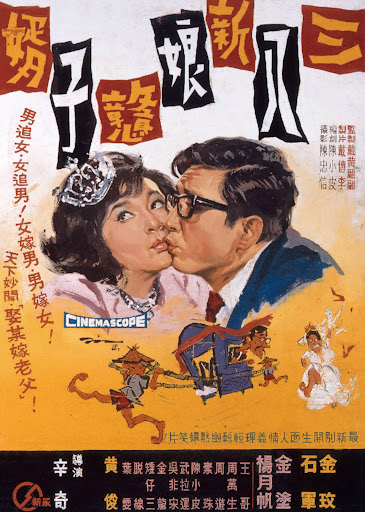
Foolish Bride, Naive Bridegroom (三八新娘憨子婿, Hsin Chi, 1967)

Even in the Taiwan of 1967 things were changing but not perhaps as quickly as elsewhere. Hsin Chi’s delightful “taiyupian” Taiwanese-language screwball rom-com Foolish Bride, Naive Bridegroom (三八新娘憨子婿) is a fairly late take on the arranged marriage vs love match debate which, perhaps surprisingly given the increasing conservatism of the era, comes down firmly on the side of the youngsters’ right to choose even while subtly poking fun at them for being naive and irresponsible, unable to forge independent lives for themselves and expecting the older generation to fix their mistakes while the parents eventually soften and in a sense free themselves from the oppressive values which defined their youths. 

As the film opens, grumpy father A-Kau (Chin Tu) is complaining that his pot is already boiling but his son Bun-ti (Shih Chun) has not yet returned with the rice he sent him out to get. That’s because Bun-ti has taken the opportunity of the errand to meet up with his girlfriend, Kui-ki (Chin Mei), who is also out on an errand having been sent grocery shopping by her mother (Yang Yue-fan). The pair can only meet on occasions such as these because their overly possessive parents refuse to let them leave the house without good reason and firmly disapprove of romantic relationships. 

In an amusing reversal of accepted gender norms, it’s A-Kau who plays the wounded widower, afraid that some young woman is coming to steal away his son and then there’ll be no one to look after him. Nevertheless, he’s simultaneously proud of his son’s popularity with the opposite sex despite describing him as having a “ladies curse” which he attributes to a constant need for female affection caused by the early death of his mother when he was only a few months old. In a running gag, the house is frequently beset by the young women of the neighbourhood pushing notes through the window and demanding to see the handsome young man. A-kau’s solution is to literally shut his son away by having the windows boarded over despite the carpenter’s cautioning that most people are looking for more ventilation, not less. 

Kui-ki’s mother, by contrast, is a much feistier figure directly telling her daughter that she’s no wish to meet her boyfriend because marriage is a matter for the parents. A-Kau later says something similar, concerned that “love heats up fast but often cools”, believing perhaps that an arranged marriage can provide greater longterm stability and is no more likely to fail than a love match. As we later discover, however, the parents’ animosity is rooted in youthful tragedy. In a staggering coincidence, it turns out that they were once young lovers like Bun-ti and Kui-ki who wanted to marry but fell foul of parental disapproval. Each accuses the other “abandonment”, but the cause is found to lie with A-Kau who, like Bun-ti, failed to be “resolute in love”, refusing to fight for Kui-ki’s mother and simply backing off when her father told him he wasn’t good enough. His own father then apparently forced him into the arranged marriage which produced Bun-ti while Kui-ki’s mother held out for a few years and was then forced into an arranged marriage herself. The pair of them fail to see the parallels with their children’s romance and have over invested in the idea of properness in traditional values in an attempt to ease the pain and disappointment of being denied the right to marry the person they loved. 

On recognising A-Kau, Kui-ki’s mother chases him out of the house with a broom and vetos the marriage, causing the young couple to elope to Taipei in an attempt to escape their parents’ authority. Each of them is sorry, but still wedded to their position as parental authorities, too proud to cede ground and simply give their blessing to the union to get their kids to come home. In an echo of an earlier scene in which he went on the prowl looking for Bun-ti, A-Kau roams the local park and spots young couples everywhere some of them engaging in public displays of affection which one might have assumed would have annoyed the censors. He’s approached first by a disabled beggar who explains that he, like Bun-ti, did not listen to his parents and eloped to Taipei with a woman they wouldn’t let him marry. But he couldn’t find work, went broke, and became ill. Finally she left him, and he’s too ashamed of his filial failure to go home which is why he’s begging in this park. A-Kau seems to find vindication rather than a warning in the story, glad to hear the young man admit that his parents were right rather than fearful that the same will happen to Bun-ti if he does not eventually accept his decision to marry. Later, a young couple approach him looking distressed, offering to sell the woman’s coat for money to elope. Feeling sorry A-kau gives them twice as much as they asked for and drops the coat behind him as he leaves, but then gives a long and painful lecture reflecting on his plight and encouraging the young couple to go home, “your filial duty is to avoid worrying your parents” he goes on. The young couple eventually make a sneaky escape while he’s turned around mid-monologue, rejecting his melancholy defence of feudal patriarchy. 

Meanwhile, in the city, Bun-ti and Kui-ki have got what looks to be a rather nice apartment together and are living it large but we later discover that they’re months behind on their rent (not to mention the rice bill) and the reality of their situation is beginning to place a strain on their relationship. He accuses of her of being a spendthrift, wanting to go out for dinner and a movie on a Sunday when they owe so much money already, while she blames him for failing to provide. In a strange and uncomfortable defence of domestic violence, Bunt-ti and Kui-ki chance on an apparently happily married couple making a spectacle of themselves during their weekly bout of fighting after which they both emerge bloody and bruised but seemingly cheerful after having worked out all their frustrations. Bun-ti and Kui-ki decide to try it for themselves and find that it works, later getting into a blazing row caused by Bun-ti’s staying out late drinking without phoning home. 

This last argument which signals the failure of their attempt to live as independent adults in the modern city leads to an intervention from the district chief/landlord and rice merchant, each of them instructing the creditors to call their parents to settle the debts. Ah-kau and Kui-ki’s mother dutifully arrive, launching a mini trial to discover who’s at fault including a full reconstruction of the events of the previous night which results in another violent fight after which the couple threaten to break up and marry other people only to reconcile while A-Kau and Kui-ki’s mother are then forced to deal with their “grudge” and end up getting engaged.

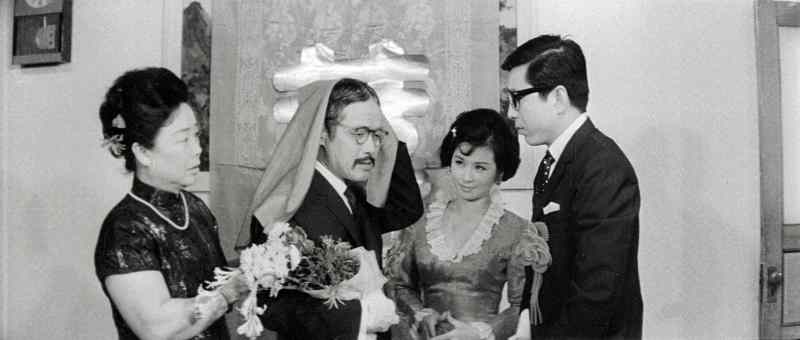
“Parents don’t understand the way young people do things” Kui-ki had explained, but they are eventually compelled to shift ground as they take back what was taken from them in finally being allowed to marry. Hsin doesn’t let anyone off the hook, neither the naive and feckless lovers nor their embittered parents whose hurt eventually turns into an unexpected opera duet as they rehash the failure of their youthful romance. He does however leave room for an unambiguously happy ending in which, ironically, the traditional family is repaired but only in its subversion as the young lovers are validated in their desire for love and freedom while A-Kau abandons the patriarchal order by assuming the role of the bride, carried in a palanquin to Kui-ki’s mother’s house wearing a veil, as he removes himself from his son’s family and surrenders his authority to his new wife in affirmation of a new social order struggling to be born in the increasingly repressive martial law era. 


Remaster trailer (English/Traditional Chinese subtitles)
The Silent Forest (無聲, Ko Chen-Nien, 2020)

There can be no justice in silence, but when those in a position to help refuse to listen what can be done? Inspired by true events, Ko Chen-Nien’s The Silent Forest (無聲, Wúshēng) takes aim at cycles of abuse and systems of oppression in society at large through a thorough investigation of the culture of silence at a school for deaf children in which endemic bullying spreads like a virus emanating from a single trauma inflicted by a negligent authority. Yet this kind of violence cannot be fought with violence and there must be empathy too for the bully or the chain will never end as Ko’s ambivalent conclusion makes clear. 

The film opens with a boy on the run, finally chasing down an old man and tackling him to the ground pummelling him until the police turn up and separate them. The policemen are frustrated. This is apparently the first time they’ve ever come into contact with a deaf person and have no idea how to communicate with him. Chang Cheng (Troy Liu Tzu-Chuan) tries to protest their injustice, but they continue to treat him as aggressor rather than victim even as he explains in writing that the old man had stolen his wallet (the old man claims he “found” it and was planning to hand it in). Finally a teacher from his new school, Mr. Wang (Liu Kuan-ting), turns up and interprets but it quickly becomes clear that he too is in a sense complicit, reporting that Cheng is sorry for what he did and grateful to the officers. In his view at least, the boy has his wallet back and there’s no harm done so why make a fuss? Just let it go and everyone goes home.

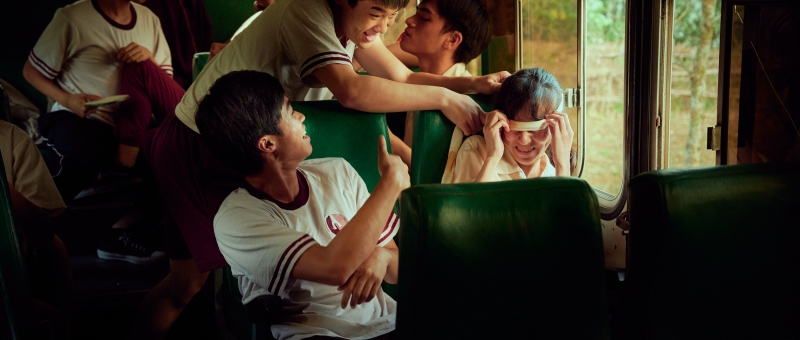
It’s this conflict between “silence” and justice that continues to prey upon Cheng’s mind after he starts at the school and becomes aware of the widespread culture of bullying witnessing a girl he likes being sexually abused by a gang of boys at the back of the school bus while the teacher sitting at the front does nothing. He tries to convince the girl, Beibei (Buffy Chen Yan-Fei), to tell one of the other teachers but she refuses, not wanting to “betray” her “friends”, insisting they were “just playing around”. Her reluctance however mainly stems from an intense fear of being sent away, that she might have to leave the school which is the only place she feels accepted. Both she and Cheng feel intensely othered in the hearing world, wary of being blamed for things that weren’t their fault as if their very existence were bothersome or “abnormal”. Even if it means putting up with extreme degradation, she would prefer it to the loneliness she felt before she found the school.

Yet the sense of social isolation is only one of the various oppressions to be found at the institution which ironically cultivates a culture of silence as regards the ongoing abuse as a means of preserving its reputation and therefore the “greater good” in providing the “safe space” from the social stigma the children face in the hearing world. Beibei points out that she was screaming, yet nobody could hear her. At first she tried to tell a teacher, but the teacher blamed it on her and implicitly on her disability insisting that the boys were “good kids” who were “just playing around” and didn’t understand she didn’t like it because she failed to communicate that she was uncomfortable. If they knew she was suffering they’d have stopped, the teacher insists before coldly walking away. Mr. Wang feels quite differently and wants to help but discovers that the culture of silence extends much deeper than he thought and the problem most likely cannot be solved through a few simple countermeasures but requires whole-scale systemic reform.

In fact, very little is done by the authorities leaving Chang Cheng with a hero complex believing that he has to be strong to beat the bad guys and save Beibei, but his righteous desire still leads him back towards complicity in order to protect her. The arch antagonist, Xiao Guang (Kim Hyun-Bin), bullies as a defence mechanism insisting that no one would dare bully him, manipulating others to do his bidding through the same mentality that one can either be a bully or a victim. Yet Xiao Guang is also a victim himself, a wounded damaged boy let down by a culture ruled by shame and unable to defend himself by any other means though apparently uniquely vulnerable to one particular aggressor. Only by addressing the root of his trauma can the cycle be brought to an end, but the concurrent cycles which he set in motion will in turn require their own resolution. A painful allegory, The Silent Forest boldly makes the case for speaking out but also admits that it doesn’t matter how loud you shout if no one is listening and without the desire for empathy and communication in all its forms the cycles will grow and repeat until the end of time.


The Silent Forest streams in Illinois until March 21 as part of the 12th season of Asian Pop-Up Cinema.

Original trailer (English subtitles)

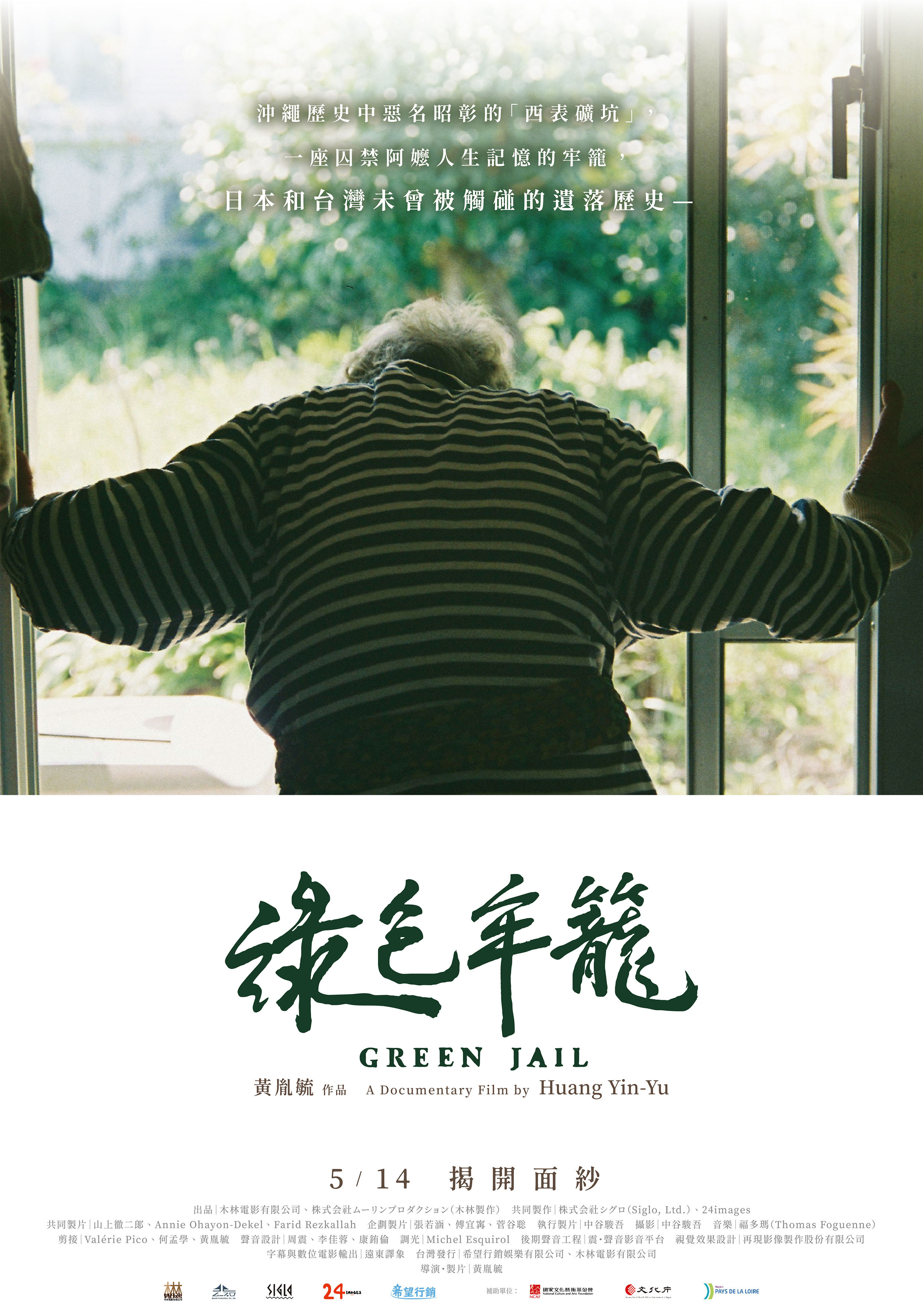
Green Jail (綠色牢籠, Huang Yin-Yu, 2021)

The legacy of Japanese imperialism continues to haunt a small Okinawan island once home to a sprawling network of coal mines but now mostly to ghosts of its troubled past at least according to Huang Yin-Yu’s beautifully lensed, elegiac documentary Green Jail (綠色牢籠, Lǜsè Láolóng). So named for its thick forests of mangrove trees, the island’s Iriomote Coal Mine ceased production in 1960 but from the late 19th century to the fall of the Japanese Empire at the end of the war, lured workers from not only from the Japanese mainland but from Korea, China, and Taiwan with false promises of tropical climes and plentiful fruits failing to disclose the harsh and exploitative working conditions they would later prove unable to escape. 

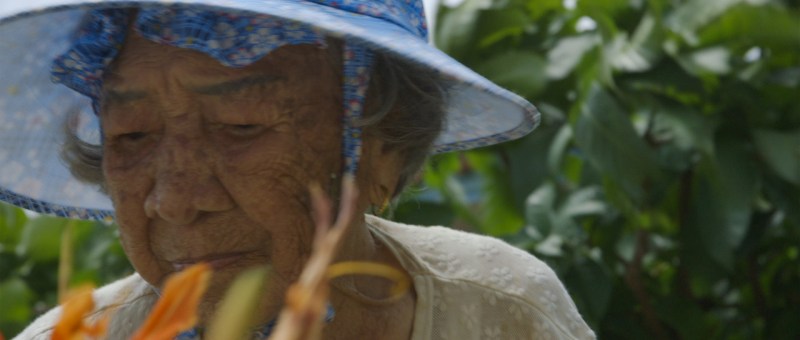
Possibly the last witness to these times, grandma Yoshiko Hashima (her name naturalised from the original Yang) travelled to the island with her adopted father, Yang Tien-fu who worked for the mines and was responsible for recruiting other workers, at the age of 10 leaving briefly after the war but soon returning. The last of the Taiwanese settlers, she recalls little regarding the running of the mines save witnessing frequent beatings by Japanese soldiers but does recall the discrimination she faced as a foreign worker from the local community who by far made up the smallest percentage of those employed at the mines finding herself with few friends as locals often even declined to eat their food or accept their hospitality. 

Yet in a strange way history perhaps repeats itself. Now elderly and alone, her children all having left the island returning only infrequently, she rents out her spare room for extra money to an American traveller, who, like her, came to Japan as a teenager. Though Luis tells us that he hadn’t intended to stay long on the island but likes being able to help Yoshiko who is elderly and alone, she tells us that she regrets her decision to rent to him which she claims she made in the belief he had a wife. She describes him as “‘messy”, claims he has lice, and that his slovenliness has attracted an influx of ants while the pet dog that he keeps on a leash outside disturbs her with its constant whining. Later we see him again having returned to Kansai revealing that he felt that people disliked him and found it difficult to fit in, but that his time in Okinawa has perhaps brought him clarity in the further direction of his life. 

Luis was at least able to leave the island at a time of his own choosing, but as the ghostly voice of Yoshiko’s late father reminds us those who worked in the mines were not so lucky. He tells us that he once slept on a pile of bones and the remains of workers who attempted to flee but ended up starving to death in the jungle were a frequent sight in local caves. Exploited and manipulated, workers were often hopped up on morphine, for which they had to pay, in order to up their productivity but also to make them dependent on their employment to avoid withdrawal aware that they would be unable to obtain a such substances in their home country. They also found themselves borrowing on their wages, especially if they contracted malaria and were unable to work, leaving them essentially indentured and therefore unable to leave without satisfying their debts. Yoshiko tells us that few wanted to come to “Dead Man’s Island” yet Tien-fu declares himself uncertain why some miners remained unhappy with the arrangement eventually needing to organise a specialised police force to enforce discipline complaining that workers who were in debt and therefore earning almost nothing often shirked and only worked when the police were around. 

Travelling around the otherwise idyllic landscape with its verdant green forests and peaceful rivers, Huang finds occasional ghosts of the departed miners hovering on the horizon dressed only in their white fundoshi underwear, slipping into brief scenes of reconstruction set amid the now ruined structures of the industrial mining complex. The last survivor, Yoshiko hangs on alone yet perhaps not quite reflecting on the implications of her father’s role in the development of the mines or particularly of their legacy. Her own life has evidently been hard, adopted as an infant and then married to her “brother” only to see her children desert her left behind alone in the Green Jail a guardian of a dark history few wish to remember. Juxtaposing the island’s traumatic past with the beauty of its verdant scenery Huang’s elegantly composed documentary poses some serious questions about the imperial legacy but always mindful of its wandering ghosts. 


Green Jail screened as part of the 2021 Osaka Asian Film Festival.

Original trailer (Japanese subtitles only)

The festival will also be screening Huang Yin-Yu’s accompanying short film Green Grass, Pale Fire: an elliptical, ethereal dramatisation of three men’s attempt to escape the mines only to find themselves trapped by the beautiful yet maddening landscape.

Images: (c) Moolin Films, Ltd./ Moolin Production, Co., Ltd.