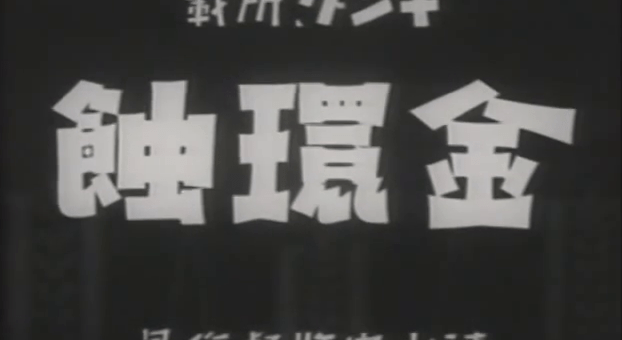

Though most often remembered for his contribution to the cinema of children, Hiroshi Shimizu was also a practiced chronicler of his difficult times. 1934’s Eclipse (金環蝕, Kinkanshoku), unlike much of his other work from the period, avoids direct reference to Japan’s increasingly global or imperialist ambitions but paints its rapid shift towards “modernity” as dangerous and potentially tragic for the unlucky few who for one reason or another are unable to secure their passage towards a harmonious and prosperous future. Adopting the form of a classic romantic melodrama, Eclipse is a bittersweet exploration of corrupted social virtues which ends on an ironic note of defeated victory.
Shimizu begins in a traditional rural village which is all abuzz because prodigal son Seiji Kanda (Shiro Kanemitsu) – now a big shot lawyer in the city, is set to return and, rumour has it, is on the look out for a good country wife. Regarding a marriage to a promising young man like Seiji as the highest of prizes, the village women gossip about whom he might choose and correctly conclude Kinue Nishimura (Hiroko Kawasaki) is likely to be the front runner given her comparatively high education level, beauty, poise, and kindness. Kinue, however, has long been in love with her diffident cousin, Shukichi Osaki (Mitsugu Fujii), who now finds himself in a difficult position as Seiji’s best friend and the go-between charged with communicating his intention to marry. Called to a secret meeting by an old watermill, Kinue is shocked and offended when Shukichi proposes on behalf of someone else, strongly refusing the proposal and reminding him of all the times they had spent together during which she believed an attachment had been formed. Shukichi, whose family is impoverished, does not reject her affections but claims not to want to stand in the way of his friend’s romantic dreams.
Kinue, perhaps unwittingly setting up the ongoing drama, asks if she is to sacrifice her heart and marry a man she does not love and believes would ultimately be unhappy with a woman who yearns for someone else, in order that Shuikichi may continue to feel noble. In the end, Shukichi tries to make her decision for her by running away to the city in the hope of making a life for himself in the same way that Seiji has done. Kinue, brokenhearted, rejects the idea of marrying Seiji and runs off after him only to end up working as a bar girl under the bright lights of Tokyo. Meanwhile, Shukichi discovers that the bonds of obligation which carry so much weight the village are all but worthless in the city when his various contacts refuse to see him and he finds it impossible to gain promising employment. His big break comes when he is knocked over by the chauffeur of the man who just offered to pay his train fare back to the country and thereafter is taken into the family home as a tutor for the youngest son on the insistence of the forthright “modern girl” daughter, Tomone (Michiko Kuwano). Needless to say, the romantic drama isn’t over as Tomone also has a “cousin” who is in love with her and is also sought by Seiji who was her tutor while he was in college and she in school.
The values of the old world and the new are in constant conflict with each other though ultimately it is the failure to act decisively on one’s emotions which causes the greatest harm. Shukichi, knowing his family is poor and a marriage to Seiji the “better” social and financial option for Kinue, insists on nobly sacrificing himself in what he sees as her interest but in doing so rejects her own agency or right to choose her future, assuming she will simply passively pass into the arms of Seiji with no resistance. Kinue, however, resists by following him to Tokyo but, unable to find him, is forced into the sex trade to support herself. Meanwhile, Shukichi continues to break hearts in the city – firstly that of Tomone who has apparently fallen in love with him despite their class difference, but also that of Kayo (Yoshiko Tsubouchi) – the sister of the chauffeur who knocked him over. Still in love with Kinue he diffidently (but not categorically) rejects the affections of the two women but also refuses to act on his feelings for Kinue until he tries a last ditch attempt to “rescue” her from a fall into a life of prostitution through a worrying act of frustrated physical violence (something which ultimately fails).
The final resolution is brought about by Seiji who, unlike Shukichi, has been able to reconcile his essential nobility with the forward moving nature of the times. Seiji, figuring out that he’d come between a loose arrangement between Kinue and her cousin, is full of remorse and steps back without a second thought, desiring only happiness for all rather than victory or conquest. Again, at the end, becoming the second choice match for Tomone, he returns to fix what he half feels he has broken by “rescuing” Kinue himself through an act of gentleman’s diplomacy and then giving his friend a good talking to. The problem becomes less of one of East and West, town and country, past and future, but personal integrity. Tomone laments that her “selfishness” has caused pain to others – something for which she is trying to make amends in becoming a “good wife” to Seiji, but this is a lesson Shukichi has been slow to learn. His failure to integrate his conflicting desires coupled with a feeling of social inferiority due to his family’s reduced circumstances and standing in the village has effectively created this web of broken hearts and ruined futures, all of which might have been avoided if he had been braver and chosen to stay at home with the woman he loved at his side, living a life of simplicity but with emotional integrity.
These twin destinies are reinforced by the final scenes which find Seiji and Tomone boarding a boat to the West to immense fanfare and celebration, while Kinue and Shukichi are perched aboard a baggage train, he standing and she sitting dejectedly, silent and apart as the rails speed away behind them. The city recedes and the chance of future happiness for our reunited lovers seems slim despite the conventionally romantic nature of their togetherness as they return home drenched in defeat. Seduced and betrayed by the bright lights of Tokyo, Kinue and Shukichi seem bound for the life they should have lived if they’d only been brave enough to fight for happiness at home rather than succumbing to the false promises of modernity but it remains to be seen if their time in the city can be “eclipsed” by a new hope for a traditional future or will continue to overshadow their simple and honest lives in the days to come.
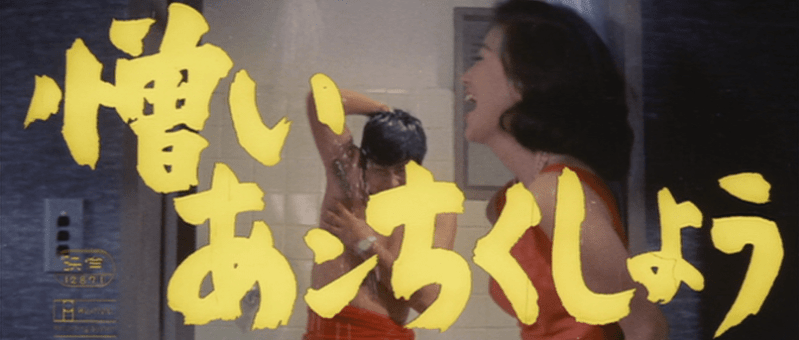





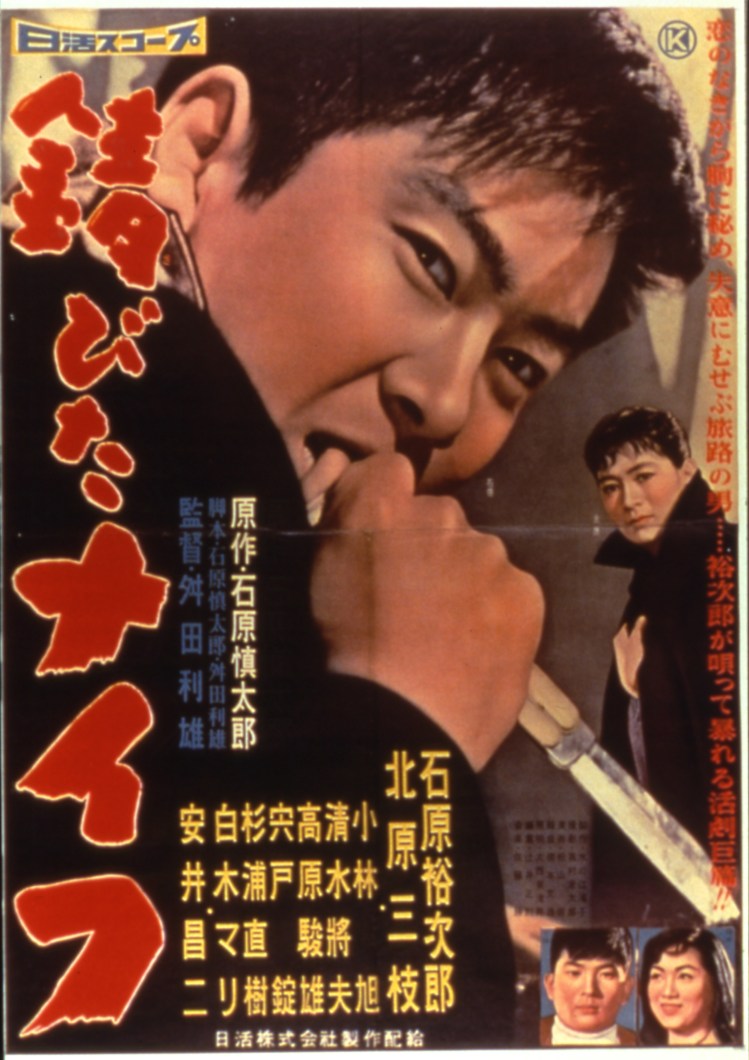 Post-war Japan was in a precarious place but by the mid-1950s, things were beginning to pick up. Unfortunately, this involved picking up a few bad habits too – namely, crime. The yakuza, as far as the movies went, were largely a pre-war affair – noble gangsters who had inherited the codes of samurai honour and were (nominally) committed to protecting the little guy. The first of many collaborations between up and coming director Toshio Masuda and the poster boy for alienated youth, Yujiro Ishihara, Rusty Knife (錆びたナイフ, Sabita Knife) shows us the other kind of movie mobster – the one that would stick for years to come. These petty thugs have no honour and are symptomatic parasites of Japan’s rapidly recovering economy, subverting the desperation of the immediate post-war era and turning it into a nihilistic struggle for total freedom from both laws and morals.