World Theatrical Premiere of 4K restoration. Introduced by John David Baldwin, creator of http://www.uchidatomu.com/ and contributor to Arrow’s recent blu-ray release.
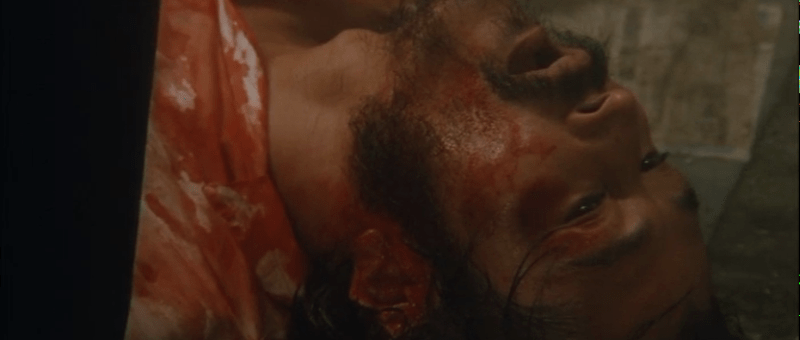
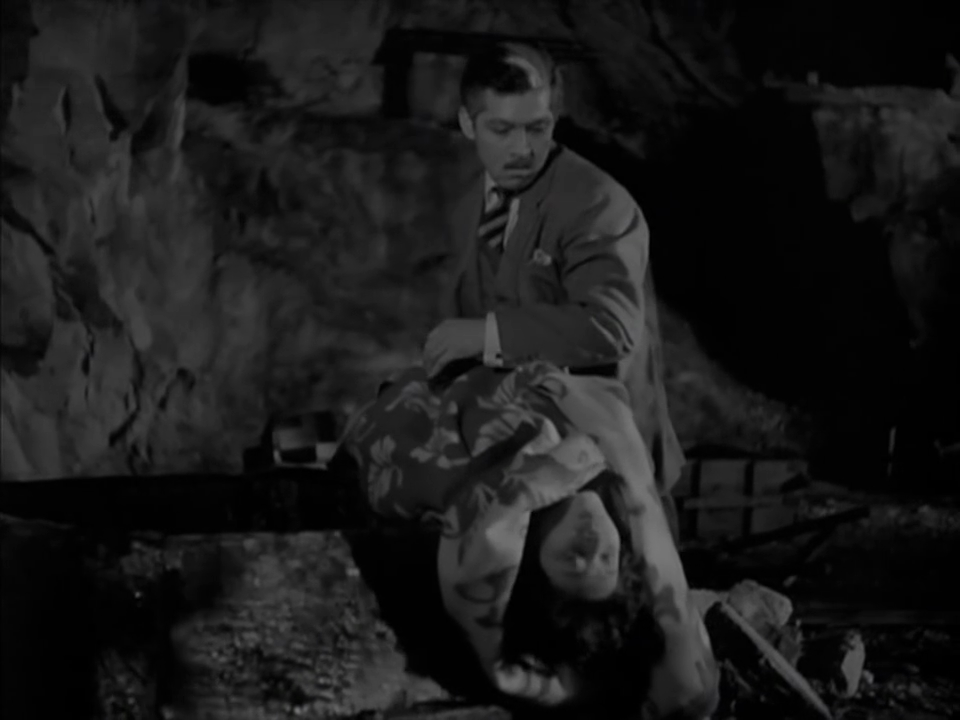
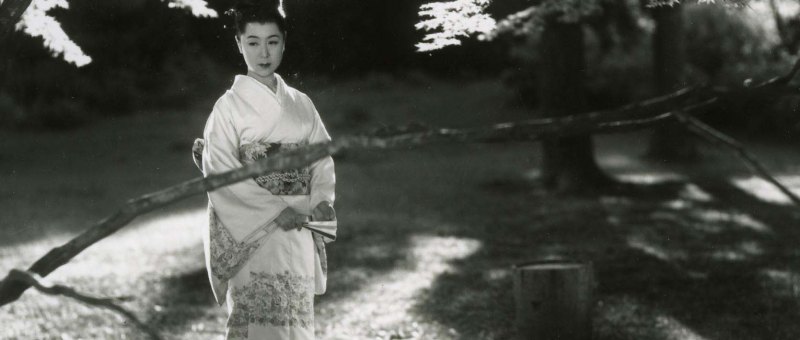
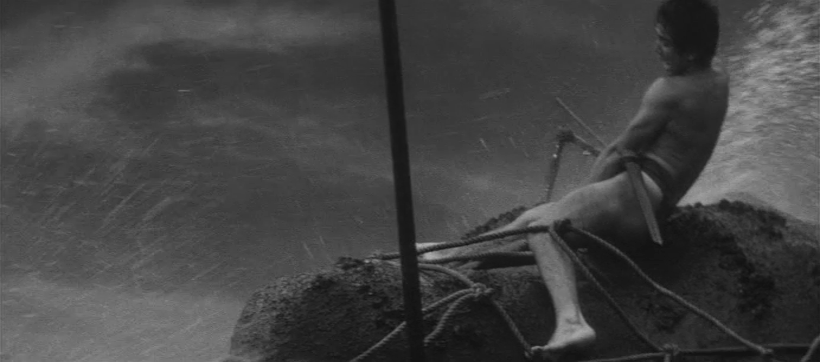
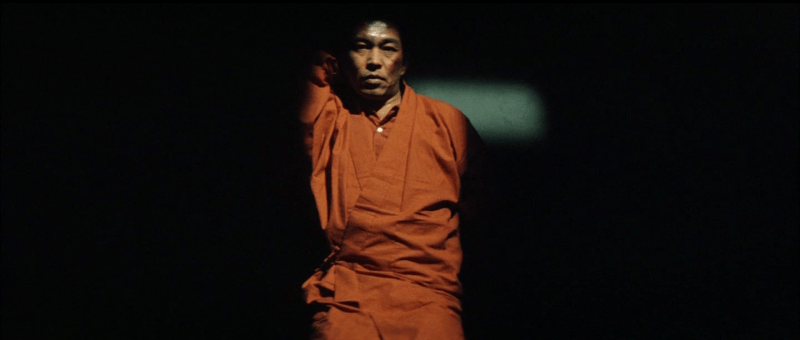
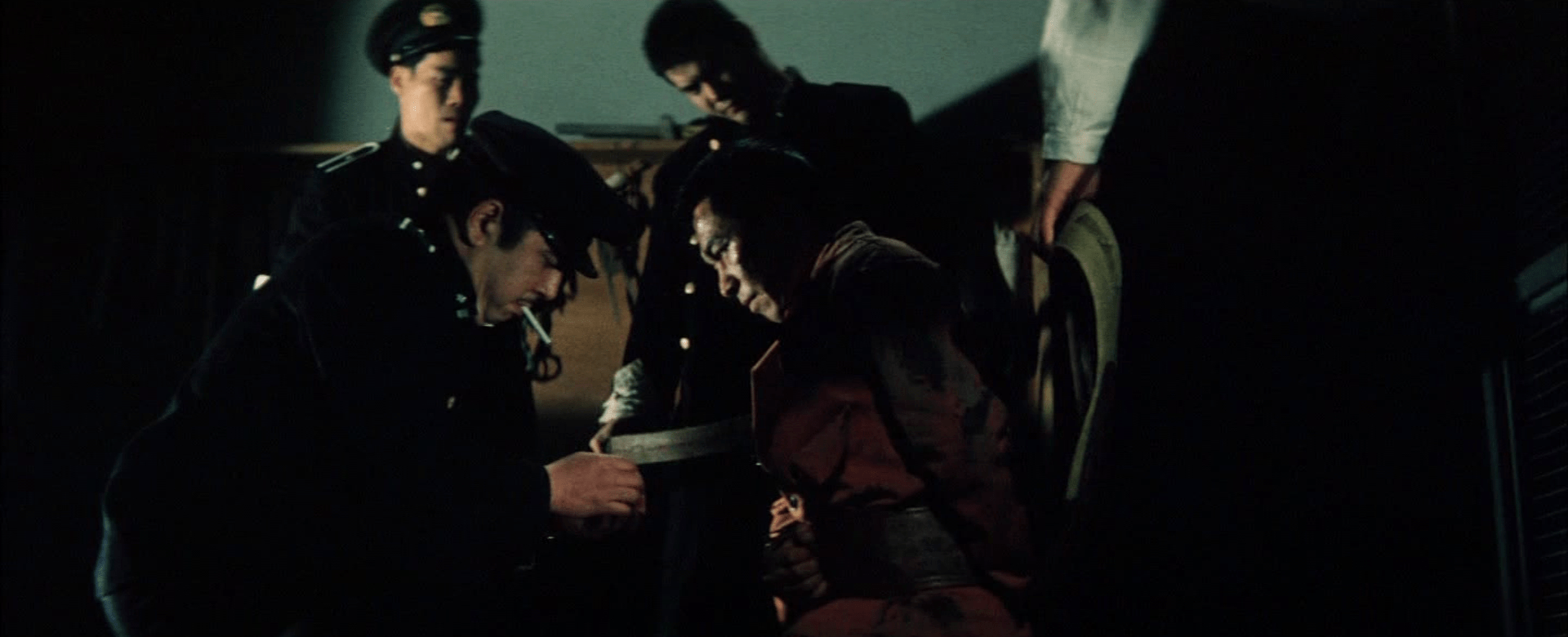
Also known as The Straits of Hunger, Tomu Uchida’s late career masterpiece stars Rentaro Mikuni as a man whose attempts to start again in the post-war era are frustrated by the reappearance of a woman from his past. Review.
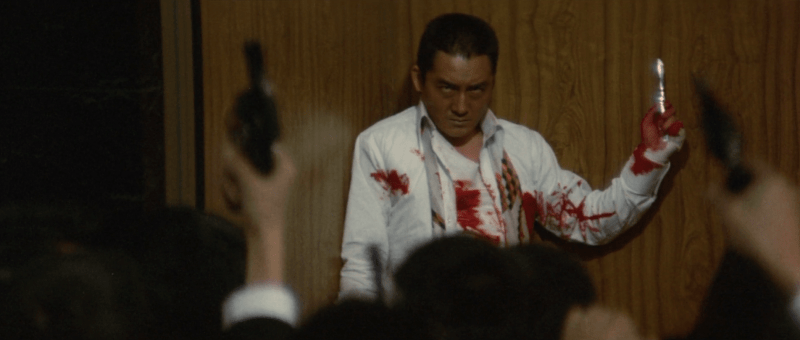
Indo-Japanese co-production 10 years in the making adapting the sanskrit epic in which exiled prince Rama retreats to the forest where he incurs the wrath of the demon king Ravana. When his beautiful wife Sita is kidnapped, be becomes embroiled in a battle which will decide the fate of the kingdom.
The screenings take place in January, 2023 at Japan Society New York. Tickets priced at $15 / $12 students & seniors, and $5 Japan Society Members are on sale now via the official website and you can also keep up with all the year-round events by following Japan Society Film on Facebook, Instagram, and Twitter.
The toxic hyper-masculinity of the yakuza world conspires against a sensitive young man who longs to reclaim his place in society through reuniting with the mother who was forced to abandon him at five years old in Tai Kato’s hugely moving jidaigeki, In Search of Mother (瞼の母, Mabuta no Haha). Adapted from a kabuki play by Shin Hasegawa, Kato’s wandering tale is perfectly tailored for post-war concerns situating itself in a world of mass displacement, economic inequality, and lonely regret in which the secrets of the immediate past have become a threat to the promise of the near future which may then in itself prove unrealisable.
As the film opens, 25-year-old Chutaro (Kinnosuke Nakamura) is trying to stop his hot-headed friend Hanji (Hiroki Matsukata) from taking revenge on a rival gang on behalf of their boss who is to them something like a father figure. Chutaro reminds Hanji that he has other ties and should think about the mother and sister who wait for him in his hometown to whom he should return and attempt to live an honest life, the possibility of which Chutaro is deprived because he is an orphan with no home or family to turn to. His pleas fall on deaf ears, Hanji reminding him of the code by which they live. “What’s going to happen to my pride as a man?” he exclaims, later telling his mother “I’m not a man if I don’t accept their challenge”. “If that’s the case then don’t be a man” she counters, physically preventing him from leaving as if Hanji were a still a child but to him it seems life is not worth living if you are not accounted a proper “man” by the values of the society in which he lives. When Hanji’s sister Onui (Hitomi Nakahara) attempts to plead for him, the gangsters explain to her that they are trapped too, they cannot return without fulfilling this debt of honour. “That’s not how it works miss, if we let him go after he attacked our boss we won’t be able to survive in our world.”
Just as Chutaro searches for his long lost mother in order to reclaim his place in mainstream society, he is pursued by the gangsters desperate to redeem themselves through revenge. Eventually arriving in Edo by winter, he adopts the rather unscientific tactic of stopping every middle-aged woman he comes across and asking her if she might once have had a son. The first of these is a blind shamisen player whom he witnesses being cheated by man who makes a point of dropping the coin he was to give her back in his own pouch to make it sound like he paid when he didn’t and then getting indignant when he she calls him on it. The woman gives her age as 50 though looks 20 years older and relates her own sad story of widowhood and a son she had to give up but is not Chutaro’s mother. In any case he gives her a large amount of money out of a kindness he might hope someone would show to his own mother were they in his position.
He does something similar with the next woman, Otora (Sadako Sawamura), a sex worker, like him ostracised by the world around her, who had a son who died in infancy and is now rejected by a judgemental society for doing the only thing she can to survive. Kato films each of these poignant moments in long unbroken takes tinged with the desperation and loneliness of two people looking for something from the other which in the end they are not able to give each other only find relief in their shared sorrow. Nevertheless the encounters also expose the difficulties faced by women in this era in which they must be dependent on men, the shamisen player suffering in her widowhood and Otora left with no choice than to engage in sex work which then exiles her from society at large just as Chutaro is rendered an outcast because of his yakuza past yet as he later explains what else could a child without parents have done?
This is something which might press heavily on the minds of a post-war audience in which the plight of war orphans and otherwise displaced children was all too familiar. In terms of cinema, the yakuza is often presented as a surrogate family in which orphaned boys can replace unconditional love with the mutual solidarity of a brotherhood defined by highly codified existence. Yet Chutaro longs to repair his connection to mainstream society by finding his mother, carrying around money he has saved in order to help her should he discover that she, like Otora and the shamisen player, is living in poverty. What he did not consider, however, is that she may reject him. Acting from a tip off from Otora he pays a visit to a local store run by Ohama (Michiyo Kogure) who unlike the other women has been able to build an independent life for herself and is preparing to marry off her daughter Otose (Keiko Okawa) to a wealthy merchant’s son. When Chutaro first appears, she assumes he is a conman fed information by Otora, admitting that she once had a son by his name but was told he had died in an epidemic when he was nine. Just as we’d seen her reject Otora lest she expose her sex worker past, she rejects Chutaro in fear that his yakuza ties will ruin her reputation, wreck her daughter’s marriage, and disrupt the comfortable life which she worked so hard to create just at the moment of its fruition.
“You are suspicious of people because you have wealth” Chutaro points out, making plain the various ways in which economic inequality continues to disrupt the bonds between people. As we discover, Ohama was forced to abandon him because his father was abusive. In that era it would not have been possible to take her son with her and so she made her peace with leaving him but despite herself is now conflicted on witnessing him crying in front of her like a child while afraid to acknowledge him lest it disadvantage her daughter. The problem here is not that her past is shameful or a secret, Otose knows she had an older brother, but the fact that Chutaro has become a yakuza with judgment unfairly placed upon him for simply doing what he could to survive without parents to care for or guide him. Too late, Ohama realises she has made a terrible mistake. She and Otose go out to look for Chutaro but either too hurt by the rejection or having come to believe that he cannot escape his yakuza past, he lets them pass him by resigning himself to the fate of a lonely wanderer. Shot entirely on stage sets more often from mid-height rather than his characteristically low perspective and with additional fluidity mimicing Chutaro’s restless sense of displacement, Kato’s take on this classic tale is a profoundly moving examination of the effects of oppressive social codes on even the most essential of connections.
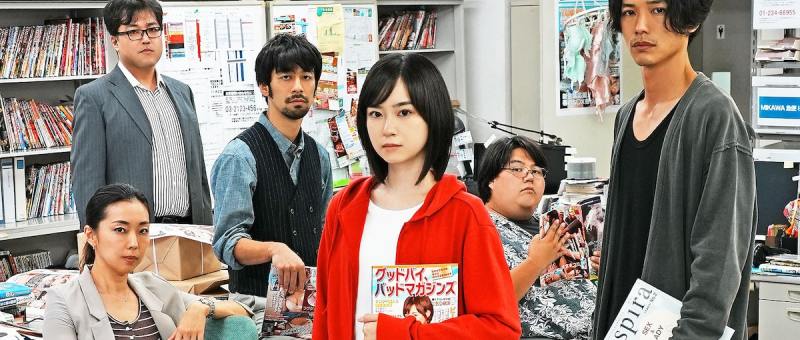
Part way through Rikiya Imaizumi’s Straying (猫は逃げた, Neko wa Nigeta), a tabloid reporter and the photographer with whom he’s been having an affair attend a screening of a pretentious film made by a hypocritical director exploring why a once loving relationship between husband and wife broke down. His reasoning may not be all that sound in the end, but does perhaps hint at something of the malaise which has invaded the relationship between Hiro (Katsuya Maiguma) and his wife of five years Ako (Nairu Yamamoto). Now on the brink of divorce, the couple have hit a stumbling block in the inability to agree who gets custody of their beloved cat, Kenta.
Kenta may not be all that happy about the separation either, peeing all over the divorce papers which only Ako has so far stamped. Hiro suggests that they’re going about it in the wrong order, that the papers should have been the final step once they’d sorted out dividing their property and finding alternative living spaces but he is perhaps a little reluctant as his determination to hang on to Kanta implies. A kitten they found together in the street in the midst of a pregnancy scare, Kanta is a symbol of their love and the hopes they had for it in the beginning. When he suddenly disappears, it sends each of the couple into a tailspin trying to find him which is also an attempt to recapture their lost love.
Yet we can see that the marriage has failed in part because of dissatisfaction in either on side. As he later admits, Hiro was always insecure in the relationship and had been planning to run out on Ako after hearing about the possible pregnancy while overcome with paternal anxiety. He once dreamed of being a novelist and hates himself for his morally dubious job as a tabloid journalist exposing the sordid secrets of the rich and famous, yet he does the job in part because he feels emasculated by Ako’s success as a manga artist and cannot bear the idea of being supported by his wife. For her part, Ako declares that she’s bored with eroticism while working on an erotic manga for a publishing company specialising in sexually explicit series aimed at a female audience. When she says she’s thinking of writing a cat manga, like the much loved Gugu the Cat, it suggests that what she wants is love rather than sex but she’s also begun a revenge affair with her besotted editor Matsuyama (Kai Inowaki) little realising that she’s toying with his feelings.
Like Matsuyama, Hiro’s girlfriend Mamiko (Miyuu Teshima) is more emotionally involved in the relationship than Hiro is though he sadly tells her he loves her and has superficially committed to leaving his wife. Mamiko also has a habit of eating Haribo at every opportunity which hints at her childish nature, though as is later revealed she’s surprisingly conservative for her age coldly telling Ako in a final confrontation that wives are responsible for their husband’s affairs while insisting Ako let Hiro go because she wants to become a traditional homemaker cooking and cleaning for him. She was also offended by the film because of its anti-marriage stance all which fuels her desire to unmask the “devoted familyman” director as just another industry sleazeball. Yet evidently the last thing Hiro wants is marriage because if that’s what he wanted he wouldn’t be getting a divorce. It’s no surprise that he put his foot down over getting Kanta neutered, insisting he be free to sow wild oats wherever he sees fit which is apparently with next-door’s cat Mimi who becomes an accidental victim of his sudden disappearance.
Yet sometimes straying only shows you the way home as the central couple awkwardly discover, brought closer together by the search for Kanta while forced to face the realities of their frustrated desires each emerging on a more authentic note and resolving to chase their individual dreams. The second film in the L/R15 project of contemporary sex comedies, Straying is scripted by Hideo Jojo who directed Imaizumi’s script for Love Nonetheless and in its ironic conclusion is perhaps less cynical than it might seem in hinting at new beginnings founded less on forgiveness than acceptance of life’s imperfections.
By the late 1960s, Japan had more or less achieved its economic miracle yet there was still a degree of political tension manifesting itself in a second round of widespread protests towards the automatic renewal of the security treaty with the Americans in 1970. The third feature from Kiyoshi Nishimura, The Creature Called Man (豹は走った, Jaga wa Hashitta) anticipates the cinema of paranoia which was to take hold in the 1970s but as confused as its internal politics sometimes are, reflects the continuing sense of dissatisfaction in the wake of the student movement’s failure in its attempt to critique ongoing complicity with American foreign policy in Asia as well as Japan’s checkered geopolitical history.
As such, Nishimura opens with hand-coloured stock footage of civil unrest in an Asian nation while the accompanying voiceover features protestors chanting “down with Jakar”, later revealed to be the ousted dictator of “Southnesia”, seemingly a stand-in for the recently assassinated Sukarno of Indonesia. As opposed to the rather pompous English title, the Japanese is simply “Jakar got away”, a phrase repeated during the opening titles and which appears as “Jaguar got away” on a typewriter sitting above the Japanese title in red which uses the character for leopard in place of Jakar’s name. In fact, animal codenames will later become something of an ironic motif with the hero referred to as a German shepherd while his rival brands himself a wolf and is referred to by his handlers as the black panther.
This slightly tongue-in-cheek use of spy movie cliche is in keeping with the brand of humour often found in Toho’s ‘60s spy spoofs though this is largely a much more serious affair if one with an undercurrent of absurdity. The hero, Toda (Yuzo Kayama), is an Olympic sharpshooter working for the Tokyo police before he is abruptly asked to resign so that he can take part in a “special mission” which turns out to be as a backup bodyguard for Jakar who has been smuggled out of his home nation and intends to defect to America which has, it is implied, been backing his regime as a bulwark against communism in Asia while his rise to power was facilitated by Japanese soldiers who stayed in the country after the war. He’s supposed to be staying for a few days in a top hotel while the Americans figure out the paperwork for him to seek asylum at their embassy but the top brass are worried the revolutionaries might try to assassinate him on Japanese soil which would be very bad for diplomatic relations and potentially create political instability across the continent.
As Toda later says, he’s just doing his job (even though he’s technically no longer a policeman), so he doesn’t give much thought to the wider political context of his actions only concentrating on preserving a man’s life no matter now steeped in blood that life might be. Meanwhile, a duplicitous corporation, Dainihonboeki (lit. Great Japan Trading) is attempting to cut some shady deals apparently having facilitated Jakar’s escape but now frustrated that the Revolutionary Government won’t honour their contracts for military equipment and so is offering to help assassinate him to prevent his forming an alternative government in exile and creating additional problems for the new regime.
Kujo (Jiro Tamiya), the killer for hire, and the dutiful policeman Toda are exposed as two sides of the same coin, Toda later killing an innocent woman mistaking her for a member of the conspiracy against Jakar only to later learn she is in fact a war widow whose fiancé was an American GI killed in Vietnam. Her exaggerated death sequence filmed with expressionist flare in mimicking that of a soldier gunned down in battle. The two men face off against each other in what is essentially a battle of wits, Toda not taking aim at Kujo but anticipating his plan and foiling it before it takes effect. Leaning in to the Toho spoof, there is considerable absurdity in their machinations, waiters falling to the ground after the rope they were climbing to sneak in through a window is shot through, or sex workers brought in to shine a guiding light towards the target, but there’s a lot of blood and terror too not to mention some sleaze and a general sense of nastiness. Once the Jakar matter is concluded, the men still have a score to settle, facing off in a one-on-one duel in a disused aircraft hangar firing potshots at each other from behind various pieces of military equipment their life and death struggle shot in elegant slow motion until they each collapse into the swirling dust in a moment of nihilistic futility as another civil war quietly brews in Southnesia precipitated by their actions.
Strikingly composed capturing the neon-lit nightscape of an increasingly prosperous Tokyo filled with the shining lights of new corporate entities and scored with noirish jazz and occasional flights into expressionism, Nishimura’s paranoid political thriller takes aim at a new world of geopolitical instability while making villains of amoral capitalists and indulging in a mild anti-Americanism but most of all is a tug of war between a hitman inconveniently regaining his humanity and a policeman temporarily abandoning his in questionable national service.
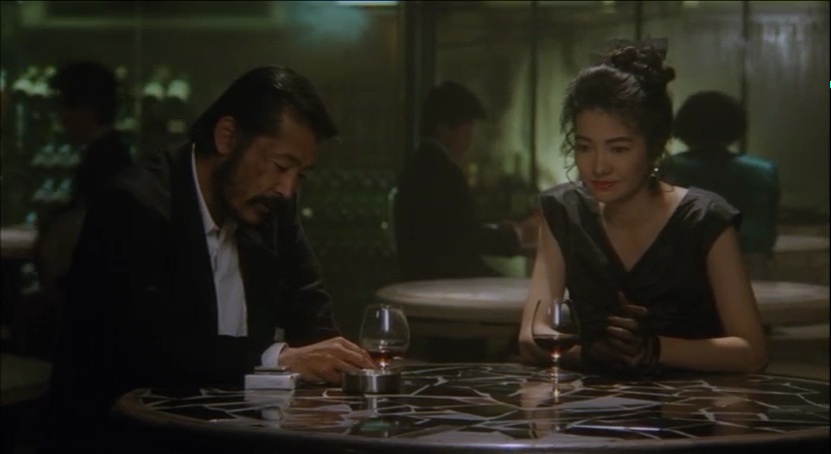
“Nothing’s like it used to be anymore” sighs a woman who’s had to betray herself but has tried to make break for it only to discover there is no way back. Hideo Gosha’s Violent Streets (暴力街, Boryoku Gai) is like many films of its era about the changing nature of the yakuza in an age of corporatised gangsterdom. Now “legitimate businessmen” who claim to no longer deal in thuggery, their crimes are of a more organised kind though a turf war’s still a turf war even if you’re fighting from the boardroom rather than simply getting petty street punks to fight it for you in the streets.
In a touch of irony, former yakuza Noboru Ando stars as a man who’s tried to leave the life behind but is pulled back into underworld intrigue when his former foot soldiers mount an ill-advised bid for revenge against the clan they feel betrayed them. After serving eight years in prison for participating in the last turf war, Egawa was given flamenco bar Madrid on the condition that he dissolve his family and attempt to go straight as a legitimate businessman. The Togiku gang has since gone legit and distanced itself from most of its old school yakuza like Egawa. But now a yakuza conglomerate from Osaka is moving in on their old turf and the Togiku want the Madrid back as a bulwark against incursion from the west which is why they’ve been sending the boys round to cause trouble in the bar.
Egawa is the classic ex-gangster who wants to turn himself around but is largely unable to adapt to life in a changing society. He is technically in a relationship with a bar hostess who has a severe drinking problem in part exacerbated by his inability to get over his former girlfriend who left him and married the boss, Gohara, while he was in prison. His former foot soldiers attempt to convince him to get the gang back together and take revenge, resentful of having been used and discarded, but he tells them to let it go, that they’ve all got “honest jobs” and that they should try to live as best they can. Like him, the guys are ill-equipped to make new lives in the consumerist society and cannot move on from the post-war past. Hoping to engineer a turf war between the Osaka guys and Togiku, they kidnap a popular TV personality/pop singer (Minami Nakatsugawa) attached to a station which Togiku controls and frame a rival affiliated with the Osakans for taking her.
This just goes to show the various ways in which newly corporatised yakuza have expanded their business portfolio, heavily participating in the entertainment industry moving beyond bars, clubs, and the sex trade into mainstream television and idol stars. Egawa’s old friend Yazaki (Akira Kobayashi) is his opposing number, just as caged but trapped within the confines of the new gangsterdom, reprimanded by his boss for raiding the rival studio’s offices and undoing the gang’s attempt to rebrand themselves as legitimate businessmen rather than violent street thugs. “I can’t stand being humiliated” he explains as Gohara points out he’s stepped right into their trap now giving the Osakans an excuse for retaliation. “The Togiku group is a defanged, domesticated dog” Yazaki barks, “I can’t pretend to be an obedient company employee forever and do nothing”.
Neither man is able to progress into the new era of rising prosperity, both little more than caged animals thrashing around trying to break free but continually crashing into the bars. Just as Egawa’s old guys had tried to engineer a turf war hoping that the two gangs would take each other out and leave a vacuum they could fill, arch boss Shimamura (Tetsuro Tanba) flies above the city in a helicopter as the “worms fight among themselves” and observes the chaos below as he completes his silent conquest of the contemporary economy like some modern day Nobunaga of corporatised gangsterdom.
Taking over the Togiku through a process of corporate infiltration and gradually ridding themselves of all the old school yakuza ill-suited to the shady salaryman life, the contrast between the world of cabaret bars and back street dives and Shimamura’s smart suits and helicopters couldn’t be more stark. A slightly sour note is struck by the use of a transgender assassin (Madame Joy) who performs a lesbian floorshow by day and kills by night while working with a bald sidekick who carries a parrot on his shoulder, her coldness bearing out the tendency of yakuza movies to associate queerness with sadistic savagery. Gosha rams his point home with the otherwise surreal scene of a pile of abandoned mannequins by a swamp that becomes a popular yakuza kill site homing in on the emptiness of their eyes and the uncanniness of dismembered bodies, mere empty shells just like the men who die in this literal wasteland. Egawa perhaps feels himself to be a man already dead long before being pushed towards his act of futile rebellion, somewhere between sitting duck and caged dog fighting for his life between the chicken coops of a moribund small-town Japan. Marching to a frenetic flamenco beat of rising passions and barely contained rage, Violent Streets leaves its former foot soldiers with nowhere to go but down while their duplicitous masters continue to prosper riding the consumerist wave into a new and prosperous future.
A pure hearted doctor stands strong against the forces of imperialism if somewhat ambivalently in Kiyoshi Saeki’s wartime drama The Sand City in Manchuria (砂漠を渡る太陽, Sabaku wo Wataru Taiyo). “Why isn’t there just one country? I don’t want a country” a young Chinese woman exclaims towards the film’s conclusion in what is intended as an anti-war statement but also invites the inference that the one country should be Japan and that China is wrong to resist the kind of “co-existence” that the idealistic hero is fond of preaching.
Dr. Soda (Koji Tsuruta), known as Soh, has been in Manchuria for two years running a poor clinic in a trading outpost on a smuggling route through the desert. He came, he later tells another Japanese transplant, after being talked into it by a pastor who told him about US missionaries who endured hardship in the Gobi desert and lamented that no Japanese people had been willing to take on such “thankless” work in the midst of the imperial expansion. There is a kind of awkwardness in Soda’s positioning as the good Japanese doctor which perhaps reflects the view from 1960 in that he objects to the way the Japanese military operates in Manchuria and most particularly to Japanese exceptionalism which causes them to look down on the local Chinese community as lesser beings, but within that all he preaches is equality and co-existence which suggests that he sees nothing particularly wrong in Japan being in Manchuria in the first place while implying that the Chinese are expected to simply co-exist with an occupying force to which they have in any case been given no choice but to consent.
Nevertheless, it’s clear that the Japanese are in this case the bad guys. Soda is at one point accosted by a drunken soldier who takes against his choice to adopt Chinese dress while rudely refusing to pay his rickshaw driver. The animosity of some in the town is well justified as we hear that their mother was murdered by a Japanese soldier, or that they were raped by Japanese troops and now have nothing but hate for them to they extent that they would withhold vital medical treatment from a child rather than consider allowing Soda to treat them. Soda’s main paying job is working at an opium clinic hinting at the various ways imperialist powers have used the opium trade to bolster their control over the local population, while it later becomes clear that one of the Chinese doctors has been in cahoots with a corrupt Japanese intelligence officer to, ironically, syphon off opium meant for medical uses and sell it to addicts in a truly diabolical business plan.
Though Soda is well respected in the town because he offers free medical treatment to those who could never otherwise afford it, he is sometimes naive about their real living conditions. Outraged that a young woman has been sold into sexual slavery, he marches off to the red light district to buy her back but is confused on his return realising her family aren’t all that happy about it because they cannot afford to feed her and were depending on the money she would send them because the father has become addicted to opium and can no longer work. The girl, Hoa (Yoshiko Sakuma), becomes somewhat attached to Soda but he is largely uninterested in her because she is only 17, while her affection for him causes tension with the daughter of an exiled Russian professor which is only repaired once they all start working together for the common good after the town after it comes under threat from infectious disease.
In an echo of our present times, it seems not much has changed in the last 80 years or so, the townspeople quickly turn on Soda once it become clear that he’s putting the town on lockdown to prevent the spread of infectious meningitis after a Russian soldier stumbles in and dies of it. The disease firstly exposes the essential racism even among those Japanese people who have lived in Manchuria longterm such as the mysterious Ishida (So Yamamura) who remarks that diseases like that only affect the Manchurians and they’ll be fine because they are “more hygienic”, while simultaneously painting the infection as a symptom of foreign corruption delivered by the Russian incursion. Soda visits a larger hospital to get the samples confirmed but is told that the disease has not been seen in Manchuria before and so they have no vaccine stocks leaving him dependent on the smuggling network to get the supplies he needs. As the town is a trading outpost whose entire economy is dependent on the business of travellers just passing through, the townspeople are obviously opposed to the idea of keeping them out fearing that they will soon starve going so far as to tear down Soda’s quarantine signs while throwing stones at his house.
In another irony, it’s Ishida’s pistol that wields ultimate control immediately silencing the mayor’s objections in a rude reminder of the local hierarchy. Many of the townspeople including inn owner Huang (Yunosuke Ito) and Hoa’s sister Shari (Naoko Kubo) are involved with the resistance to which Soda seems to remain quite oblivious and in any case adopts something of a neutral position but gains a grudging respect from Huang thanks to his humanitarianism that eventually saves him from brutal bandit Riyan (a rare villain role for a young Ken Takakura). In any case, as the corrupt Japanese officials pull out to escape the imminent Russian incursion, Soda decides to stay in part to atone for the sins of the Japanese in an acceptance of his responsibility as a Japanese person if one who has not (directly) participated in the imperialist project even if he was in a sense still underpinning it. Essentially a repurposed ninkyo eiga starring Koji Tsuruta as a morally upright man surrounded by corruption but trying to do the right thing to protect those who cannot protect themselves, there is an undeniable awkwardness in the film’s imperialist ambivalence but also a well intentioned desire to look back at the wartime past with clearer eyes and a humanitarian spirit.
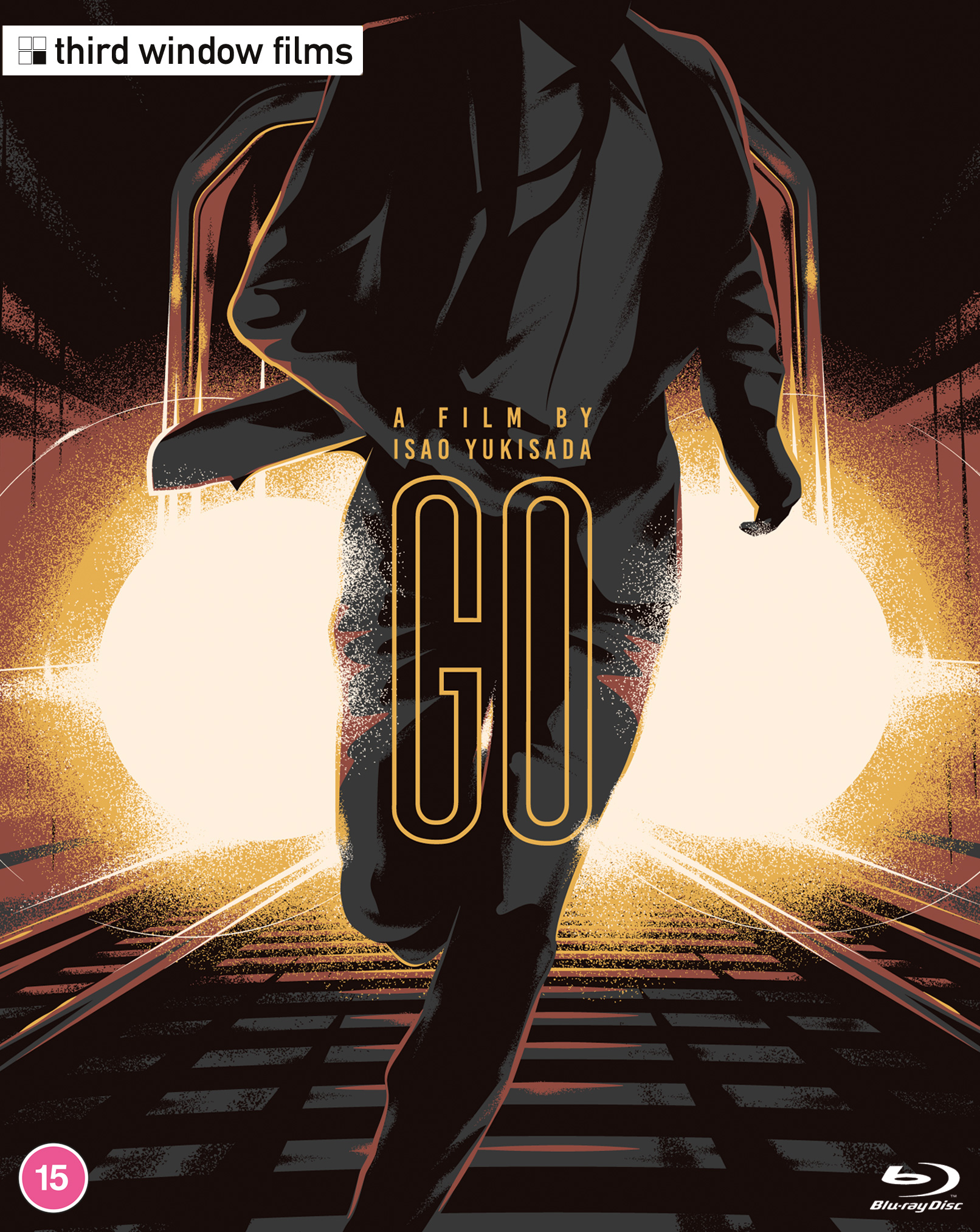
An aimless young man finds unexpected direction while walking the streets of the city with an unlikely father figure in Satoshi Miki’s meandering dramedy Adrift in Tokyo (転々, Tenten). These two men are indeed adrift in more ways than the literal, each without connections and seeking a concrete role in life while attempting to make peace with the past. But like any father and son there comes a time when they must part and their journey does indeed have a destination, one which it seems cannot be altered however much they might wish to delay it.
That Fumiya (Joe Odagiri) is aimless might be assumed from his unruly hair and the fact that he thinks tricolour toothpaste might be enough to jolt him out of his sense of despair but is confirmed by his matter of fact statement that he’s in his eighth year of university where nominally at least he’s studying law. His problem is that he’s amassed massive debts to a loanshark, Fukuhara (Tomokazu Miura), who breaks into his apartment and threatens him by shoving a sock in his mouth before leaving with his ID and driving licence. Fukuhara, however, later decides to make him another offer that he will cancel the debt and even give Fumiya even more money if only he will agree to wander around Tokyo with him for an unspecified time until they reach Kasumigaseki where he intends to hand himself in at police headquarters claiming to have recently murdered his wife.
Like many things that Fukuhara says, it’s not clear whether or not he has indeed killed his wife though Miki frequently switches back to a scene of a woman who seems to have passed away and has been laid out in bed though she shows no signs of having died violently. Her zany co-workers keep thinking they should check on her seeing as she hasn’t shown up in days but something always distracts them and they end up forgetting about her entirely. The body appears to have been treated with love, hinting that if what Fukuhara says is true and this woman was his wife whom he killed in a fit of passion he has quite clearly thought through his plan of action rather than attempting to flee the scene and is perhaps only delaying the inevitable while walking out some other trauma in the company of Fumiya a surrogate son mirroring the description he gives of taking walks in the company first of his father and then of his wife.
Fumiya deflects every question and agrees that he hates memories having burned his photo albums before leaving for university. He claims that he has no parents, describing the people who raised him as just that, as his mother and father both abandoned him as a child leaving him in a perpetual state of arrest which is one reason he’s still a student four years after most people have graduated. He never went to the zoo or rode a rollercoaster or called a man dad and seems to think of himself as nothing much of anything at all. Yet the fake can sometimes be more real than the real as he eventually discovers becoming part of an awkward family unit with Fukuhara’s “fake” wife (Kyoko Koizumi) he used to accompany to weddings as a paid guest, just beginning to enjoy being someone’s son when Fukuhara decides he’s reached the end of his road.
There is a sense that everyone is chasing the ghost of someone else or perhaps even themselves, Fumiya finding shades of the father who abandoned him in career criminal Fukuhara who tells someone else that he once had a son who died in infancy, and seeing something of his mother in fake wife Makiko discovering transitory roots in an unlived imaginary childhood. But then there are also occasions of cosmic irony such as a coin locker bag being full not of money but of bright red daruma dolls and tengu noses, or a rebellious street musician meekly bowing to the police. A repeated gag says you’ll have good luck if you spot iconic actor Ittoku Kishibe out and about in the streets, and perhaps in a way Fumiya does in learning to make peace with his childhood self walking with Fukuhara who also comes to accept his failures as a man, a husband, and perhaps a father too. Filled with zany humour and a warmth underlying its melancholy, Adrift in Tokyo is a meandering journey towards a home in the self and a sense of rootedness in the middle of a sprawling metropolis filled with infinite possibility.
Adrift in Tokyo is released on blu-ray in the UK on 12th December courtesy of Third Window Films.
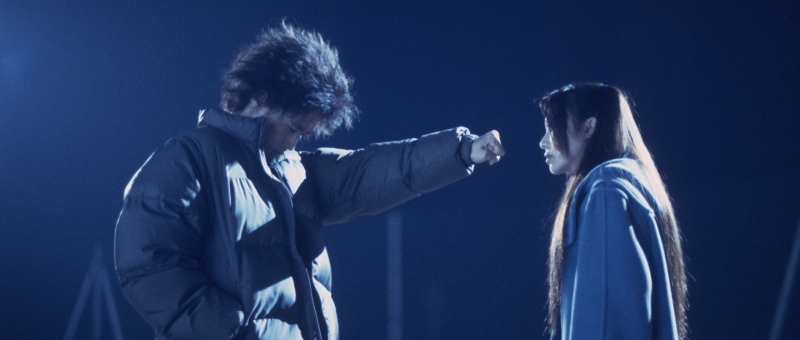
“For us the natural world is a playground. But for the things that live in it, it might be hell on earth.” a middle-aged stranger explains to a confused teenage boy elaborating on a metaphor about a strangler tree that wraps itself around its brethren and suffocates them to death. The contemporary society is indeed a hell on earth to the alienated turn of the century teens in Shunji Iwai’s plaintive youth drama All About Lily Chou-Chou (リリイ・シュシュのすべて, Lily Chou-Chou no Subete) who have found solace in “The Ether”, “a place of eternal peace” as discovered in the music of a zeitgeisty pop singer inspired by the ethereality of Mandopop star Faye Wong.
Filled with millennial anxiety, The Ether as mediated through message board chat is the only place the teens can be their authentic selves. “For me only the Ether is proof that I’m alive” one messenger types using an otherwise anonymous online handle unconnected with their real life identity. Iwai often cuts to the teens standing alone listening to music on their Discmans while surrounded by verdant green and wide open space with a bluer than blue sky above, but also at times finding that same space barren and discoloured, drained of life in, as Yuichi (Hayato Ichihara) puts it, an age of grey much like a field in winter. For Yuichi the world ended on the first day of school in September 1999 when his torment began at the hands of a previously bullied boy who decided to turn the tables after, of all things, getting hit in the head by a flying fish in Okinawa and almost drowning.
Purchased with money stolen from some other bullies who had just stolen it from a well-off middle-aged man they were harassing in a carpark, the trip to Okinawa captured in grainy ‘90s holiday video style later subverted by the same use of contemporary technology to film a gang rape of a fellow student, is the event that finally reduces Yuichi’s world to ashes. Like the other teens he is also carrying a sense of alienation as his mother prepares to remarry while carrying his soon-to-be stepfather’s child which also dictates that Yuichi will have to change his surname lending a further degree of instability to his already shaky sense of identity. For Hoshino (Shugo Oshinari), his sometime friend, the instability seems to run a little deeper. “Nobody understands me” he tells Yuichi with broody intensity, irritated by the image others have of him as a top swat chosen to give a speech at the school’s opening ceremony and widely believed to have placed first in the exams. In truth he only placed seventh and is most annoyed that whoever really did come top probably thinks he pathetically lied about it for clout.
We can see that Hoshino’s family appears to be wealthy, at least much more than Yuichi’s, though as we also discover they once owned a factory which has since gone bust amid the economic malaise of the ‘90s leading to the disintegration of his family unit. Like Yuichi he feels himself adrift, evidently bullied in middle school for being studious and introverted while rejected by the girls in his class who again attack him because of his model student image. Hoshino seems to have a crush on a girl who is herself bullied, Kuno (Ayumi Ito), apparently resented by the popular set for being popular with boys. “It’s amazing how women can ostracise someone like that” band leader Sasaki (Takahito Hosoyamada) reflects, one of the few willing to call her treatment what it is but finding no support from their indifferent teacher Miss Osanai (Mayuko Yoshioka), while entirely oblivious to the fact that the boys are just the same in Hoshino’s eventual reign of terror as a nihilistic bully drunk on his own illusionary power.
Shiori (Yu Aoi), blackmailed into having sex with middle-aged men for money, questions why she and Yuichi essentially allow themselves to be manipulated by Hoshino and are unable to stand up to him even when they know they are being asked to do things that they find morally repugnant such as Yuichi’s complicity when tasked with setting Kuno up for gang rape by Hoshino’s minions with a view to videoing it for blackmail purposes. Whether or not he did in fact have a romantic crush on her, Hoshino’s orchestration of the rape signals his total transformation, forever killing the last vestiges of his humanity and innocence but for Yuichi, who can only stand by and cry, it signals the failure of his resistance that if he went along with this there is no line beyond which he will not go if Hoshino asks it. Yuichi asks Shiori why she didn’t agree to date the kindhearted Sasaki who would have been able to shield her from Hoshino but she knows it’s too late for that while suggesting Yuichi is in a sense protecting her though his inability to do so only further erodes his wounded sense of masculinity.
Only online can the teens find the elusive Ether they dream of, ironically connected via a message board that Yuichi runs under the name Philia where the only rule is that you have to love Lily yet unknown to each other thanks to the alienating effect of their online handles. Someone has a point when they suggest all this talk of polluting the Ether sounds a bit like a cult, but does at least give the teens their safe space where they can share their pain free of judgement and find solidarity in adolescent angst. In any case all of this shame, repression, and loneliness is later channeled into nihilistic violence and cruelty provoked by millennial despair. The only way Yuichi can free himself is by killing the part of himself that hurts in an effort to quell the “noise” in his head. Broken by title cards accompanied by the reverberating sound of typing in emptiness, Iwai’s characteristic soft focus lends a trace of nostalgic melancholy to this often harrowing tale but also neatly encapsulates turn of the century teenage angst with the infinite sympathies of age.
Shunji Iwai’s wistfully nostalgic coming-of-age drama April Story (四月物語, Shigatsu Monogatari) opens with a POV shot as its heroine awkwardly waits for her train to depart while her family, assembled on the platform, look back at her anxiously before the train door closes and the carriage begins to move. The girl says nothing but places a hand on the glass, freezing amid the snows of Hokkaido, as if bidding a silent goodbye now all alone as she makes her way towards her new life in the capital.
Shot with the breezy soft focus associated with Iwai’s early work, the film positions its heroine’s growth alongside the blossoming of the cherry trees which in contrast to many other nations in Japan mark the beginning and end of a school year. Shy and somewhat reserved, Uzuki (Takako Matsu) does her best to seem grown up, managing the removals men while insisting on helping but mostly just getting in the way of their work until they finally tell her that, like many students, she’s brought far too much stuff and there’s no way it’s all going to fit in her modest two-room flat. She makes sure to introduce herself politely to her new neighbours bearing gifts, but is met with a wary indifference from the woman across the hall perhaps more accustomed to city living and less likely to be instantly trusting of a stranger.
At the university some of her fellow students treat her like a country bumpkin asking stupid questions like whether it’s cold in Hokkaido and making fun of her snazzy jumper which is a little too heavy for Tokyo at the start of spring. In the cafeteria she takes it off and hangs it around her waist, embarrassed by her early fashion faux pas. One of the other girls, Saeko (Rumi), attempts to befriend her but as it turns out Uzuki has other things on her mind except for study and in fact Saeko may have an ulterior motive too that neatly reflects her own in looking for fresh recruits for the fly fishing club.
In any case it’s as if the world gradually opens itself up to her, Uzuki riding the wide streets of the city on her bicycle through parks and under cherry trees before making her way to a particular bookshop. She discovers the dangers of city life while stopping in to watch a classic samurai movie, a beautifully realised historical fantasy homage to golden age cinema and old-fashioned serials in which Oda Nobunaga (Yosuke Eguchi) has managed to escape death at Honnoji Temple and is out for ironic revenge. A late arriving salaryman (Ken Mitsuishi) sits himself down a few seats away from her and surreptitiously tries to edge closer until she’s forced to flee the cinema leaving some of her belongings behind. Even so it doesn’t seem to dampen her enthusiasm for life nor for her unofficial mission and the the reason that’s brought her to Tokyo in the first place.
Iwai focusses on the domesticity of her newly independent existence, building a cosy nest in her tiny flat and attempting to cook for herself but finding her invitation to her neighbour for dinner politely rebuffed while uncertain if the fly fishing club is really for her given that the guy who runs it is condescending and incredibly full of himself. But then as she tells her mother on the phone she just wanted to try something new and there is something comfortable in the gentle rhythms of casting the fly especially as no one seems to do any actual fishing only practice in the park. She makes friends with the equally awkward Saeko and even finds her neighbour gradually opening up to the idea of friendship. Her world continues to expand until she’s finally ready to reconnect with the unrequited high school crush she followed to the city if admittedly in another slightly awkward meet cute involving a series of umbrellas, torrential rain, and a very patient gallery director.
A self-declared “nice film”, Iwai’s heartwarming drama is an innocent tale of first love and romantic obsession that is nothing other than sweetness and light. “A miracle of love” is how Uzuki chooses to describe her arrival in Tokyo and subsequent reunion with her romantic destiny, but it’s in the pursuit of love that she finally begins to come into herself and embrace the possibilities of life blossoming under the cherry trees of an unseasonably warm Tokyo.
The friendship between two underachieving teenage boys hints a series of conflicts in a changing society while accidentally bringing their respective siblings together in Keisuke Kinoshita’s cheerful romantic comedy, This Year’s Love (今年の恋, Kotoshi no Koi). In many ways, it’s the older siblings who appear to be stuck while the parents are largely content to let life be and the boys rejecting the conventional paths laid out for them while attempting to overcome their loneliness and sense of despair through the sincerity of their interclass friendship.
As the film opens, high school boys Hikaru (Masakazu Tamura) and Ichiro (Ryuji Ishikawa) have been lured to a patch of grass above the city where they’re assaulted by an older bully who for some reason resents the fact that they weren’t wearing their traditional students caps even though such things are perhaps already outdated in the rapidly changing society of 1962. In any case, Hikaru vows revenge, deciding to give up golf club and a series of other things to take up boxing, instructing Ichiro to abandon the “girly” sport of basketball and join him. Neither boy is currently doing very well at their studies, with Ichiro’s prim and proper sister Mikako (Mariko Okada) convinced that Hikaru is a bad influence on her brother assuming that he is another spoilt rich kid set on leading him astray.
In fact, she’s not entirely wrong. Hikaru does seem to be somewhat aimless probably because his family is wealthy and he doesn’t see much urgency in the situation nor hold that kind of anxiety for his future though is fond of telling people that he feels quite depressed. While Ichiro lives in Ginza where his family run a successful restaurant, Hikaru lives in a large townhouse in nearby Yokohama cared for largely by their kindhearted housekeeper (Chieko Higashiyama) and a live-in maid while his older brother Tadashi (Teruo Yoshida) is currently a graduate student heading towards a regular salaryman job. Their mother having died some time ago and their father always away on business, care for Hikaru has largely fallen to Tadashi who is nevertheless a young man himself with his own life to be getting on with. Similarly Mikako has largely taken on a maternal role when it comes to caring for Ichiro because her parents are always busy with the restaurant. Part of the reason she’s resentful of Hikaru is that she’s the one the school keeps calling in about her brother’s poor academic performance while Ichiro is always off messing around with his rich kid friend.
Mikako seems to take against Hikaru in part because he is rich, assuming that wealthy people are necessarily decadent and lazy while concerned that Ichiro’s head is being turned by seeing the way the other half live without understanding what it takes to live that way. The Aikawas aren’t exactly poor, they also have a live-in maid and their quarters behind the restaurant are spacious enough, though they couldn’t quite claim to be middle class because they work in the hospitality sector which is still somewhat looked down upon. In any case, dressing exclusively in kimono Mikako is extremely uptight and obsessed with properness. She further takes against the Yamadas after an awkward first meeting with Tadashi who is dumped by his fed up girlfriend in her restaurant and ends up getting beer thrown in his face, while his father later turns up with his secret longterm mistress, a maid from an inn in Atami, leaving Mikako scandalised and embarrassed.
Ironically enough, Tadashi’s name quite literally means “correct” though even if he isn’t quite as hardline as Mikako he also wants the best for his brother. Because of the realities of life in post-war Japan, both boys explain that they find it hard to study in part because they are lonely often left home alone with no one to talk to which is one reason they value their friendship so deeply. Hikaru’s mother has passed away and his father is largely absent, while Ichiro’s parents are always working in the restaurant as is Mikako even if she’s largely been delegated other maternal duties. Tadashi and the housekeeper attempt to set Hikaru straight that he needs to do well in school because he’ll have to be able to get a good job to support himself, but Hikaru is part of a new generation that doesn’t the see point in the emptiness of the salaryman lifestyle. Tadashi might not either, but he’s going along with it anyway whereas as Mikako is completely wedded to the idea of aspirational respectability intent that Ichiro should do his best to get into college and catapult himself into the middle classes.
Her cheerfully laidback parents meanwhile barely finished school and have done alright for themselves with restaurant. They aren’t that bothered if Ichiro isn’t academically inclined because they can train him up as a chef even if that isn’t quite the future Mikako had envisaged for him in her upwardly mobile worldview. Nevertheless, she’s not quite as prim as she makes out, sneaking the odd cigarette here and there, and despite herself begins to fall for Tadashi’s goofy charms while bonding in shared love for their siblings. In the end she’s the one who has to learn that it’s alright to have a little fun now and then and if longtime widower Mr Yamada has a girlfriend that’s probably alright too. The boys’ teacher hints that he finds it strange they aren’t more into girls, Hikaru apparently so popular that the phone at his house never stops ringing but he turns them all down because he’s too consumed with ennui to date, introducing an additional transgressive element to their friendship along with their bid for manliness with their new obsession with boxing which as Mikako’s maid points out does feature a series of shirtless musclebound men. Perhaps Mikako’s newfound appreciation for romantic freedom wouldn’t stretch that far, but it does seem to have opened her up to new possibilities in a less judgemental future as she rings in the new year in the old capital of Kyoto.