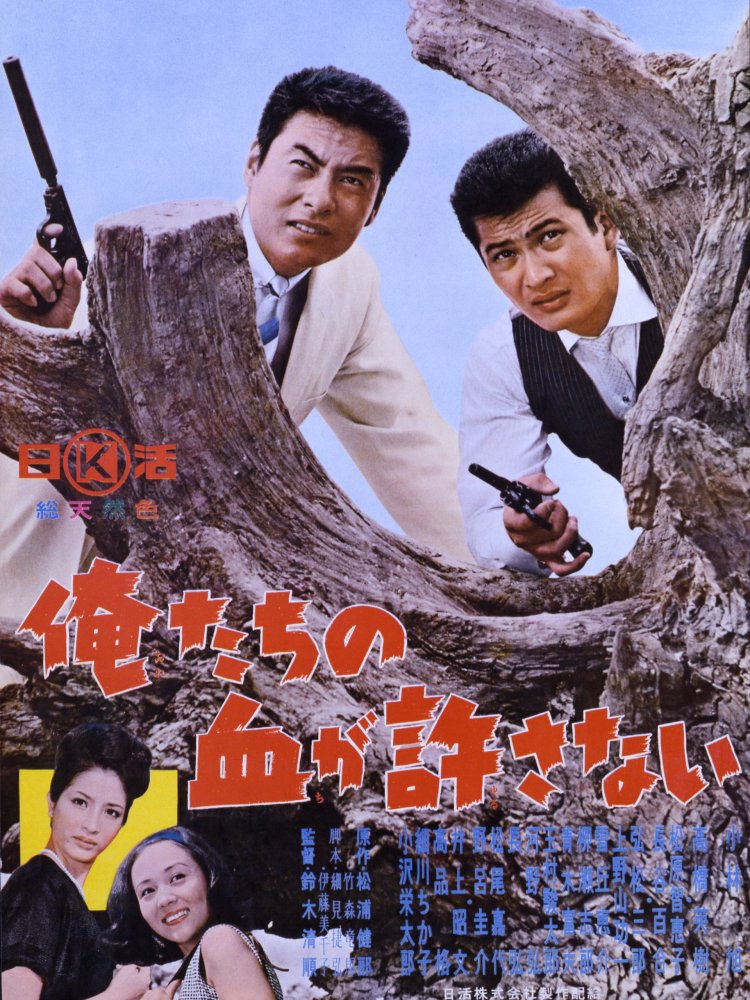
 In Japan, “kaeru no ko wa kaeru”, or “a frog’s son is also a frog”, is an often heard idiom, sometimes disparaging but often affectionate. Can a yakuza’s son become anything other than a yakuza, or does your blood define you in ways you cannot defy? Our Blood Will Not Forgive (俺たちの血が許さない, Oretachi no Chi ga Yurusanai), an early semi-absurdist gangster drama from Seijun Suzuki’s mid-period at Nikkatsu, asks just that question as two brothers battle the legacy of their slain father whose dying wish it was that the yakuza line die with him.
After their father was assassinated at home by sword, the Asari brothers were raised by their mother, Hatsu (Chikako Hosokawa), who did her best to keep them out of the underworld. After the war, however, times were tough. Older brother Ryota (Akira Kobayashi) had to work as a delivery boy to keep the family fed, studying hard at the same time and getting in to a good university. Now grown up, he’s a smart suited night club manager. His younger brother Shinji (Hideki Takahashi), meanwhile, is a clownish goof-off with a good job at an ad agency he’s always in danger of losing (like a fair few jobs before). Today, Shinji was meant to collect his bonus, but he’s bunked off to take part in a local festival which is unfortunate, because he’s got a visitor – Tobita (Akifumi Inoue), the man who killed their father without knowing why and now regrets it. He’s managed to track Shinji down thanks to the fact he looks just like his dad and has a habit of doing stupid things that get his picture in the papers like winning eating competitions and getting lucky on the horses only to get mugged outside.
Tobita’s desire to apologise to the boys exposes their father’s sordid yakuza past and forces them to deal with the legacy of their gangster blood. Though Ryota is more sanguine and simply declares that he “hates all yakuza” before asking Tobita to leave and never come back, Shinji immediately attacks him but then becomes enamoured of the romanticism of the gangster life and considers restarting the Asari clan after getting fired when a picture of him fighting with thugs on the company away trip makes the papers with the headline “yakuza’s son”.
The central irony is that Ryota, who was his mother’s favourite and ostensibly the steady, respectable son, has secretly been a yakuza for quite some time. The club he runs is a yakuza front, which is why he tries to talk Shinji out of trying to get a job there, leading him to feel rejected enough to have too much to drink and start a bar fight, causing problems for Ryota with his boss.
“All yakuza are the same,” Ryota confesses to Shinji as they argue in a car incongruously surrounded by roaring waves, “they’re violent because they’re afraid”. Despite graduating from Tokyo University, Ryota couldn’t get an honest job because they always found out his dad was a yakuza. Out of other options, he decided he had no other choice but to become one too, that he could not escape his blood but might be able to make sure his brother could. Shinji has romantic dreams of the yakuza lifestyle (his bedroom wall’s covered in pictures of Al Capone et al), but Ryota knows what it means, which is why he hates all yakuza, including himself. He’s planning to marry his secretary girlfriend, Yasuko (Chieko Matsubara), but his emotions are so corrupted that he isn’t quite sure if he really loves her or is only making a bid for respectability as a kind of atonement to his mother. In any case, he also feels guilty, knowing that just as his father eventually made his mother miserable, no woman can be happy with a yakuza.
“Yakuza are so stupid, you’re all obsessed with dying – what’s the point?” Shinji eventually exclaims, finally thoroughly disillusioned as his brother goes out in search of an honourable ending rather than trying to escape from certain death at the hands of his vengeful boss. “It may not be easy to live, but there’s nothing honourable about dying!” he tells him, undercutting a series of cultural signifiers, but finally crawling out of the yakuza trap and vowing to live on muddling through with his mother and perky girlfriend, Mie (Yuri Hase) whose birthday party he’s currently missing. Blood does not forgive, but it does eventually release if only you can learn to see it for what it is and choose to be free of it.
Opening (no subtitles)



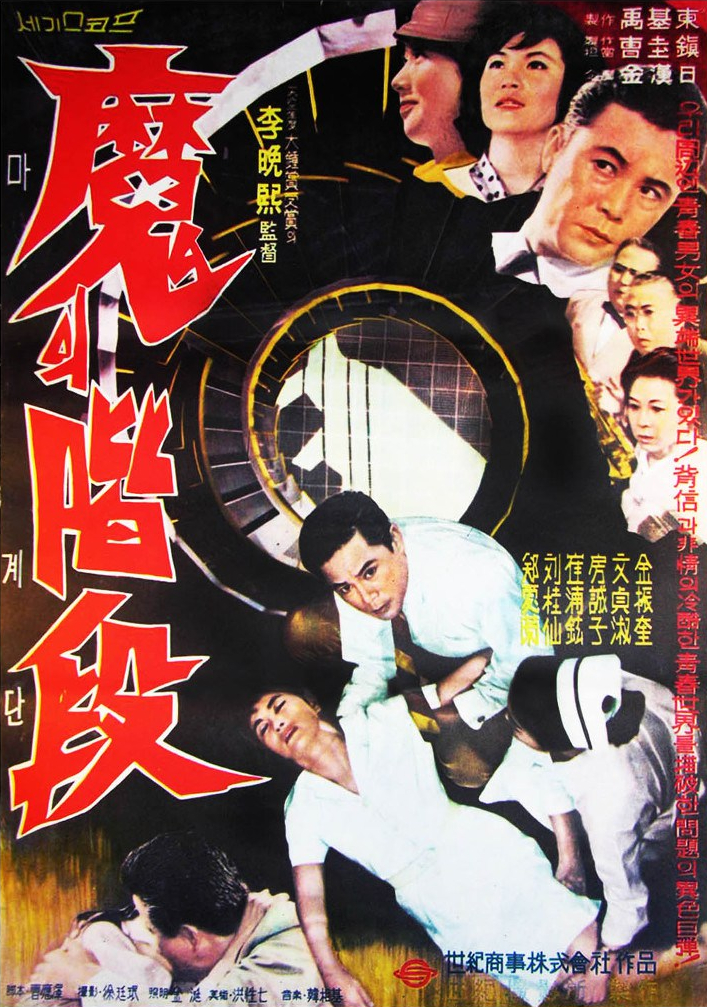

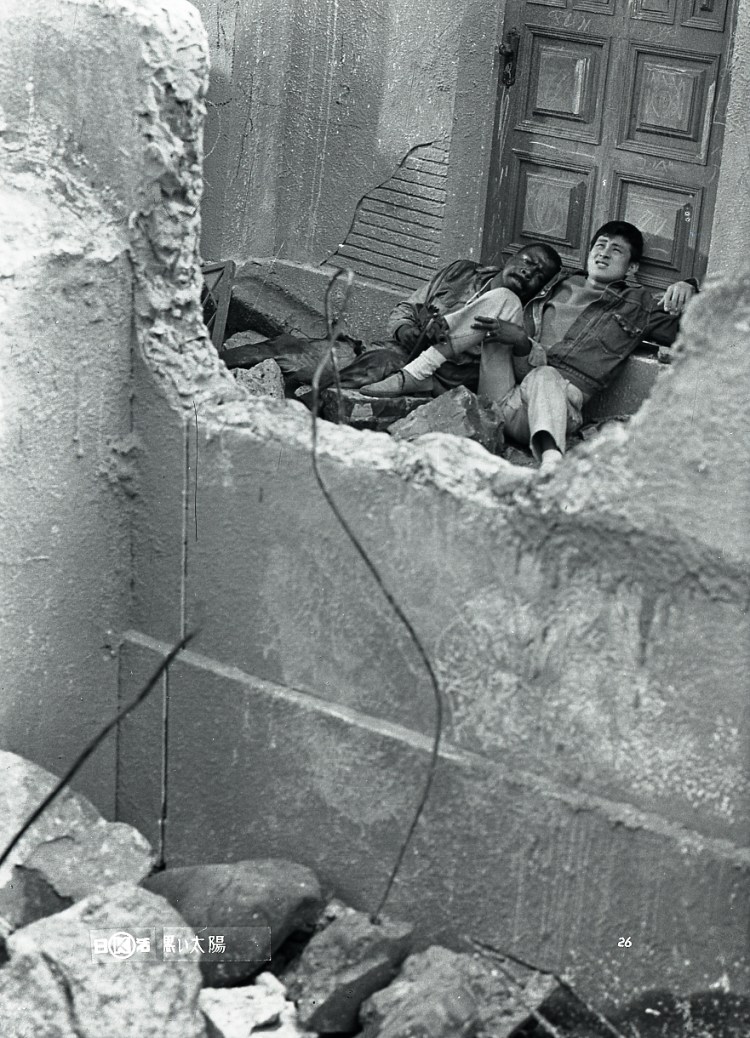

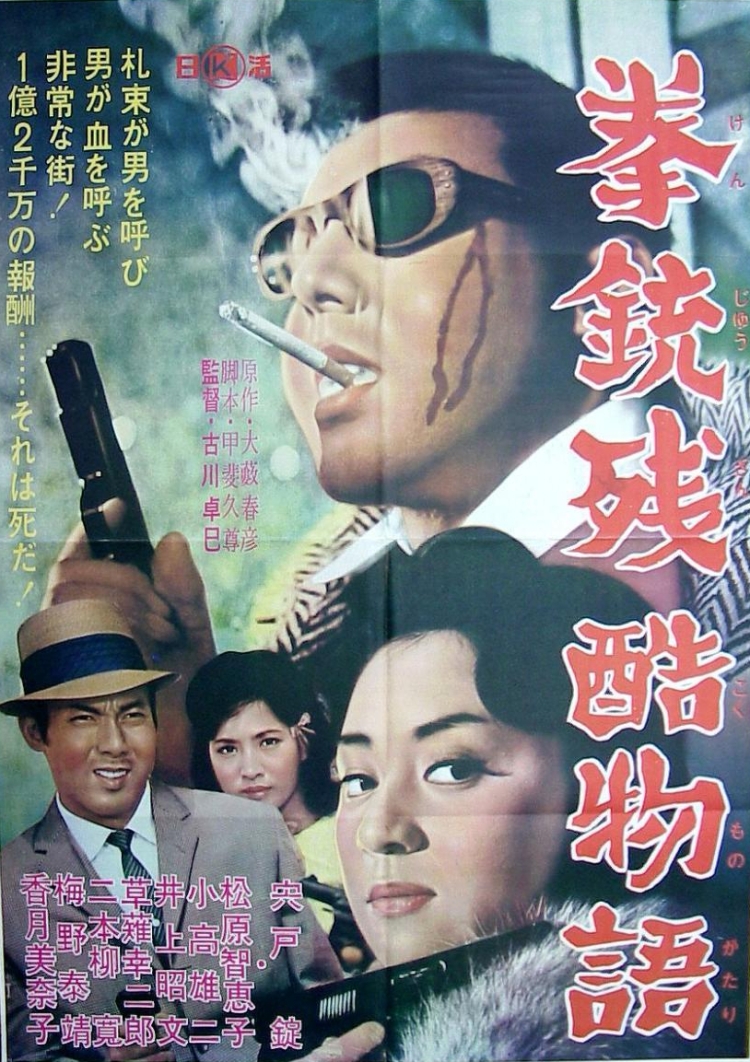

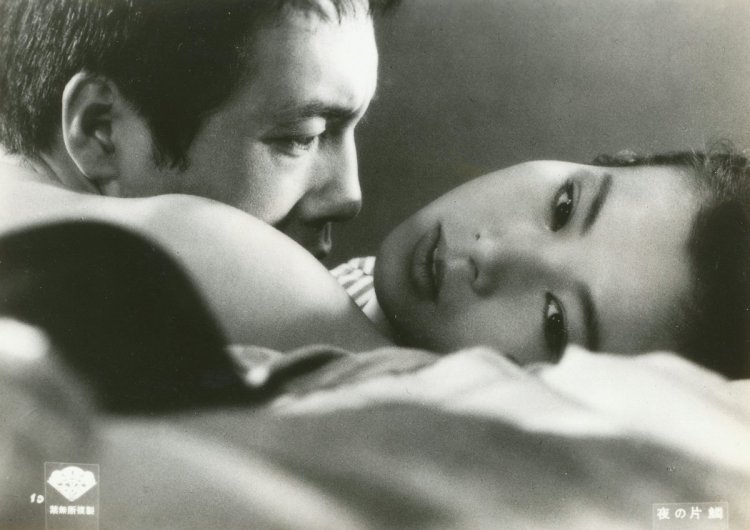


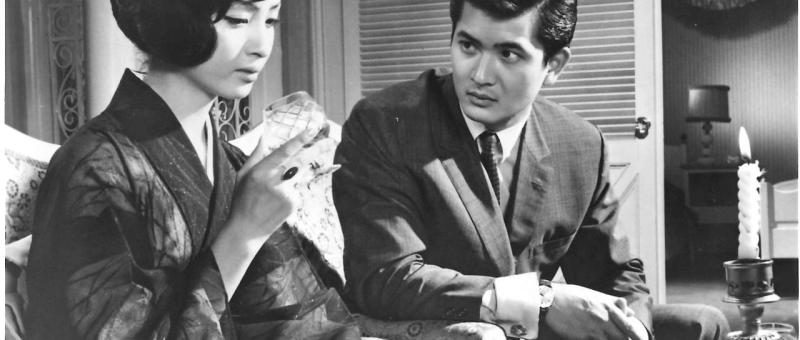
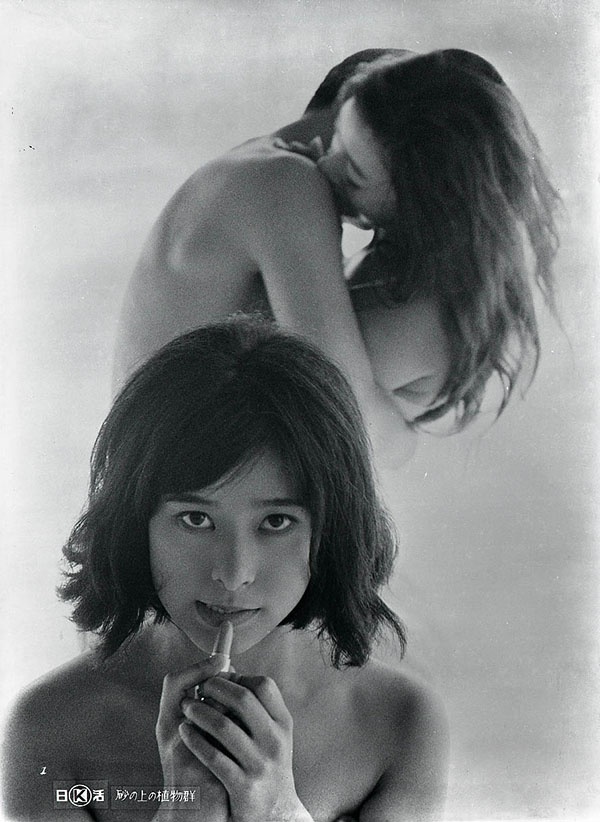 Despite being among the directors who helped to usher in what would later be called the Japanese New Wave, Ko Nakahira remains in relative obscurity with only his landmark movie of the Sun Tribe era, Crazed Fruit, widely seen abroad. Like the other directors of his generation Nakahira served his time in the studio system working on impersonal commercial projects but by 1964 which saw the release of another of his most well regarded films Only on Mondays, Nakahira had begun to give free reign to experimentation much to the studio boss’ chagrin. Flora on the Sand (砂の上の植物群, Suna no Ue no Shokubutsu-gun), adapted from the novel by Junnosuke Yoshiyuki, puts an absurd, surreal twist on the oft revisited salaryman midlife crisis as its conflicted hero muses on the legacy of his womanising father while indulging in a strange ménage à trois with two sisters, one of whom to he comes to believe he may also be related to.
 Windows on Worlds