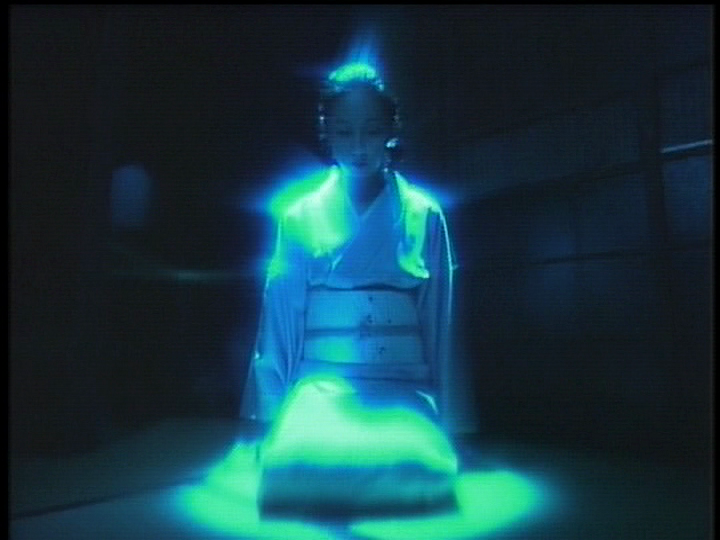
 Akio Jissoji had a wide ranging career which encompassed everything from the Buddhist trilogy of avant-garde films he made for ATG to the Ultraman TV show. Post-ATG, he found himself increasingly working in television but aside from the children’s special effects heavy TV series, Jissoji also made time for a number of small screen movies including Blue Lake Woman (青い沼の女, Aoi Numa no Onna), an adaptation of a classic story from Japan’s master of the ghost story, Kyoka Izumi. Unsettling and filled with surrealist imagery, Blue Lake Woman makes few concessions to the small screen other than in its slightly lower production values.
Successful artist Nagare had a serious following out with one of his oldest friends five years ago and is so rather stunned to receive an invitation to his wedding. Nagare had been invited to paint the portrait of Takigawa’s father and then asked to stay at his home for an extended period whilst Takigawa travelled in Europe buying art. Tokigawa’s father was old and frail and therefore retired to an annex each night at 8pm leaving Nagare entirely alone in the house alongside Takigawa’s wife, Mizue. The inevitable occurs when the lonely and neglected Mizue falls for the handsome painter but the romance turns dark when she talks Nagare into a double suicide at Blue Lake. Mizue drowns herself but Nagare survives only to be rescued and confined to a mental hospital.
Now five years later Takigawa wants to forget (if not quite forgive) the past and start again with a new wife by his side. The funny thing is wife number two, Ameko, is the spitting image of Mizue. When Takigawa once again asks him to stay alone in the house with his new wife whilst he jets off to America, Nagare begins to wonder exactly what’s going on. Staying at the house a second time, Nagare finds himself haunted by the ghost of the woman who died for him, but whose sacrifice he ultimately rejected. Mizue seems to want him to come to her at the bottom of Blue Lake, but Nagare still lacks the courage to take his own life, if not the inclination. Thinking of Mizue but inevitably becoming closer to Ameko, Nagare is trapped between the living and the dead but it turns out there may be more than supernatural intrigue to his darkly romantic adventures.
Jissoji creates an oppressive and creepy atmosphere for the woodland mansion noisy with the sound of a hundred ticking clocks, filled with shadows and shot from odd angles. Nagare begins to dream strange dreams in which Mizue comes to him, leaving watery footprints and her signature comb behind her to indicate that her presence is not limited to the dream world. Complaining that she’s “alive” beneath the mud next to Blue Lake where she’s cold and lonely, Mizue waits for him to make good on his promise and join her there. Nagare remains unsure if this Mizue is a manifestation of her grudge towards him, or simply a manifestation of his own guilt in allowing her to die alone.
Trapped in Vertigo-esque conundrum torn between the living Ameko and the dead Mizue, Nagare
finds himself in an impossible position unable to clearly distinguish between the two women, at one point physically attacking Ameko believing her to be Mizue’s ghost. It remains unclear if the resemblance between Mizue and Ameko is real or a figment of Nagare’s imagination prompted by both women’s position as Takigawa’s wife and by their watery names (“mizue” literally meaning “water picture” and “Ameko” “rain child”) both of which lead him straight back to Blue Lake. If it’s death Nagare is chasing rather than either women or friendship, he is ultimately unable to follow through on his desires all the while protesting that it’s “desire” which holds him among the living.
The supernatural elements are emphasised and undercut by turns as Nagare discovers their may be a more solid, real world cause for the strange events plaguing him. Still, the past continues to haunt Nagare in one form or another leaving unexplained and half remembered events to linger in his memory, rendering his reality continually unstable. As her name suggests, the ghostly Mizue is always shown in a hazy, watery blue, radiating waves of unease designed to pull Nagare back to the failure of his love suicide and at least as far as his art life in concerned, there’s part of him always submerged beneath the waters of Blue Lake. Even if not quite reaching big screen standards, Blue Lake Woman displays high production values for a 1980s television special anchored by naturalistic performances and innovative camera technique. Filled with Jissoji’s idiosyncratic surrealist imagery, Blue Lake Woman is a haunting, gothic ghost story which refuses to give up on its supernatural chills even whilst proffering a more rational explanation for all of its strange goings on.

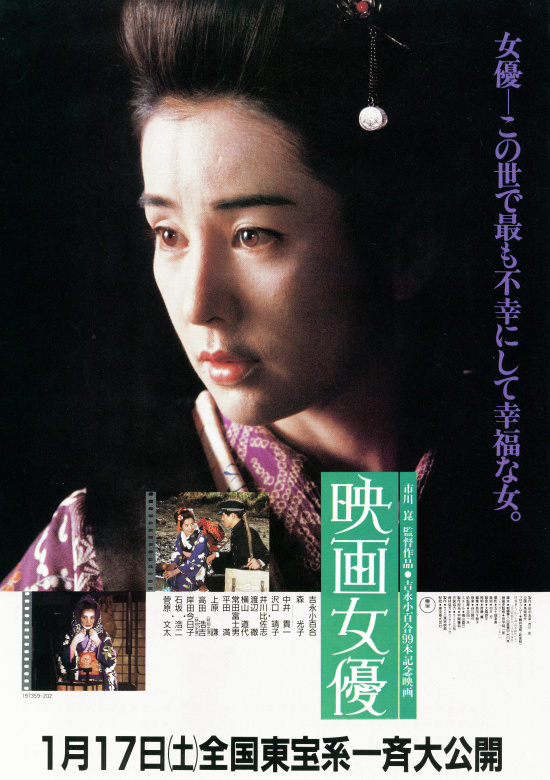 Kon Ichikawa was born in 1915, just four years later than the subject of his 1989 film Actress (映画女優, Eiga Joyu) which uses the pre-directorial career of one of Japanese cinema’s most respected actresses, Kinuyo Tanaka, to explore the development of Japanese cinema itself. Tanaka was born in poverty in 1909 and worked as a jobbing film actress before being “discovered” by Hiroshi Shimizu and becoming one of Shochiku’s most bankable stars. The script is co-written by Kaneto Shindo who was fairly close to the action as an assistant under Kenji Mizoguchi at Shochiku in the ‘40s before being drafted into the war. A commemorative exercise marking the tenth anniversary of Tanaka’s death from a brain tumour in 1977, Ichikawa’s film never quite escapes from the biopic straightjacket and only gives a superficial picture of its star but seems content to revel in the nostalgia of a, by then, forgotten golden age.
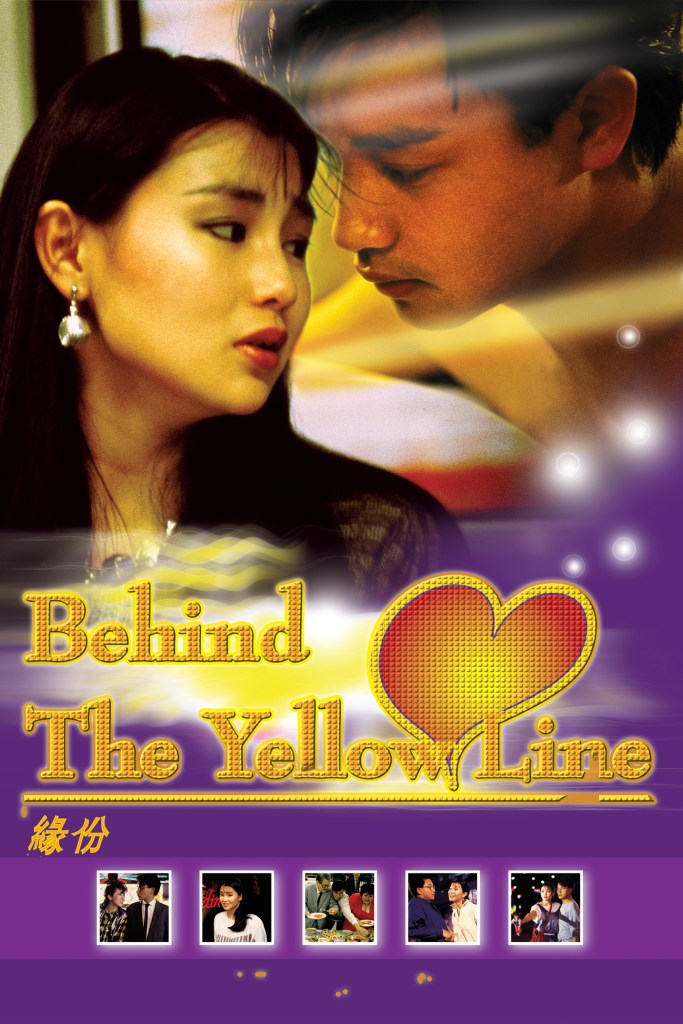 Back in the 1980s, you could make a film that’s actually no good at all but because of its fluffy, non-sensical cheesiness still manages to salvage something and capture the viewer’s good will in the process. In the intervening thirty years, this is a skill that seems to have been lost but at least we have films like Taylor Wong’s Behind the Yellow Line (緣份, Yuan Fen) to remind us this kind of disposable mainstream youth comedy was once possible. Starring three youngsters who would go on to become some of Hong Kong’s biggest stars over the next two decades, Behind the Yellow Line is no lost classic but is an enjoyable time capsule of its mid-80s setting.
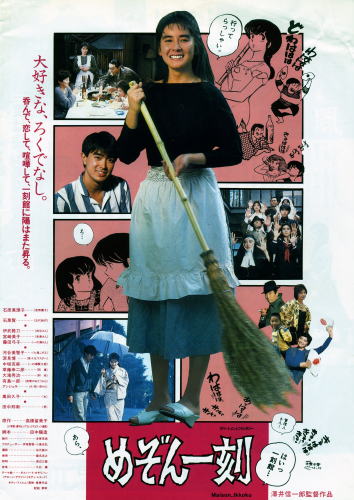 If you’ve always fancied a stay at that inn the
 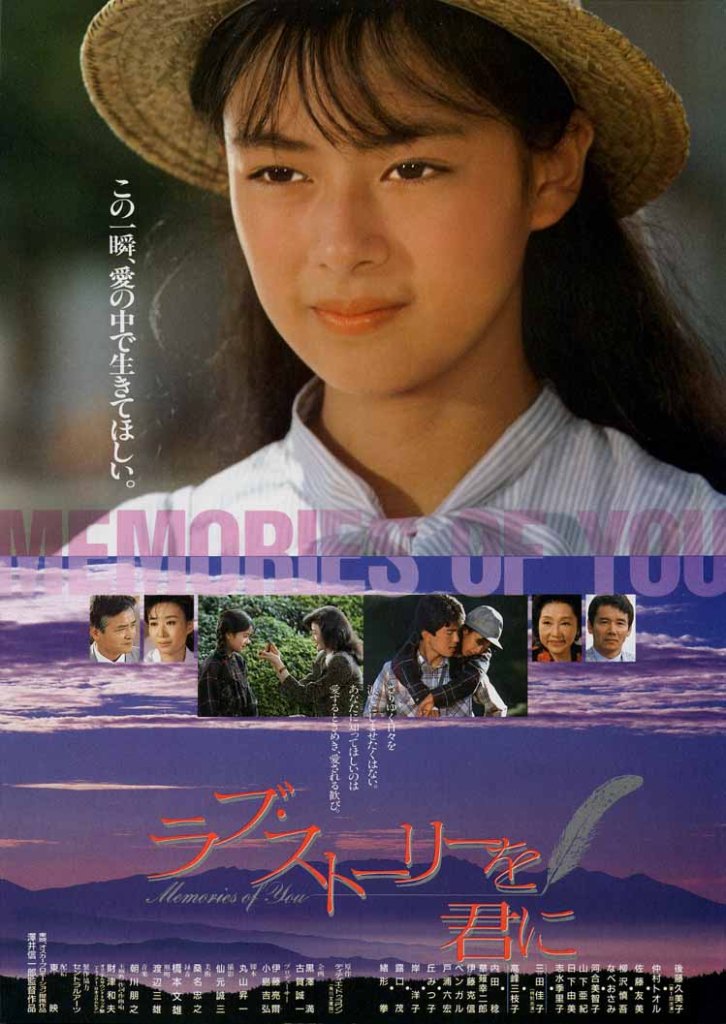 If you thought idol movies were all cute and quirky stories of eccentric high school girls with pretty, poppy voices then think again because Memories of You is coming for you and your faith in idols to make everything better. Directed by
 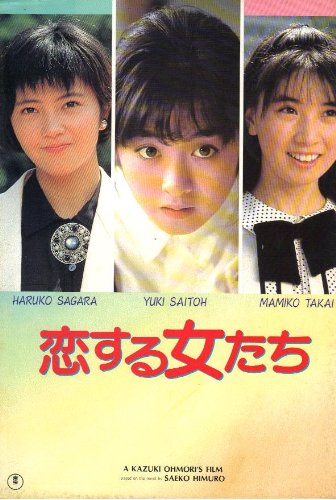 The friends you make in high school are the friends you’ll have the rest of your life, says Takako – the heroine of Kazuki Omori’s Young Girls in Love (恋する女たち, Koisuru Onnatachi). Only she doesn’t quite want hers – they’re weird and cause her nothing but trouble. Also one of them is too pretty so she soaks up all of the attention – where’s the fun in that? Takako is not altogether happy in her adolescence but at least she has her friends there beside her, right?
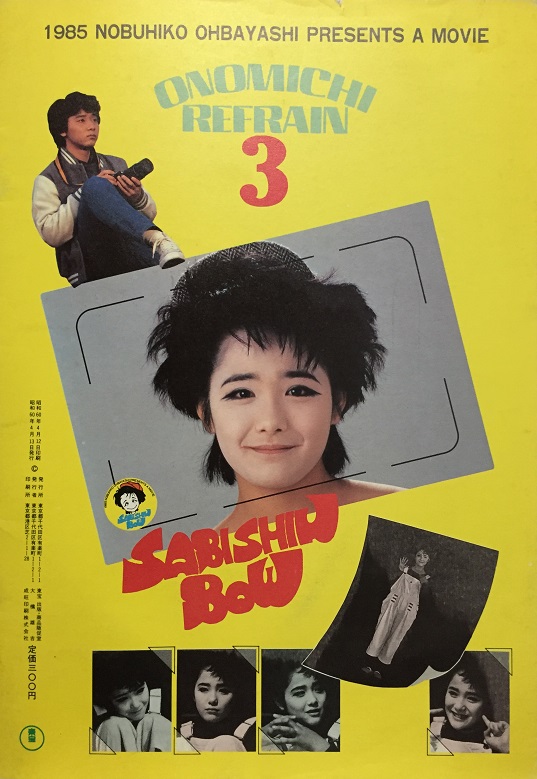 Miss Lonely (さびしんぼう, Sabishinbou, AKA Lonelyheart) is the final film in Obayashi’s Onomichi Trilogy all of which are set in his own hometown of Onomichi. This time Obayashi casts up and coming idol of the time, Yasuko Tomita, in a dual role of a reserved high school student and a mysterious spirit known as Miss Lonely. In typical idol film fashion, Tomita also sings the theme tune though this is a much more male lead effort than many an idol themed teen movie.
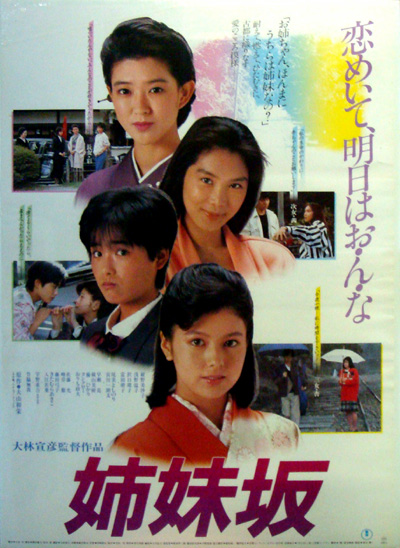 Nobuhiko Obayashi takes another trip into the idol movie world only this time for Toho with an adaptation of a popular shojo manga. That is to say, he employs a number of idols within the film led by Toho’s own Yasuko Sawaguchi, though the film does not fit the usual idol movie mould in that neither Sawaguchi or the other girls is linked with the title song. Following something of a sisterly trope which is not uncommon in Japanese film or literature, Four Sisters (姉妹坂, Shimaizaka) centres around four orphaned children who discover their pasts, and indeed futures, are not necessarily those they would have assumed them to be.
 The Girl Who Leapt Through Time is a perennial favourite in its native Japan. Yasutaka Tsutsui’s original novel was first published back in 1967 giving rise to a host of multimedia incarnations right up to the present day with Mamoru Hosoda’s 2006 animated film of the same name which is actually a kind of sequel to Tsutsui’s story. Arguably among the best known, or at least the best loved to a generation of fans, is Hausu director Nobuhiko Obayashi’s 1983 movie The Little Girl Who Conquered Time (時をかける少女, Toki wo Kakeru Shoujo) which is, once again, a Kadokawa teen idol flick complete with a music video end credits sequence.
 Windows on Worlds