The Deserted City (廃市, Haishi, Nobuhiko Obayashi, 1984)

haishiNobuhiko Obayashi might be most closely associated with his debut, Hausu, which takes the form of a surreal, totally psychedelic haunted house movie, but in many ways his first feature is not particularly indicative of the rest of Obayashi’s output. 1984’s The Deserted City (AKA Haishi, 廃市), is a much better reflection of the director’s most prominent preoccupations as it once again sees the protagonist taking a journey of memory back to a distant youth which is both forgotten in name yet ever present like an anonymous ghost haunting the narrator with long held regrets and recriminations.

Based on a novel by Takehiko Fukunaga, The Deserted City is a European influenced, nostalgic, coming of age tale in which university student Eguchi travels to a small Japanese backwater famous for its canals. Though not as sophisticated as Venice itself, the town shares something of the atmosphere of that city as it has often been evoked in literature in its slightly claustrophobic, decaying grandeur. Eguchi has come to the town on an invitation from his uncle and with the intention of spending the summer there to finish his undergraduate dissertation which concerns the work of Edgar Allen Poe.

However, Tokyoite Eguchi immediately finds the town strange, if mostly charming, with its old fashioned rhythms and almost silent soundscape in which only the lapping of the village’s many rivers is audible. Staying in a guest house run by 19 year old Yasuko and her grandmother, Eguchi begins to hear gentle sobbing at night and jumps to the conclusion it must belong to Yasuko’s married older sister, Ikuyo, whom he has yet to meet. Younger brother Saburo also lurks silently in the background with the brother-in-law, Naoyuki, making infrequent appearances. Eguchi had apparently almost forgotten about this single summer in his youth, but was reminded of it after reading a newspaper report that the town had been destroyed in a fire. His memories are coloured by the tragedy which occurred towards the end of his stay and which his youthful soul was not fully able to understand.

The Deserted City revisits many of the themes which came to define Obayashi’s career from the nostalgia for youth and the power of memory to a vaguely supernatural tone which prefigures the final traumatic event that will continue to haunt the protagonist, even if unconsciously, for the rest of his life. Fukunaga was himself very much influenced by European literature and The Deserted City has a distinctly Western feeling with its death ridden canal town and once grand family in decline. Eguchi’s thesis is on the work of Edgar Allen Poe and it wouldn’t be a stretch to say that he is reading his studies into the story of his own life with the mysterious crying and hidden sister not to mention family secrets and the frequent allusions to the sorry state of the moribund city.

Eguchi describes Yasuko as “cheerful” yet she herself offers the most melancholic commentary of her life. She says she hates the town and can’t stand the constant sound of the waters which she likens the death wail of her city – a slothful sound without energy or purpose. She can see all the other young people leaving with only the elderly remaining behind to decay along with the town, but when Eguchi asks why she doesn’t leave too she replies that she can’t, she’s bound to this place in life and death. Similarly when making a visit to her mother’s grave at a nearby temple she remarks that in this place of stillness, she can no longer discern a difference between the living and the dead. Finally, after all the tragedies that have befallen her, Yasuko declares herself to be “nothing at all” and in bidding Eguchi goodbye as he leaves, corrects him when he promises to visit – she knows she’ll never see him again, he will return to the world of the living. He’ll forget all of this, as if it happened in a dream.

Like many of these stories, The Deserted City is filled with the detached melancholy of the older man looking back at the young one. Eguchi says this incident taught him to expect tragedy from the very beginning of things though he also claimed to have forgotten all about the town and its sad stories of longing and misunderstandings, romantic and otherwise. Working with ATG here Obayashi opts for a nostalgic 4:3 frame and a moderately warm colour palate which echoes both the slightly idealised atmosphere of the idyllic waterside village and its nature as a place which exists solely in memory, shaded in tones of nostalgia but also of regret. Much more conventional than some of Obayashi’s other work, The Deserted City is a perfect blend of European romanticism, melodrama and slight gothic undertones which, though a little low on impact, is a perfect synthesis of his themes up to this point.


Unsubbed trailer:

At This Late Date, the Charleston (近頃なぜかチャールストン, Kihachi Okamoto, 1981)

At this late date, the charlestonKihachi Okamoto first made his name with his samurai movies but his output was in fact far more varied in tone than the work most often screened outside of Japan might suggest. Marked by heavy irony and close to the bone social commentary, Okamoto’s movies are nothing if not playful even in the bleakest of circumstances. He first teamed up with Japan’s indie power the Art Theatre Guild for The Human Bullet in 1968 which recounted the absurd final days of the war in true Okamoto fashion and then bounced back to the Edo era for Battle Cry before deciding on the very contemporary satire At This Late Date, the Charleston (近頃なぜかチャールストン, Chikagoro Nazeka Charleston) in 1981.

Shot in 4:3 and a stately looking black and white, At This Late Date, the Charleston begins when Jiro – a slightly strange younger son of a wealthy family, punches out a girl’s boyfriend whilst the pair are sitting on a bench and subsequently chases her through the park util he eventually gets himself arrested on a charge of “attempted rape”. He then gets thrown into a cell with a gang of crazy old guys who took the decision sometime ago to secede from the state of Japan and create their own independent nation known as the land of Yamatai. Consequently, they all refer to each other by their “cabinet titles” such as Foreign Minister and Army Minister etc each inspired by their former lives which is why they have a minister for mail (he used to be a postman). They’re in jail because they tried to make a “state visit” to the Diet building and whilst there enjoyed some of the canteen food but as this was an official event they didn’t see why they should pay for any of it (and their Finance Minister was busy at the races).

Soon enough everyone gets released – the old guys when the Finance Minister turns up to pay their bill and Jiro when he’s bailed out by his older brother and the family housemaid (who quickly realises the “victims” aren’t quite what they seem). However, in a fantastically weird coincidence it turns out that the government of Yamatai have commandeered a house on the estate of Jiro’s father for their sovereign territory. Jiro’s brother is desperate to evict them but there’s also the problem that their multimillionaire dad has been missing for months and no one’s quite sure what might have happened to him…

Crazy old guys (and gal) who’ve become so disillusioned with their nation that they’ve started a new one on their own, missing industrialists, a Lupin III-like policeman who’s so obsessed with looking cool that the suspects always run away while he’s left striking a pose – Okamoto really knows how to pile on the strangeness, but somehow it all seems to make perfect sense. Madcap doesn’t even begin to do justice to crazy cartoon world Okamoto has created but it’s all so effortlessly funny that it hardly matters what you’d call it.

After initially being captured and branded a spy when he marches on over to Yamatai to ask them about his father, Jiro finds himself defecting to become “Minister of Labour” (this seems to involve doing all of the old guys’ menial tasks). As the youngest member of the group, he becomes the repository for their stories which mostly date back to the days of their youth from the fun loving Charleston era to the rise of militarism and eventually the war itself. This comes to the fore even more as the events take place in August, meaning that there’s both the anniversary of the atomic bomb and of the end of the war raising painful memories for this group of older folks, even if not quite so relevant to the younger contingent. The gang are planning a special trip to a hot spring on the 15th, but first they have to defend their micro-country against the onslaught of gangsters and bailiffs who are trying to “invade” their sovereign territory.

The old folks are pacifists, more or less (they didn’t really want an “Army Minister” but it was argued that no one would take them seriously without means of defence) but are still determined to protect their ideal state of Yamatai all the while clamouring for a silent kind of diplomatic immunity. They have some very unusual ideas but they know what’s what and having made an unlikely ally in the form of an unhappily married and soon to be retired policeman, have even managed to expose a little corruption and evil corporate shenanigans in the process of defending their own freedom. A vote for dancing cheerfully over a military march, At This Late Date, The Charleston is a warm and funny tale of eccentric oldsters who’ve seen it all before and finally decided it’s all kind of ridiculous anyway which can’t help but get your own toes tapping, whatever age you are.


Several unsubtitled trailers for the price of one:

Detective Story (探偵物語, Kichitaro Negishi, 1983)

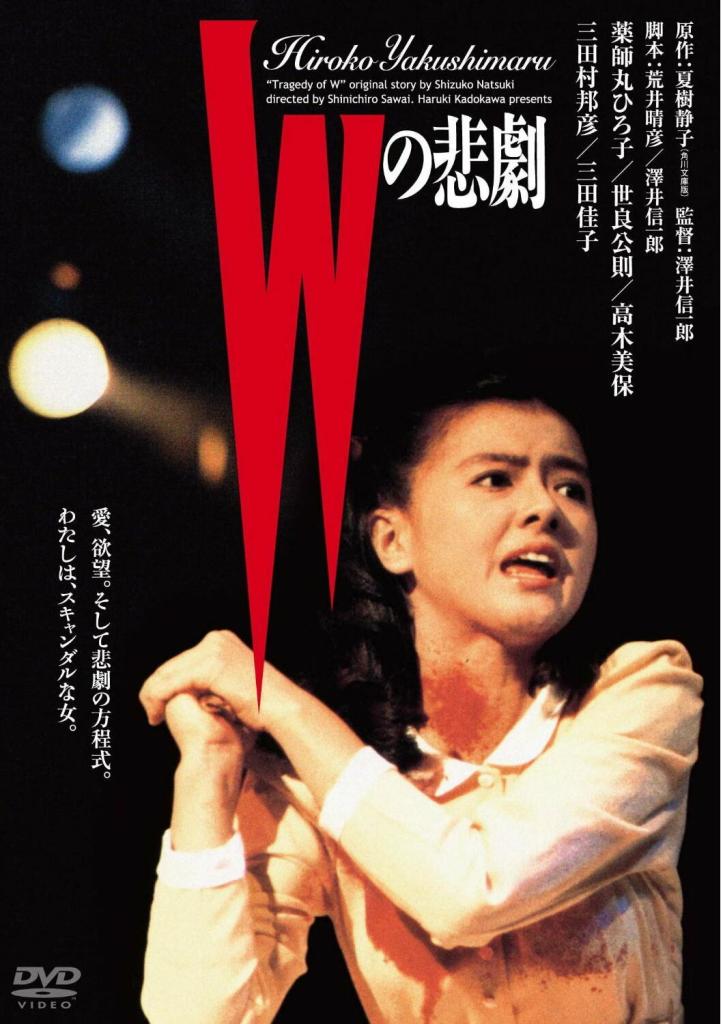
Dective Story 1983Yusaku Matsuda became a household name and all round cool guy hero thanks to his role as a maverick private eye in the hit TV show Detective Story, however despite sharing the same name, Kichitaro Negishi’s Detective Story movie from 1983 (探偵物語, Tantei Monogatari) has absolutely nothing to with the identically titled drama series. In fact, Matsuda is not even the star attraction here as the film is clearly built around top idol of the day Hiroko Yakushimaru as it adapts a novel which is also published by the agency that represents her and even works some of her music into the soundtrack.

As far as plot goes, Detective Story is the kind of good natured, innocent crime thriller that has all but disappeared since the 1980s. Yakushimaru plays teenage student Naomi who is due to move to America to be with her father in the very near future. However, Naomi is an inquisitive, mildly rebellious sort with a habit of sneaking out of her room through the window despite the fact that no one is preventing her simply leaving through the front door. Consequently someone or other has hired a detective, Tsujiyama (Matsuda), to keep an eye on her. This he does pretty well until he puts a stop to Hiroko making a huge mistake with a fellow student in a love hotel. Though Naomi is very not happy about a creepy old guy following her about everywhere, she gradually gets used to it and when Tsujiyama’s ex-wife gets caught up in a hotel room murder case, Naomi gets the inspiration to embark on some detective work of her own.

Despite the shadiness of the world that rich girl Naomi is about to get embroiled in, the film maintains a bright and cheerful tone – perhaps because of Naomi’s own straightforward innocence. Even if she very nearly falls for the advances of an obvious creep (seriously, the guy actually borrows money from his “girlfriend” ? right in front of Naomi to take her out on a date, after which he tries to persuade her to join him in a love hotel), Naomi’s teenage spunkiness largely keeps her out of trouble for the rest of the movie which sees her getting mixed up with nightclubs, showgirls and yakuza. Somehow there is very little feeling of actual danger in the film leaving this all feeling like the kind of thing that happens to Naomi all the time and is simply just one last adventure before she heads off to America.

It must have been something of a coup to get arguably the biggest movie star of the day, Yusaku Matsuda, to play second fiddle in a mainstream teen idol movie especially as his other film choices of the time seem to indicate a desire to get away from his tough guy persona into more dramatic roles. Tsujiyama is cool presence in his stylish brown suit, smoking away in the shadows content to simply keep watch. He’s the omniscient type who always seem to have a plan in motion yet it’s Naomi herself who takes the lead here, solving the case whilst saving Tsuijiyama and his damaged show girl of an ex-wife in the process.

As is common with these kinds of stories there is a light romantic subplot which is a little unseemly when you consider Yakushimaru was only 19 at the time and her character around the same age whereas Matsuda was already in his 30s. This plot strand is played a little strangely throughout the film with a tacked on airport gate conclusion which dissolves itself almost straightway but does play into the film’s coming of age themes as Naomi develops greater sense of herself as an adult woman rather than a reckless teenager.

Detective Story is no lost classic, it’s very much of its time and has perhaps faded a little as has the fame of its tentpole star. That said it’s a perfectly enjoyable cute teen idol detective story which overall succeeds in doing exactly what it sets out to do even if it proves a little dull in the execution. An interesting watch for fans of its two stars Hiroko Yakushimaru and Yusaku Matsuda and even for its director Kichitaro Negishi who has gone on to win some later critical acclaim particularly with the prestige drama Villon’s Wife in 2009, Detective Story is perhaps not worth an all night stakeout but at least warrants a cursory investigation.


Unsubtitled trailer:

and here’s a video of Hiroko Yakushimaru singing the (very catchy) title song at a concert celebrating the 35th anniversay of her film debut (video has a bit about the concert at the beginning, fastfoward to 1:13 for the song only)


Death Powder (デスパウダー, Shigeru Izumiya, 1986)

death powderCyberpunk, for many people, is a movement which came to define the 1980s and continues to enjoy various kinds of resurgences and rebirths even into the new century. Beginning the the ‘60s and ’70s in dystopian science fiction afraid of the impact of advancing technologies in society, it’s not surprising that the genre began to actively embrace influences from the East and especially that of the more technologically advanced and economically superior Japan. However, when Japan made its own cyberunk cinema, the “punk” element is the one that’s important. These movies sprang from the punk music scene and often star punk bands and musicians as well as featuring high energy punk rock inspired scores.

Death Powder (デスパウダー) is among the first of these tech themed experimental films and is the only feature to be directed by folk singer and poet Shigeru Izumiya who had also starred in Sogo Ishii’s massively influential Burst City in 1982. Hugely indebted to Blade Runner, it takes that film’s noir stylings and terminology to create an experimental surrealist film loosely themed around two bounty hunters in search of a “replicant”.

After beginning with a chase sequence past neon signs and through a contemporary Tokyo where the faces of passersby have been pixelated out, the story focuses in on the pair of street punk robot hunters, Kiyoshi and Noris, who have been charged with investigating a gang hideout which used to belong to an artist who keeps trying to come back. However, when the duo arrive they find that the reason the artist, Harima (played by Izumiya himself), keeps trying to attack the place is that they’ve been holding his girlfriend, Guernica – an android, in the basement. After Guernica is killed in the resultant fighting, her body turns into a kind of powder which Kiyoshi later snorts. This “Death Powder” allows Guernica to colonise his body producing changes in both his mind and physiology.

This is what passes for a plot summary, though in keeping with the best of cyberpunk film making from Japan the narrative is irrelevant. One character even says to another “Like life itself, this makes no sense” – that being the point in a sense, creating meaning from the meaningless. Though it starts off with a Blade Runner-esque aesthetic bearing all of the hall marks which would come to be associated with cyberpunk from the neon signs, darkened streets and noir tinged atmosphere right down to the shades and trilbies costuming, the film quickly moves into the experimental realm with strange robotic sperm flying across the screen and melting vistas of city scenes and memories.

Kiyoshi begins to merge with Guernica’s consciousness, inheriting her memories and what may or may not be android fears and emotions. He “remembers” a flashback sequence featuring the very strange figure of Dr. Loo – a rock god mad scientistic who built Guernica for some undisclosed reason and then passed her on to Harima on whom it, apparently, depends whether not not she can become human which requires showing her love that transcends human love and will become “memories”. Like the replicants in Blade Runner she has a limited four year lifespan but when she dies her body will become a powder which gives life to other things.

Guernica is a created being, devoid of human flesh, but can she become human through experiencing human emotions and can she overcome death by downloading her experiences into another being’s consciousness? All fundamental questions found in cyberpunk explorations of what in means to be human in a world of advancing technology but once again Death Powder offers no clear answers so much as a surrealist and experimental exploration of the individual changes undergone by the individual rather than the society in the face of increasing mechanisation.

The borders between life and death, consciousness and unconsciousness, man and machine have all become so hopelessly blurred that concept of reality itself has become corrupted and no longer carries any kind of currency. While it may not have the raw and sophisticated artistic power of Tsukamoto’s later Tetsuo the Iron Man which has come to define the genre, Death Powder is a surprisingly accomplished low budget cyberpunk body horror extravaganza which places sensory experience ahead of narrative. Undoubtedly hugely influential yet now little seen or remembered, Death Powder is an essential addition to the cyberpunk canon and one which deserves to be as widely distributed as the classics which later followed it.


Opening sequence of the film (very trippy but dialague free until right near the end. Fast forward to around four minutes in for the nighttime chase through Tokyo!):

The Drifting Classroom (漂流教室, Nobuhiko Obayashi, 1987)

Drifting ClassroomNobuhiko Obayashi may have started out as an experimental filmmaker and progressed to a lengthy narrative film career but he remains best known for his “what the hell am I watching?” cult classic Hausu. Aside from his 1983 take on The Girl Who Leapt Through Time, very little of his other work has travelled outside of Japan. In the case of 1987’s The Drifting Classroom (漂流教室, Hyoryu Kyoshitsu), this is doubly surprising firstly because it’s based on a hugely popular manga by the godfather of horror comics Kazuo Umezu and secondly because it’s set in an international school so around 80% of the dialogue is in English.

Obayashi jettisons most of Umezu’s original plot which involves an ordinary Japanese school being suddenly and mysteriously uprooted from its city centre location leaving only a gaping hole to mark its place. This time our hero is Shou – a teenage boy who has recently returned from living in LA and is attending Kobe International School until his Japanese improves enough to get into a normal establishment. Having lived abroad for so long, Shou is a totally Americanised boy with a rebellious, individualistic streak and just wants to hang out with his cool American pals rather than study like his parents want him to do so he can get a foot on the all important ladder of the Japanese educational system. Consequently he argues with his mother and says some very harsh things which leads to her telling him to get out and not to bother coming back – sentiments which both are about to spend the rest of their lives regretting.

Right before taking the register some weird shit goes down and there’s an intense storm which fills most of the school building with sand. Looking out of the windows, everything seems to have become desert. The kids and the two remaining teachers think about what to do and settle on practical things like rationing the food and water left in the school canteen. Back in Kobe, there’s just a giant hole in the ground and a whole lot of confusion….

For some reason, Obayashi decided to set the story in an international school which means that most of the dialogue is in English (though judging by the accents and languages there are some Europeans and students from other parts of Asia around too). This is the single worst decision of the adaptation as the dialogue, which is overly silly to begin with, is offered in stilted, halting tones by its disappointing child actors with the native English speakers not doing very much better than the Japanese kids who are at least trying their best. Perhaps for these reasons (or just out of operational necessities) the film is entirely shot in non-sync sound and the dubbing never quite links up either.

It almost seems as if Obayashi is targeting an overseas audience as his tone is very much indebted to ‘80s kids’ movies with its cast of slightly plucky (sometimes irritatingly so) youngsters trying to solve the mystery of their own disappearance. However, it doesn’t seem as if the film was ever released outside of Japan (where it has never even been released on DVD) despite the presence of one time American star Troy Donohue leaving the strange Americanisms as a sort of exotic plot element with no real resolution.

Though the story seems to be aimed at older children with the usual themes of perseverance in times of adversity and the importance of teamwork and friendship, there are a few scary moments including a psycho style gag where a teacher’s head spins round before dissolving into sand. However, the majority of the special effects are extremely unconvincing resembling an ‘80s kids TV programme with a host of matte paintings, bad green screen, early digital effects and even some tokusatsu style people in rubber suits playing strange cockroach-like monsters. Arguably the best of these is the friendly creature who hangs round with the kids from school and most closely resembles a disgruntled potato with legs (but may actually be giving the most accomplished performance in the entire film).

All of this could have added to the film’s kitsch, “bad movie” vibe but Obabyashi opts to get serious every now and then and ruins everyone’s fun in the process. Weirdly, everyone just seems to accept the “timeslip” argument right away as if that’s a perfectly normal thing that happens every now and then like sinkholes or spontaneous human combustion – there’s even a geologist (?) being interviewed on the news who just says “yes – it is probably a timeslip” when asked to provide some “scientific commentary” on the disappearance of the school children. Completely bizarre but not in a very interesting way, The Drifting Classroom is a misfire on all levels neither making a good adaptation of its source material or an entertaining movie in its own right. Camp classics enthusiasts or Obayashi fanatics only.


The Drifting Classroom was also adapted into a TV drama in 2002 under the title of Long Love Letter which is much better than this movie.

A short scene from the film starring its best character whom I have decided to name “Spuddy” (English dialogue):

Robinson on the Beach (砂の上のロビンソン, Junichi Suzuki, 1989)

Robinson on the Beach

“Family Drama” is often said to be the mainstay of Japanese film. From Ozu to Koreeda, drama in the basic social unit has often been exploited to create a wider dialogue about society at large. However, In the wake of Yoshimitsu Morita’s condemnation of modern family values in The Family Game the nature of the conversation shifted. As Japan eased into its bubble era, concerns began to grow about what exactly the rise of consumerism meant for traditional values. Robinson on the Beach (砂の上のロビンソン, Suna no Ue no Robinson, AKA A Sandcastle Model Family Home) takes things one step further than The Family Game in that it repackages the entire idea of “the ideal family” as something that can itself be bought and sold and therefore manipulated as the perfect marketing tool.

At the beginning of the film, the Kidos are a fairly ordinary lower middle class family of five all living a modest apartment. They’re a little cramped – in fact so much so that mum and dad have to sneak into the wardrobe to get some alone time together just watching movies on a tiny TV set and sharing a set of earphones between them. The kids are always at each other’s throats but broadly they’re happy. However, when both husband Shouhei and wife Ryoko spot an advert for a new scheme which promises a “free” house to a “model family” they decide that this is their best chance at a new life. The deal does have a few drawbacks – they all have to play the part of a perfect family for a whole year and let the public into their lives to prove it.

Things were a little more innocent back in 1989. Reality TV hadn’t yet kicked in and the Kido’s don’t quite understand what it is they’re letting themselves in for when they agree to this too good to be true offer. The house they’ve been given is a veritable mansion – a huge, sprawling Western style home with a bedroom each for the children, a dedicated study for Shouhei and as many walk-in closets as anyone could wish for. However, the cars in the garage are only for show and even if the house is in the same general area as their old flat, Shouei still has to cram himself inside the sardine tin of the morning commuter train every day just like before.

He does at least have the luxury of being allowed to leave the house, unlike Ryoko who becomes a bizarre “first lady” to this new show home empire expected to play a role somewhere between real estate agent and princess as she welcomes prospective buyers and allows them to poke and prod all over her nice new home spreading thinly veiled judgement wherever they go. Suddenly she has people going through her fridge and oggling her washing left hanging up to dry . The liaison lady from the company even has the gaul to criticise Ryoko’s nightwear as “frumpy” and orders her to buy something a little more glamorous which will match the “upmarket” appeal of the house.

After she gives in and does this she just has to listen as two visitors describe the new nightwear as “slutty” and wonder how a “respectable” wife could wear such a thing (it’s just a regular pink negligee nightdress, nothing unusual about it at all save for being a little more career woman than mumsy in appeal). In fact, the family’s new found circumstances only cause resentment in those around them and Ryoko in particular is plagued by nuisance callers who repeatedly accuse her of having prostituted herself to win the house.

In the economic reality of Tokyo at the time, there was just no feasible way a family like the Kidos would ever be able to afford to own their own house. They probably wouldn’t even be able to rent one or get anything bigger than the apartment they occupied at the beginning of the film. Shohei provokes the ire of his boss after moving into the show home because it’s already better than anything his boss could afford and he already owns a small home far out in the suburban commuter belt. Now everyone has it in for Shohei and he does get a kind of demotion as the company send him to demonstrate their “super slicer” kitchen gadget in a local department store. This is doubly worrying as Shohei is a very shy and nervous man who is not well suited to public speaking leaving the company’s excuse of making use of his new found celebrity as an ironic way of taking revenge on his jumping up the social order through unorthodox means.

All of these stresses gradually build up as even the children are subject to attacks from outside (and some of them very cruel and disturbing in nature). Before long this once happy family begins to buckle under the strain of pretending to be what they once really were. One particularly perverse episode sees them sitting down to a pre-scripted dinner while an audience of onlookers silently judge them as if they were engaged in some kind of performance art – which, of course, they are albeit almost unconsciously. Having gained everything they’d ever wanted, they discover that the costs far outweigh the benefits with Shohei hit hardest after he succumbs to a streak of selfish individualism that has dire consequences for everyone.

Eventually the value of the traditional family is reinforced as everyone starts to realise that the fancy house was never as important as the simple happiness they felt being crammed together in their tiny apartment. Though there is a hopeful resolution at the end, whether or not the damage can be repaired may be a matter for debate though the overriding message of caution about the corrupting influences of rampant consumerism including classism, petty jealousy and a growing tendency towards the voyeuristic is one which finds its way into many of the films from this period and is sadly still worth restating even today.


Scene from near the beginning of the film (with English subtitles):

Ran (乱, Akira Kurosawa, 1985)

ran posterAkira Kurosawa is arguably the most internationally well known Japanese director – after all, Seven Samurai is the one “foreign film” everyone who “doesn’t do subtitles” has seen. Though he’s often thought of as being quintessentially Japanese, his fellow countryman often regarded him as too Western in terms of his filming style. They may have a point when you consider that he made three different movies inspired by the works of Shakespeare (The Bad Sleep Well – Hamlet, Throne of Blood – Macbeth, and Ran – King Lear) though in each case it’s clear that “inspired” is very much the right word for these very liberal treatments.

In the case of Ran (乱) – a loose adaptation of King Lear, Kurosawa moves the story to feudal Japan and an ageing king who this time has three sons rather than three daughters. This leaves Hidetora (Tatsuya Nakadai) with a smaller problem than Lear’s though in his original idea of making his eldest son his heir with the other two inheriting smaller roles it’s clear things aren’t going to end well. Just as in the original play, the oldest two sons Taro and Jiro sing their father’s praises with cynical glee but the youngest and most sincere, Saburo, refuses to play this game as his respect for his father is genuine. Unfortunately, Saburo’s honesty sees him banished from his father’s kingdom and his share of responsibility given over to his treacherous brothers. Predictably, neither is satisfied with what they’ve been given and it’s not long before a familial conflict has sparked into a bloody civil war.

How sharper than a serpent’s tooth it is to have a thankless child….Hidetora is not quite as far gone as Lear in Shakespeare’s original text at the beginning of the film yet he is still unable to see that his oldest two sons have placed personal ambition ahead of filial piety. Hidetora was once a fearsome, if cruel, warrior, famous for burning enemy villages and creating peace only through destruction. He’s old now, and tired and so he proposes to hand over the running of the kingdom to his eldest son, yet – he wants to remain the de facto leader until the very end. Of course, that doesn’t sit well with Taro, or more to the point his ambitious wife Lady Kaede. Hidetora is thrown out of Taro’s castle and then also from Jiro’s before all out war erupts between the two leaving him totally isolated – a king without a kingdom.

Hidetora’s true madness begins when he realises not only how little regard his eldest two sons hold for him, but also that his failure to recognise the true nature of the situation has lead to the deaths of the people in his care that have remained loyal to him to the very end. As the enemy begin to engulf the castle, concubines begin helping each other to commit suicide in order to avoid ravishment while others try to escape but are cut down by arrow fire. This is all his own fault – his ruthless cruelty has been filtered down to his two oldest sons who, as he did, will stop at nothing in the pursuit of power. What is a king if not the father of a nation, and as a father he has failed. Neither Taro or Jiro are worthy of the offices afforded to them and lack both basic humanity and the princely power one needs to become the unifying force of a people.

Only too late does Hidetora see the wisdom in Saburo’s words and finally understand that he has alienated the only one of his children that truly loved him. From this point on his madness increases and Nakaidai’s performance becomes increasingly mannered and theatrical as if Hidetora himself is acting in another play which only he can see. Wandering and lonely, the once great king is reduced to the estate of a beggar led only by his fool and sheltered by the ruins of a castle which he himself burned down.

However, as great as Nakadai is (and he always is), he’s very nearly upstaged by the young Mieko Harada as one of the all time great screen villainesses with the Lady Macbeth a-like Lady Kaede. Filled with a vengeful fury, Kaede is unafraid to use every weapon at her disposal to achieve her goal. No sooner is she brought the news of her first plan’s failure in the death of her husband than she’s embarking on a plot to seduce his brother which includes getting him to execute his wife. Vile as Kaede’s actions often are, her desire for revenge is an understandable one when you consider that Hidetora was responsible for the deaths of her family leaving her to become a trophy bride for the son of the man that killed them. Viewed from another angle, it would be easy to sympathise with Kaede’s desire to rid the world of these cruel and tyrannical lords were it not for her insistence on the death of Lady Sue – a woman in exactly the same position as herself whose death would not actually advance her cause very much at all.

Kurosawa films all of this from a distance. We, the audience, almost become the gods he speaks of – the ones who weep for us, watching silent and helpless, unable to save us from ourselves. We see the world for what it is – chaos, horses and men and blood. The battles aren’t glorious, they are frenetic, frightening and ultimately pointless. Though for all that there is a beauty to it too and the sheer scale of the production with its colour coded princes and immense armies is one the like of which we will never see again.

Ran presents us with a prognosis which is even more pessimistic than that of Lear. At the end of Shakespeare’s play, as profoundly tragic as it is, there is at least the glimmer of hope. There is a new, rightful king and the idea that something has been restored. Here there is no such resolution, we are the blind man casting a stick around the edge of a precipice, entirely alone and unable to see the gaping chasm which extends before us into which we may plunge headlong driven only by the chaos in our own hearts. In the end, Kurosawa’s message is not so different from Shakespeare’s – all the weight of this sad time we must obey, speak what we feel, not what we ought to say. Fathers and sons must strive to understand each other, and themselves, lest we fall into the eternal chaos which leads us to build our very own hell here on Earth.


Ran is currently playing in UK cinemas in a brand new 4K restoration courtesy of StudioCanal!


As Tears Go By (旺角卡門, Wong Kar-wai, 1988)

as tears go byThese days, Wong Kar-wai is an international auteur famous for his stories of lovelorn heroes trapped inside their memories, endlessly yearning in vain for the unattainable. In many ways his debut feature, As Tears Go By (旺角卡門, Mongkok Carmen) is little different save that it owes more to its vague heroic bloodshed, gangster inspiration and is less about memory than inevitability and a man abandoning his dreams of a better life with a woman he loves out of mistaken loyalty to his loose cannon friend.

The film opens with Wah (Andy Lau) still in bed despite it being late in the day only to be woken by a voice so piercing it can only belong to an aunty. It seems a mysterious cousin whom he’s never met before will be coming to stay with him as she has something wrong with her lungs and needs to see a specialist in town. Seconds after he puts the phone down the doorbell rings to reveal the cousin, Ngor (Maggie Cheung), standing outside. Slightly put out, Wah goes back to sleep despite the continuous phone calls from his friend, Fly, who is supposed to be collecting a bill but is not having much success. As he will do for the rest of the film, Wah will have to go down there himself and stop Fly making things even worse for everyone than they really needed to be.

For the early part of his career Wong had worked as a scriptwriter (a self confessed hack at times) and was finally given the opportunity to direct his own work as the Hong Kong film industry began to boom in the late ‘80s. This was of course largely due to the fantastically successful action flicks being made at the time including A Better Tomorrow, The Killer, City on Fire etc. so it’s not surprising that he chose the relatively safe arena of genre for his first foray into the director’s chair. His existing connections also enabled him to cast arguably the biggest young stars of the day including Andy Lau, Maggie Cheung and Jacky Cheung as his three leads meaning he had pretty much a safe bet on his hands whatever he decided to do. However, even if As Tears Go By is the most straight forward, even commercial, of his films that’s not to say it doesn’t bear many of the hallmarks of his later efforts.

Broadly speaking, As Tears Go By is a fairly standard gangster tragedy much indebted to Scorsese’s Mean Streets as its melancholic hero is caught between loyalty to his friend and the possibility of salvation through the love of a good woman. Fly is a one man disaster zone – a totally useless gangster who can’t take care of himself in a fight yet loves to buzz around irritating the hell out of everyone and starting gang wars over nothing every five seconds. Even the pair’s godfather warns Wah that sooner or later Fly is going to land him in big trouble and it would be better for everyone if they could find him something else to do. Wah seems to agree but is unable to guide his feckless friend away from the fleeting glory of the tough guy world. Wah is already tired of the gangster life, he feels old with it but knows somewhere deep down he’ll never be free. Either out of complete stupidity, mistaken loyalty and a desire for revenge, or just because he doesn’t think he deserves anything else Wah throws away his chance for something better in a pointless, though affecting, gesture of solidarity with Fly.

Shot by Andrew Lau (who would go on to direct his very own genre hit Infernal Affairs also starring Andy Lau only 15 years later), As Tears Go By sparks many of Wong’s consistent visual motifs including the use of slow motion and a persistent melancholic atmosphere which is also filled with tiny moments of contemporary life. Andy Lau makes for a super cool gangster hero in jeans, dark jacket and sun shades, cigarette hanging carelessly from his lips as he wanders about town in a perpetual statue of ennui. Like many of Wong’s subsequent lonely male heroes, he has an inner longing for something which he believes he can never have. Just as the best film noir tough guys do, he warns off his potential romantic salvation which comes in the pleasing form of Maggie Cheung by telling her that, being such as he is, he can promise her nothing because he’s learned never to bother thinking past tomorrow.

Taken on its own merits, As Tears Go By is an interesting addition to the canon of late ‘80s gangster movies which marries the classic tropes of heroic bloodshed with an arthouse aesthetic inspired by both “New Hollywood” classics and genre infused European cinema. Though he’d rarely return to such frenetic action scenes, here Wong shoots with energetic hand held camera and a kind of fury that might give Fukasaku a run for his money. Extraordinarily accomplished for a debut movie, As Tears Go By is very much a youthful feature which is stained with the same kind of unresolvable longing which would come to colour the rest of Wong’s work to date. A stylish genre effort, As Tears Go By is Wong finding his feet, but find them he does and leads us on a characteristically melancholy waltz as he does so.


Reviewed as part of HOME’s CRIME: Hong Kong Style touring season.

Such a pleasure seeing this again and in 35mm! Though there perhaps should have been a warning about how much of the film lacked subtitles (just as well I’d seen it before!).

As Tears Go By was previously released by Tartan in the UK but a word of warning as there was quite a big error involved with the UK edition in that Tartan were given the Mandarin dub of the film rather than the original Cantonese by mistake but opted to rush the film out in conjuction with the release of 2046 rather than fix the problem. Kino Lorber released the film in the US but maybe out of print. The good news is that the Hong Kong edition at least does have English subtitles.

Original trailer (no subs)

I’m not sure if the film’s title actually has anything to do with this song, but As Tears Go By is an appropriately melancholic ballad from The Rolling Stones, here’s a vintage version sung by Marianne Faithfull:

The original Cantonese title is Mongkok Carmen – Mongkok being an area of Hong Kong and Carmen referring to the opera by Bizet which certainly creates an interesting set of allusions!

Yokohama BJ Blues (ヨコハマBJブルース, Eiichi Kudo, 1981)

Yokohama bj bluesYusaku Matsuda may have been the coolest action star of the ‘70s but by the end of the decade he was getting bored with his tough guy persona and looked to diversify his range a little further than his recent vehicles had allowed him. Matsuda had already embarked on a singing career some years before but in Eiichi Kudo’s Yokohama BJ Blues (ヨコハマBJブルース), he was finally allowed to display some of his musical talents on screen as a blues singer and ex-cop who makes ends meet through his work as a detective for hire.

After his set at a rundown jazz bar, BJ’s first job is tracking down a missing son. When he finds the guy, Akira, he seems to have become the employee (and possible sex slave?) of a gay gangster. Akira says he’s fine with his new life and wants his mother to leave him alone so BJ gets the hell out of there to give her the message but the unpleasantness of the situation lingers with him a little.

Shortly after, BJ receives a telephone call from an old police buddy, Ryo, who needs his help. Ryo got in too deep with the same gang BJ just came up against and is thinking of quitting the force in a bid to make the “Family” lose interest in him. However, Ryo is gunned down in broad daylight leaving his partner, Beniya, convinced that BJ is somehow responsible. BJ now doubly has it in for Family and starts working on his own behalf to try and find some answers and possibly a little vengeance too.

You see, back when Ryo and BJ were partners, they both liked the same girl, Tamiko, who eventually married Ryo. Beniya thinks BJ killed his friend to steal his wife and is much more interested in giving BJ a good kicking rather than investigating this very strange gang set up which seems to have some kind of drug smuggling gig going with the triads in Hong Kong.

BJ forms an odd sort of friendship with Akira in the hopes of tracking down the four gay, leather clad punk henchmen of Ali who probably gunned down his friend. However, the conspiracy only deepens and BJ finds himself suspecting even his closest of friends.

With its jazz soundtrack and melancholy tone, Yokohama BJ Blues is channelling hard boiled in a big way though does so in a distinctly modern fashion. BJ sings the blues whilst walking around this strange noir world which seems to endlessly disappoint him. Unfortunately for him, BJ is quite a good detective and quickly gets himself in way over his head only to end up finding out a few things it might be better not to know.

One of the film’s most notable components is its use of homoerotic themes with its gangs of gay gangsters, rent boys and punks. Indeed, though the wife of his former partner is floated as a possible motive, the love interest angle is never fully explored and all of BJ’s significant interactions in the film are with other men. Firstly his relationship with his former police partner Ryo which kick starts the entire adventure and then his strange almost date-like experience with Akira about half way through. BJ remains otherwise alone, a solo voice seeking justice for his fallen friends.

Of course, the film’s selling point is Matsuda’s singing so he’s allowed to play his own chorus in a sense by narrating the events from the stage in the form of the blues. Not quite “The Singing Detective”, but almost – BJ tries to bring some kind of order to his world by turning it into a song. In addition to adding to the noir tone, the bluesy soundtrack even allows for a New Orleans-esque musical funeral which oddly fits right in with the film’s weird, macabre atmosphere.

A surreal, noir inspired crime drama with musical elements, Yokohama BJ Blues is quite a hard film to categorise. Unusual for its homosexual milieu and overt homoerotic plotting the film occupies something of a unique place given its obvious marketing potential and star’s profile coupled with its decidedly murky noir tone. Difficult, yet interesting, Yokohama BJ Blues ultimately succeeds both as an intriguing crime drama and as a star vehicle for its versatile leading man.


This is a really, deeply, strange film.

Unsubtitled trailer:

I actually quite like Matsuda’s foray into the world of jazz, the title song from Yokohama BJ Blues which is heard in the trailer is called Brother’s Song and is included on Matsuda’s 1981 album Hardest Day. Here he is on a talk show singing Yokohama Honky Tonk Blues:

Kitchen (キッチン, Yoshimitsu Morita, 1989)

KitchenBanana Yoshimoto’s debut novel Kitchen was first published in 1988 and instantly became a publishing phenomenon. The first film adaptation came not long after with the identically titled Kitchen (キッチン) directed by Yoshimitsu Morita in 1989. Like most of Yoshimoto’s work, Kitchen deals with people learning to live with grief and cope with the aftermath of tragedy. However, though Morita’s script sticks closely to the novel for the first half of its running time, he later deviates into a conventional romantic youth drama much like his more populist offerings of the time.

The film opens with a strange image of a young woman asleep in front of a fridge in an otherwise entirely darkened kitchen. The young woman is Mikage Sakurai – orphaned at a young age, Mikage (Ayako Kawahara) was raised by her grandmother who has recently also passed away leaving her entirely alone in the world. The one place Mikage has learned to feel at peace is in a kitchen and she has her sights set on a culinary career.

At the funeral, Mikage meets a young man who had apparently become good friends with her grandmother through his part-time job at a florist. After striking up a friendship with Mikage, Yuichi (Keiji Matsuda) invites her to the upscale apartment he shares with his mother, Eriko (Isao Hashizume). Mikage falls in love a little bit with their well appointed and spacious Western style kitchen which is filled to the brim with all the latest gadgets. Soon after, Mikage moves in with Yuichi and Eriko and begins to rebuild her life with a new family beside her.

It’s difficult to avoid spoilers in this respect but for anyone who is familiar with Yoshimoto’s novel, it’s important to note that one particular tragedy which informs the entirety of book has been completely eliminated in this adaptation. The biggest change Morita has made is in his depiction of Eriko who is a trans woman and the father of Yuichi having undergone gender reassignment after the death of Yuichi’s mother.

The film is actually very positive in dealing with Eriko’s character and doesn’t try to elide or make a joke out of her. However, whereas Eriko in the book is described as an extremely glamorous and beautiful woman to the extent that she may seem slightly intimidating at first despite her warm and loving nature, here she is played by a male actor with a man’s haircut and slightly frumpy fashion sense as well as being depicted more like a stereotypically gay male character. Likewise, though Eriko’s friend Chika-chan is still in the movie, we never see anything of Eriko’s life at the gay club she runs or much of her life away from Yuichi and Mikage. That said, the change in question does offer a little more hope and happiness for Eriko than her outcome in the novel.

Morita also gives the film more of the quirky, light hearted feel he adopted in many of his other populist films from the ‘80s. Yoshimoto’s work often successfully straggles a difficult tonal gap in which it’s filled with a kind of existential despair but simultaneously light and cheerful. Though Mikage is numbed with grief throughout the novel which prevents her from assessing what it is she really wants from life, the film is satisfied with depicting her as a fairly ordinary young woman whose problems stem more from trying to step out alone for the first time rather than trying to emerge from a life altering tragedy like the death of your last remaining family member.

However, Morita retains the magical realist qualities of the novel through his use of dream sequences and expressionist imagery. Juxtaposing bright colours of nature with the often extremely dark backgrounds, he creates an impressive sense of differing realities with Mikage’s cheerful on the surface yet depressed inner life recreated through iconography rather than through performance or dialogue. He also retains the use of the moon as symbol for life and happiness, presenting a source bright light in an otherwise dark world which can help to guide the way in times of trouble.

As a film in its own right, Morita’s Kitchen is certainly very much of its time though perhaps not unwatchable, but as an adaptation of Yoshimoto’s novel it ultimately fails on all counts. Veering way off tone in its second half, Kitchen takes on much more of a conventionally romantic narrative eschewing Yoshimoto’s major messages about the need to come to terms with a traumatic past in order to move on and the importance of understanding your true feelings while there’s still time to act on them. Yoshimoto is more concerned with showing that joy and sorrow are two sides of the same coin and you can’t have one without the other but Morita’s story creates a much smoother, more natural path for a romance between Mikage and Yuichi which ultimately robs it of much of its power. That said even if Kitchen disappoints as a literary adaptation it isn’t entirely without interest and does at least offer several examples of Morita’s idiosyncratic gift for composition.


Opening scenes of the film (dialogue free)

Kitchen was also adapted as film in Hong Kong directed by Ho Yim in 1997, starring Yasuko Tomita and Jordon Chan. Banana Yoshimoto’s source novel was first published in English in 1993 (translated by Megan Backus) and is still in print from Faber & Faber in the UK and Grove Press in the US.