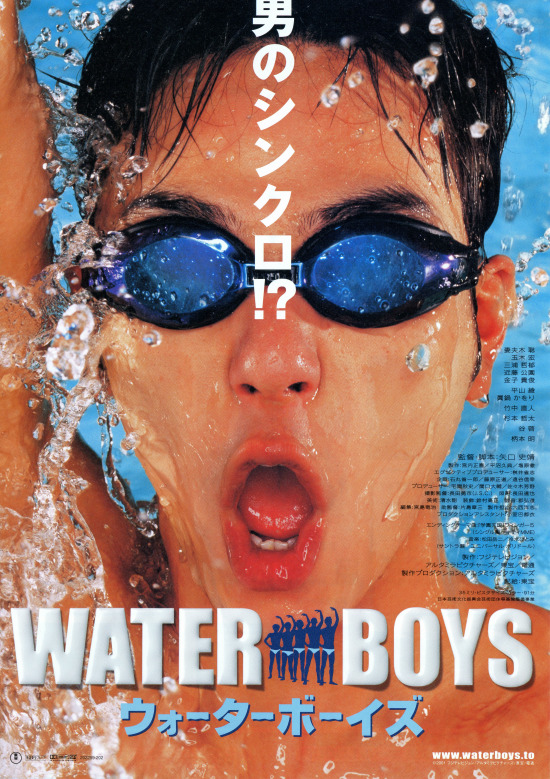
 Japan has really taken the underdog triumphs genre of sports comedy to its heart but there can be few better examples than Shinobu Yaguchi’s 2001 teenage boys x synchronised swimming drama Waterboys (ウォーターボーイズ). Where the conventional sports movie may rely on the idea of individual triumph(s), Waterboys, like many similarly themed Japanese movies, has group unity at its core as our group of disparate and previously downtrodden high school boys must find their common rhythm in order to truly be themselves. Setting high school antics to one side and attempting to subvert the normal formula as much as possible, Yaguchi presents a celebration of acceptance and assimilation as difference is never elided but allowed to add to a growing harmony as the boys discover all new sides of themselves in their quest for water borne success.
Dreamy high school boy Suzuki (Satoshi Tsumabuki) is currently the only member of his high school’s swimming team, and unfortunately he’s not a particularly good swimmer. His interest is piqued when he spots a synchronised swim meet, but he forgets all about it until a new teacher arrives and pledges to revive the school’s fortunes in the pool. Seeing as their new teacher is a pretty young woman with an interest in swimming, the team suddenly becomes much more popular but when she reveals her synchronised swimmer past numbers dwindle once again. Unfortunately, the hot new teacher suddenly has to leave the school so the boys are left to fend for themselves in their new and possibly embarrassing career in a generally feminine sport.
Being teenage boys who only started this whole thing because of the pretty teacher, most of the other guys are are looking for a way out but they also don’t like to be called quitters and so they become determined to make a success of themselves. Suzuki, who secretly wanted to become a synchronised swimmer anyway, is the most committed but also, perhaps, the least confident in his choice of sport as he embarks on a tentative romance with a girl from another school – herself an enthusiast of the more masculine karate. Terrified that she will find out and laugh at him, Suzuki goes to great lengths to avoid telling her what it he really does in his club activities, possibly putting the growing romance at risk in the process.
This mild challenge to masculinity is the main joke of the film but Yaguchi neatly subverts as the guys become cool again thanks to mastering a difficult skill and creating an impressive spectacle through hard work and group mentality. The boys gain an unlikely mentor in the form of a dolphin trainer at Sea World who they hope will be able to train them in the same way he trains his marine creatures but quickly sets them off on some Karate Kid style practical training which involves a lot of menial tasks around the park before dumping them at the local arcade to play dance dance revolution until they learn the art of synchronicity through the power of idol pop. Waterboys is, essentially, a hymn to the harmonious society as the boys eventually find their common rhythm and the power that comes from many acting as one.
Unusually, this does not requite a loss of individuality or for any erasure of essential personality traits but rather a greater need for acceptance as difference merely adds to the strength of the whole. Though there are a fair few gay jokes in what is essentially a movie about high school boys in skimpy trunks, the joke is not homosexuality but reactions to it as Yaguchi adopts a “get over it” attitude and so when one of the boys does confess his love for another it’s treated with no particular reaction other than lack of surprise. Similarly the cross dressing mama-san from the local gay club (a surprising turn from Akira Emoto) becomes one of their greatest supporters and may provide comic relief but is never a figure of fun. In order to succeed the boys will need to be in tune with each other, but that in tune sounds better when it allows for harmony rather than insisting on dull monotony.
Visually inventive and often hilarious, Waterboys lacks the heart of Yaguchi’s similarly plotted Swing Girls but nevertheless succeeds in its tale of inexperienced young guys working hard and achieving the impossible, growing up and discovering new things about themselves as they do. Waterboys may be lighthearted, crowd pleasing fun, but its good natured message that great things are possible when determined people work hard at them together, and that group harmony does not necessarily require social conformity, only add to its warm and gentle tone.
Korean trailer (Korean captions/subtitles only)
 Lav Diaz’s auteurist break through, Batang West Side is among his more accessible efforts despite its daunting (if “concise” by later standards) five hour running time. Ostensibly moving away from the director’s beloved Philippines, this noir inflected tale apes a police procedural as New Jersey based Filipino cop Mijares (Joel Torre) investigates the murder of a young countryman but is forced to face his own darkness in the process. Diaspora, homeland and nationhood fight it out among those who’ve sought brighter futures overseas but for this collection of young Filipinos abroad all they’ve found is more of home, pursued by ghosts which can never be outrun. These young people muse on ways to save the Philippines even as they’ve seemingly abandoned it but for the central pair of lost souls at its centre, a young one and an old one, abandonment is the wound which can never be healed.
 No ghosts! That’s one of the big rules when it comes to the Chinese censors, but then these “ghosts” are not quite what they seem and belong to the pre-communist era when the people were far less enlightened than they are now. One of the few directors brave enough to tackle horror in China, Raymond Yip Wai-man goes for the gothic in this Phantom of the Opera inspired tale of love and the supernatural set in bohemian ‘30s Shanghai, Phantom of the Theatre (魔宫魅影, Mó Gōng Mèi Yǐng). As expected, the thrills and chills remain mild as the ghostly threat edges closer to its true role as metaphor in a revenge tale that is in perfect keeping with the melodrama inherent in the genre, but the full force of its tragic inevitability gets lost in the miasma of awkward CGI and theatrical artifice.
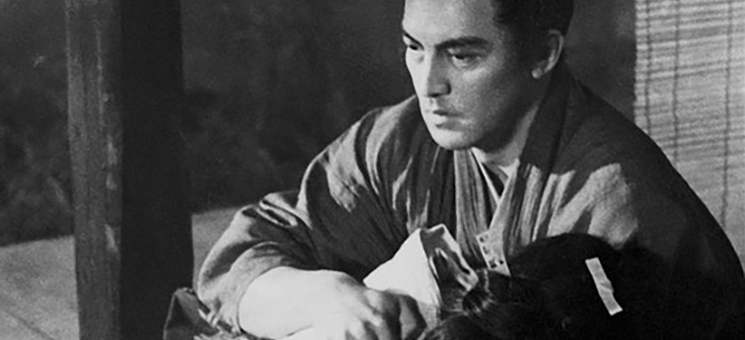
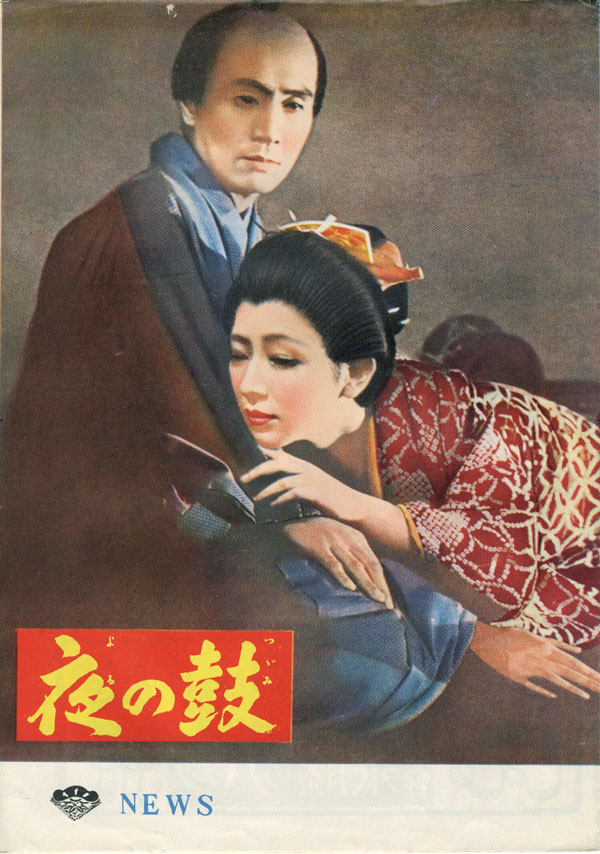
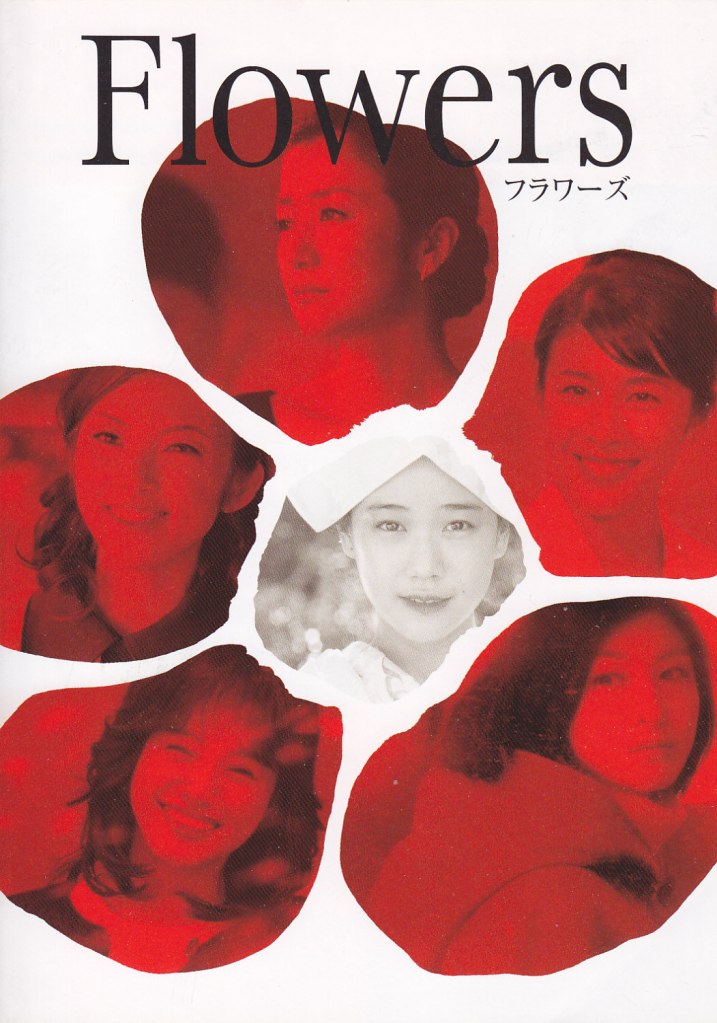 The rate of social change in the second half of the twentieth century was extreme throughout much of the world, but given that Japan had only emerged from centuries of isolation a hundred years before it’s almost as if they were riding their own bullet train into the future. Norihiro Koizumi’s Flowers (フラワーズ) attempts to chart these momentous times through examining the lives of three generations of women, from 1936 to 2009, or through Showa to Heisei, as the choices and responsibilities open to each of them grow and change with new freedoms offered in the post-war world. Or, at least, up to a point.
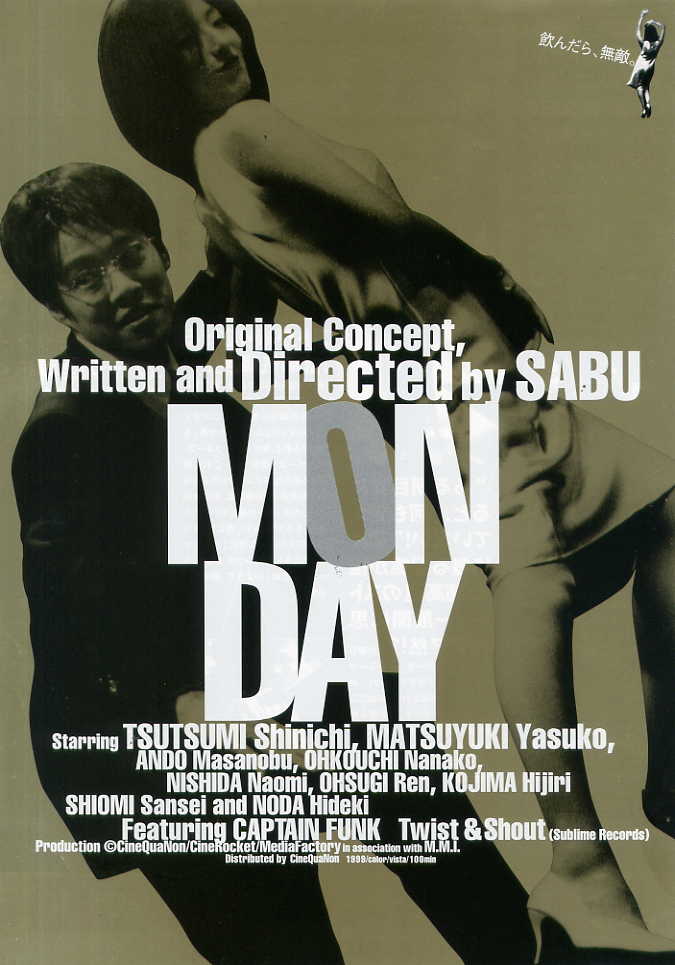 Waking up in an unfamiliar hotel room can be a traumatic and confusing experience. The hero of SABU’s madcap amnesia sit in odyssey finds himself in just this position though he is, at least, fully clothed even if trying to think through the fog of a particularly opaque booze cloud. Monday (マンデイ) is film about Saturday night, not just literally but mentally – about a man meeting his internal Saturday night in which he suddenly lets loose with all that built up tension in an unexpected, and very unwelcome, way.
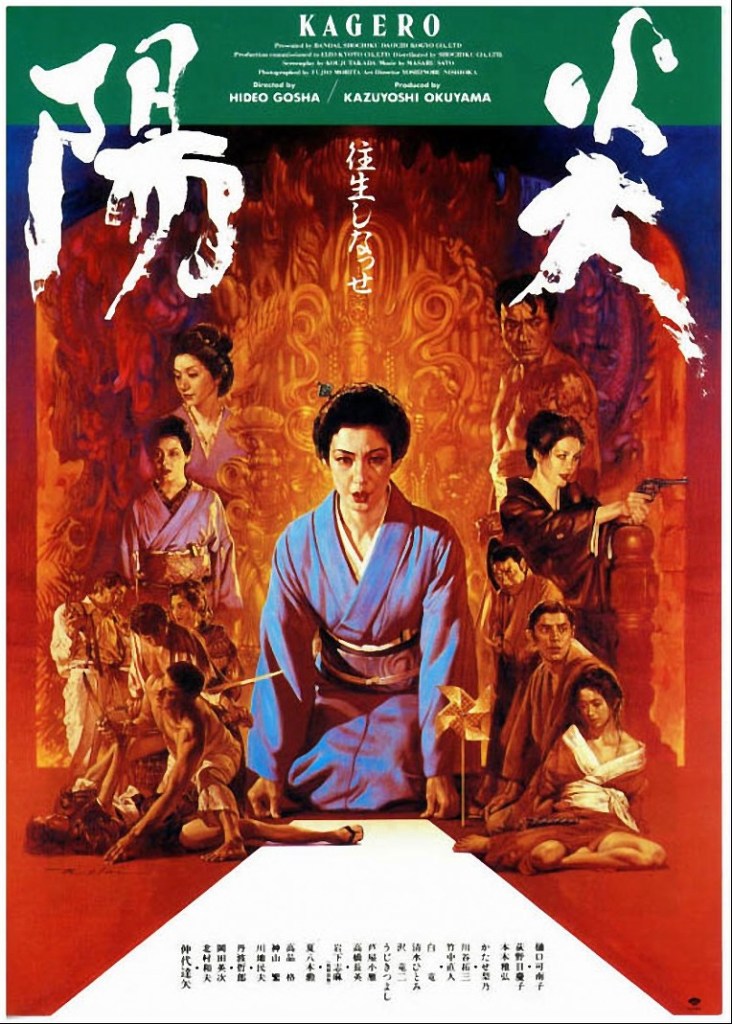 Hideo Gosha had something of a turbulent career, beginning with a series of films about male chivalry and the way that men work out all their personal issues through violence, but owing to the changing nature of cinematic tastes, he found himself at a loose end towards the end of the ‘70s. Things picked up for him in the ‘80s but the altered times brought with them a slightly different approach as Gosha’s films took on an increasingly female focus in which he reflected on how the themes he explored so fully with his male characters might also affect women. In part prompted by his divorce which apparently gave him the view that women were just as capable of deviousness as men are, and by a renewed relationship with his daughter, Gosha overcame the problem of his chanbara stars ageing beyond his demands of them by allowing his actresses to lead.
 Korea is quite good at rom-coms. Consequently they make quite a lot of them and as the standard is comparatively high you have to admire the versatility on offer. Korean romantic comedies are, however, also a little more conservative, coy even, than those from outside of Asia which makes Petty Romance (쩨쩨한 로맨스, Jjae Jjae Han Romaenseu) something of an exception in its desire to veer in a more risqué direction. He’s too introverted, she’s too aggressive – they need each other to take the edges off, it’s a familiar story but one that works quite well. Petty Romance does not attempt to bring anything new to the usual formula but does make the most of its leads’ well honed chemistry whilst keeping the melodrama to a minimum.
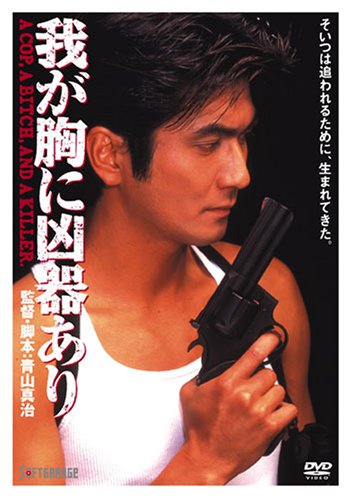 Shinji Aoyama would produce one of the most important Japanese films of the early 21st century in Eureka, but like many directors of his generation he came of age during the V-cinema boom. This relatively short lived medium was the new no holds barred arena for fledgling filmmakers who could adhere to a strict budget and shooting schedule but were also aching to spread their wings. After a short period as an AD with fellow V-cinema director now turned international auteur Kiyoshi Kurosawa, Aoyama directed his first straight to video effort – the sex comedy It’s Not in the Textbook!. Released just after his theatrical debut, Helpless, A Weapon in My Heart (我が胸に凶器あり, Waga Mune ni Kyoki Ari, AKA A Cop, A Bitch, and a Killer) is a more typically genre orientated effort with its cops, robbers, and femme fatale setup but like the best examples of the V-cinema trend it bears the signature of its ambitious director making the most of its humble origins.
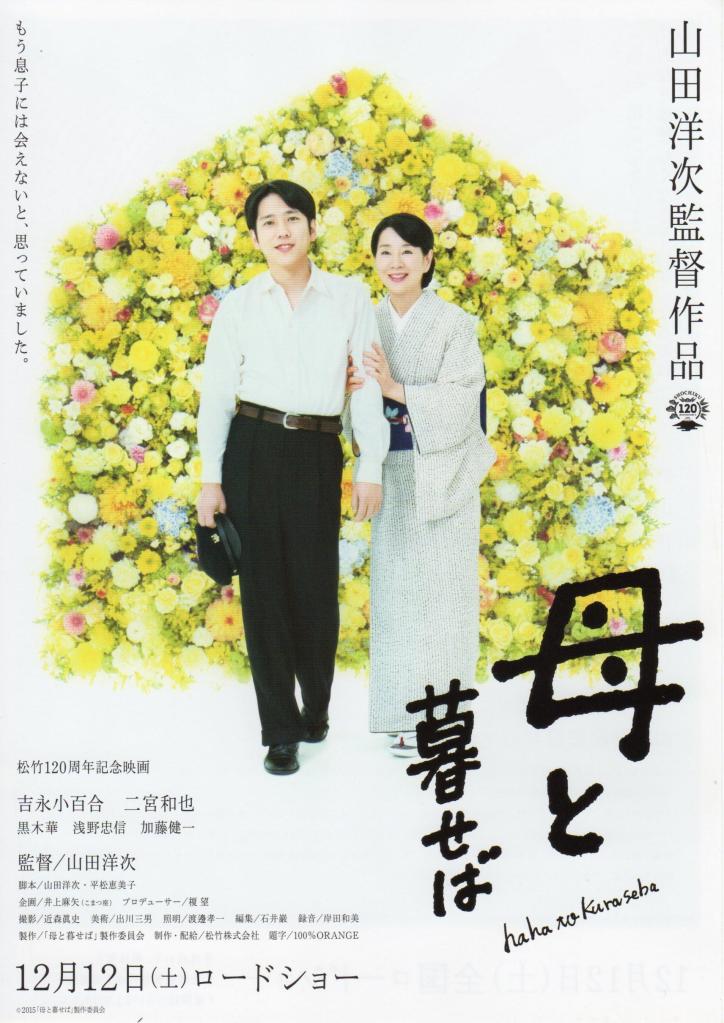 After such a long and successful career, Yoji Yamada has perhaps earned the right to a little retrospection. Offering a smattering of cinematic throwbacks in homages to both Yasujiro Ozu and Kon Ichikawa, Yamada then turned his attention to the years of militarism and warfare in the tales of a struggling mother,

