What Can You Do About It? (だってしょうがないじゃない, Yoshifumi Tsubota, 2019)

“Datte, shoganai janai?” The subject of Yoshifumi Tsubota’s empathetic documentary asks, stoically accepting disappointment with a resigned, well What Can You Do About It? (だってしょうがないじゃない). Recently diagnosed with ADHD, 41-year-old Tsubota documents his friendship with a relative diagnosed with a Pervasive Developmental Disorder, in his case autism with mild learning difficulties, as he tries to come to terms with the many changes in his life from the death of his mother some years previously to the impending prospect of having to leave his childhood home and enter a residential facility. 

Born in 1957, Makoto had lived alone with his mother for over 40 years before she passed away. Leaving education after middle school, he drifted around in various jobs before joining the SDF with which he served until returning home on his father’s death and is now in his early 60s. Yoshifumi’s aunt, Machiko, has become his legal guardian, helping him get the PDD diagnosis and sorting him out with a pension while managing his money and just generally watching over him. Other than Machiko, whom he refers to as a sister, Makoto is also visited by a series of helpers who assist him with day to day matters such as cleaning and grocery shopping he otherwise finds difficult. 

As his grocery helper points out, sometimes it can take a while for Makoto to fully understand why something is not working out the way he expected. In the case of shopping, he forgets about his budget and puts everything he wants into the basket only for the helper to remind him that he needs to put something back because he’s run out of money. He also gets himself into trouble with Machiko after asking Yoshifumi to go shopping with him and splurging on new trainers just because he liked them, lying that Yoshifumi had bought them for him and remorseful about potentially getting Yoshifumi into trouble. The biggest problem, however, is with a seemingly pernickety neighbour who has been making complaints about Makoto’s sometimes eccentric behaviour, especially his strange habit of going out late at night and throwing plastic carrier bags in the air just because he enjoys seeing them dance in the wind. He knows he needs to change, but finds it impossible to stop. 

Makoto’s compulsions worry Machiko who recalls a previous occasion on which he almost started a fire idly playing with matches. She is also alarmed on discovering a pornographic magazine he’d hidden in his figurine cabinet, paranoid that he might harm someone, unable to control himself or understand what might be considered inappropriate. Machiko’s rather prurient reaction appears to cause Makoto a great deal of anxiety despite Yoshifumi’s reassurance that most men have similar magazines and looking at them, so long as that’s all it is, is perfectly healthy whatever Machiko might say to the contrary. 

Meanwhile, he’s acutely worried about the prospect of being forced out of his family home and realising that if something happens to Machiko there will be no one left to look after him. After his mother’s death, Makoto had announced a sudden intention to marry a beautiful woman, but, as it turns out, only to get himself another mother. Two older women who come to chat with him as part of a community outreach programme try to talk him out of it, persuading him that wives and mothers are different, something which apparently took a little time for him to fully understand. When a cherry tree in the garden has to be cut down, he finds it very distressing as if he no longer recognises his home as his own with only two trees when there had always been three.

Yoshifumi too is looking for acceptance and understanding, explaining to Makoto and the visiting ladies that his wife is struggling to accept his ADHD diagnosis while telling us in voiceover that he’s been hiding his medication in his office and taking it in secret because she doesn’t approve. His quest to understand Makoto is also one to understand himself while trying to capture the way he sees the world. As Makoto says, however, Yoshifumi’s wife can never fully understand because she does not experience things the way they do. Nevertheless, the two men though a generation apart generate a genuine friendship, going to theme parks, baseball games, summer festivals, and eventually karaoke as they bond over their shared sense of difference. Lending a whimsical touch with frequent transitions into surrealist animation, Tsubota’s warm and empathetic approach explores not only his cousin’s usual life but also the problems of ageing and of disability in contemporary society along with a persistent stigma towards the acknowledgement of development disorders but finds solace in community support as friends and relatives rally round to help Makoto live his life to the fullest for as long as he can. 


What Can You Do About It? is available to stream in the US until July 30 as part of this year’s Japan Cuts.

Original trailer (English subtitles)
Fukushima 50 (フクシマ50, Setsuro Wakamatsu, 2020)

The “Fukushima 50” (フクシマ50), as the film points out, was a term coined by the international media to refer to the men and women who stayed behind to deal with the unfolding nuclear crisis at the Fukushima Daiichi Nuclear Power Plant. Loosely inspired by Ryusho Kadota’s non-fiction book On the Brink: The Inside Story of Fukushima Daiichi which featured extensive interviews with those connected to the incident, Setsuro Wakamatsu’s high production value film adaptation arrived to mark the ninth anniversary of the devastating earthquake and tsunami which occurred on 11th March, 2011 and closes with a poignant callback to the plant’s role in Japan’s post-war reconstruction as the nation once again prepares to host the (now postponed) Olympics with a torch relay beginning at Fukushima as a beacon of hope as the country continues to rebuild in the wake of the disaster. 

Though inspired by real events Wakamatsu’s dramatisation is heavily fictionalised and while surprisingly frank for a mainstream film in its criticism of the official reaction to the disaster, is also quietly nationalistic while doing its best to pay tribute to the selfless sacrifice of the plant workers who stayed behind to do what they could many of whom had little expectation of surviving. Chief among them would be Izaki (Koichi Sato), an imperfect family man and veteran section chief, and the plant’s superintendent Yoshida (Ken Watanabe) who are both local men and old friends. Local, it seems, is later key with multiple appeals to the furusato spirit as each is at pains to point out that they stay not only to prevent a catastrophic meltdown that would leave most of central Honshu including Tokyo uninhabitable, but because they feel a greater duty to protect their hometown and the people in it. 

Meanwhile, they find themselves burdened rather than assisted by official support as government bodies’ political decision making undermines their attempts to avert disaster while the boardroom of TEPCO who operate the plant reacts with business concerns in mind. A few hours in the prime minister (Shiro Sano) decides to make a visit, in political terms he can’t not national leaders who don’t visit sites of crisis are never forgiven, but his presence actively hinders the recovery efforts. Referred to only as the PM, Wakamatsu’s film presents the man leading the nation as an ignorant bully overly obsessed with his personal image. He has little understanding of nuclear matters or the implications of the disaster, refuses to abide by the regular safety procedures required at the plant, and mostly governs through shouting. Beginning to lose his temper, Yoshida does his best to remain calm but resents the constant interference from those sitting in their offices far away from immediate danger while he does his best to contend with the increasingly adverse conditions on the ground, mindful of his responsibilities firstly to his employees and secondly to those living in the immediate vicinity of the plant who will be most at risk when measures taken to prevent meltdown will lead to an inevitable radiation leak. 

Yoshida’s hero moment comes when he ignores a direct order from the government to stop using seawater to cool the reactors, knowing that he has no other remaining options. Meanwhile, the government refuse offers of help from the Americans, who eventually make a strangely heroic arrival with Operation Tomodachi, discussing plans to move their families to safety while their commander reflects on his post-war childhood on a military base near the site of the nuclear plant. Japan’s SDF also gets an especial nod, granted permission to leave by Yoshida who is beginning to think he’s running out of time but vowing to stay and do their duty in protecting civilians in need. 

In essence, the drama lies in how they coped rather than the various ways in which they didn’t. The conclusion is that the existence of the plant was in itself hubristic, they are paying the price for “underestimating the power of nature” in failing to calculate that such a devastating tsunami was possible. They thought they were safe, but they weren’t. Perhaps uncomfortably, Wakamatsu mimics the imagery of the atomic bomb to imagine a nuclear fallout in Tokyo, harking back to ironic signage which simultaneously declares that the energy of the future is atomic while the plant workers reflect on the sense of wonder they felt as young people blinded by science back in the more hopeful ‘70s as the nation pushed its way towards economic prosperity. Frank for a mainstream film but then again perhaps not frank enough, Fukushima 50 is both an urgent anti-nuclear plea and an earnest thank you letter to those who stayed when all looked hopeless, suggesting that if the sakura still bloom in Fukushima it is because of the sacrifices they made.


Fukushima 50 is available to stream in the US until July 30 as part of this year’s Japan Cuts.

International trailer (English subtitles)

Reiwa Uprising (れいわ一揆, Kazuo Hara, 2019)

With a career spanning more than 40 years, veteran documentarian Kazuo Hara cannot exactly be described as prolific. His films can often take years to produce, his upcoming documentary on the Minamata disease apparently having been in development for the last decade and a half. Perhaps appropriately enough Reiwa Uprising (れいわ一揆, Reiwa Ikki) is then something of a revolution even within the director’s own career in that it saw him spring into action at a moment’s notice after being invited to document the imminent House of Councillors election by the documentary’s subject, Ayumi Yasutomi, making good on a joke made during an online interview. 

A transgender woman and professor at the University of Tokyo, Ayumi Yasutomi had received some previous press attention during an eccentric but unsuccessful campaign to become a local mayor. She was now one of 10 candidates selected to stand for brand new political party Reiwa Shinsengumi founded by former actor Taro Yamamoto. Yamamoto himself was already known for his unconventional political style, and Reiwa Shinsengumi was set up expressly to oppose the scandal-beset Abe administration with a series of broadly left-wing policies prioritising human rights and the environment in addition to pushing for an end to the consumption tax, nuclear power, and the controversial Henoko US military base in Okinawa. 

As a new political party, however, there was no firm organisation in place and Yamamoto chose his various candidates for their individual platforms, giving them in the main a fairly free rein to run their own campaign as they saw fit prioritising their own policy ideals. Yasutomi’s central policies revolve around the protection of children with a focus on preventing abuse and reform of the educational system, but she is also keen to encourage a return to nature and as in her mayoral campaign is regularly accompanied by a rented horse temporarily stabled in the city. Like Yamamoto she stages a series of publicity stunts including a Thriller flashmob, describing the video’s zombies as adults who have died inside after being robbed of their childhoods and have subsequently become mere machines perpetuating the systems of oppression which have made them what they are, while continuing with the musical processions which had originally caught Hara’s eye during her mayoral campaign. 

Though Yasutomi remains his main focus, Hara expands the canvas to capture the nascent revolution that Reiwa Shinsengumi is attempting to foster. As a new political party, they are not so much focussed on winning power as gaining a foothold, hoping for the 2% vote share that would grant them status as an official political party. The other candidates stand on a variety of social issue policy platforms from disability to workplace exploitation and the anti-nuclear movement with a keen focus on social equality insisting that no-one should be judged according to their “productivity” or “usefulness” to society. A sign language interpreter appears onstage next to the candidates at the central rallies, and in an impressive hustings gimmick the floor literally rises to allow his two wheelchair-using candidates access to the stage on the same level as their able-bodied colleagues. It is perhaps an unexpected candidate who makes the most impact, however, in the impassioned speeches of part-time worker and single mother Teruko Watanabe who advocates fiercely for the rights and dignities of Japan’s impoverished working class as a woman who found herself at the mercy of an inherently exploitative employment system which offers little protection to those outside of the full-time salaried employee. Her concerns are echoed in those of another candidate who once ran a 7-Eleven and has a deeply held grudge against Japan’s famous combini culture having taken the unusual position of being a boss who regularly advocated on behalf of workers. 

While passively documenting their struggle, Hara nevertheless uncovers a possible schism at the heart of the movement in that, as unconventional as he otherwise is, Yamamoto is determined to work within the system if only to change it while Yasutomi would rather destroy it completely, repeatedly insisting that the entire country is “crazy” and has never fully managed to escape from its militarist past. She resents the ruling LDP, who have been in power for almost the entirety of the period since Japan’s new post-war constitution came into effect, for perpetuating a kind of “positionism” in which all they care about is a conservative desire to maintain their own status granting only the concession that they will in turn recognise the status of others. It’s this “positionism” she seeks to counter in what she sees as the best expression of liberalism through rejecting labels, something which has apparently brought her into conflict with the wider LGBTQ+ community. Reiwa Shinsengumi managed to win two Diet seats, awarded to the two disabled candidates in a first for Japan, though Yamamoto himself did not make it back to parliament and Shinzo Abe’s administration remained comfortably in power. Nevertheless, Hara captures a political moment in which real change seems possible for the perhaps the first time since the decline of the post-war leftwing student movement in the early 1970s. As Watanabe puts it, this is just the start the starting line. The revolution starts now. 


Reiwa Uprising is available to stream in the US until July 30 as part of this year’s Japan Cuts.

Original trailer (English subtitles)
Special Actors (スペシャル アクターズ, Shinichiro Ueda, 2019)

When your made on a shoestring indie debut becomes an accidental international phenomenon, no one could really blame you for succumbing to imposter syndrome. Shinichiro Ueda’s One Cut of the Dead, a meta comedy with high concept conceit, delighted fans around the world but rather than slide into summer tentpole territory Ueda remains true to his roots with follow up feature Special Actors (スペシャル アクターズ) once again developed through actors’ workshops and owing a significant debt to contemporary stage comedy.

Our dejected hero, Kazuto (Kazuto Osawa), is an anxious young man burdened with PTSD from childhood trauma that causes him to faint when he becomes overly stressed or is confronted by an overbearing, if not actually violent, male authority figure. He dreams of becoming a hero who can protect people like Rescue Man, the star of an American tokusatsu-style show he’s obsessively watched dubbed into Japanese since childhood, and is determined to become an actor only his habit of fainting mid-audition constantly frustrates his ambitions. Already behind on his rent and about to be fired from his part-time job as a security guard on the grounds that he didn’t disclose his “illness” when he applied, Kazuto is reunited with his estranged younger brother Hiroki (Hiroki Kono), also an actor, who offers to introduce him to his agency, “Special Actors”. In addition to the usual TV and advertising work, Special Actors speciality is renting out talent for “real” as in providing professional mourners, bulking out theatre audiences with laughing stooges, and engineering long queues outside previously empty restaurants. 

Kazuto isn’t quite convinced, not only because it seems like anxiety central, but because it’s more than a little bit shady. The lead “scenario” writer was once a conman, and you can’t get away from the fact this is all quite manipulative and essentially unethical. Forced to take the job because of his financial predicament, he finds himself involved in various plots to change problematic behaviour at the request of well-meaning relatives such as a mother desperate to rescue her daughter from frittering all her money away at host bars. But are the Special Actors really any different than a host at a host bar who is after all only playing a role, as the young woman must know even if she has for some reason been taken in by it? Perhaps they’d be better to find out what is fuelling her obsession rather than coming up with some hokum involving a fake shaman to convince her that her behaviour is dangerous on a cosmic level. 

The moral ambiguity only deepens when the team take on their biggest challenge yet, taking down a shady cult at the request of an orphaned teenage girl whose sister seems primed to give away the family inn. Abruptly shifting into the realms of the espionage thriller reimagined as theatre, Ueda concocts an elaborate heist as the Special Actors infiltrate with the intention to expose. The central irony is of course that in practical terms there isn’t so much difference between them. They are both “lying”, manipulating vulnerable people and doing it for financial gain. “Acting is a big lie” the irate director had screamed in Kazuto’s face, “you have to mean it”. Is the shady cult merely “theatre” taken to an extreme, and if so who if anyone should be held responsible?

Ueda isn’t so much interested in these themes as the ironic potential of their latent comedy, stitching together a series of theatre skit set pieces working towards the epic finale in which the hero, Kazuto, learns to put on his cape and save the day by overcoming his internal “villain” in the shape of his abusive father. Like the cult, the Special Actors are also promising salvation or at least liberation from behaviours which others find problematic regardless of the target’s own wishes or desires even if in the case of some it may be for their own good, a more elaborate form of role play than that enacted in a therapy session. We are indeed all “acting” to one extent or another and you can never be sure that anyone is who they say they are because life itself is theatre. Shot with a perhaps thematically appropriate TV drama aesthetic, Kazuto’s zero to hero journey is pure wish fulfilment fantasy, but even if never reaching the perfectly constructed heights of One Cut of the Dead is undeniably entertaining. 


Special Actors is available to stream in the US until July 30 as part of this year’s Japan Cuts. Tune in for the live Q&A (available worldwide) after the movie on July 17 (also available afterwards on demand)!

Original trailer (English subtitles)
Shell and Joint (Isamu Hirabayashi, 2019)

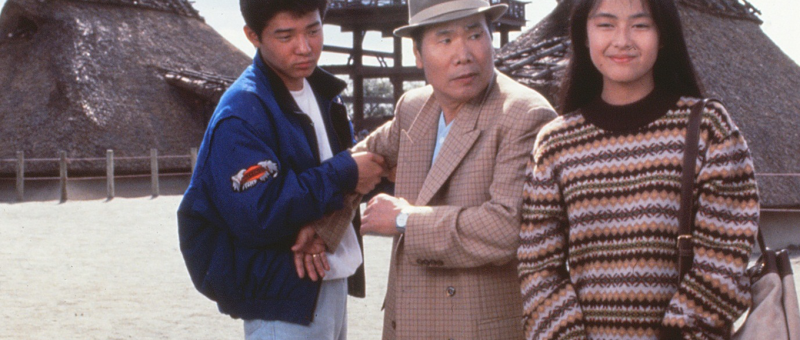
A capsule hotel is a contradictory space, a hub for compartmentalised pods which are nevertheless joined to form one greater whole. The people who frequent them are usually looking for confined private spaces as if cocooning themselves before emerging as something new, or at least renewed, yet the hotel at the centre of Isamu Hirabayashi’s Shell and Joint is slightly different, a noticeably upscale take on convenience with its stylishly modernist design and well appointed spaces from showering facilities to saunas. It is also, it seems, at the nexus of life and death as its bored receptionists, childhood friends, debate what it is to live and what it is to die. 

Sakamoto (Mariko Tsutsui), the female receptionist, has considered suicide many times but continues to survive. She attributes her death urge not to existential despair but to brain-altering bacteria and is certain that a vaccine will eventually be found for suicidal impulses. While her deskmate Nitobe (Keisuke Horibe) is struck by the miracle of existence, Sakamoto thinks his tendency to adopt a cosmic perspective is a just a way of dealing with his fear of death in rejecting its immediacy. Her suicide attempts are not a way of affirming her existence and she has no desire to become something just to prove she exists, nor does she see the point in needing to achieve. Just as in her bacterial theory, she rejects her own agency and represents a kind of continuous passivity that is, ironically, the quality Nitobe had admired in the accidentally acquired beauty of the pseudoscorpion. 

This essential divide is mirrored in the various conversations between women which recur throughout the film and mostly revolve around their exasperation with the often selfish immediacy of the male sex drive. The creepy “mad scientist” starts inappropriate conversations about sperm counts and his colleague’s impending marriage, offering to loan him some of his apparently prime stock to vicariously father a child with the man’s “cute” fiancée who, in a later conversation with another female researcher, expresses her ambivalence towards the marriage, like Sakamoto passively going with the flow, because men are like caterpillars permanently stuck in the malting phase. Her colleague agrees and offers her “men are idiots” theory which is immediately proved by the male scientists failing to move a box through a doorway. 

A middle-aged woman, meanwhile, recounts the process of breaking up with her five boyfriends who span the acceptable age range from vital, inexperienced teenager to passionate old age through the solipsistic, insecure self-obsessed middle-aged man but her greatest thrill lies in the negation of the physical, remarking that “ultimately eroticism is all mental” while suggesting the ephiphany has made her life worth living. On the other hand, a young man is terrorised in a sauna by a strange guy claiming that he is actually a cicada and simultaneously confiding in him about the strength of his erection along with the obsession it provokes to find a suitable hole in which to insert it. 

“What’s the deal with leaving offspring?” another of the women asks, seemingly over the idea of reproduction. The constant obsession with crustacea culminates in a butoh dance sequence in which lobsters spill their eggs down the stairs of an empty building (much to the consternation of an OL sitting below and, eventually, the security team) while other strange guests tell stories of women who underwent immaculate conception only to be drawn to the water where hundreds of tiny crab-like creatures made a temporary exit. The urge to reproduce, however, necessarily returns us to death and the idea of composition. The melancholy story of a Finnish woman drawn to the hotel because of its similarity to a beehive meditates on the sorrow of those left behind while a fly and a mite mourn their cockroach friend by wondering what happens to his dream now that he has died only to realise that because he told them about it, it now lives on with them. Nitobe wonders what the corruption of the body in death means for the soul and for human dignity, while the images Hirabayashi leaves us with are of a corpse slowly suppurating until only a scattered skeleton remains. Such is life, he seems to say. Life is itself surreal, something which Hirabayashi captures in his absurdist skits of the variously living as they pass through the strange hotel and then, presumably, make their exits towards who knows what in the great cycle of existence.


Shell and Joint streamed as part of this year’s online Nippon Connection Film Festival. Viewers in the US will also be able to catch it streaming as part of this year’s Japan Cuts!

International trailer (dialogue free)

Prison Circle (プリズン・サークル, Kaori Sakagami, 2019)

“A scar may recover but trauma never goes away” according to one of the inmates in Kaori Sakagami’s heartfelt documentary Prison Circle (プリズン・サークル). Neatly encapsulating the doc’s themes, the title refers both to the circle of chairs which represents the open group therapy sessions at the centre of the experimental rehabilitation programme on which the film is focussed, and the cycle of violence to which it alludes. Long interested in justice issues, Sakagami follows her two previous documentaries dealing with the US penal system with that of Japan, but concerns herself less with life in prison than the wider social issues which led to these men being convicted of crimes along with their future possibilities for reintegration into mainstream society. 

Sakagami apparently spent six years trying to acquire permission to shoot inside a Japanese prison before coming to an agreement with Shimane Asahi Rehabilitation Program Center which nevertheless has its limitations in that the faces of all the inmates are understandably blurred, she is always accompanied by two guards, and is not permitted to interact with prisoners or anyone working in the prison outside of a few direct interview sessions. Apparently inspired by Sakagami’s US documentary Lifers: Reaching for Life Beyond the Walls, the Shimane programme is the first and only of its kind in Japan shifting the focus away from punishment towards rehabilitation supporting around 40 men through a therapeutic treatment centre (TC) which attempts to help the prisoners understand the reasons for their crimes, empathise with their victims, and eventually return to mainstream society. According to the closing text the programme has been successful in reducing the rate of recidivism among its graduates in comparison with those released from a regular prison. 

In order to qualify, inmates must have the will to change, have no underlying mental health conditions, and be serving at least six months. The prisoners are also described as low risk though many of those we meet have been convicted of violent crimes including those which involved a death. Operating as a small bubble within a larger facility, the TC shares many of the rules and regulations with the wider population in that inmates are expected to raise their hand to ask permission of the guards any time they want to do something, but unlike other blocks are permitted to walk around unsupervised and sleep in “rooms” rather than “cells”. Prisoners engaging in the programme are also partially exempted from mandatory labour requirements while required to participate in the group sessions that are at the core of the TC. 

Following four men over two years, Sakagami finds a fatalistic similarity among their stories despite the differences in their offences, painting their crimes as a cry for help and direct result of childhood trauma. Each of the men who are now in their 20s comes from a difficult family background and experienced abuse, neglect, and bullying which is, the film seems to suggest, the root cause of their lawbreaking. The first of the men, Taku, was abandoned by his abusive father into a children’s home and thereafter left without support as a young man leaving care with nothing to fall back on. Encouraged to be open, he relates his embarrassment in revealing that even as a grown man he often longs to be hugged he feels because his parents never held him when he was a child. The other prisoner reveals he feels something similar, and other of the men admit they fell into crime in part because they wanted to stay connected to something even if it was delinquent kids in place of a family that had already failed them. The last of the men, Ken, also explains that he ended up getting into debt in part because he was buying expensive presents for his mother and girlfriend because he feared they’d abandon him and he didn’t know how else to keep them. 

Yet the prisoners also admit to feeling little remorse, seeing themselves as victims rather than perpetrators and struggling to draw the lines between their trauma and the crimes they have committed along with the hurt they’ve caused to those around them. Through therapy and role play sessions, the prisoners learn to empathise with each other as well as themselves as they begin to process their trauma in an essentially safe space. Sakagami shifts into gentle, storybook-style sand animation in order to dramatise their often horrific childhood memories linking back directly to a fairy tale written by one of the men about a boy who cried wolf because of a mysterious curse which forced him to lie, insisting that he was fine even in his loneliness as he pushed away those who had not rejected him. The boy in the fairy tale is eventually given the power to free himself after being approached by a benevolent god who gives him permission to speak his truth, emerging from his darkness into the light. Though limited by the conditions of filming and over reliant on onscreen text, Sakagami’s compassion for these men and faith in the project is never is doubt as the closing dedication “For everyone who wishes to stop the cycle of violence” makes plain. 


Prison Circle streamed as part of this year’s online Nippon Connection Film Festival. Viewers in the US will also be able to catch it streaming as part of this year’s Japan Cuts!

International trailer (English subtitles)
Extro (エキストロ, Naoki Murahashi, 2019)

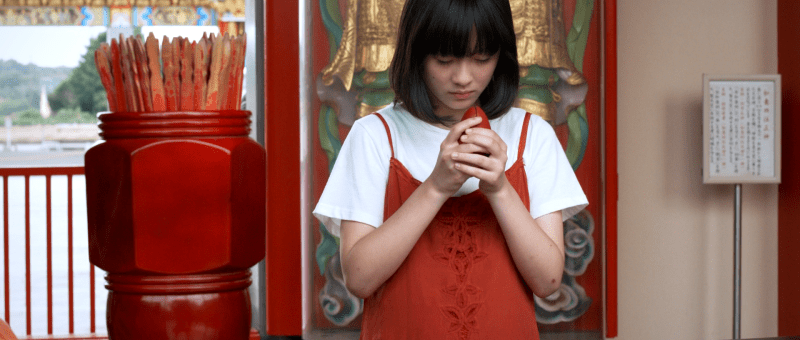
Extras are the unsung heroes of the movies. Getting up in the middle of the night, prepared to spend hours in makeup, and enduring not only the discomfort but also the boredom of standing around all day waiting for something to happen. Naoki Murahashi’s affectionate mockmentary Extro (エキストロ) is dedicated to those whose names do not appear in the credits and are, according to the characteristically warm onscreen interview from the late Nobuhiko Obayashi, the very force that brings life to the otherwise artificial world of the film set. 

The set in this case being “Warp Station Edo”, an artificial replica of a historically accurate samurai-era town used for the production of jidaigeki TV serials. Murahashi’s first subject is a retired dental technician, Haginoya (Kozo Haginoya), fulfilling a lifelong dream as a background performer, but as we quickly see the life of an extra is not an especially glamorous one. Having got up at the crack of dawn to be there at the time listed on his call sheet, he’s nearly sent away because he doesn’t want to shave his beard and back in old Edo facial hair was prohibited for civilised people. The only solution is to switch his role from townsman to farmer, which causes a costuming delay and gets the AD into trouble. Haginoya then goes on to cause yet more problems by bigging up his part before being taken ill, complaining that his intestines hurt right in the middle of a take. Unsurprisingly, he sits the rest of the day out. 

Meanwhile, the other extras are mostly forced to stand around in the cold waiting for the cameras to start rolling. The agency which provides the background actors laments that extra work is only suitable for flexible people with a lot of free time, i.e. pensioners like Haginoya, but that it also requires physical stamina which they often lack. It also transpires most of the agency’s employees are working on a volunteer basis and earning their money through a separate main job, which really begs the question why they bother especially when the agency itself becomes liable for the extras’ mistakes such as those repeatedly made by one “problem child” including making sneaky peace signs, smiling at the camera, and posting strange on-set photos to social media. 

Not quite content with satirising the production environment and its tendencies towards exploitative employment practices, Murahashi adds a second surreal plot strand introducing two bumbling policemen who are seconded to go undercover as extras after a suspected drug dealer is spotted on camera, somewhat incomprehensibly stepping out of hiding and into living rooms across the country. Predictably, the policemen aren’t very good at the acting business and quickly forget all about the case while becoming overly invested in their cover identities, even attending an acting workshop in an effort to blend in with the background stars. 

While the hero of the jidaigeki TV drama earnestly insists that the extras are what give the fake town “life” and it is in a sense he who is being allowed to perform in their world, not everyone is so forgiving. A pro-wrestler brought in to star in a low budget movie titled Dragon Samurai gets so fed up with the antics of the two policeman that he eventually quits, presumably costing another production company somewhere a lot more money, while a repeated gag sees most of the projects go unreleased because someone involved with the production had too much to drink and engaged in acts of public indecency. One such project is the amazingly titled “Prehistoric Space Monster Gamogedorah”, apparently inspired by a local legend about a giant evil duck.

From the self-obsessed stars who turn up when the money’s right to the embattled agency staff and the stressed out ADs, Murahashi doesn’t quite so much sing the praises of the extras as satirise the low level production industry, but does eventually cycle back to the unironic intro from Obayashi who affirms that the extras, or “extros” as he likes to call them short for “extraneous maestros”, are a part of what gives film its beauty and power. As if to prove that sometimes dreams really do come true, even Haginoya gets his moment in the spotlight mimicking his screen hero Steve McQueen as an Edo-era fireman but disrupting the filming once again by laughing maniacally in joy as he rings his bell while Gamogedorah looms ominously on the horizon.


Extro was streamed as part of this year’s online Nippon Connection Film Festival. Viewers in the US will also be able to catch it streaming as part of this year’s Japan Cuts!

Original trailer (no subtitles)

i -Documentary of the Journalist- (i-新聞記者ドキュメント-, Tatsuya Mori, 2019)

“I’m not obliged to answer you” Chief Cabinet Secretary Yoshihide Suga irritably tells a journalist part way through a press briefing. It begs the question, if you’re not willing to be interrogated then what are the briefings really for? Something which unflappable reporter Isoko Mochizuki, subject of Tatsuya Mori’s documentary i -Documentary of the Journalist- (i-新聞記者ドキュメント-, i -Shimbun Kisha Document-) makes a point of asking but of course receives no reply. Reporting for Tokyo Shimbun, Mochizuki has earned a reputation for being “troublesome”, refusing to let politicians off the hook without getting a proper answer. This is of course what a reporter is supposed to do, she’s only doing her job in holding those in power to account in the name of the people, but Japanese politicians are used to deference from journalists who pull in their punches in fear of losing access. She is also the author of the book which inspired last year’s box office smash political thriller The Journalist in which a dogged reporter finds herself an unlikely ally of a conflicted bureaucrat who is minded to blow the whistle on a governmental land scandal. 

As we see, Mochizuki’s everyday life is nowhere near as glamorous or sensational. In fact, Mori struggles to keep up with her as she finds herself constantly on the move dragging a small suitcase and large tote bag all around town while displaying an ironic tendency to get lost trying to exit official buildings. Meanwhile, none of the people she attempts to visit for comment on the relocation of an SDF facility in Okinawa is in when she calls and, again, she has trouble gaining access to the building in order to leave them a note. 

Access, as we soon realise, is the pressing issue. Mochizuki is a well known reporter for a major paper so it would not be politically expedient to have her removed from the room, but even so the powers that be do their best to obstruct her ability to gain answers, firstly by having an usher loudly instruct her to get to the question while she patiently tries to make her point. It amounts to a kind of game. Mochizuki knows Suga will issue a non-reply, insist that the government is acting in accordance with regulations while refusing further comment, and so is using the question to raise awareness of the issue which necessarily takes time in providing context. They then introduce an unofficial policy restricting Mochizuki, but no other reporter, to two questions only to prevent her pressing her point, before escalating matters by crudely issuing an open directive to journalists to avoid basing their comments on “fake” information, attempting to invalidate her line of questioning by implying it is partisan and offered in bad faith. 

The problem is partly that, as Mori is keen to suggest, the system is rigged because of press complicity with government. We learn that the Abe administration, which has long been beset by scandal, has been keeping a stranglehold on the official press club since it took office in 2012. Mori himself tries to get access to briefings to film Mochizuki but is told that it is almost impossible for freelance journalists to gain approval, while a visit to the Foreign Correspondents’ Club reveals that it is no easier for international journalists who may gain access but are not generally given the opportunity to ask questions nor can they speak directly to members of government whom, it is said, are not terribly interested in Japan’s overseas reputation. Papers afraid of losing their spot in the room avoid directly criticising the government, while the rightwing press is content to do the government’s bidding such as in its vilification of the Kagoikes, the couple at the centre of the Moritomo Gakuen scandal in which Prime Minister Abe’s wife was herself implicated, or its attempt to smear a whistleblower on a possibly corrupt sale of land for a veterinary school to an old friend of Abe’s. 

For those reasons while other journalists and politicians may be sympathetic to Mochizuki’s cause in private she receives little support in the room. An increased profile and persistent harassment campaign also brings out the cranks including a death threat from a man who uses a word many would regard as a racial slur to brand her a North Korean spy. The people, however, approve organising a demo in support outside the Diet building insisting on press freedom and government accountability. The title may take things too far in its emphatic “I”, the reporter is not the story, but advocates for an end to the conformist culture of deference to power in which journalists willing to ask difficult questions will no longer be a “troublesome” aberration but the welcomed norm. 


i -Documentary of the Journalist- streamed as part of this year’s Udine Far East Film Festival. Viewers in America will also have the opportunity to catch the film when it streams as part of this year’s Japan Cuts.

Original trailer (no subtitles)

colorless (猿楽町で会いましょう, Takashi Koyama, 2019)

“I think I could capture the real you” a photographer pleads of a subject he has become obsessed with, little knowing the deeply problematic implications of his statement. Shot with a photographer’s eye, Takashi Koyama’s colorless (猿楽町で会いましょう, Sarugakucho de Aimasho), paints its heroes as just that, wandering zombies of modern day Tokyo as estranged from themselves as they are from others, but even as it attempts to draw similarities between their mutual lifelessness cannot help but reflect a misogynistic world view in which the conflicted heroine remains little more than an empty shell, a blank canvas onto which various men project their inner desires leaving her essentially robbed of an identity by an exploitative society. 

When we first meet aspiring freelance photographer Shu (Daichi Kaneko), he is in much the same position, kept waiting by an arrogant magazine editor who has stepped out of the office despite having arranged an appointment to look over his portfolio. When he eventually arrives, Kasamura (Kenta Maeno) rudely dismisses his work, claiming that the selection of photos he’s assembled doesn’t make sense in that it gives no clear indication of his style or intent and aside from that his shots are cold and lifeless. He attributes this lack of passion to the likelihood that Shu has never truly been in love, something which turns out to be true though as we later discover Kasamura is also a cold and cynical man who proudly proclaims the same of himself. Nevertheless, he hooks Shu up with a side job shooting publicity shots for an acquaintance, Yuka (Ruka Ishikawa), hoping to become a “reader’s model” as a path to fame. 

For whatever reason, Yuka seems to incite in him the passion which Kasamura claimed was missing in his work, becoming both muse and object of desire. She describes herself as colourless and wonders if there is a “her” that can be captured, while Shu assures her that he feels much the same but fails to appreciate the various ways in which he is attempting to colour her with his camera, filled with nothing but jealous anxiety when confronted by the possibility that she exists outside of the image he has created of her. The incongruities between what she tells him of herself, his own self created vision, and the evidence presented to him by others bring out an unpleasantly chauvinistic side of him which he perhaps does not even like in himself, abruptly attempting to stop her leaving his apartment without consenting to sex by threatening to withhold the data for the pictures he took, breaking into her phone to check her messages, and later feeling humiliated in realising that she may have hidden from him a prior (or current) life in sex work.

Yuka, meanwhile, remains a cipher. Unexpectedly interviewed as part of an audition she is asked to describe herself but can only reply in terms of the way others see her, answering only that she is often said to have a sunny disposition. We see her parrot back lines she’s heard from one man to another in an attempt to please him, as if wilfully erasing her essential identity to better conform to male desires in an attempt to keep herself safe but also perhaps betraying that she has few words of her own to offer. Yet in private we see a much less complimentary side of her in which she is petty and jealous, resentful of a friend’s success while she seems to get nowhere and, the film uncomfortably insists, willing to use men by exploiting their desire for her which is in essence a desire for a colourlessness they can dye with their own self projected ideals. 

Yuka claims that she does not want to know who she really is, perhaps afraid to know or realising that there really is no value in knowing because her existence is defined by male desire. Her tragedy may be that she isn’t cynical enough, unable to manipulate men to the same extent as her more successful friend, still longing to be known and loved for who she is even while insisting that she does not exist and wilfully misrepresenting herself to those around her out of embarrassment and dissatisfaction with her life. The story she tells in her interview implies a lasting trauma of male abuse which has caused a rupture in her sense of self, unable to grasp an identity other than that granted by others, but still we’re largely left with Shu’s resentment in his inability to “capture” that which cannot be captured in his desire to possess not only Yuka’s body but her image by replacing it with that of his own creation. A dark and cynical take on modern romance, colorless leaves its heroes much where it found them, floundering in an inherently patriarchal society itself devoid of the colour they each desire. 


colorless streamed as part of this year’s Udine Far East Film Festival.

International trailer (English subtitles)
A Beloved Wife (喜劇 愛妻物語, Shin Adachi, 2019)

Adapting his own autobiographical novel, screenwriter and director Shin Adachi claims that the events and characters of A Beloved Wife (喜劇 愛妻物語, Kigeki Aisai Monogatari) are exactly as they are in real life, only the film makes it all look better. Even if true, Adachi can’t be faulted for his honesty. His protagonist stand-in, Gota (Gaku Hamada), has almost no redeeming qualities, while his long-suffering wife receives little sympathy even while giving as good as she gets as a sake-guzzling harridan apparently ready to run her husband down at every opportunity, of which there are many, but Gota is quite simply useless. The Japanese title is careful to include the word “comedy” as a prefix, but this is humour of an extremely cruel variety. 

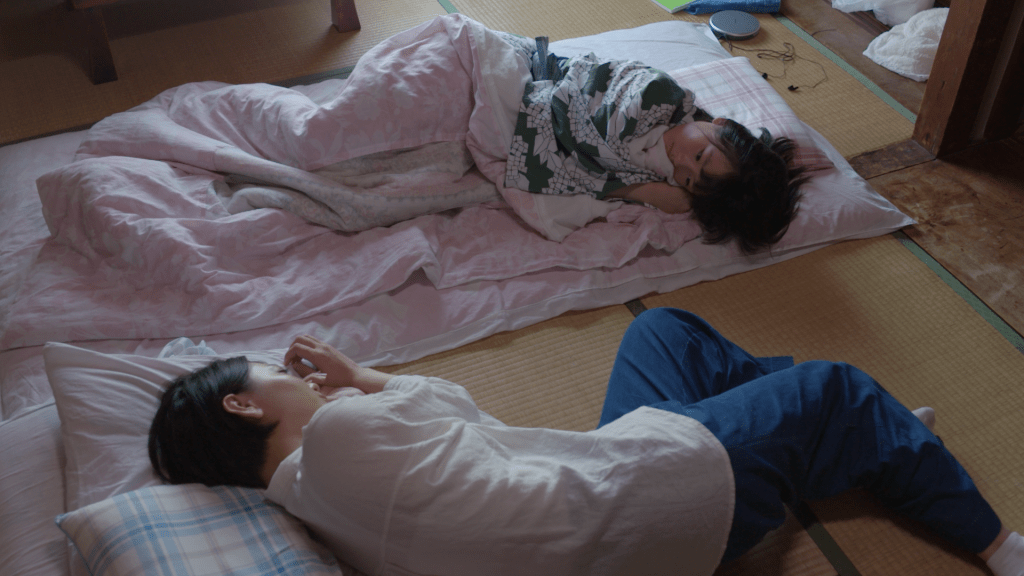
Married for 10 years with a small daughter, Gota’s chief preoccupation in his life seems to be that his wife, Chika (Asami Mizukawa), no longer finds him sexually desirable and they are rarely intimate. Rather than lament the distance in their marriage, all Gota does is go on a long, misogynistic rant about how he’d get a mistress or visit a sex worker only he has no money while complaining that he has to humiliate himself by helping out with the housework and childcare which he only does to curry favour in the hope that he will eventually be able to have sex with his wife. After some minor success as a screenwriter, his career is on the slide and he’s had no work in months, something which seems to damage his sense of masculinity and in his mind contributes to his wife’s animosity towards him.

He is right in one regard in that Chika is thoroughly fed up being forced to pick up the slack while he sits around watching VR porn, not writing or looking for a job but insisting that the next movie is always just round the corner. She’s tired and overworked, sick of penny pinching and resentful that she has to do everything herself, but it’s not so much the money that bothers her as Gota’s fecklessness while all he seems to care about is sex, meeting his own needs and no one else’s. Even when he takes his daughter, Aki (Chise Niitsu), to the park he ignores her to ogle other women, becoming embarrassed on running into a neighbour we later learn he slept with and then ghosted. He does the same thing again later on a beach, so busy sexting that he doesn’t see her wander off and is roundly chewed out by the lifeguard (an amusing cameo from director Hirobumi Watanabe, giving him the hard stare) who eventually finds her and brings her back. Not content with that, he rounds out the bad dad card by frequently bribing Aki with treats so she won’t spill the beans to her mum about his many questionable parental decisions. 

Really, we have to ask ourselves, why does Chika not leave him? The perspective we’re given is Gota’s and he appears not to understand that any of his behaviour is problematic, which might be why he seems genuinely shocked when Chika reaches the end of her tether and once again suggests divorce. He seems to think some of this at least is performative, part of the act of “marriage”, and she does indeed make a show of her frugality – insisting on sharing a 200 yen bowl of udon with her daughter to save money and climbing up a utility pole to sneak into a hotel after booking only a single occupancy room for the three of them, but is there more in her decision not to leave than habit? Gota seems to think so, especially on noticing her wearing the lucky red pants she bought back when they were young and in love and she believed in his potential. But then perhaps she really is just being economical.  

Nevertheless, she appears to keep supporting him, once again typing up his latest screenplay because he claims not to be able to use a word processor, and laughing off the rather more serious incident in which he is arrested after being discovered by a policeman molesting a drunk woman in the street. Adachi doesn’t appear to have very much to say in favour of the modern marriage, as if this one is no worse than any other (even a friend who married well (Kaho) badmouths her husband and giggles about a young lover), but Gota seems to have learned absolutely nothing even while declaring his love to his sleeping family and vowing to make a success of himself at last. It would be funny, if it weren’t so sad. 


A Beloved Wife is available to stream worldwide until July 4 as part of this year’s Udine Far East Film Festival.

Festival trailer (English subtitles)