 Japan was a strange place in the early ‘90s. The bubble burst and everything changed leaving nothing but confusion and uncertainty in its place. Tokyo, like many cities, however, also had a fairly active indie music scene in part driven by the stringency of the times and representing the last vestiges of an underground art world about to be eclipsed by the resurgence of studio driven idol pop. Bandage (Bandage バンデイジ) is the story of one ordinary girl and her journey of self discovery among the struggling artists and the corporate suits desperate to exploit them. One of the many projects scripted and produced by Shunji Iwai during his lengthy break from the director’s chair, Bandage is also the only film to date directed by well known musician and Iwai collaborator Takeshi Kobayashi who evidently draws inspiration from his mentor but adds his own particular touches to the material.
High school girl Asako (Kie Kitano) is best friends with Miharu (Anne Watanabe) who likes all the same cool indie bands she does and is therefore upset to learn that she is dropping out of school because her parents have money problems. Luckily the girls run in to each other at a record store where Miharu works and bond again over the new CD of a band Miharu had recommended and Asako had fallen in love with – LANDS. Miharu also manages to get tickets to a LANDS concert and even swipes a couple of backstage badges from some retreating suits.
The girls sneak backstage and are immediately clocked by the band’s wily manager, Yukari (Ayumi Ito), but their adventure is derailed after they literally run into a band member and Asako loses a contact lens. The band’s lead singer, Natsu (Jin Akanishi), places a bandana across Asako’s temporarily blinded eye and rechristens her “Black Jack” before inviting both the girls to the post-show drinking session. Leaving early, Asako ends up arranging to meet Natsu at another bar later, beginning her long journey with the difficult, damaged musician as they navigate the turbulent “indie” record scene with all of its various traps and temptations.
Though Natsu and Asako may not actually be so far apart in age, you have to admit there’s a something not quite right in his sudden desire to befriend a starstruck high school girl. He does indeed seem to be after the obvious but after she resolutely turns him down, he keeps chasing her right until the end of the film. Despite remaining a little distant and afraid of this somehow very intense yet completely chilled out diva of a frontman, Asako becomes something like his only friend yet her presence continues to provoke tension within the group, particularly after she leaves high school and gets a job as a manager working alongside Yukari.
What first drew Asako to the music of LANDS was an identification with their melancholy lyrics echoing the alienation and loneliness she herself felt as a diffident adolescent. Her feelings towards Natsu are also driven by this same identification with his angst ridden lyrics but the qualities which attract him to her are those which she loathes in herself. Natsu, a narcissistic would be rock god, treats the band like his personal little empire, but deep down he knows he’s not its MVP. That would be the striking long haired guitar player, Yukiya (Kengo Kora), who the suits have pegged as the most likely to succeed. Natsu can write and his songs are good, if sometimes “uncommercial”, but he doesn’t quite have “it” in the same was as Yukiya does. Yukiya, by contrast, is (mostly) content to follow Natsu’s lead yet comes to resent his close relationship with Asako, regarding her as a kind of “Yoko” disrupting the band’s carefully crafted unity.
Yukiya’s attempt to destroy Asako is a calculated and cold one, motivated by his belief that she has “destroyed LANDS”. Laying bear his own pain and loneliness, Yukiya uses his internal darkness as an odd kind of seduction technique only to leave Asako on a barren shore sure of nothing other than the fear and confusion inside her heart. A dangerously violent confrontation with a drunken Natsu is the final trigger for Asako’s own moment of self realisation as she sees herself reflected in Natsu’s self destructive meltdown. United in mutual self loathing, the pair cement a melancholy though ultimately unrealisable bond which puts an end to Asako’s musical adventures.
Asasko is given a second opportunity to pursue a musical dream but one which is more on her own terms and reminds her of the potential and possibilities of music as art rather than the market driven mindset her agency job had done its best to instil. Natsu, it seems, has also rediscovered his artistry and may be in a better place to create away from the pressures that come with fronting an up and coming indie band. Defiantly exclaiming that the pain can’t reach him, Natsu might have found the “bandage” he’d been looking for which is, in a sense, his music – the dressing which staunches the weeping wounds of his pain and suffering. Music, like a bandage, is both salve and barrier – its message indirect but none the less deeply felt even if its effects are for internal use only. Asako and Natsu seem destined to walk on parallel paths but each has, at least, begun to discover their true selves as they continue to pursue their artistic dreams if perhaps at the expense of the personal.
Short scene from the film (no subtitles)
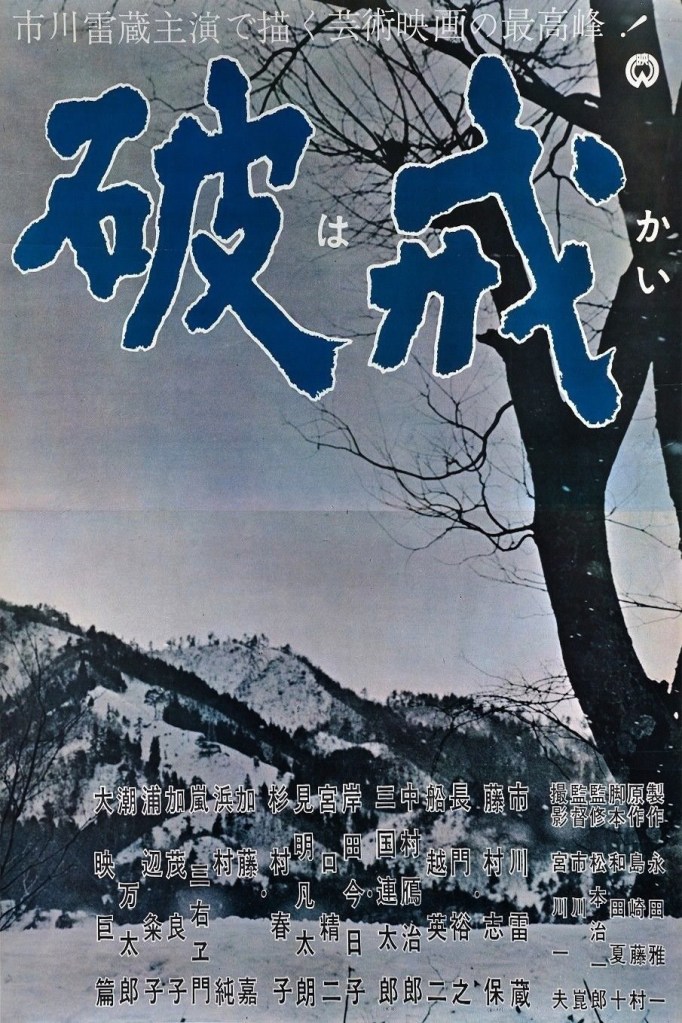 Kon Ichikawa’s approach to critiquing his society was often laced with a delicious slice of biting irony but he puts sarcasm to one side for this all too rare attempt to address the uncomfortable subject of Japan’s hidden underclass – the burakumin. The term itself simply means “people who live in hamlets” but from feudal times onwards it came to denote the kinds of people with whom others did not want to associate – notably those whose occupations dealt in some way with death from executioners and undertakers, to butchers and leatherworkers. Though outright discrimination against such people was outlawed during the Meiji restoration, social stigma and informal harassment remained common with some lingering tendency remaining even today.
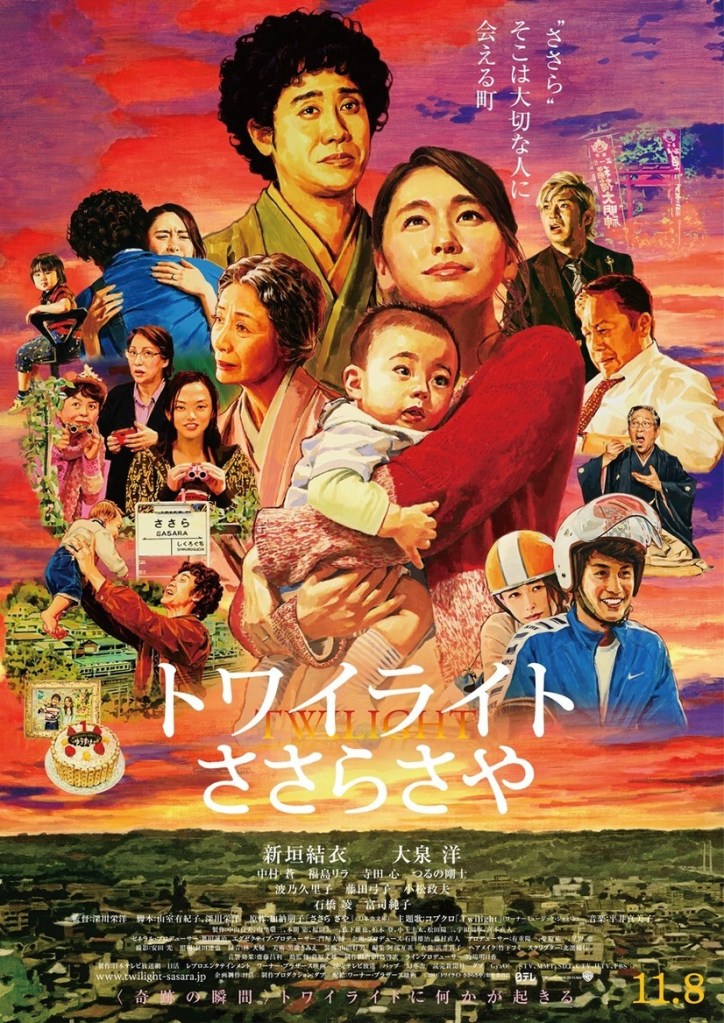 Japanese cinema has its fare share of ghosts. From Ugetsu to Ringu, scorned women have emerged from wells and creepy, fog hidden mansions bearing grudges since time immemorial but departed spirits have generally had very little positive to offer in their post-mortal lives. Twilight: Saga in Sasara (トワイライト ささらさや, Twilight Sasara Saya) is an oddity in more ways than one – firstly in its recently deceased narrator’s comic approach to his sad life story, and secondly in its partial rejection of the tearjerking melodrama usually common to its genre.
 Koji Wakamtasu had a long and somewhat strange career, untimely ended by his death in a road traffic accident at the age of 76 with projects still in the pipeline destined never to be finished. 2008’s United Red Army (実録・連合赤軍 あさま山荘への道程, Jitsuroku Rengosekigun Asama-Sanso e no Michi) was far from his final film either in conception or actuality, but it does serve as a fitting epitaph for his oeuvre in its unflinching determination to tell the sad story of Japan’s leftist protest movement. Having been a member of the movement himself (though the extent to which he participated directly is unclear), Wakamatsu was perfectly placed to offer a subjective view of the scene, why and how it developed as it did and took the route it went on to take. This is not a story of revolution frustrated by the inevitability of defeat, there is no romance here – only the tragedy of young lives cut short by a war every bit as pointless as the one which they claimed to be in protest of. Young men and women who only wanted to create a better, fairer world found themselves indoctrinated into a fundamentalist political cult, misused by power hungry ideologues whose sole aims amounted to a war on their own souls, and finally martyred in an ongoing campaign of senseless death and violence.
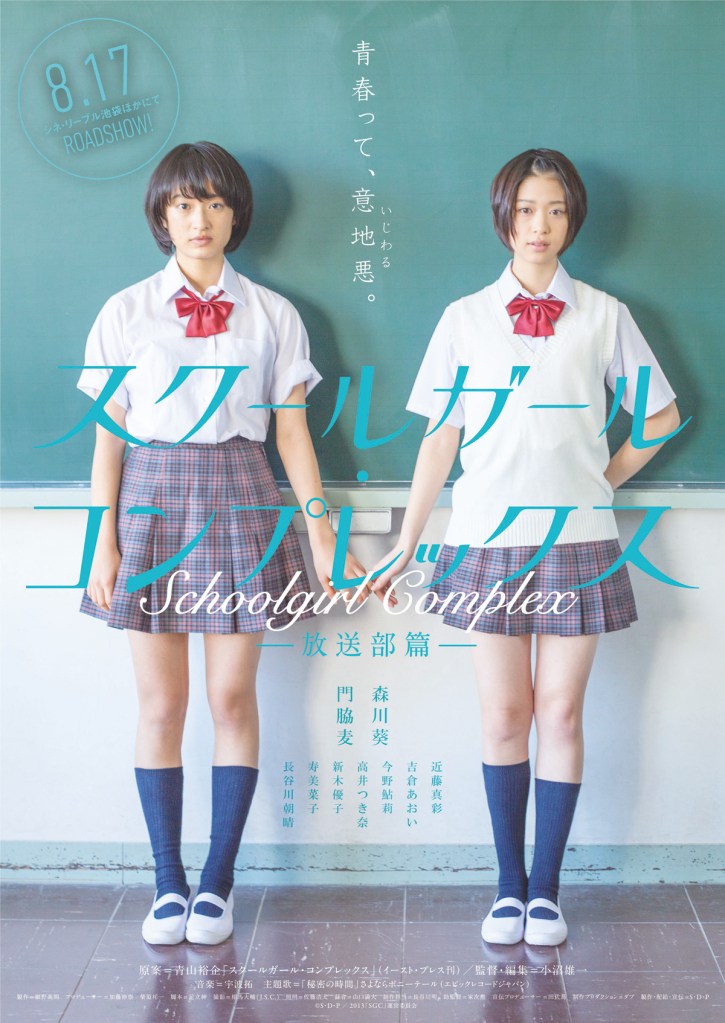 Schoolgirl Complex is a popular photo book featuring the work of Yuki Aoyama and does indeed focus on that most most Japanese of fixations – the school girl and her iconic uniform. Aoyama’s book presents itself as taking the POV of a teenage boy, gazing longly from a position of total innocence at the unattainable female figures who, in the book, are entirely faceless. Given a more concrete narrative, this filmic adaptation (スクールガール コンプレックス 放送部篇, Schoolgirl Complex Housoubu-hen) directed by Yuichi Onuma takes a slightly different tack in dispensing with high school boys altogether for a tale of self discovery and sexual confusion set in an all girls school in which almost everyone has a crush on someone, but sadly finds only adolescent suffering as so eloquently described by Osamu Dazai whose Schoolgirl informs much of the narrative.
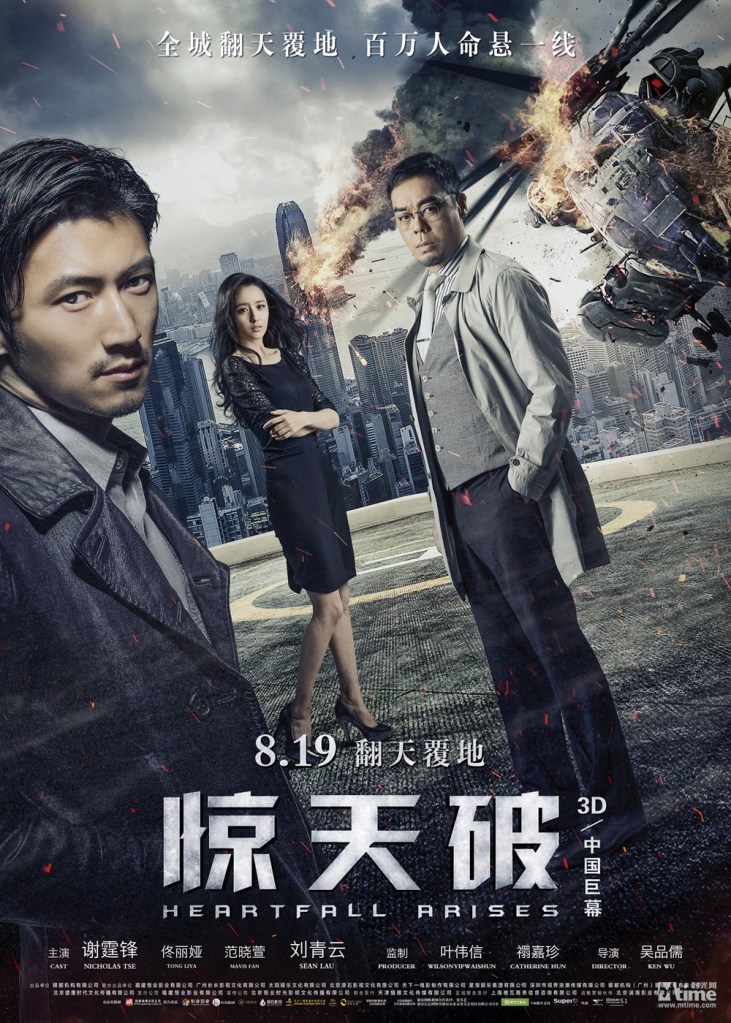 Sean Lau Ching-wan and Nicholas Tse are together again after being denied the opportunity to reteam for a sequel to the acclaimed
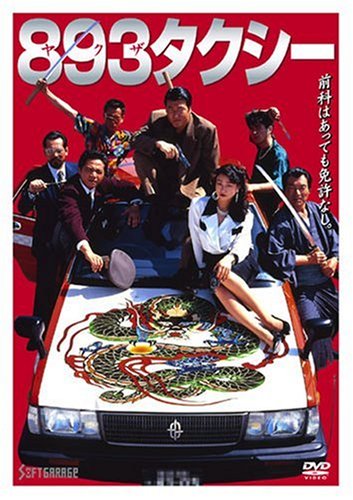 Like many fillmakers of his generation, Kiyoshi Kurosawa began directing commercially in the 1980s working in the pink genre but it was the early ‘90s straight to video boom which provided a career breakthrough. This relatively short lived movement was built on speed where the reliability of the familiar could be harnessed to produce and market low budget genre films with a necessarily high turnover. Kurosawa made his first foray into the V-cinema world in 1994 with the unlikely comedy vehicle Yakuza Taxi (893 タクシー, 893 Taxi). Although Kurosawa had originally accepted the project in the hope of being able to direct a large scale action film, his distaste for the company’s insistence on “jingi” (the yakuza code of honour and humanity) proved something of a barrier but it did, at least, lend free rein to the director’s rather ironic sense of humour.
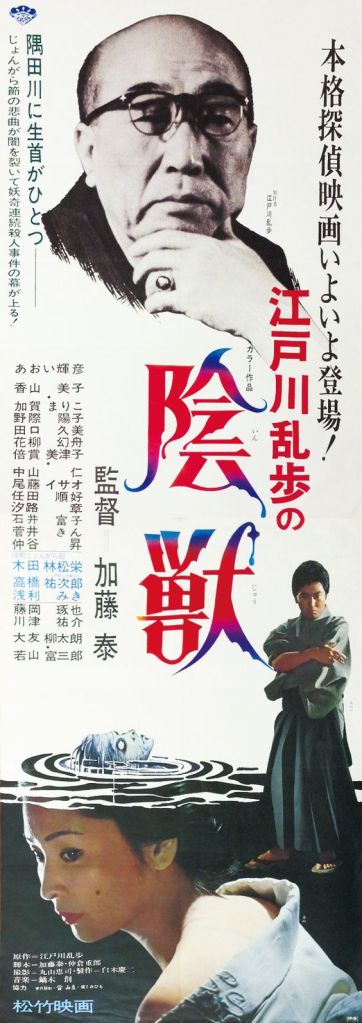 Edogawa Rampo (a clever allusion to master of the gothic and detective story pioneer Edgar Allan Poe) has provided ample inspiration for many Japanese films from
  Windows on Worlds