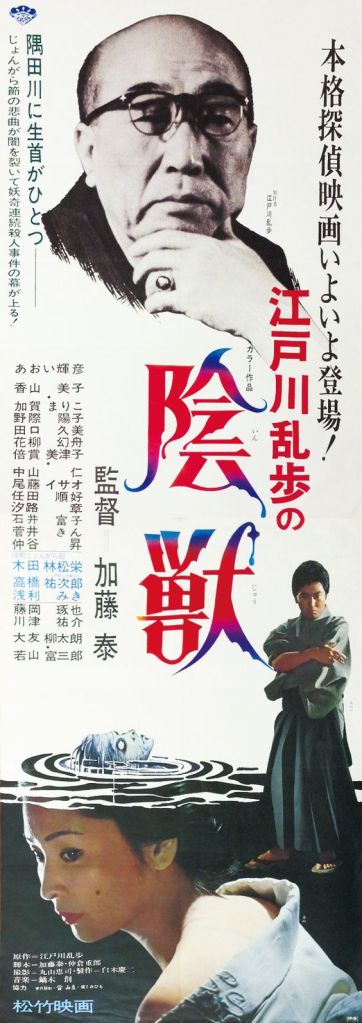
Edogawa Rampo’s Beast in the Shadows ( 江戸川乱歩の陰獣, Tai Kato, 1977)

Edogawa Rampo (a clever allusion to master of the gothic and detective story pioneer Edgar Allan Poe) has provided ample inspiration for many Japanese films from Blind Beast to Horrors of Malformed Men. So synonymous with kinky terror is his name, that it finds itself appended into the title of this 1977 adaptation of his novel Beast in the Shadows (江戸川乱歩の陰獣, Edogawa Rampo no Inju) by veteran director Tai Kato best known for his work in the yakuza genre. Mixing classic European detective intrigue with a more typically Japanese obsession with method over motive, Beast in the Shadows, like much of Edogawa Rampo’s work twists and turns around the idea of atypical sexuality, one side cerebral and another physical as the “Westernised” sadomasochism of the heroine’s husband becomes the driving force of the narrative.

Our hero, Koichiro Samukawa (Teruhiko Aoi), is a best selling author who likes to describe himself as the creator of “serious” mystery novels. In this he contrasts himself favourably with the coming younger generation who rely on sensationalised tricks and twists rather than the intricately plotted, traditionally constructed crime stories which Samukawa prides himself on writing. The particular object of his rage is a recently successful rival, Shundei Oe, who is making quite a splash in literary circles in part due to his mysterious persona. Refusing all in-person contact, Oe’s whereabouts are completely unknown and though he supplies a “real name” at the back of each book, there is great speculation as to who he really is, how he lives, and where he might be.

Down south to supervise a movie shoot based on one of his novels, Samukawa is thrilled to run into a fan – particularly as she’s such a beautiful young woman. Shizuko (Yoshiko Kayama) is the wife of a wealthy businessman, Oyamada, who has recently returned from an extended spell abroad though he doesn’t share her passion for literature even if he brings home such luxuries as fancy European gloves. The relationship moves beyond mutual appreciation when Shizuko asks for Samukawa’s help in investigating a series of threatening letters she’s been receiving from an old boyfriend who may or may not also be stalking her. The real kicker is that the letters purport to be from Shundei Oe – apparently the pen name being used by a man who fell deeply in love with Shizuko when he was a student but couldn’t take no for an answer when his creepy behaviour became too much for the then school girl. Though Samukawa is sure the letters are all talk and commits himself unmasking Oe for the perverted cretin he is, Shizuko’s husband is eventually murdered just as the letters threatened.

Though the final twist is one which most seasoned mystery lovers will have seen coming, Kato keeps the audience on its toes with plenty of intrigue and red herrings as Samukawa attempts to discover the truth behind the death of Shizuko’s husband as well as taking the opportunity to indulge in a little intellectual vanity by unmasking his rival. The movie subplot quickly gets forgotten but Samukawa is also helped/hindered by his publisher, Honda (Tomisaburo Wakayama), who keeps reminding him about the looming deadline for his latest work. The case at hand provides ample distraction for the harried writer whose writer’s block is only made worse by thoughts of Shundei Oe’s growing success and his resentment of this new, sensationalised form of crime novel which seems to be eclipsing his own.

If the way he acts in “real life” is anything to go by, Samukawa’s detective novels owe much to the European tradition but still, there’s a persistent fear of the foreign underlining much of the proceedings despite the heavy presence of Westernised clothing, music and culture which seems to diffuse itself throughout daily life. Shizuko’s husband may have just returned from abroad but it seems he brought back much more with him than some fancy gloves and an elegant English mistress (pointedly named Helen Christie). The English style riding crop in Oyamada’s study is not mere affectation but the cause of the nasty looking wound on Shizuko’s shoulder which first caught Samukawa’s attention. Oyamada’s sadistic tendencies are posited as a credible reason he could himself be masquerading as Oe, getting off on driving his wife half crazy with fear, but his eventual murder would seem to rule that out.

Nevertheless the game is one of pleasure and pain as Samukawa comes to the realisation that he is integral to the plot. Challenged by his literary rival to a game of minds, Samukawa is putting his detective abilities to the test as his rival is writing their latest story in reality rather than on the page. Love, lust, betrayal, violence and tragedy all come together for a classic gothic detective story which looks ahead to noir with its melancholy fatalism yet remains resolutely within the dark and ghoulish world of the gothic potboiler. Kato shoots a prestige picture with the undercurrent of repressed eroticism in his strange low level angles and unusual compositions which bind, tie and constrain the elusive Shizuko within the window panes and doorways of her home. Light levels fluctuate wildly, isolating the haunted protagonists in their supernatural gloom until we hit the expressionism of the theatrical finale which takes place in an entirely red, almost glowing attic space. The atmosphere is one of profound unease as Oe is thought to be perpetually watching, hidden somewhere in the house, out of sight.

The Beast in the Shadows does not just refer to the unseen voyeur but to the repressed eroticism which his actions symbolise and is perhaps brought out in the various sadomasochistic relationships created between each of the protagonists. Then again, where are we in all this – sitting in the dark, watching, undetected, seeing things we had no right to see. Kato takes our own voyeuristic tendencies and serves them back to us with visual flair in a late career masterpiece which perfectly captures Edogawa Rampo’s gothic world of repressed desire and brings it to its cinematic climax as two detectives go head to head in a game so high stakes neither of them quite realised what it was they were playing.


Original trailer (no subtitles, NSFW)
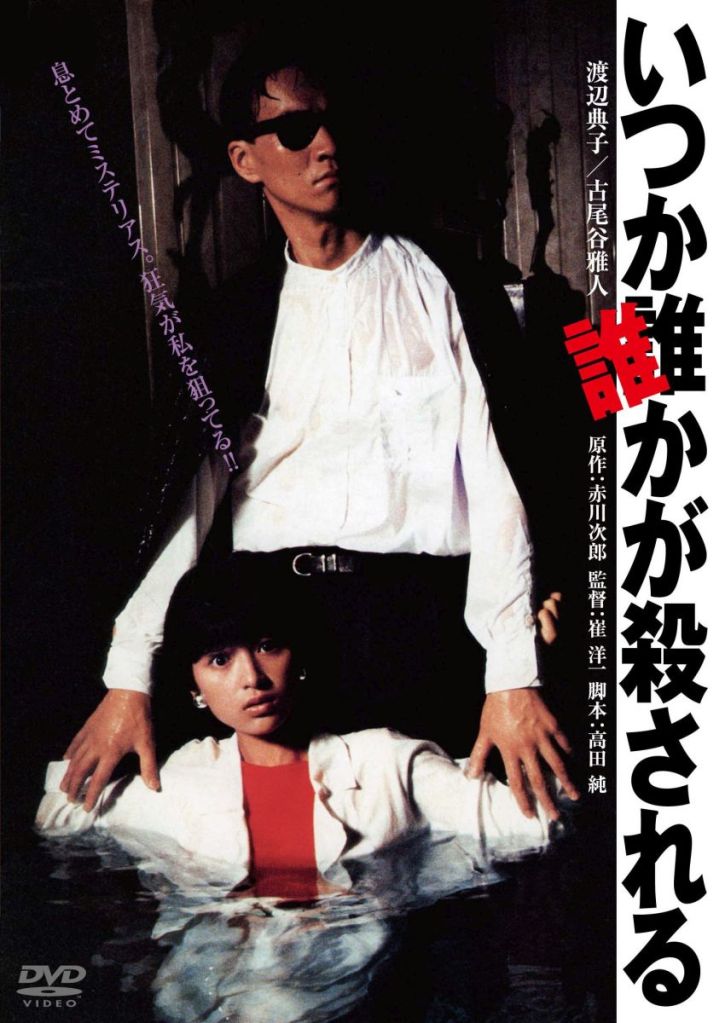
Someday, Someone Will Be Killed (いつか誰かが殺される, Yoichi Sai, 1984)

Haruki Kadokawa dominated much of mainstream 1980s cinema with his all encompassing media empire perpetuated by a constant cycle of movies, books, and songs all used to sell the other. 1984’s Someday, Someone Will be Killed (いつか誰かが殺される, Itsuka Dareka ga Korosareru) is another in this familiar pattern adapting the Kadokawa teen novel by Jiro Akagawa and starring lesser idol Noriko Watanabe in one of her rare leading performances in which she also sings the similarly titled theme song. The third film from Korean/Japanese director Yoichi Sai, Someday, Someone Will be Killed is an impressive mix of everything which makes the world Kadokawa idol movies so enticing as the heroine finds herself unexpectedly at the centre of an ongoing international conspiracy protected only by a selection of underground drop outs but faces her adversity with typical perkiness and determination safe in the knowledge that nothing really all that bad is going to happen.

The film opens with a strange, often forgotten subplot as an eccentric elderly lady, apparently loathed by her children who are taking bets on when she will die, celebrates her birthday by announcing a new game – taking the first syllables of her children’s names she comes up with that of our heroine – Atsuko Moriya (Noriko Watanabe), whom she intends to invite to her party. Approaching the end of high school, Atsuko is an ordinary girl of the time which is to say her interests are studying, shopping, and boys. Her father is a reporter for a newspaper who is often away but has returned to take her on a rare shopping trip. Revealing that he was actually born abroad, her father slips a floppy disc into her handbag and disappears after going to make a phonecall while Atsuko is occupied in the fitting room. Striking up a friendship with the store assistant, Cola (Masato Furuoya), Atsuko is taken in by a collection of fake fashion peddling drop outs from society while she tries to work out what’s going on with her dad and what she’s supposed to do with the much sought after floppy disk.

Like many a Kadokawa heroine, Atsuko is quickly plunged into a dark and complicated world she is ill equipped to understand but in keeping with the nature of the genre the atmosphere is largely dictated by her typically teenage outlook. Despite the increasingly high stakes, the film remains bright and cheerful as Atsuko continues in her quest without fear or danger. Her main allies are a computer nerd (Toshinori Omi) who has such a crush on her he’s created his own 8-bit Atsuko operating system complete with palm reader door lock for his base of operations, and the guys from the fashion store who, it transpires, are a gang of counterfeiting squatters. A thoroughly middle class girl, Atsuko reacts negatively to her new found friends and their unusual domestic arrangements but quickly warms to them as they show her nothing but kindness and acceptance, even risking their own existence in an attempt to help her uncover the circumstances surrounding her father’s disappearance.

Fathers become something of a running theme as Atsuko’s solid relationship with hers is contrasted both with Cola’s disconnection from his family and his new found role as a kind of surrogate father for a little girl at the commune. Later the same theme resurfaces as Atsuko uncovers the truth behind her father’s birth which explains the dreams she often has of a bright red sun setting over a wide river. These circumstances are echoed in the strange atmosphere of the mansion at which the film begins as its eccentric, regency dressing older lady engages with her seemingly resentful children in a cold and severe manner. An insert song playing as Atsuko and Cola take a drive wonders what the point of family is, but Atsuko’s concern is less than with the nature of familial bonds than with her own identity as filtered through that of her father and her discoveries of his apparently mysterious birth and career. Thus her final decision becomes one which sets her on a course of growing up in a quest for self knowledge and the creation of an identity which is both of her own making and takes into account her new found family history.

Making room for a musical sequence in which Atsuko picks up a guitar and embarks on a rendition of Summertime as well a few insert songs alongside the title track, Someday, Someone Will be Killed is pure Kadokawa idol movie but Sai makes sure to up the stakes with some genuinely exciting action sequences and mounting tension as Atsuko finds herself in way over her head. Of course there are a few comic moments too including the unfortunate detective charged with locating Atsuko to give her the invitation to the old lady’s ball who often finds himself beaten up by mistake by one side or the other. Very much of its time with its cold war paranoia coupled with up to the minute technology, Someday, Someone Will be Killed is among the darker of the idol dramas Kadokawa had to offer but nevertheless remains rosy and innocent in terms of outlook right up until Atsuko takes off on her motorbike in search of the woman she’ll eventually become.


Title track sung by Noriko Watanabe Itsuka Dareka ga…

Swing Girls (スウィングガールズ, Shinobu Yaguchi, 2004)

There are two kinds of people in the world, those who swing and those who…don’t – a metaphor which works just as well for baseball and, by implication, facing life’s challenges as it does for music. Shinobu Yaguchi returns after 2001’s Waterboys with a film that’s…almost exactly the same only with girls instead of boys and concert halls instead of swimming pools, but it’s all so warm and charming that it hardly matters. Taking the classic sports movie formula of eager underdogs triumphing against the odds but giving it a teen comedy drama spin, Yaguchi’s Swing Girls (スウィングガールズ) is a fitting addition to the small but much loved high school girls vs music genre which manages to bring warmth and humour to its admittedly familiar narrative.
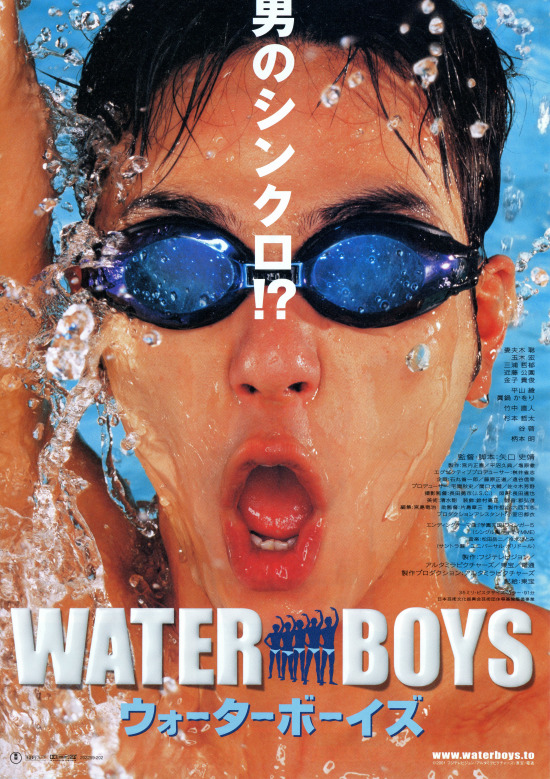
It’s summer and it’s hot and sunny but the school is filled with yankis and dreamers, forced to spend this lovely day indoors. While one group is busy ignoring their maths teacher, the school band is getting ready to accompany the baseball team on an important match. Unfortunately, the bus leaves before the bento boxes they’ve ordered are delivered so enterprising high school girl Tomoko (Juri Ueno) suggests they blow off the maths class and show solidarity with those representing the school by making sure their fellow students are well fed. Unfortunately, they fall asleep and miss their stop on the train meaning by the time they get there it’s a very late lunch and these bento boxes containing fish and eggs etc have all been in the hot sun for a fair few hours. After nearly killing all their friends, the girls are forced to join the band in their stead, despite having almost no musical experience between them.

As might be expected, the girls start to get into their new activity even if they originally dismiss sole boy Takuo’s (Yuta Hiraoka) interest in big band jazz as the uncool hobby of pretentious old men. However, this is where Yaguchi throws in his first spanner to the works as the original band recover far sooner than expected leaving our girls oddly heartbroken. This allows us to go off on a tangent as the girls decide they want to carry on with their musical endeavours and form their own band but lack the necessary funds to do so. Being a madcap gang of wilful, if strange, people the schemes they come up with do not go well for them including their stint as supermarket assistants which they get fired from after nearly setting the place on fire, and a mushroom picking trip which leads to an encounter with a wild boar but eventually holds its own rewards.

The girls’ embittered maths teacher, Ozawa (Naoto Takenaka), who just happens to be a jazz aficionado offers some key advice in that it’s not so much hitting the notes that matters as getting into the swing of things. It might take a while for the Swing Girls (and a boy) to master their instruments, but the important thing is learning to find their common rhythm and ride the waves of communal connection. Tomoko quickly takes centre stage with her largely self centred tricks which involve pinching her little sister’s games system to pawn to buy a saxophone, and almost messing up the all important finale through absentmindedness and cowardice. Other characters have a tendency to fade into the background with only single characteristics such as “worried about her weight”, or “hopelessly awkward”, or even with “folk duo in love with punk rockers”. Other than the one girl lusting after the baseball star and the two punk rockers annoyed by their earnest suitors, Yaguchi avoids the usual high school plot devices of romantic drama, fallings out, and misunderstandings whilst cleverly making use of our expectation for them to provide additional comedy.

What Swing Girls lacks in originality it makes up for with warmth and good humour as the band bond through their recently acquired love of music, coming together to create a unified sound in perfect harmony. Ending somewhat abruptly as the gang win over their fellow musicians after having overcome several obstacles to be allowed to play, the finale does not prove quite as satisfying as might be hoped but is certainly impressive especially considering the music really is being provided by the cast who have each learned to play their intstruments throughout the course of the film just as their characters have been doing. Warm, funny and never less than entertaining, Swing Girls lacks the necessary depth for a truly moving experience but does provide enough lighthearted fun to linger in the memory.


Original trailer (English subtitles)

Waterboys (ウォーターボーイズ, Shinobu Yaguchi, 2001)

Japan has really taken the underdog triumphs genre of sports comedy to its heart but there can be few better examples than Shinobu Yaguchi’s 2001 teenage boys x synchronised swimming drama Waterboys (ウォーターボーイズ). Where the conventional sports movie may rely on the idea of individual triumph(s), Waterboys, like many similarly themed Japanese movies, has group unity at its core as our group of disparate and previously downtrodden high school boys must find their common rhythm in order to truly be themselves. Setting high school antics to one side and attempting to subvert the normal formula as much as possible, Yaguchi presents a celebration of acceptance and assimilation as difference is never elided but allowed to add to a growing harmony as the boys discover all new sides of themselves in their quest for water borne success.
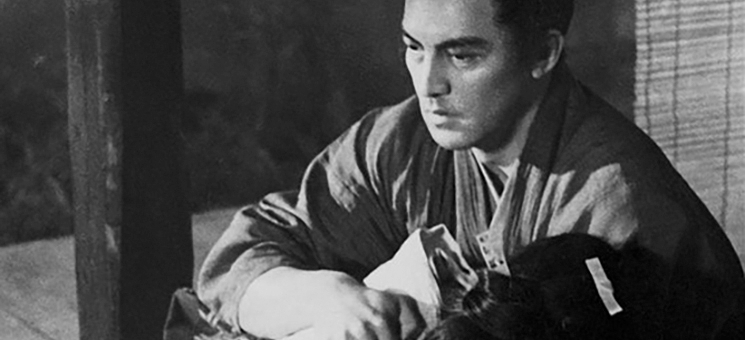
Dreamy high school boy Suzuki (Satoshi Tsumabuki) is currently the only member of his high school’s swimming team, and unfortunately he’s not a particularly good swimmer. His interest is piqued when he spots a synchronised swim meet, but he forgets all about it until a new teacher arrives and pledges to revive the school’s fortunes in the pool. Seeing as their new teacher is a pretty young woman with an interest in swimming, the team suddenly becomes much more popular but when she reveals her synchronised swimmer past numbers dwindle once again. Unfortunately, the hot new teacher suddenly has to leave the school so the boys are left to fend for themselves in their new and possibly embarrassing career in a generally feminine sport.

Being teenage boys who only started this whole thing because of the pretty teacher, most of the other guys are are looking for a way out but they also don’t like to be called quitters and so they become determined to make a success of themselves. Suzuki, who secretly wanted to become a synchronised swimmer anyway, is the most committed but also, perhaps, the least confident in his choice of sport as he embarks on a tentative romance with a girl from another school – herself an enthusiast of the more masculine karate. Terrified that she will find out and laugh at him, Suzuki goes to great lengths to avoid telling her what it he really does in his club activities, possibly putting the growing romance at risk in the process.

This mild challenge to masculinity is the main joke of the film but Yaguchi neatly subverts as the guys become cool again thanks to mastering a difficult skill and creating an impressive spectacle through hard work and group mentality. The boys gain an unlikely mentor in the form of a dolphin trainer at Sea World who they hope will be able to train them in the same way he trains his marine creatures but quickly sets them off on some Karate Kid style practical training which involves a lot of menial tasks around the park before dumping them at the local arcade to play dance dance revolution until they learn the art of synchronicity through the power of idol pop. Waterboys is, essentially, a hymn to the harmonious society as the boys eventually find their common rhythm and the power that comes from many acting as one.

Unusually, this does not requite a loss of individuality or for any erasure of essential personality traits but rather a greater need for acceptance as difference merely adds to the strength of the whole. Though there are a fair few gay jokes in what is essentially a movie about high school boys in skimpy trunks, the joke is not homosexuality but reactions to it as Yaguchi adopts a “get over it” attitude and so when one of the boys does confess his love for another it’s treated with no particular reaction other than lack of surprise. Similarly the cross dressing mama-san from the local gay club (a surprising turn from Akira Emoto) becomes one of their greatest supporters and may provide comic relief but is never a figure of fun. In order to succeed the boys will need to be in tune with each other, but that in tune sounds better when it allows for harmony rather than insisting on dull monotony.

Visually inventive and often hilarious, Waterboys lacks the heart of Yaguchi’s similarly plotted Swing Girls but nevertheless succeeds in its tale of inexperienced young guys working hard and achieving the impossible, growing up and discovering new things about themselves as they do. Waterboys may be lighthearted, crowd pleasing fun, but its good natured message that great things are possible when determined people work hard at them together, and that group harmony does not necessarily require social conformity, only add to its warm and gentle tone.


Korean trailer (Korean captions/subtitles only)

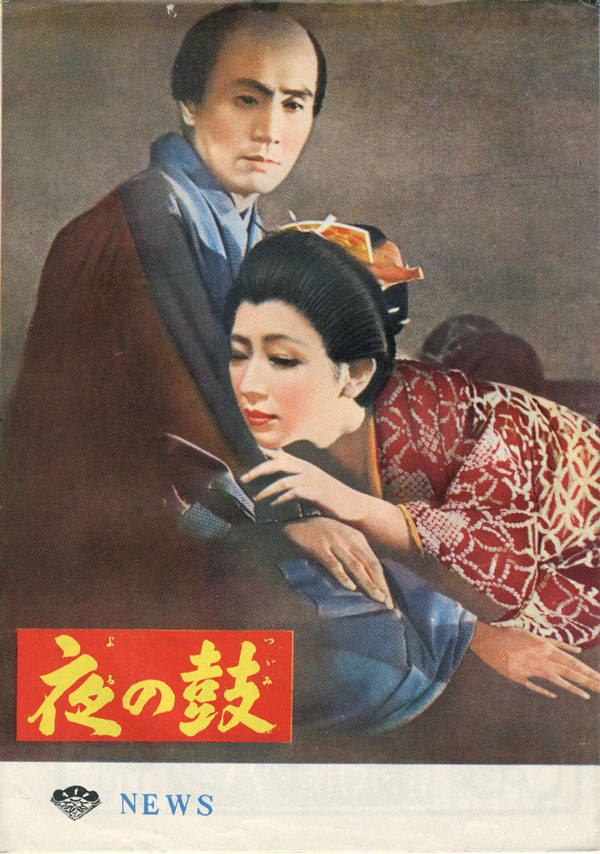
Night Drum (夜の鼓, Tadashi Imai, 1958)

night-drum

The works of Chikamatsu Monzaemon continue to have a large influence over Japanese drama even if not as frequently and directly adapted as they were in the immediate post-war period. Famous for tales of tragic love suicides and romantic heroes who risk all in the service of deep emotion, Chikamatsu’s works perhaps found even greater resonance in the turbulent years in which individual freedom and adherence to tradition found themselves in even greater conflict than ever before. Tadashi Imai makes the most of Chikamatsu’s melancholy fatalism to take a sword to the samurai order itself with all of its arcane rules and the essential hypocrisy which underlines its cruelty.

Hikokuro Ogura (Rentaro Mikuni) has been in Edo for a year with the shogun and is now on his way home. Stopping at an inn, he has a low level argument with his brother-in-law who warns him the men are getting restless and need to blow off some steam preferably with some sake. Hikokuro is in charge of the purse strings and knows all of this pageantry costs money the clan do not quite have hence he’s reluctant to fritter it away on alcohol no matter how much the men might resent him for it.

That’s not to say Hikokuro is a particularly officious person, he’s kind and cheerful by nature but also tired and eager to get home after such a long time away. His wife, Otane (Ineko Arima), is very happy to see him but something seems different about her and there’s a tension in the air among some of the other women. It seems, there are rumours about Otane and a travelling musician (Masayuki Mori) who frequented the house during the summer while Hikokuro was away. Rumours are often just that, especially in these petty circles of nobility, but female adultery is punishable by death and so is not something to be gossiped about idly.

Night Drum (夜の鼓, Yoru no Tsuzumi) begins with the ominous sound of the drum itself, beating out the inevitably tragic fate of all concerned with a melancholy fatality. The tale proceeds in a procedural fashion as the authorities become involved, hearing witness testimonies and trying to discover if there could be any truth at all in these unpleasant rumours. Matters are further complicated by the pecuniary difficulties the clan currently finds itself in – the elders are half hoping it is true because it would be a good excuse to expel the Ogura household and thereby save the money which goes on its upkeep. They are aware, however, that they’re talking about the life of a previously unblemished woman as well as the ruin of her extended family.

The life of a retainer is not as easy as it sounds and we’re constantly reminded of just how much money is necessary to keep up appearances. The clan authorities are dismayed when they hear of Otane earning money on the side through needlework though other retainers are quick to confess their wives also help out, they just can’t survive on such meagre stipends. Each lord is required to hire servants as befits their status but they aren’t given the money to do so. Hikokuro is also required to serve the shogun in Edo every other year for at least twelve months meaning Otane is left alone at home with almost nothing other than her needlework to do except wait patiently for her husband’s return.

Given these circumstances, it’s easy to understand how such pernicious rumours might begin. The sole basis of the evidence seems to rest on a tip off that Otane is thought to have been alone in a room with a man who is not her husband. That she may be put to death solely for the crime of sharing the same space as someone of the opposite sex seems extreme, but this is the feudal world where rules and propriety are all. The men can cavort with geishas to their heart’s content, but Caesar’s wife must be above suspicion.

The action unfolds piecemeal as each of the various witnesses offers their testimony of events. Given the gravity of the situation, few are eager to recount their suspicions – especially the other women who fear the rumour may be true but are also unwilling to believe it. Hikokuro does not want to believe it either but faced with such convincing, if circumstantial, evidence doubt creeps into his mind and finds an anchor in Otane’s guilt ridden behaviour. Ironically, this entire situation developed only because of Otane’s attempts to avoid it – remaining at an inn rather than travelling with a man on the road only for one of her husband’s friends to attempt to rape and blackmail her. Having had far too much to drink in an attempt to steel her nerves and cover up the embarrassing assault, Otane finds herself at the mercy of man who should have known better than to take advantage of another man’s wife in such a moment of weakness.

One stupid mistake born of alcohol, loneliness, and a series of male betrayals is enough to bring down the social order all on its own. Rentaro Mikuni plays the part of the previously affable wounded spouse with an exceptional level of nuance as he accepts his part in his wife’s downfall thanks to the the circumstances of their lives which have kept them apart and left her at the mercy of untrustworthy lords. There is anger here, and shame, but there is still love too which only makes the inevitable outcome all the more painful for everyone concerned. Hikokuro plays the part he’s expected to play, but it pains him and you can’t wipe a slate clean with blood. Imai has his eyes firmly on the civilised society with all of its rigid yet often cruel and unfair rules for living. Shot with a kind of hypnotic dreaminess in which each of our unfortunate players is swept along by events they are powerless to influence, Night Drum beats out the death knell of those who allow their individual desires to overwhelm their “civilised” conformity but it does so with a rhythm that is filled with anger rather than sorrow, for those who are forced to leave half their lives unlived in maintenance of the very system which oppresses them.


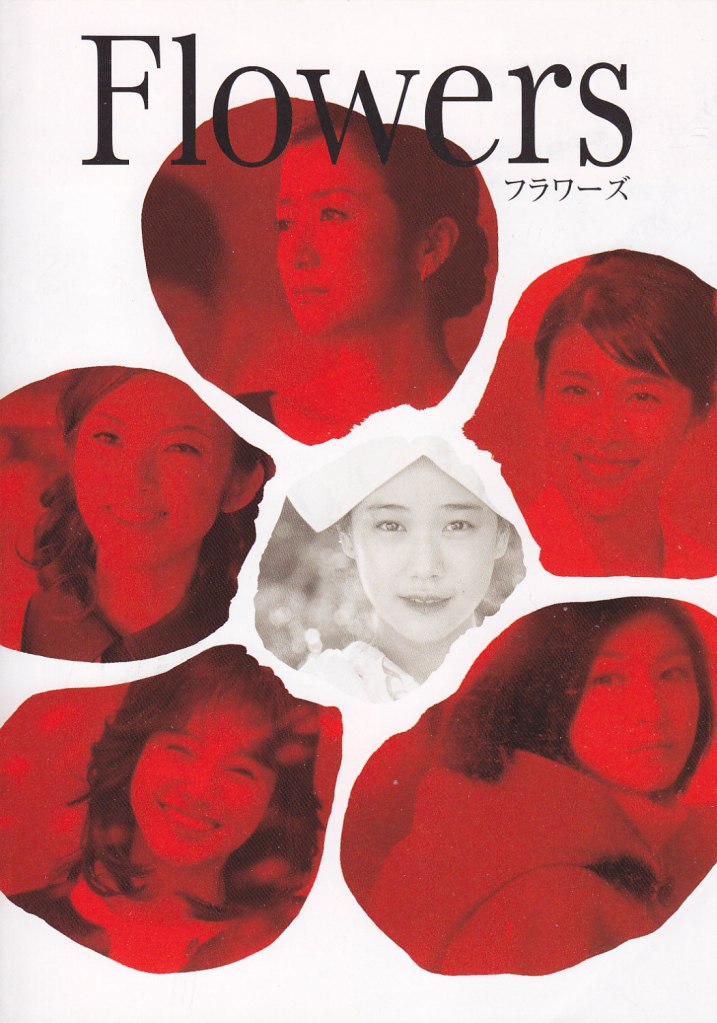
Flowers (フラワーズ, Norihiro Koizumi, 2010)

flowersThe rate of social change in the second half of the twentieth century was extreme throughout much of the world, but given that Japan had only emerged from centuries of isolation a hundred years before it’s almost as if they were riding their own bullet train into the future. Norihiro Koizumi’s Flowers (フラワーズ) attempts to chart these momentous times through examining the lives of three generations of women, from 1936 to 2009, or through Showa to Heisei, as the choices and responsibilities open to each of them grow and change with new freedoms offered in the post-war world. Or, at least, up to a point.
In 1936, oldest sister Rin (Yu Aoi) is to be married off against her will to a man picked by her father and whom she has never actually met. Bold and wilful, Rin finds herself more than usually torn between her intense resentment at being forced into a one time only life changing event simply on her father’s say so, and the guilt of rejecting centuries of tradition in rejecting her father’s authority. Minutes before the ceremony Rin makes a break for it fully done up in her wedding dress and makeup.

Flashing forward to her funeral in 2009, we learn that Rin did marry (someone, at least) and had three daughters. It’s her granddaughters we’re interested in now – happy mother Kei (Ryoko Hirosue), cheerful even at a wake, and the depressed Kanna (Kyoka Suzuki) – an unmarried former concert pianist who’s recently discovered she’s pregnant and is unsure what to do. In order to understand them we have to flashback a little again – to 1969, 1964, and 1977 to find out what happened to Rin’s three daughters – Kaoru (Yuko Takeuchi), Midori (Rena Tanaka), and Sato (Yukie Nakama).

Koizumi makes the most of his shifts in time periods to experiment with technical effects recreating the look of classic films of the era. Hence, 1936 is a desaturated monotone filled with classic silent movie compositions, seemingly owing a large debt to Ozu, Shimizu, and Mizoguchi. The difference between 1964 and 1969 might be thought slight but partly down to the different genre elements in the two vignettes, the contrast is marked with 1964 taking on the classic romantic melodramas of the period, and 1969 embracing bright and colourful salaryman comedy – only this time it’s a salary woman embarking on the era of having it all (though perhaps, tragically, ten too years to early to make the most of it). 1977 brings us back down with bump of realism as Sato lives an ordinary suburban life as a housewife and mother. Imbuing each of his eras with the warmth of nostalgia backed up with rich period detail, Koizumi has indeed framed his passage of womanhood narrative with an impressive degree of grounding.

This has been a period of intense social change, entirely for the better even if there is still a long way to go. Though marriages of 1936 were referred to as semi-arranged, families could and did place intense pressure on their children to consent or refuse to accept their refusal to do so (perhaps as true for sons as daughters, though sons were unlikely to find themselves in such a difficult position when things went wrong). Thus the course of Rin’s life is decided by her rigid, austere father leaving her with no possibility of choice in a world entirely controlled by men. Her daughters have more freedom and opportunities, marrying for love and choosing careers and/or motherhood as they see fit.

Midori, the most headstrong of the three sisters takes a job at a publishing house where she is the only female employee. Receiving a marriage proposal leads her to question her choices once again, wondering if accepting means jumping off the career ladder altogether. Wanting to get ahead, Midori has been behaving like her male colleagues – dressing in less feminine clothes and in subdued colours, heading off the inevitable sexist comments with aggression and violence but, eventually emboldened, she she finds herself blossoming when embracing her femininity within the workplace.

The world has moved on – women cannot be pushed in the same way Rin was pushed even if social mores can still be used to cajole them into conformity. The one big recent social change is in Kanna’s decision to proceed as a single mother. Though the question is still raised, there is broad approval for the idea which is met with no obvious stigma and only love and support from her immediate family. However, some things apparently don’t change as even if not all roads lead to marriage they all point towards motherhood which is still presented as the only marker of success as a woman. In this respect the closing montage accompanied by the odd choice of Olivia Newton John’s Have You Even Felt Mellow feels ill judged as the sister who’s experienced the ultimate heartbreak bounces around recreating the opening of Georgy Girl (only more successfully) with a new haircut and indulging in an ice-cream as a sort of antidote to eternal widowhood.

Nevertheless, Flowers does present a warm and broadly inspirational ode to the healing power of family and unbreakable female resilience even in the midst of such extreme social change. Painted with a keen eye for period detail and a deeply nostalgic longing for comforts long since passed, Koizumi’s exploration of womanhood through the ages is quick to acknowledge the pain and sacrifice experienced by women of all generations but is, in the end, too ready to accept it.


Original trailer (no subtitles)

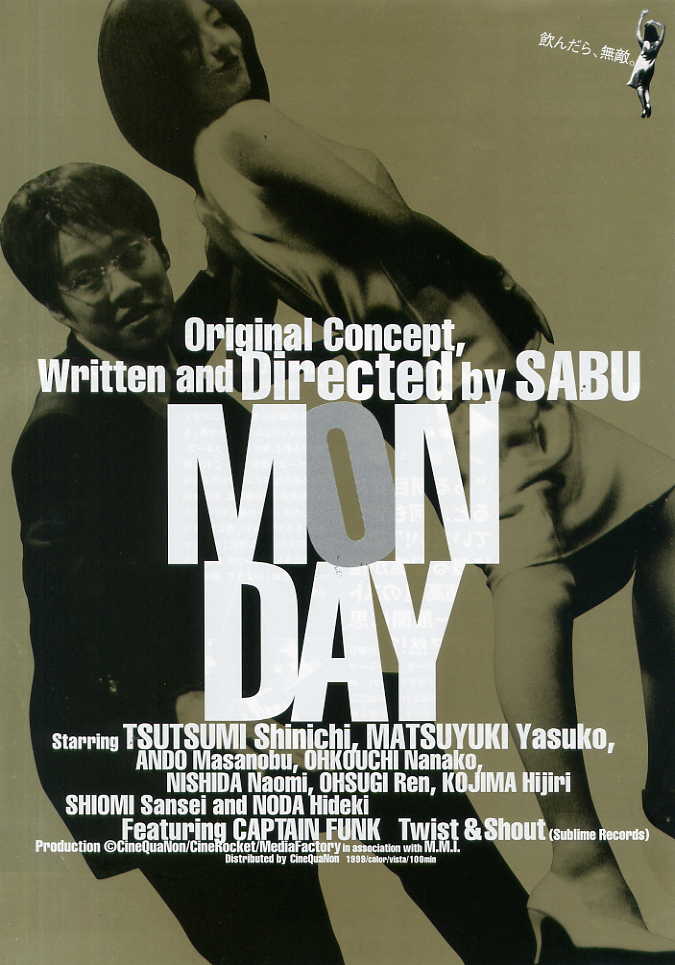
Monday (マンデイ, SABU, 2000)

mondayWaking up in an unfamiliar hotel room can be a traumatic and confusing experience. The hero of SABU’s madcap amnesia sit in odyssey finds himself in just this position though he is, at least, fully clothed even if trying to think through the fog of a particularly opaque booze cloud. Monday (マンデイ) is film about Saturday night, not just literally but mentally – about a man meeting his internal Saturday night in which he suddenly lets loose with all that built up tension in an unexpected, and very unwelcome, way.
Mild mannered salaryman Takagi (Shinichi Tsutsumi) wakes up in his cheap hotel room dressed in a pitch black suit and with no recollection of how he got there. A packet of purification salt reminds him he was going to a funeral, but what happened after that? Takagi, it seems, enjoys a drink or two to ease that ever present sense of dread and impotence which dominates his life and so the events of the previous two days are lost in that pale space obscured by a booze drenched curtain of brain fog. Spotting various reminders hidden in his room Takagi begins to piece his strange adventure together from a bad date with the girlfriend whose birthday he blew off to go to the funeral, to a weird fortune teller, a beautiful woman, guns, gangsters and a homicidal killing spree. All in all, perhaps it was better when he couldn’t remember.

As usual, SABU weaves his complex comedy into a complicated cycle of interconnected gags. Takagi remains within the purgatory of his hotel room, furiously trying to remember how he got there but this otherwise anodyne space seems to be a reflection of his everyday persona in its inoffensive blandness, littered as it is with indications of the deeper layers implied by the still unknown actions of the previous few days. Judging by his appearance, Takagi is a shy, nervous man hidden behind his unstylish glasses and neatly swept back hair. Fearing his adventures are about to signal the end of his existence, Takagi suddenly gets the inspiration to make a proper will/suicide note which largely consists of a number of apologies firstly to his parents and siblings and finally to the girlfriend who walked out on him in the bar owing to his failure to appear for her birthday celebration and subsequently bizarre behaviour. The second portion of the letter also includes some advice to his siblings about how to look after the family pets and some horticultural tips but as he takes a few more drinks to steady his nerves, those deeper layers start to bleed through and so he takes this opportunity to advise his girlfriend that she should work on her anger issues and also avoid finishing other people’s sentences for them.

In Takagi’s defense, he has had a strange few days. The funeral of a close friend, especially one so young, might be enough to tip anyone into a spot of drunken introspection but the send off for former hair model Mitsuo (Masanobu Ando) is hardly a typical one given that it ends with the corpse exploding after Takagi is asked and then fails to “defuse” it. When he should probably take the opportunity to talk to someone about the things which are bothering him, Takagi has another drink, does his strange little laugh, and internalises his irritation with the very people who might be able to help him. Retreating to the bathroom carrying the memory of a stunning woman spotted at the bar with him, he returns to find a gloomy yakuza sitting in the adjacent seat intent on drinking and talking. Rather than saying a flat no and going home like a sensible person, Takagi keeps drinking until he feels like partying with the most dangerous guys in the room, even going so far as a raunchy dance with the gangster’s girl. The gangster, strangely, doesn’t mind and even seems to think he’s found a cool new friend but when everyone’s this drunk and there are guns around nothing is going to end well.

The finale finds SABU at his most sarcastic as the imprisoned Takagi indulges in a hero fantasy of taking the cops hostage and heading outside to meet the forces of authority head on only to give them a lecture about the danger of firearms and the necessity of love and kindness in a strange world. Needless to say, his message of peace is not universally well received. Takagi might have a point when he says that none of this would have happened if it hadn’t been for the shotgun – such a powerful and easy to use weapon in the hands of those who previously felt so powerless can indeed be a dangerous thing, but the fact remains that he harboured all of this fear and resentment inside himself, attempting to drown it with booze but continually failing. We leave Takagi trapped inside the hotel room, as he’s always been trapped inside his mind, holding a possibly empty shotgun at a flimsy hotel room door with all of that pressure pushing down outside it. The gun is one thing, and guns are bad, but the enemy will always be Monday – the modern world is driving people crazy and could use some of that love and kindness Takagi was so keen on during his hostage crisis but it probably won’t work until he puts the gun (and the booze) down and opens that hotel room door.


Original trailer (no subtitles)

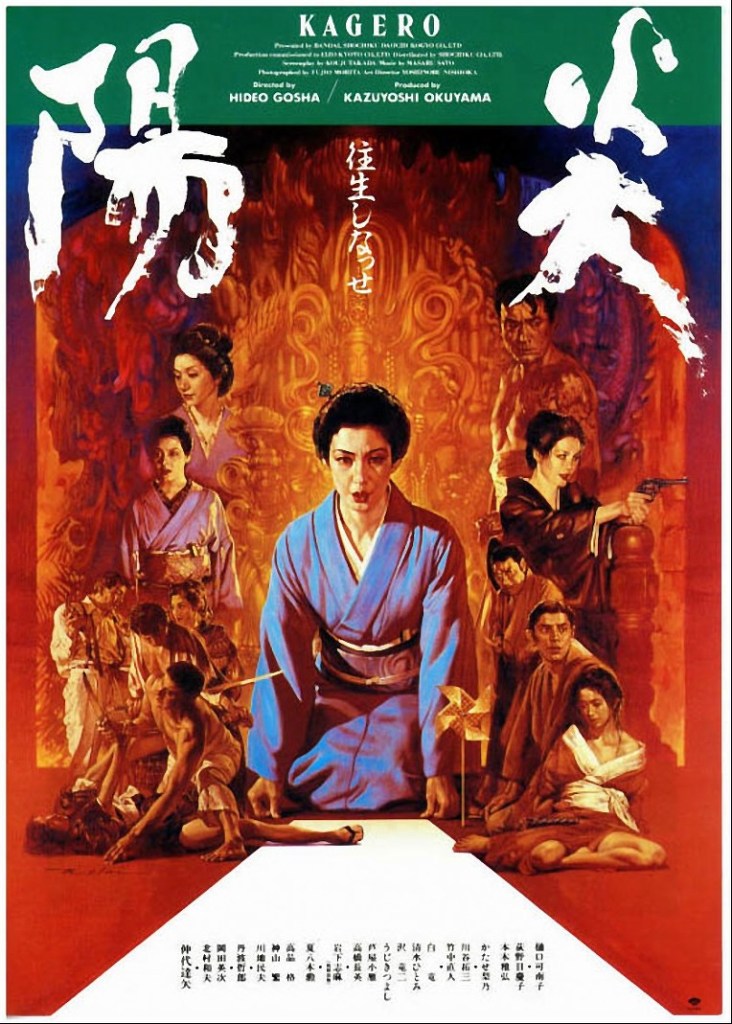
Heat Wave (陽炎, Hideo Gosha, 1991)

heat-waveHideo Gosha had something of a turbulent career, beginning with a series of films about male chivalry and the way that men work out all their personal issues through violence, but owing to the changing nature of cinematic tastes, he found himself at a loose end towards the end of the ‘70s. Things picked up for him in the ‘80s but the altered times brought with them a slightly different approach as Gosha’s films took on an increasingly female focus in which he reflected on how the themes he explored so fully with his male characters might also affect women. In part prompted by his divorce which apparently gave him the view that women were just as capable of deviousness as men are, and by a renewed relationship with his daughter, Gosha overcame the problem of his chanbara stars ageing beyond his demands of them by allowing his actresses to lead.
Heat Wave (陽炎, Kagero), which was to be the director’s penultimate feature, is a homage to late ‘70s gangster movies with a significant nod to Toei’s Red Peony Gangster series. Set in 1928, the action follows cool as ice professional itinerant gambler Rin Jojima (Kanako Higuchi) whose high stakes life becomes even more complicated when she accidentally runs into her adopted little brother, apparently on the hook to some petty gangsters. Dropping her commitments to help him out of his sticky situation and recover the family restaurant, Rin comes face to face with the yakuza who killed her father in a gambling dispute more than twenty years previously but vengeance is just one of many items on her to do list.

The title Heat Wave was apparently selected for the film to imply that Gosha was back on top form and ready to burn the screen with thrilling action but when producers saw his rushes they knew that their hopes were a little misplaced. Gosha was already seriously ill and was not able to direct with the fire of his youth. Heat Wave is undoubtedly a slow burn as Rin figures out the terrain and designs her campaign with the opposing side coming up with a counter plan, but the gradual acceleration begins to pay off in the film’s elaborate smoke and flames finale as Rin takes a bundle of dynamite to the disputed territory and then fights her way out with sword and pistol aided by an unlikely ally. Downbeat but leaving room for the hoped for sequels, Heat Wave is very much in the mindset of Gosha’s heyday in which, as Rin laments, the good die young and the bad guys win.

In keeping with many gambling films much of the action is taken up with tense games of hanafuda which may prove confusing to the uninitiated and are not particularly engaging in any case, though Gosha does not overly rely on the game to fill the screen. This may be early Showa, but save for the trains the action could almost be taking place a hundred years previously. Rin may have an unusual degree of autonomy as an unmarried woman travelling alone and earning her money through back alley gambling but her world is still a traditional one in which the honour of the game is supposed to matter, even if it is ignored by the unscrupulous who would be prepared to undercut their rivals away from the gaming table by attacking their friends and allies. Rin gains and then loses, reduced to an endgame she never wanted to play and which she fully intends to win by destroying herself only to be saved by her greatest rival.

Gosha’s reputation for vulgarity was not quite unjustified, even if perhaps overstated. Rin apparently inhabits the male world of her profession in a full way as an odd scene in which she’s taken to an inn to watch a live lesbian sex show seems to demonstrate though there is no dramatic purpose to its inclusion save to emphasise Rin’s impassive poise. Though nudity is otherwise kept to a minimum, Rin’s yakuza tattoos are on full show as a clear indication of her position in the underworld. The appearance of such extensive tattooing on female gangsters is a rare sight and Gosha does his best to make the most of its transgressive qualities.

When the producers realised Gosha was not as filled with intensity as they’d hoped, they hatched on the idea of attaching a hard rock song to the end to give the film more edge (apparently much to the consternation of the composer). This might explain the strange entry to the credits sequence which is accompanied by a very up to the minute burst of synthesiser music accompanied by computer graphics loading the faces of the stars across the screen in strips. Perhaps meant to bring the ‘70s inspired action into the present day the sudden entry of the modern world is jarring to say the least though perhaps it kept viewers in their seats long enough to enjoy the post credits sting of Rin giving it her best “you shall perish”, presumably to whet appetites for a sequel. Even if not quite as impressive as some of Gosha’s previous work, Heat Wave makes up for its flaws in its exciting finale which brings all of his choreographical and aesthetic abilities to their zenith as Rin basks in both victory and defeat with the legacy of the good people who took her in burning all around her.


Selection of scenes from the the film (no subtitles)

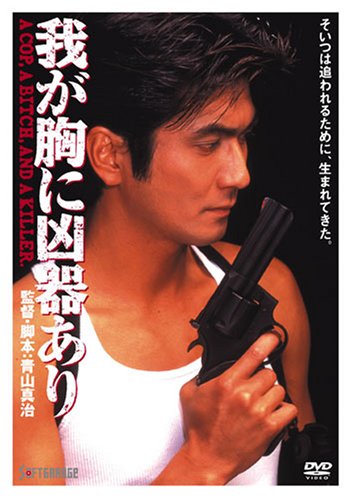
A Weapon in My Heart (我が胸に凶器あり, AKA A Cop, A Bitch, and a Killer, Shinji Aoyama, 1996)

a-weapon-in-my-heartShinji Aoyama would produce one of the most important Japanese films of the early 21st century in Eureka, but like many directors of his generation he came of age during the V-cinema boom. This relatively short lived medium was the new no holds barred arena for fledgling filmmakers who could adhere to a strict budget and shooting schedule but were also aching to spread their wings. After a short period as an AD with fellow V-cinema director now turned international auteur Kiyoshi Kurosawa, Aoyama directed his first straight to video effort – the sex comedy It’s Not in the Textbook!. Released just after his theatrical debut, Helpless, A Weapon in My Heart (我が胸に凶器あり, Waga Mune ni Kyoki Ari, AKA A Cop, A Bitch, and a Killer) is a more typically genre orientated effort with its cops, robbers, and femme fatale setup but like the best examples of the V-cinema trend it bears the signature of its ambitious director making the most of its humble origins.
Call girl Alice has ripped off her gangster bosses for a large amount of heroine only her accomplice has got cold feet and called a relative in the police force. The kid gets shot as officers Goro and his partner Yoshioka wade in all guns blazing but Alice calmly allows herself to be taken into custody. Yoshioka is a strangely cheerful chap who informs Alice that he has a game running where he gives suspects odds to bet on their likelihood of escape. Hers are brilliant because there is no way she is getting away. However, the trio are ambushed by crazy gangster Matsumura and his gang forcing Goro and Alice onto the run. In addition to avoiding Matsumura and his dastardly schemes, Goro and Alice are also being stalked by a mysterious hitman, Hoshi, who claims to be “watching from up above” and has his own motives for his bizarrely heroic hunting style.

This being a V-cinema effort, the production values are low, shot in widescreen but on the kind of cheap video cameras common to the V-cinema movement. Nevertheless, Aoyama makes the most of what he has to create a stylish genre throwback which recalls the Nikkatsu action films of years gone by only a little less madcap even if leaning towards the surreal. Told in a non-linear fashion, exposition is delivered largely through flashbacks but each of these is innovatively offered such as in a touching scene in which Goro remembers a conversation with Yoshioka in which only the lighting darkens to let us know that the happy memory has ended and the melancholy present has resumed. Similar techniques mark Alice’s frequent flashbacks to her traumatic crime, though in line with their much more pressing nature Alice’s memories are given harsher, more abrupt entrances and exits, lacerating the screen as they do her mind.

The genre elements may be familiar enough but Aoyama ensures each of the major players is fully drawn despite the necessarily tight running time. Good cop Goro is arguably the least explored but it’s antagonist Hoshi who leaves the biggest mark. A joke that’s somewhat lost in translation runs on the fact that “Hoshi” means star which lends an oddly comic dimension to his frequently uttered catch phrase in which he promises to be watching “from up above”. Having once abandoned the killing game, Hoshi has found himself forced back into the life in order to earn the money to pay for an operation to restore the sight of his blinded son – something he feels karmically responsible for. Frequently letting our heroes go out of a debt of honour, Hoshi nevertheless has his mission to complete, no matter how much it might offend him to do so.

Our policemen also seem to operate from a mysterious antique shop where they keep the records for their escape based betting games. Add in weird dirt bike riders, mysterious statues, and strange phone calls not to mention a horror movie inspired sequence where our two heroes are trapped in a shed while the enemy looms large in a thunderstorm outside and there are plenty of interesting quirks to be going on with. Deaths are dramatic, slow motion falls and set pieces become remarkably elaborate but there’s also a sort of childish innocence as a fearsome killer tries and fails to unwrap one of his beloved boiled sweets even as he dies. Very much part of the fast and loose V-cinema universe, A Weapon in My Heart is also pure Aoyama, filled with strange details and surrealist touches but ultimately imbued with his own strange brand of humanity.


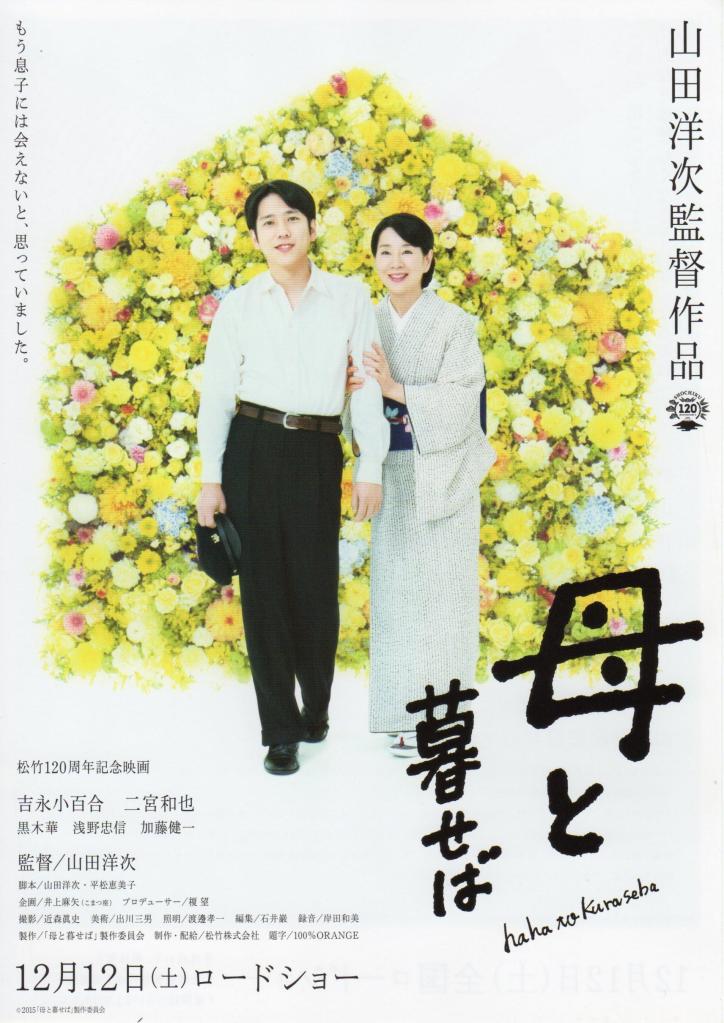
Nagasaki: Memories of My Son (母と暮せば, Yoji Yamada, 2015)

nagasaki-memories-of-my-sonAfter such a long and successful career, Yoji Yamada has perhaps earned the right to a little retrospection. Offering a smattering of cinematic throwbacks in homages to both Yasujiro Ozu and Kon Ichikawa, Yamada then turned his attention to the years of militarism and warfare in the tales of a struggling mother, Kabei, and a young a woman finding herself a haven from the ongoing political storm inside The Little House. Nagasaki: Memories of My Son (母と暮せば, Haha to Kuraseba) unites both of these impulses in its examination of maternal grief set amidst the mass tragedy of the atomic bomb and in the obvious reference hidden inside Japanese title (another Yamada trend) to the 2004 Kazuo Kuroki film The Face of Jizo (父と暮せば, Chichi to Kuroseba), itself based on a play by Hisashi Inoe. Whereas the young woman of Hiroshima found herself literally haunted by the image of her father to the extent that she was unable to continue living in the present, the mother at the centre of Nagasaki is approaching the end of her life but only now, three years after the bombing, is she ready to allow the idea of her son’s death to cement itself within her mind.

Nobuko’s (Sayuri Yoshinaga) son Koji (Kazunari Ninomiya) left as normal on that fateful morning, in a hurry as always, leaping onto the outside of a crowded bus that would take him to the university for a lecture on anatomy. That was three years ago and now it’s August again but in the absence of a body Nobuko has never been able to accept the death of her son, despite the picture on the altar and the two previous trips she’s made to the family grave on this date along with Koji’s girlfriend, Machiko (Haru Kuroki). Finally, Nobuko is beginning to feel it’s time to accept the inevitable, that her son is not lost somewhere and unable to find his way home but in some other world. This grudging acceptance of Koji’s death is the thing which returns him to her as the prodigal son suddenly appears one evening in spirit form to reminisce with his mother about the carefree pre-war days.

Kazunari Ninomiya’s Koji is, appropriately enough, a larger than life presence. A cheerful chatterbox, Koji blusters in to his old family home with the same kind of amusing energy he’d always lent it, laughing raucously to his mother’s polite but strange under the circumstances greeting of “have you been well?”. Reminiscences generally lean towards happier times but each time Koji becomes upset he suddenly disappears again, leaving his mother alone with all her sorrows. Nobuko lost both her sons to the war and her husband to TB and so she is quite alone now save for the kindhearted attentions of Machiko who continues to stop by and help her with house work or just keep her company.

The two women share an intense bond in their shared grief. Almost like mother and daughter Nobuko and Machiko help each other to bear the weight of their loneliness in the wake of such overwhelming tragedy. However, Nobuko is beginning to feel guilty in monopolising the life of this young woman who might have been her daughter-in-law or the mother of her grandchildren by now if things were different. Can she really ask her to sacrifice the rest of her life to a memory? Machiko swears that she has no desire to ever marry, preferring to remain loyal to her true love. “Shanghai Uncle” a black marketeer who brings Nobuko all the hard to find items not available through the normal channels, offers to set up an arranged marriage for the young woman but Nobuko is quick to turn it down on her behalf. In this new age of democracy, she says, young women ought to have the right to choose their own path whatever that may be. Nobuko respects Machiko’s choice, but after talking things over with Koji, urges her to consider letting the past go and honouring Koji’s memory by living fully while there is still time.

Interestingly enough, Machiko’s potential suitor, Kuroda – an injured war veteran and fellow teacher at the school where she teaches, is played by Tadanobu Asano who also played the shy researcher who began to reawaken the heart of the daughter at the centre of The Face of Jizo, Mitsue. Mitsue’s problem was more obviously one of survivor’s guilt, literally haunted by the friendly spirit of her genial father who continually urges her to embrace this last opportunity for happiness, to go on living even whilst others can’t. Nobuko’s journey is almost the reverse as she, essentially, attempts to cleave herself away from her life by ensuring Machiko is taken care of and knows that she has nothing to feel guilty about in seeking happiness even if it can’t be with Koji.

Despite the innovative opening sequence featuring the cockpit and targeting system of the plane which eventually dropped the bomb and the chilling effects sequence as it takes hold, Yamada then reverts to a kind of classical stateliness which is never as effective as Kuroki’s eerie magical realism. Adding in the Christian imagery associated with Nagasaki, the film takes a turn for the mawkish during the final sequence which descends into a series of heavenly cliches from fluffy white clouds to angelic choirs. Warm and melancholy, Nagasaki: Memories of My Son is a poignant exploration of life in the aftermath of preventable tragedy but one which also makes the case for moving on, honouring the legacy of the past with a life lived richly and to the full.


Original trailer (English subtitles)