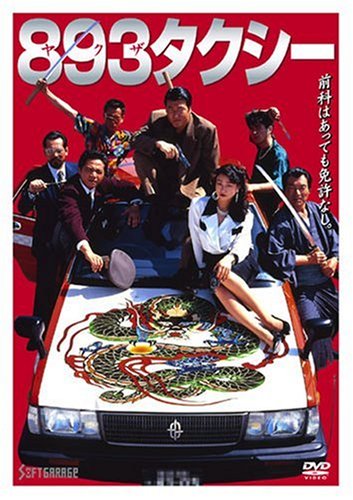
 Like many fillmakers of his generation, Kiyoshi Kurosawa began directing commercially in the 1980s working in the pink genre but it was the early ‘90s straight to video boom which provided a career breakthrough. This relatively short lived movement was built on speed where the reliability of the familiar could be harnessed to produce and market low budget genre films with a necessarily high turnover. Kurosawa made his first foray into the V-cinema world in 1994 with the unlikely comedy vehicle Yakuza Taxi (893 タクシー, 893 Taxi). Although Kurosawa had originally accepted the project in the hope of being able to direct a large scale action film, his distaste for the company’s insistence on “jingi” (the yakuza code of honour and humanity) proved something of a barrier but it did, at least, lend free rein to the director’s rather ironic sense of humour.
The Tanaka taxi firm has hit on some hard times and is in trouble over a series of promissory notes owned by a former yakuza loanshark. Luckily, Tanaka is lifelong friends with a local yakuza boss who is angry about the dishonourable way his friend has been treated and is determined to help him. He also sees this as a rare opportunity to prove the yakuza can still be of help in an “honest” way and therefore instructs three of his guys to get some fake driving/taxi licenses and set about making enough money to fend off the loansharks. The guys are soon joined by the recently released Seiji who wasn’t really planning on a secondary career as a taxi driver after sacrificing precious time in service of his clan and is not happy with his current career track.
The set-up is, of course, primed for comedy as the yakuza, who are known for being rough, rowdy and rude, suddenly have to adapt to a job which requires absolute politeness and courtesy. The original trio do their best learning from the company’s only remaining professional driver, Kimura, and come to view radio girl and boss’ daughter Kanako as a kind of big sister figure. Once Seiji arrives things begin to become more complicated as he maintains a number of yakuza habits incompatible with taxi driving – namely all day drinking, hostess bars, and beating up the passengers.
Seiji and Kanako spit fire at each other in place of courtship though Kanako’s often surly attitude is later revealed as.partly driven by resentment at being forced to labour in a boring job at her father’s company. The guys are supposed to be earning the money back legally but Seiji has always been one for a short cut. His ill gotten gains are ultimately rejected by Kanako, but not before they’ve caused a lot more trouble. The situation becomes even more challenging when a corrupt policeman teams up with the loansharks to harass the guys, even going to far as to make them drive to remote places where they can be beaten up by motorcycle thugs. Finally the game appears to be up when Kanako attempts to renegotiate and is offered “alternative employment” with the threat of enslavement hanging over her head.
Despite the comedic tone, sleaze is never far from the screen with two quite odd and extremely gratuitous sequences of strange boob fondling, not to mention one set of passengers who are delighted that they’re “alone now” and decide to make the most of it with some distinctly kinky action (Seiji makes a point of giving the male customer a few lessons in taxi etiquette before they reach their destination). Comedy is the main draw, there are no gun battles and relatively few actual fights aside from failed jump kicks and the distant thud of crowbars. Remaining more or less straightforward in terms of style, Kurosawa nevertheless embraces his taste for the absurd as this gang of low level bad guys come together to help a friend and discover an unexpected affinity for the service industry in the process.
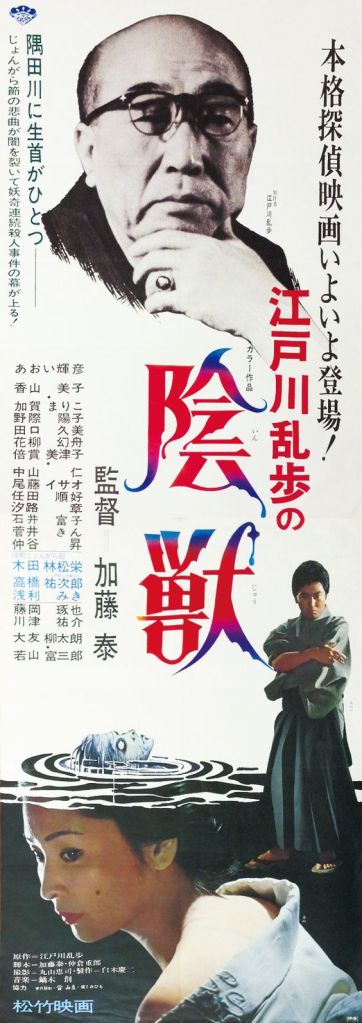 Edogawa Rampo (a clever allusion to master of the gothic and detective story pioneer Edgar Allan Poe) has provided ample inspiration for many Japanese films from
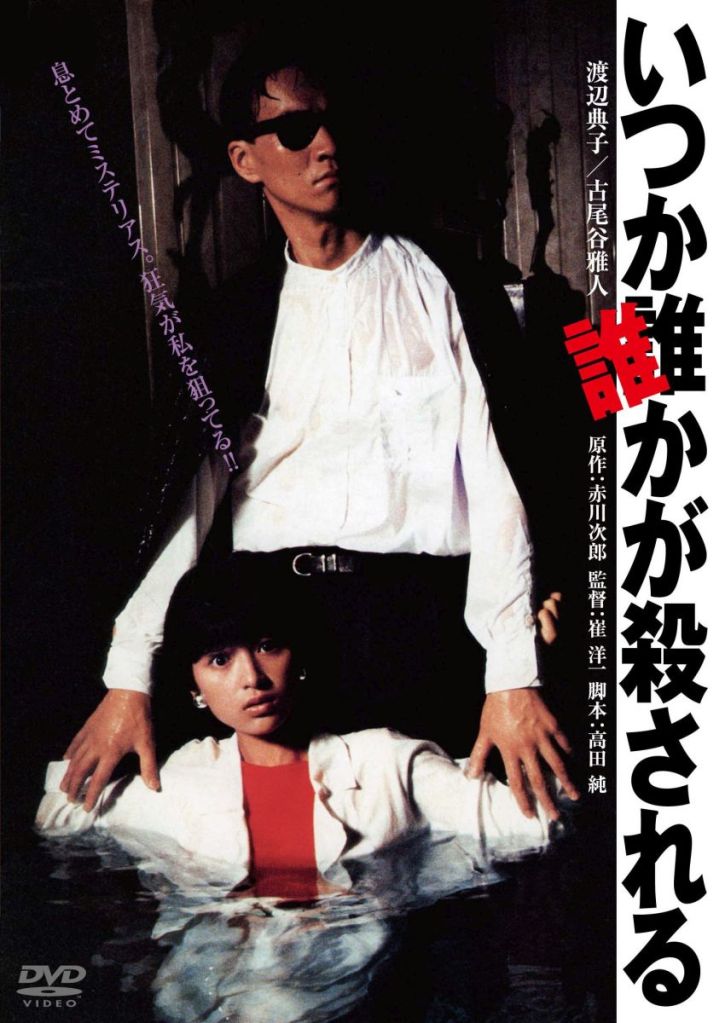 Haruki Kadokawa dominated much of mainstream 1980s cinema with his all encompassing media empire perpetuated by a constant cycle of movies, books, and songs all used to sell the other. 1984’s Someday, Someone Will be Killed (いつか誰かが殺される, Itsuka Dareka ga Korosareru) is another in this familiar pattern adapting the Kadokawa teen novel by Jiro Akagawa and starring lesser idol Noriko Watanabe in one of her rare leading performances in which she also sings the similarly titled theme song. The third film from Korean/Japanese director Yoichi Sai, Someday, Someone Will be Killed is an impressive mix of everything which makes the world Kadokawa idol movies so enticing as the heroine finds herself unexpectedly at the centre of an ongoing international conspiracy protected only by a selection of underground drop outs but faces her adversity with typical perkiness and determination safe in the knowledge that nothing really all that bad is going to happen.
 There are two kinds of people in the world, those who swing and those who…don’t – a metaphor which works just as well for baseball and, by implication, facing life’s challenges as it does for music. Shinobu Yaguchi returns after 2001’s
 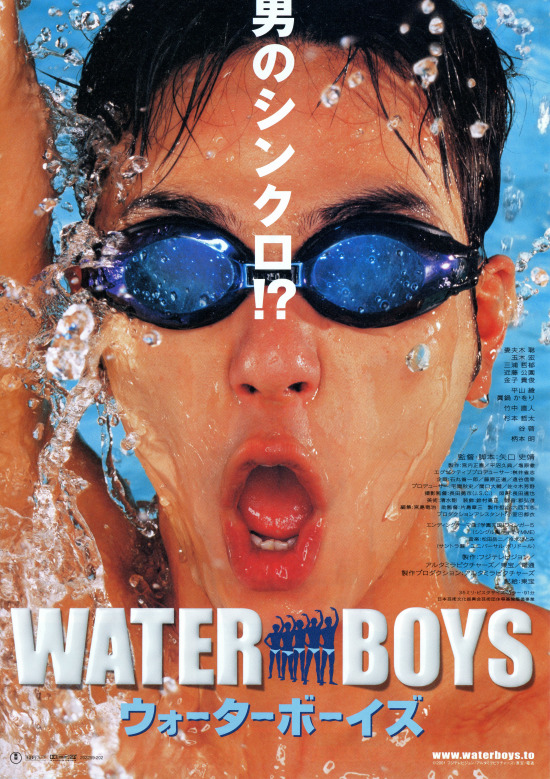 Japan has really taken the underdog triumphs genre of sports comedy to its heart but there can be few better examples than Shinobu Yaguchi’s 2001 teenage boys x synchronised swimming drama Waterboys (ウォーターボーイズ). Where the conventional sports movie may rely on the idea of individual triumph(s), Waterboys, like many similarly themed Japanese movies, has group unity at its core as our group of disparate and previously downtrodden high school boys must find their common rhythm in order to truly be themselves. Setting high school antics to one side and attempting to subvert the normal formula as much as possible, Yaguchi presents a celebration of acceptance and assimilation as difference is never elided but allowed to add to a growing harmony as the boys discover all new sides of themselves in their quest for water borne success.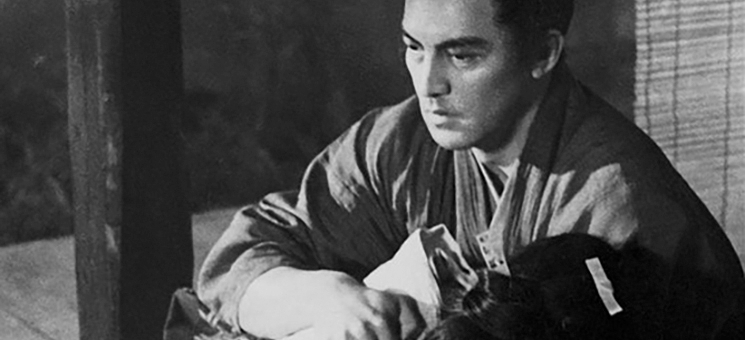
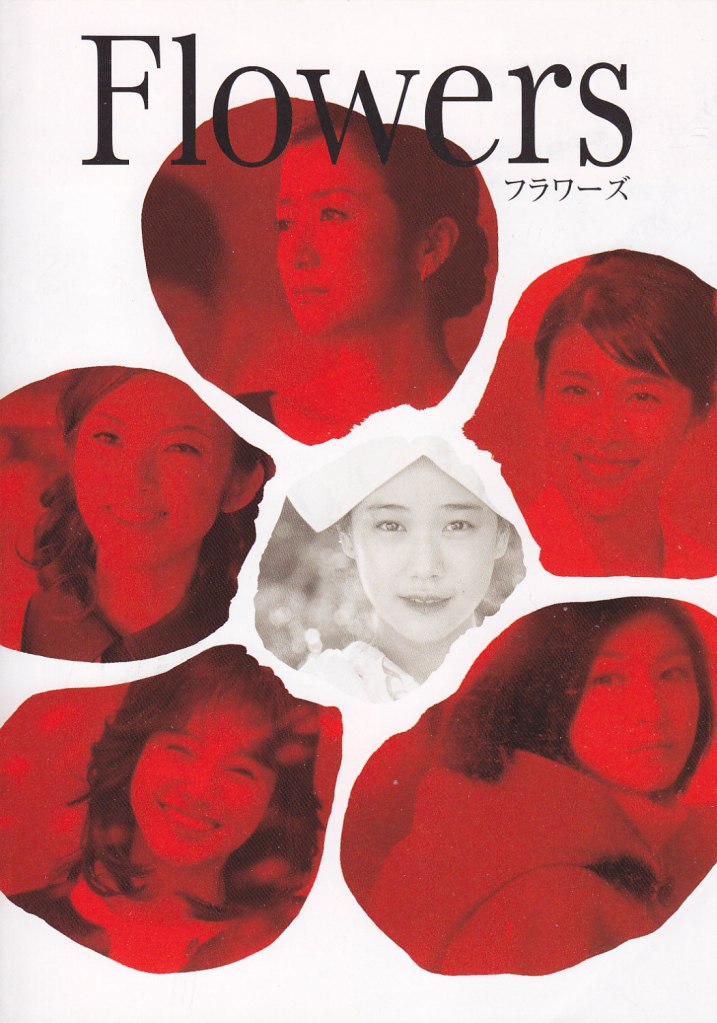 The rate of social change in the second half of the twentieth century was extreme throughout much of the world, but given that Japan had only emerged from centuries of isolation a hundred years before it’s almost as if they were riding their own bullet train into the future. Norihiro Koizumi’s Flowers (フラワーズ) attempts to chart these momentous times through examining the lives of three generations of women, from 1936 to 2009, or through Showa to Heisei, as the choices and responsibilities open to each of them grow and change with new freedoms offered in the post-war world. Or, at least, up to a point.
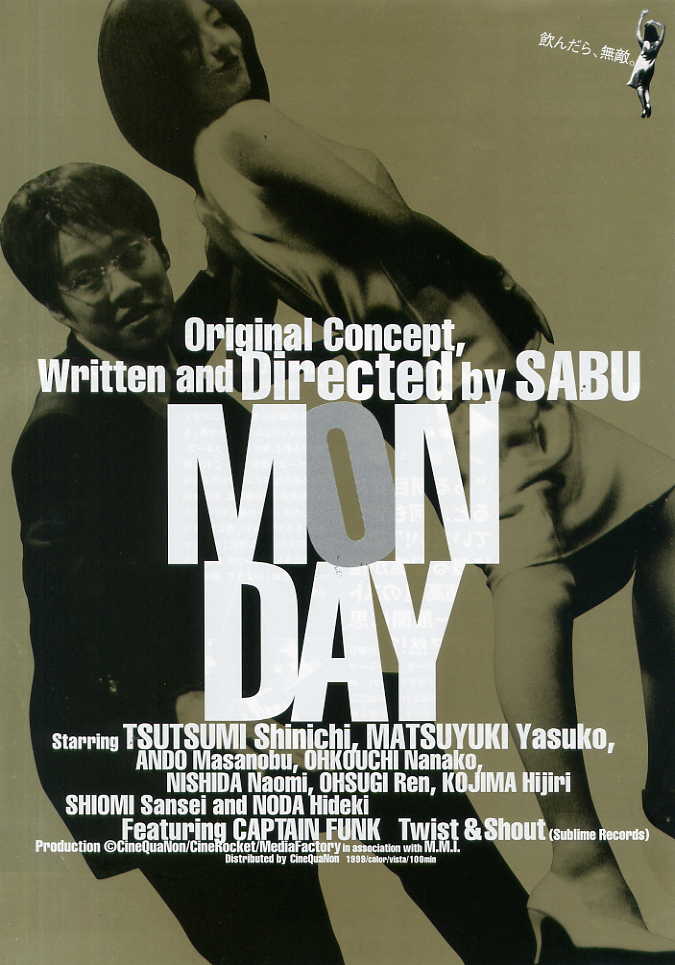 Waking up in an unfamiliar hotel room can be a traumatic and confusing experience. The hero of SABU’s madcap amnesia sit in odyssey finds himself in just this position though he is, at least, fully clothed even if trying to think through the fog of a particularly opaque booze cloud. Monday (マンデイ) is film about Saturday night, not just literally but mentally – about a man meeting his internal Saturday night in which he suddenly lets loose with all that built up tension in an unexpected, and very unwelcome, way.
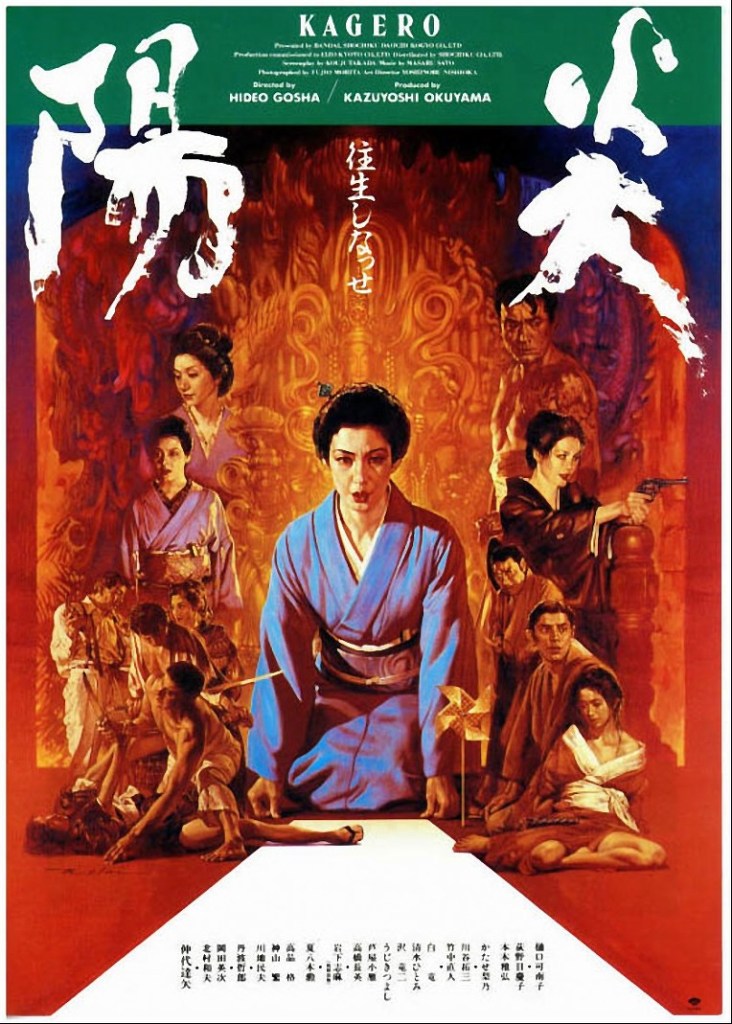 Hideo Gosha had something of a turbulent career, beginning with a series of films about male chivalry and the way that men work out all their personal issues through violence, but owing to the changing nature of cinematic tastes, he found himself at a loose end towards the end of the ‘70s. Things picked up for him in the ‘80s but the altered times brought with them a slightly different approach as Gosha’s films took on an increasingly female focus in which he reflected on how the themes he explored so fully with his male characters might also affect women. In part prompted by his divorce which apparently gave him the view that women were just as capable of deviousness as men are, and by a renewed relationship with his daughter, Gosha overcame the problem of his chanbara stars ageing beyond his demands of them by allowing his actresses to lead.
