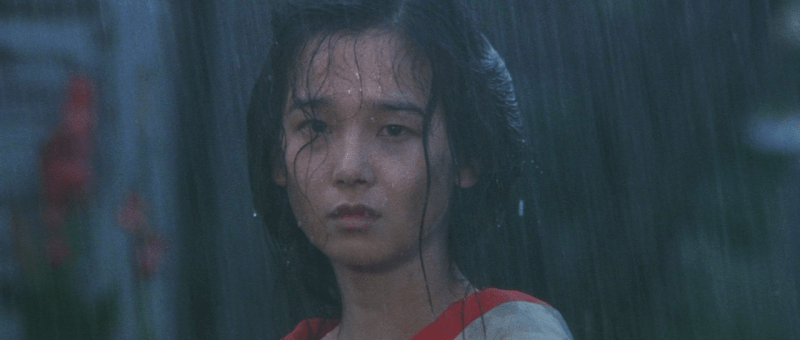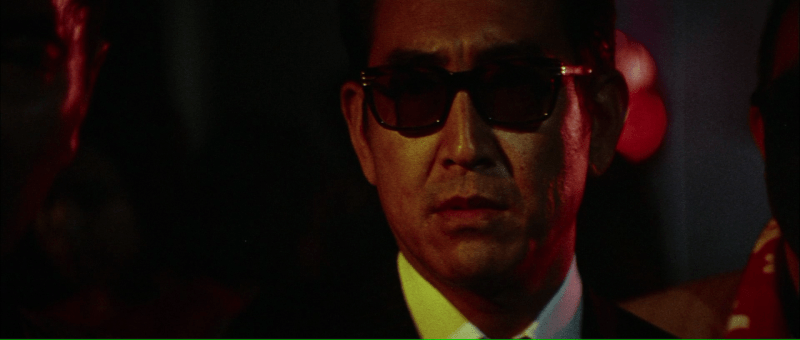
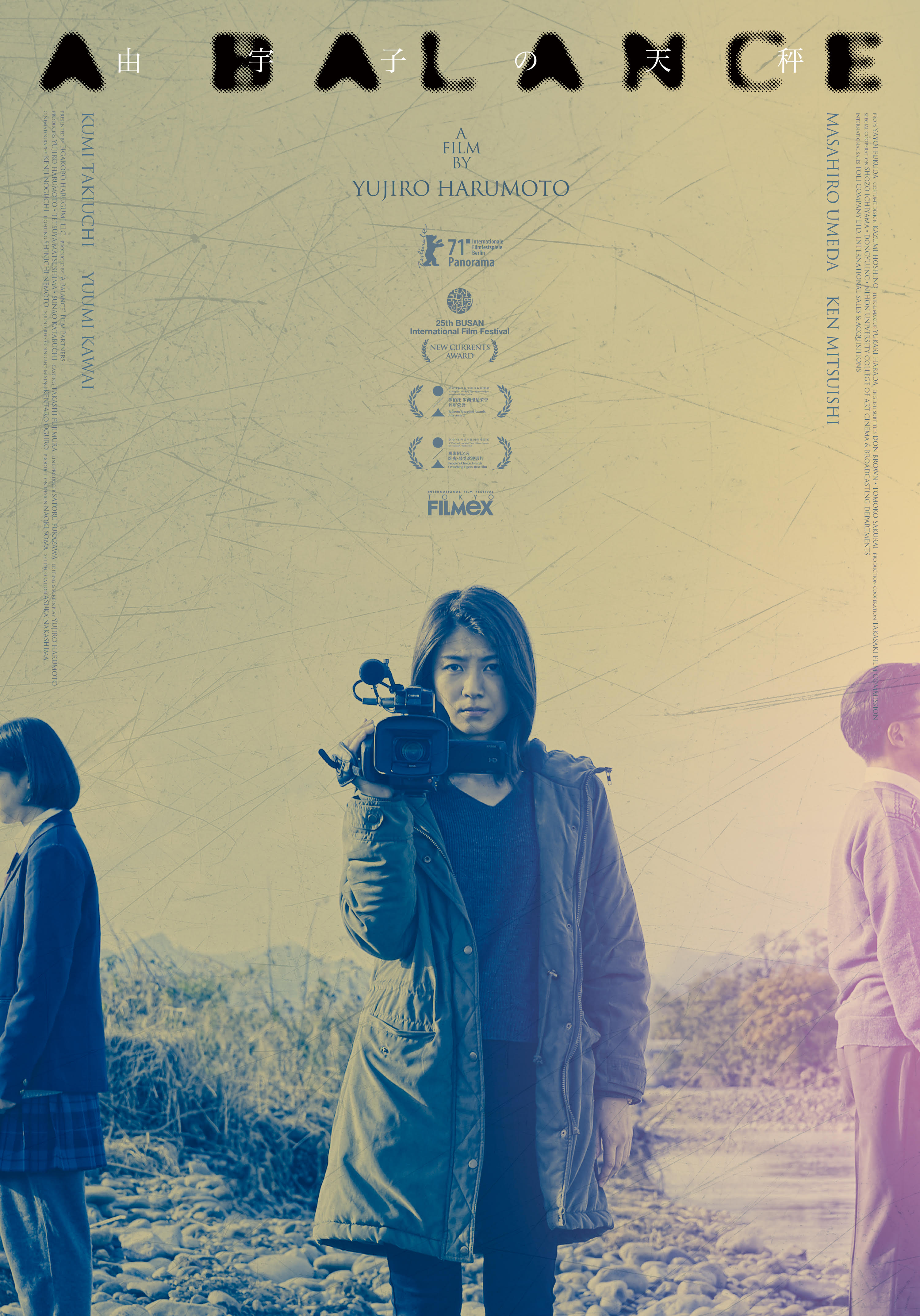
A Balance (由宇子の天秤, Yujiro Harumoto, 2020)

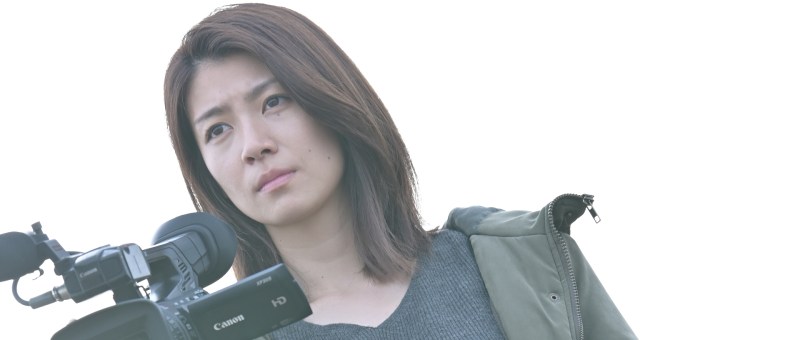
“What’s moral isn’t always what’s best” according to the morally compromised heroine at the centre of Yujiro Harumoto’s A Balance (由宇子の天秤, Yuko no Tenbin). To Yuko (Kumi Takiuchi), a balance is what a documentarian should strike, not taking one side or another but shining a light on hidden truths. The irony is that in seeking to expose one truth she accidentally stumbles on another uncomfortably close to home and although her job is to highlight injustice finds herself making the decision to do the opposite concluding that in this case, and perhaps many others, keeping quiet may actually be what’s best for victims, victimisers, and everyone in-between. 

As the film opens, Yuko is shooting a potentially manipulative interview with the grieving father of a young woman, Hiromi, who took her own life after becoming the subject of scandal and rumour when it was revealed she may have been involved in an inappropriate “relationship” with a teacher. The teacher, Mr. Yano, eventually took his own life too leaving behind him a note proclaiming his innocence and explaining that death is the manner he has chosen for his resistance. Yuko is sympathetic to Mr. Hasebe (Yuya Matsuura), but also perhaps verging on the unethical in the depth of the questions she asks him of his daughter’s death. Soon enough a conflict emerges between the nature of the documentary Yuko would like to make which is more contemplative than polemical, and the “routine piece on bullying” the TV studio think they’ve commissioned. Consequently, we see the suits redacting problematic lines in Yuko’s scripts in editorial meetings, misrepresenting Mr. Hasebe’s words in removing his criticism of mass media which he blames for hounding Mr. Yano to his death and thereby depriving him of answers. 

Yuko remains determined to provide “a balance” in interviewing Yano’s surviving family members including his mother Toshiko (Mitsuko Oka) and sister Shiho (Misa Wada), but discovers them tyrannised by the treatment they’ve received at the hands of the media and a vindictive society. Toshiko near collapses towards the end of the interview when asked if there was anything the family could have done to prevent this tragedy happening, inviting Yuko to visit her at home whereupon she discovers her living in near total darkness, afraid to go out lest she be recognised and explaining that she has few possessions in case she has to move again in a hurry because someone has exposed her address online. This little old lady is living in terror because of something her son was accused of which later caused him to take his own life and even that did not end the torment for his family. 

Meanwhile, in an ironic touch, Yuko discovers that a young woman, Mei (Yumi Kawai), attending the cram school owned by her father where she also teaches part-time has become pregnant and claims her father, Mr. Kinoshita (Ken Mitsuishi), is responsible having accepted sex in lieu of her overdue fees. Yuko does not want to disbelieve her and confronts her father, holding up her iPhone as a record, who admits that what Mei has said is true. Yuko tells herself she’s doing what’s best for Mei, bonding with her as two women who lost their mothers young (as did Hiromi), understanding that she may not want to go to the authorities because of the lingering stigma of being involved such a scandal. But she also can’t deny that her actions are self-interested in that she doesn’t want her doc pulled or her career messed up by her father’s transgression, something which gets harder to ignore when she discovers Mei’s pregnancy may be high risk and requires immediate medical treatment from a proper hospital to ensure her safety. 

The lines become ever more blurred, Yuko developing a quasi-maternal relationship with the motherless Mei which is in its way perfectly genuine even as she pays their overdue gas bill and worries about her potentially abusive father (Masahiro Umeda), but is nevertheless coloured by her desire both to cover up this harmful secret and to atone for her father’s wrongdoing. For his part, Mr. Kinoshita wants to confess but as Yuko points out he’d be doing it to unburden himself which in effect would merely shift the burden onto others including Mei but also Yuko herself, her documentary team, the other students at the cram school, and in effect everyone else they’ve ever known. 

Yet can Yuko be an effective arbiter of the truth especially when, as it turns out, neither she nor anyone else is being entirely honest? Her job is to present information in such a way that conclusions can be drawn, but she is herself making decisions in selecting the information she presents and the manner in which she presents it. She may resent the interference of the studio, but in reality they aren’t doing anything she hasn’t already done even if they are acting less out of a sense of integrity than commercial concern. “Whatever we put together is the truth” as her exasperated producer (Yota Kawase) finally insists. It’s in this same conflict that she begins to lose her sense of balance, trying to help those victimised by an unforgiving society while attempting to protect herself from unwelcome consequences of social scandal aided and abetted by the industry in which she herself works. “Ask them who is the real victimiser” Toshiko asks of Yuko taking aim at the mass media who have shamed her into a life of total darkness, but all Yuko can in the end do is turn her camera back on herself in contemplation of her shattered integrity.  


A Balance screens Aug. 12 as part of this year’s New York Asian Film Festival.

Original trailer (English subtitles)

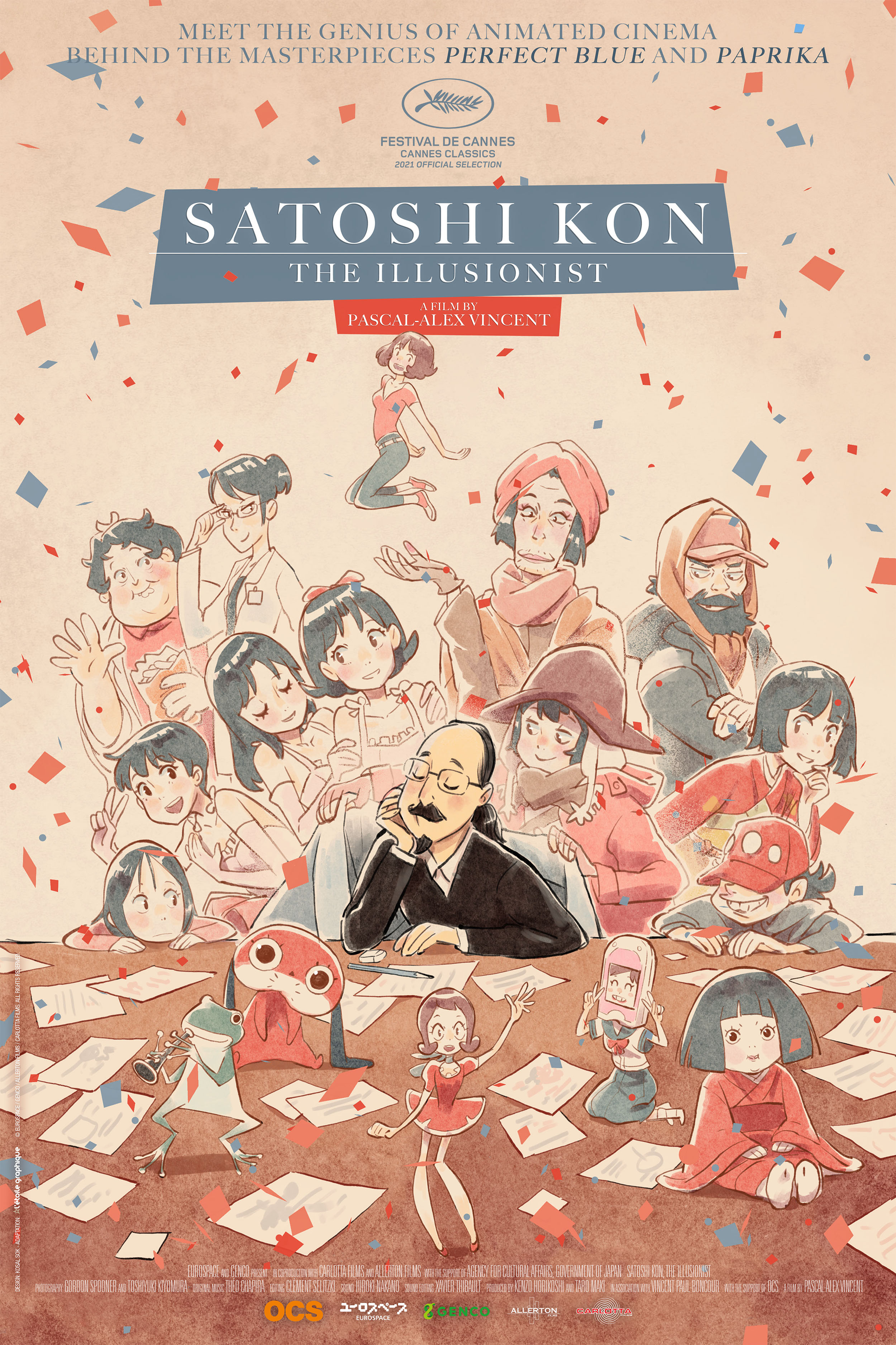
Satoshi Kon: The Illusionist (Satoshi Kon, l’illusionniste, Pascal-Alex Vincent, 2021) [Fantasia 2021]

“A genius but a nasty guy” is the way a former collaborator describes the late director Satoshi Kon, a sentiment echoed by others who’d worked alongside him though many also describe him as gentle if reserved remarking on his seeming impenetrability. Pascal-Alex Vincent’s documentary Satoshi Kon: The illusionist (Satoshi Kon, l’illusionniste) is less interested in illuminating the man than briefly sketching an overview of his career yet nevertheless seems to content to present him as an enigmatic figure filled with contradictions which his work, in some way, was intended to resolve. 

Skipping over Kon’s early life and beginnings as a manga artist, Vincent begins with Perfect Blue before proceeding through each of his features chronologically finishing with the incomplete Dreaming Machine. In essence a talking heads doc, he interviews a series of well-known figures in the anime world such as fellow directors Mamoru Oshii, Mamoru Hosoda, and Jin-Roh’s Hiroyuki Okiura, as well as those who had worked with Kon directly, the international filmmakers who’d found inspiration in his work such as Darren Aronofsky, Jeremy Clapin, Marc Caro, and Rodney Rothman, and experts in anime and manga history. 

In a sense, Vincent is less interested in Kon as a man than in the lasting impact of his oeuvre, which does in a sense lend an uncomfortable imbalance in implying Kon’s work is of greater importance because of the influence it went on to have on Western, particularly Hollywood, cinema. Kon’s impact on contemporary anime for example is not addressed in any real depth save for implying that it gave the art form permission to deal with more mature concepts and ideas which in itself implies that it up to that point had not done so. 

Yet even if Kon is described as “prickly”, an intense perfectionist unable to tolerate failure or resistance, he is also regarded as another kind of innovator in his determination to change the notoriously difficult, often exploitative working culture of the contemporary anime industry. Despite facing financial hardship, he ensured his crew members and animators were paid fairly while also determined to support the next generation of anime creatives. His goodbye letter published the day after he passed away similarly expresses concern for his animators now left adrift with Dreaming Machine destined to remain incomplete. A former colleague remembers Kon as a patient mentor and teacher, gaining a new appreciation for him when she dared to challenge some of the attitudes she found unpalatable in his work including his depiction of women only for Kon to reveal that the women in his films are often reflections of himself. Thus Mima’s torment is an expression of his own in dealing with the fractious politics of the anime and manga industry. 

According to others, the desire to address these issues was born of that to resolve the things he did not understand, Kon again describing the heroine of Millennium Actress’ quest to retrieve a lost key as like that of a director pursuing the idealised vision in his mind, finally arriving at the conclusion that what he loved was the chase itself. His work was frequently concerned with the interplay between dream and reality, yet his vision could sometimes be at odds with others’ describing Paprika as his “Sailor Moon” movie intended as a piece of commercial cinema about a dream hopping “magical girl”. Despite his perfectionism, his universe was anything but black and white, a space which held no place for those who embody evil and sought only to understand. According to an archive interview, Dreaming Machine would have marked a break with his persistent themes, aimed at children as well as adults though apparently also dealing with some darker ideas as mankind’s children attempt to survive their orphanhood. It’s this sense of contradiction which gives Kon’s work its power, at once a man who “radiated gentleness” but was unafraid to speak his mind, bluntly berating a colleague for not pulling his weight but hurt and confused when the colleague declined the opportunity to continue working together because of his intense management style. “He had two sides to him. He could be a nasty guy. A really nasty guy, OK? But I loved him” according to Madhouse’s Masao Maruyama, “He’ll always be in our hearts” a contradiction to the last.


Satoshi Kon: The Illusionist streams in Canada until Aug. 25 as part of this year’s Fantasia International Film Festival.

Original trailer (English subtitles)
Georama Boy, Panorama Girl (ジオラマボーイ・パノラマガール, Natsuki Seta, 2020) [Fantasia 2021]

“As long as you have a girl you can cope with anything. Who cares what’s happening in the world?” the lovestruck hero of Natsuki Seta’s Georama Boy, Panorama Girl (ジオラマボーイ・パノラマガール) blusters floating around on a cloud of adolescent intensity. “Man, you’re crazy” his more mature workmate replies with unconcealed exasperation. Adapted from a manga by Kyoko Okazaki, Seta’s post-modern drama like her previous film Parks recalls the lighthearted teen movies of the Bubble era even as it gleefully subverts rom-com norms as the mismatched youngsters repeatedly glide past each other experiencing parallel though connected episodes of romantic disillusionment in a rapidly deconstructing city. 

The heroine, Haruko Shibuya (Anna Yamada), is a dreamy, romantic sort of girl who’s read too many shojo manga and wishes the summer could go on indefinitely because she wants “to dream longer”. Kenichi Kanagawa (Jin Suzuki), by contrast, is a slightly nerdy young man who upends expectation by suddenly standing up mid-class after being forced to take a test on the first day back after the summer holidays to announce he’s quitting school because he’s realised it’s just not necessary for him. As if trying to get his mid-life crisis over as early as possible, Kenichi picks up a skateboard and starts hanging round in Shibuya unsuccessfully trying to pick up girls until he catches the attention of a free spirited older woman, Mayumi (Misato Morita), only to be unceremoniously beaten up by her maybe boyfriend after being spotted together in a cafe. Bloodied, bruised, and collapsed in the street is how he eventually meets Haruko who stops to see he’s OK and then randomly gifts him her combini purchases, keeping hold of his school ID card which is how she figures out who he is. 

Being a teenage girl, Haruko, like her friends Kaede (Erika Takizawa) and Maru (Kogarashi Wakasugi), longs to fall in love and thinks meeting Kenichi is her romantic destiny even over investing in its potency in believing their love is probably necessary in order to save the Earth from calamity like the star-crossed lovers from a shojo manga. As their names suggest, Haruko is the city centre whereas Kenichi is the provincial suburbs, but they spend their time dancing around each other living out parallel love stories as Kenichi continues to obsess over Mayumi whose free-spirited frankness is tinged with sadness while her toying with a lovestruck teen has an almost self-destructive quality. Each of them experience a moment of romantic disillusionment realising that their adolescent visions of pure love are essentially unrealistic and that chance meetings are sometimes just that intended to go no further because life thinks nothing of the rules of narrative causality. 

The failure of Haruko’s romantic dreams prompts her into a further moment of introspection as she continues to wonder if everything around her is merely an illusion. Meanwhile, the TV news is a catalogue of contemporary anxieties from an early report on a young woman who took her own life rather than return to school because of rampant bullying not to mention exam stress, to a protest over nuclear weapons and conscription, and even one about a potential response to meteors and aliens. The Tokyo the teens inhabit is one of constant uncertainty, a city half-built and in a state of limbo remaking itself for the upcoming Olympics (which ironically we now know will only half arrive). Yet as Kenichi had suggested, the teens barely notice what’s going on in the world around them so caught up are they in their adolescent dramas finding themselves less star-crossed than at cross purposes in their mutual romantic dilemmas. 

Just like the teen movies of old, Seta draws inspiration from the French New Wave as the youngsters frequently monologue across each other sometimes in sync and others not their dialogue in a sense pretentious but also filled with the naive intensity of youth as they each attempt to navigate their way towards a more mature adulthood. With a charmingly timeless retro quality, Georama Boy, Panorama Girl embraces the absurdity of teenage love but finally opens the door to something more “real” brokered in a way by twin heartbreak followed by a mutual resetting as the pair walk out into a new dawn now more ready to meet whatever it has waiting for them. 


Georama Boy, Panorama Girl streams in Canada until Aug. 25 as part of this year’s Fantasia International Film Festival.

International trailer (English subtitles)

Sexual Drive (性的衝動, Kota Yoshida, 2021) [Fantasia 2021]

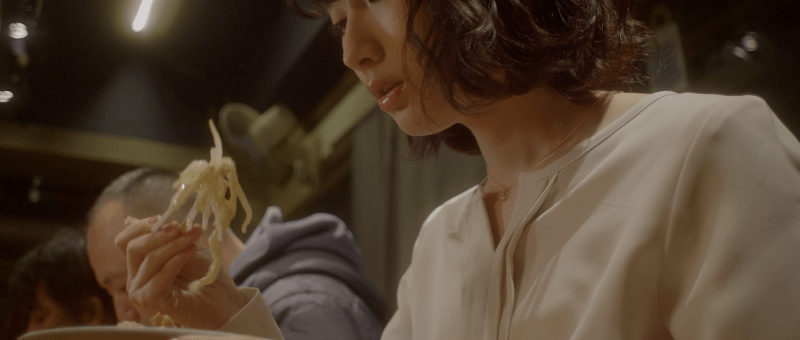
A weird chestnut-bearing spirit of sexual awakening visits three troubled couples in Kota Yoshida’s odyssey of food-themed eroticism, Sexual Drive (性的衝動, Seitekishodo). As the title perhaps implies, Yoshida’s loose thesis seems to be that each of the spouses he counsels is living a dull and unfulfilling life because they’re repressing their authentic selves either unrecognising or rejecting the true nature of their sexual desires. Yet who or what is Kurita (Tateto Serizawa) and what is he really up to? Aside from all that, is he even “real”?

When we first meet Kurita, he’s bearing a box of Chinese chestnuts (“chestnut” being the first character of his name but also a slang term for clitoris) and walking with a pronounced limp. This lends credence to his story of having suffered a stroke three years previously though as we will later discover the cause is likely very different if at least suggesting a healthy corporality. The visit is all the more unusual as it seems he doesn’t know the man he’s come to see, Enatsu (Ryo Ikeda). Just as we’re wondering if this is some kind of hookup while his wife (Manami Hashimoto) works an extra shift at the hospital, we realise that the reverse may be true as Kurita claims to have been having a three-year affair with Enatsu’s spouse having fixated on her after she fitted a catheter for him following an operation. This is a discussion between men, but Kurita soon becomes excitable making lewd gestures with a mostly empty natto carton apparently likening its distinctive taste and odour to the nether regions of Enatsu’s wife. Goading him that their marriage has been sexless for the last five years, what Kurita seems to do is ironically restore Enatsu’s sexual potency through his vicarious enjoyment of his wife’s taste for this famously love it or hate dish of fermented soy beans. 

Kurita’s second victim, meanwhile, has apparently committed the crime of making inauthentic mapo tofu, its heat turned down to suit the Japanese palate. This time Kurita claims to have been an elementary school classmate of the nervous Akane (Honami Sato) who has frequent panic attacks and has finally got up the courage to go for her first solo drive. He insists that Akane is a sadist who brokered his own masochistic awakening through her merciless bullying and that the reason she’s so on edge is because she’s living a neutered life with only inauthentic mapo tofu when she should really be making her own loaded with enough spice to burn the roof of her husband’s mouth clean off. 

His third case, however, sees him steal a device from Snake of June in communicating with an adulterous husband, Ikeyama (Shogen), claiming that he’s kidnapped his mistress, Momoka (Rina Takeda), and will soon expose his extra-marital affair if he refuses to follow the instructions he gives him. These are mostly surprisingly wholesome and a little bit sad as what Kurita is hoping to teach Ikeyama is what a cad he’s being and how his insensitive treatment of Momoka must make her feel. Accordingly, he sends him to a greasy ramen bar mostly frequented by middle-aged men where talking is very much not allowed in order for him to consume a satisfyingly fatty dish the transgressive energy of which both inflamed Momoka’s desire and forced her into a contemplation of her role as the mistress of a married man. Ikeyama’s awakening is less to sex than to love in being forced to accept Momoka’s personhood in empathising with the loneliness his indifference causes her to feel. 

Yet, if it weren’t for the chestnuts, we might wonder if Kurita were real or merely a manifestation of each of his victims’ subconscious fears and desires. Even as it stands, we can’t be sure that anything he says is actually true, nor do we know what motive he has for guiding these frustrated souls towards their sexual release like some strange sex fairy sent from on high. Nevertheless, in satisfying appetites of all kinds he paints the fulfilment of authentic sexuality as a basic human need even as food becomes a kind of displacement activity standing in for the satisfaction of human desire. Strangely absurd in Kurita’s rather creepy demeanour coupled with his victims’ crumbling wholesomeness, Sexual Drive even if ironically presents a refreshingly positive message of embracing kink while remaining mindful of its effects on others. 


Sexual Drive streams in Canada Aug. 5 – 25 as part of this year’s Fantasia International Film Festival.

Original trailer (English subtitles)

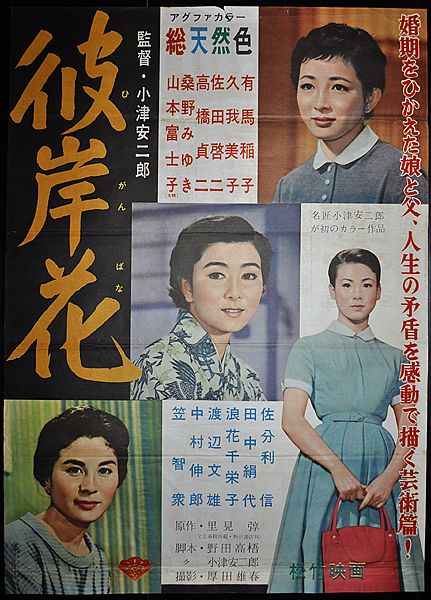
Equinox Flower (彼岸花, Yasujiro Ozu, 1958)

Japanese golden age cinema is famed for its centring of female stories, but while it’s true that many of Yasujiro Ozu’s family dramas revolve around a young woman’s feelings towards marriage, the perspective is often surprisingly male. Equinox Flower (彼岸花, Higanbana), his first film in colour, marks something of a change in direction in its spirited defence of the young, but at heart is still a story as much about impending old age, the responsibilities of fatherhood, and changing times as it is about contemporary family dynamics or female agency. 

The father in question, Hirayama (Shin Saburi), is a high ranking executive with two daughters. The older, Setsuko (Ineko Arima), is working at another company, and the younger, Hisako (Miyuki Kuwano), is still in school. Marriage is on his mind because he’s just attended the wedding of an old school friend’s daughter at which he gave a speech, with his wife Kiyoko (Kinuyo Tanaka) sitting awkwardly next to him, describing the arranged marriage he had with her as “pragmatic, routine” while he envies the young couple’s “fortunate opportunity” to indulge in romance. He and Kiyoko idly discuss the idea of Setsuko’s marriage, it seems as if there is a promising match on the horizon, with Hirayama conflicted while Kiyoko is very much in favour of doing things the traditional way. She’s already mentioned it to her daughter, but all she does is smile demurely which seems to provoke different interpretations from each of the parents. 

While thinking about all of that, Hirayama receives a visit from an old friend who was a notable absence at the wedding asking him to check up on his daughter Fumiko (Yoshiko Kuga) who ran away from home two months ago to live with a musician after he tried to veto her intention to marry without consulting him. Hirayama is sympathetic, perhaps thinking his friend has acted foolishly and pushed his daughter away. After visiting the bar where she works, he comes to the conclusion that as long as she’s happy with her choice then everyone else should be too. That all goes out the window, however, when a young man, Taniguchi (Keiji Sada), visits him unexpectedly at work and asks for permission to marry Setsuko. Hirayama quite rudely asks him to leave and then irritatedly talks the matter over with Setsuko before petulantly refusing his consent, not because he objects to Taniguchi, but because he is hurt on emotional level that she hadn’t talked to him about this first (not least so that they stop worrying about arranging a marriage) while resentful that she’s gone behind his back and undercut his patriarchal authority. 

In addition to the changing nature of family dynamics, Hirayama is perhaps conscious of his advancing age, feeling himself increasingly obsolescent and therefore additionally wounded by this assault on his authority as a father. The generation gap, however, is all too present. Both Setsuko and Fumiko feel as if they simply cannot talk to their parents because they wouldn’t listen and will never understand. Yukiko (Fujiko Yamamoto), the daughter of another friend, feels something similar in her exasperation with her well-meaning single mother who keeps hatching plans to set her up with various men she isn’t interested in. Intellectually, Hirayama sides with the young, envying them their freedoms and advising Yukiko firstly not to marry at all, and then encouraging her desire to resist arranged marriages despite trying to foist them on his own daughters. 

Even Kiyoko eventually describes her husband’s continuing petulance as “inconsistent”. It seems obvious that Kiyoko is siding with her daughter, immediately taking a liking to Taniguchi who politely brought her home after she stormed out following an argument with her father, but she continues to behave as a “good wife” should, politely minding her husband while gently hoping that he will eventually come round. Only once pushed does she try to explain to him, again politely, that he’s being selfish and unreasonable, but he continues on in resentment while causing his daughter emotional pain simply for trying to find her own happiness rather letting him decide for her. Kiyoko is afraid that if it carries on like this, then Setsuko will, like Fumiko, eventually leave and they’ll lose her completely, something which Hirayama either hasn’t fully considered or is actively encouraging through his petulance. 

In the end the conclusion he comes to is that the parents will eventually have to give way or risk losing their children entirely. He tells both Fumiko and Yukiko that all parents want is for their children to be happy and so nothing else matters, but struggles to put his advice into practice when it comes to his own daughter. Like pretty much everyone in an Ozu film, Hirayama is a good, kind person, even if one struggling against himself as he contemplates a loss of authority, a change in standing, and the difficulty of dealing with complex emotions as a man in a patriarchal society. Predictably, it’s women who essentially bully him into making better decisions, Yukiko “interfering” in the nicest of ways, while his wife makes it clear that though she thinks he’s wrong she will continue to stand by him if only in the hope he will eventually see the light. “Life is absurd, we’re not all perfect” he admits, only later realising how his stubborn foolishness may have caused unnecessary suffering to those he loves the most.


Currently streaming in the UK via BFI Player as part of Japan 2020. Also available to stream in the US via Criterion Channel.

Original trailer (no subtitles)

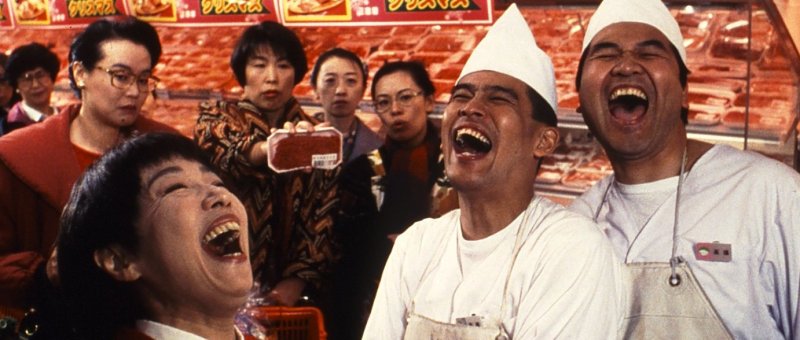
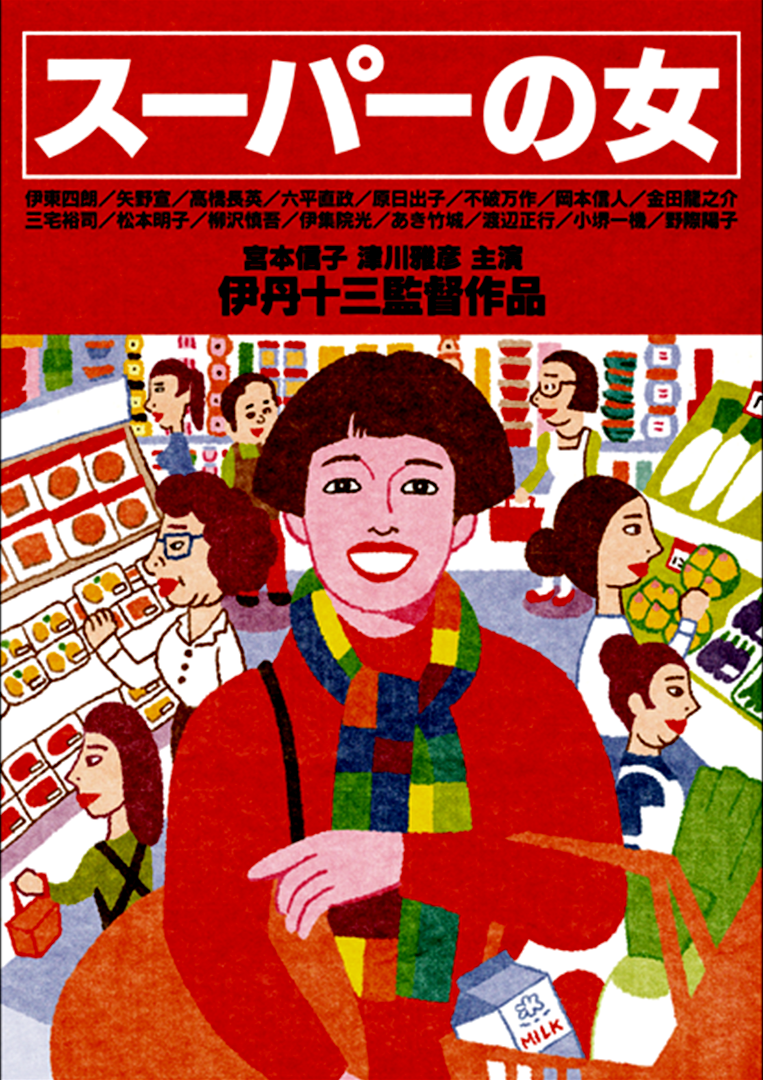
Supermarket Woman (スーパーの女, Juzo Itami, 1996)

By 1996 Japan had entered an extended period of economic stagnation which signalled the end of post-war aspiration but for many at least the false promises of the Bubble era proved hard to dispel. In what would be his penultimate film, Supermarket Woman (スーパーの女, Supa no Onna), Juzo Itami turns his attentions to the insular world of the nation’s family-held, independent supermarkets to ask a few questions about integrity in business which cut straight to the heart of what kind of society post-Bubble Japan intended to be given yet another opportunity to make itself anew. 

As the opening text crawl explains, this is a story not about giant supermarket chains but your friendly indie local. “Honest Mart” is a family-owned, mid-range supermarket in a declining industrial area nominally run by absentee CEO Goro (Masahiko Tsugawa) who was bequeathed the place by his father but is a melancholy drunkard delegating responsibility to his manager. The store has a huge problem in that a rival has recently re-opened under the new name “Discount Demon” and seems primed to steal all their business. On a stakeout of the new place, Goro runs into a childhood friend, Hanako (Nobuko Miyamoto), who is now a widow returning to the area. With her lifelong experience as a veteran housewife, Hanako knows a few things about supermarkets and she’s not very impressed with Discount Demon, doing a few quick calculations to realise the supposed discounts aren’t as enticing as they seem while common gimmicks like the all pervasive red glow that makes their meat look fresher than it really is only irritate her. Goro asks her for a “professional” opinion on Honest Mart without telling her who he is, only to discover she’s even less impressed with them, certain that his place is on the way out thanks to its dated decor, uninviting atmosphere, and low quality produce. 

The irony is Honest Mart is not much better than Discount Demon, both stores are subject to the same industry standards in which a certain degree of obfuscation is permissible. “In business honesty doesn’t pay” Hanako is told by the onsite butcher after she questions his tendency to mix meats to pass them off as more expensive cuts, while she later discovers that the store engages in the practice of repackaging unsold meat and fish with new expiration dates and is not very particular about its suppliers when it comes to buying in ready-made products. Brought on board to save the store, Hanako breezes in with a new mission to win the hearts and minds of her customers, and she can’t do that if she can’t have confidence in her stock. In any case, her the customer is always right policy quickly brings her into conflict with the store manager, an older more conservative man who actively resists innovation and resents having his authority undercut by an interloping woman. 

Meanwhile, we can also see that customer attitudes have changed. There’s a problem with availability of trolleys because, perhaps unusually for Japan, customers are just abandoning them willy-nilly in the carpark instead of retuning them to the trolley point like responsible shoppers. One man is even for some reason intent on stealing a large number of shopping baskets, caught by Hanako loading them into his car. Everybody wants cheap, which is understandable especially given the economic situation, and they might even be a little underhanded when it comes to getting it, but they also expect a reasonable level of quality and to be able to trust that the food they’re buying is safe to feed their families. Hanako is most alarmed that the ladies who work in the kitchen area, who are obviously wives and mothers themselves, do not shop at Honest Mart because they know what goes on at the store and they don’t trust it. 

“A housewife knows” Hanako is fond is saying. Her revolution is in essence a vindication of “the housewife”, perhaps the most maligned and dismissed figure of the mid-90s society, putting to good use all of her veteran experience both of running a home and of working a series of part-time jobs including those in supermarkets which she claims to love. Approaching the problem from the point of view of a consumer, she attempts to help Goro achieve his dream of making Honest Mart number one in Japan not through making it the most financially successful but the most loved by listening to women like her in the form of a focus group of local aunties some of whom had previously been serial complainers. 

Then again, some of her decisions are in a sense contradictory as she attempts to streamline the business along classically capitalistic lines in suggesting that the store doesn’t really need its overqualified butcher and fishmonger because the part-timers could be trained to do a “good enough” job. “Good enough” is in a sense her business philosophy, only not in the sense that somewhere like Discount Demon which falsely advertises regular steak as discount Wagyu means it, rather that her customers are after an everyday level of produce and so it’s not surprising that premium meats don’t sell. She wants to get rid of the butcher, who turns out to be on the fiddle, and the melancholy fishmonger disappointed no one wants his top quality seafood, because their “artistic temperament” is disruptive to the flow of the store and their presence is perhaps emblematic of the bloated, pretentious management style which is holding it back. 

Positioning the “housewife’s choice” as the ultimate seal of approval, Supermarket Woman advocates for a return to wholesome, small-town values, prioritising a sense of integrity as Honest Mart projects itself as a corporate force their customers can trust, perhaps anticipating a trend in dedicating itself to providing good quality fresh produce at fair prices in direct opposition to Discount Demon and its underhanded trickery. “Honest Mart keeps its word” Goro assures, pledging to honour a mistaken ad which promised eggs at prices so good it caused minor riot. In the end, it’s all about trust and integrity. If you don’t have that, you don’t have anything and the housewives of post-Bubble Japan will it seems vote with their feet. 


Currently available to stream in the US via Criterion Channel.

Original trailer (no subtitles)

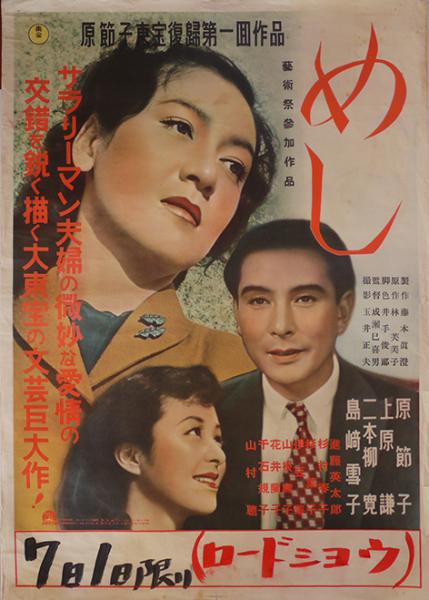
Repast (めし, Mikio Naruse, 1951)

“Must every woman grow old and die feeling empty?” asks the unhappy heroine of Naruse’s 1951 melodrama Repast (めし, Meshi) only to conclude that yes, she must, but that this in fact constitutes “happiness” as a woman. The first of Naruse’s Fumiko Hayashi adaptations Repast arrived in the year of the author’s death and is inspired by a short story left unfinished at the time of her passing. Screenwriter Sumie Tanaka was apparently convinced that the film should end with a divorce, as Sound of the Mountain would two years later, and consequently left the project after the studio mandated a more “sympathetic” ending. Superficially happy as it might seem, however, the conclusion is as bleak as one might expect from Naruse in which the heroine simply accepts that she must recalibrate her idea of happiness to that which is available to her and learn to find fulfilment in shared endeavour with her husband. 

As she explains in her opening voiceover, Michiyo (Setsuko Hara) married her husband Hatsunosuke (Ken Uehara) five years ago in Tokyo against her family’s wishes and has been living on the outskirts of Osaka for the past three. Marital bliss has quite clearly worn off. As we see from the repeated morning scenes of the local community sending their sons off to school and husbands to the office, every day is the same and all Michiyo ever seems to do is cook and clean. The only words Hatsunosuke says to her are “I’m hungry”, and the only source of solace in her life is her cat, Yuri. Yet even this constant state of unhappy frustration is disrupted by the unexpected arrival of Hatsunosuke’s spoilt and immature niece Satoko (Yukiko Shimazaki) who has apparently run away from home in rebellion against an arranged marriage. 

There is obviously a blood relation between Hatsunosuke and Satoko, but Michiyo’s jealously is not exactly unreasonable given the young woman’s childish flirtation with her uncle, perhaps an adolescent extension of her propensity to pout and preen to get her own way. Aside from all that, finances weigh heavily on Michiyo’s mind. Other than her drudgery, the constant source of friction in the relationship is Hatsunosuke’s low salary and lack of career success. Satoko’s family are a little wealthier and having been brought up in relative comfort she has little idea of the real world and is often tactless, remarking on Hatsunosuke’s worn out tie much to Michiyo’s chagrin. Hatsunosuke is happy enough to have her, but Michiyo is wondering if there’s enough rice in the jar to see them through and Satoko never stops to consider that they’re feeding her for free even falling asleep when Michiyo enjoys her one and only day off reuniting with old friends rather than preparing dinner as she’d been asked. Perhaps aware of the disruptive effect of her presence, Satoko pours salt on the wound by constantly asking her uncle if Michiyo doesn’t like her or is angry, further placing a wedge between husband and wife. 

For all that, however, Hatsunosuke would not be accounted a “bad” husband for the time save perhaps for his lack of career success. He is not cruel or violent, merely insensitive and distant, taking his wife for granted and unable to see that she is deeply unhappy while otherwise internalising a sense of guilt and failure in his inability to adequately provide for her. She meanwhile sometimes takes her dissatisfaction out on him in barbed comments about his low salary, her barely hidden contempt never far from the surface. Yet as her mother later points out in encouraging her go back to him he is “reliable, discreet, and honest”, qualities borne out by his later refusal to go along with a dodgy scheme organised by the old elite along with his nervous rebuttal of the attentions of the “mistress” from across the way. 

At heart a conservative woman, Michiyo too looks down on Ms Kanazawa (Kumeko Otowa) for her taboo status as the illicit lover of a wealthy man which is only in a sense her way of seizing her future as an independent woman running her own bar. Satoko, a woman of the modern era, sees less of a problem with it and is far less judgemental, though her own attempts are destined to end in failure thanks to her inability to work out that her present lifestyle is far above her current reach. Retreating to her Tokyo home, Michiyo looks for other options, admiring the apparently happier relationship between her younger sister and brother-in-law who now run the family shop. She asks a sympathetic cousin, Kazuo (Hiroshi Nihonyanagi) who provides an alternate love interest, to help her find work but encounters the brutalising line outside the local employment office and then an old friend now a war widow desperate for employment because her benefits are about to run out and she has a young son to support. Later she spots the same woman handing out flyers, suddenly realising the fallacy of her fantasy of starting again as an independent woman. She pens a letter to her husband admitting that she’s realised how vulnerable she is without his protection, but remains undecided enough to avoid sending it. 

Hearing that Satoko, still childish but perhaps not quite as naive as she assumed her to be, has been laying her claws into Kazuo the final nail seems to have been struck. Michiyo knows she will return to Osaka, but does so not because she has rekindled her love for her husband but because she has accepted there are no better options. Hatsunosuke is dull, but he is in a sense reliable, and honest to the extent that he may be about to be rewarded for his moral unshakability. He cares enough about her to show up in Tokyo hoping, but not insisting, she will return with him which is perhaps as close to a declaration of love that one could hope for. On reflection she decides that a woman’s happiness is found in sharing the journey with her husband, accepting that she must subsume her own desires into his and cannot hope to expect emotional fulfilment other than that found in his satisfaction. Even for a Naruse film, and one as peppered with moments of slapstick humour as this one is, it’s an extraordinarily bleak conclusion subtly hinting at the iniquities of life in a patriarchal society in which the best a woman can hope for is a life of unrewarded drudgery. 


Amagi Pass (天城越え, Haruhiko Mimura, 1983)

There’s no statute of limitations on guilt an ageing policeman laments in Haruhiko Mimura’s adaptation of the Seicho Matsumoto mystery, Amagi Pass (天城越え, Amagi-Goe). Co-produced by Yoshitaro Nomura and co-scripted by Tai Kato, Amagi Pass arrives at the tail end of the box office dominance of the prestige whodunnit and like many of its kind hinges on events which took place during the war though in this case the effects are more psychological than literal, hinging on the implications of an age of violence and hyper masculinity coupled with sexual repression and a conservative culture. 

In a voiceover which doesn’t quite open the film, the hero, Kenzo (Mikijiro Hira / Yoichi Ito), as we will later realise him to be, likens himself to that of Kawabata’s Izu Dancer though as he explains he was not a student but the 14-year-old son of a blacksmith with worn out zori on his feet as he attempted to run away from home in the summer of 1940 only to turn back half-way through. In the present day, meanwhile, an elderly detective, Tajima (Tsunehiko Watase), now with a prominent limp, slowly makes his way through the modern world towards a print shop where he orders 300 copies of the case report on the murder of an itinerant labourer in Amagi Pass in June, 1940. A wandering geisha was later charged with the crime but as Tajima explains he does not believe that she was guilty and harbours regrets over his original investigation recognising his own inexperience in overseeing his first big case. 

As so often, the detective’s arrival is a call from the past, forcing Kenzo, now a middle-aged man, to reckon with the traumatic events of his youth. Earlier we had seen him in a doctor’s office where it is implied that something is poisoning him and needs to come out, his illness just as much of a reflection of his trauma as the policeman’s limp. Flashing back to 1940 we find him a young man confused, fatherless but perhaps looking for fatherly guidance from older men such as a strange pedlar he meets on the road who cheekily shows him illustrated pornography, or the wise uncle who eventually tricks him into buying dinner and then leaves. His problems are perhaps confounded by the fact that he lives in an age of hyper masculinity, the zenith of militarism in which other young men are feted with parades as they prepare to fight and die for their country in faraway lands. Yet Kenzo is only 14 in 1940 which means he will most likely be spared but also in a sense emasculated as a lonely boy remaining behind at home. 

He tells the wise man who later tricks him that he’s run away to find his brother who owns a print shop in the city because he hates his provincial life as a blacksmith, but later we realise that the cause is more his difficult relationship with his widowed mother (Kazuko Yoshiyuki) whom, he has recently discovered, is carrying on an affair with his uncle (Ichiro Ogura). Returning home after his roadside betrayal he watches them together from behind a screen, a scene echoed in his voyeuristic observation of the geisha, Hana (Yuko Tanaka), with the labourer plying her trade in order to survive. Described as odd and seemingly mute, the labourer is a figure of conflicted masculinity resented by the other men on the road but also now a symbolic father and object of sexual jealously for the increasingly Oedipal Kenzo whose youthful attraction to the beautiful geisha continues to mirror his complicated relationship with his mother as she tenderly tears up her headscarf to bandage his foot, sore from his ill-fitting zori, while alternately flirting with him. 

Yet his guilt towards her isn’t only in his attraction but in its role in what happened to her next even as she, we can see, protects him, their final parting glance a mix of frustrated maternity and longing that has apparently informed the rest of Kenzo’s life in ways we can never quite grasp. Amagi Pass for him is a barrier between youth and age, one which he has long since crossed while also in a sense forever trapped in the tunnel looking back over his shoulder towards Hana and the labourer now on another side of an unbreachable divide. The policeman comes like messenger from another time, incongruously wandering through a very different Japan just as the bikers in the film’s post-credit sequence speed through the pass, looking to provide closure and perhaps a healing while assuaging his own guilt but finding only accommodation with rather than a cure for the traumatic past. 


Original trailer (no subtitles)

Neither Seicho Matsumoto’s original novel or the film adaptation are directly related to the well-known Sayuri Ishikawa song of the same name released three years later though the lyrics are strangely apt.

Snow Country (雪国, Shiro Toyoda, 1957)

Closely associated with literary adaptation, Shiro Toyoda had been wanting to adapt Yasunari Kawabata’s Snow Country (雪国) since its serialisation and apparently spent four years preparing his treatment ahead of the 1957 film starring Ryo Ikebe as the solipsistic aesthete at the novel’s centre. Characteristically, however, he takes several liberties with the source material, notably introducing an entirely different conclusion which perhaps helps in re-centring the tale away from the hero Shimamura to the melancholy geisha who apparently falls for him because of his intense loneliness. 

A brief reference to a failed military insurrection in Manchuria sets us firmly in the mid-1930s as do repeated mentions of the ongoing depression which causes additional anxiety to local business owners in a small holiday resort town. Mimicking the novel’s famous opening, Toyoda opens with a POV shot of a train exiting a tunnel into the snow-covered landscape, the hero Shimamura (Ryo Ikebe) sitting sadly gazing out of a window and eventually captivated by the reflection of a young woman devotedly caring for a young man who appears to be in poor health. Meanwhile, another young woman, Komako (Keiko Kishi), gazes at her own reflection in a train station window, waiting once again as if unable to depart. As we discover, Shimamura has returned with the intention of seeing Komako with whom he’d struck up a relationship during a summer trip but is somewhat disappointed to learn that she has since become a geisha.

In a flashback to their first meeting, Komako asks Shimamura if he has come for “escape”, a question he doesn’t exactly answer while petulantly complaining about his lack of artistic success as someone who paints pictures apparently out of step with his times. When the head of the local commerce association tries to involve him in conversation about the failed insurrection, he bluntly tells him that he’s an artist and as such has no interest in such things, but it does indeed seem that he is looking for some kind of escape from the turbulent times, expressing that here the war seems very far away as does “the depression”. Komako, a more modern and perhaps prophetic figure than it might at first seem, is the only one to bring up the war directly speculating that it may be about to intensify while the frustrated affair between the two seems to be informed by the mounting tensions against which they are attempting to live their lives. 

Rather self-absorbed, Shimamura in a sense may even identify with Komako explaining that he too has a “patron” and implying that his flight is perhaps a response to his sense of powerlessness, that he feels constrained by his financial dependency presumably on his father-in-law though his relative economic superiority which leads Komako to frequently remark on his “extravagance” obviously affords him the freedom to make these random solo trips to ski resorts and indulge his career as a painter regardless of its capacity to support himself and his family. Komako must know on some level that the relationship is a fantasy, yet she believes in it enough to end her connection with an elderly patron on suspecting that she is carrying Shimamura’s child only to have her hopes dashed when he does not turn up for a local festival as promised with the consequence that all of her dependents are turfed out of the home he had provided for her. 

Komako is not “free” in the same way that Shimamura evidently is, her entire life dictated by the fact that she is poor and female. Fostered by a shamisen teacher, she may have been technically engaged to the young man, Yukio (Akira Nakamura), Shimamura saw on the train being cared for by Yoko (Kaoru Yachigusa), Komako’s foster sister in love with him herself, but intensely resents the burdens she is expected to bear quite literally with her body. She later tells Shimamura that she didn’t become a geisha for Yukio in order to pay his medical bills but out of a sense of obligation, while she is also responsible for her birth family, the now bedridden shamisen teacher, and Yoko who intensely resents her for her callous treatment of Yukio and generally “dissolute”, selfish way of living. During the famous fire in a cinema that closes the novel (but not the film), Komako even exclaims that her life would be easier if Yoko burned to death, but on witnessing her either fall or jump from the burning building she can do nothing other than run to her side. 

Indeed, the novel’s climax finds Shimaura standing alone indifferent to the fate of Yoko, a young woman he had come to admire if only for her contrary qualities, admiring instead the beauty of the night sky. In Toyoda’s characterisation, Yoko is in one sense the conventionally good woman whose selfless devotion to the sickly Yukio so captivates Shimamura, but her goodness is nevertheless undercut by the degree of her animosity towards Komako even as the two women remain trapped in a complex web of frustrated affection and intense resentment, each perhaps knowing they neither can have the man they want and are condemned to an eternal unhappiness as the snow mounts all around them in this perpetually cold and depressing moribund resort town. Switching between studio matte paintings ironically mimicking Shimamura’s art and on-location footage of the deepening snows, Toyoda’s sense of near nihilistic melancholy evoking the atmosphere of Japan in the mid-1930s hints at grand tragedy but finds resolution only in stoicism as the heroine picks up her shamisen and trudges onward amid the quickening blizzard.  


Sympathy for the Underdog (博徒外人部隊, Kinji Fukasaku, 1971)

Toei’s stock in trade through the 1960s had been the ninkyo eiga, chivalrous tales of noble gangsters set before the war and implicitly in a less corrupt Japan in which jingi could still triumph over the giri/ninjo conflict if at great personal cost to the idealistic hero. By the end of the decade, however, audiences were growing tired of yakuza romanticism particularly in the wake of grittier youth dramas produced by Nikkatsu. Originally conceived as a kind of sequel to Japan Organised Crime Boss, Kinji Fukasaku’s Sympathy for the Underdog (博徒外人部隊,  Bakuto Gaijin Butai) marks a shift towards the jitsuroku or “true account” trend of the 1970s which would come to dominate the genre following the success of his Battles Without Honour and Humanity cycle two years later, employing many of the same techniques from onscreen text to shaky handheld photography but doing so within the confines of moody noir as the hero emerges from a 10-year prison sentence into a very different Japan. 

When Gunji (Koji Tsuruta) gets out, he steps into an empty, windswept street his incongruous zori sandals clashing with his smart suit and sunshades and marking him out as a relic of a bygone era. He’s met only two loyal underlings, his gang apparently now disbanded following the death of his boss who refused to take his advice as regards the big name gang from Tokyo attempting to muscle in to their Yokohama territory. Part of the missing post-war generation, Gunji has no illusions about going straight, wandering into their former HQ now a derelict building and calling the guys, who’ve since moved on to more legitimate occupations, back together. He knows he can’t take on Daitokai with his meagre forces and so settles for extracting from them some compensation money to get out of town, later teaming up with Kudo (Noboru Ando) a similarly orphaned former member of a rival Yokohama gang wiped out by Daitokai, and resolving to relocate to Okinawa where he is convinced the post-war gangster paradise is still very much in existence. 

Okinawa was only “returned” to Japanese sovereignty in 1972, having been governed by the Americans since the end of the war, and of course maintains a large American military presence up to the present day. As such to Gunji, and in a yakuza movie trope which persists right into Takeshi Kitano’s Boiling Point, it exists in a permanent post-war present in which the conditions of the occupation are still very much in play. Gunji knows that he and his guys are products of the post-war era, they cannot adapt to the “new” world of corporatising yakuza in which street brawls and petty thuggery have given way to more sophisticated kinds of organised crime, and so they retreat into an Okinawan time warp, determining to steal turf from under two rival gangs who control between them the ports and the red light district mediated by black market booze from the American military.  

Fukasaku was apparently inspired by Pontecorvo’s The Battle of Algiers, intending to make a comment on resistance to American imperialism on the mainland though it has to be said that this is extremely ironic given that Japan is itself a coloniser of the Okinawan islands where there has long been a demand for self-determination and recognition of a distinct identity which has often been subject to oppression in the face of conformist Japanese culture. Nevertheless, the film continues the persistent theme that the chaotic post-war era which has come to a close thanks to rising economic prosperity in the time Gunji was inside is inextricable from the American occupation, implying that Okinawa is in a sense the last frontier and the only viable territory for men like Gunji who, like the melancholy ronin of the Edo era, lack the skills to live in time of peace.  

Nevertheless, modernity is also on its way to Okinawa and where there’s money there are gangsters so as expected Daitokai eventually rear their heads on the island pushing Gunji towards the revenge he didn’t want to take. The Okinawa he inhabits is one of loss and nostalgia, taking up with a sex worker who reminds him of the Okinawan woman who left him when he went to prison and perhaps playing into the slightly complicated political dialogue which positions Gunji as an ironic “migrant worker” salmoning back to Okinawa as many Okinawan youngsters are forced to travel to the mainland for work while the islands themselves remain, it’s implied, mired in poverty and crime economically dependent on the American military. Indeed, the head of the dock gang brokers a deal with Daitokai predicated on the fact that there is plenty of cheap labour available at the harbour. “Good place for a long life” he ironically adds, shortly before all hell breaks loose. Shot with typical Fukasaku immediacy, Sympathy for the Underdog looks forward to jitsuroku nihilism but does so through the prism of film noir cool as its fatalistic hero submits himself to his inexorable destiny.


Original trailer (English subtitles)