
 The cinema of the late ‘90s and early 2000s is one defined by alienated youth kicking back against a stagnant society in which they see no place for themselves now that the dull and conventional salaryman world of their parents can no longer offer security in place of fulfilment. Kiyoshi Kurosawa’s early masterpieces had edged towards the nihilistic, embracing this sense of generational hopelessness but finding perhaps glimmers of possibility in the longing for escape no matter how far off. Bright Future (アカルイミライ, Akarui Mirai), shifting away from the genre fare which had made his name, does something much the same but perhaps even bleaker in its melancholy acceptance of intergenerational disconnection.
Our two heroes, Yuji (Joe Odagiri) and Mamoru (Tadanobu Asano), have workaday jobs at a factory which they find fulfilling only in their emptiness. The guys have found a fan in the factory’s ageing boss, Fujiwara (Takashi Sasano), who begins giving them special jobs and trying to hang out with them while promising a special signing bonus should they agree to become regularised employees. Bonding in their resentment towards men of Fujiwara’s age who romanticise their youth while exercising paternal authority and entitlement, the two hatch their revenge on an unforgiving society through the strange plan to acclimatise their pet jellyfish to life in modern Tokyo.
The jellyfish, closely associated with the ethereal Yuji, becomes a kind of symbol of the “bright future” the two young men fear will elude them. They, like the jellyfish, have tried to acclimatise themselves to living in the otherwise hostile environment of contemporary Tokyo but also accept that the ability to survive may not be enough and it may eventually be necessary to remove oneself from an unforgiving society until such time as it is possible to return.
This or something like it seems to be Mamoru’s key philosophy as the owner of the jellyfish and the chief architect of the “bright future” both men dream of – literally in the case of Yuji who is the idea’s unwilling prophet. Mamoru has, for reasons unknown, decided to take the strangely melancholic Yuji under his wing, eventually entrusting sole custody of the jellyfish to him in an attempt to force him to look after “himself”. In service of this ideal and perhaps of Yuji’s unwilling visions, Mamoru takes more immediate revenge against the literal Fujiwara – murdering his boss and his wife (Marumi Shiraishi) in their well appointed middle-class home (only their small daughter is spared). Yuji interprets this gesture as protective seeing as he himself had found the bodies after wandering into the Fujiwara home with violence on his mind, but misinterprets Mamoru’s intentions for him in disappointing his mentor by insisting that he is prepared to “wait” for him rather than take this cue to step up and take control of his own life’s direction.
Yuji is indeed, like the majority of heroes in turn of the century Japanese cinema, entirely directionless. He appears to have no surviving family in the older generation, only an exasperated sister who does her best to help but doesn’t know how, attempting to straightjacket him into a salaryman world of conventional success with an office boy job at her understanding company. A strange young man, Yuji has has vivid dreams and a need for control and routine – it’s the closure of the local bowling lanes which sends him round to the Fujiwara’s in a calm yet violent rage while repeatedly losing in a video arcade to his sister’s boyfriend also sends his insecurity into overdrive. He once dreamt of a “bright future” but now sees only darkness. Stepping up onto the roof of a building in which he is learning to find a home, he is forced to admit that despite attempting to look far into the distance he can’t see much of anything at all from where he is right now.
Yet for all his resentment towards men like Fujiwara, it’s a father figure which eventually begins to push him in a more positive direction. Mamoru’s father Shinichiro (Tatsuya Fuji) takes his son’s vulnerable best friend under his wing, giving him a home and a purpose as he begins to teach him how to repair things that might ordinarily be thrown away. Shinichiro’s previous assistant quit because he saw no future in this line of work, but Yuji seems to delight in the repurposing of the previously useless for arcane ends even if his chief contribution is a continuation of his jellyfish experiments. Shinichiro, superficially supportive, cannot understand the obsession with the jellyfish. Attempting to reassure a thwarted Yuji, he asks him what exactly the jellyfish could achieve in a world so resistant to real change yet he also berates him with the impassioned impotence of age in decrying his contemptuous dismissal of the reality which, after all, belongs to men like Shinichiro who will demand respect while offering very little in return.
The jellyfish find they can’t live in Tokyo, but youth adopts a different solution as it runs rampant with out purpose or direction but seemingly delighting in meaningless anarchy. A group of teens Yuji runs into wear identical Che Guevara T-shirts while sporting light-up microphone headsets as they wander round the city kicking cardboard boxes and laughing as they go, like overgrown children with no clear forward path before them. Age and youth seem primed to exist in differing realities, perpetually unable to understand each other while youth struggles to find direction in the absence of parental guidance. Ironic in the extreme, the “bright future” here seems to exist only as a vague hope but, perhaps, the only guiding light in an ever darkening world.
Original trailer (English subtitles)


 In the post-

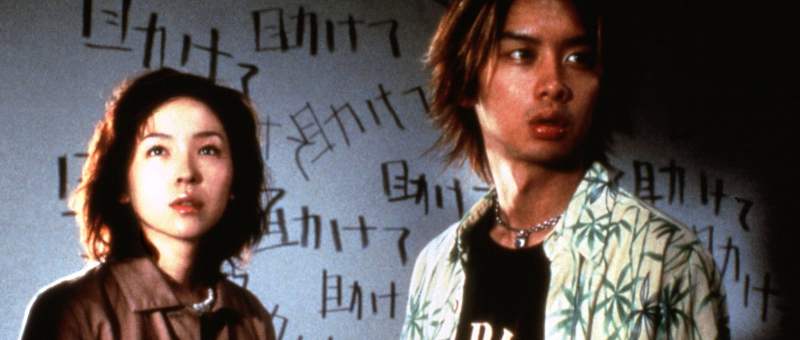
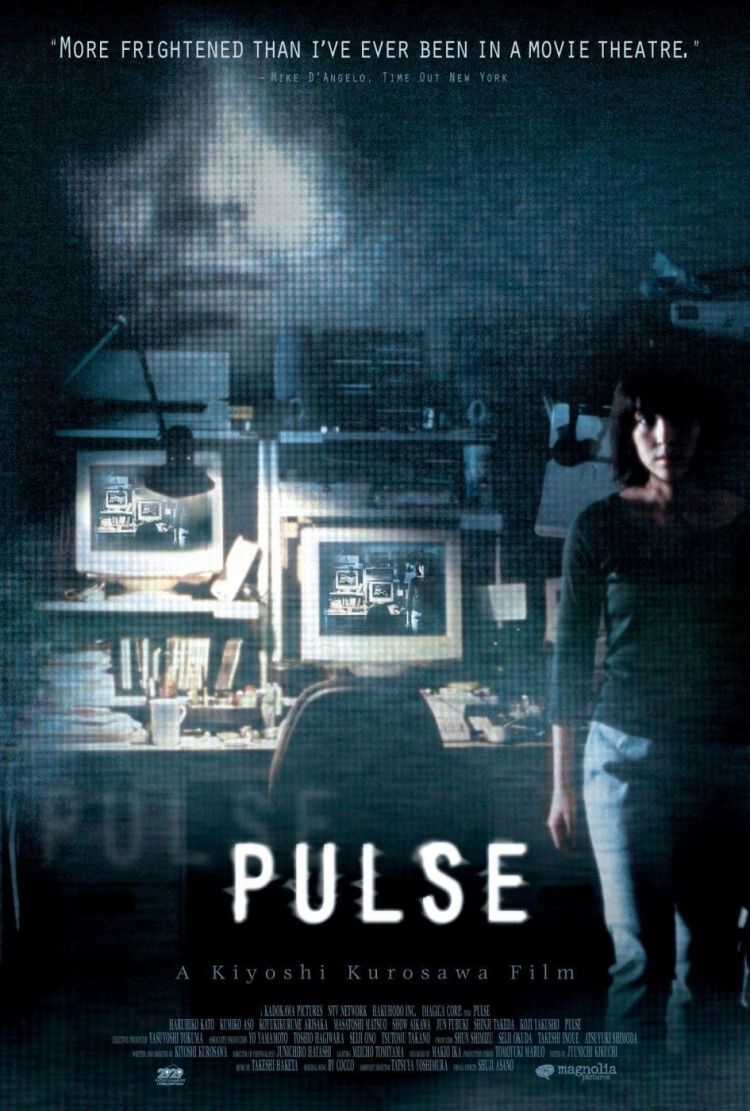 Times change and then they don’t. 2001 was a strange year, once a byword for the future it soon became the past but rather than ushering us into a new era of space exploration and a utopia born of technological advance, it brought us only new anxieties forged by ongoing political instabilities, changes in the world order, and a discomfort in those same advances we were assured would make us free. Japanese cinema, by this time, had become synonymous with horror defined by dripping wet, longhaired ghosts wreaking vengeance against an uncaring world. The genre was almost played out by the time Kiyoshi Kurosawa’s Pulse (回路, Kairo) rolled around, but rather than submitting himself to the inevitability of its demise, Kurosawa took the moribund form and pushed it as far as it could possibility go. Much like the film’s protagonists, Kurosawa determines to go as far as he can in the knowledge that standing still or turning back is consenting to your own obsolescence.
 Festival season is well and truly underway and in the first of two big announcements of today Cannes has confirmed its full lineup. China, HK, and Taiwan are notably absent this year but it’s otherwise a good one for Asian film with five features from Korea (inlcuding two from prolific director Hong Sang-soo) and three from Japan. Scroll down for a checklist by country:
 In the Competition section, Cannes favourite Naomi Kawase returns with her latest movie – Radiance (光, Hikari) which stars An’s Masatoshi Nagase as a photographer slowly losing his eyesight.
 The story of a young girl’s struggle to save her mysterious animal friend from a giant multi-national company, Okja will be streamed worldwide on Netflix from June 28.


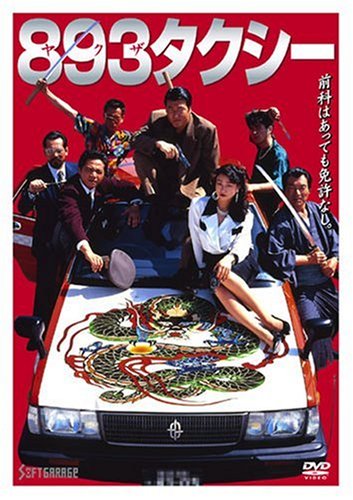 Like many fillmakers of his generation, Kiyoshi Kurosawa began directing commercially in the 1980s working in the pink genre but it was the early ‘90s straight to video boom which provided a career breakthrough. This relatively short lived movement was built on speed where the reliability of the familiar could be harnessed to produce and market low budget genre films with a necessarily high turnover. Kurosawa made his first foray into the V-cinema world in 1994 with the unlikely comedy vehicle Yakuza Taxi (893 タクシー, 893 Taxi). Although Kurosawa had originally accepted the project in the hope of being able to direct a large scale action film, his distaste for the company’s insistence on “jingi” (the yakuza code of honour and humanity) proved something of a barrier but it did, at least, lend free rein to the director’s rather ironic sense of humour.
 How well do you know your neighbours? Perhaps you have one that seems a little bit strange to you, “creepy”, even. Then again, everyone has their quirks, so you leave things at nodding at your “probably harmless” fellow suburbanites and walking away as quickly as possible. The central couple at the centre of Kiyoshi Kurosawa’s return to genre filmmaking Creepy (クリーピー 偽りの隣人, Creepy Itsuwari no Rinjin), based on the novel by Yutaka Maekawa, may have wished they’d better heeded their initial instincts when it comes to dealing with their decidedly odd new neighbours considering the extremely dark territory they’re about to move in to…
