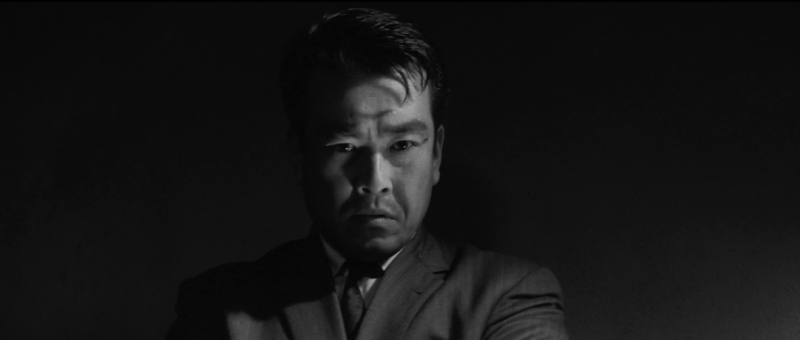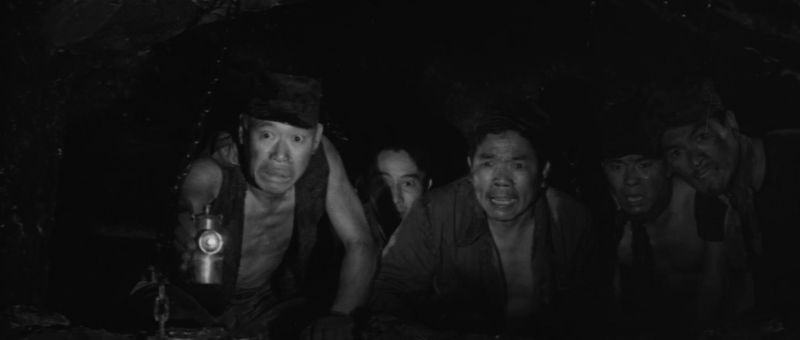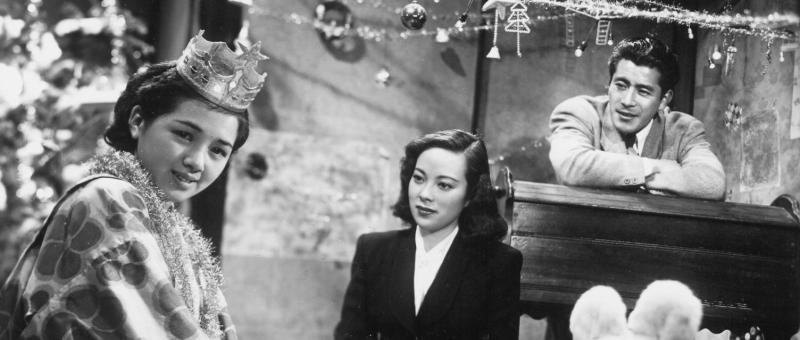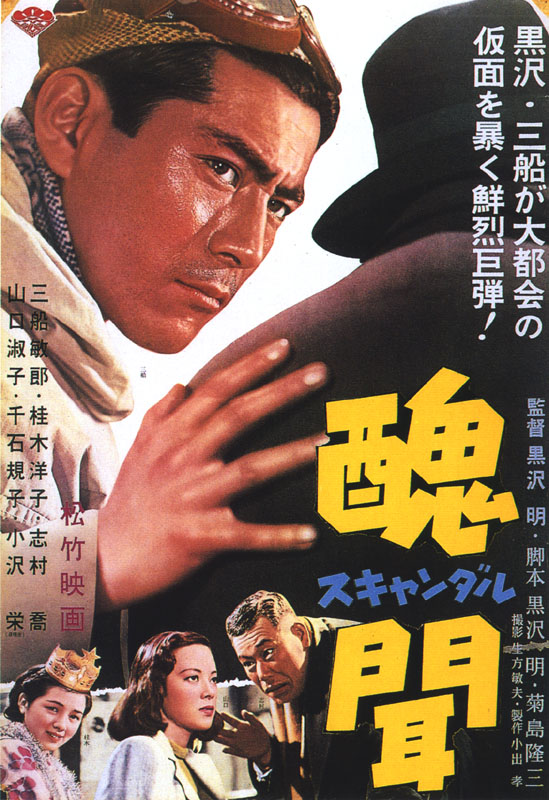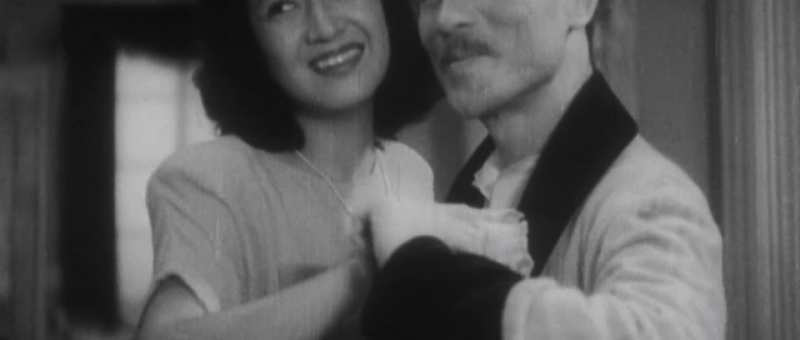
The Ball at the Anjo House (安城家の舞踏会, Kozaburo Yoshimura, 1947)

“Old things die out so new things can be born,” according to the ruined patriarch of a once noble house in Kozaburo Yoshimura’s Chekhovian drama Ball at the Anjo House (安城家の舞踏会, Anjo-ke no butokai), though he might as well be speaking to the post-war society. The Anjos are like the declining aristocracy of the earlier 20th century mourning the disappearance of their world of privilege and gaiety and reflecting that they too must now, as younger daughter Atsuko (Setsuko Hara) says, learn to serve others.

Atsuko is really the only one who accepts the age of the aristocracy has passed and that it is only right and proper that they should join this newly egalitarian, democratic society. Her sister Akiko (Yumeko Aizome) has recently returned home after 12 years having left her husband because of his adultery, but cannot now face it that she no longer has a place here. Approached by their former chauffeur Toyama (Takashi Kanda) who has long carried a torch for her, Akiko snaps that she will always be a noblewoman in heart, unable to let go of outdated customs of class and propriety. She seems to have feelings for the chauffeur too, but won’t let herself embrace them, calling him “dirty” and resenting herself for her attraction to a man who is not her social equal. 

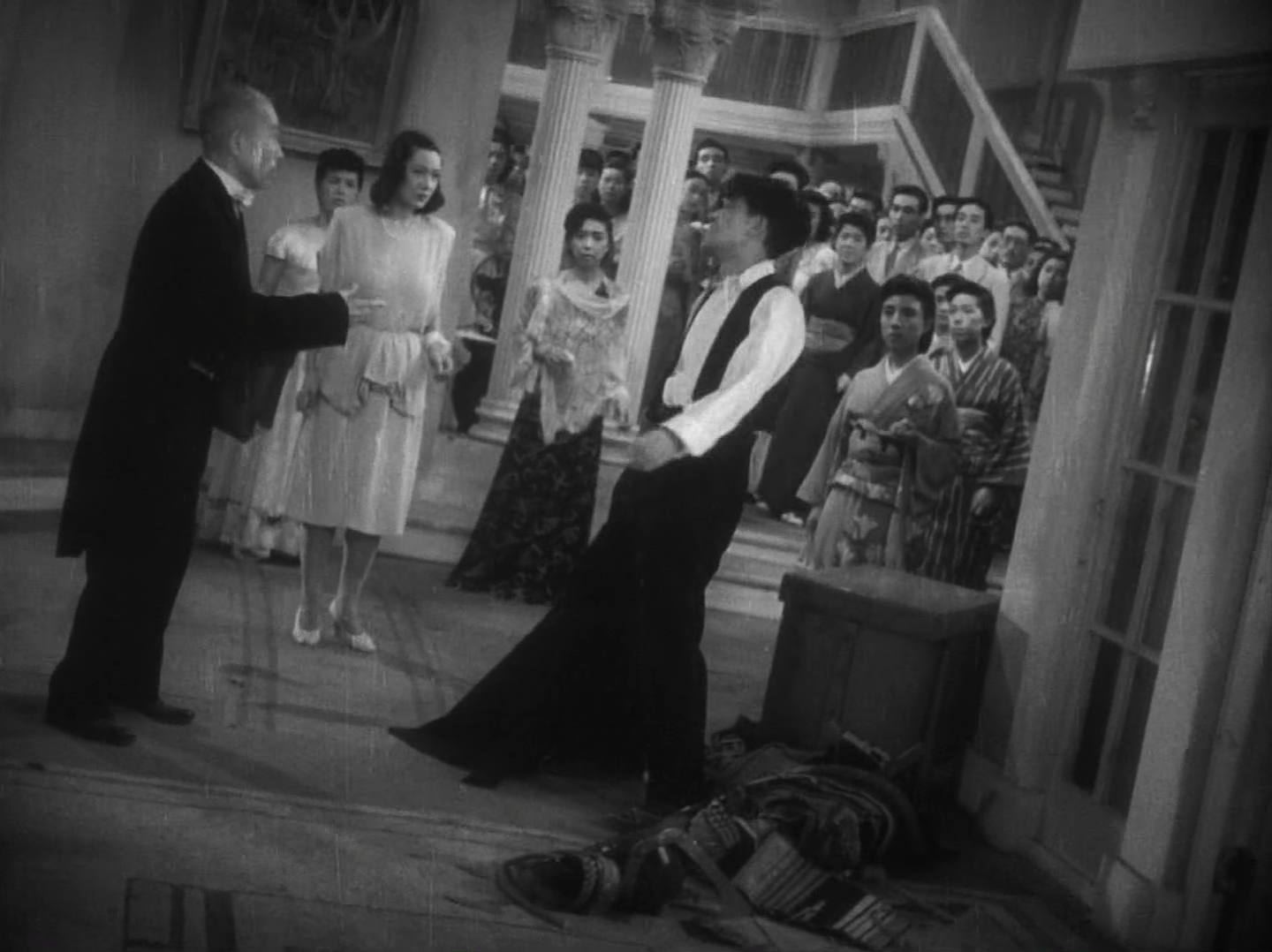
But times are very different now and the aristocracy has been abolished which has in all other senses dissolved the class barrier between them. The tables have turned and Toyama is now a wealthy man having done well for himself in business through honest hard work. Akiko asks him for help as a kind of symbolic gesture as if she were making recompense by handing the house to its rightful owner in their former servant. He insensitively tells patriarch Tadahiko (Osamu Takizawa) that he can easily spare a few thousand to throw away on the house as a sentimental gesture, but does so largely without malice. Only after Akiko has turned him down at the ball and he begins to drink does he start to crow, if a little sadly, that now this base and ugly servant has bought the master’s house. On his way out, he knocks over the suit of armour that had stood in the hall as if literally bringing down the feudalistic military legacy of this once great family and sending it crashing to the floor. The camera suddenly tilts to emphasise that this world is now out of kilter and has been destabilised beyond repair. It’s only this action that frees Akiko from her self-imposed repression as she skips over the armour and chases Toyama out the door. Tumbling down a sand dune she literally descends to his level leaving her pearls and shoes behind. 

The class barrier has been fully dissolved, and Tadahiko too permits himself to marry his long-term mistress, the geisha Chiyo (Chieko Murata), who declares that she doesn’t care about his loss of status and invites him to live with her if he has to sell his house. But it seems as if Tadahiko can’t let go of his ancestral legacy nor his childhood home. In truth, this Western-style country house by the sea can only have been built after the Meiji Restoration which means it’s under a hundred years old and most likely built by Tadahiko’s father, the gentleman in European-style military dress in the portrait. As such, it was likely constructed to look forward to a new era as the samurai class rebranded itself into a European-style aristocracy. Tadahiko’s older sister, married to a lord who’s faring better in this new world, tells an enraptured collection of younger women of the time she danced with a prince a year after the Russo-Japanese war when she was only 19. But this will be the last ball at the Anjo House, in memory of a “beautiful way of life” that has been now been eclipsed.  

Tadahiko had faith that they would be saved essentially through the good chap system in his relationship with a nouveau riche upstart named Shinkawa (Masao Shimizu). Shinkawa holds the mortgage on the house, and there are all sorts of rumours about his shady business. He made most of his money on the black market. Shinkawa had arranged a marriage between his daughter Yoko (Keiko Tsushima) and Tadahiko’s son Masahiko, which gave him even more confidence. But as Atsuko says, Shinkawa was only friendly with him because of his aristocratic title and now it’s gone he has nothing to offer. In marrying Yoko to Masahiko (Masayuki Mori), Shinkawa would have gained the legitimacy of a connection with nobility while Tadahiko would have gained an injection of cash that would save his social status. But none of that matters any more now that the aristocracy has been abolished under the post-war reforms that have also seen Tadahiko’s lands confiscated and estate broken up. It seems that Tadahiko let Shinkawa use his name for a munitions factory during the war, which might not play so well now, just as Akiko’s decision to part with her adulterous husband may also have been influenced by the fact that he was a general who is presumably little in demand in the wake of defeat. Still, Tadahiko prefers Shinkawa to letting the house go to a former servant like Toyama who must himself be enamoured enough with that old world to want to become master of it rather than tear it down.

For Masahiko’s part, he has little interest in marrying Yoko but on learning the engagement has been unilaterally called off and Shinkawa is little more than crook decides to rape Yoko to get back at him. His cruelty is a symptom of post-war nihilism, and we soon discover he’s been sleeping with a maid, Kiku (Akemi Sora), to whom he made promises of marriage he had no intention of keeping. But Like Akiko it seems as if he does care for her after all, only he won’t let himself feel anything in the numbness of his loss of privilege preferring instead to laugh too loudly with his boorish friends. Only on seeing the class barrier dissolve when his father marries Chiyo and his sister Akiko takes off after Toyama does he allow himself to embrace Kiku and express genuine emotion.

Masahiko is played by a young Masayuki Mori who was the son of the novelist Takeo Arishima. Arishima was also a member of the aristocracy but one who became a socialist and dissolved his estate which was something of a fashion in the 1920s. The situation is however complicated by the fact that the Anjos’ servants remain loyal and don’t want to leave them. After all, this is as much their home too and they don’t have anywhere to go either because a world with no masters has no need for servants. We too are encouraged to mourn this world, but its end is also presented as a kind of liberation in which the family are finally permitted to embrace their own desires only after casting off the shackles of the aristocracy and preparing to forge new futures in a changing world leaving the feudal past behind and waltzing into a new and brighter future.
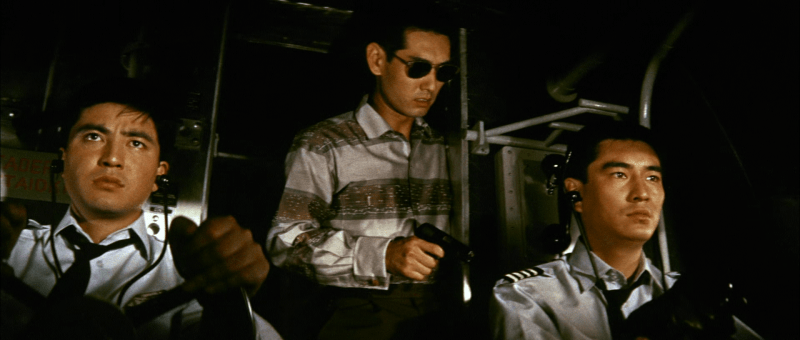
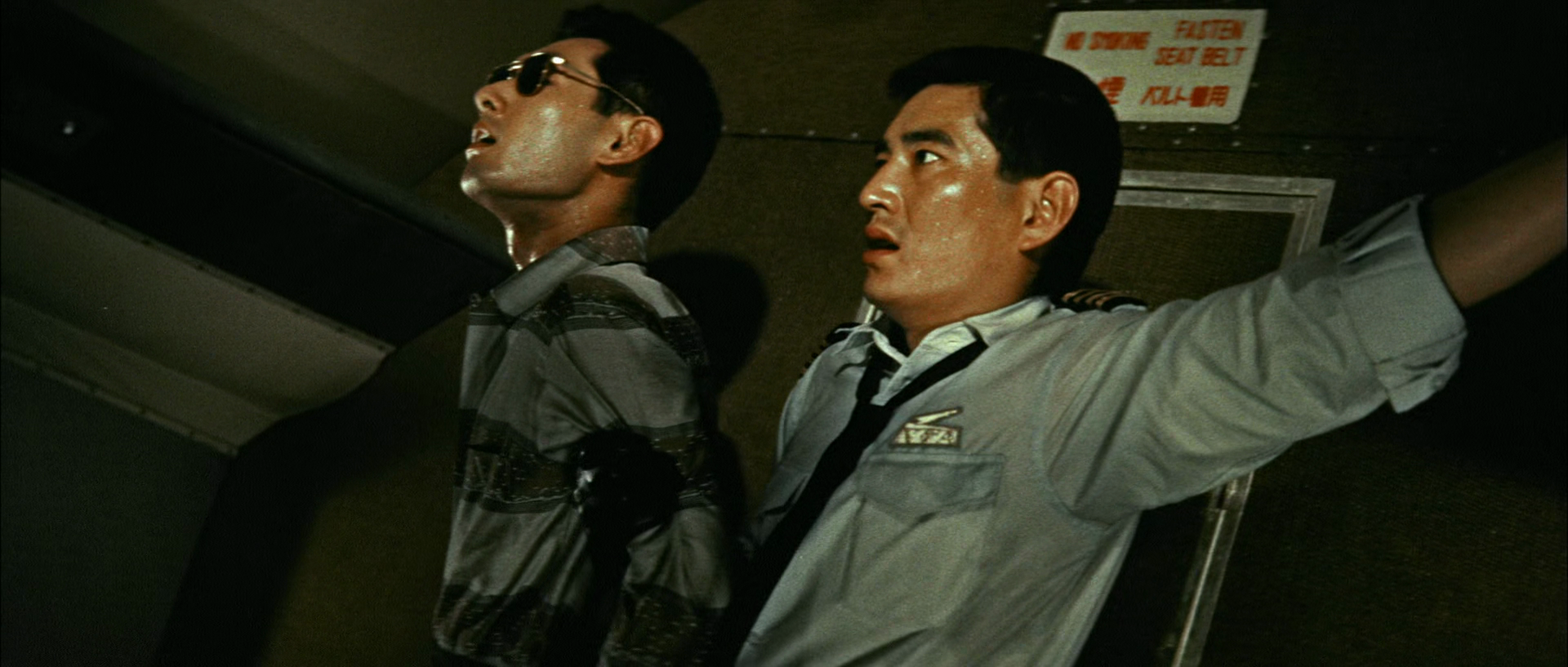
Four Hours of Terror (高度7000米 恐怖の四時間, Tsuneo Kobayashi, 1959)

It seems quite strange now to think of a time when air travel was both new and exciting and as easy as catching a bus. It’s this juxtaposition that Tsuneo Kobayashi’s hijacking thriller Four Hours of Terror (高度7000米 恐怖の四時間, Kodo Nanasen Metoru: Kyofu no Yojikan) plays with as an armed fugitive takes a passenger plane hostage in an attempt to escape after committing a murder while those on board struggle to accommodate themselves to this new form of transportation. 

This sense of exoticisation is obvious from the opening voiceover which sings the praises of Haneda airport as the gateway to a newly internationalised Japan though in actuality the flight in question is a domestic service travelling from Tokyo to Sapporo. The voiceover also introduces us to each of the passengers which come from differing strata of society and even includes a middle-aged American couple. There are in fact three generations of couples on board who seem to represent different stages of life from the newly wed students so wrapped up marital bliss that they barely notice anything else, to a long-married reporter and his wife on their first holiday together since their honeymoon, and an elderly couple returning from a trip to the capital who are mystified by this new age of mass media and air travel. The newlyweds apparently won this free trip on an aeroplane after agreeing to have their wedding broadcast on television in an early example of reality TV, reinforcing the sense of irony that they weren’t necessarily supposed to be on this doomed flight after all. 

Neither was car saleswoman Kazuko (Hitomi Nakahara) who has apparently been pulled away to Sapporo by a short notice business opportunity. She gets a standby ticket, as does her boyfriend/rival Fujio (Tatsuo Umemiya) who is also on track to the same opportunity. Weirdly, Kazuko is not overly sympathetic having randomly kicked a basket containing a little dog about to be smuggled on the plane by its doting owner, but does perhaps represent something of a more independent post-war womanhood even as she effortlessly deflects unwanted attentions from a client she may also have been exploiting in order to obtain his business. Having boarded the plane, she ends up sitting next to another man who requested a standby ticket and was using a surname that was the same as hers but evidently turns out to have been assumed. So lax is the security, you don’t necessarily have to travel under your legal name. In any case, she briefly flirts with him as an overture to a business relationship and also to annoy Fujio before overhearing a news report about the escaped fugitive on her portable radio.

Kida (Fumitake Omura), the fugitive, is dressed like a stereotypical yakuza which makes it odd that no one treats him with suspicion until they spot he’s carrying a gun which he had no trouble at all bringing on board. Though hijackings are not exactly unheard of, they aren’t particularly common either so no one would really suppose anyone had any reason to take a domestic flight to the provinces hostage, and really that was never Kida’s intention merely a last resort after being discovered. Later he gives a partial justification for his life of crime in that his mother beat him and then threw him off a cliff which is why he has a false leg. In any case, there’s a small moment of potential redemption towards the end when the kindly old lady tells him he can’t undo what he’s done, but could still resolve to change assuming they all survive this difficult situation with the plane which now has mechanical problems thanks to the gun going off. 

Even so, it’s the passengers who tie Kida up after the pilot ,Yamamoto (Ken Takakura), manages to disarm him by weaponising the plane. By flying to a high altitude, they knock him out with the air pressure, but are then faced with the mechanical failure of the landing gear which seems to be linked to with Yamamoto’s wartime trauma. A secondary drama revolves around his stoical character with one of the stewardesses apparently in love with him while simultaneously wary of his iciness given that he apparently showed no emotion after receiving the news his wife had passed away but simply flew the plane home as normal. Some see this as his devotion to the aircraft which is in a way a commitment to his duty over his human feelings, the factor that perhaps allows him to save the plane and get the passengers home safely. He is however saved by his love for his late wife with the cigarette case that contains her photo saving him from the worst effects of a bullet. 

The same may go for the co-pilot Hara (Kenji Imai) who is dragging his feet over his marriage to Yamamoto’s sister because he wants to achieve 3000 flight hours before getting married so he can call himself a real pilot. Though the film plants the seeds of these random plot threads and the social commentary that goes with them, it does not particularly engage while the hijacking itself remains fairly low key given that Kida is not a particularly “bad” bad guy. He just wants to go to a random place where the police won’t be waiting for him, but otherwise refrains from harassing the passengers save threatening a little boy travelling on his own to return to his parents after visiting his grandfather in Tokyo. In essence, there’s a kind of innocence and naivety in play which speaks to something of post-war hopefulness and a wonder in the frantic pace of progress in which the day is saved by keeping calm and carrying on even in the face of severe adversity.


Trailer (no subtitles)

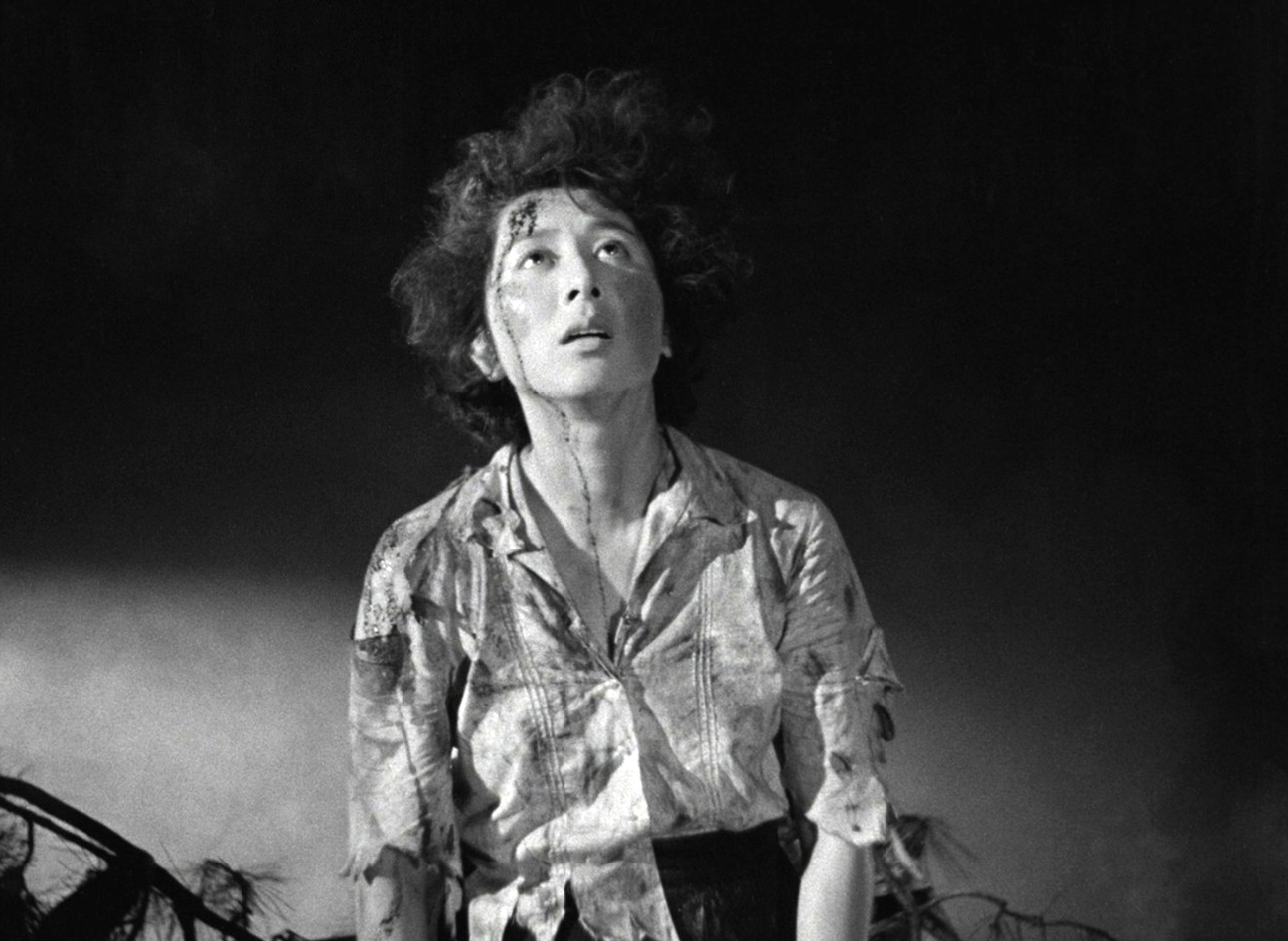
Hiroshima (ひろしま, Hideo Sekigawa, 1953)

During the post-war occupation of Japan which lasted until 1952, the censorship regulations which replaced those of the militarist era perhaps ironically made it more or less impossible to criticise the US presence or depict the extent of wartime devastation lest it raise hostility towards American forces or reinforce a feeling of victimisation. For this reason, images of the atomic bombings were tightly controlled and the events rarely referenced in mainstream media, Hiroshi Shimizu’s Children of the Beehive being a notable if brief exception. Once the occupation was over, however, many assumed it would become easier to broach such taboo subjects. 

Hiroshima native Kaneto Shindo’s comparatively better known Children of Hiroshima, inspired by the book Children of the A Bomb: Testament of the Boys and Girls of Hiroshima, was released in 1952 shortly after the censorship regulations were lifted and stars his later wife Nobuko Otowa as a teacher who returns to Hiroshima to visit the graves of her parents killed in the atomic bombing and thereafter several of the children from a nursery school she once taught at who have survived but continue to suffer in various ways due to their experiences. Despite Shindo’s well known leftist credentials, many including the Japan Teachers’ Union who apparently owned the rights to the book though there is some dispute as to their involvement in the production, were disappointed with the film which they felt to be an overly sentimental studio melodrama that was ultimately unhelpful in supporting the anti-war political movement or accurately representing the hibakusha community. 

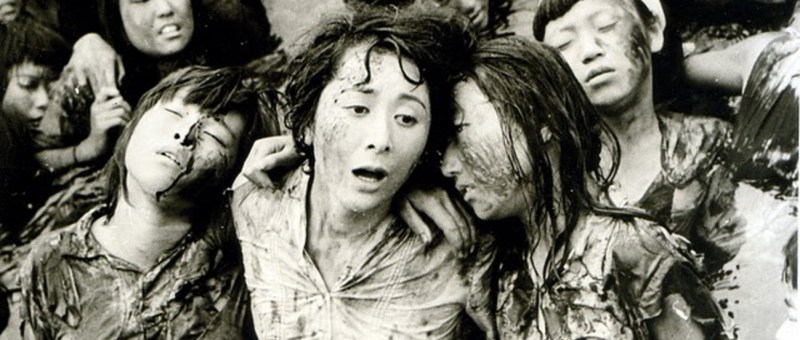
In response, the JTU commissioned a second version in order to better reflect their aims and ideals. Long unseen in either Japan or internationally prior to its recent restoration, Hideo Sekigawa’s Hiroshima (ひろしま) adopts a much more strident docudrama approach while, like Children of Hiroshima, maintaining a focus on the plight of children during the bombing and beyond though it seems somehow unlikely that teachers and parents would be wholeheartedly enthusiastic about showing such a deliberately harrowing piece to a sensitive younger audience. One criticism of Shindo’s film had been that he’d dodged dealing with the bombing itself by concerning himself only with the present-day aftermath. Sekigawa meanwhile focuses directly on the traumatic instant of the attack, utilising expressionistic techniques to recreate the living hell to which the city was reduced literally in flash. 

It’s clear however that the normal of that day was already far from normal. Rather than go about their studies, school children are working hard for the war effort helping to clear extensive bomb damage. A teacher and a class of school girls salvaging roof tiles from a ruined building pause to look at the sky. They can hear bombers but no sirens and it’s in that moment of stillness that everything changes. The world as it was implodes and is left in total collapse. Survivors search desperately for loved ones while stumbling through an unfamiliar landscape filled with crying children, charred bodies, rubble and fire. “This is hell” an injured man groans after managing to make his way to the field hospital, “hell”. 

Sekigawa bookends his tale with a contemporary framing sequence in which an idealistic teacher tries to instil compassionate values in his students some of whom are survivors of the bomb and still living with its effects including one suffering with radiation-related leukaemia who becomes very upset on listening to a radio lesson recounting the morning of the bombing from the point of view of the pilot flying the plane. Another of the students later comes to her defence, taking some of the others to task and lamenting that the suffering of those affected by the A Bomb is not taken seriously while victims still undergo a degree of social stigma even if they have no visible wounds. He is also very worried about his friend, Endo (Yoshi Kato), who later appears in the flashback to the aftermath of the bombing and has apparently gone off the rails, working in a cabaret bar and addicted to pachinko after losing his entire family. 

It’s through Endo that Sekigawa dramatises many of the secondary effects of the bombing in that he was not physically injured but is consumed by a sense of hopeless anxiety, intensely concerned about the prospect of another war and unable to envisage a successful future for himself in a world in which such horror can occur seemingly at random. It’s he who first introduces us to the parasitical disaster tourism that generates a grim trade in A-Bomb “souvenirs” as he passes a stall selling fake skulls as a child and then later attempts to sell actual human remains with inspirational stickers plastered on the top. The “better” future they have imagined for him is however in itself problematic, harking back to the traditional post-war solution of a factory job which directs aligns him with the nation’s push towards a capitalistic society, but is then undercut when he quits not because he is bored or lazy but because he discovered the factory was being used to produce artillery shells and he felt he could have nothing to do with it. 

Endo is also among a group of post-war street kids who learn to say the word “hungry” without knowing what it means to get bread and chocolate from passing Americans. A later more direct speech has them make a formal accusation that the Americans are responsible for the deaths of their parents and therefore bear a responsibility towards them which they should immediately repay with food. Some, including Shochiku who were originally set to distribute but later declined, described the film as overly anti-American, but Hiroshima largely refrains from mentioning the Americans other than a suggestion that the dropping of the bomb was itself a racist act in which they used the Japanese people as guinea pigs to test their new weapon, and focuses on the failure of the militarist authorities to respond in an appropriate fashion. We see a soldier read out a proclamation telling a ragged queue of survivors queuing up for food that the situation is “not unusual” in time of war and they should all return to their jobs despite the fact that there are no longer any buildings in which to work. Meanwhile, militarists talk of using the disaster to foment the war effort by marshalling hate and resentment towards the enemy while commanders refuse to take scientific advice that tells them Hiroshima may be uninhabitable for the next 70 years, obsessed only with continuing the war at all costs ironically insisting that their “fervent will” which “burns as brightly as a million stars” will bring them an assured victory.  

In the face of a second bombing, however, they are forced to accept that the war cannot continue, many of the victims left perplexed and defeated that despite their suffering the government has unconditionally surrendered and seemingly abandoned them. An abnegation of responsibility is also suggested by the presence of the street kids abandoned by their society and left to fend for themselves though Endo is eventually taken into a progressive care home from which he and other boys make numerous attempts to escape, in his case in the hope that he can find the sister from whom he became separated. Sekigawa does not make suggestions for the future, merely depict the difficult post-war reality while arguing for greater compassion in the contemporary era, one bomb survivor describing her despair in the knowledge that her disability is a barrier to marriage while finding work that can be done with her physical limitations is also difficult as is accessing government support. Sekigawa too may give in to a particular kind of sentimentality in the closing moments but it is indeed undoubtedly effective as a reminder of the human cost of war and our collective responsibility to ensure that it never happens again.


Mermaid Legend (人魚伝説, Toshiharu Ikeda, 1984)

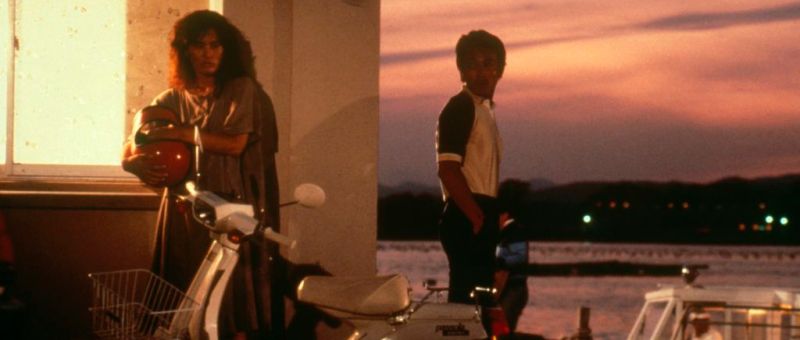
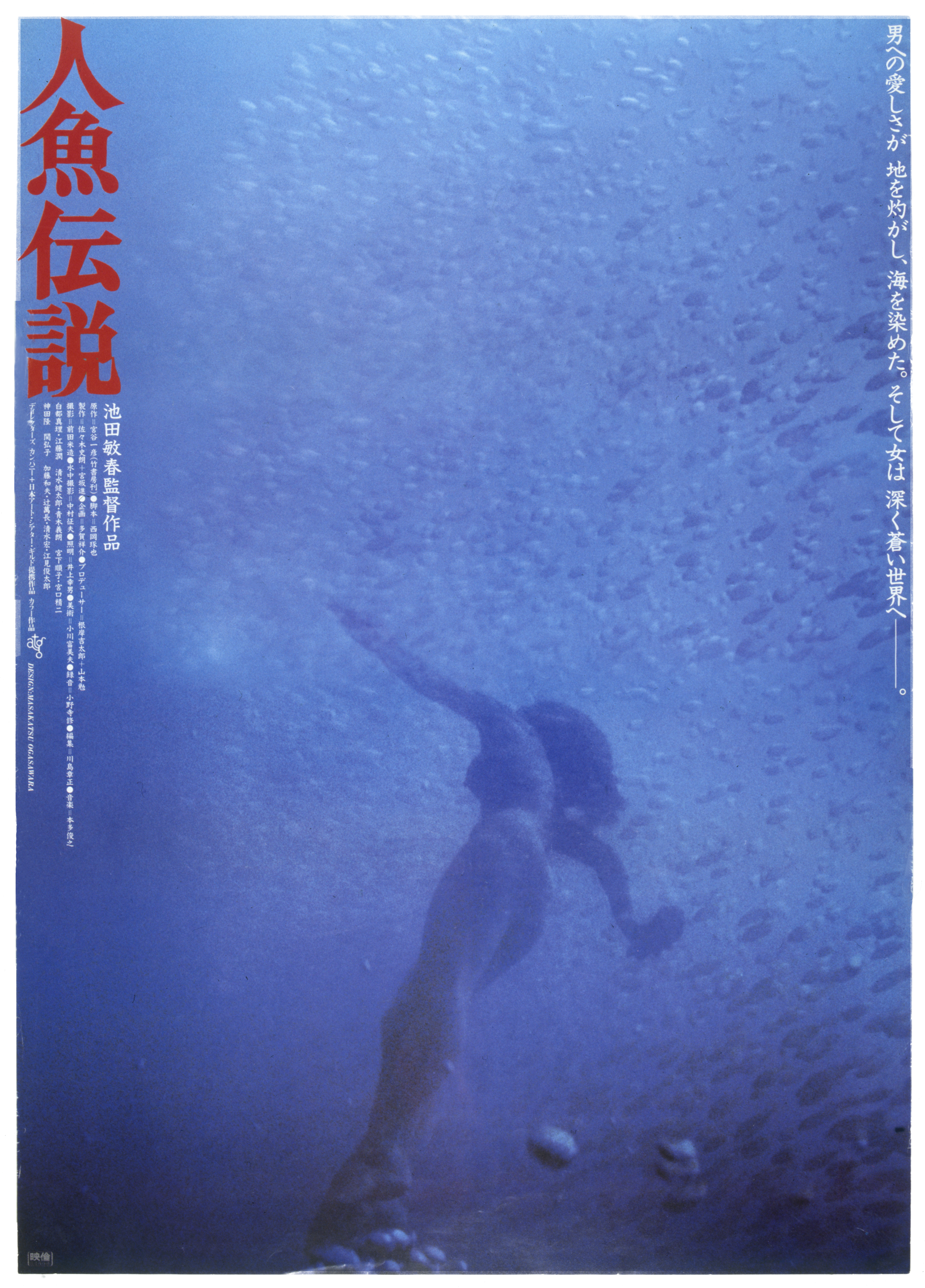
“Even if someone kills you, you wouldn’t die,” a drunken husband somewhat sarcastically replies having pledged to come back and haunt his wife if he died and she married a man who didn’t drink. His words take on a prophetic quality given that the heroine of Toshiharu Ikeda’s Mermaid Legend (人魚伝説, Ningyo Densetsu) takes on a quasi-supernatural quality as an embodiment of nature’s revenge after someone tries, and fails, to kill her having already killed her husband for witnessing their murder of another man who’d tried to resist their plans of buying up half the town to build a nuclear plant. 

By the mid-1980s, Japan’s economy had fully recovered from post-war privation and was heading into an era of unprecedented prosperity which is to say that the coming of a power plant was not welcomed with the same degree of hope and excitement as it may have been in the 1950s when it was sold not only as a new source of employment for moribund small towns but an engine that would fuel the new post-war society. Several industrial scandals such as the Minamata disease had indeed left those in rural areas fearful of the consequences of entering a faustian pact with big business, which is one reason why the guys from Kinki Electric Power sell it as an amusement park project though even this has the locals wary not just of the disruption it will bring to their lives and potential ruin of their livelihoods which are dependent on the protection of the natural environment but that what is promised simply won’t be delivered. Fisherman Keisuke (Jun Eto) says as much when lamenting a previous aquaculture programme which didn’t pan out and caused lasting damage to marine life. 

In any case, as others say there’s no money in going out to sea anymore and its clear that the old-fashioned, traditional way of life practiced by Keisuke and his newlywed wife Migiwa (Mari Shirato) is no longer sustainable. Migiwa is an abalone diver working without modern equipment but using heavy weights to dive deep enough to reach the shells. As such she’s dependent on her husband to pull her back up to the boat when she tugs the rope. She must put her life entirely in his hands though in truth, he does not seem to take his responsibility all that seriously. The couple bicker relentlessly and not even she really believes him when he says he witnessed a murder which might be understandable given the extent of his drinking. All of which is further evidence against her when she manages to escape from the assassination plot and runs straight to the nearest policeman who thanks her for turning herself in implying he believes she is responsible for Keisuke’s death. 

The possible collusion of the policeman hints as a further sense of distrust in authority which has become far too close to corporate interests. Shady industrialist Miyamoto (Yoshiro Aoki) ropes in both the mayor and the head of the fishing association in his talks with Kinki Electric Power along with Shimogawa from the local tourist board who evidently opposes the plans as he is the man Keisuke witnesses being murdered. As Miyamoto says “sometimes your hands get a little dirty” though he never “directly” involves himself matters such as these. The situation is complicated by an unresolved love triangle between Miyamoto’s spineless son Shohei (Kentaro Shimizu), a sometime photographer, who is resentful of Keisuke and in love with Migiwa complaining that Keisuke always outdrinks him and gets the girl too hinting at his sense of wounded masculinity. Isolated by his class difference, he appears not to approve of his father’s actions but later does little to stop them and eventually sides with corporate interest over his feelings for Migiwa who in any case seems to have become more attached to Keisuke following his death which she vows to avenge. 

There is there is something quite strange in the prophetical quality of Keisuke’s words also predicting the “black sweat” of the Jizo on the beach and the mystical storm which does eventually sweep everything clean destroying the signs for the new nuclear power plant already installed on the beach. In this way, Migiwa becomes a vengeful force of nature taking up arms against those who wilfully ravage and pollute the natural environment while damaging the lives of those who lived on its shores such as herself and Keisuke. She takes revenge not only for the murder of her husband by corrupt capitalists but against that corruption itself even as she laments that “no matter how many I kill, they just keep coming.” “Don’t worry, maybe all this was just a dream,” Keisuke once again prophetically intones though it’s difficult to know if it’s defeating the capitalist order that is a fantasy or the maintenance of the idealised rural life to which Migiwa seemingly finds her way back swimming into an unpolluted sea surrounded by the floating barrels of ama divers and clear blue skies, a creature of nature once again.


Mermaid Legend screened as part of this year’s JAPAN CUTS.

The Wolves (狼, Kaneto Shindo, 1955)

Post-war desperation drives a collection of otherwise honest men and women towards a criminal act that for all its politeness they are ill-equipped to live with in Kaneto Shindo’s biting social drama The Wolves (狼, Okami). “Wolves” is what the criminals are branded, but the title hints more at the wolfish society which threatens to swallow them whole. After all, it’s eat or be eaten in this dog eat dog world, at least according to a cynical insurance salesman hellbent on exploiting those without means. 

Each of the five “criminals” is an employee at Toyo Insurance where they’re immediately pitted against each other, reminded that in order to qualify for a full-time position they need to meet their quotas for six months. The orientation meeting is cultilke in its intensity, the boss insisting that only in insurance can you become a self-made man while recounting his own epiphany as to the worthiness of his profession. They are told that the only two things they need are “faith and honesty”, and then “faith and pursuasion”, while encouraged to think of their work as an act of “worship”, “for the salvation of everyone”. 

Yet they’re also told to exploit their friends and family by pressuring them into taking out life insurance policies in order to help them meet their quotas. As one man points out, friends and relatives of the poor are likely to be poor themselves, but these are exactly the kind of people they’re expected to target. They’re told there’s no point going after the weathly because they’re already insured, but there’s something doubly insidious in trying to coax desperate people who can’t quite afford to feed themselves into paying out money they don’t have on the promise of protecting their families from ruin. One man even asks if the policy covers suicide and is told it does if you pay in for a year, sighing that he doesn’t want to wait that long.

“Suicide or robbery, choose one,” one of the salespeople reflects after failing to make their quota once again. They each have reasons to be desperate, all of them already excluded from the mainstream society and uncertain how they will find work if the job falls through. Akiko (Nobuko Otowa) is a war widow with a young son who is being bullied at school because of his cleft palate for which he needs an expensive operation. She’s already tried working as a bar hostess but is quiet by nature and found little success with it. Fujibayashi (Sanae Takasugi) is widowed too with two children and five months behind rent for a dingy flat in a bomb damaged slum where the landlord is about to turn off her electric. Harajima (Jun Hamamura) used to work in a bank but was fired for joining a union and is trapped in a toxic marriage to woman looking for material comfort he can’t offer. Mikawa (Taiji Tonoyama) too is resented by his wife, a former dancer, having lost his factory job to a workplace injury while the ageing Yoshikawa (Ichiro Sugai) was once a famous screenwriter but as he explains people in the film industry turn cold when you’re not hot stuff any more. 

Their unlikely descent into crime has its own kind of inevitability in the crushing impossibility of their lives. They may rationalise that what they’re doing is no different from the insurance company that exploits the vulnerable for its own gain, thinking that if they can just get a little ahead they’d be alright while feeling as if robbery and suicide are the only choices left to them and at the end of the day they want to survive. Perhaps you could call them “wolves” for that, but they’re the kind of wolves that give the guards from the cash van they robbed their train fare home after bowing profusely in apology. The real wolves are those like Toyo who think nothing of devouring the weakness of others, promising the poor the future they can’t afford while draining what little they have left out of them. As the film opens, Akiko looks down at a bug writhing in the dirt attacked by ants from all sides and perhaps recognises herself in that image as the sun beats down oppressively on both of them. Breaking into expressionistic storms and unsubtly driving past a US airbase to make clear the source of the decline, Shindo paints a bleak picture of the post-war world as a land of venal wolves which makes criminals of us all. 


Invasion of the Neptune Men (宇宙快速船, Koji Ota, 1961)

Japan was well on the way to economic recovery by 1961, but the newly prosperous society also gave rise to other anxieties and most particularly in the light of the Cold War and space race with the nation fearful of falling behind in scientific development. Or at least, that’s something that particularly bothers the young heroes of Koji Ota’s kids tokusatsu, Invasion of the Neptune Men (宇宙快速船, Uchu Kaisokusen), in which the nation’s failure to build a space rocket is conflated with its traditional visions of masculinity. 

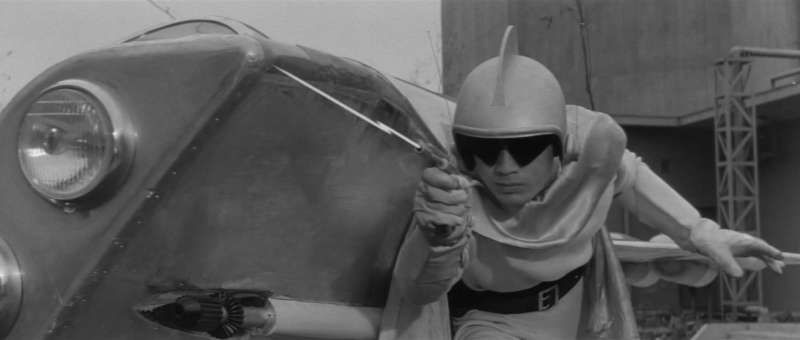
At least, the boys all agree that Tachibana (Shinichi Chiba), a young scientist who runs a kind of club with them at the research facility where he works, is pretty great but also a bit of a wimp who failed to stand up to some bullies who were hassling him at a local cinema. They think it would be better if he were cool, re-imagining him as a kind of tokusatsu hero named “Iron Sharp” for whom they even come up with a theme song. As part of their club activities watching satellites, the kids accidentally stumble across a spaceship belonging to Neptune men who are planning to invade though obviously as they are children no one really believes them until the Neptune men start causing other forms of destruction. 

Attacked, the kids are saved by the hero they themselves made up flying in on a car/plane/spaceship though he too doesn’t really have a lot time for them and the kids don’t even really notice he looks a lot like Tachibana who is noticeably absent from the lab whenever he’s around. Even so, this being a kids film the major the problem is that no one else takes the boys very seriously, save Tachibana himself, leaving them to save the day on their own while the grown-ups argue amongst themselves. 

Getting people to argue amongst themselves turns out to be part of the aliens’ mission in exploiting Cold War paranoia to start world war three. The first attack results in a mushroom cloud which must have been fairly painful symbolism though the Americans immediately blame Russia who blame the US in return asking if they’re really intent on starting a nuclear war. The kids wonder why grownups are always so suspicious of other countries, hinting at a desire for a less xenophobic society eventually echoed in the calls for worldwide unity to defeat the Neptune men while otherwise repeatedly emphasising that Japan can’t be left behind by the US and Russia in the space race. 

Then again, there is something quite troubling in the fact that the invading Neptune men who’ve taken on human form appear as soldiers but wearing prominent feminine makeup, re-echoing the boys’ concerns regarding science and masculinity while introducing a seemingly unintentional dose of homophobia into the threat posed by the aliens who otherwise wield destructive nuclear powers echoing the atomic bomb in using their ray guns to vaporise their targets who then leave shadow imprints of themselves where they disappeared. The main weapon used to combat them is science, Tachibana and his boss, the father of one of the boys, coming up with an ingenious electric shield and then a series of magnetic rockets which allow them to shoot down the Neptunian’s ship. 

In this case, science is the “good” force that combats the “bad” use of nuclear weapons this time rendered alien rather than manmade therefore neutering the debate surrounding their use and the responsibilities involved with their discovery. Tachibana, the thinly disguised Iron Sharp, then becomes a hero of science racing round in his custom car and largely defeating the Neptunians through a more primal kind of hand to hand violence while embodying the kind of cool masculinity the boys the otherwise feared he lacked which is to say that unlike his real life guise, Iron Sharp is perfectly capable of standing up to “bullies” like extraterrestrial invaders. Reusing some of the effects footage from The Last War, the film emphasises the need for world unity and the end of the Cold War, but also sells a slightly contradictory, mildly nationalist message insisting that Japan can’t fall far behind technologically or will essentially be at the mercy of Russia and America, Tachibana having travelled to Moscow to assist with the creation of a new spaceship. Spurred on by their adventures, the kids all vow to become great inventors protecting Japan through their innovations, going on to explore Mars and Venus hinting at a new sense of possibility in the post-war society but also mindful of its geopolitical realities.


The Desperate (どろ犬, Takaharu Saeki, 1964)

A bruiser cop railing against the system is pulled towards the dark side in Takaharu Saeki’s icy noir, The Desperate (どろ犬, Doro Inu). Adapted from a novel by Shoji Yuki, the film is one of only two Saeki directed in an otherwise lengthy career mainly spent in television and captures an eerie sense of existential dread as its detective hero sinks to even greater depths in a quest for self preservation while kicking back against the hypocrisies of the post-war society. 

As one officer puts it, Sugai (Minoru Oki) is one of many veteran officers who can’t adjust to new codes of justice in the democratic era. In the film’s opening sequence, he’s pulled aside and warned about using excessive force on a suspect only to counter that he knows the guy’s guilty so he doesn’t see what the problem is. Sugai had been particularly motivated about this case as the victim was an 18-year-old girl raped after accepting a lift from a stranger. She was so traumatised that she could hardly speak but did remember the registration plate of the car. She’d only been working because her father lost his factory job though he appears to have begun drinking and is abusive towards his daughter for her silence, later coming to the station to drop the charges after being paid off by the suspect’s lawyer. The legal definition of rape in this era is founded not on an idea of consent but whether violence was involved and the victim can be proved to have resisted physically. The guilty party, Tomita (Hideo Murota) claims that nothing illegal transpired in his car and then walks away with a smirk when his lawyer gets him off the hook. It’s all too much for Sugai to bear, resentful that the rich and powerful are now effectively above the law thanks to legislation he feels ties his hands as a police officer. 

It’s at this point he runs into petty yakuza Yamaguchi (Ko Nishimura) whom he’s been trying to turn as an informant, unwisely mouthing off about his dissatisfaction with contemporary law enforcement only for Yamaguchi to turn the tables and effectively blackmail him having discovered that Sugai has begun a relationship with the estranged wife of an imprisoned gangster. In an act of petty revenge and desperation, Sugai leaks info on “guilty” suspects who weren’t charged to Yamaguchi who exacts financial justice by extorting them for money while threatening to expose their immorality. 

Disappointed in him, the gangster’s wife, Chiyo (Chisako Hara), exclaims that Sugai’s no different from her husband and in truth he isn’t. Part of Sugai’s resentment lies in the fact his wife left him for another man while he was on a stakeout, frightened by his violence and insisting that she hated detectives. His old-fashioned police tactics include taking suspects to the dojo where beats the living daylights out of them. Later he tells another, more earnest officer, he reminds him of himself when he was younger implying that he has become corrupted by the times and the impossibility of justice, particularly for young women whom he feels an urge to protect, in a world ruled by money and status. He may feel some pangs of guilt for a rookie who is unfairly fingered as the mole on the grounds that he and Yamaguchi were originally from the same area and had a past acquaintance, but in the end is happy enough to scapegoat him for his wrongdoing while he continues trying to dig himself out a hole but falling still further into the abyss. 

Sugai is merely trying to save his own skin, but those around him are desperate too. His opposite number, Toku (Hisashi Igawa) is desperate to clear his name, while Chiyo is desperate for what she describes as a proper marriage to a proper man while seemingly kept captive in the apartment Sugai rents for her on his meagre police salary but does not live in himself. She wants to work and has an innocent desire to buy him some better shoes that he otherwise resents in its implied challenge to his masculinity that he evidently cannot afford all this additional expense coupled with the strain of keeping his problematic relationship with a gangster’s wife secret from his employers. In the end he claims that the problem was he couldn’t escape from being a detective, pushed into desperate acts of destruction as a man now exiled from his times unable to move on from post-war chaos into a newly democratic, consumerist Japan. Saeki ends his fatalistic vision with an image of a train reeling backwards, echoing the degree to which Sugai has lost control of his life and himself no longer a detective but only a man without a moral compass whose path can only lead in one direction. 


The Eleventh Hour (どたんば, Tomu Uchida, 1957)

The problematic working practices of a post-war coal mine are thrown into stark relief when five men are trapped underground during a collapse in Tomu Uchida’s tense rescue drama, The Eleventh Hour (どたんば, Dotanba). Based on a TV play which was itself inspired by real events, the title alone tells us that we can expect a happy ending even if it’s somewhat undercut by the cynical quality of the fanfare with which it is greeted. Nevertheless, it’s clear that the mine itself reflects a dark side of the contemporary society even as it rocketed towards an economic miracle at least on one level fuelled by coal. 

The Towa mine is a small concern run by the owner, Sunaga (Yoshi Kato), who was a miner himself in his younger days, and the chief engineer Kusaka (Shin Tonomura). In the opening scenes it becomes apparent that they are having difficulty running the business effectively while chasing lucrative large-scale contracts. Kusaka pulls Sunaga aside and attempts to warn him that recent attempts to fit a replacement support beam have caused the structure to shift with the effect that it has begun leaking water. The implication is that Sunaga has attempted to cut corners and endangered the miners’ safety. He barely listens to Kusaka’s complaint before barking at him that it’s his responsibility to take care of, and he must be aware of the cost implications involved seeing as he more than anyone knows how hard it is to run this kind of business. 

Unfortunately for him, a sudden rainstorm spells disaster when the mine begins to flood. Some workers still underground are able to escape thorough a support tunnel that connects to another mine, but five are trapped at the other end having managed to climb to a higher shelf above the water. In the rain-soaked soil, some of the above ground structure also begins to collapse, while to his credit a distraught Sunaga calls in the police and miners’ union as soon as possible rather than trying to cover up the disaster to hide his mismanagement. 

For all that, Sunaga is not a stereotypically exploitative mine owner so much as a bad businessman possibly in over his head though as a former miner he should have known better. On the one hand, he had only just found out about the unstable support arch and could not have fixed it before the disaster but as he himself agrees he bears the ultimately responsibility for the way the mine was run which includes skimping on repairs and inspections. More than anyone else, he wants the men to be rescued alive and later tearfully tells his wife that he has considered suicide but is now resolved to sell the mine and his own home to compensate the families should the worst happen. Kusaka later does try to take his own life after witnessing the rescue effort flounder, a Buddhist priest later suggesting that his act may have been intended as a kind of human sacrifice as if he could save the men’s lives by offering up his own. 

Then again, the way some of the men put it it seems like some mine owners view the compensation money for workers killed on the job as a kind of fine they’re prepared to pay to maximise profits. The film briefly introduces the circumstances of the some of the men and their families, one a husband and father who asks for an advance on his pay because his wife and daughter are ill with something that could turn out to be measles. The amount of the compensation money isn’t clear, but may not be enough for a widow to raise a five-year-old daughter to adulthood. If these men die, their families may die with them. Other relatives waiting for news include an elderly man anxious for his only son, and a grandmother waiting for her grandson who only went to the mine to have a look around before potentially starting to work there. 

In the case of the young Yamaguchi (Shinjiro Ebara), the film hints at the way the industrialisation presented by the mine has disrupted local communities as farmers’ sons leave the land for the promise of better pay for working underground. Yamaguchi is taking the job because his father is ill with some kind of neurological complaint, possibly caused by industrial pollution, and he has argued with his brother presumably about money and the responsibility of earning his keep. While underground, he runs into a friend of his father’s, Banno (Takashi Shimura), who tells him that mining is not a job you can do for life and he himself seems far too old to be doing such physically strenuous work though he is the only one almost able to stand when the men are eventually lifted from the mine. 

A veteran miner, Banno too is perhaps complacent. He smokes underground and blows the cigarette out after every puff but only to avoid carbon monoxide rather than a potential explosion. Trapped underground twice before, he does his best to comfort the other men while reassuring them that their colleagues are working to rescue them as they speak. Most of the mine workers from the surrounding area have indeed come to help, along with a specialist rescue team from Tokyo, though they make little progress with the tools available to them. As a journalist puts it, small enterprises don’t have access to the same resources as large corporations and cannot simply order in larger pumps or better diggers. Many of the workers want want to give up with the main support coming from the korean miners from a neighbouring town though they get little thanks for the efforts. After overhearing a frustrated member of the rescue team employ a racist stereotype to describe them as lazy drunks only after money, they withdraw their labour. 

Sunaga is later forced to go back to the Koreans cap in hand with a personal apology, but though some of them are personally sympathetic they remark on the level of discrimination they’ve faced for the entirety of their careers and aren’t sure why they should help Sunaga now considering the way they’ve been treated. On a side note, standard workers protections would not apply if they were killed or injured during a rescue attempt meaning they’d be risking their families’ lives as well as their own for men who are almost certainly already dead. It’s not surprising that they overwhelmingly vote not to help leaving a dejected Sunaga devoid of all hope. 

Nevertheless, they eventually reconsider reflecting that if they were trapped underground they’d want to believe someone was coming and if they don’t come now then they won’t have any right to expect them to. It is workers’ solidarity that eventually saves the miners, from winch operator Michi (Masako Nakamura) who refuses to leave her post so that the men won’t feel “abandoned” to those who arrive to rejoin the rescue effort just when it seems the most hopeless. The solution to cracking the mine is found only by listening to a former employee who hints at its dark history in reminding them of a secret support tunnel sealed up after the war once military equipment had removed.

It might be tempting to read an allegorical message into the solution being the need to blast through the buried wartime past to rescue the men trapped on the other side though it may be a bit of a stretch. In any case the action outside is also somewhat ironic. As the mine collapse becomes national news and attracts rubbernecking crowds, a man turns up to sell ice cream, while journalists also report on the event from the close by. They seem broadly hopeful, but are also looking for a good story and all too quick to report on Kusaka’s suicide attempt. When the men are eventually rescued, they order a helicopter to drop confetti over the surrounding area (possibly unhelpful to local farmers) along with a bouquet for each of the men. Uchida had some experience of working in a mine during his time in Manchuria which had permanently ruined his health and had first hand knowledge of how a mine works and what happens when something goes wrong which explains the otherwise naturalistic opening sequence laying out the conveyor belt design of the complex as the coal is picked and transferred into pick up trucks that will take it to its new owners. It is however “dark and wet like hell” underground, a place that ideally no one should have to go and that all should eventually be rescued from. 


Cantankerous Edo (大江戸喧嘩纏, Kiyoshi Saeki, 1957)

A noble-hearted samurai on the run falls for a fireman’s sister in Kiyoshi Saeki’s hugely enjoyable jidaigeki musical adventure Cantankerous Edo (大江戸喧嘩纏, Oedo Kenka Matoi). Another vehicle for Hibari Misora and samurai movie star Hashizo Okawa, Saeki’s wholesome drama finds its heroes not only standing up to the oppressions of a rigid class system but also taking on a bunch of entitled sumo wrestlers intent on throwing their weight around having apparently lost sight of the tenets of traditional sumo wrestling such as fighting for justice and having a kind heart. 

To begin at the beginning, however, young samurai Shinzaburo (Hashizo Okawa) is on the run believing that he has accidentally killed another man who attacked him in order to clear the path towards his fiancée, Otae (Hiroko Sakuramachi), whom he wasn’t going to marry anyway because he realised she was in love with someone else and wanted to help marry him instead. Having escaped to Edo, he takes refuge inside a parade of firemen lead by Tatsugoro (Ryutaro Otomo) and his feisty sister Oyuki (Hibari Misora) who decide to take him in after hearing his story. Adopting the simpler, common name of “Shinza” he begins life as a fireman and gradually falls for Oyuki but remains a wanted man constantly dodging the attentions of his uncle, the local inquisitor, and the magistrates. 

More a vehicle for Okawa than Misora who plays a relatively subdued role save for boldly stealing the standard and climbing a roof herself when the others are delayed, Cantankerous Edo takes aim not particularly at a corrupt social order but of the oppressive nature of class divisions as Shinza discovers a sense of freedom and possibility he was previously denied as a samurai while living as a common man. It’s this desire for personal autonomy and the freedom to follow one’s heart that led to his exile from his clan, unwilling to marry a woman he knew not only did not love him but in fact loved someone else and would have been forever miserable if forced to marry him out of duty alone. “The life of a samurai who has to be somebody or not to suit another’s convenience is utterly stupid” he bluntly tells his uncle and Otae’s father, “how you cling onto family status, heritage, and honour. All that fuss, I hate it.” he adds before turning to Otae and encouraging her too to stand up to her father and insist on marrying the man she loves rather than be traded to another. 

Meanwhile, the two women exchange some contradictory messages about the nature of class and womanhood, the samurai lady Otae confessing that she isn’t sure she’s strong enough to fight for love in the face of tradition and filial duty in contrast to Oyuki’s spirited defence of Shinza the fireman insisting that firemen don’t think about such trivial things as name or family status before throwing themselves into harm’s way for the public good. “All women are weak” Otae sighs, Oyuki replying that they need to be strong for the men they love, “that’s what it means to be a woman”. Love may be in this sense a force of liberation, destabilising the social order but also a means of improving it, yet it still reduces women to a supporting role ironically as perhaps the film does to Misora who in contrast to some of her feistier performances takes something of a back seat. 

Romance aside, the main drama revolves around a conflict between the local sumo wrestlers who have turned into thuggish louts under their boorish leader Yotsuguruma (Nakajiro Tomita), taking against the fireman and forever spoiling for a fight. The samurai proving unexpectedly understanding, the sumo wrestlers become the main source of oppression in usurping a class status they don’t really have. The noble Tatusgoro tries to stave off the fight insisting that they aren’t brawling yakuza but responsible firemen here to serve the public good and should save their energy for fighting fires rather than their obnoxious neighbours. Nevertheless the fight cannot be held off forever. Tatsugoro is forced to redefine the nature of “fire” after hearing a warning bell informing him one of his men is in grave danger unable to manage their anger anymore.  

Saeki’s jidaigeki musical has surprisingly good production values for a Toei programmer, making space for a few songs along the way celebrating the valour of the firemen while Oyuki meditates on her potentially impossible romance and the perils of love across the class divide. While the conclusion may end up ironically reinforcing the hierarchical society, it does however make the case for the right to romantic freedom along with the necessity of human compassion in the face of inconsiderate arrogance and intimidation.


Note: This film is sometimes titled “Fight Festival in Edo” but according to Eirin’s database, the official English-language title is “Cantankerous Edo”. Rather confusingly, a very similar film with a very similar title (大江戸喧嘩まつり) was produced in colour at Toei in 1961 and is known as “Fight Festival in Edo” in English. Meanwhile, Hibari Misora also starred in another colour film with a very similar storyline in 1958 (唄祭りかんざし纏) which is known as “Girl with the Fire Banner” in English but listed as “Festival of Song” on Eirin’s database.

Scandal (醜聞, Akira Kurosawa, 1950)

“Freedom of the press or harassment?” The more things change, the more they stay the same. Akira Kurosawa’s attack on the declining moral standards of the post-war society as reflected in the duplicity of the gutter press has unexpected resonance in the present day in which the media is simultaneously unwilling to challenge authority and in thrall to the populist allure of celebrity gossip with sometimes tragic results. The aptly named Scandal (醜聞) is essentially a morality tale which draws additional power from its seasonal setting and embodies the soul of the contemporary society in a conflicted lawyer consumed by internal struggle against despair and hopelessness. 

The more literal scandal however revolves around a well known singer, Miyako Saijo (Yoshiko (Shirley) Yamaguchi), and a motorcycle-riding artist, Ichiro Aoe (Toshiro Mifune), who meet by chance while staying at the same remote mountain inn. Having ironically headed to the mountains to escape the various “annoying things” that plague her in the city, Miyako has been pursued by two muckrakers from the tabloid press who take umbrage at her refusal to see them. They are then fairly delighted when they manage to snap a picture of Ichiro and Miyako standing on her balcony looking out at the mountains like a young couple in love. They deliver the photo to their seedy boss, Hori (Eitaro Ozawa), who is over the moon with excitement at his new business prospects. Suddenly Ichiro and Miyako are on posters all around the city with headlines such as “Love on a Motorcycle” and “Miyako Saijo’s secret love – revealed!”. 

Though Ichiro is a semi-public figure himself having been featured in magazine spreads as an artist on the rise, he is not a worldly man and is shocked by the idea that the press can make something up and print it with no consequences. He feels he must resist not just on a personal level angry to have been misrepresented but for the post-war future to ensure that the press is held to account and that it does not misuse its power to breach the privacy of ordinary citizens. To his mind, they only get away with it because most people just ignore them and wait for the scandal to pass, a sentiment born out by Hori who dismisses a concerned underling with the reminder that they’ve never yet been sued so they need have no fear saying whatever they like whether it’s true or not. “The kind of snobs we target think the law is beneath them” he adds, suggesting that most people prefer to think of the gutter press as something they can safely ignore and that it’s only themselves that they show up in their torrid obsession with the lives of others. 

But Hori also ironically defends his right to press freedom and quickly hits back that he’s being oppressed by those who wish to silence his right to free speech even when what he’s saying isn’t true. Lawyer Hiruta (Takashi Shimura) who offers to represent Ichiro in his lawsuit quickly identifies Hori as a duplicitous conman but also allows himself to be manipulated accidentally accepting a bribe after being led to believe that Hori has a top legal expert on retainer and the case is hopeless unless Miyako, who has so far maintained a dignified silence, can be persuaded to join as co-plaintiff. Ichiro had decided to accept Hiruta’s offer of representation largely on meeting his teenage daughter, Masako (Yoko Katsuragi), who has been bedridden with TB for the last five years. Masako is a pure soul whose isolation from the contemporary society has allowed her to maintain her innocence and humanity but it’s also true that it’s the society that made her ill in the first place.

The morality play reaches a climax on Christmas Day as Ichiro delivers a tree on his motorbike while Miyako sings carols for a radiant Masako who is at least sitting up and looking much healthier than she’s ever been before. But the more Hiruta debases himself, caught between an accidental debt to Hori, his own lack of conviction, and the frustrated desire to do right, the sicker she gets as if poisoned by post-war duplicity. Even so, Ichiro continues to defend him insisting that Hiruta isn’t a bad person just a weak one and that in the end he won’t be able to go through with betraying him but will eventually come clean and tell the truth when it counts. Ichiro’s faith is as much in the institutions of the new democratic Japan as it is in Hiruta as he explains at the trial admitting that he may have been naive in placing too much trust in the legal system thinking that he couldn’t lose because he knows he’s in the right. As the opposition lawyer points out, that’s not a very good legal argument because his client thinks he’s in the right too only he doesn’t know that Hori is both a liar and an idiot who’s staked everything on the assumption that Hiruta won’t expose him for bribery, which would at least strongly imply he can’t back up his story, because it would mean destroying himself. 

In the end it’s Hiruta who puts himself on trial, baring his soul to the court which he acknowledges he has betrayed in his negligence and wilful obstruction of justice. It’s a victory for truth and decency and a turn away from the duplicitous, capitalistic mores of men like Hori who think they can do whatever they want and only laugh at those who value fairness and compassion. “In all my 50 years I’ve never seen a more confused age” Hiruta explains speaking of post-war chaos and the forced comprises of the intervening years of despair and desperation. As he coaxes the denizens of a small bar into an early rendition of Auld Lang Syne on Christmas Day, each vowing that this time next year things really will be better, many of them breakdown in frustrated longing drowning their sorrows as they continue to yearn for better times they do not really believe will come. But then like all the best Christmas films, this is also a redemption story of a man who decided that it wasn’t too late after all and that he might have to destroy himself in order make himself anew and be the man his daughter always knew he could be even if in the end he could not save her from the ravages of the post-war society.


Scandal screens at the BFI Southbank, London on 10th & 24th January 2023 as part of the Kurosawa season.