The Period of Her (Erlina Rakhmawati, Yulinda Andriyani, Praditha Blifa, Sarah Adilah, 2025)

Four emerging female filmmakers explore the experiences of women in contemporary Indonesia in anthology film The Period of Her. Though in different styles and approaching the issues from different angles, each of the segments highlights the ways in which women suffer disproportionately due to double standards in a fiercely patriarchal culture, from being prevented from following their dreams to being trapped at home by an abusive partner expecting total obedience from his wife.

Perhaps the clearest indication of this is that the women are expected to scrub their sanitary pads to remove “dirty” blood even though they are disposable and will just be thrown away. Women are often seen trying to wash blood stains out of their clothes and towels as if expected to hide the evidence of their womanhood. Nisa gets her period during swimming training and is immediately forced to reckon with her sudden entrance into adulthood. Though she enjoyed swimming and was good at it, now that she is a woman it is no longer permitted. They tell her that she’s polluting the water, while it’s now improper for her to wear “revealing” swimming costumes. At first, she tried to keep it a secret from her school friends, but once they find out she has to dress differently, marking her out as an “adult”, though she is clearly still a child no different from the other girls. Though her male teammate doesn’t agree with the way she’s being treated and just wants to swim with her again, he is eventually picked to represent the school while Nisa is forced to retire. She takes a used, unscrubbed, sanitary towel and smears blood over the display cabinet featuring all her trophies and certificates for which the school has taken all the credit.

Nisa’s mother had also wanted to pursue her dream of swimming, but was pulled into an early marriage meaning she had to give it up which isn’t what she wants for Nisa. But motherhood is it seems the only role for a woman. Wati also turns down her husband’s sexual advances because of her menstrual cramps, but he too becomes angry and is apparently fed up with her inability to conceive a child after five years of marriage. He says this is the reason that he married her, but, at the same time, refuses to be examined by a doctor unwilling to consider that the issue may lie with him. His family have called her a failure as a wife, while Watik complains that she’s struggled for five years trying to prove her husband’s manhood. When she comes across an abandoned baby, it seems like all her problems are solved, though her husband is unhappy complaining that he wanted her to have his child, not raise someone else’s, and then bizarrely taking them both to a brothel in search of help.

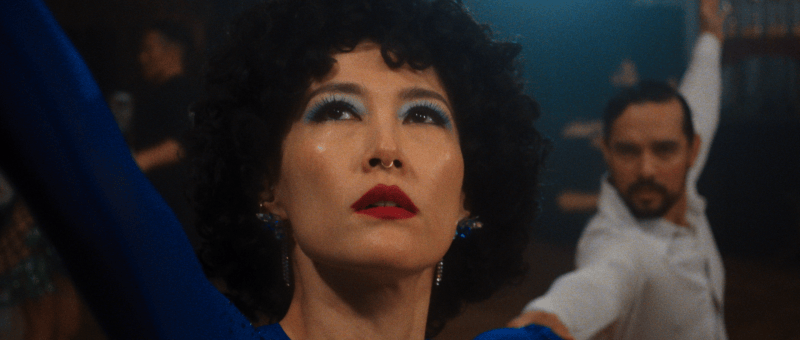
Rendi, a cheating boyfriend, similarly says he can do what he likes and smirks that his girlfriend, Shela, wasn’t a virgin anyway so he doesn’t owe her anything even if they slept together. The girl she caught him with, Desi, tells her that Rendi said he was bored with her, though he’s evidently made no attempt to end the relationship or treat Shela as anything other than object. She can’t really challenge him, but becomes so enraged during the traditional dance she’s performing that the MC has to stop it for her safety. Nevertheless, she pretends to be possessed by a spirit to call Rendi out, seeing as he’s at the festival in the guise of a “virgin shaman”. Despite the animosity that might exist between them, the episode ends on a note of female solidarity as Shela and Desi share a drink on the way home, laughing together as they ride away on their motorbikes.

An inversion of this female solidarity can be seen in the final segment, Not Dead Enough, in which an overbearing husband drops dead of a heart attack after picking up a machete to attack his previously meek wife who has been pushed to breaking point by his uselessness. On waking up, he discovers himself in a world in which gender roles have been completely reversed. He is now bullied by his domineering wife and a host of female debt collectors, not to mention casually sexually harassed even though he’s not really allowed to go out of his house. He has only the solidarity of the other husbands who try to help and take care of him. In place of hijabs, they wear bicycle helmets on their heads, and are expected to serve their wives with absolute obedience. Experiencing period pain for the first time along with the threat of violence from his wife and other women, Kempas gets a taste of his own medicine and realises what it’s like to live as a woman in this society, though he never really gets the opportunity to put what he’s learned into practice and be a better man and husband. Each of the women is, in their own way, trapped by the patriarchal order and struggling to find a way to live while looked down on and dismissed by men who think it’s their birthright to be served and take each refusal as an assault on their manhood.


The Period of Her screens in Amsterdam 9th/10th April as part of this year’s CinemAsia Film Festival.

Trailer (English subtitles)
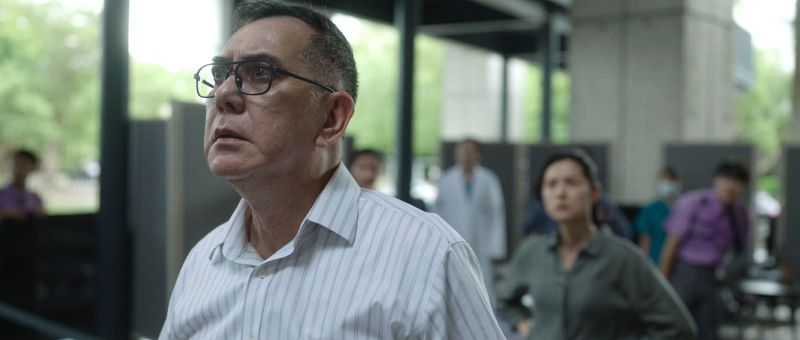
Becoming Human (ជាតិជាមនុស្សា, Polen Ly, 2025)

In a way, all cinemas are haunted spaces. They echo and replay time while becoming repositories for the thoughts and feelings of all who walk through their doors. Perhaps that’s why many of them feel so human, as if they really had a soul. Or perhaps they steal a little bit of ours and hide it away behind the screen. The cinema in Polen Ly’s Becoming Human (ជាតិជាមនុស្សា), however, really does have a spirit of its own now facing eviction as it, too, is to be torn down to make way for a new that no one may really want. 

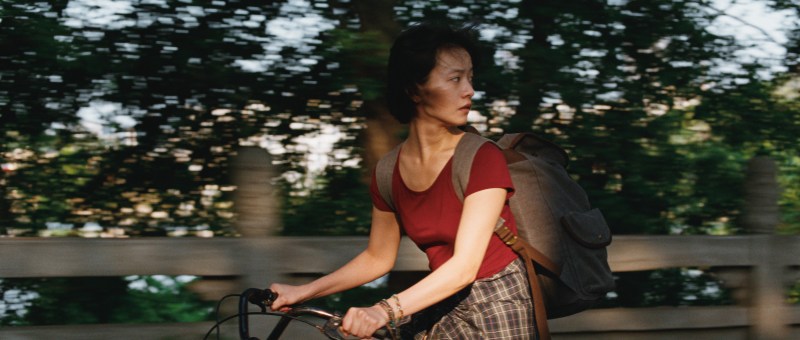
This feeling of unwilling displacement and rootlessness echoes through the film, not the least in the figure of the woman across the way cleaning out her late mother’s home. She looks lovingly at a tree on the rooftop knowing she will never see it again and this last memory of her childhood will not last much longer. Her son sarcastically asks her why she doesn’t take it with her and the house too for that matter if she likes them so much. She would if she could, she replies, with a tone that suggests she’s put out not have the option of doing so. Thida, the cinema ghost, is also in search of a tree, one that once stood outside her childhood home, though she’s no idea if either of them are still there now. She’s rooted to this place, or more precisely to a small shrine inside it that is later rather unceremoniously put out for the bin men with the rest of the demolition refuse. 

But Hai, a young photographer weary of his life as a journalist in a world in which no one wants to talk about anything serious, is also in his way haunting this space. He tells Thida that he has no home to go back to. Abandoned as a child, he took shelter in a pagoda which, when Thida breaks free and visits it, looks much like the ruined cinema with the light streaming in from above. Now the pagoda is to be torn down too, this time for a quarry which is slowly destroying the very landscape in levelling mountains to build tall buildings in other places. After being sent off for rebirth, Thida encounters a woman who used to be the guardian spirit of a lake, but has learned to live with changing times. Nevertheless, she laments that the lake was filled in to build more apartment blocks and shopping centres for the wealthy. The lake, meanwhile, was used by the poor villagers to water their crops and provided them with fish. The villagers were made into wandering ghosts too. They lost their homes, went to prison for protesting, or took their own lives because they could not find a place for themselves in this changing landscape.

Thida resisted rebirth because her suffering was too great in this life and she’s no desire to repeat it. Being a ghost’s not all that bad, she insists, but there are reasons she can’t move on and in, someways, it’s the country that’s haunting her rather than she it, much as her presence provides both comfort and melancholy for Hai who perhaps risks becoming trapped in nostalgia for a lost past he never really knew. He sings old songs in the abandoned cinema, while ironically playing a classic film for Thida on his smartphone. Perhaps in a way this demonstrates that things don’t disappear so much as merely migrate. Somewhere, the film is always playing even it’s just echoing in the ears of Thida and Hai as they look for new homes in a place where it feels as if the foundations are always been dug out from underneath them.

Still, Thida is also a temporal ghost carrying with her the lingering trauma of a war that continues to scar a landscape if only in its empty spaces. Given the ability to go anywhere, Thida realises there is nowhere to go but home. She grasps the grass where her house once was and seems to make peace with something. Nevertheless, in the end she can’t let it go, choosing to take her memories with her however painful they might be. This land is being reborn too, dying and being rebuilt, while in some respects at least forgetting itself while simultaneously unable to move on from its past.


Becoming Human screens in Amsterdam 8th, 10th, and 12th April as part of this year’s CinemAsia Film Festival.

Trailer (English subtitles)
Beyond the Fire: The Life of Japan’s First Pride Parade Pioneer (熱狂をこえて, Hiroaki Matsuoka, 2026)

Hiroaki Matsuoka’s documentary Beyond the Fire: The Life of Japan’s First Pride Parade Pioneer (熱狂をこえて, Nekkyo wo Koete) follows the life of Teishiro Minami who started the first Pride parade to take place in Japan in 1994. The film is not, however, an exercise in hagiography and examines Minami’s troubled legacy as someone whose attempts to control the movement ended up destroying it and leading to tragic and unforeseen circumstances. The parade has since been reborn under Tokyo Rainbow Pride which aims for greater inclusivity for sexual minorities and operates out of a community hub where all are welcome.

As for Minami, he was born in 1931 on the island of Sakhalin which was eventually taken by the Russians during the war. The family evacuated to Akita to live with his mother’s relatives, but his father refused to come with them and remained behind. This sense of physical dislocation and displacement only deepened Minami’s sense of rootlessness and lack of belonging having figured out his sexuality while hanging out with part-timers at his family’s shop. With his mother having to support the family single-handed, Minami was keen to start working and got a civil service job after high school working in the local prosecutor’s office. Once his father returned, he asked for a transfer to Tokyo and began looking for the mysterious “House of Secrets” and the gay world he’d read about in magazines.

But after failing to gain a promotion, Minami resigned due to a discomfort about the way of thinking at the prosecutor’s office. His repeated decisions to resign from most of the jobs he held echoes his forthrightness, but also an unwillingness to compromise or inability to work with others who might not agree with him. He quits his job in broadcasting in part because he overhears his colleagues using slur words and speaking disparagingly about men like him which makes his workplace an unpleasant and unsafe environment, though times being what they were he couldn’t exactly complain about it. Most of the men he meets at gay bars when he finally discovers them are unable to be out at work and some of them are married, only able to live their gay lives at weekends. Minami too gets married out of a sense of social obligation and to give his mother grandchildren. As an older man, he seems to feel guilty about the way he abandoned his wife and children to live a more authentic life, but also seeks no kind of reconciliation.

His path to Pride began with a series of gay-themed magazines and a meeting with international activist Bill Schiller who convinced him that the gay rights movement was something that could make a difference in Japan. Having travelled to San Francisco and witnessed the Pride parade there, he begins planning one in Japan but despite the success of the first event, internal divisions came to the fore. The biggest of these was that though Minami had followed Schiller’s example and included lesbians in the movement, he’d largely done it for cynical reasons and really had no interest in working with them, admitting to finding women difficult in general. Admitting now that he went too far, the real crisis arrived when Minami tried to turn the third Pride parade into an exclusively political event, banning outlandish outfits or celebratory behaviour. He intended the parade to end in a rally in which they’d adopt a manifesto he’d written by himself without discussing it with the wider community. When some of them protested, a member of Minami’s team was heard to ask what the women were even doing there, making it clear that the organising committee believed this to be an event solely for gay men. Minami then took back control by excluding women from the committee entirely.

In some ways, his story is a cautionary tale about how strong personalities with a need for control can derail a movement or risk turning it into a vanity project. A young man who’d worked as a part of Minami’s team and had stayed to mediate when protestors stormed the stage later took his own life in despair with the direction things had taken. Many had been uncertain a Pride parade would work in Japan given the levels of hostility and the risks involved for those taking part. Their fear was that no one would come, but attendance was much greater than expected and many joined the parade later, encouraged by seeing that others had already done so and they were not alone. Though many praise Minami’s efforts and activism, not only with the Pride parade but during the AIDS crisis, and acknowledge the importance of his courage in taking the first step towards creating a gay rights movement, they also question his methods and motivations. Using a mixture of animation, archive footage, and talking heads interviews, the film does its best to record this landmark moment in the history of Japan’s LGBTQ+ community through the eyes of an elder statesman but never shies away from his mistakes if only in seeking to learn from them.


Beyond the Fire: The Life of Japan’s First Pride Parade Pioneer screened as part of this year’s BFI Flare.

Trailer (English subtitles)

April (丟包阿公到我家, Freddy Tang Fu-ruei, 2025)

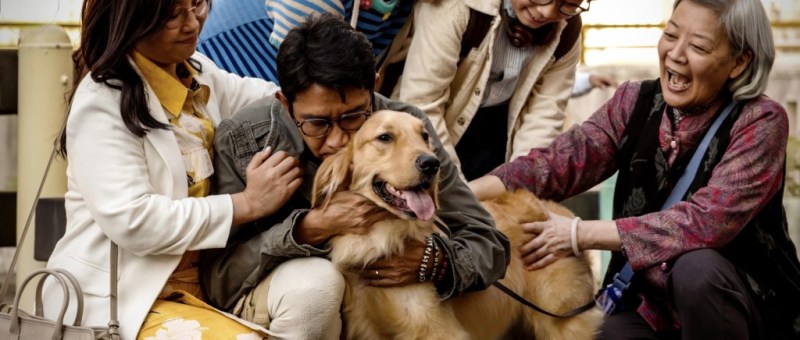
Ah-Ting (Zhang Xiao-xiong), an elderly man whose children mistakenly think is living with dementia because they just don’t really have anything to say to each other, says that he feels like a ball no one wants that they’re trying to kick as far away as possible. When his long-term carer April (Angel Aquino), who they call “Ah-po” because they can’t really be bothered with her name, wants to go back to the Philippines to see her dying mother, the children are reluctant to let her go and even go as far as saying that dying takes ages, so there’s no need to rush back. They have their own lives and don’t want to take care of their father nor do they want to have to pay someone else to cover April’s absence.

In the end, the only way that April can return to the Philippines is if she takes Ah-Ting with her. It’s an unusual arrangement, but highlights the way in which each of them has become somewhat abstracted from their families and exists only as a shadow presence hovering on the edges. Ah-Wei (Liu Kuan-ting), Ah-Ting’s youngest son who has just been released from prison, also feels like an unwanted ball to be kicked down the road, and may ironically come to identify with his father despite the animosity that’s existed between them since he was a child. Having nowhere else to go, Ah-Wei goes home, but is sort of relieved that his father isn’t there while the empty house gives him a place to reset and figure out how to start again as someone with a criminal conviction who can’t find conventional employment and is viewed with suspicion. 

The irony is that, as someone who worked abroad looking after someone else’s family, April was separated from her own but fails to see the gulf that’s emerged between her children and herself. While she resumes her role as their birth mother, they point out that she didn’t raise them. The image she has of her son and daughter is self-constructed, while she is fixated on providing a “better” future for them that neither of them want. In her absence, her daughter Luisa has essentially been forced to take on a maternal role looking after the house and her younger brother as well as her bedridden grandmother. April keeps pushing her son Diwa to study, citing a childhood dream of becoming a police officer which is quite obviously not what he wants to do now, while Luisa needles her that there was never any money available for her to study nor would she have been able to with all of these other responsibilities.

Still just as Ah-Ting rejected Ah-Wei, April reasserts her authoritarian parenting style in trying to push her children towards futures she thinks are better while her husband reminds them that everyone’s happy as they are, which is presumably what she wanted when she decided to sacrifice herself for the family by going abroad. In an ironic touch, Ah-Ting had told the neighbours Ah-Wei had become a doctor in Taipei rather than have them know his son was in prison, while April had wanted to be a doctor but had to give up her studies because she became pregnant with Luisa, had to get married, and resign herself to domesticity. Her life was defined by the conservative and patriarchal social codes of the Philippines, yet she pushes them onto her children at the same time harbouring a degree of resentment that she had to sacrifice her dreams for motherhood. She makes her husband fire his apprentice after finding out he’s dating Luisa because she thinks she can do “better”, while disparaging her husband’s line of work by complaining that he’s “just” a carpenter. She tells her neighbours that she works in a factory rather than admit she’s a maid as if she were ashamed to be working in service. 

It’s not exactly that the children are ungrateful, but as Diwa points out they never asked for this sacrifice to be made on their behalf and may have perhaps preferred a less comfortable life with their mother as opposed to feeling indebted as if they’re expected to do as their mother wants because of all she’s done for them. But what both April and Ah-Ting learn is that their rigid parenting styles haven’t done them any favours. They have to let their children be free and support them on their own paths rather than insisting that they do as their parents say. Through spending time with April’s family, Ah-Ting begins to learn to embrace his own, while Ah-Wei begins to accept himself by being accepted by a local woman. Which is to say, there’s an implication that this kind of care probably shouldn’t be outsourced, but no real solution proposed for how to manage caring for each other with all the economic pressures of the contemporary society. Nevertheless, there is a genuine sense of warmth in the remaking of these families as supportive and accepting rather than ruled by a sense of obligation or aspiration.


April screens in Chicago 2nd April as part of the 20th edition of Asian Pop-Up Cinema.

Trailer (English subtitles)

The Deepest Space in Us (そこにきみはいて, Yasutomo Chikuma, 2025)

The dress code at Kaori’s office doesn’t seem to be all that formal, but for some reason she alone looks like she’s going to a funeral. As it turns out, there’s a reason for that, but it also reflects the way that her job makes her feel dead inside and how she’s made to feel by a judgemental society that refuses to accept her as she is but punishes and excludes her for living outside of its expected norms and social codes.

Kaori (Momoko Fukuchi) doesn’t usually attend the team’s after work drinking parties, but is dragged along this time only to sit impassively ignoring everyone until a couple of drunk guys press her for her first love story and then ask a series of invasive questions about what kind of guys are her type. There are obviously a lot of assumptions in play here, and their obsessive probing borders on harassment. Kaori eventually gets up and leaves, but is chased by one of the guys who tries to ask her out. She tells him directly that she’s not interested because she doesn’t experience sexual attraction or desire, but that’s like a red flag to a bull for a certain sort of guy and this one laughs in her face after tearing her shirt as she tries to get away. People simply don’t believe her when she tells them, or else they conclude that there’s something wrong her that needs to be cured. She too feels as if she’s “not normal”, and is pressured by a society in which it’s still marriage and children that are the benchmarks of social success for a woman.

That’s one reason she bonds so easily with Takeru (Kanichiro), the lawyer who handled the probate for her estranged late mother’s estate which Kaori declined to inherit. Takeru tells her that he has something he wants to reject too, and it’s true enough that, to begin with, Kaori may be trying to reject her asexuality. She tries to initiate sex with Takeru in order to overcome it, but it isn’t something that either of them can go through with. Though he tells her that he has someone he can’t forget much as he’d like to, Takeru does not disclose that he is gay because of the intense shame he feels about his sexuality. Kaori evidently had a difficult childhood with a mother who was physically abusive towards her and thereafter raised in foster homes, while Takeru’s conservative mother (Mariko Tsutsui) seems to have instilled in him the same anxieties that plague Kaori in expecting him to marry and have children. Takeru’s former lover, Shingo (film director Ryutaro Nakagawa), has married a woman he doesn’t seem to like for convenience’s sake. Ten years after he and Takeru parted, Shingo is now a successful novelist writing populist fare that he secretly hates himself for knowing he’s writing for others and not himself. 

They all, in their way, attempt bury their true selves to achieve social success through heteronormative marriages, but Takeru and Kaori slowly discover that whatever joy they may have found in their mutual decision to overcome their self-loathing in a platonic union, it won’t work. They each at different times end up in the same hotel room with a hookup date staring a black mark on a wall that comes to represent an internal void. Realising that he will not be able to reject his homosexuality nor get over the grief and sense of loss he feels in Shingo’s rejection, Takeru eventually takes his own life. Struggling to understand why, Kaori ends up on a strange road trip with Shingo in which it’s never quite clear whether she fully realises he is Takeru’s former lover, or has already figured everything out and is trying to help him accept himself as a means of atoning for being unable to help Takeru do the same.

Her trip also strangely brings her into contact with a woman from her office who once claimed to hate her, but has now come to apologise while also looking, like Kaori, for some kind of acceptance and recognition. She says that she too hates herself, sure that men are only ever interested in sex and never in her. Eventually making a pass at Kaori, she admits that for some reason she is only able to be honest with her rather than her friends, family, or lovers. Nevertheless, though Kaori rejects her romantic advances, this simple act of unburdening and watching the sunrise together in silence seems to clear the air and grant both women a kind of peace.

Besides her sexual identity, Kaori seems to have a degree of trouble in dealing with people that suggests neurodivergence, but also longs for acceptance and companionship. While processing Takeru’s death and leading Shingo towards an acceptance of himself, she too learns to embrace her authentic identity and refuses to hide or run away from who she really is to please others rather than herself. Holding a mirror up to a repressed society, she achieves a kind of freedom in self-acceptance, which she then begins to extend to Shingo who once admitted that he ran away from love out of fear, and only now has the courage to face himself and the terrible delayed grief of having lost something precious that can never be reclaimed.


The Deepest Space in Us screened as part of this year’s BFI Flare.

Trailer (English subtitles)
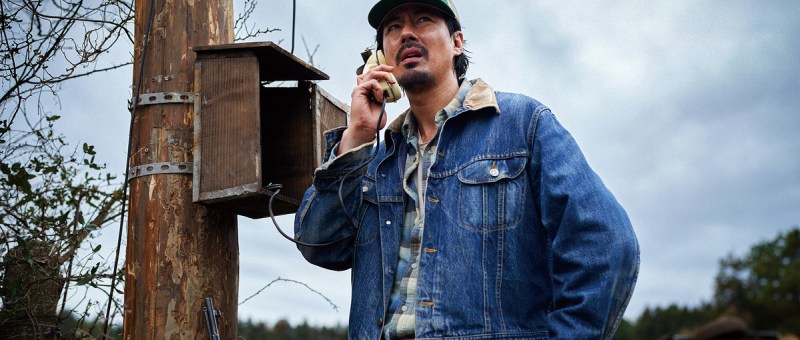
Halo (후광, Roh Young-wan, 2025)

An astrologer delivery driver Min-joon (Choi Gang-hyun) meets tells him that he’s unlikely to achieve his dreams of becoming a film director in Korea. He was born under an unlucky star, destined to be a self-sacrificing figure overshadowed by his toxic family. However, the astrologer points out, the stars look different depending on where you stand, and according to him the best place for Min-joon is the UK, as unlikely as that might seem.

The astrologer doesn’t seem to hold out much hope that he’ll make it, though. He feels sorry for people like Min-joon who have an over-developed sense of responsibility for those around them and are incapable of putting themselves first. They may very well be toxic and dragging him down, but as Min-joon says, they’re still his family. When we first meet them, his parents are having a physical altercation in the police station while his older brother, Min-ha, who has learning difficulties, screams in terror and confusion. It seems that Min-joon’s father has taken to drink and either can’t or doesn’t work. He criticises the state of the nation that reduces people to living like this, but as his wife points out rather than worrying about the country perhaps he could fix the light in the bathroom that’s been broken for months. He asks why he should when it’s not their place anyway, which might explain a few things about the state of the nation.

In any case, Min-joon is surrounded by radio broadcasts about North Korean missiles and various other disasters that lend an additional sense of doom to his monotonous life. Min-joon is honest and hard-working, diligently delivering parcels all day long and taking good care of his van, only to be treated with contempt and a constant stream of problems from his family. He dreams of becoming a film director, but is always frustrated, first by being unable to afford a colour print of his script and pitch for a producer he met through a connection. He shows up in a neat suit ready to discuss his idea, but she immediately shoots him down by saying that no one makes this kind of film any more and he has zero chance of directing anything. She advises working on the set to gain more experience, but those kinds of jobs don’t usually pay very well and Min-joon probably couldn’t afford to take it even if he weren’t hurt and demoralised by the humiliating experience of being so casually dismissed.

That might be why he takes the astrologer’s advice to heart and starts working overtime to save money to move to the UK while sleeping in his van and washing in a local public toilet. He makes the convenience store guy put his buy one get one free sandwiches in separate bags as if ashamed to have him know he’s going to eat them both himself and that that’s his only meal. Even so, his mother asks him to lend them money to buy his brother, the oldest son, a wife from North Korea so he can live a settled family life, seemingly thinking little of Min-joon’s right to do the same. Meanwhile, Min-ha has suspiciously also come into quite a lot of money, and is later arrested for getting involved with a gang running telephone scams. Min-joon thinks Min-ha probably didn’t know or at least fully understand what he was getting into and was exploited by the gang because of his disability but the police won’t listen to him and a lawyer seems to suggest there’s nothing he can do, bearing out the inherent injustice of the contemporary society.

There really is no way out for him. He’s insulted by residents of the snooty apartment blocks he delivers to who don’t like him using their lift, his van gets robbed, and he ends up bumping it too, requiring even more money to repair and now he can’t even sell it to help his brother pay the compensation money for victims of the scam so he can stay out of prison. He repeatedly visits the apartment of a hoarder with a piles of boxes outside her door that she never opens. It’s like he too is trapped in the room surrounded by cardboard with only his family for company. His desperation mounts with frightening intensity until reaching its unavoidable conclusion as he seeks the only kind of escape available to him.


Halo screens in Chicago March 28th as part of the 20th edition of Asian Pop-Up Cinema.

Trailer (English subtitles)
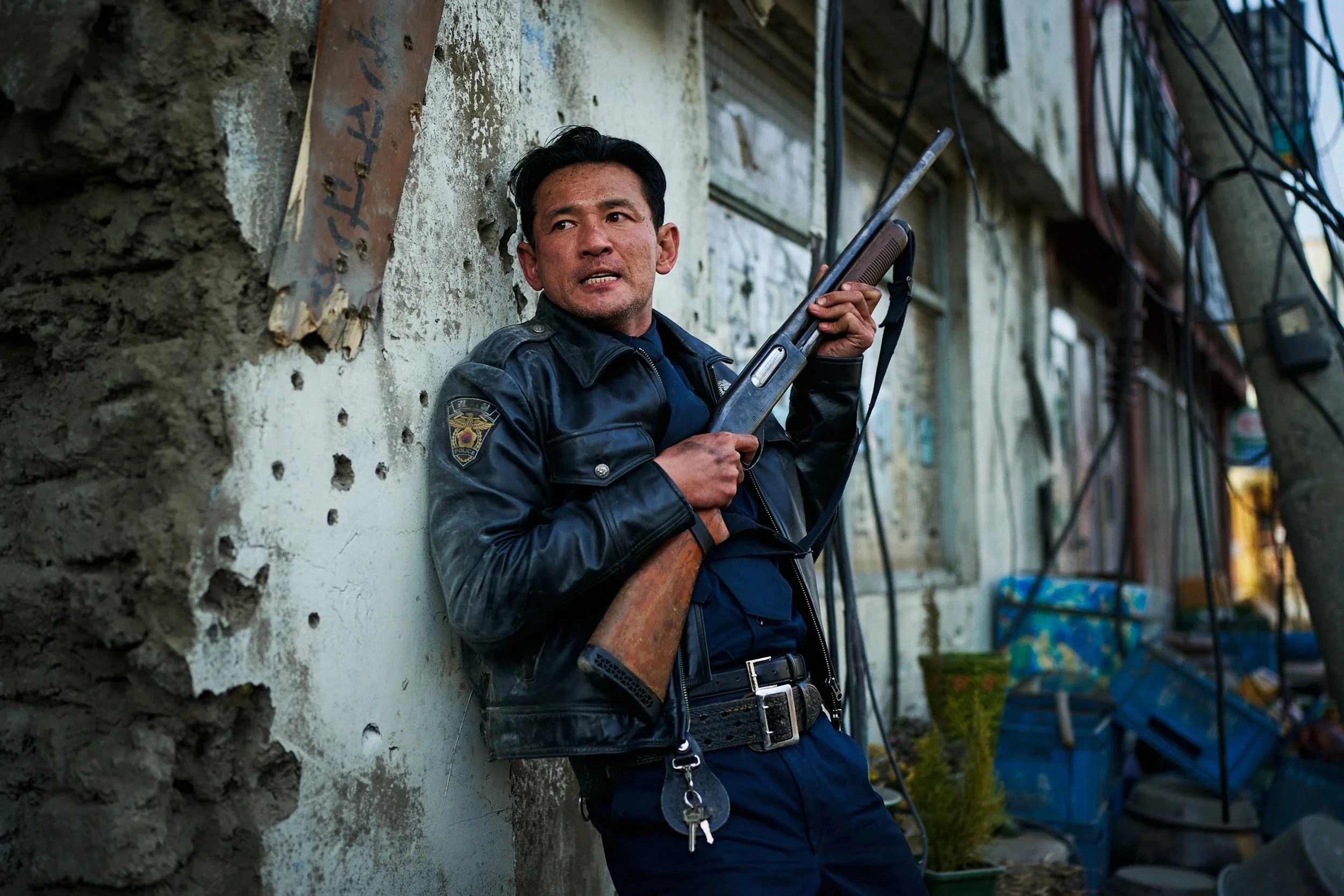
The Girl Who Stole Time (时间之子, Yu Ao & Zhou Tienan, 2025)

All Qian Xiao (voiced by Liu Xiaoyu) wants to escape her boring island life where time runs slowing to experience the fast-paced life of the city, though her guardian, an older man she describes as an artist who can develop film, is not keen for her to go. Washing up on the island three years previously having lost her memory, Qian Xiao is fascinated by the films they watch in the town square which seem to her modern and exciting while also a means of capturing time and assuring that nothing is ever really forgotten.

But when she’s shipwrecked after accidentally stowing away on a steamship that collides with an ocean liner, she unexpectedly gains the ability to pause time with a small device known to assassin Seventeen (Wang Junkai) as the “time dial”, though she calls it the “shiny gold spinny thing”. Seventeen has been charged with recovering it on behalf of his mysterious boss Mr Zou who has set his minions a challenge declaring the person who brings it to him will be the only one to survive. The ability to pause time is indeed useful in a practical sense in that it allows Qian Xiao to escape her enemies temporarily, flicking a bullet out of the way that otherwise have entered the back of Seventeen’s head.

In other ways, however, it may not always be a good thing and time can never really be turned back but is ever marching forward. It’s not meant to be paused forever. Qian Xiao tries to extend her time in the city by putting it on pause, but then quickly becomes bored. There’s not a lot to do here if everyone’s stood still like a statue and she’s stuck on her own again. The irony is that she’d complained about island life being too slow, but as she grows closer to Seventeen all she wants is string time out for as long as possible. This is also, in someways, a reflection of ageing that young people are often in a hurry to grow up and experience the world, but as you get older time passes more quickly and you begin to feel it running out. Despite having said that you only have one life and there are things you can’t fix no matter how hard you try, she begins trying to find ways to get a second chance and stop time from moving forward.

Mr Zou wanted the dial for the same reason, unable to deal with his own deep-seated grief and hoping to use it to bring back those who he’s lost even if it means a lot of other innocent people might die. Seventeen might not have cared about that before, but has become more human through this adventures with Qian Xiao and can no longer allow him to misuse time in that way. As he says, all things must eventually come to an end and it’s enough to be remembered by those you leave behind. Qian Xiao may have become an immortal being and the master of time, but that also means existing in a perpetual state of loss. Eventually, she will need to learn to let go and treasure what she once had rather than being mired in her grief. 

Films are also, though, a means of stopping time and allowing Qian Xiao to revisit her past. While the film looks back to golden days of Chinese cinema in the glamorous Shanghai of the 1930s though its use of silent film techniques, it also seems to draw inspiration from Western animation such as Disney with its unexpected musical number and Qian Xiao eventually donning a very Cinderella-like ballgown for a romantic waltz for the ages. In its final stretches, however, it is more philosophical in contemplating the nature of time and how it’s spent, the ways in which it is sort of rewound and relived, along with the conviction that there’s no need to be sad when the movie’s over because it was it always about who you watched it with. Less anarchic than some recent Chinese animation, if energetic, the film revels in the elegance of its 1930s setting and derives genuine poignancy from its central love story as the fated lovers find their way back to each other only to part once again.


The Girl Who Stole Time screens in Chicago March 28th as part of the 20th edition of Asian Pop-Up Cinema.

Trailer (English subtitles)
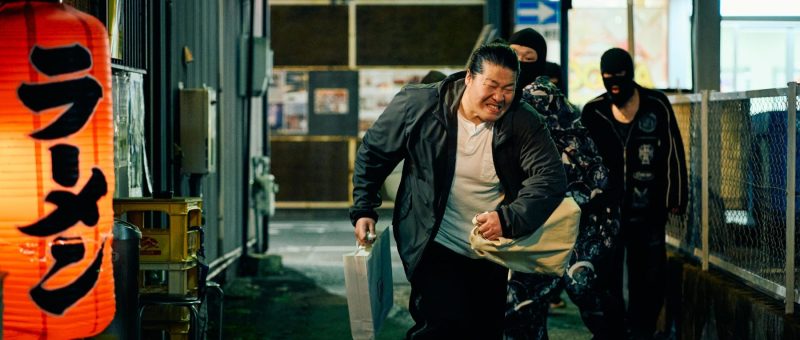
The Last Woman on Earth (지구 최후의 여자, Yeum Moon-kyoung & Lee Jong-min, 2024)

Wronged by an internationally famous film director, a pair of aspiring filmmakers set their sights on cinematic revenge in Yeum Moon-kyoung and Lee Jong-min’s meta comedy, Last Woman on Earth (지구 최후의 여자, Jigu Choehuui Yeoja). Even so, they find themselves mired in a world of sexism and artistic jealousy ruled over by powerful elites content to feed on their aspiration, chew them up and spit them out only to, on the one hand, insist that exploiting them made them sad, and then on the other barely remember them at all and claim they did nothing wrong.

Hana and Cheol each have painful histories with a Hong Sang-soo like festival darling that have frustrated both their lives and artistic careers. They meet in a film class where they workshop their movies that are also attempts to overcome their trauma. Hana’s is a high-concept sci-fi drama shot like a silent film and peppered with intertitles in which the only woman left on earth after a virus wiped out all the others is imprisoned by men who harvest her eggs and attempt to clone her. Cheol’s is Hollywood gangster noir set in Chicago in 1989 in which he kills an annoying old man who was holding him back. Cheol annoys Hana by pointing out the theme of her film was “misandry”, as if there were something wrong with that, while she points out his film is obviously about his resentment towards a father figure. Even so, Cheol thinks the reason no one likes his script its that it’s too manly, and he could use some female input to help him score points on the grant application, which is how they end up working together.

Their various traumas highlight the problems in the mainstream film industry, even if Cheol’s problem is, in another meta touch, with indie filmmakers who make indie films to show to indie people at indie festivals. After being talked into a nude scene a more famous actress had refused to do, Hana became the talk of the town while her scenes from the movie ended up porn sites. She became a sex symbol, but was shamed out of show business. The only jobs she got offered were erotic movies and all she could do in the end was abandon her old identity. As she reveals in a lengthy musical number, she still wants to make films even though it’s painful and no one wants to seem to letter.

Like her, Cheol sought the approval of a master but feels betrayed by him. Tak stole his screenplay and used it to win awards in Europe without crediting him. Even since then, he’s been determined to become the Ant-Tak by doing what he couldn’t, making a hit popcorn movie that’s nothing more that an good time at the movies. But even Cheol can’t completely abandon the patriarchal mindset, first gender-flipping his revenge drama, then changing gears to make Hana the hero only to suddenly appear as a male character to swoop in and save her from the evil professor, Tak. 

Throughout the runtime, there’s the sense that the world is coming to an end, and of course it is because the world of this film lasts only until the closing credits. Still, they want to make the film anyway, even if there’s no tomorrow and no one will see it, because it’s what they have to do. They start out by making a documentary about Tak, hoping to destroy the Korean film industry by exposing what he’s really like. But Tak doesn’t really take them seriously. He points out he’s not Park Chan-wook or Bong Joon Ho, so no one’s going to watch their film anyway. Though he claims to feel bad about what happened to Hana after he used her for his film, he also says that it’s not his fault because that’s just how things were and everybody did it. Like Cheol, he’s now trying to make a “feminist” film to atone, laying bare the cynicism of these kinds of gestures intended only to whitewash the image of a tainted artist. But films after all “next world” and the way out. You can make one on your own, and it doesn’t really matter if no one sees it. Killing her past trauma, Hana transfers fully into the world of cinema, staying with Cheol to watch the world end as the camera continues rolling on waiting for the next world to enter the frame.


The Last Woman on Earth screens in Chicago March 27th as part of the 20th edition of Asian Pop-Up Cinema.

Trailer (English subtitles)
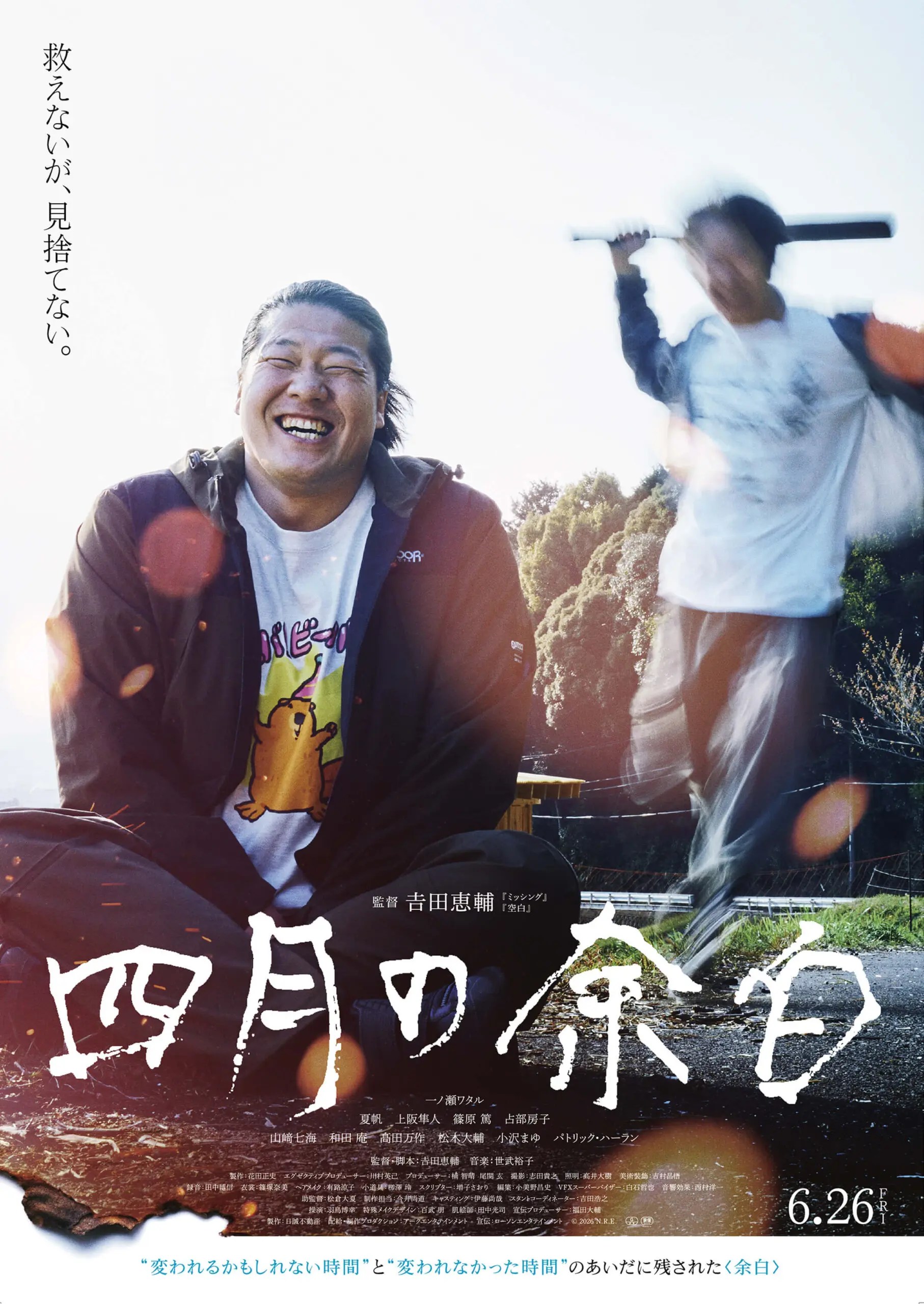
The Last Blossom (ホウセンカ, Baku Kinoshita, 2025)

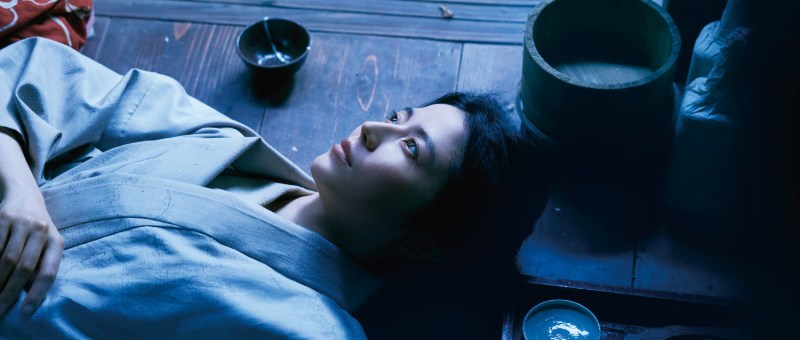
Seen from above, balsam flowers look like an arrangement of leaves, yet when viewed from the side, the pretty flower within becomes visible. It’s an apt metaphor for the “pathetic” life of Minoru (voiced by Junki Tozuka / Kaoru Kobayashi), an elderly gangster apparently drawing close to death all alone in a prison cell except for a talking plant whose voice he is only now able to hear. Created by the team behind the charmingly surreal Odd Taxi, The Last Blossom (ホウセンカ, Honsenka) is an oddly affecting tale in which the hero remains convinced that he can still turn it all around, if only with his final move.

Back in 1986, Minoru had taken in a bar hostess, Nana (Hikari Mitsushima / Yoshiko Miyazaki), who was already pregnant with another man’s child. Emotionally insecure, he could never quite find it within him to tell her that he loved her and their family, and instead began to push her and her son Kensuke away in fear of losing them. Though Nana suggested getting married, he refused saying that he did not wish to bring her into his yakuza life and was worried that it would only cause problems for her if his name was in the papers or he had to go to prison. When he was eventually sentenced to life behind bars, not being married ironically meant that she couldn’t get access to see him, while his applications for parole were always turned down given that he had no one to vouch for him on the outside.

Nevertheless, there are moments of blissful domesticity such as the pair noticing that the ping on the microwave sounds exactly like the bell in the song Stand By Me, which becomes sort of their tune. Yet Minoru’s life is intertwined that of the bubble era, as if his brief years of happiness were a just a bubble that was always destined to burst. During the 1980s, the yakuza was also in a moment of transition and as an underling who feels he owes a debt to his sworn brother Tsutsumi (Hiroki Yasumoto), Minoru is also trapped in another era. Tsutsumi is wary of a young recruit, Wakamatsu (Soma Saito), who is a new yakuza of the corporate age in which the street thugs of the post-war era are slowly becoming legitimate businessmen. Wakamatsu has a good nose for business and has realised that land will be the money spinner of the age, prompting Minoru to engage in a spot of property speculation of his own.

But Tsutsumi is increasingly resentful, knowing that Wakamatsu has supplanted him in the boss’ affections. Old-school yakuza are no longer welcome in a world of boardroom gangsters. It’s clear that Wakamatsu doesn’t like Tsutsumi either, but seems well disposed to Minoru. Ironically all his mannerisms are reminiscent of those of the balsam flower, even down to his slightly sarcastic way of speaking. Nevertheless, Minoru begins to lose himself amid bubble era excess, spending all his time and money on clubs and rarely coming home to Nana and Kensuke. Only when he learns that Kensuke has incurable heart disease and needs a transplant does he begin to step up and assert himself as a father, willing to do whatever it takes to get the money for Kensuke to go to the US for a new heart as the surgery isn’t legally permitted in Japan. 

Minoru has a deep-seated sense of himself as a loser and is always saying that he’s going to turn things around. The irony is that he leaves it so late, but it is indeed with his final move that he gives his life meaning in making clear his feelings for Nana and Kensuke. Maybe it looks like a “pathetic” life when seen from above, but when you look from the side you can the beautiful flower blossoming underneath, a sentiment that could equally stand for Minoru’s quiet nature and buried feelings. Though he allowed himself to be corrupted, starting to drink when he never had before not because he wanted to but because Tsutsumi did, becoming obsessed with work and losing sight of what really mattered to him, he really did manage to turn it around in the end. With a gentle sense of magical realism in the talking plants and occasional moments of surreality, The Last Blossom is a poignant tale of regret and redemption beautifully expressed by the stillness broken by brief explosions of fireworks to be found in Baku Kinoshita’s beautifully simplistic aesthetics. 


The Last Blossom opens in UK cinemas 27th March courtesy of Anime Limited.

Trailer (English subtitles)

Images: ©Kazuya Konomoto /The Last Blossom Production Committee

Warla (Kevin Z. Alambra, 2025)

A group of transwomen attempts to turn the tables by kidnapping wealthy foreign businessmen and blackmailing them to fund their surgery, but a newcomer to the group forces them to confront their hypocrisy in turning the violence inflicted on them back on the patriarchal society. Inspired by a real life case, Warla explores the marginalisation of transpeople in a country so imbued with Catholicism and toxic masculinity as the Philippines where all they really have to rely on is each other.

The violence of that society is evident from the very first frames as a body begins to drift into view. Mother Leila has been murdered in a brutal fashion for the crime of existing. Kit-Kat (Lance Reblando), rejected by her conservative father and brother, is cast adrift with no other means of affirming herself. When her father kicks her out, she’s taken in a family of transwomen led by Joice (KaladKaren), but what she didn’t know is that their business model is meeting foreign businessmen on dating apps, kidnapping them, beating them up, and blackmailing them by threatening to tell their wives, families, and employers. In doing so, they’re turning the prejudice they face back on those who rejected them, but as Kit-Kat points out, it’s as if they’ve joined the system rather than beating it. She doesn’t want anything to do with the violence, with ends up partially going along with because it she wants to remain part of the group and has nowhere else to turn.

As Joice points out, having nowhere else to turn is why they’re doing this. There is no social support for them in the Philippines and they struggle to even get casual jobs in fast food restaurants just by virtue of being transpeople. Barbie Ann (Serena Magiliw) has a son from her previous marriage which ended when she decided to embrace her trans identity, but her former wife, Kate (Francesca Dela Cruz), has met someone else and wants to move in with him. Roger (Jel Tarun) is evidently a much more conservative man and is already beginning to distance Kate from Barbie by banning her from the house. When she tries to talk to him on the street, he tells her that she’s filling her son’s head with a lot of nonsense about how people like her are okay which will lead to him getting bullied. He thinks that, as he’s accepted the child and will now be providing for him, he should have a greater say over what he’s taught to think. Barbie’s existence is dangerous precisely because of what she was teaching son, challenging the social order by undercutting the patriarchy.

Ning (Valeria Kurihara), meanwhile, struggles to maintain a relationship because she wants to wait until she’s had her surgery to become intimate. Experiencing extreme dysphoria, she doesn’t want her partner to see the part of herself that she hates, but he gets fed up and leaves her for a cis woman. He tells her that their relationship was always doomed because his father wouldn’t accept her. With his new girlfriend, he can post pictures on social media and doesn’t feel the need to sneak around. Getting the money together to go to Thailand for her surgery becomes an obsession in part so that she can get Lance back, but also so that she will finally feel whole. Barbie also wants the surgery to avoid the kind of violence she inflicts on their victims. Kit-Kat says she isn’t interested in surgery which places her at odds with other members of the group such as Barbie who suggests it’s alright for her because she presents as more obviously feminine and so isn’t subject to the same levels of violence and rejection.

Though they may feel that they’re only playing these men at their own game, they bite off more than they can chew with a short-fused Japanese businessman who talks like a yakuza and flies off the handle with wait staff. Most of the other men gave in quite quickly because of the shame they feel and the fear they have of their transgressions being exposed, but Isamu (Jacky Woo) was like them in that he had nothing left to lose and soon realised he’d been set up. In the end, Joice is forced to make the ultimate maternal gesture to try and save her girls, while Kit-Kat must reckon with where this dark path has taken her. Though she knew that her mother loved her but was unable to stand up to her father’s patriarchal violence, she eventually finds solace in the fact that she can still hold her hand and call her by her true name even if the rest of the world refuses to recognise her.


Warla screened as part of this year’s BFI Flare.

Trailer (English subtitles)