Initiation Love (イニシエーション・ラブ, Yukihiko Tsutsumi, 2015)

initiation loveMost romantic comedies don’t come with warnings about twist endings and a plea not to give them way, but Initiation Love (イニシエーション・ラブ) is not your average romantic comedy. Set in the early bubble era, Yukihiko Tsutsumi’s double sided feature is itself a wry look at the problematic nature of nostalgia. Harking back to a perhaps more innocent era in which lack of political and economic turmoil left plenty of time for romantic confusion coupled with the corruption of the consumerist dream, Initiation Love pits innocent romance against cynical success but subtly suggests that grown up love is a kind of compromise in itself.

Side A: In the summer of 1987, Yuki Suzuki (Kanro Morita) – a geeky, overweight young man who is shy but has a kind heart, is unexpectedly invited to a college drinking party where he earns some major white knight points for interrupting the increasingly inappropriate grilling of new invitee Mayuko (Atsuko Maeda). Mayuko is pretty, sweet, and cute if in a slightly affected way. She is way out of Suzuki’s league, but later confesses that she’s looking for someone a bit different, like Suzuki, an awkward-type who won’t lie to her or play around. Bonding over a shared love of reading, the pair grow closer, Mayuko rechristens Suzuki “Takkun”, and he vows to spruce himself up to become “worthy” of her.

Side B: Takkun (Shota Matsuda), now slim and handsome, is given a surprise promotion to Tokyo. Rather than suggest marriage or that Mayuko come with him, he settles on long distance and promises to come back to Shizuoka at weekends while waiting to be approved for a transfer back home. In Tokyo, however, Takkun’s personality begins to shift. Seduced by city sophistication and the promises of an elite salaryman lifestyle, Takkun draws closer to upper-class career woman Miyako (Fumino Kimura) whose jaded straightforward confidence he regards as “grown up” in contrast to the innocent charms of Mayuko waiting patiently at home.

The overarching narrative is provided to us via a melancholy voice over and accompanied, in the manner of a classic mix-tape, by a song from the era which is deliberately on the nose in terms of its aptness – a song about giving up on summer just as the couple are stuck in a traffic jam on the way to the beach and about to have a gigantic row, or a song about lucky chances coming up on TV just as our hero is plucking up the courage to allow himself to be bamboozled into going on a date with the girl of his dreams. The carefully placed positioning of the songs reminds us that we are inside someone’s carefully curated memories. Just as Takkun’s vision of Mayu-chan is one surrounded by flowers and light, the early days of romance are a condensed and romanticised version of real events seen entirely from one perspective and coloured with the gradual fading of time. Nostalgia is an unreliable narrator, recasting real life as Hollywood fiction.

The warm and fuzzy glow of Side A is undercut by the subtly questionable actions of Mayuko and our own prejudices about why she might be with a guy like Takkun. Self-consciously cute, Mayuko makes needling suggestions – dress better, get contacts, learn to drive, which, objectively speaking, might all help Takkun to gain some much needed confidence if only he were not doing all of them solely because he fears losing a woman like Mayuko. If Mayuko wanted a guy she could remake and boss around, she might have come to the right place but she does, at least, also try to insist that she likes Takkun anyway and so any changes he makes to himself will make no difference to her.

Side B, by contrast, turns the dynamic on its head as Takkun’s Tokyo persona becomes increasingly violent, resentful, and cruel while Mayuko seems genuine, innocent, and hurt by the increasing distance between herself and the man she loves. Seduced by city sophistications, Takkun leans ever closer to dumping the innocent country bumpkin, a love he has now outgrown, for a leg up into the middle-classes by marrying the elegant daughter of a wealthy Tokyo businessman. He is, however, torn – between the nostalgic glow of first love’s innocence, and the realities of adult life, the certain past and the uncertain future.

This is the philosophy ascribed by Miyako (apparently given to her by her own first love) that the first failed romance is a crucial part of growing up, an “Initiation Love” that breaks your heart by revealing the idea of true love as a romantic fallacy, allowing you move into the adult world with a degree of emotional clarity. A sound idea, but also sad and cruel in its own way. The final twist, offered as a cynical punchline, can’t help but feel cheap, carrying mildly misogynistic undertones dressed up as a kind of joke aimed at cowardly men who are incapable making clear choices and refuse to see their romantic partners as real people rather than the self created images of them they maintain. Takkun remains torn, between past and future, town and country, old love and new but nostalgia is always a trap – a false impression of a true emotion that impedes forward motion with a promise of a return to something which can never be delivered.


Screened as part of the Japan Foundation Touring Film Programme 2018.

Screening again:

  • QUAD – 10 February 2018
  • Brewery Arts Centre – 2 March 2018
  • Filmhouse – 9 March 2018

Playlist: Side A

Yureru Manazashi (Kei Ogura)

Kimi wa 1000% (1986 Omega Tribe)

Yes-No (Of Course)

Lucky Chance wo Mo Ichido (C-C-B)

Ai no Memory (Shigeru Matsuzaki)

Kimi Dake ni (Shonentai)

Side B:

Momen no Handkerchief (Hiromi Ota)

Dance (Shogo Hamada)

Natsu wo Akiramete (Naoko Ken)

Kokoro no Iro (Masatoshi Nakamura)

Ruby no Yubiwa (Akira Teruo)

Show Me (Yukari Morikawa)


Mumon: The Land of Stealth (忍びの国, Yoshihiro Nakamura, 2017)

MumonJapan prides itself on its harmonious society, but just like the Spartans of Ancient Greece, there have always been those who choose to do things differently. In the late 16th century, Japan was divided into a number of warring states but one visionary general, Oda Nobunaga, had begun a campaign of conquest which he intended to extend across the nation creating peace through unification under a single ruler. One tiny province held out – Iga, home to the ninja and renowned for the petty heartlessness of its mercenary men.

In the September of 1579, two rival ninja clans are engaging in a little practice fighting to the death during which Mumon (Satoshi Ohno), “the greatest ninja in Iga”, takes a commission to assassinate the younger son (Shinnosuke Mitsushima) of the opposing general, which he does with characteristic style and efficiency. The dead man’s older brother, Heibei (Ryohei Suzuki), is heartbroken not only by his brother’s death but by the relative lack of reaction it provokes in his father (Denden) who remarks that the loss of a younger son is no different to that of a foot soldier, and foot soldiers die all the time.

Ironically enough for a man nicknamed “no doors” because no doors can bar him, Mumon is currently locked out of his own house because his wife is upset about his meagre salary. When he stole her away from her noble home, Mumon exaggerated slightly in his tales of his great wealth and social standing and now Okuni (Satomi Ishihara) has decided he can’t come home ’til she gets what she was promised.

The death of Heibei’s brother sets in motion a chain of politically significant events which are set to change not only the course of history but the outlook of at least two men in the “land of stealth”. In Iga, the men are known are known for their beastliness and lack of common human decency. Skilled in stealth warfare, they have no allegiance to any but those with the biggest wallets and live by the doctrine of strength. The weak die alone, and that’s a good thing because it means the tribe is strong.

Later a retainer (Makita Sports) to the son of Oda Nobunaga, Nobukatsu (Yuri Chinen), says something similar – that only might can unite, the weak must either follow or be destroyed. He regards Iga as weak because it is small and alone, but Iga thinks it is strong for exactly the same reasons. The Nobunaga contingent have no idea just how beastly and petty minded the Igans can be when comes to defending their independence, little suspecting that they are embroiled in a well planned conspiracy.

Heibei, disillusioned with the inhumanity of his fellow ninja defects, offering his services to the new regime with the advice that they invade and wipe out the heartless warriors like the beasts they are. Mumon, sold to the Iga as a child, has known nothing but the Iga way of life and is as greedy and self-centred as any other ninja save being able to command a higher price thanks to his fame and abilities. He now has a problem on his hands in the form of Okuni who manages to dominate him fully with her insistence on replicating the way of life she was originally promised. Mumon cares deeply for his stolen bride and does not want to lose her, but she objects to his natural indifference to the cruelty of his people, opening his eyes to the harshness he had always regarded as normality.

When greed is the only accepted virtue, there can be no honour and without honour no unity. This Mumon eventually comes to understand. Far from the famed independence of the Iga, he, Heibei, and a host of others have been well and truly played by a corrupt and secretive tyranny. Daizen (Yusuke Iseya), an honourable samurai forced to betray his own code in killing his former lord, has a point when he says that the ninja spirit has not been destroyed but merely scattered and will endure through the ages – a chilling thought which results in an echo of the modern world and the horrors wrought by intensive individualism. Rather than embrace the traditional genre tropes of the jidaigeki, Nakamura opts for a post-modern style filled with punk and jazz while the ninjas perform their death defying stunts and Mumon pauses to wink at the camera. The result is an anarchic foray in a historical folly in which triumph is followed quickly by defeat and always by the futility of life without compassion.


Mumon: The Land of Stealth (忍びの国, Shinobi no Kuni) was screened as part of the Japan Foundation Touring Film Programme 2018.

Also screening at:

  • QUAD – 10 February 2018
  • Phoenix Leicester- 11 February 2018
  • Showroom Cinema – 13 March 2018
  • Eden Court – 15 March 2018
  • Broadway – 17 March 2018
  • Firstsite – 25 March 2018

Original trailer (English subtitles)

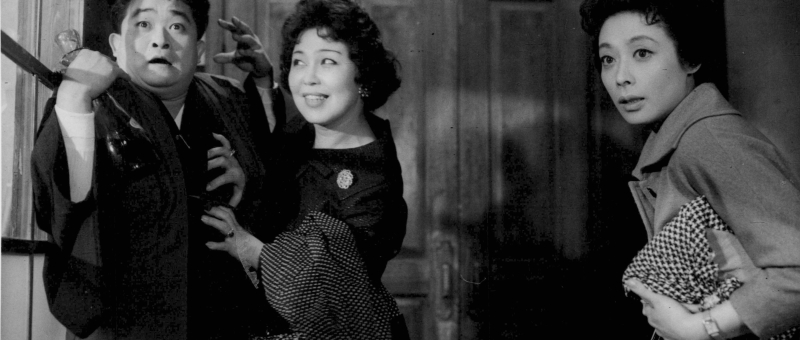
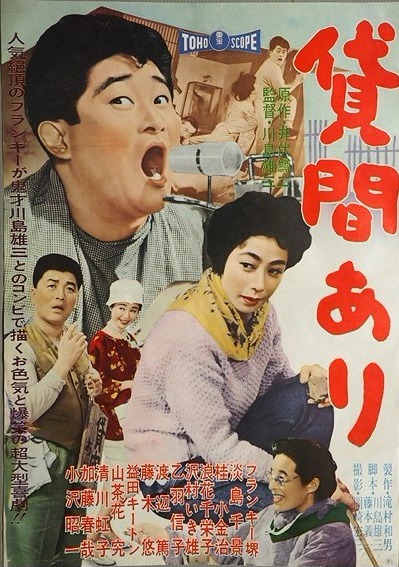
Room for Let (貸間あり, Yuzo Kawashima, 1959)

room for rent poster“Life is just goodbyes” exclaims a tenant of the small, rundown boarding house at the centre of Yuzo Kawashima’s Room for Let (貸間あり, Kashima Ari). Best remembered for his anarchic farces, Kawashima takes a trip down south to the comedy capital of Japan for an exploration of life on the margins of a major metropolis as a host of eccentric characters attempt to negotiate the difficult post-war economy, each in someway having failed badly enough to end up here. Though the setting is perhaps depressing, the lively atmosphere of the boarding house is anything but and the residents, depending on each other as a community of solidarity, know they have the ultimate resource at their disposal in the form of infinitely kind hearted, multi-talented fixer Goro Yoda.

Our introduction to the boarding house follows the passage of an outsider, Yumiko Tsuyama (Chikage Awashima) – a ceramicist who wants to make use of Goro’s printing facilities, but to find him she’ll first have to run the gamut of eccentric residents from the batty bee keeper to the geisha currently trying to fumigate one of her patrons by riding him around the room and the henpecked husband who responds to his wife’s frequent shouts of “Darling!” with a military style “yes, sir!”. On her way to Goro’s jam packed annex, Yumiko notices a room to let sign along with a kiln in the courtyard which catches her eye. Taking a liking both to the room and to Goro, Yumiko moves in and subsequently gets herself involved in the oddly exciting world of an old-fashioned courtyard standing on a ridge above a rapidly evolving city.

Played by well known comedian Frankie Sakai (who played a similar role in Kawashima’s Bakumatsu Taiyoden of two years earlier), Goro is an awkward symbol of post-war malaise and confusion. Goro, a jack of all trades, is the man everyone turns to when they run into a seemingly unsolvable problem, and Goro almost always knows a way to solve them (for a price). His sign in the marketplace proclaims that he speaks several languages and is available for tutoring students, he’s written “how to” books on just about everything you can imagine, he knows how to make the perfect cabbage rolls and konyaku, ghostwrites serial fiction, and runs a small printing enterprise, yet Goro is not a scholar, (licensed) lawyer, doctor, or successful businessman he’s a goodhearted chancer living on his wits. He runs away from success and eventually from love because he doesn’t think he deserves it due his continuing “fakery”.

Despite his minor shadiness, Goro’s kindness and sincerity stand in stark contrast to the evils of his age. Like Goro, many of the boarding house residents are trying to get ahead through somewhat unconventional means including the bawdy lady from upstairs whose main business is blackmarket booze, the peeping-tom street punk who peddles dirty pictures near the station, and the sad young woman working as an independent geisha (Nobuko Otowa) to save enough money to marry her betrothed whom she hopes is still waiting for her at home in her tiny village. That’s not to mention the mad scientist bee keeper who can’t help describing everything he sees in terms of bees and has attempted to turn their apian secretions into a cream which increases sexual potency, or the enterprising landlady who realises she could charge a few more pennies for patrons who want to sit in a fancy seat or watch TV while they eat dinner.

Yumiko isn’t the only outsider sending shockwaves through the community, a young student armed with a camera and the determination to avoid parental disapproval, intends to petition Goro to take his exams for him. The aptly named Eto (Shoichi Ozawa) is a dim boy with seemingly infinite wealth who’d rather scheme his way to the top than invest his energy in getting there the honest way. In this he’s the inverse of Goro whose simple sincerity and easy going nature are, it is subtly suggested, partly the reason he hasn’t made his way in the increasingly duplicitous post-war society. Goro does, however, give in to Eto’s nefarious plan even if it conflicts with his otherwise solid honour code which also sees him turn down the “opportunity” of sleeping with his neighbour’s seemingly insatiable wife in one of the stranger requests coming in to his do anything shop.

Kawashima’s true mastery lies not in the myriad moments of small comedy that pepper the main narrative, but in the glorious way he brings them all together as a perfectly constructed farce. The residents of the boarding house (one of whom is so proud of the “room to let” sign he made that he doesn’t want to rent the room because then he’d have to take the sign down) each face their own difficulties and disappointments but even when darkness creeps in (suicides, arrest, sexual assault, and animal cruelty all raising their ugly heads) the absurd positivity and warmth of these ordinary Osakans seems to be enough to combat it. Life may be a series of goodbyes, but it must still be lived, at least to the best of one’s ability.


 Screened as part of the Japan Foundation Touring Film Programme 2018.

Also screening at:

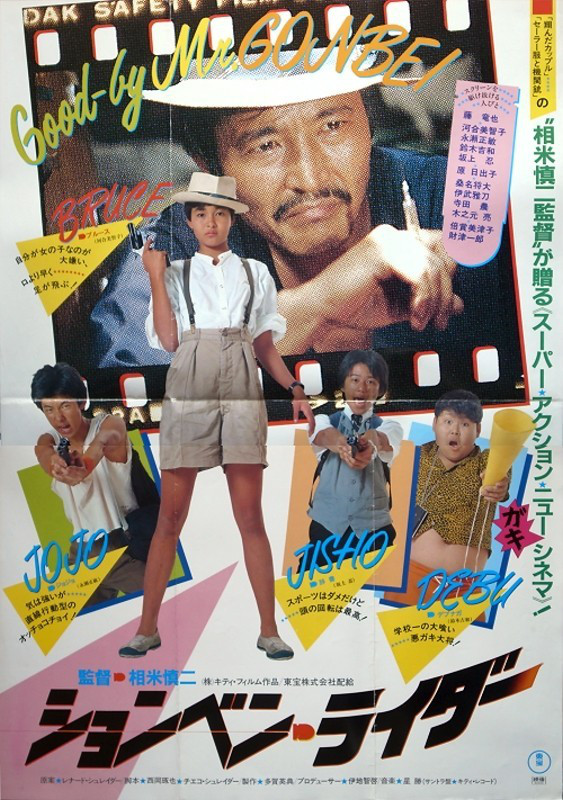
P. P. Rider (ションベンライダー, Shinji Somai, 1983)

PP rider poster

Despite a brief resurgence following a retrospective at Tokyo Filmex followed by another at Edinburgh International Film Festival, Shinji Somai remains frustratingly underrepresented in the West. Though his career is more varied than most give him credit for, encompassing the melancholy pink film Love Hotel and masculinity drama The Catch among others, Somai is justifiably most closely associated with his youth films. Running from the artier Typhoon Club and The Friends to the rabidly populist in the Kadokawa idol movies Sailor Suit and Machine Gun and Tokyo Heaven, Somai’s work is unique in managing to catch hold of a zeitgeist, capturing the essence of the contemporary teenager more or less in the way they saw themselves rather than the way they were generally seen by adults. Like many Japanese teen movies of the ‘80s, the world of P.P. Rider (ションベンライダー, Shonben Rider) is essentially a safe one. Our three protagonists get themselves mixed up in some dark and shady business but they are never afraid, do not lose heart, and face danger with only contempt and determination.

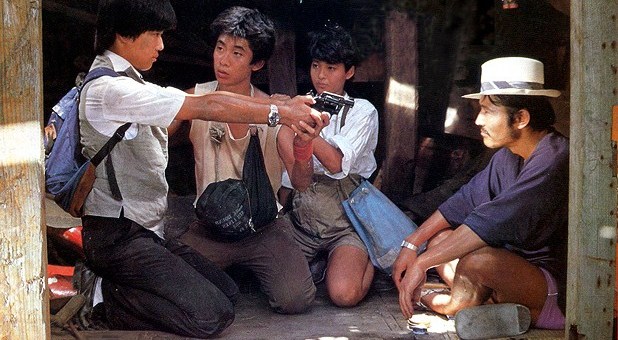
Somai opens with one of his trademark long takes which whirls around from two suspicious looking yakuza types to a bunch of kids playing around in the school swimming pool. One of the kids, a rotund boy who goes by the nickname Debunaga (his full name being Nobunaga (like the historical tyrant) Deguchi, ‘Debu” essentially meaning “fat”) is being a bit of a twit and having a go at one of our heroes, JoJo (Masatoshi Nagase). Debunaga (Yoshikazu Suzuki) then tries to “drown” JoJo’s friend Jisho (lit. “Dictionary”) (Shinobu Sakagami), before the third member of the trio arrives, an androgynous girl who goes by the name of Bruce (Michiko Kawai). Bruce neatly dispatches the petty high school punks while a teacher, Arane (Hideko Hara), attempts to shift some bosozoku bikers who’ve invaded school property.

Meanwhile, the petty yakuza get on with their plan. They’ve come to kidnap Debunaga, his pharmacist dad apparently has a sideline in drug dealing, but before they can grab him, Debunaga is kidnapped by entirely different kidnappers! Our three heroes, JoJo, Jisho, and Bruce are very annoyed about this because they didn’t get a proper chance to get even with him. Accordingly, they decide the best way to make use of their summer holiday is to rescue Debunaga themselves and make sure they get their revenge before the kidnappers do him in.

P.P. Rider means exactly you think it means, except it doesn’t quite mean anything at all aside from perfectly capturing the strange mix of childish jokes and serious crime that defines the movie’s tone. The atmosphere is absurd and ironic, the kids distrust adult authority and attempt to define their own nascent personalities by effectively rejecting them by using nicknames, dressing in highly codified ways, and either conforming to or subverting social codes as they see fit. Amusingly enough, the trio take a brief pause in the middle of their quest to get haircuts and change outfits, after which they emerge dressed in each other’s clothes as if implying they are almost interchangeable. 

In keeping with most Japanese youth dramas, parents are an entirely off screen presence. Adult input comes from two very different directions (plus the occasional interventions of bumbling beat cop Tanaka), a down-at-heels yakuza called Gombei (Tatsuya Fuji), and the kids’ teacher, Arane. Gombei, a drug-addled gangster, is hardly an ideal role model (especially when he tries to drown Bruce and attacks Jisho with a samurai sword), but he does eventually take the kids under his wing with JoJo picking up the classic deputy role in learning the yakuza ropes. Arane, by contrast begins by letting them down. Harried by the bosozoku she tells the kids to buzz off when they try to talk to her, telling them that she’s off to hot springs town Atami and they’d best come back next term. Nevertheless she eventually becomes an integral part of their group, assisting in the quest and helping to rescue Debunaga while the strange finale plays out before her impassive eyes.

The kids didn’t really want to save Debunaga, and are conflicted when they eventually locate him, but in the end it’s friendship which wins out as they each celebrate their various roles in the successful rescue whilst lamenting the relative lack of care they’ve received from adults and authority figures aside from Arane and Gombei. Absurdist and ironic, P.P. Rider is a strange children’s odyssey in which the adolescent teens head out on a dark and dangerous adventure but live in the relative safety of the world and so nothing very bad is going to happen to them despite the terrible things they eventually witness. Classical long takes jostle alongside Somai’s mobile camera, random intertitles, and frequent breaks for pop music (this is an idol movie after all) in a frenzy of post-modern gags but somehow it all just works, and does so with wit and charm.


Opening scene (no subtitles)

Interview with actor Masatoshi Nagase from the Tokyo Filmex screening in 2011 (Japanese only, no subtitles)

Michiko Kawai’s main titles song – Watashi, Takanna Koro

Christmas on July 24th Avenue (7月24日通りのクリスマス, Shosuke Murakami, 2006)

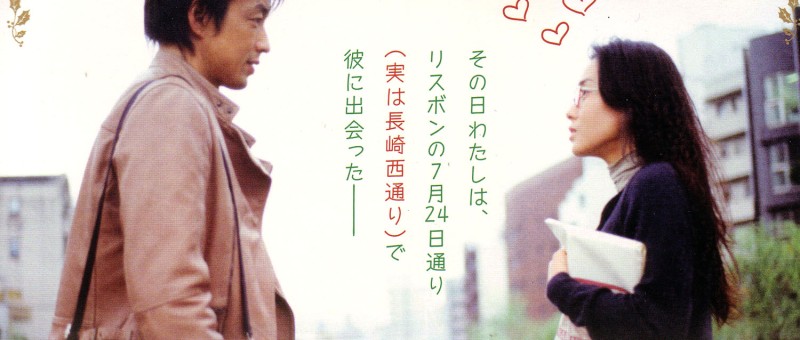
Christmas July 24th AvenueThey do Christmas a little differently in Japan. Rather than a celebration of family and commercial excess, Christmas is an occasion for romance much like the Western Valentine’s Day. Strangely, Japanese cinema has been slow to warm to the idea of the Christmas date movie though Christmas on July 24th Avenue (7月24日通りのクリスマス, 7 gatsu 24 ka dori no Kurisumasu) tries its best to plug the gap. Starring the ever reliable Miki Nakatani, Christmas on July 24 Avenue is a grown-up romance filtered through the innocence of the shojo manga its heroine has come to love.

Sayuri Honda (Miki Nakatani) is a 24 year old office lady who dreams of romance but has come to believe that she just isn’t destined for a great love of her own. Obsessed with a manga she’s loved since childhood which is set in Lisbon, Sayuri has begun to notice the various similarities between her hometown of Nagasaki and the Portuguese capital, living part-time in a kind of sunbaked European fantasyland. When her long lost high school crush, Satoshi (Takao Osawa), resurfaces as a famous architect with a bestselling book out, Sayuri’s dreams of romantic fulfilment are suddenly reawakened.

Constructed with obvious projected wish fulfilment, Sayuri’s arc is the rom-com classic of shy girl gets handsome boy after a series of coincidences and misunderstandings. Bespectacled and reserved, Sayuri’s major selling point is her propensity to suddenly fall over and make a spectacle of herself which she does in spectacular fashion during one of the amateur dramatic plays she helps out with. Embracing an unwelcome genre norm, Sayuri’s journey towards true love begins with prettying herself up – swapping her glasses for contacts, getting a more sophisticated haircut, and dressing in more typically elegant girlish outfits over her practical, dowdy tastes.

Rather than allow Sayuri to realise she’s fine as she is and doesn’t need to change herself for a man, the arc is Sayuri abandoning her anxieties to become the kind of person she thinks Satoshi would like. While all of this is going on there’s another potential suitor hanging around in the form of Yoshio (Ryuta Sato) – a geeky guy who works in a bookstore and has been nursing a crush on the oblivious Sayuri for years. Several times Yoshio confesses his love, and several times Sayuri fails to understand him. His being a pure love, Yoshio decides to help Sayuri find happiness no matter who with.

Sayuri sees her own situation mirrored in that of her brother. Where Sayuri sees herself as plain and undesirable, her brother is handsome and popular with the ladies – the kind of “prince” she herself dreams of. Despite having a long history of dating remarkable girls, Koji’s new girlfriend (Juri Ueno) is a virtual clone of Sayuri – mousy with glasses and a talent for mumbling. Oddly, Sayuri is not worried by this development in the way that might be expected, but only outraged at her brother’s breaking of romantic protocol in taking up with someone who is nowhere near his league. Resenting that a girl just like her has improbably managed to bag a prince, Sayuri treats her potential new sister-in-law with scorn and contempt whilst continuing to blame her own failure to do the same on her plainness and reserve.

Truth be told, Satoshi is a predictably dull love interest – a cardboard cutout prince of the kind familiar to shojo romance. Additional spice is added in an extra-marital affair between Satoshi and an old flame with whom he apparently has some unfinished business but even this hint of impropriety does not seem to put Sayuri off. Her final revelations tend towards realising that there’s nothing wrong with plain dowdy girls hooking handsome guys, even though she is no longer a plain and dowdy girl herself and her prince is also responsible for a crisis in the marriage of a friend. She has this revelation through a lengthy speech at someone else’s wedding which she has nearly derailed by provoking a crisis of confidence in the bride.

Based on a short story by Shuichi Yoshida – best known for socially conscious crime thrillers such as Villain, Rage, and Parade, Christmas on July 24th Avenue is a consciously cute affair filled with quirky details which attempt to recreate the world of shojo manga but cannot make up for the soulless quality of its romance. A lack of chemistry between Nakatani and Ozawa prevents the love story from taking off while the second lead is kept hovering the background but more sweet joke than credible option. Reaching an improbably neat conclusion in which everything is forgiven and everyone lives happily ever after, Christmas on July 24th Avenue fulfils its promise of magical romance filled with cheerful Christmas carols and twinkling lights but proves disappointing after all the fancy wrapping.


30 second trailer (no subtitles)

March Comes in Like a Lion (3月のライオン, Keishi Ohtomo, 2017)

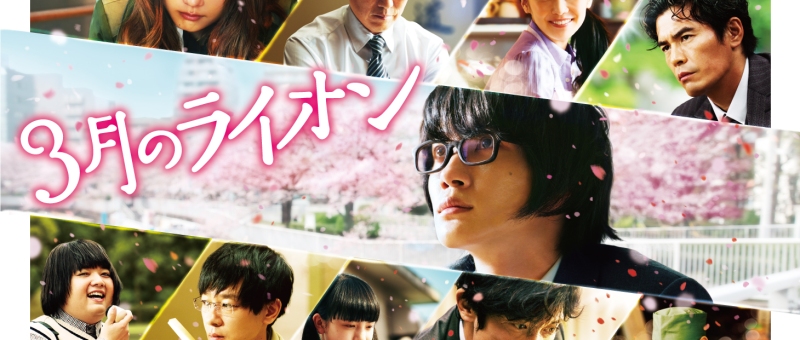
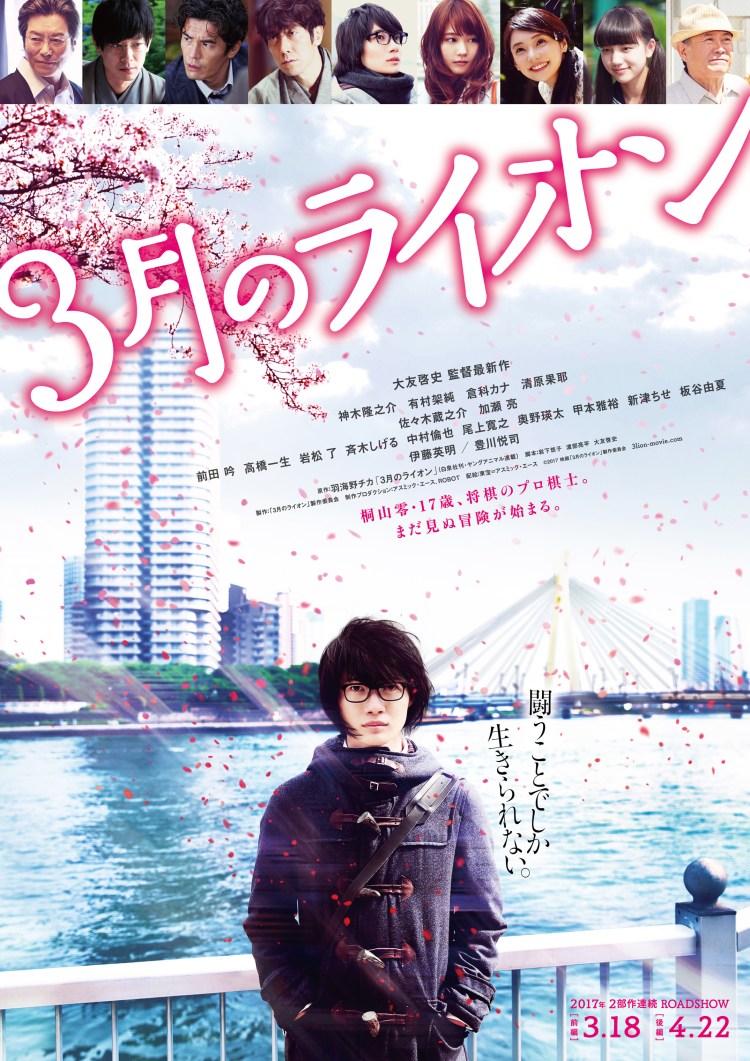
march comes in like a lion posterShogi seems to have entered the spotlight of late. Not only is there a new teenage challenger hitting the headlines in Japan, but 2017 has even seen two tentpole Japanese pictures dedicated to the cerebral sport. Following the real life biopic Satoshi: A Move for Tomorrow, March Comes in Like a Lion (3月のライオン, Sangatsu no Lion) adapts the popular manga by Chica Umino in which an orphaned boy attempts to block out his emotional pain through the taxing strategising becoming a top player entails. Shogi, however, turns out to be a dangerous addiction, ruining lives and hearts left, right and centre but, then again, it’s not so much “shogi” which causes problems but the emotional volatility its intense rigidity is often masking.

Rei Kiriyama (Ryunosuke Kamiki) lost his family at a young age when both parents and his little sister were tragically killed in a car accident. Taken in by a family friend, Rei takes up shogi (a game also apparently beloved by his late father) in the hope of being accepted in his new home. A few year’s later, Rei’s plan has worked too well. Better than either of his foster-siblings, Kyoko (Kasumi Arimura) and Ayumu, Rei has become his foster-father’s favourite child causing resentment and disconnection in the family home. Believing himself to be a disruptive influence among those he loves (even if he suspects they still do not love him), Rei removes himself by deciding to live independently, shunning all personal relationships and dedicating his life to the art of shogi.

Everything changes when Rei is taken for a night out by some senior colleagues and is encouraged to drink alcohol for the first time despite being underage. A kindly young woman who lives nearby finds Rei collapsed in the street and takes him home to sleep things off. The oldest of three sisters, Akari (Kana Kurashina) has a habit of picking up strays and determines to welcome the lonely high schooler into her happy home. Suddenly experiencing a positive familial environment, Rei’s views on interpersonal connection begin to shift but people are not like shogi and you can’t you can’t expect them to just fall into place like a well played tile. 

Like Satoshi, the real life subject of which is also echoed in March through the performance of an unrecognisable Shota Sometani who piles on the pounds to play the sickly yet intense shogi enthusiast and Rei supporter Harunobu Nikaido, March dares to suggest that shogi is not an altogether healthy obsession. Koda (Etsushi Toyokawa), Rei’s foster-father, is a shogi master who trained both his children to follow in his footsteps only to pull the rug from under them by ordering the pair to give up the game because they’ll never be as good as Rei. Thinking only of shogi, he thinks nothing of the effect this complete rejection will have on his family, seeming surprised when neither of his children want much more to do with him and have been unable to move forward with their own lives because of the crushing blow to their self confidence and emotional well being that he has dealt them.

Kyoko, Rei’s big sister figure, remains resentful and hurt, embarking on an unwise affair with a married shogi master (Hideaki Ito) who is also emotionally closed off to her because he too is using shogi as a kind of drug to numb the pain of having a wife in a longterm coma. Believing himself to be a disruptive influence who brings ruin to everything he touches, Rei has decided that shogi is his safe place in which he can do no harm to others whilst protecting himself through intense forethought. He is, however, very affected by the results of his victories and failures, feeling guilty about the negative effects of defeat on losing challengers whilst knowing that loss is a part of the game.

Drawing closer to the three Kawamoto sisters, Rei rediscovers the joy of connection but he’s slow to follow that thread to its natural conclusion. His shogi game struggles to progress precisely because of his rigid tunnel vision. Time and again he either fails to see or misreads his opponents, only belatedly coming to realise that strategy and psychology are inextricably linked. Yet in his quest to become more open, he eventually overplays his hand in failing to realise that his viewpoint is essentially self-centred – he learned shogi to fit in with the Kodas, now he’s learning warmth to be a Kawamoto but applying the rules of shogi to interpersonal relationships provokes only more hurt and shame sending Rei right back into the self imposed black hole he’d created for himself immersed in the superficial safety of the shogi world.

As Koda explains to Kyoko (somewhat insensitively) it’s not shogi which ruins lives, but the lack of confidence in oneself that it often exposes. Rei’s problem is less one of intellectual self belief than a continuing refusal to deal with the emotional trauma of losing his birth family followed by the lingering suspicion that he is a toxic presence to everyone he loves. Only in his final battle does the realisation that his relationships with his new found friends are a strength and not a weakness finally allow him to move forward, both personally and in terms of his game. Rei may have come in like a lion, all superficial roar and bluster, but he’s going out like a lamb – softer and happier but also stronger and more secure. Only now is he ready to face his greatest rival, with his various families waiting in his corner silently cheering him on as finally learns to accept that even in shogi one is never truly alone.


Released in two parts – 3月のライオン 前編 (Sangatsu no Lion Zenpen, March Comes in Like a Lion) / 3月のライオン 後編 (Sangatsu no Lion Kouhen, March Goes Out Like a Lamb).

Original trailer (no subtitles)

Good Morning Show (グッドモーニングショー, Ryoichi Kimizuka, 2016)

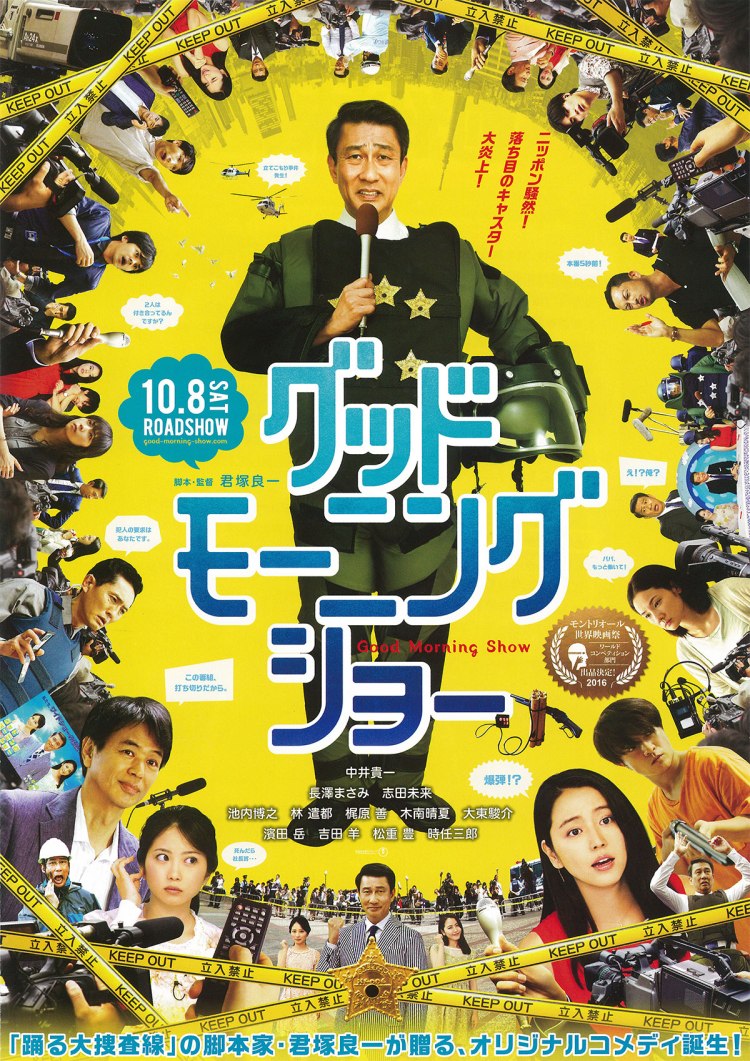
Good Morning Show posterThirty years before Good Morning Show (グッドモーニングショー), No More Comics showed us that the news is serious business and it seems the intervening three decades have not done much to change that. Good Morning Show is the kind of vacuous TV magazine programme that seems to have become popular the world over but Japan has mastered in its entirety. This is a news programme for people trying to avoid the news – there’s just enough of the essentials to keep the average viewer up to date with the big ticket item of the day, but the rest is horoscopes, cakes, and celebrity gossip. The morning news sets the mood for the rest of the day, and isn’t it in everyone’s interest if it’s blue skies all the way ahead? Perhaps so, but whatever happened to serious journalism?

Good Morning Show’s veteran anchor, Sumida (Kiichi Nakai), used to be a top talent on the evening news but a spot of “inappropriate” reporting from the scene of a disaster has had him relegated to the nonsensical early morning magazine show which involves getting up at 3am everyday and becoming something of an expert on pastries. Sumida’s day starts badly when he gets up to find his wife (Yo Yoshida) and son (Mihiro) still awake. As it turns out, there’s a family crisis. Sumida’s student son has got his girlfriend pregnant and has decided to do the right thing and get married, no matter what his dad might have to say about it. Sumida is definitely not happy but he’s also late for work. On the way, he finds out that his co-anchor, Keiko (Masami Nagasawa), with whom he apparently had some kind of drunken indiscretion, has decided that they’re now a couple and is about to announce as much live on air. Luckily for Sumida, a third crisis enters his life when a gunman (Gaku Hamada) takes a cafe hostage and asks directly for the Good Morning Show host to visit him at the scene.

The Good Morning Show exists entirely to cater to its audience’s baser instincts, but its simple charms are apparently going out of style and the show will be cancelled if they don’t get their numbers up soon. The hostage crisis is a godsend in this regard as is Sumida’s unexpected importance to the case which gets the show on the ground reporting live from the scene with exclusive access. Given this shift in broadcast tastes, it’s strange there’s no reference to social media though Good Morning Show is apparently viewable via the internet with a large portion of the audience tuning in on their smartphones during their morning commute. This sense of “community” seems to be key to the show’s appeal as the interactive poling which usually asks silly questions intended to spark debate such as whether or not to throw out gifts from old lovers, becomes central to the hostage case in deciding whether Sumida and the gunman should live or die live on air.

The gunman, like many, turns out to be just another angry young man frustrated that no one will listen to his complaints. At first it looks like Sumida may be in some way responsible, either because of his botched reporting on an earlier disaster or a connection to an incident in the cafe some years previously, but it turns out the major factor is a kind of hypocritical smugness that’s become the Good Morning Show’s trademark. For all of his frustrations with the format, Sumida is depressingly good at mindless twaddle and his fake “worry” about the future of the nation has got the gunman’s back up. The key issue is still more personal as the gunman feels himself excluded from the community feeling fostered by the show when he tries to make himself heard via its channels and is ignored.

A definite irony when Good Morning Show’s major selling point is “ignoring” the real news. Yes, they run a small item on the important headline of the day which provides Sumida a chance to “worry” about corrupt politicians misappropriating public funds etc, but then the show moves on to more cheerful areas like celebrity affairs and delicious cakes. Sumida ends up committing the newsman’s mortal sin – he becomes the news, much as the reporter at the centre of No More Comics did before him, though like the show itself it’s the personal which wins the day. Saying the things he couldn’t say to directly to his own son, Sumida tries to forge a connection with the gunman who is not a bad person, just another youngster at the end of his tether with an uncaring world. The connections are made through glass, but they are made all the same (even if imperfectly and with less than total honesty). Good Morning Show is, like its namesake, a fairly disposable effort but fun while it lasts. Then again sometimes the most harmless things do the most harm.


Original trailer (English subtitles)

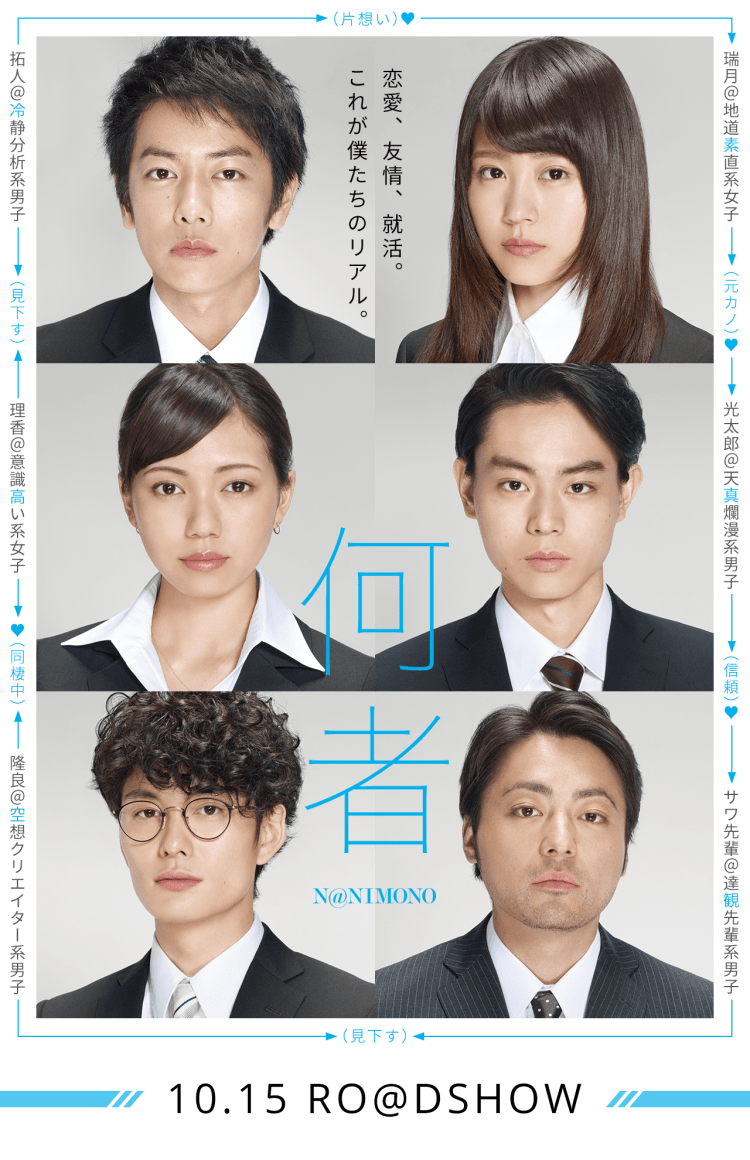
N@NIMONO (何者, Daisuke Miura, 2016)

Nanimono posterGrowing up is a series of battles in Japan. Exam hell soon gives way to the freedom and liberation of university but students know that their carefree days of youth and discovery will be short lived. Job hunting is done en masse and takes place in the final year of study (or even before). The process of securing a work placement is much the same as deciding on which school to apply to – attending job fairs to meet with representatives, getting hold of brochures, talking to anyone and everyone you know about the various reputations of the big firms, and then figuring out what your best bets are. Many companies run written exams which are then followed by group interviews in which the applicants are made to answer humiliating questions in front of their fellow candidates. What this all amounts to is a gradual erasure of the self in order to become the perfect hire, making the same tired phrases sound interesting in an effort to say all the right things whilst trying not too seem calculating or too bland.

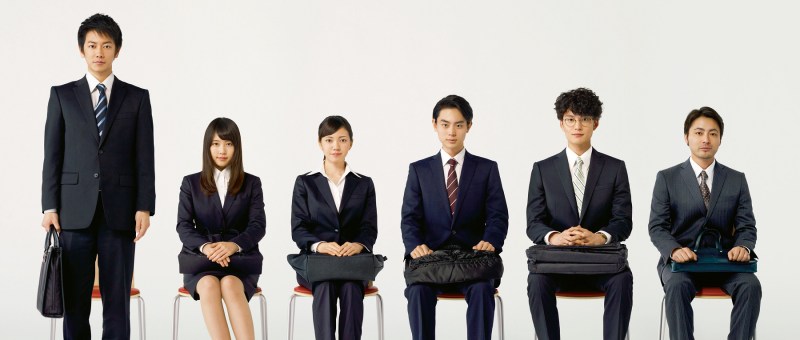
The group at the centre of Daisuke Miura’s adaptation of the Naoki Prize winning novel by Ryo Asai, N@NIMONO (何者, Nanimono, AKA Somebody / Someone), know this better than most. Protagonist Takuto (Takeru Satoh) used to be interested in theatre but has abandoned his dreams of the stage for the mainstream route into company life while his friend Kotaro (Masaki Suda) has played his last gig as the lead singer of a rock band, died his hair black again, and got a smart haircut in preparation for interviews. The boys are still good friends and roommates despite the fact that Takuto has long been carrying a torch for Kotaro’s former girlfriend, Mizuki (Kasumi Arimura), who has just returned from studying abroad. Mizuki is good friends with another girl, Rica (Fumi Nikaido), who happens to live upstairs from the boys and suggests that the four of them all get together to compare notes on the job hunting process. Rica lives with her boyfriend (still somewhat unusual in Japan), Takayoshi (Masaki Okada), who is working as a freelance journalist and is disdainful of the others’ passage into the regular workaday world but later tries to get into it himself.

There is a kind of sadness involved in this process, even if no one seriously thinks about fighting back. Everyone wants to get their foot onto that corporate ladder to become “someone”, at least in the eyes of society. There are a lot of rungs on the ladder to success, and if you miss your footing it’s near impossible to get it back – you’ll wind up one of the many crowded round the bottom staring up at the top even if you don’t want to admit it. University is the last time time there is real scope for indulging one’s personality before the corporate life takes hold – thus Takuto and Kotaro both accept that their artistic pursuits have to go in their quest for a regular middle-class life even if they inwardly struggle with their decisions to “sell-out”.

Takayoshi thinks of himself as above all this. He asks himself what all of this is for, why people put themselves through this humiliating ritual just to be locked into a nine to five that makes them miserable and turns them into soulless drones. There’s an obvious answer to that, and Takayoshi’s refusal to take it into account borders on the offensive, as does his often patronising attitude to those actively engaged in the job hunting process, but his hypocrisy is eventually brought home to him when he turns down a project to work with another artist because he thinks their work isn’t good enough. Maybe there’s courage in just putting something of yourself out there, even if it isn’t very good, rather than sitting at home looking down on everything and critiquing everyone else’s life choices whilst getting nothing done yourself.

It’s this conflict between interior and exterior life in which N@NIMONO is most interested. Main character Takuto begins as the everyman, depressed and stressed by his job hunting odyssey but aloof isolationism soon reveals itself as a kind of cowardice and self-involvement born of insecurity as he takes to a “secret” Twitter account for acerbic comments on his friends’ lives, sarcastically taking cruel potshots safe in the knowledge of his anonymity. Takuto’s entire concept of himself is a construction as his eventual descent into abstraction shows us in recasting his interaction with his friends as an avant-garde theatre show in which he finally begins to see the various ways his resentment of others is really just a way of expressing dissatisfaction with himself. This inability to fully integrate his own personality is offered as the final reason he hasn’t managed to find employment – his insincerity marks him out as a poor prospect. Takuto’s final realisation that he is unable to successfully answer the standard interview question “define your own personality in under one minute” for the perfectly sensible reason that the task is impossible kickstarts his own journey to a more complete life, even if it doesn’t do much to help the countless other “someones” out there hammered into a standard sized holes as mere cogs in the great social machine.


N@NIMONO seems to have been screened under the English titles of both “Somebody” and “Someone” but “N@NIMONO” is the one that features on the title card of the English subtitled Hong Kong blu-ray.

Original trailer (no subtitles)

Take Me Away! (ふりむけば愛, Nobuhiko Obayashi, 1978)

Take Me Away PosterDuring his long and extremely varied career, Nobuhiko Obayashi was a not infrequent visitor to the world of the idol movie though his most notable entries into the genre would come in the 1980s Kadokawa heyday with the much loved The Little Girl who Conquered Time (starring Tomoyo Harada) and School in the Crosshairs (starring Hiroko Yakushimaru) among many others made for that studio alone. Obayashi’s ‘80s idol movies play very much into his key themes in their preoccupation with youthful melancholy and teenage ennui but 1978’s Take Me Away (ふりむけば愛, Furimukeba Ai) takes a slight step away from the genre norms in its slightly more grownup tale of complicated love and early life disappointments.

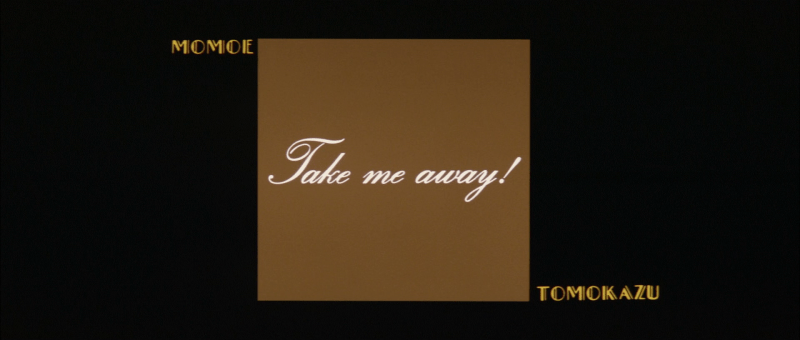
Beginning in typically strange Obayashi style, the film opens with some footage of abandoned machinery before the caption “Kyoko is on a journey” flashes up on the screen and we meet the woman herself (Momoe Yamaguchi) as she stares at San Fransisco’s Golden Gate Bridge.  Soon enough her view is obscured by a runaway kite bearing the name of Tetsu (Tomokazu Miura) – a young Japanese man currently living in the city. The pair hit it off while Tetsu tries to fix his both kite and Kyoko’s shoe which she broke trying to catch it. Tetsu promises to show her around San Fransisco and asks her to meet him at Union Square the next day at noon. Kyoko waits but Tetsu does not arrive – eventually a friend of his turns up in his place and Kyoko reluctantly spends a few hours with him during which she reveals that she’s on a suicide holiday and is about to go back to her hotel room to write the note. Finally Tetsu arrives, takes her to a hippy beatnik club where he sings her the title song of the movie, and the pair fall deeply in love.

Tetsu promises to meet Kyoko back in Tokyo to start a life together, but once again he does not turn up. Heartbroken and worried, Kyoko searches for him but the name of a bar he gave her as a point of rendezvous seems to be fake and her letters all come back undeliverable. When she gets hit by a car driven by a wealthy businessman, another, more stable, romantic possibility presents itself but will Kyoko let her true love dream go?

Take Me Away was the eighth in a series of films which starred popular Horipro idol Momoe Yamaguchi and her regular leading man Tomokazu Miura but the couple already had a long history of working with Obayashi in his career as a director of TV commercials. In fact the pairing which would eventually become a real life marriage was born thanks to Obayashi who was casting around for some stars while he made commercials with Miss Lonely apparently already on his mind. Obayashi was offered the chance to direct Yamaguchi’s cinematic debut but the dates didn’t line up and she made her first film, an adaptation of Yasunari Kawabata’s The Dancing Girl of Izu, with Katsumi Nishikawa instead.

This being the eighth Yamaguchi/Miura romantic drama the stakes needed to be raised – hence the decision to shoot for real on location in San Fransisco. Like many idol movies, the temporary shift away from the regular world the leading lady inhabits provides her an occasion to reinvent herself and the jet-setting, glamorous American holiday is certainly in keeping with the new, globally minded youth of Japan interested in transgressing borders of all kinds. When Tetsu meets Kyoko, she spins him a tale about diplomat parents that sounds like it could come out of any idol movie but in a departure from the norm it’s a part of her new holiday persona. In truth, beatnik dropout Tetsu is the posh one, a runaway son of a wealthy doctor, while Kyoko’s origins are humbler – she’s saved the money for this extremely extravagant holiday while working not as a concert pianist as she claimed, but as a piano tuner (making her choice of a Holiday Inn less strange in retrospect).

Though many idol movies centre around their teenage target audience, Kyoko and Tetsu are very noticeably grown up, already leading “adult” lives, no longer students but young people living semi-independently. This is brought home by the incongruous inclusion of a sex scene – the first in the series of films starring Yamaguchi and Miura, something which would not usually feature (at least explicitly) in the generally innocent idol movie world. Obayashi chooses to shoot this in an artistic, surreal, and impressionistic rather than naturalistic manner which shows the pair lying together naked (Yamaguchi covers herself with an arm) with a superimposition of the couple about to kiss over the top while the entire scene is bathed in golden white light. The sequence is one of the few typically Obayashi flourishes seen in the film (others include the title sequence, obvious Pan Am model shots, illustrated starry skies, and a slapstick brawl conducted to ‘20s jazz), but it perfectly captures the glory of young love so central to the early part of the film.

Of course, it doesn’t last. Holiday romances are one thing, but Tetsu proves to be a flaky sort of guy on every conceivable occasion until he’s finally dragged back into Kyoko’s orbit and vows to give up on his half-hearted ways once and for all to finally be true to his one true love. Kyoko’s second chance – a marriage proposal from the CEO who ran her over looks like the better option, that is until he shows his true colours at the film’s climax. Just as Tetsu leant meaning to Kyoko’s life in San Fransisco, so she too reawakens his fighting spirit. Tetsu describes himself as like the kite which bears his name – a free floating thing whose strings have long been severed. He needs the steady hand of Kyoko to right himself again. Unlike many of Obayashi’s wistful dramas, Take Me Away has a classically happy ending though its oddly silly, slapstick quality is very much in keeping with his sensibilities. A strange brew to be sure, but one which retains the essential innocence of the idol movie even whilst moving it beyond its traditionally adolescent remit.


Tomokazu Miura’s Furimukeba Ai

Rage (怒り, Lee Sang-il, 2016)

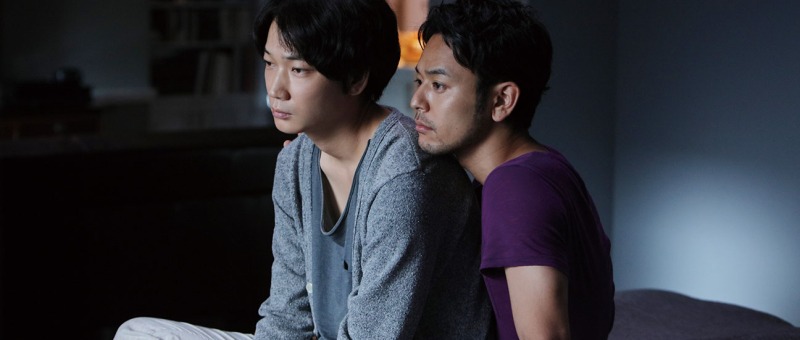
rage posterVillain, Lee Sang-il’s 2011 adaptation of a novel by Shuichi Yoshida, used a crime story to investigate the wider effects of social stigma and emotional repression – themes which are recurrent in the author’s work. Rage (怒り, Ikari) attempts to do something similar but its aims are larger, reflexively tacking the vicious cycle of social oppression and emotional repression in a society which actively suppresses the desire for expression in the aim of maintaining an illusion of harmony. A brutal, senseless killing has occurred and three suspects present themselves. The killer could be any one or none of them, but the fact of the matter is that when you cannot speak the truth, you cannot truly believe in anything or anyone.

In the blazing summer heat with its noisy cicadas and uncomfortable humidity, a young couple has been brutally murdered in their Hachioji home. There are few clues to be found save that the killer has painted the kanji for “rage” in blood on the wall. The police do, however, come up with a suspect and circulate a photofit which is anonymous enough to look like any youngish man who might make you feel uncomfortable for a reason you can’t articulate.

Meanwhile, a middle-aged man from Chiba, Maki (Ken Watanabe), anxiously wanders around Kabukicho until someone finds him and takes him to a brothel where his runaway daughter, Aiko (Aoi Miyazaki), has been working and has been very badly injured through her “eagerness to please her clients”. The father, trying to comfort his daughter who seems cheerful enough despite her ordeal, inwardly seethes with rage and is both relieved and worried when she begins a relationship with a secretive drifter, Tashiro (Kenichi Matsuyama).

Back in Tokyo, Yuma (Satoshi Tsumabuki) visits a gay bathhouse and roughly forces himself on a nervous man hunched in a corner. Despite the slight unpleasantness of their meeting, the two men eat dinner together and Yuma invites his new friend, Naoto (Go Ayano), to live with him in his well appointed apartment despite knowing nothing more about him.

Further south, a teenage couple enjoy a day out on what they think is a deserted island but the girl, Izumi (Suzu Hirose), discovers a backpacker, Tanaka (Mirai Moriyama),  living in some local ruins. Strangely drawn to him, Izumi keeps meeting up with Tanaka but an encounter in the city turns sour when her friend, Tatsuya (Takara Sakumoto), works himself into a jealous rage. Trying to get the drunken Tatsuya to the ferry, Izumi is raped by GIs from the local military base.

The Okinawan episode is, in many ways the key. Tetsuya invites Izumi to see a movie in Naha but they’re really going to observe a protest about the continued presence of the US military bases. Tatsuya wanted to be there to see it but pressed for an answer he doubts protest will achieve anything. Izumi, after her brutal encounter, says the same thing. She doesn’t want anyone to know. “Protesting won’t change anything”. No matter what she says, nothing will be done, no one would listen, nobody really cares.

Or, perhaps they simply care about the wrong things. Aiko gets home from her horrible ordeal in the city but everyone knows what she did there; her “sordid” past is the talk of the town. Her father says nothing, because like Izumi he knows it will do no good, but still he berates himself for it and his internalised anger grows.

Izumi does not want the stigma of being a rape victim, and Aiko does not want the stigma of being a “fallen woman”, their secrets are already out, but Yuma is jealously guarding his – living as a cautious gay man with his life strictly divided, his true nature walled off from his professional persona. Too afraid to be open about his sexuality, he projects his sense of unease and discomfort onto Naoto – first going overboard by inviting someone he just met and knows nothing about to live with him and then refusing to let him in all the way. Yuma asks Naoto not to attend his mother’s funeral despite the fact they had been friends because he doesn’t want the awkwardness of deciding how to introduce his boyfriend to a set of relatives he doesn’t really know. What he doesn’t do is ask any questions about Naoto’s past, jumping to conclusions and angrily slinging accusations when he thinks he’s caught Naoto out in a lie but his reaction and subsequent behaviour only bear out his own insecurities in his inability to trust the man the loves.

Each of the trio begins to doubt their friends or lovers with little more to go on than a police photofit which only superficially resembles them. The suspicion, however, is reflexive. It’s born of a society in which one is obliged to keep secrets and emotional honesty is frowned upon. No one speaks the truth because no one wants to hear it – it will only bring more suffering with additional social stigma. Sooner or later, when all of these unexpressed emotions reach a critical mass, they will explode. Such crimes could so easily be avoided were it easier to live a more open, less fearful life, but as long as it is impossible to trust oneself, there can be no unguarded trust between people.

Neatly in line with the self-centred narrative viewpoints, Izumi’s rape is relegated to a plot device as she herself disappears from the screen only to return briefly in the final coda. The effects of the rape are then explored as they impact on Tetsuya and Tanaka whose self images of masculinity are (seemingly) damaged by their failures to protect her. Izumi’s rape is viewed as something that happened to the men, as if she were a car that was scratched or a jacket torn. Self-involved as this is, it plays into the central theme – no one cares very much about anybody else’s feelings until those feelings are visited upon them by means of violence.

The murder occurs essentially because of a betrayal followed by unbearable, unexpected kindness. A woman felt sorry for a man, and so she trusted him and was betrayed. Two parties fail to trust the one they love because of a failing in themselves, their own sense of personal inadequacy will not allow them to believe in the other person’s faith in them, while another misplaces his trust in his need to find an ally and confidant to feel less alone and powerless. Prevailing social stigmas, selfishness, and a need to maintain the status quo have left all running scared, craving connection but too afraid to engage. When the system won’t let you be, violence, of one sort or another, is an inevitable consequence.


Original trailer (English subtitles)