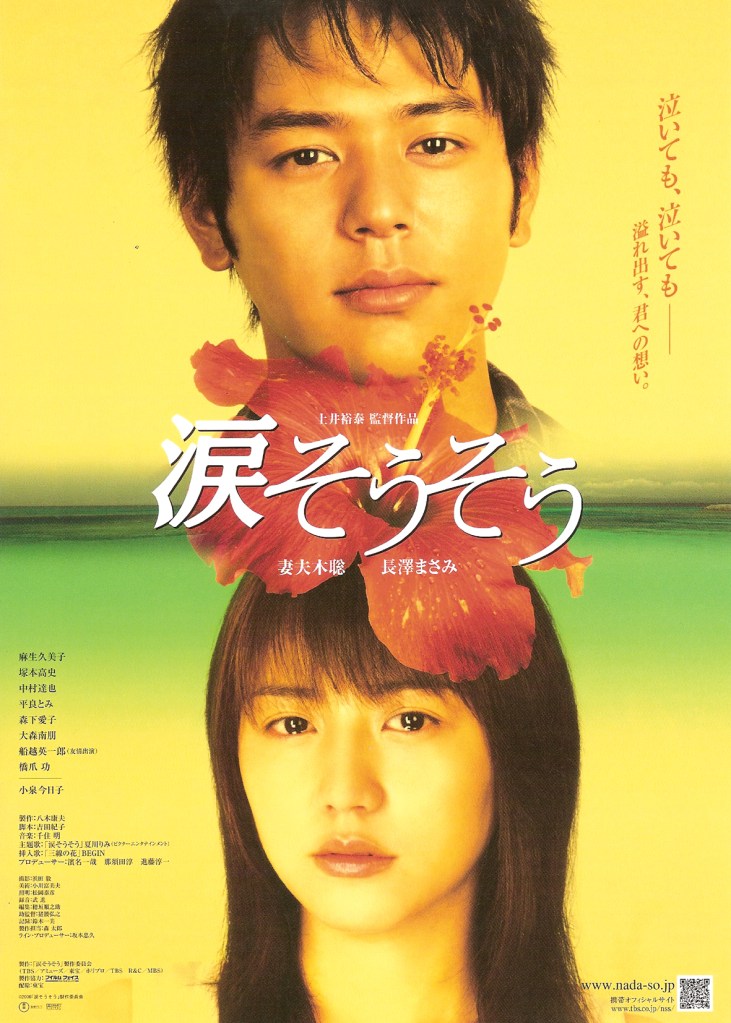
 Coming in at the end of the “pure love” boom, Nobuhiro Doi’s second feature, Tears for You (涙そうそう, Nada So So) is presumably named to tie in with his smash hit debut Be With You, and continues in the same general vein but with a much less satisfying melodrama at its core. A complicated love story centring on a pair of orphaned step-siblings, Tears for You edges into some difficult, perhaps unpalatable, territory but neatly skirts around it with a childish innocence intended to enhance its romantic credentials. Starring the jun-ai icon Masami Nasagawa, the tragic heroine at the centre of Crying Out Love in the Center of the World, alongside the then up and coming leading man Satoshi Tsumabuki, Tears for You is never quite as heartrending as it would like to be but does its best to wring its sorrowful narrative for all of its inherent tragedy.
21yr old Yota (Satoshi Tsumabuki) is a young man with big dreams but he’s put lots of them on hold in order to take care of his younger step-sister, Kaoru (Masami Nagasawa), who has only him to depend on. Yota’s mother married Kaoru’s father when both the children were small but her new husband soon ran off leaving his daughter behind. The three of them continued as a tightly knit family until Yota’s mother became ill and passed away, making Yota promise to take care of Kaoru no matter what even whilst on her deathbed. The two then moved back to an Okinawan island to live with Yota’s grandmother until Yota came back to Naha for high school. Kaoru is now about to make that same journey but the siblings’ happy reunion also provokes a number of questions about the nature of their relationship and the course each of their lives will take in the future.
This being a “pure love” movie, tragedy is coming though Tears for You does its best to disguise where it’s coming from even if the eventual outcome is quite obviously signposted. The original barrier between Kaoru and Yota is raised by their nature as accidental siblings, not related by blood but raised alongside each other with a familial bond stronger than that of just childhood friends. This, of course, becomes a problem as they grow older and begin to find it difficult to draw the line between their familial love and a possibly romantic one which would allow their family of two to continue forever.
Yota, the self sacrificing older brother has indeed become everything to Kaoru – a brother, father, and friend all in one. Dropping out of high school early, Yota has been sending a pay check home since the age of sixteen, putting his own future to one side in order to provide for Kaoru. Determined that Kaoru should prosper and escape their lowly, poverty stricken island existence through getting to university and into a middle class profession, Yota has been working three different jobs. When it looks as if he’s about to be able to realise his own dream of opening a restaurant, it all comes crashing down around his ears as he realises he’s been duped by a con artist and is now on the hook to a gang of loansharks.
In addition to adding to his financial burdens, causing him embarrassment, and further deepening his worry about providing for Kaoru, the situation also creates instability in his romantic life when the father of his longterm medical student girlfriend finds out about his predicament and offers to help – but only at a price. Keiko (Isao Hashizume), he reminds him, is a middle class girl on track to take over her father’s clinic. Yota is a poor boy with limited expectations. The implications are clear and already known to Yota who has internalised a degree of shame over his lowly origins and lack of education which he overcomes through hard work and enthusiasm. Keiko is not the sort to worry about a petty class difference even if her father is, but his words get to Yota who has always felt Keiko is too good for him. She does, however, care slightly about Yota’s ongoing and complicated relationship with his younger sister whom, she fears, will always eclipse any other woman in his life.
As in all pure love stories, love is an impossibility, surrounded by unassailable walls of culture and fate. Though there is no blood relation between Yota and Kaoru, their familial circumstances make romantic love a taboo which leads the film into a rather odd corner in which the familial side of their relationship is the one which gains the upper hand as the love of a brother and sister eclipses that of a tragic missed opportunity. As such the nature of the heartrending conclusion does not reach the melodramatic heights of other genre hits, even if it adheres to the form in maintaining the “purity” of the love through the final impossibility of its realisation. Doi employs many of the same techniques he used so well in Be With You, artfully shifting between past and present and making the most of repeated motifs to bring home the circularity of the relationship between the pair of tragic lovers but never achieves the same kind of emotional depth. Nevertheless, Tears for You is a suitably melancholy weepy anchored by strong performances from its two leads which does ultimately prove moving even if not quite reaching the degree of melodrama implied by the title.
Original trailer (no subtitles)
And here’s the original song, Nada Sou Sou, in its cover version by Rimi Natsukawa which spawned a mini industry of its own encompassing two TV dramas and this standalone film (English translation):
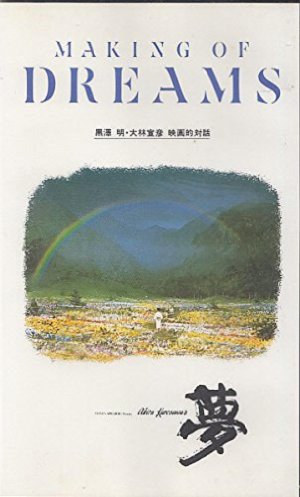 You might think there could be no more diametrically opposed directors than Akira Kurosawa – best known for his naturalistic (by jidaigeki standards anyway) three hour epic Seven Samurai, and Nobuhiko Obayashi whose madcap, psychedelic, horror musical Hausu continues to over shadow a far less strange career than might be expected. However,
 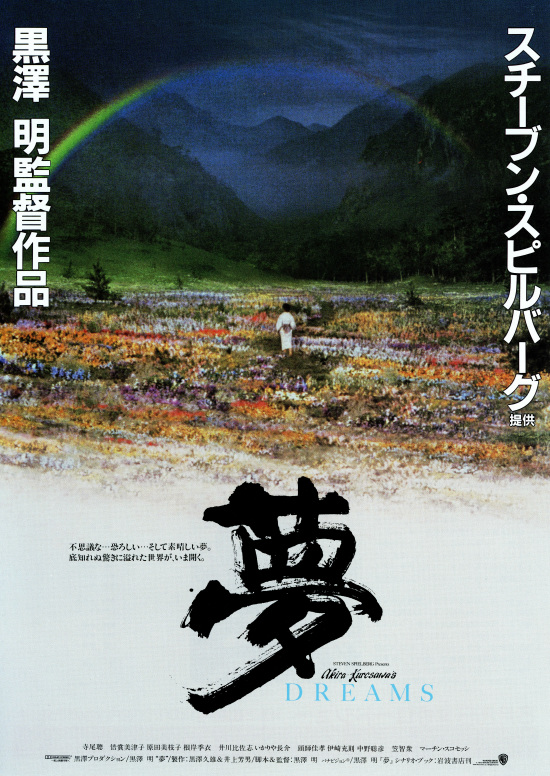 Despite a long and hugely successful career which saw him feted as the man who’d put Japanese cinema on the international map, Akira Kurosawa’s fortunes took a tumble in the late ‘60s with an ill fated attempt to break into Hollywood. Tora! Tora! Tora! was to be a landmark film collaboration detailing the attack on Pearl Harbour from both the American and Japanese sides with Kurosawa directing the Japanese half, and an American director handling the English language content. However, the American director was not someone the prestigious caliber of David Lean as Kurosawa had hoped and his script was constantly picked apart and reduced.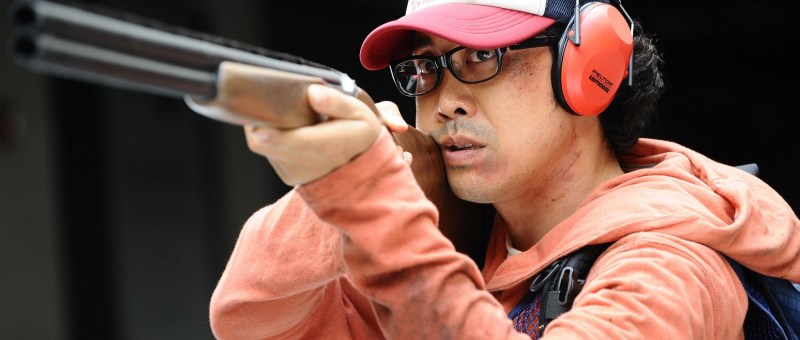
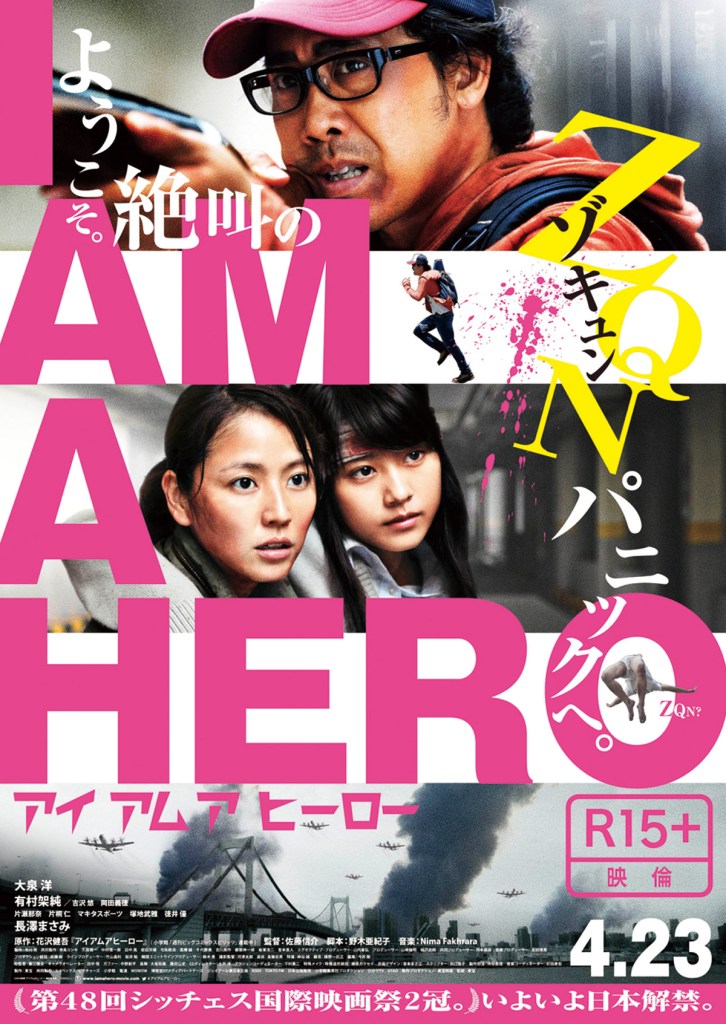 Japan has never quite got the zombie movie. That’s not to say they haven’t tried, from the arty Miss Zombie to the splatter leaning exploitation fare of Helldriver, zombies have never been far from the scene even if they looked and behaved a littler differently than their American cousins. Shinsuke Sato’s adaptation of Kengo Hanazawa’s manga I Am a Hero (アイアムアヒーロー) is unapologetically married to the Romero universe even if filtered through 28 Days Later and, perhaps more importantly, Shaun of the Dead. These “ZQN” jerk and scuttle like the monsters you always feared were in the darkness, but as much as the undead threat lingers with outstretched hands of dread, Sato mines the situation for all the humour on offer creating that rarest of beasts – a horror comedy that’s both scary and funny but crucially also weighty enough to prove emotionally effective.
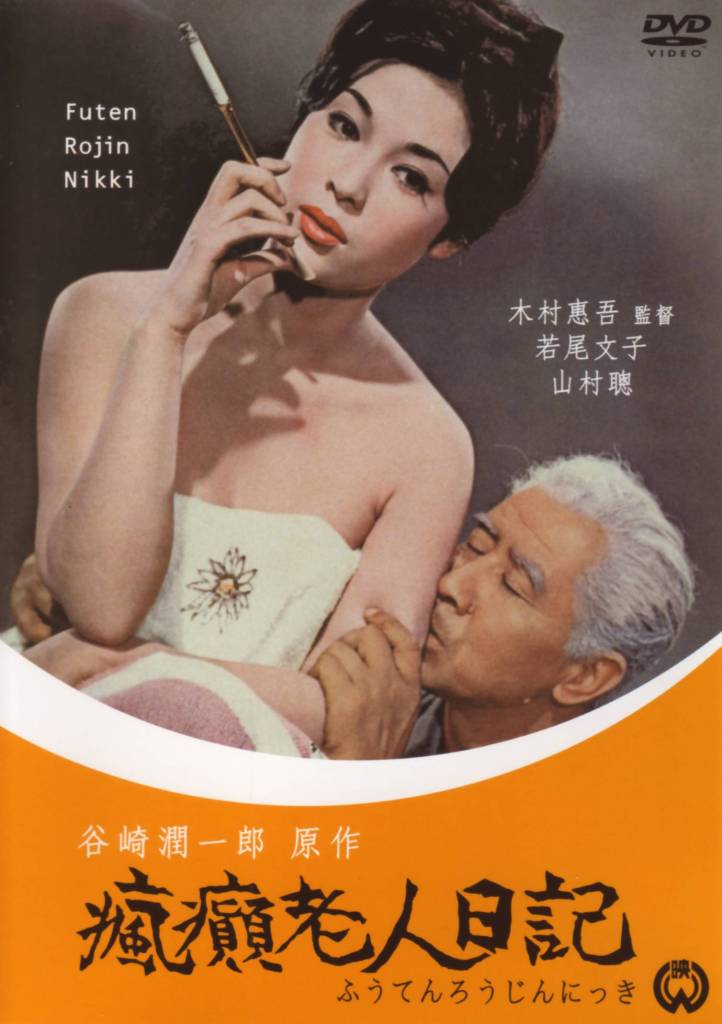 Junichiro Tanizaki is giant of Japanese literature whose work has often been adapted for the screen with
  Terra Formars – Terror for Mars? It’s all about terror in the quest for terra and reform in Takashi Miike’s bug hunt extravaganza adaptation of Yu Sasuga and Kenichi Tachibana’s manga. In fact, much of the plot is more or less the same as Aliens, but our motley crew is not a crack team of space marines headed by a recently awoken from stasis super survivor who proves unexpectedly dextrous in a robotic forklift exoskeleton, but a collection of human “bugs”, parasitical criminals who’ve each been made an offer they can’t refuse. High budget and boasting a starry cast, Terra Formars (テラフォーマーズ) definitely falls into the throwaway Miike category and proves curiously dull despite its ridiculous set up, but then if you happen to be into bugs there’s really a lot to like here.
 Yukio Mishima’s Temple of the Golden Pavilion has become one of his most representative works and seems to be one of those texts endlessly reinterpreted by each new generation. Previously adapted for the screen by Kon Ichikawa under the title of
 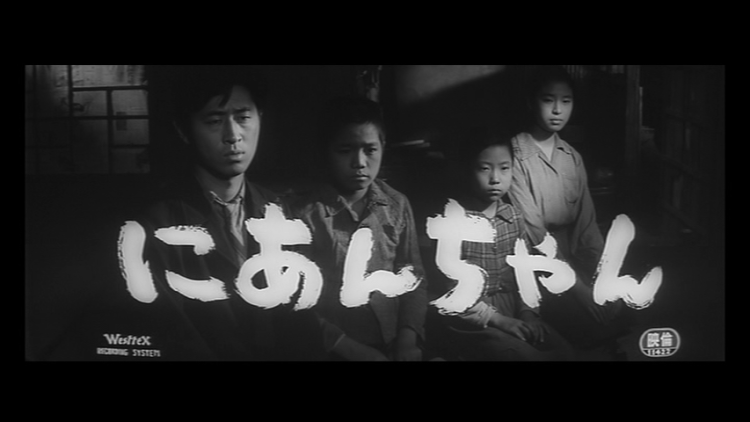 Like most directors of his era, Shohei Imamura began his career in the studio system as a trainee with Shochiku where he also worked as an AD to Yasujiro Ozu on some of his most well known pictures. Ozu’s approach, however, could not be further from Imamura’s in its insistence on order and precision. Finding much more in common with another Shochiku director, Yuzo Kawashima, well known for working class satires, Imamura jumped ship to the newly reformed Nikkatsu where he continued his training until helming his first three pictures in 1958 (Stolen Desire, Nishiginza Station, and Endless Desire). My Second Brother (にあんちゃん, Nianchan), which he directed in 1959, was, like the previous three films, a studio assignment rather than a personal project but is nevertheless an interesting one as it united many of Imamura’s subsequent ongoing concerns.
 Looking at the poster and its “A Most “Oshare” Movie” tagline, you’d assume Cats in Park Avenue (公園通りの猫たち, Koendori no Nekotachi) to be a very stylish story about some fashionable felines living on an uptown street comparable to the famous New York landmark but the title is entirely coincidental as it’s a literal translation of the Japanese and just means the cats live on a street near the park. These cats are full on alley cats, scrappy and free, roaming the rooftops of Shibuya and not giving a damn about whatever it is cats are supposed to do. Ostensibly a throw away young adult movie about a group of dance students and their obsession with a gang of local street cats, Cats in Park Avenue takes on a surprisingly individualist message as the virtues of freedom and validity of life outside the mainstream are resolutely reinforced through cute animation and nonsensical musical sequences.
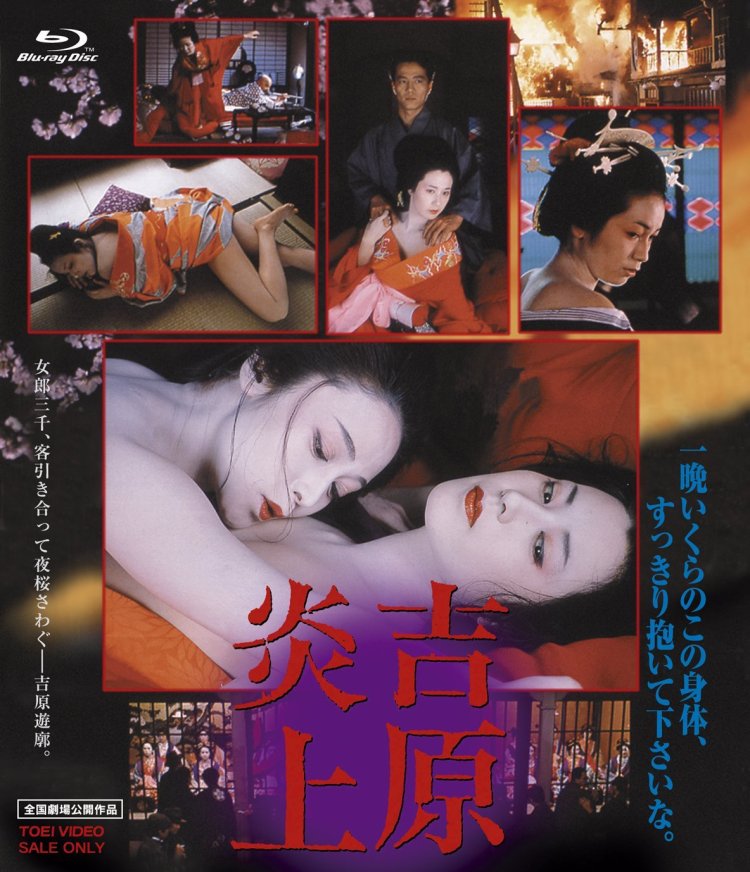 Hideo Gosha maybe best known for the “manly way” movies of his early career in which angry young men fought for honour and justice, but mostly just to to survive. Late into his career, Gosha decided to change tack for a while with a series of female orientated films either remaining within the familiar gangster genre as in Yakuza Wives, or shifting into world of the red light district as in Tokyo Bordello (吉原炎上, Yoshiwara Enjo). Presumably an attempt to get past the unfamiliarity of the Yoshiwara name, the film’s English title is perhaps a little more obviously salacious than the original Japanese which translates as Yoshiwara Conflagration and directly relates to the real life fire of 1911 in which 300 people were killed and much of the area razed to the ground. Gosha himself grew up not far from the location of the Yoshiwara as it existed in the mid-20th century where it was still a largely lower class area filled with cardsharps, yakuza, and, yes, prostitution (legal in Japan until 1958, outlawed in during the US occupation). The Yoshiwara of the late Meiji era was not so different as the women imprisoned there suffered at the hands of men, exploited by a cruelly misogynistic social system and often driven mad by internalised rage at their continued lack of agency.
