After the Rain (恋は雨上がりのように, Akira Nagai, 2018)

KoiAme_teaser_B5_F_outAdolescence is a difficult time for all, a period of waiting, in a sense, for the rain to end and everything to make the kind of sense you’ve been led to believe life is supposed to make only to finally see that the thing about life is there is no sense to be made of it. After the Rain (恋は雨上がりのように, Koi wa Ameagari no yo ni), adapted from the popular manga by Jun Mayuzuki, is touted as an admittedly creepy age gap romance between a confused teen and a melancholy middle-aged man but thankfully arrives at something more thoughtful and less problematic in its philosophical look at self-imposed inertia seen through the lenses of age and youth.

High school girl Akira (Nana Komatsu) loves nothing more than running but her record-breaking track career was brought to an abrupt halt by a ruptured achilles tendon. Having given up on her athletic dreams, she now spends her “free” time on a part-time job in a diner-style “family restaurant”. Unbeknownst to all, the reason Akira took the job was that the restaurant’s manager, 45-year-old divorced father Kondo (Yo Oizumi), was once nice to her after her accident and now she’s developed an almighty crush on his mild-mannered charms.

While Akira is processing the loss of her future as a top runner, Kondo is trying to get over not only the failure of his marriage but of his own dreams of literary success. Jealous of a college friend with a bestseller, Kondo has barely written anything in years and has all but resigned himself to a lifetime of managing a low-level chain restaurant in suburbia.

Kondo, for all his faults, is essentially a good guy whose major problem in life is being too nice. Needless to say, he’s not enthused by Akira’s surprise declaration of love and understands that it could cause him a lot of trouble but even so he wants to help her get over whatever it is that makes her think an affair with an older guy might be a good idea. Realising that her misplaced crush is most likely a displacement activity born of her grief for her racing career, Kondo sets about trying to coax Akira back towards something more positive than unwise romance through genial paternal attention even if she finds his attempts to make clear that he is only prepared to offer friendly support somewhat frustrating.

Akira’s problems are perhaps greater than they first seem. A strange girl with underdeveloped social skills and a relatively low need for interpersonal interaction, Akira has few friends and a habit of accidentally glaring at everyone she meets (which is not an ideal quality for a diner waitress). She is however very beautiful which also earns her a heap of unwanted attention precisely because of her angry aloofness. Neither of the boys her own age who declare an interest are very promising – both of them are unwilling to take a flat no for an answer and continue to chase Akira even though she consistently ignores them, though sous-chef Kase (Hayato Isomura) is at least a little more perceptive than he originally seems and finally able to offer some impartial advice to the confused young woman once he’s realised that his attentions really are unwanted.

Unwilling to engage with anything that reminds her of what she’s lost, Akira has been avoiding all her old friends. Haruka (Nana Seino), who has been chasing along behind desperate to catch up ever since they were kids, is as broken-hearted about their ruptured friendship as Akira is about running and longs to repair what was broken if only to prove that there’s more between them than just sports. Originally worried about Akira’s interest in Kondo she relaxes when she realises that he, like her, just wants to help Akira escape her moment of wounded inertia.

As Kondo puts, it’s boring waiting for the rain to stop. Like the heroes of Rashomon which becomes a repeated motif, Akira and Kondo are essentially just marking time waiting to be released from a self-imposed sense of frustrated impossibility. Kondo needed a dose of self-confidence which the decision to help a depressed high school girl who seems to be the only person who doesn’t find him pathetic just might offer, while Akira needs to realise that her life isn’t over and that she may have been too hasty in abandoning her dreams over what could be nothing more than a minor setback. Through their awkward non-romance the pair each rediscover something about themselves that they’d forgotten along with the courage to face their painful failures head on rather than attempting hide and living on in melancholy resentment.

Thankfully not the creepy age gap romance the synopsis teases, Nagai’s adaptation perhaps fails to mine the unexpectedly rich philosophical seam of Mayuzuki’s manga to its fullest extent in its powerful confrontation of age and youth sheltering from the storm of disappointment, but nevertheless presents an oddly warm tale of serendipitous friendships and mutual support as two frustrated people at different points of life each find the courage to move forward through helping someone else do the same.


Original trailer (no subtitles)

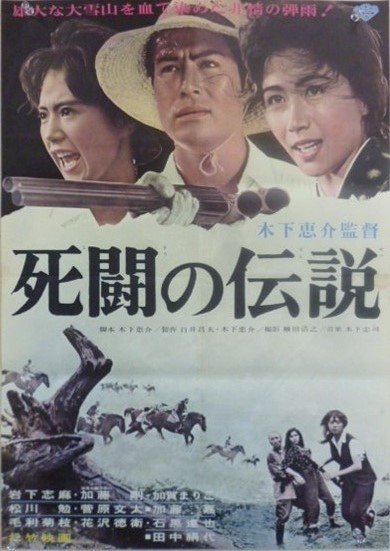
Thus Another Day (今日もまたかくてありなん, Keisuke Kinoshita, 1959)

Thus Another Day vertical bannerThe cinema of the immediate post-war era, contrary to expectation, is generally hopeful and filled with the spirit of industry. Keisuke Kinoshita might be thought of as the primary proponent of post-war humanism in his fierce defence of the power of human goodness, but looking below the surface he’s also among the most critical of what the modern Japan was becoming, worried about a gradual loss of values in an increasingly consumerist society which refuses to deal with its wartime trauma in favour of burying itself in intense forward motion.

The housewife at the centre of Thus Another Day (今日もまたかくてありなん, Kyo mo mata Kakute ari nan), Yasuko (Yoshiko Kuga), is a perfect example of this internal conflict. She and her husband Shoichi (Teiji Takahashi) have built a modest house way out of the city in the still underdeveloped suburbs for which they are still burdened by an oppressive mortgage. Shoichi has a regular job as an entry level salaryman but his pay is extremely low and Yasuko is forced to scrimp and save just to get by. The central conflict occurs one summer when Shoichi’s boss declares he’s looking to rent a summer house in the quiet area where the family live. Shoichi thinks it would be a great idea to rent out their house to his boss earning both money and favour. Yasuko can go stay with her family who live in a pleasant resort town while he will stay with a friend in a city apartment. Yasuko does not really like the idea, but ends up going along with it.

Shoichi is trying to live the salaryman dream, but it isn’t really going anywhere. Yasuko is home alone all day with the couple’s small son, Kazuo, who is too young to understand why the family lives the way it does and continuously asks probing questions which upset and embarrass his mother. Watching her painstakingly washing clothes by hand, Kazuo wants to know why they don’t have an electric washing machine like some of his friends’ mothers do. Yasuko tells him they’re saving money to get one, at which point he pipes up that he personally would rather have a TV set. Like his father, he is rather self-centred but being only four can perhaps be forgiven. Nevertheless, Yasuko is constantly embarrassed by the family’s relative poverty. When another neighbour spots her out shopping and decides to accompany her, she is visibly distressed that the stall she takes her to is a little more expensive than the one she had in mind. Wanting to save face, she buys expensive fish but is mindful of there being less money for the rest of the week.

Meanwhile, Shoichi is obsessed with “getting ahead” by ingratiating himself with his bosses – hence why he decided to let out his own house over the summer. The house is, after all, Yasuko’s domain and she perhaps feels family atmosphere isn’t something you should be selling. She resents that the family will be split up over the summer even if it gives her an opportunity to visit her mother and sister out in the country. Even when Shochi arrives to visit, he makes them trot out to a neighbouring town to visit his boss’ wife also on holiday in the area, and stays there all day playing mahjong while Yasuko and Kazuo are bored out of their minds sitting idly by. The second time he doesn’t even bother to invite them.

The small resort town itself is something of a haven from the demands of the city but there is trouble and strife even here. Shortly after her arrival Yasuko meets a strange, rather sad middle-aged man who is a stay at home dad to his beloved little girl, Yoko. Takemura (Nakamura Kanzaburo XVIII) came of age in the militarist era, attending a military university to become one of the elite. The world changed on him and he remains unable to reconcile himself to the demands of the post-war society. Experiencing extreme survivor’s guilt, Takemura is filled with regret and resentment towards the ruined dreams of his misguided youth in which he abandoned a woman he loved to marry a wealthy man’s daughter who he has also let down by refusing his military pension, forcing her into the world of work and eventually onto the fringes of the sex trade as a hard drinking bar girl.

As if to underscore the looming danger, a thuggish gang of yakuza have also decided to spend the summer in the resort, holing up at the inn where Takemura’s wife is working. The young guys terrorise the youngsters of the town, disrupting the well established social hierarchy with acts of violence and intimidation. The punks cause particular consternation to Takemura who remembers all the men their age who went to war and never came back only for the successive generation to live like this. Having lost everything which made his life worth living, Takemura decides to take a stand against modern disorder, hoping to die in battle the way he feels he ought to have done all those years ago.

Thus Another Day is among the darkest of Kinoshita’s post-war dramas, suggesting that there really is no hope and that past innocence really has been lost for good. The values of Takemura’s youth, however, would not perhaps line up particularly well with those most often advanced in Kinoshita’s cinema, as kind and melancholy as he seems to be. Yasuko goes back to her crushing world of unfulfillable aspirations with her obsequious husband and demanding son with only gentle wind chimes to remind her of happier days while she tries to reaccommodate herself to the soullessness of post-war consumerism .


Original trailer (no subtitles)

Orgies of Edo (残酷異常虐待物語 元禄女系図, Teruo Ishii, 1969)

Orgies of Edo poster“Pinky Violence” is a strangely contrary genre, often held up both as intensely misogynistic but also proto-feminist in its vast selection of vengeful heroines who seemed to embody the rage of several centuries of inescapable oppression. Teruo Ishii, at the very forefront of Toei’s attempts to graft pink film sensibilities onto its house style of manly yakuza drama, had a definite love for the perverse but, perhaps unusually, a consciousness of the implications of his world of surrealist violence. The Japanese title of Orgies of Edo (残酷異常虐待物語 元禄女系図, Zankoku Ijo Gyakutai Monogatari: Genroku Onna Keizu) translates as something like “a genealogy of the women of the Genroku Era” and concerns itself with three tales of misused women each of whom meets a grim end at the hands of faithless men who seem to embody the decadence of their prosperous times.

Ishii’s three tales of increasing madness and brutality travel from the streets to the palace in locating each scene of mounting debauchery within the shifting circles of prosperous Genroku era Edo. Our guide, positioned to the side of each of the tales, is a conservative doctor (Teruo Yoshida) who diagnoses his society as morally sick and hovering on the edge of a decadent abyss. Tellingly, each of episodes with which he becomes involved is presaged by his inability to access foreign knowledge in the wilfully isolated nation, slowly stagnating even in the midst of unprecedented prosperity.

His first patient is a young woman in the middle of a painful miscarriage caused by a beating intended to end her pregnancy. Abroad they know of an operation to avoid this sort of misery, the doctor muses, but he has no way of helping her. The young woman, Oito (Masumi Tachibana), like many in the tales of old Edo, got into debt and then was seduced by a handsome young man who posed as a saviour but only ever meant to misuse her. Hanji (Toyozo Yamamoto), a gangster, presses her into prostitution and eventually betrays her by taking up with another woman but neither of them are free of their respective captors be they the Yoshiwara or the gangster underworld.

The doctor’s second case is more extreme and calls upon him to make use of his knowledge of the Western notion of psychiatry in trying to cure a young noblewoman of her perverse fetish for the physically deformed. Ochise’s (Mitsuko Aoi) tastes stem back to a traumatic teenage incident during which she was abducted, held prisoner, and repeatedly raped by a man with a ruined face. Her loyal servant, Chokichi (Akira Ishihama), has long been in love with her but the pair remain locked in a one sided sadomasochistic relationship in which he knows that she can never return his love not because of their class difference, but because of his “perfection”. Pinching an ending from Tanizaki’s Shunkinsho, Ishii sends the frustrated lovers in a less positive direction in which a woman’s defiant insistence on pursuing her own desires is met only by the violence of a male need for possession which eventually leads to mutual destruction.

Mutual destruction is a final destination of sorts. The doctor’s third unrealisable request is for an untimely caesarian section – another piece of Western medical knowledge he has only vague awareness of. This unusual situation unfolds at the court of a lascivious lord whose perverse proclivities are quickly becoming the talk of the town. Drawn to a young woman, Omitsu (Miki Obana), who greets his attempt to fire his arrows at her while angry bulls with flaming horns charge at his other concubines with excitement, the lord is dismayed to hear of another of his ladies, Okon (Yukie Kagawa), enjoying the attentions of her pet dog and therefore somehow sullying his own bedroom reputation. The lord has Okon painted gold and thrown in a hall of mirrors for a slow and painful death of multiplied suffocations but she wins a temporary reprieve by promising to introduce him to untold pleasure if only he lets her live. This will all end in flames and ashes, but the lord hardly cares because it is only the natural end for his hedonistic endeavours.

The doctor performs his miracle and emerges with a child in whom lies the legacy of this immoral time. Yet the doctor wants to “save” it. Even if it’s a “beast” the child is innocent, he intones, insisting that he must live despite this burden in order to resist the madness. Like the strange butoh inspired performance art which opens the film, these are times of madness and confusion in which women, most of all, suffer at the hands of men who care only for their own pleasure. The doctor tries to cure the “sickness of the soul” that he sees before him, but knows that cannot be excised so much as tempered. Still he walks forward, away from the wreckage, with the future in his arms and resolves to live whatever the cost may be.


Orgies of Edo is available on blu-ray courtesy of Arrow Films.

Original trailer (no subtitles)

River Washes Away the Moon (残月大川流し, Yasushi Sasaki, 1963)

River Washes Away the Moon posterTimes are changing fast in Edo. Hibari Misora reunites with director Yasushi Sasaki for another jidaigeki adventure only this time one with much less song and dance and fewer tomboy antics for the often spiky star. Set in 1868 in the immediate aftermath of the fall of the Tokugawa Shogunate, River Washes Away the Moon (残月大川流し, Zangetsu Okawa Nagashi) is, in its own way, a story of revolutions, personal and political, as sides are picked and alliances forged in midst of a city in flux.

Edo, 1868. The Tokugawa Shogunate has been drummed out of the capital by the collective forces of Satsuma, Choshu, and Tosa but a new regime has yet to solidify itself. While some remain loyal to the Tokugawa cause, others join the new imperial armies leaving Edo a fractured state in which loyalists are on the run and violence rules the streets. Meanwhile, ordinary Edoities are trying to go about their everyday business. Ogin (Hibari Misora), an orphan, is a member of a pickpocketing gang run by a cruel mistress who metes out extreme punishments to those deemed to have transgressed her stringent rules, most often by trying to keep some of the money for themselves rather than hand it to the bosses for “redistribution”. Ogin is good at pickpocketing, but she has a noble heart and feels sorry for the country bumpkins who often become her prey. The madame wants her to take over the gang, but she wants out of the criminal life as soon as possible.

With things the way they are, the the loyalists ask the pickpockets for a favour – steal the shoulder badges off the Imperialist mercenaries so they won’t be able to return to their camps. The madame declares herself apolitical and declines but Ogin, a true child of Edo, feels quite differently and is only too keen to support the loyalists in whichever way she can. She gets her opportunity when a wounded soldier, Shinzaburo (Yoshitomo Ogasawara), creeps into the house she hides out in to get away from the gang. Ogin bravely hides Shinzaburo from the Imperialist troops and then hides him again when he returns sometime later after another battle with a lost little girl in tow. The pair grow closer, but Shinzaburo is under the impression Ogin is a wealthy merchant’s daughter and has no idea she is a poor orphan forced to pick pockets on the streets in return for safe harbour.

Unlike many of Misora’s jidaigeki heroines, Ogin is a much more “feminine” figure – she never gets to do any fighting of her own and the (extremely subdued) romance with Shinzaburo becomes the film’s main focus. She is however steadfast and bold. She stands up to her madame as much as feels she is able and is desperate to extract herself from the criminal world. As an orphan without any other means of support, however, her options are limited and even when she tries to do good it’s thrown back in her face.

Even Shinzaburo whose ideals one would hope to be more compassionate is after all a loyalist and not a revolutionary. His ideals are conservative if bending towards the moral good and therefore when he finds out what Ogin really is their connection is broken, he loses respect for her and though she never lied to him he blames her for the life she was forced to lead. A man like Shinzaburo might have lost his place, but he’s never known the kind of hardship a woman like Ogin has had to endure and the concepts are alien to him.

After getting her heart broken by Shinzaburo, Ogin finds the strength to break away from her criminal family by becoming an itinerant musician which gives Misora a chance to sing another song – her only other musical number is a full on set piece taking place during a community show held to raise money for orphans and possibly reunite dislocated people with their families in the process. Nevertheless Misora delivers an impressive performance as the continuously lovelorn Ogin, convinced that her world is limited by the circumstances of her birth and only latterly realising she has the power to change her fate (if for the slightly dubious reasons of proving herself worthy of Shinzaburo). Ogin opts for her personal revolution while Shinzaburo opts for a political one. By 1963 the winds of change were indeed blowing through Tokyo once again, though if there are any political messages to be found in River Washes Away the Moon they are fairly subtle and lean more towards compassionate living and finding the strength to live by your principles than advocating for direct agitation as the best path towards a fairer world.


Hibari’s musical numbers (no subtitles)

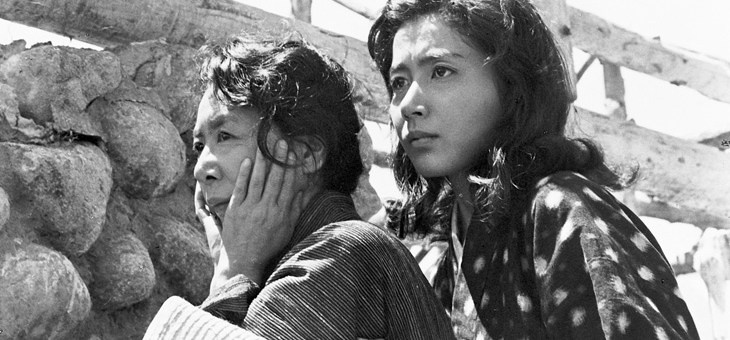
The Empty Table (食卓のない家, Masaki Kobayashi, 1985)

The Empty TableJapanese cinema of the 1980s is marked by an increasing desire to interrogate the idea of “the family” in an atmosphere of individualist consumerism. Yoshimitsu’s Morita’s The Family Game had blown the traditional ideas of filial piety and the primacy of the patriarch wide open in exposing his ordinary middle-class family as little more than a simulacrum as its various members sleepwalked through life playing the roles expected of them free of the true feeling one would expect to define familial bonds. A year later, Sogo Ishii’s The Crazy Family took a different, perhaps more positive approach, in depicting a family descending into madness through the various social pressures of maintaining a conventional middle-class life in the cramped environment of frenetic Tokyo. Masaki Kobayashi, unlike many of his contemporaries, was not so much interested in families as in individuals whose struggles to assert themselves in a conformist society became his major focus. The Empty Table (食卓のない家, Shokutaku no nai Ie) is not perhaps “a family drama” but it is, if indirectly, a drama about family and the ways in which the wider familial context of society at large often seeks to misuse it.

Set in 1973, The Empty Table is also among the earliest films to tackle the aftermath of the 1972 Asama-Sanso Incident. For ten days in February, the nation watched live as the police found themselves in a stand off with five United Red Army former student radicals who had taken the wife of an innkeeper hostage and holed up in a mountain lodge, refusing to give themselves up to the police. The discoveries surrounding the conduct of the United Red Army which had descended into a cult-like madness involving several murders of its members (including one of a heavily pregnant woman) shocked the nation and finally ended the student movement in Japan.

Kidoji (Tatsuya Nakadai) is the father of one of the student radicals, Otohiko (Kiichi Nakai), who took part in the siege. In Japanese culture, it’s usual for the parents of a person involved in a scandal to come forward and offer an official apology to the nation on behalf of the their children. During the siege itself the family had also been weaponised as mothers, particularly, were enlisted to shout from outside the inn, offering poignant messages intended to get their sons to give themselves up and come home. Kidoji, unlike the other fathers (one of whom hanged himself in shame), refuses his social obligation on the grounds that the actions of his grownup son are no longer his responsibility. 

As a scientist, Kidoji is used to thinking things through in rational terms and outside of Japan his logic may seem unassailable – after all, it is unreasonable to hold the conduct of a family member against an otherwise upright and obedient citizen. In Japan however his actions make him seem cold and unfeeling, as if he has disowned both his son and his position as the father of a family with whom rests ultimate responsibility for those listed on his family register. This way of thinking may be very feudal, but it is the way things work not just in the late 20th century, but even in the early 21st.

Kidoji’s refusal to do what is expected of him eventually leads to the crumbling of the family unit. Far from the cheerful scene we see of Kidoji, his wife, and their three children seated around a dinner table in celebration, the family now eat separately and Kidoji returns home to cold meals and an empty table. Kidoji’s wife, Yumiko (Mayumi Ogawa), has had a breakdown and had to be hospitalised, while his daughter Tamae (Kie Nakai) is forced to break off her engagement only to resort to underhanded methods to be allowed to marry the man she loves. While Otohiko languishes in prison, only his younger brother Osamu (Takayuki Takemoto) remains at home.

Kobayashi’s central concern is the conflict in Kidoji’s heart as he faces a choice between maintaining his principles and saving his family pain. It’s not that Kidoji feels nothing – on the contrary, he is profoundly wounded by all that has happened to him, but ironically enough, puts on the face society expects but does not want in maintaining his composure in a situation of extreme difficulty. Kidoji’s deepest anxieties rest in the need to “take responsibility”, something he must do in acknowledging that it’s not his son’s disgrace which has destroyed his family but his own rigidity in refusing to bend his principles and obey social convention. What Kidoji wants is for his son to take responsibility for his own choices as an individual rather than expecting his family to carry his load for him. He must, however, also take responsibility for the effect his choices have had on others, including on his family, and accept his role both as an individual and as a member of a society with rights and obligations.

Kidoji’s refusal to apologise on behalf of his son looks to the rest of society like an abnegation of his paternal authority, and without paternal authority the family unit crumbles like a feudal household whose lord has been murdered. Yet Kidoji, like many of Kobayashi’s heroes, refuses to compromise his principals no matter how much personal pain they eventually cause him. Where the rules of society make no sense to him, he will ignore (if not quite oppose) them, remaining true to his own notions of moral righteousness.

In many ways, Kidoji is the archetypal Kobayashi hero – standing up to social oppression and refusing to simply give in even when he knows how beneficial that may be to all concerned. He is also, however, just as problematic in allowing his family to continue suffering in preservation of his personal beliefs. Kobayashi’s final feature film, The Empty Table is extremely dated in terms of shooting style with its overly theatrical dialogue and frequent use of voice over and monologue which were long out of fashion by the mid-1980s. Kobayashi does, however, return to the more expressionist style of his earlier career, moving towards an etherial sense of poetry as his hero contemplates his place in a society which often asks him to behave in ways which compromise his essential value system. The family, broken as it is, is also (partly) mended once again as Kidoji begins to reconcile his various “responsibilities” into a more comprehensive whole as he prepares to welcome a new generation seemingly as determined to live in as principled and unorthodox a way as he himself has.


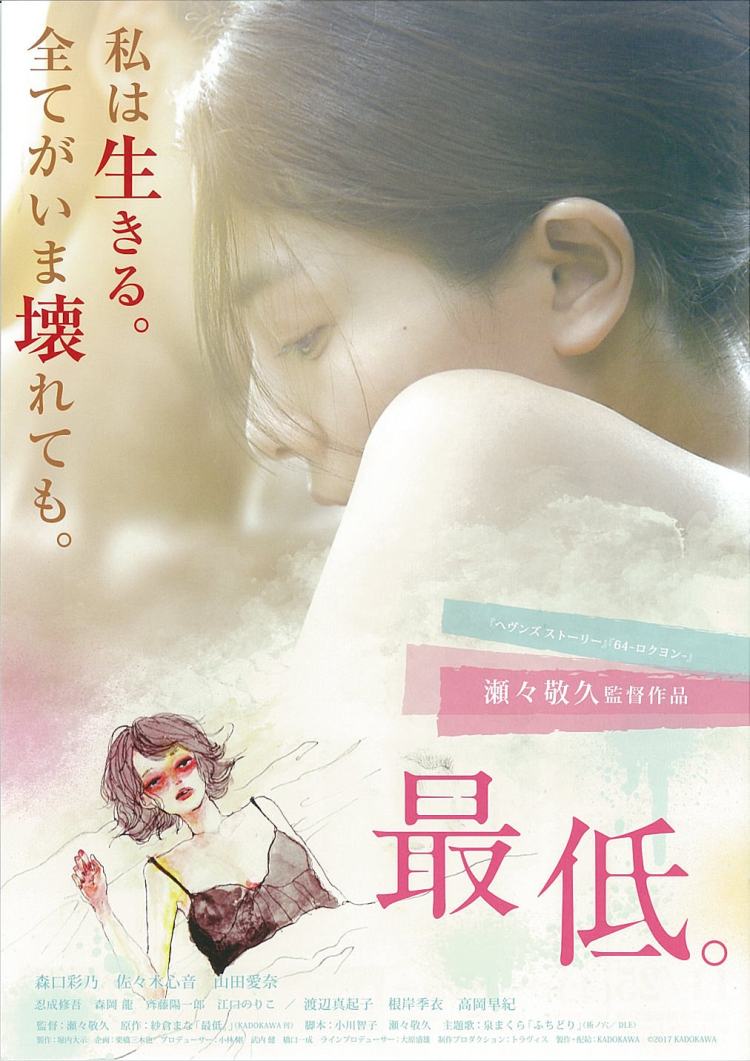
The Lies She Loved (嘘を愛する女, Kazuhito Nakae, 2018)

lies she loved posterHow well do you really know the people with whom you share your life? Or, perhaps, how honest have you really been with those closest you? Inspired by a notorious newspaper article, The Lies She Loved (嘘を愛する女, Uso wo Aisuru Onna) has a few hard questions to ask about the nature of modern relationships and the secrets which often lie at their hearts. Yet the message is perhaps that there are different kinds of truths and the literal may be among the least important of them. The salient message is that consideration for the feelings of others and a willingness to share the burden of being alive are the only real paths towards a fulfilling existence.

30-something Yukari (Masami Nagasawa) is a workaholic career woman currently at the top of her corporate game. Unmarried, she’s been living with impoverished medical researcher Kippei (Issey Takahashi) for the last five years and is happy enough with him (save the occasional one night stand) but also feels as if there’s something missing. She’s angry when he doesn’t show up to a pre-arranged dinner where he’s supposed to meet her mum, leaving her to deal with her mother’s disapproving scorn all alone, but chastened when it’s revealed he was found collapsed in a local park and is currently in the hospital after suffering a brain haemorrhage. If that weren’t enough chaos for the hyper organised Yukari, the police tell her Kippei’s ID is fake. He doesn’t work where he said he said worked and no one seems to have heard of him. Remembering a conversation about cheating spouses, Yukari turns to the detective uncle (Daigo) of one of her work friends for help but starts to wonder what sort of answers it is that she’s really looking for.

An intriguing mystery, The Lies She Loved begins in worrying fashion as if it wants to punish Yukari for her obsessive workaholic lifestyle and avoidance of the traditionally feminine roles of wife and mother. The couple aren’t married, but Kippei is for all intents and purposes a kept man and house husband. He doesn’t earn enough to contribute to the household economy, but makes up for it by handling the domestic tasks usually the domain of a “wife”, i.e. cooking and cleaning. Meanwhile, Yukari works insane hours and often stays out drinking with colleagues, claiming this valuable out of hours time as part of the job but sometimes spending it with other men. We see her “lie” to Kippei, telling him a large bouquet of snacks won from an amusement stand was a gift from a female friend when it came from a “date”, while he reproves her with coldness for her excessive drinking and the tendency it provokes in her for unsolicited cruelty.

Yet moving on we see that a woman’s career, or man’s lack of one, is not the issue at all. The issue is neglect, a taking for granted of other people’s feelings and their willingness to provide support and affection while getting nothing in return. Rather than going to work, Kippei had been spending time in a coffeeshop writing something that’s somewhere between novel and therapy about a happy family living on an idyllic island. We discover that he too once took something for granted, became wrapped up in his career, and overburdened someone else by allowing them to take on the entirety of their mutual responsibility with tragic consequences. Filled with remorse, he ran away from his crime and tried to forget.

The crime is not a woman working, but people in general working too much and knowing each other too little. Humiliated, Yukari wants answers about her immediate past, wanting to know if she was tricked by a conman in order to avoid facing the fact that she never really bothered to ask many questions about the man she invited into her home. Indeed, her decision to “invite” him in the first place is not altogether altruistic and cannot help giving off the scent of mild desperation as she tries to make the arrangement seem convenient while ensuring she retains the upper-hand in the power dynamics without giving too much away. What she really wants to know, without really wanting to admit it, is if her lover really loved her despite his “lies”, but to know that she’ll have to deal with her own longstanding intimacy issues and accept that a loving home is a balanced one in which both partners are equal and agree to share their burdens with openness and generosity. A progressive, nuanced look at modern romance The Lies She Loved is a surprisingly effective defence of love and a mild rebuke of the society which does its best to undermine it.


Original trailer (no subtitles)

Shitamachi no Taiyo (下町の太陽, Yoji Yamada, 1963)

(C) Shochiku 1963

Shitamachi no Taiyou DVD coverYoji Yamada’s debut feature, The Strangers Upstairs, was very much of its time as it attempted to capture the aspirational fighting spirit of the post-war era through the struggles of a nice young couple who are trying to “get on” and escape their humble origins for the salaryman dream through achieving the goal of home ownership as quickly as possible. His second film, Shitamachi no Taiyo (下町の太陽, also known as The Sunshine Girl / Sunshine in the Old Neighbourhood), takes a slightly different look at a similar issue as a young woman from Shitamachi – a working class industrial area on the outskirts of Tokyo, agonises over her future prospects as she considers a marriage to her longterm boyfriend who has ambitions to join the salaryman revolution.

Yamada opens with shots of Shitamachi and its prominent smokestacks while the now famous song plays in an instrumental version over the credits, before abruptly shifting to visions of the upscale Ginza where Machiko (Chieko Baisho) and her boyfriend Michio (Tamotsu Hayakawa) are enjoying a demonstration of an extraordinarily expensive, state of the art radio before retreating to a cafe where they agree that sometimes its more fun to “aspire” to things than actually obtain them. After all, there’s no way they could ever afford the diamond rings they walked past on their way out of the department store unless they decided to rob the place. Both Machiko and Michio are residents of Shitamachi and work in a local soap factory. Michio, however, has his sights firmly set on the path to a middle-class life and is planning to take the exam for a promotion to head office – though he lacks qualifications, Michio is confident because he’s studying hard (though more so because his dad and his section chief served together in the war so Michio is sure a good word will be put in for him).

Despite her fondness for Michio, Machiko has her doubts about his overriding ambition to get out of Shitamachi. Since her mother died, Machiko has been the lady of the house and primary caregiver for her naughty little brother Kenji (Joji Yanagisawa) while her older brother Kunio (Toshio Suzuki) is the family brainbox and also planning to bust out only through the path of education rather than advancement. Having left education behind, Machiko is happily contributing to the family finances with her job on the packing line at the soap factory which is, all things considered, not too bad – the work may be dull and methodical but also relatively quiet and stress free, not to mention sweet smelling. Nevertheless, Machiko does not necessarily want to work on the shop floor all her life but knows her opportunities are limited.

This fact is one cruelly brought home to her by a moody Michio when descends into a major sulk on learning that he hasn’t passed the test for head office because another of his colleagues outdid him – both in terms of his study ranking and in one upping him in having a direct connection to the director. While Machiko tries her best to sympathise and put up with his moody petulance, Michio chooses to throw her sympathy back in her face by abruptly announcing that she can’t understand the pain he’s going through because careers are irrelevant to women who only use them as a stopgap until they get married. Thoroughly annoyed, Machiko leaves Michio to his wallowing before things get any worse but she can’t argue with the fact that he’s only said what most people think.

Still, Machiko isn’t even sure she wants to get married. One of her friends, Kazuko (Kyoko Aoi), recently won the jackpot – she married a nice man who did get a promotion to head office and won the housing lottery for a home on one of the shiny new “danchi” – brand new apartment complexes for upwardly mobile young couples and the very embodiment of post-war aspiration. However, when Machiko and a friend visit the new bride they find that she is not quite as happy as one might expect. Though married life is peaceful enough and she and her husband evidently get on, Kazuko is also intensely lonely. With her husband away at work all day and often out playing golf with colleagues on Sundays too (not to mention after hours drinking and miscellaneous get togethers), there’s precious little for Kazuko to do, stuck at home all day cooking and cleaning while waiting for her husband to return. Having moved to the danchi she’s also lost her community and is no longer close enough to her friends to see them very often.

Meanwhile, Machiko is also somewhat disturbed by Kazuko’s collection of expensive cosmetics which her husband has instructed her to buy because he’s “very particular” about her appearance. Kazuko makes sure her makeup is on point before her husband gets home because that’s apparently what he likes. Machiko, however, does not like this – to start with, she thinks Kazuko looks better without. Not that there’s anything wrong with wearing makeup because you want to wear it, but the idea of wearing it because someone told you to and you’re worried they’ll “get bored” with your face doesn’t strike her as a particularly healthy relationship dynamic. If this is what a love marriage is like, perhaps Machiko would rather do without.

Despite her otherwise close relationship with Michio, it quickly becomes obvious that she does not love him and if she decides to marry him it will be because it’s the “sensible” decision rather than any great romantic desire. Annoyingly enough, Michio hasn’t really even asked her, he just assumes they will marry once he gets his promotion. He also assumes that Machiko, like him, will want to shake the dust of Shitamachi off her feet for good for the bright lights of Tokyo. Machiko, however is not so sure. “Getting on” is one thing and there’s nothing wrong with “aspiration”, but that doesn’t mean you need to look down on the people who come from the same place as you – after all, the sun still shines even in Shitamachi and there’s nothing wrong in choosing to be happy here rather than always chasing an unattainable dream of conventional success.

Another possibility presents itself when Machiko meets an unrefined boy who has an ordinary job in the steelworks. Though their first meeting did not make a good impression – he creepily chased her off a train and then made a mess of trying to explain why, they later bond when she realises he has befriended her troubled little brother and the pair then end up spending a pleasant evening together which is far more romantic than any of her dull and conventional outings with Michio. Then again the choice she faces isn’t between two men but whether or not to embrace her own ability to make a definitive choice about her future. What she rejects is cold and selfish path of men like Michio who only want to get ahead and are willing to step on anyone who gets in their way to make it happen. Machiko doesn’t want fancy radios and diamond rings, she just wants to not have to worry too much about money and for someone to actually listen to what she’s saying. She doesn’t want to end up like Kazuko, all alone in a sparkling apartment with nothing to do but knit. When Michio tells her to shut up and do as he says because he’ll definitely make her happy, the choice seems clear. Hard work, community, and maybe the fiery boy who seems determined to get a yes rather than assuming he already has one. Who wouldn’t want to live here?


Original trailer (no subtitles)

Famous title song performed by Chieko Baisho

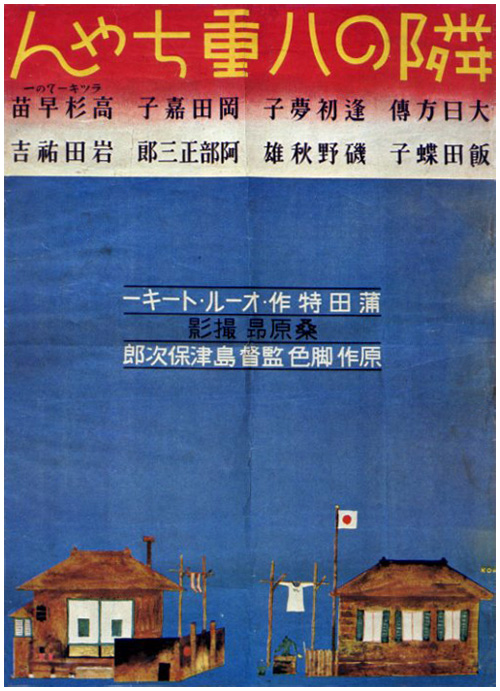
The Rendezvous (約束, Koichi Saito, 1972)

The Rendezvous poster“If human’s don’t trust each other, it’ll be the end of the world” – so says the cheerful hero at the heart of Koichi Saito’s The Rendezvous (約束, Yakusoku). Saito’s film is, somewhat unusually, a rare example of a Korean film remade in Japan. Inspired by Lee Man-hee’s Late Autumn (now sadly thought lost), The Rendezvous has been remade three times in Korea by such esteemed directors as Kim Ki-young (1975), Kim Soo-yong (1982) and most recently Kim Tae-young in 2010. There is indeed something particularly timeless in its tale of fate frustrating a fated love as each of our protagonists struggles to find the energy to rebel against their own sense of impossibility.

A brief framing sequence begins with a nervous, melancholy woman, Keiko (Keiko Kishi), sitting alone on a park bench, surrounded by the cheerful activity of athletes training, women pushing prams, and families enjoying the crisp sunshine. As she thinks back to what brought her here we travel back with her to a fateful train journey some years previously.

Keiko sits sadly by the window, impassively watching the sea stretch out as the train whizzes by. An older woman (Yoshie Minami) is sitting next to her, though they appear at least not to be on particularly friendly terms. At the first stop a younger man, Akira (Kenichi Hagiwara), gets on and sits down opposite Keiko, throwing a newspaper over his face, presumably to help him get some sleep (or, as we later wonder, perhaps just to better disappear). Intrigued, Keiko nevertheless shivers on catching sight of the paper’s headline – “Drunken Husband Stabbed to Death”. Knocking the paper off his head as she gets up to go to the bathroom, Keiko clips it back on for him with her hairpin – something that later gives him an excuse to talk to her when he eventually wakes up.

Akira, it turns out, is the chatty sort of person who enjoys making conversation with strangers. He makes a nuisance of himself trying to chat to Keiko and the old woman who ignore him, whilst accidentally frightening the bored little girl opposite by trying to entertain her. The ice finally thaws when Akira decides to buy everyone lunch – Keiko accepts and speaks to him if only to insist on paying him back (which the old lady then also feels compelled to do). Though very little actual conversation takes place on this first train journey, Akira is also travelling to the same small town as Keiko and continues to make a nuisance of himself by following her around. Nevertheless a connection begins to form between the pair, such perfect opposites in every way but one, though the time is always ticking and the encounter is one coloured by its impending end.

Keiko’s mysterious behaviour is later revealed to be more than just shyness or existential angst. Akira repeatedly asks for her trust, but she claims herself incapable of trusting anyone because in a sense she is already dead. Indeed, her entire aura is one of deliberate stillness, rarely speaking, and often leaning sadly against a more solid structure as if lacking the energy to fully support herself. Ironically enough, Keiko’s name is written with the character for “firefly” – a creature that burns out bright and then fades away. Keiko not only believes that her light has gone out, but that there are no more fireflies left. Akira, whose name is written not with the character for “bright” but with one for “cheerful”, begins to show her that there could be fireflies still, jokingly pointing to the lights from a nearby boat bobbing on the water.

We’re later told that the root of all Keiko’s suffering is “an absence of love”, that as passion cooled there was only emptiness in its place. “Emptiness” seems to be the force which defines Keiko’s existence, the reason her fire is out and her life apparently over. Though she feels a passionate attraction to Akira, she cannot bring herself to submit to it, both distrusting herself and afraid to face the possibility that it too will end. Both Keiko and Akira are fugitives from themselves, literally railroaded towards an inevitable conclusion they lack the courage to oppose. Akira wants to run, but Keiko knows she belongs on the train, incapable of escaping her self-imposed imprisonment and unwilling to step away from her unchanging destiny.

Fate follows them everywhere – violent headlines, prisoners being escorted, flashes of handcuffs, all reminding them that they are trapped, powerless in the face of an oncoming reckoning. Akira repeatedly asks Keiko to trust him, insisting that as long as she believes in him everything will be alright. Yet Akira is a flustered young man always in a hurry, running as if already late for the future. He makes Keiko a promise of a meeting and even gives her his watch to help her keep it, yet fails to appear. Akira’s heart may be trustworthy, but his body less so and even if he really wanted to come fate may have other plans. Love, it seems, is not enough. Saito returns to Keiko, sitting alone on the bench, waiting as the park empties and all the kids go home for tea. There’s no way to know if Akira can keep his promise even if he meant to, but perhaps there is something even so in the continued faith that he might simply bound in, hours late but as earnest as ever.

The central narrative seems to retain the Korean of sensibility of Lee’s original in its sense of dread and inevitability, and of passion repressed. Saito’s approach leans more towards misty European arthouse than your average Shochiku romance, making the most of its mystery as the time continues to run down for Keiko and Akira before they must prepare to meet their respective fates. Fate, at least, will wait for you and will always be there in the end. Impossibility defines the world of the defeated Keiko and the childlike Akira, but perhaps the most painful thing is hope itself, and the lingering faith that a promise will be kept despite the overwhelming odds.


Original trailer (no subtitles)

It’s Me, It’s Me (俺俺, Satoshi Miki, 2013)

It's Me It's Me posterSome say it’s good to be your own best friend, but then again perhaps too much of your own company isn’t so good for you after all. The hero of Satoshi Miki’s adaptation of the Tomoyuki Hoshino novel, It’s Me, It’s Me (俺俺, Ore Ore), is about to put this hypothesis to the test as his identity literally splinters, overwriting the source code of strangers and replacing it with its own. How can you save your identity when you aren’t sure who you are? Perhaps getting to know yourself isn’t as straightforward a process as most would believe.

Hitoshi (Kazuya Kamenashi), an aimless 20-something, had dreams of becoming a photographer but they’ve fallen by the wayside while he supports himself with a dead end job on the camera counter in a local electronics superstore. Virtually invisible to all around him and so anonymous the woman in the fast food restaurant almost wouldn’t give him the fries he’d ordered, Hitoshi is irritated when two salaryman-types gossiping about how one of them plans to quit the company to pursue his dreams rudely invade his space. Perhaps for this reason, he finds himself taking off with the irritating stranger’s phone after he carelessly allows it to fall onto Hitoshi’s tray.

Emboldened, Hitoshi decides to use the phone to commit an “Ore Ore” scam – a well known telephone fraud in which a stranger rings an elderly person and shouts “it’s me, it’s me!” in a panic so they won’t twig it’s not really their grandson who is ringing them and claiming to be in some kind of terrible trouble which can only be relieved with cold hard cash. Not the sharpest knife in the drawer, Hitoshi gets the money wired to his account and then tries to dispose of the phone but it’s already too late. When he gets home, a strange woman (Keiko Takahashi) is in his apartment and she keeps calling him “Daiki”. What’s more, when he tries to go and see his mum (Midoriko Kimura), another guy is there who looks just like him and his mum won’t let him in.

Hitoshi eventually becomes friends with “Daiki” who introduces him to another “Me”, Nao – a cheerful student slacker. Each in their own way slightly disconnected, the trio build up an easy friendship – they do after all have quite a lot in common, and begin jokingly referring to their shared apartment as “Me Island”. Hitoshi, remarking that he’s never felt so carefree among others, begins to see the upsides of his strange new situation which obviously include the ability to be in two places at once, but too much of himself eventually begins to grate when Nao begins tracking down and bringing home all the other Mes he can find with the intention of launching a Me Empire.

A member of a lost generation, Hitoshi is a perfect example of modern urban malaise. Though he once had dreams, they’ve been steadily killed off by an oppressive society leaving him alone and adrift, unable to connect with others as the light slowly dies in his eyes. Perhaps, however, there is the odd flicker of resistance in his intense resentment towards those who have defiantly not given up – the chatty salaryman talking about his individualist dreams and later his work colleague who has been secretly taking accountancy classes in an effort to escape casual employment hell for a steady, if dull, regular job.

Hitoshi has always regarded relationships as “troublesome” but begins to feel differently through bonding with himself. As Daiki puts it, accepting others means that you’ll be accepted – something Hitoshi unconsciously longs for but is too insecure to believe is possible. His actualisation receives another stimulus when he meets the beautiful and mysterious Sayaka (Yuki Uchida) who again encourages him to accept the one who accepts you and is the only other person who seems to be able to see the “real” him as distinct from all the other Mes. Yet Hitoshi struggles – he can accept parts of but not all of himself, eventually leading to a disastrous turn of events in which the parts of himself he does not like begin being “deleted” as one Me decides to make war on all the others.

Only by ridding his psyche of imperfections can Hitoshi reformat his personality and once again resume full autonomy as the one and only Me. Yet can we be so sure final Hitoshi is the “true” Hitoshi? Who can say – only Hitoshi himself can know the answer to that (or not), the rest of us will just have to accept him as he is in the hope that he will also be able to accept us so that we can in turn accept ourselves.


Original trailer (no subtitles)

Farewell to Spring (惜春鳥, Keisuke Kinoshita, 1959)

(C) Shochiku 1959
Farewell to Spring poster

For Keisuke Kinoshita, people are basically good even if the world around them often isn’t. Even so, there are limits to goodness. Can friendship survive if an intimate trust is abused, or will betrayal cut the cord once and for all? Unlike many of his contemporaries, “youth” was not a theme in which Kinoshita was particularly interested. Or, at least, not quite in the same way. Farewell to Spring (惜春鳥, Sekishuncho) is in some senses an awkward fit for his usual concerns but then the concerns here are perhaps closer to the personal in examining the changing fortunes of a group of five male childhood friends who find themselves scattered in the complicated post-war landscape, facing their mutual troubles in solitary, manly fashion while their friendship withers under the weight of their individual sorrows.

The drama begins when Iwagaki (Yusuke Kawazu) returns to his Aizu mountain village after being away at university for the previous two years. As Iwagaki’s parents have died and his half-brother moved to Hokkaido with his family, Iwagaki has no “home” in his hometown as he sadly tells a familiar face spotted on the train. Nevertheless, his friends are very excited to see him and have all rallied round without even being asked. Iwagaki will be staying at an inn owned by the family of his friend, Minemura (Kazuya Kosaka). The other boys all stayed in the village. Makita (Masahiko Tsugawa), the illegitimate son of a bar owner is being primed to take over the family business while sort of dating the step-daughter of his estranged father; Teshirogi (Akira Ishihama), the younger son of an impoverished former samurai family, is working at a local factory and heavily involved in the labour movement; while Masugi (Toyozo Yamamoto), who is disabled with a lame leg thanks to a childhood accident, works alongside his parents in a traditional lacquerwork shop but finds his livelihood threatened by political troubles with China.

Once a tight group of small-town friends, none of the boys quite wants to acknowledge how far they have drifted apart, not just from each other, but from the young men they once were even though comparatively little time has actually passed. Nevertheless, the shadow of their old bond still exists. It is obvious to all the boys that Iwagaki has returned in some kind of disgrace. A favourite of their teacher, Iwagaki had been given a valuable opportunity to better himself by going to university in Tokyo but has apparently fallen out with his sponsor and into hard times. The story he tells his friends is dark. They’d heard it had to do with a “dalliance” with a maid which annoyed his patron but the way he describes it sounds more like a rape revenge followed by an unwanted romance which he eventually ran away from. Iwagaki is not making himself look good which might suggest that he trusts his friends enough to tell them the truth, or perhaps just doesn’t quite see the various ways in which his conduct discredits him, but either way there is deepening gulf between each of the men in which none is quite being honest with the other.

Iwagaki’s arrival doesn’t so much stir up old troubles as occur alongside them. The central drama revolves around a squaring off between Makita and Teshirogi over a girl, Yoko (Yukiyo Toake), who is the niece of Makita’s biological father, a nouveau riche pawnbroker with a steely wife, Tane (Teruko Kishi), who hates Makita’s mother for obvious reasons. The mistress and the wife are locked into an internecine battle of wills and resentments and so both are opposed to a marriage between Makita and Yoko even though they have fallen in love independently. As there is no son in the family, Makita’s father needs someone to marry in through marrying Yoko. It would obviously be ideal for him if his “real” son could inherit his estate, but Makita’s mother wants him to take over her bar and Tane is directly opposed to suffering the humiliation of a mistress’ son living under her roof and so they are at an impasse. Meanwhile, Tane has been trying to arrange a socially beneficial marriage and has settled on Teshirogi, the impoverished son of an aristocratic family.

A confluence of post-war problems, the first question pits the traditional arranged marriage against the youngster’s right to choose. Yoko doesn’t want the arranged marriage. She’s doing everything she can to fight it even if she ends up alone, but Makita has already given up believing the situation is futile. Teshirogi tries to ask him if it’s OK to pursue Yoko, but Makita doesn’t really answer. What he says is do as you see fit, but Teshirogi hears only what he wants to hear and fails to notice that Makita minds quite a lot and has only said that out of a sense of despondency and a possible romanticisation of his emotional suffering. Yoko is living in the post-war reality. She rejects the idea of arranged marriage and of her adoptive parents’ right to control her future, but she is unable to fully resist alone. She needs Makita to stand with her, but he doesn’t have her courage. Meanwhile, Makita is also consumed by thoughts of romantic impossibility thanks to the sad story of his melancholy uncle (Keiji Sada) who tried to run off with a geisha (Ineko Arima) only for her to be dragged back by her madam because of an outstanding debt.

Debt bondage is something else that’s thankfully on its way out in the post-war world thanks to the prostitution laws which are contributing to a decline in the fortunes of Minemura’s inn. Feudalism, however, is doing its best to cling on, especially in tiny mountain backwaters. Teshirogi may now be a proletarian factory worker flying the red flag and taking an active part in the labour movement as a striker protesting for better pay and conditions, but at heart he’s still a nobleman and has a natural sense of entitlement and superiority towards his friends which is only deepened by his resentment over his comparative financial inferiority. Yoko asks him to turn down the marriage proposal because she’s in love with Makita and fears her family won’t listen to her alone, but Teshirogi roughly tells her he doesn’t care much for her feelings and will make his own decision. Later he insists on giving his answer “the proper way” by going through his father, and submits himself entirely to the processes of the pre-war society. Making a half-hearted justification to Makita, Teshirogi confesses that his decision to push for the marriage was motivated by his poverty and a desire to regain his status if also partly because he too is attracted to Yoko and admires her spiky spirit even if it otherwise seems to contradict his conservative views.

Teshirogi breaks the bro code in favour of self interest, not actually caring very much if it costs him friendships which he appears not to value. As openly gay as it was possible to be in the late 1950s, Kinoshita creates an intensely homosocial world of male honour-based bonding, but makes a tragic hero of the innocent Masugi who is in a sense feminised by his disability which prevents him from participating in the manly rituals of the other boys, most notably in the coming of age sword dance in which he becomes narrator rather than sword bearer. Teshirogi, in an early instance of smug insensitivity, throws a mildly barbed comment at Masugi in tersely suggesting that his affection for Iwagaki runs beyond friendship, something which the group seems to be aware of but does not want to go into, or at least not really like this. Masugi and Minemura emerge as the most pure hearted and the most hurt among the friends, clinging on to the idea of their friendship even as they are betrayed by those closest to them while Makita wonders if betrayal is an essential component of connection or merely its inevitable end.

Despite the central betrayal, the boys eventually manage to salvage something of their friendships, leaving the field of battle together and alive if also wounded and sorrowful. Unlike the tragic White Tigers in the song which recurs throughout the film who elected mass suicide on believing their battle was lost, the boys move forward, Makita, at least, spurred on by his uncle’s tragic romance decides that love is worth fighting for after all and that he doesn’t have to blindly accept the profound inertia of small-town Aizu life or the natural authority if the hypocritical Teshirogi who shouts socialist slogans but insists on his social superiority. Friendship may not survive the compromises of adulthood, but perhaps the bonds between people aren’t so easily broken after all even if they consistently break your heart.


Original trailer (no subtitles)