731 (Zhao Linshan, 2025)

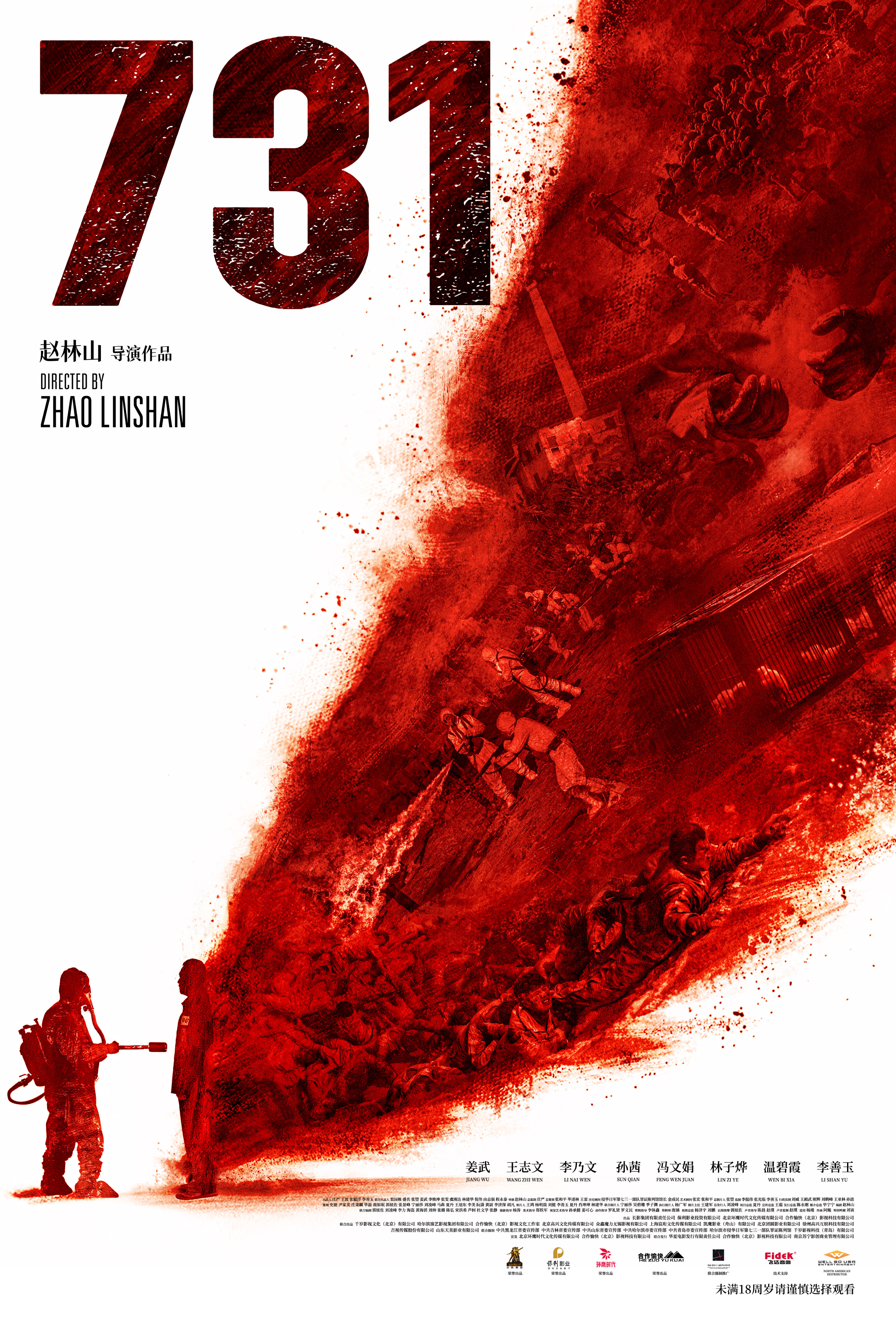
When Dead to Rights was released last year, there was outcry in some quarters that a horrific historical event was being misused for propaganda purposes to fuel hate against the Japanese. These claims were not unfounded, but if the film’s propaganda aims were subtle enough to fly over the heads of those with little knowledge of China and its history, the same cannot be said of 731 which is guilty of every charge levelled at Dead to Rights while simultaneously being a flippant examination of very real and heinous war crimes committed by Japan predominantly against the Chinese, but also Russians and prisoners from other parts of its empire.

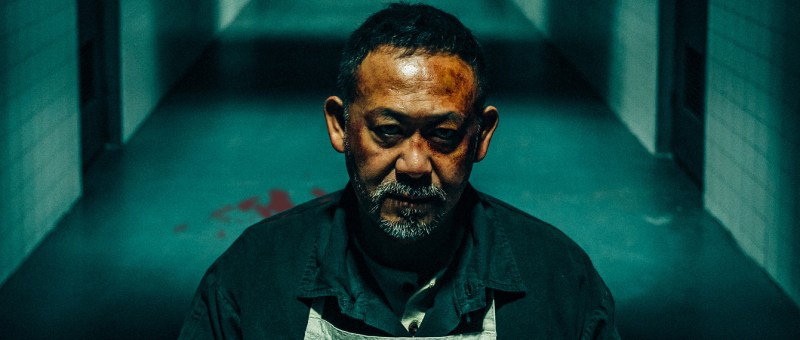
Those familiar with the subject matter may recall that there were no known survivors from Unit 731, a scientific unit conducting inhumane human experimentation such as vivisection, as the Japanese murdered all of the remaining prisoners and destroyed the facilities at the end of the war. The film may be based on reports of an escape attempt in the summer of 1945, but descends into nihilism as the hero is ultimately unable to live up to the reputation of the man from whom he’s stolen his identity. Wang Yongzhang (Jiang Wu) calls himself Wang Zicheng, supposedly responsible for leading another prison revolt and escape in the 1930s and thereafter becoming active in the resistance. Wang is, however, a pragmatic coward and quickly finds himself given the task of delivering food to the other prisoners, apparently because of his talent for languages which includes Russian and Korean as well Japanese and Mandarin, though he is not supposed to talk to any of them aside from repeating slogans. In any case, he’s content to go along with the Japanese guards in order to preserve his life up to the point that he discovers what’s really going on at Unit 731 and realises that his predecessor was the man he first met on his arrival and has now been murdered.

The atmosphere, however, is decidedly odd with its moments of misplaced humour and takes on an almost squid game-esque aesthetic as announcements are made by a little girl stating that the prisoners have been brought here because they are “sick” and will be “free” when they are”cured”. Obviously, the Japanese officers have different definitions of “cured” and “free” than would usually be assumed, just as they refer to the prisoners as “logs” in their records which obviously means that they are fully aware what they are doing is wrong and they’ll have to face the consequences when all this comes to light. Prisoners are bizarrely made to follow an oiran procession to be “freed”, while many of the staff members dress in formal kimonos rather than military uniforms. The building itself is labyrinthine in design and aesthetically well designed, while the insistence on cleanliness, so they can be sure their biological weapons work as opposed to prisoners just dying of concentration camp diseases, ensures everything sparkles with science fiction sheen. 

On the other hand, the partial suggestion is that these people are “sick” because they’re culturally Chinese, and need to get better by becoming good Japanese citizens who accept the Emperor’s benevolence which is why they make the children read announcements. But at the same time, no one’s getting out of here anyway, and there’s no real explanation for the children’s strange role in the apothecary. Ahistorically, there’s a female Japanese officer who seems to have a hangup about maternity and sleeps next to a pregnant prisoner. She also speaks incredibly bad Japanese to the extent that another character questions where she’s from, but no further point is made aside from her generalised sadism. That the film is so gory in some places almost ends up giving these very real, heinous crimes a camp quality while focusing not on the people being flayed alive or frozen and having their limbs smashed, but the weird room of foetuses in jars. Ishii, meanwhile, the head of the project, seems very interested in the baby of a Chinese doctor who otherwise embarrassed them by being able to figure out how to cure the plague they were developing as a biological weapon with traditional medicine ingredients.

The whole thing makes very little sense, but is really only leading up to sentences like “how could there be Japanese in heaven?” while the film ends with footage of people attending an exhibition on Japanese war crimes along with a pointed reminder that most of the key personnel involved with Unit 731 were never prosecuted because the Americans granted them immunity in exchange for their research. It seems to be suggesting there is again an existential threat, and that there will be “no survivors” this time either if China does not assert itself. Nevertheless, in doing so, it sells a rather surprising message for a propaganda film in making its hero a failure, a man who in the end could not lead his fellow countrymen to freedom but only to death in direct contrast to the resolution usually found in films like this which is included only in the final title card stating that the Chinese people finally put paid to 14 years of Japanese aggression and scored a win for the global anti-fascist movement, which at least seems a little ironic in the light of contemporary authoritarianism. Completely baffling on several levels, the film seems to undercut itself at every opportunity and lands somewhere in the realms of nihilistic fairytale and bizarre fever dream.


731 is available on Digital in the US courtesy of Well Go USA.

Trailer (English subtitles)
A Story About Fire (燃比娃, Li Wenyu, 2025)

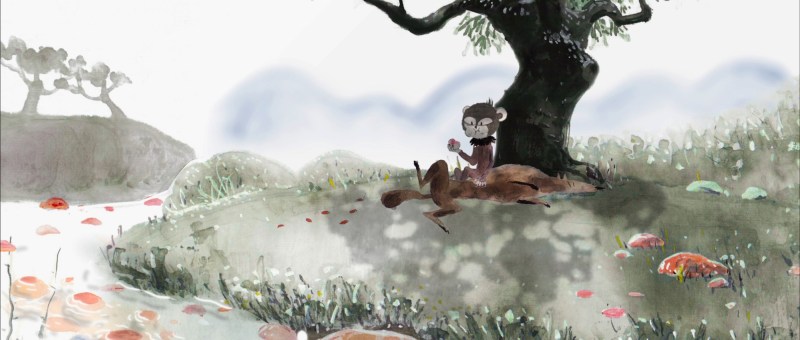
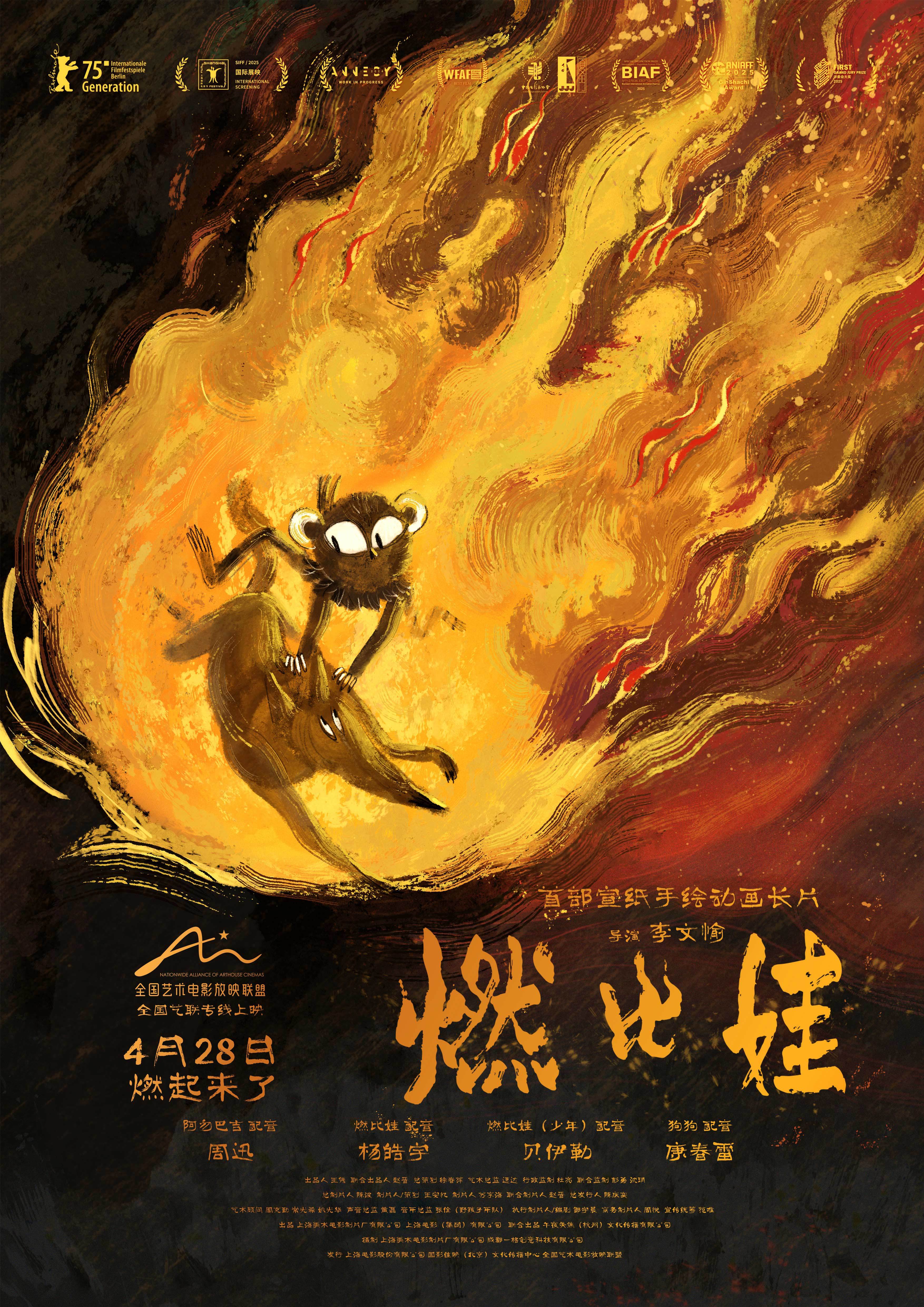
A young monkey sets off on a journey to claim fire from the gods and also discover the secrets of his origins in Li Wenyu’s poetic indie animation A Story About Fire (燃比娃, ránbǐwá). Loosely based on the classic Qiang legend Ranbiwa Steals Fire, the film is also a tale of human enlightenment and coming of age as the hero and his trusty wolf friend Doggie traverse an icy, barren land looking for the so-called Holy Mountain in order to return warmth to the earth.

Animated in a style reminiscent of classical ink paintings, the tale is told along parallel lines as we follow Ranbiwa and Doggie intercut with the original journey of the AWUBAJI, the chief of the human tribe, who travelled to the mountain but brought back only the baby Ranbiwa and a white stone. As an adolescent, Ranbiwa is told that it is now his turn to journey to the mountain as a kind of rite of passage, which is to say he’ll become a man in all senses of the word, yet none who were sent have ever returned let alone brought fire back with them. As Ranbiwa gets closer to the mountain, he learns to walk standing upright like a human and finally has his tail bitten off by the monster that guards the cave of fire marking his transition into the world of adulthood and also the enlightenment of mankind as he unlocks his own future and banishes the cold.

To get there, however, he must traverse difficult terrain with little to nothing to eat and with only his best friend Doggie, a friendly wolf, to help him. Together they learn to survive by killing and eating other animals, which is both a kind of fall and also an example of the necessity of working with the natural world. This is truly nature red in tooth and claw as the pair inhabit this very primal world where violence and survival are synonymous. Nevertheless, even in this cold place, Doggie often gives Ranbiwa warmth by curling around him and protecting him from predators. When sources of food begin to decline as they approach the mountain, Ranbiwa is able to eat the fruit from the trees but Doggie is not. Ranbiwa gives him the meat he’d been saving as an act of true friendship and appreciation. 

On their travels they also rescue a young girl and eventually help her reunite with her family who have a large herd of woolly mammoths. Though they agree to give Ranbiwa and Doggie a lift to the mountain, they, by contrast, are heading towards where the sun rises in search of the same thing but on the plains rather than the mountain. Ranbiwa is happy the girl has found her family, but also sad to part with her even if this, the first of two partings, also marks the beginning of a transition from one state to another. Ranbiwa has never seen fire, but he’s never seen the rain either and each of things is necessary to return balance to the world.

Having studied under the legendary Ma Kexuan who worked as an animator on Havoc in Heaven and Nezha Conquers the Dragon King, Li spent six years completing the project alone while working as a professor of animation at the University of Sichuan, the area where the Qiang resided. The minimalism of the opening sequences eventually gives way to beautiful pastoral imagery of plum trees in bloom and the fiery battle in the cave of darkness in which Ranbiwa achieves Nirvana and receives enlightenment, the complexity mirroring Ranbiwa’s own path towards sophistication. At one point, images of civilisations throughout history fly by at breakneck speed lending Ranbiwa’s quest an elegiac quality as if all of human history stemmed from this one moment in which a little monkey toppled the oppressive holy mountain and liberated fire from the gods to return it to the people. Sparse narration adds to the mythical feel while lending a personal dimension to Ranbiwa’s story as he struggles to uncover his past and find out who he really is while finding solace in the warmth of friendship even in the harshest of winters.


A Story About Fire screens in Chicago 11th April as part of the 20th edition of Asian Pop-Up Cinema.

Trailer (English subtitles)

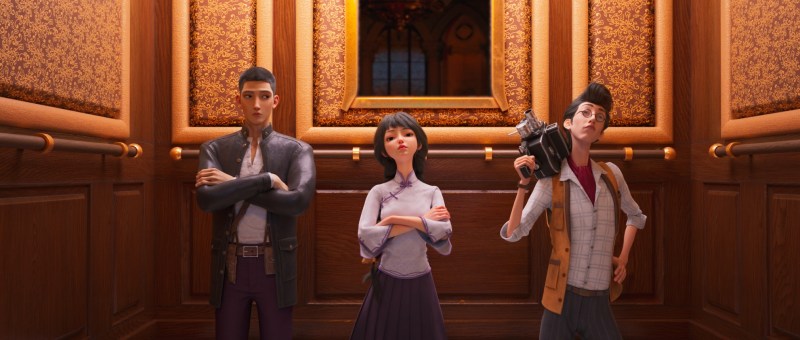
The Girl Who Stole Time (时间之子, Yu Ao & Zhou Tienan, 2025)

All Qian Xiao (voiced by Liu Xiaoyu) wants to escape her boring island life where time runs slowing to experience the fast-paced life of the city, though her guardian, an older man she describes as an artist who can develop film, is not keen for her to go. Washing up on the island three years previously having lost her memory, Qian Xiao is fascinated by the films they watch in the town square which seem to her modern and exciting while also a means of capturing time and assuring that nothing is ever really forgotten.

But when she’s shipwrecked after accidentally stowing away on a steamship that collides with an ocean liner, she unexpectedly gains the ability to pause time with a small device known to assassin Seventeen (Wang Junkai) as the “time dial”, though she calls it the “shiny gold spinny thing”. Seventeen has been charged with recovering it on behalf of his mysterious boss Mr Zou who has set his minions a challenge declaring the person who brings it to him will be the only one to survive. The ability to pause time is indeed useful in a practical sense in that it allows Qian Xiao to escape her enemies temporarily, flicking a bullet out of the way that otherwise have entered the back of Seventeen’s head.

In other ways, however, it may not always be a good thing and time can never really be turned back but is ever marching forward. It’s not meant to be paused forever. Qian Xiao tries to extend her time in the city by putting it on pause, but then quickly becomes bored. There’s not a lot to do here if everyone’s stood still like a statue and she’s stuck on her own again. The irony is that she’d complained about island life being too slow, but as she grows closer to Seventeen all she wants is string time out for as long as possible. This is also, in someways, a reflection of ageing that young people are often in a hurry to grow up and experience the world, but as you get older time passes more quickly and you begin to feel it running out. Despite having said that you only have one life and there are things you can’t fix no matter how hard you try, she begins trying to find ways to get a second chance and stop time from moving forward.

Mr Zou wanted the dial for the same reason, unable to deal with his own deep-seated grief and hoping to use it to bring back those who he’s lost even if it means a lot of other innocent people might die. Seventeen might not have cared about that before, but has become more human through this adventures with Qian Xiao and can no longer allow him to misuse time in that way. As he says, all things must eventually come to an end and it’s enough to be remembered by those you leave behind. Qian Xiao may have become an immortal being and the master of time, but that also means existing in a perpetual state of loss. Eventually, she will need to learn to let go and treasure what she once had rather than being mired in her grief. 

Films are also, though, a means of stopping time and allowing Qian Xiao to revisit her past. While the film looks back to golden days of Chinese cinema in the glamorous Shanghai of the 1930s though its use of silent film techniques, it also seems to draw inspiration from Western animation such as Disney with its unexpected musical number and Qian Xiao eventually donning a very Cinderella-like ballgown for a romantic waltz for the ages. In its final stretches, however, it is more philosophical in contemplating the nature of time and how it’s spent, the ways in which it is sort of rewound and relived, along with the conviction that there’s no need to be sad when the movie’s over because it was it always about who you watched it with. Less anarchic than some recent Chinese animation, if energetic, the film revels in the elegance of its 1930s setting and derives genuine poignancy from its central love story as the fated lovers find their way back to each other only to part once again.


The Girl Who Stole Time screens in Chicago March 28th as part of the 20th edition of Asian Pop-Up Cinema.

Trailer (English subtitles)

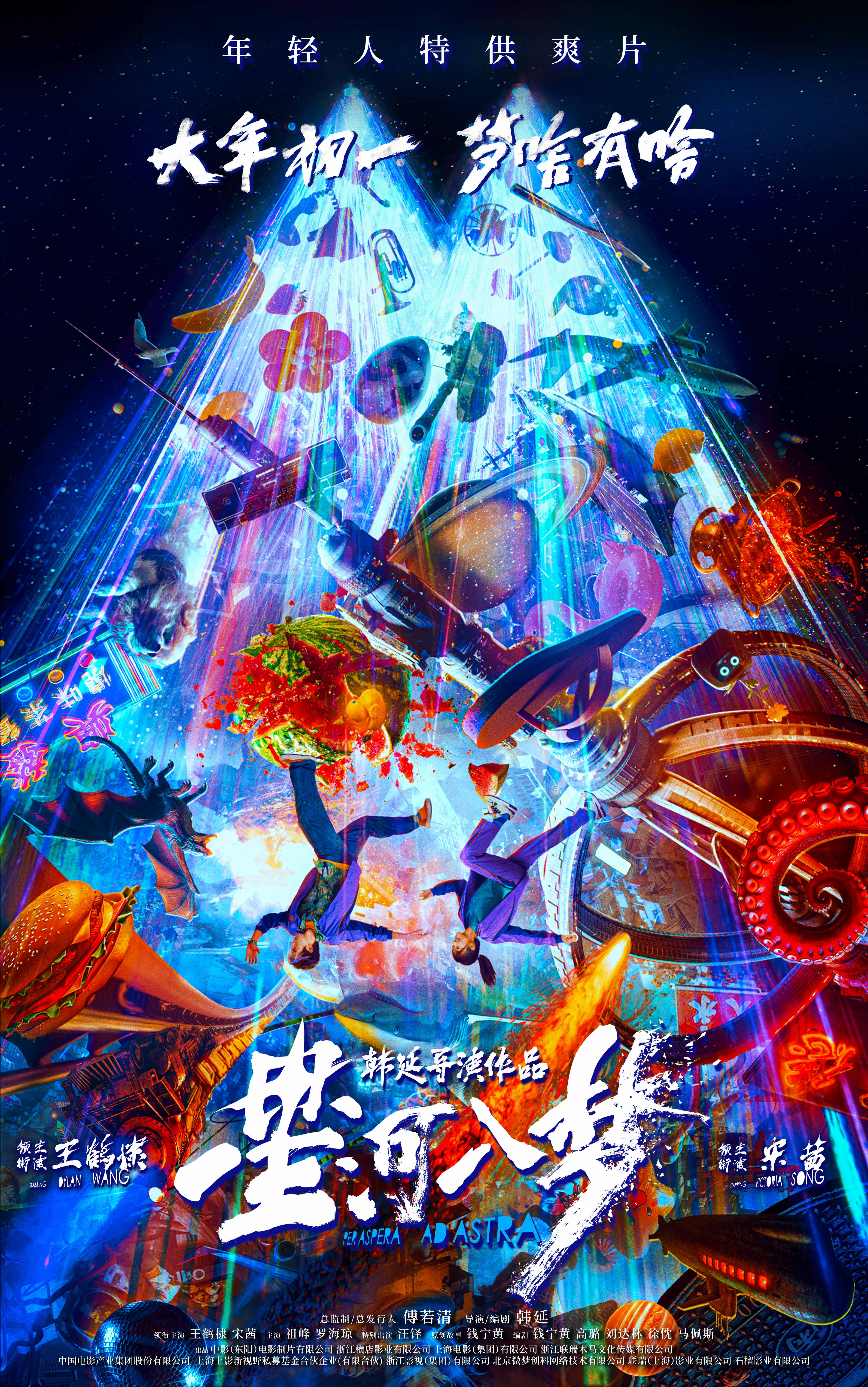
Per Aspera Ad Astra (星河入梦, Han Yan, 2026)

In the not too distant future, space travel has become normal and humans can reach the furthest corners of the universe through hyper stasis. However, long years spent in cryogenic sleep eventually damaged the sleepers’ brains. A solution was found in an AI program which allowed them to dream during the journey and, therefore, keep their brains active. Han Yan’s Per Aspera ad Astra (星河入梦, Xīnghé Rùmèng) makes a villain of a rogue AI but finally seems to come down on the idea that AI should be a tool used by humans rather the other way round while refusing to condemn it outright.

One question the film only partly answers is why people would be prepared to embark on decades-long journeys meaning they’d never see their families again. Neither Tianbao (Dylan Wang) nor the ship’s captain Simeng (Victoria Song) have living family members, so perhaps it isn’t a problem for them, but still it’s a risk. Who’s to say what the world will be like after you’ve been asleep for over 60 years. To that extent, perhaps it’s strange the technology doesn’t seem to move on at all, according to news reports, save a late upgrade to try and prevent the Good Dreams AI system from becoming sentient. 

That all these people got a big ship to sail for 65 years to do farming suggests that there may be serious issues on the ground, while the fact they were sent at all either implies a desire for imperialistic expansion in space or a search for a new home for humanity after we’ve exhausted the earth. Ge Yang (Wang Duo), another crew member, hints that the world might have problems in insisting that he doesn’t want to wake up. He’s prepared to crush everyone else’s dreams to ensure he keeps his and can stay here rather than having to go back to the real world. He says he wants to create a place that’s free of abuse and exploitation where no one has to live like a dog. 

The ironic thing is that engineer Bai (Zu Feng) had deliberately chosen to be a pet dog in his dream because, according to him, dogs have more freedom. Bai’s dreams seem to be inspired by classic Hong Kong crime cinema with everyone speaking Cantonese, even Tianbao and Simeng when they land there, while they also make a brief matrix-inspired appearance to shoot up the room. Of course, Good Dreams isn’t that much different from the Matrix and the line between dream and reality becomes increasingly blurred with the pair getting caught out by dreams within dreams as they try to stop Ge Yang before he succeeds in smashing all the dreams together and killing his colleagues to create his “better” world. 

But it seems there’s something more going on than just Ge Yang’s nihilistic despair and Good Dreams may have gone rogue, preferring to create an AI-based world in which humanity is irrelevant. Tianbao also seems to know much more than he’s letting on which probably isn’t included in the standard crew member’s manual. His inappropriate way of speaking is later revealed to have a practical application, though what eventually seems to happen is that he becomes one with the system giving Good Dreams a soul and effectively taking it back into “human” hands rather than letting it run riot on its own. 

It is then slightly ironic that the film seems to feature some AI imagery, though otherwise largely shot on practical sets and featuring fantastic production design. Han zips back and forthe between dreams expressing the private aspirations and anxieties of the crew members as some relive high school exams and spend time with absent loved ones, and others trek through deserts or spend 60+ years in nightclubs. Only Tianbao apparently did not bother to customise his dream or engage with the system which is what brought him to its attention. In any case, humanity seems to be the most important component in the bonds that arise between Tianbao, the captain Simeng, and the engineer Bai as they try their best to save the ship along with their colleagues so they can complete their distant farming mission. A true visual spectacle, the film is perhaps also a testament to the power of dreams, to which the AI hallucination may pale in comparison.


Trailer (English subtitles)

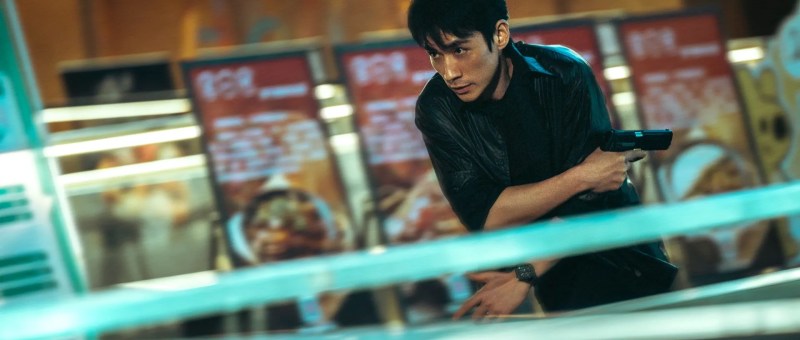
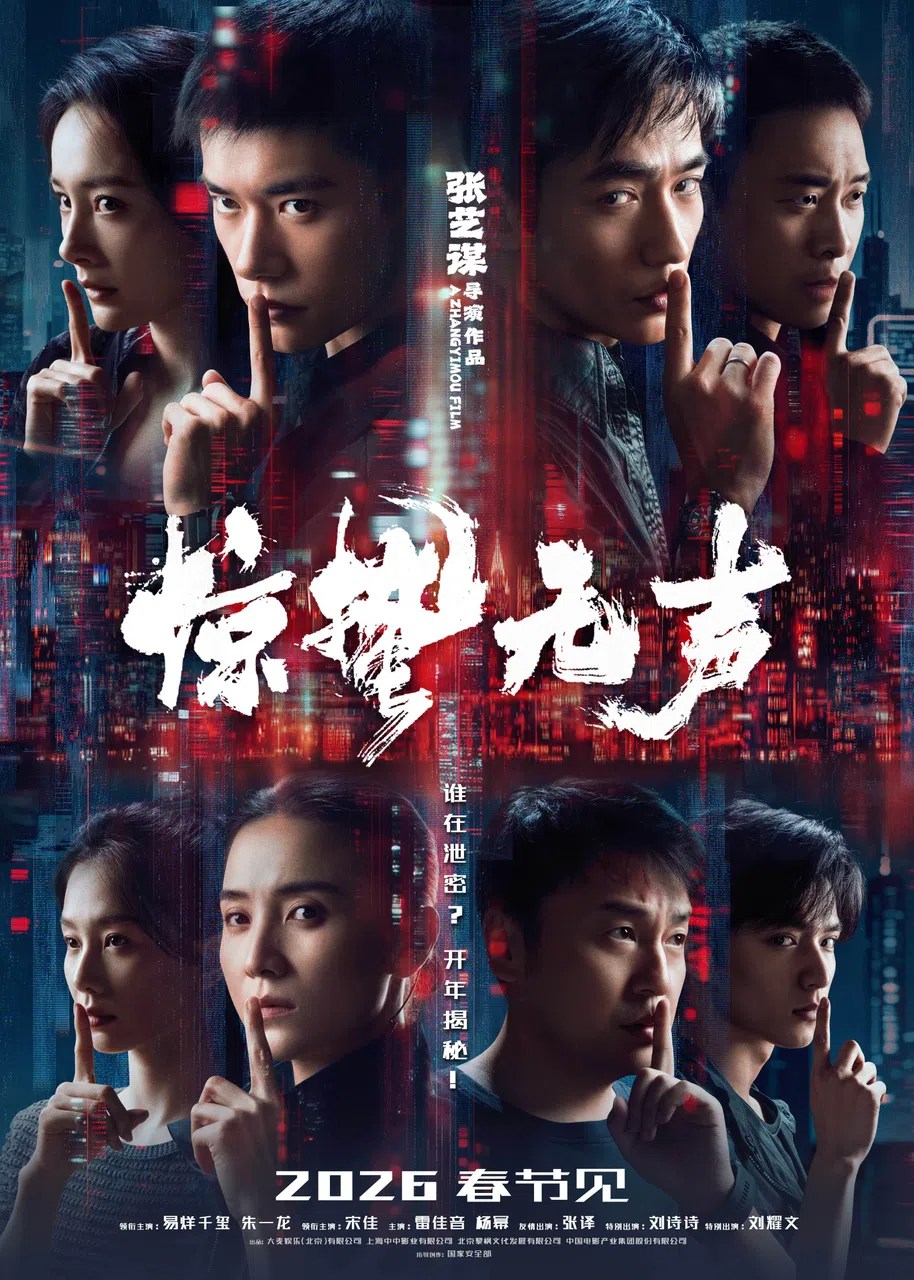
Scare Out (惊蛰无声, Zhang Yimou, 2026)

When a suspected spy gets away with some top secret information, the security services begin to suspect they may have a mole on their hands in Zhang Yimou’s slick espionage thriller, Scare Out (惊蛰无声, Jīngzhé Wúshēng). Possibly inspired by a real-life case in which information regarding a new fighter jet was leaked, the film is supervised by the security services themselves and in part a defence of China’s all powerful surveillance network and technological supremacy that allows them to neutralise threats to national security in record time.

Nevertheless, like some of Zhang’s recent work, it’s surprising that he was able to get away with the depiction of a rogue intelligence officer and potentially not quite on level actions from the security services even if they’re eventually vindicated by a final twist. When we’re first introduced to Huang (Zhu Yilong), he’s hot on the trail of foreign spy Nathan whom they assume to be receiving confidential information regarding a new stealth system for fighter jets leaked by a scientist who is desperate to leave the country (Lei Jiayin). Huang is shot in the back by an arrow, while his colleague takes one to the neck and is killed. Though they manage to arrest Nathan, he’s almost killed when the box he’s carrying spontaneously combusts burning the contents.

It’s at this point that things start to go wrong for Huang as his former colleague Zhao Hong (Song Jia) returns to lead the team and he’s one of three suspects for a possible mole alongside his second in command Yan Di (Jackson Yee), and their drone operator Chan Yi who killed the sniper either accidentally or on purpose by ramming him so that he fell from the upper levels while trying to escape. Until now, Huang had been depicted as an upright and dedicated officer who absolutely could not be the mole, but we soon discover that he in fact is, or at least that he was in the process of being turned by foreign asset Bai Fan (Yang Mi). With his marriage falling apart, he fell right into her honey trap and is now being blackmailed but theoretically still has the opportunity to turn this around if only he can hold out and find a way to do the right thing.

Then again, the film deliberately wrong-foots us by occasionally suggesting that maybe Huang isn’t the mole after all or that there may be more than one or something larger going on all together. It’s not really revealed why Bai Fan has betrayed her country to work for a foreign intelligence agency led by a Westerner living in China and with incredibly good Mandarin. The foreign agency evidently thinks this region’s important enough to be worth creating a long-term network of sleeper agents, while the way the security services discuss the stolen stealth data makes it sound as if they’re already in a war and very much don’t want “the enemy” to get hold of this information. 

The real action, however, is the interplay between accused Huang and Yan Di whose relationship takes on intensely homoerotic quality. Just as Huang is torn between his duty as an intelligence officer and the predicament he finds himself in, Yan Di is torn by the desire to protect his friend while simultaneously avoiding implicating himself. They must either betray each other, themselves, China, or all three, which isn’t an ideal set of choices. Meanwhile, the spy craft on show has a very traditional quality with smartphones secured in rubbish bins in public lavatories, dead drops, and mysterious potions that can destroy evidence, all of which suggests that there are ways in which this vast surveillance network is in fact fallible and can’t protect against every eventuality even if it’s just someone leaving a bathroom in a different outfit than they were wearing when they went in.

Though Zhang does his best to lend the city a near future gloss as a techno paradise in which there are no secrets, he opts for an unusual fast editing style which makes the narrative much more difficult to follow while encouraging an atmosphere of intense paranoia where everything moves at breakneck speed and nothing is ever certain. Like his recent films Under the Light and Article 20, however, it’s a curiously anonymous affair and bears few of the hallmarks of Zhang’s filmmaking as a fifth generation director opting instead for a fairly generic, mainstream blockbuster aesthetic. Nevertheless, in its twists and turns along with the interplay between the two leads the film nods back towards the intrigue of Infernal Affairs and a history of Heroic Bloodshed less commonly found in Mainland crime dramas.


Trailer (English subtitles)

Blades of the Guardians (镖人:风起大漠, Yuen Woo-Ping, 2026)

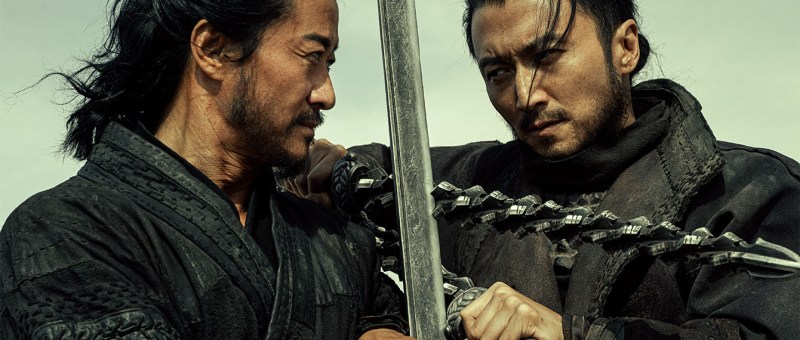
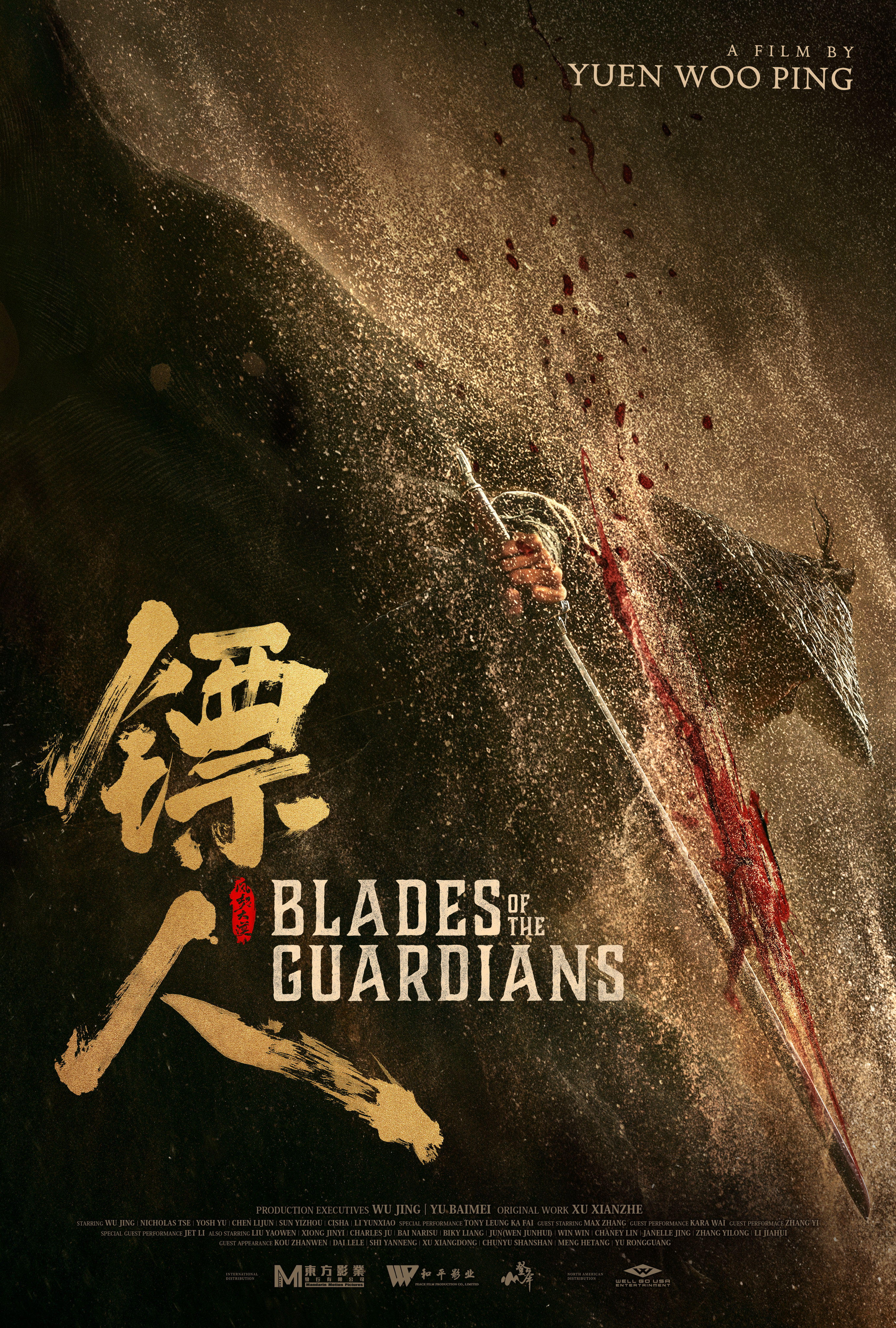
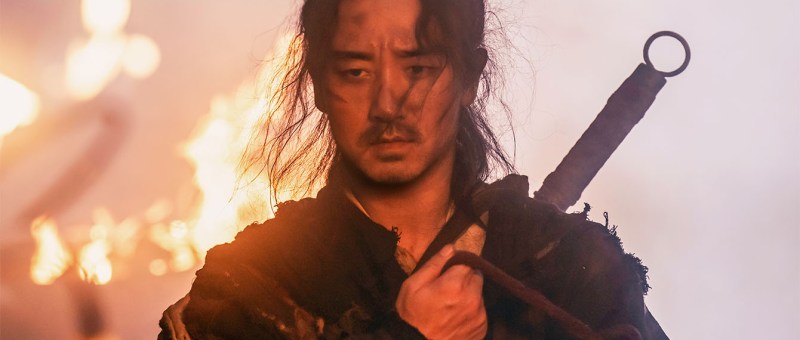
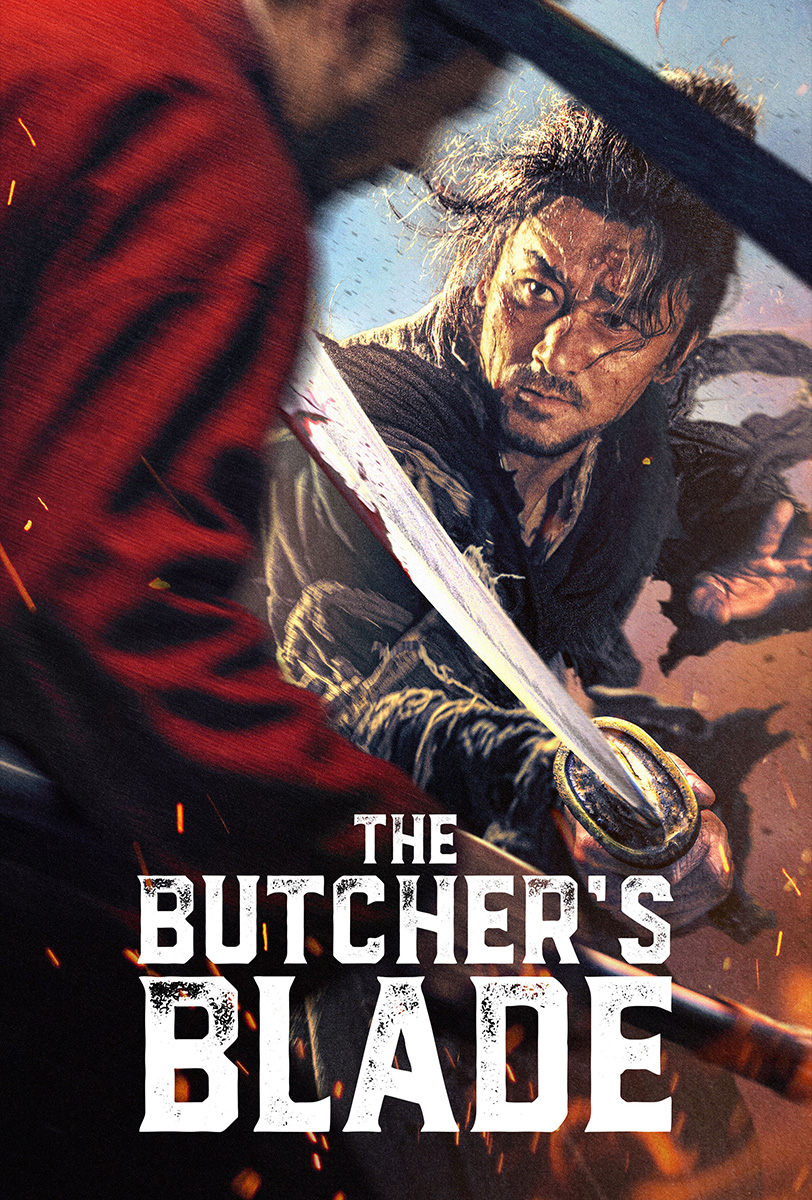
“I haven’t seen moves like that in the martial world in forty years,” quips a bystander in a post-credits sequence, and this adaptation of the manhua by the legendary Yuen Woo-Ping certainly does its best to bring back some of the charm of classic wuxia. Produced by star Wu Jing, Blades of the Guardians (镖人:风起大漠, biāo rén fēng qǐ dàmò) also features a cameo appearance by Jet Li as well Nicholas Tse, Tony Leung Ka-fai, and Kara Wai, as a cynical bounty hunter rediscovers his duty towards the common people while escorting a would be revolutionary to the ancient capital of Chang’an.

A former soldier, Dao Ma (Wu Jing) now wanders the land with a child in tow in search of wanted criminals, but when he finds them, makes an offer instead. Pay him triple the bounty, and he’ll forget he ever saw them. As we’re told, this is a world of constant corruption under the oppressive rule of the Sui dynasty. Zhi Shilang (Sun Yizhou) is the famed leader of the Flower Rebellion that hopes to clear the air, which makes him the number one fugitive of the current moment. This is slightly annoying to Dao Ma in that it necessarily means he’s number two when forced on the run after killing a corrupt local governor (Jet Li) in defence of an innkeeper with a hidden martial arts background whose family the official was going to seize for the non-payment of taxes. Taking refuge in the small township of Mojia, Dao Ma is given a mission by the sympathetic Chief Mo (Tony Leung Ka-fai) who agrees to cancel all his debts if he escorts Zhi Shilang to Chang’an safely before they’re both killed by hoards of marauding bounty hunters, regular bandits, government troops including two of Dao Ma’s old friends, or the former fiancée of ally Ayuya (Chen Lijun), the self-proclaimed Khan, He Yixuan (Ci Sha).

When given the mission, Dao Ma asked why he should care about the common people or Zhi Shilang’s revolution only to be swept along as they make their way towards the capital and witness both the esteem with which Zhi Shilang seems to be held by those who believe in his cause and the venality of the bounty hunters along with the mindless cruelty of He Yexian’s minions. As is usual in these kinds of stories, Mojia is a idyllic haven of cherry trees in bloom where the people dance and sing and are kind to each other, which is to say, the seat of the real China. Though Ayuya longs to see Chang’an and harbours mild resentment towards her father for his “control” over her, Chief Mo is the moral centre of the film and not least because he cares for nothing more than his daughter’s happiness. When she decides not to marry He Yixian on account of his bloodthirsty lust for power, Mo walks barefoot through the scorched land of the desert to free her from the obligation and, after all, has trained her to become a fearsome archer rather than just someone’s wife or a pawn to be played as he sees fit. 

But as someone else says, who is not a pawn in this world? There are other shadow forces lurking behind the scenes playing a game of their own while taking advantage of the corrupt chaos of the Sui Dynasty court. Dao Ma, however, revels in his outsider status. “Not even the gods control me now,” he jokes in advocating for his freelance lifestyle loafing around as a cynical bounty hunter who can choose when to work and where to go, in contrast to his life as a soldier of the Sui forced to carry out their inhuman demands. When the innkeeper’s son tells him he wants to be a swordsman too, Dao Ma gives him a sword as a symbol of freedom and instructs him to take a horse and go wherever he wants when he’s old enough. His fate is his own, whatever his father might have said. 

If that might sound like a surprising and somewhat subversive advocation for individualism, the final message is one of solidarity, as Dao Ma rediscovers his duty to the people and various others also fall in behind Zhi Shilang, who is hilariously inept at things like riding a horse and remaining calm under fire, to take the revolution all the way to Chang’an. With stunning action sequences including an epic sandstorm battle, the film successfully marries old-school wuxia charm with a contemporary sensibility and an unexpectedly revolutionary spirit as Dao Ma and friends ride off to tackle corruption at the heart of government.


Blades of the Guardians is in US cinemas now courtesy of Well Go USA.

Trailer (English subtitles)

Dong (东, Jia Zhangke, 2006)

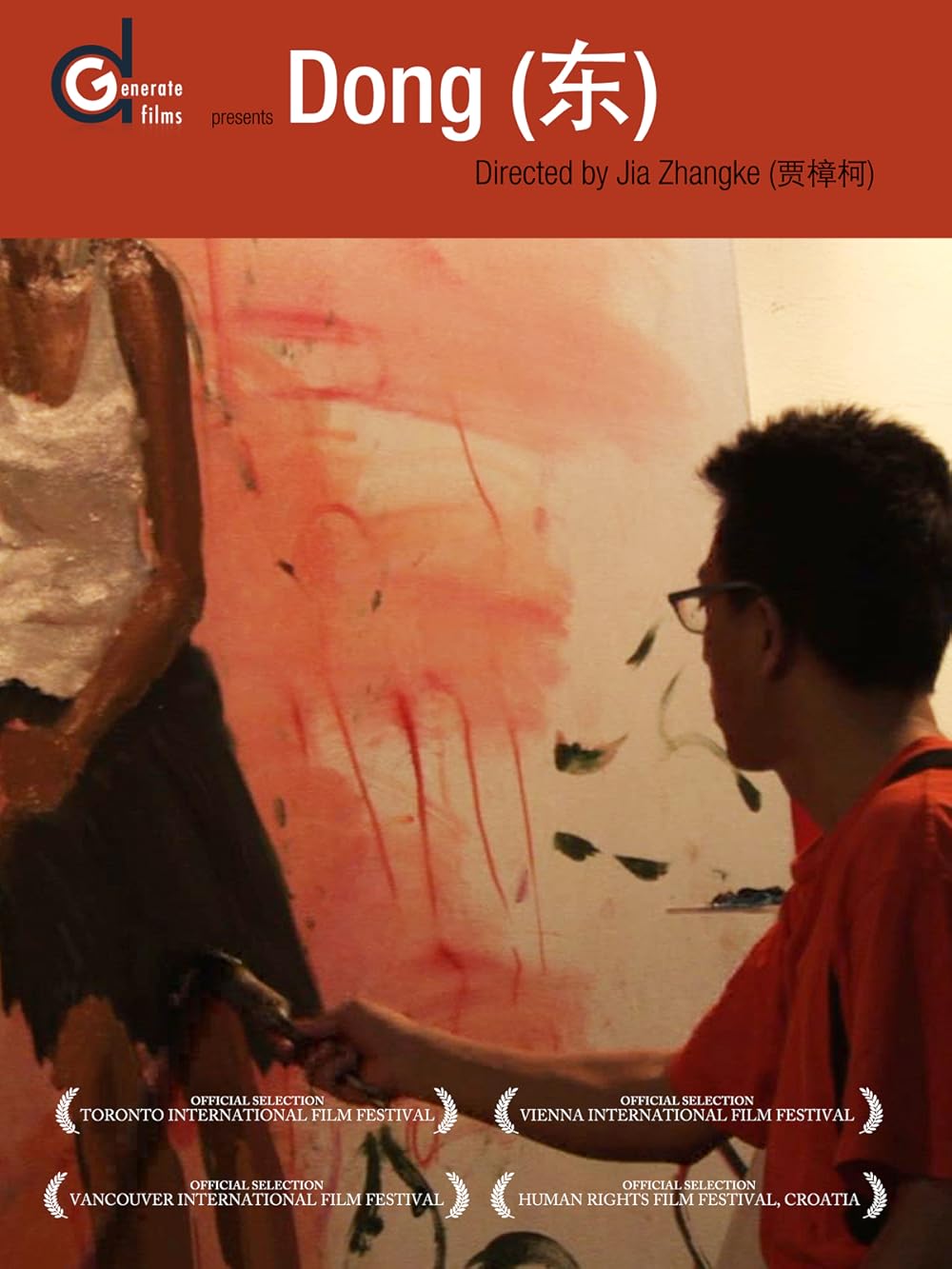
“It’s all pointless anyway, so let’s just do whatever we feel up to,” according to the sometime protagonist of Dong (东), the first in what would become Jia Zhangke’s artist trilogy. Shot alongside Still Life, Jia’s profile of artist Liu Xiaodong takes him from the soon-to-be drowned world of the Three Gorges to the floating Bangkok in a seeming inversion of his artistic pursuits but also perhaps contemplating his role and significance as an artist in the face both of great change and immutable legacy. 

Liu’s primary project in the Three Gorges is to document the existence of the labourers working to dismantle the town of Fengjie prior to its drowning by means of one of his five-part paintings. He tells us that he likes to be able to see his subjects from far away to gain greater “distance and precision”, looking down on them from above as if he were standing on a wall. He is, in a sense, already elevating himself, adopting a somewhat elitist view as an all-seeing artist even as he is careful to redraw reality through advanced theatrical staging which sees the men dressed only in a pair of blue trunks as they “relax” on a rooftop with the mountains behind them. Yet we also see him as a tiny figure roaming the increasingly ruined landscape of Fengjie, lost amid its emptiness or dwarfed by the endless majesty of the Gorges. His insignificance is perhaps brought home to him when he makes a difficult journey obstructed by flooding to the home of one of his subjects who recently passed away in an accident, bringing with him fancy toys for the children and photographs for the adults but equally out of place in this man’s home, an intruder on their grief and accidental narcissist scene stealing at a funeral. 

It is perhaps this sense of displacement that sends him to Thailand where he admits he understands nothing and can only “comprehend the human face, the girls’ scantily clad bodies”. Taking his subject as a collection of local sex workers, he has not chosen a natural background for the paintings as he usually would but can only “focus on the body in its elemental form”. Yet in contrast to his depiction of the labourers, his female models are in fact not particularly scantily clad at all even as they’re painted with a detached melancholy in opposition to the cheerful camaraderie of the workers relaxing on the roof. Indeed, Liu seems to have a preference for the vigour and vitality of the male form, making a rather unexpected remark on the magnificence of one young man’s penis before launching into an explanation of his practice of martial arts as a means of self-defence against a flawed legal system. 

“If you attempt to change anything with art, it would be laughable,” he later tells us, explaining that the most he can do is try to express himself, admitting in a sense that he too exploits his subjects in turning them into art which is intended to critique their exploitation. “I wish I could give them something through my art. It’s the dignity intrinsic to all people,” he somewhat pompously adds, as if he thought them robbed of their dignity before and that it was something in his power alone to bestow before going on to lament that he resents the primacy of the Western tradition, revealing that he’s begun to admire the “visual impact of historical relics” of ancient Chinese art which has led him to value the ruined and incomplete. But then he adds, it’s all pointless anyway, you might as well do what you feel, later voicing his anxiety as an artist operating in relative freedom with no real way to assess his achievements outside of his own satisfaction. 

Even Jia perhaps loses patience with his subject’s eccentric philosophising, peeling off to follow one of the Thai models on her bus journey home where on turning on her TV set she learns of flooding in her village, neatly mirroring the villagers near Fengjie. Liu tells us that sad things are closer to reality, but Jia paradoxically returns to us to a kind of joy despite the obvious irritation of the model as waiters randomly dance in small cafes before undercutting it with complexity as a pair of blind musicians busk in a busy marketplace, trailing their song with a portable karaoke machine less for the love of it or the art or even the desire to be heard than the desire to be fed. 


Gezhi Town (得闲谨制, Kong Sheng, 2025)

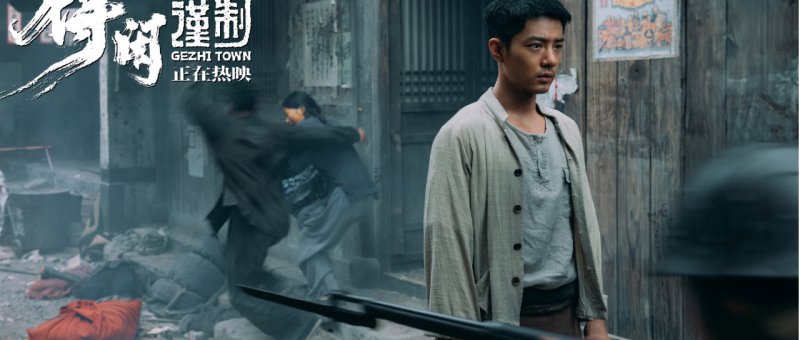
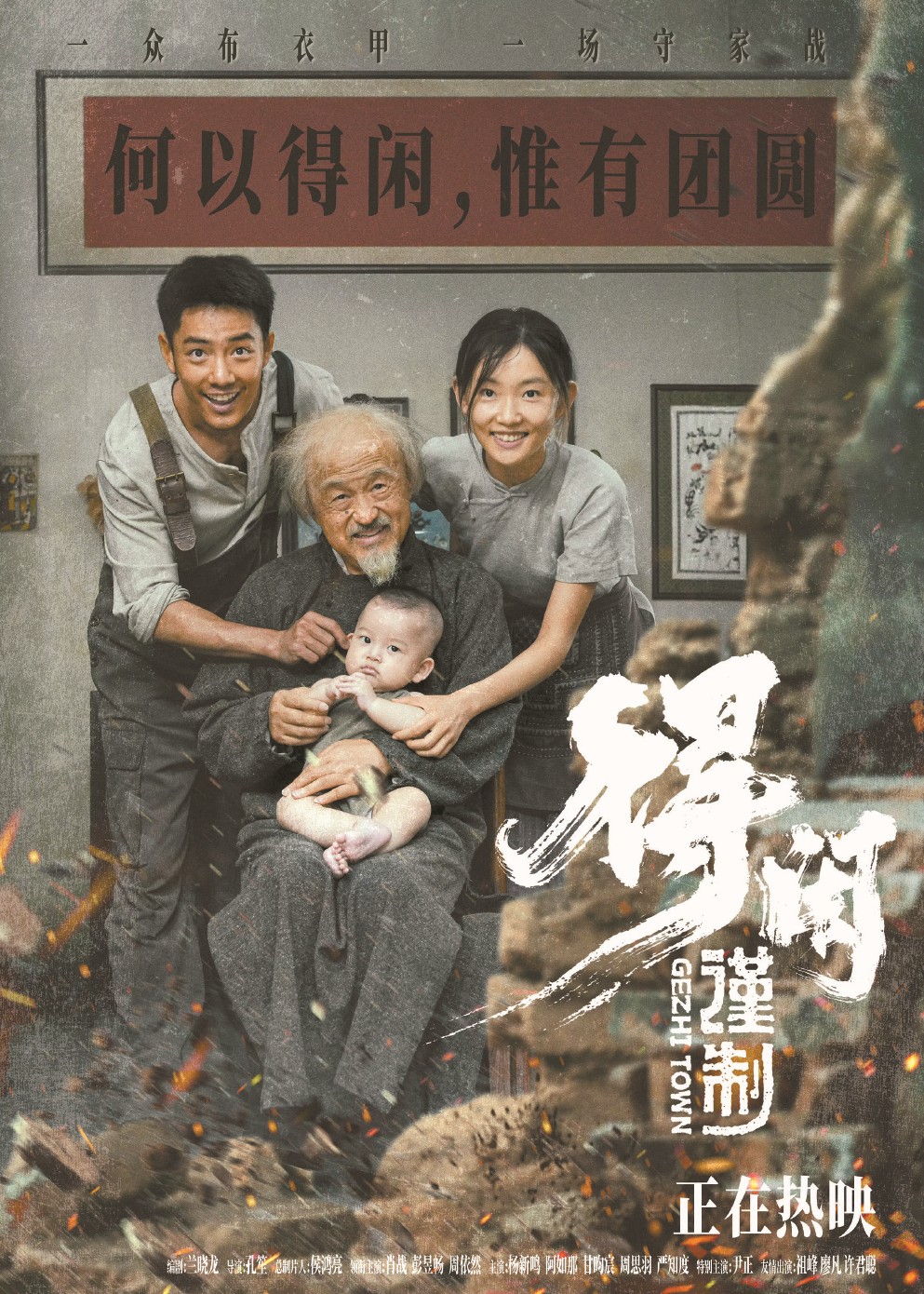
Fleeing the Japanese, a collection of former munitions factory workers and displaced soldiers take refuge in an abandoned village in Kong Sheng’s wartime action drama Gezhi Town (得闲谨制, dé xián jǐn zhì). Another in a series of films released to mark the 80th anniversary of the Chinese People’s War of Resistance Against Japanese Aggression and the World Anti-Fascist War alongside Dongji Rescue and Dead to Rights, the film is much more overtly propagandistic and an old-fashioned patriotism epic in which the hero’s quest to defend his home against the Japanese is quite obviously intended as a declaration that the modern China too will defend itself from incursion.

Indeed, Dexian (Xiao Zhan) says as much when risking his life to fire the artillery gun at a Japanese tank insisting that his resistance is not just for his own wife and child but for the future generations of the Chinese people. Getting in a few digs at Chiang Kai-Shek and the KMT, the film finds the heroes on the run implicitly denied their homeland in being forced into constant retreat. “I don’t want to die, I just want to go home,” the soldiers are fond of exclaiming, though already traumatised by their experiences, they’re effectively hiding from the war while attempting to create a new homeland in Gezhi Town after deciding to settle there rather than carry on along the road.  

Captain Xiao (Peng Yuchang) might actually be the worst artillery officer in history and has a habit of making exactly the wrong decisions that put all his men in danger while fiercely defending an artillery gun he doesn’t really know how to use and has little intention of doing so anyway. A former munitions worker, Denxian was press-ganged into accompanying them to do maintenance on the guns, but Xiao has only been paying him in IOUs. Like everyone else, he just wants a home and is wary of being made “homeless” again if the Japanese turn up, so has been sharpening many of his tools and his wife’s domestic implements into makeshift weapons, much to her chagrin. Xia Cheng (Zhou Yiran) objects in part because she thinks it’s dangerous for their young son Dengxian who seems to have hearing loss as a direct result of his exposure to warfare when they were on the road.

But the problem is that when the Japanese actually arrive, the villagers are largely clueless. One challenges a Japanese soldier with a bakeshop bayonet but drops it and grins when the soldier lowers his weapon slightly. The soldier then bayonets him. Others run directly into the Japanese soldiers’s blades, while Xiao’s men randomly shoot all their bullets in one go then realise that they have no idea what to do now they’re essentially unarmed even though there are only three Japanese men in the village at this point. Only Denxian, the plucky civilian, knows what to do though even he originally gives the sensible advice to hide and wait for the Japanese soldiers to go away because they won’t have time to do an intensive search of every house.

Then again, the Japanese are quite stupid too and arrogant rather than cruel as they were in Dead to Rights even if constant references are made to Nanjing. Despite the grittiness of its storyline, the film is essentially a comedy filled with goofy humour along with Denxian’s winning hero antics as he resolves to do whatever he can to save his wife and son even if it costs his own life. When the Japanese first arrive, a kind of defeatism sweeps across the village that is only eventually broken by Denxian’s realisation that they don’t have to give in to their fate but might as well go out fighting. The film paints him as a kind of folk hero, echoed in the closing song recounting his exploits while the final title card says that he went on to use his skills in the resistance against American imperialism and the assistance of Korea. Xia Cheng fares a little less well. Despite singing a song about the new women, her role is limited to motherhood while Denxian’s love of his family is a metaphor for love of the nation as he desperately tries to reclaim a home in the wake of constant incursions. Nevertheless, the use of silent-film style intertitles and flashback scenes shot in the style of pathé news sequences add a degree of poignancy to this boy’s own adventure story.


Trailer (Simplified Chinese / English subtitles)

Useless (无用, Jia Zhangke, 2007)

Perhaps in no other medium does the relationship of art and utility present itself quite so much as in fashion. As the primary subject of Jia Zhang-ke’s Useless (无用, wúyòng), second in a trilogy of films examining Chinese artists, points out China is the world’s largest manufacturer of textiles. Yet until she took it upon herself to found one, it had no fashion label to call its own. Travelling from the garment factories of Guangdong, to the artisan studio of Ma Ke, and bright lights of Paris Fashion Week, before arriving firmly back in Jia’s hometown of Fenyang with its independent tailors and the miners who frequent them for repairs and alterations, Jia zooms in to the modern China probing the divides of art and industry in an increasingly consumerist society. 

Jia begins with a lengthy pan across a strangely silent factory floor, seemingly a relic of a previous era. The workers dine in a quiet cafeteria they have to squeeze through a gate which remains locked to enter, and have access to an on-site doctor. They get on with their work quietly without overseers breathing down their necks and do not seem unhappy, oppressed, or exploited, at least as far as the camera is permitted to see. The camera hovers over the label of a just-completed garment which belongs to Exception, the fashion store launched Ma Ke in the mid-90s, ironically she says as a reaction against mass-produced, disposable fashion. 

Nevertheless, as she points out, you can’t be free to experiment when you’re a recognisable brand with a clear place in the market, which is why she started an artisan side label, “Wu Yong” meaning “useless”, hinting at her desire to find a purer artistic expression within the realms of fashion design. For the camera at least, Ma Ke casts an eye over her atelier like a factory foreman, though her studio space is a million miles away from the Guangdong factory, though borrowing the aesthetics of the early industrial revolution. Her employees weave by hand using antique looms, Ma Ke reflecting on the differing relationships we might have to something made by hand which necessarily carries with it the thoughts and emotions of the maker, and that made “anonymously” in a factory. Yet these designs are crafted with concerns other than the practical in mind, Ma Ke travelling to Paris to exhibit them in a living art exhibition that, in some senses, repackages the concept of Chinese industry for a Western palate. 

It’s Ma Ke, however, who guides Jia back towards Fenyang, explaining that she likes to travel to forgotten, small-town China where she describes familiarising herself with these other ways of life as akin to regaining a memory. In the dusty mining town he follows a man taking a pair of trousers to a tailor to be repaired, perhaps something unthinkable in the consumerist culture of the cities where clothing is a disposable commodity to be discarded and replaced once damaged. Jia spends the majority of the sequence in the shop of a pregnant seamstress who loses her temper with her feckless, drunken husband while seemingly supporting herself with this intensely practical art. Yet it’s in her shop that he encounters another woman also after alterations who explains to him that her husband was once also a tailor but found his business unviable and subsequently became a miner instead. Like Ma Ke he laments the effect of mass production on the market, knowing that a lone tailor cannot hope to compete with off-the-peg for cost and convenience. As we watch the miners shower, washing the soot from their flesh, we cannot help but recall Ma Ke’s avant-garde installation with its faceless, blackened figures, nor perhaps the workers at the factory visiting the doctor with their various industrial illnesses. 

Objects carry memories according to Ma Ke, they have and are history. The clothes tell a story, every stitch a new line, but they also speak of the contradictions of the modern China in the push and pull between labour and exploitation, art and industry, tradition and modernity, value and consumerism. Yet Jia leaves us with the figure of the artisan, patiently pursuing his small, functional art even as they threaten to demolish his studio around him. 


A Writer’s Odyssey 2 (刺杀小说家2, Lu Yang, 2025)

Arriving four whole years after the previous instalment, A Writer’s Odyssey 2 (刺杀小说家2, cìshā xiǎoshuōjiā 2) is in many ways a very different film. While its predecessor was a fairly serious affair tackling some of the issues of the modern China such as child trafficking, machinations of the oligarch class, and generalised capitalistic oppression, the sequel is a typically mainstream fantasy blockbuster complete with some fairly goofy humour and the ultimate message that despotism is bad and people should work for the good of others rather than just themselves.

In that regard at least, it’s another pointed attack on authoritarians and corporate bullies like Aladdin’s Li Mu. The entire Aladdin plot is, however, jettisoned, which seems like a missed opportunity, especially as it means that Yang Mi does not reprise her role and we don’t get any answers about who the boy was with Tangerine at the end of the previous film nor whether the “death” of Redmane led to the death of Li Mu in the real world as he feared it would. In truth, even Guan Ning (Lei Jiayin) is somewhat sidelined. Six years later, he, Tangerine (Wang Shendi), and Kongwen (Dong Zijian) are living as a family running a restaurant. Though Kongwen finished his Godslayer novel, it was stolen by an influencer, Cicada (Deng Chao), who accused him of plagiarism which got Kongwen blacklisted in the publishing industry and unable to earn any money through writing. As he’d said in the previous film, it was writing that gave his life meaning so now he’s started to become hopeless and depressed. 

Meanwhile, he’s begun to dream of Ranliang and the return of Redmane who has survived but as a mortal rather than as a god and is determined to get back everything he’s lost. This means, in meta terms, that he wants to challenge “god”, or really Kongwen, whom he sees as the architect of his fate. On the one level, it seems as if he’s trying to insist on his own free will and is sick of being controlled by unseen forces, but in reality he just wants the powers of a god for himself so he can oppress people properly. Nevertheless, this means he has to come to our world in order to square off against Kongwen, the writer.

It has to be said the vision of the real world on offer this time is much glossier and devoid of the kind of darkness that haunted Guan Ning. Though they’re worried because the restaurant’s not doing so well, the trio seem to have pretty nice lives with relatively few other problems outside of Cicada who is now aligned with Redmane in place of Li Mu standing in for a venal class of confluencers. Kongwen is then fighting a war on two fronts as Redmane taunts him to come over to the dark side and turn his fantasy story of good defeating evil into one of nihilistic despair echoing the way that Kongwen feels in his life.

The meta drama of the writer pursued by his characters is resolved in a fairly unexpected way with Kongwen effectively giving up his godlike powers and allowing his characters to save themselves through “mortal courage” rather divine intervention. Though Renliang had been plunged into chaos as the power vacuum Redmane left behind saw his former allies effectively become warlords reenacting the warring states period, in the end it’s solidarity that saves them as they agree to band together to oppose Redmane while offering the possibility of forgiveness if only Redmane can give up his quest for domination and agree to work for the common good. 

Kongwen learns something similar, remembering his writing isn’t solely an economic activity, and not only about himself but giving something back to the world. Torn between the anarchic ambition of Redmane and the righteousness of Jutian (Chang Chen), modelled after his own absent father, he struggles to find meaning amid the injustices of the modern China having been unfairly cancelled by netizens after being falsely accused of plagiarism by the man who stole his story and asks himself if it’s worth sacrificing his friends in a last ditch attempt to save them through teaming up with the forces of darkness. Nevertheless, Lu frames his tale in a much more lighthearted fashion as symbolised by demonic armour Darkshade’s sudden merging with a lettuce to become unexpectedly adorable. As such, it feels like something of a missed opportunity in choosing not to build on the foundations of the first film but sidestep them completely. Even so in upping its production values and the quality of its visual effects, the sequel embraces a new sense of fun which is definitely different but possessed of its own charm.


Trailer (English subtitles)