Y Vân: The Lost Sounds of Saigon (Khoa Hà & Victor Velle, 2025)

How can it be that someone can be universally renowned, famous beyond their wildest dreams, but seemingly forgotten only fifty years later? Filmmaker Khoa Hà moved to the US at 17 and never met the grandfather who passed away before she was born leaving behind a forgotten musical legacy. Other family members have told her various things about him, but the one that fascinated her was that Y Vân had been one of the foremost composers before the war through none of his work apparently survives.

Y Vân: The Lost Sounds of Saigon is partly a mystery as Khoa decides to try retracing her grandfather’s steps, trying to bring his music back into the modern era. But it’s also an exploration of family, legacy, and the brutality of the war during which most of Y Vân’s work was either deliberately or otherwise destroyed. Not only does Khoa struggle to find anything of her grandfather’s music, but is repeatedly told that nothing much survives of music made before 1975 due wartime destruction and/or the new regime who destroyed anything they deemed to be decadent. 

The totality of the destruction seems shocking. That an entire era could just be erased as if it never existed is somehow chilling in its implications. Y Vân was one of a handful of major songwriters whose work was known by all. In those days, publishers sold sheet music for songs on a similar level to records so people could learn the song by following as they listened, and you’d think that something like this would stick in the collective memory as people keep the songs alive by singing them. The problem is, however, that without any of Y Vân’s records, Koha isn’t left with much to go on, not really knowing who any of her father’s collaborators might have been to try asking them for their thoughts and recollections. 

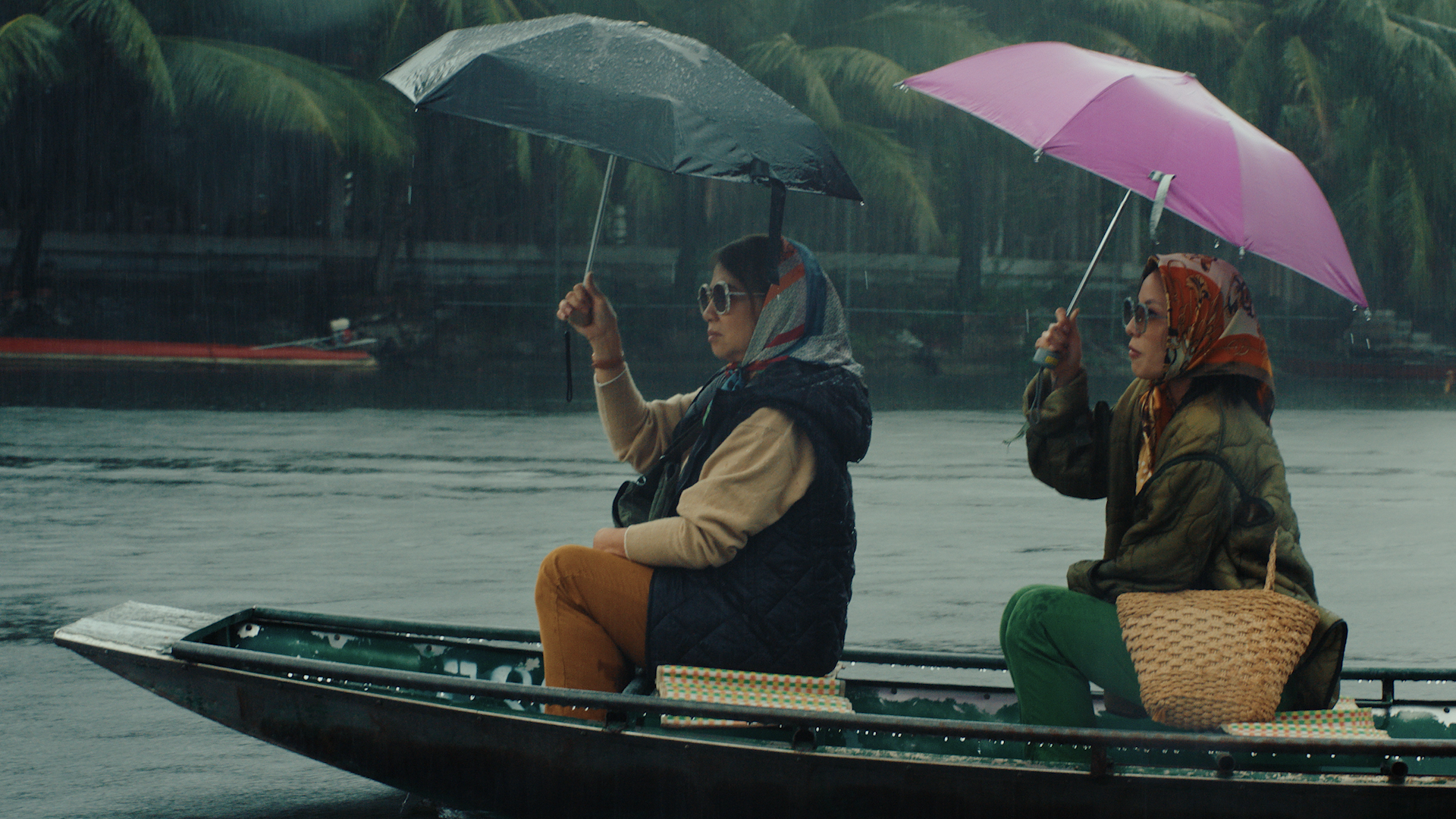
All she really has to rely on is family, though Y Vân himself had said that’s all you really need. Looking for her grandfather’s legacy enables Khoa to reconnect with her family in Vietnam including her great-aunt and uncle as well as Y Vân’s first wife from whom he eventually separated. After a while, he mother joins her on her quest, deepening their own connection as they delve into family history and travel all over Vietnam trying to track down Y Vân’s music.

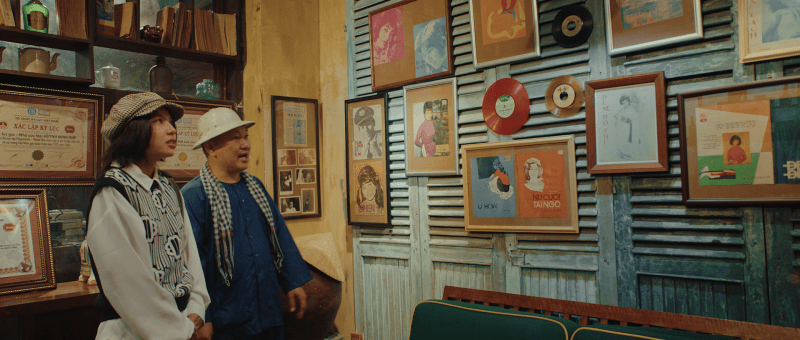
It’s a family connection that eventually puts them on to a collector who, like Khoa, has been trying to reclaim something of the past. Before the war, his family owned a music cafe, and so he’s been collecting records to recreate his childhood. His desire to restore this lost past is a means of trying to heal the trauma of the war and push past this dividing line to reclaim the lost Vietnam that lies behind it just as Khoa is attempting to reconnect with the cultural roots she felt herself in danger of losing in the US. 

Y Vân himself seems to have been a casualty of these changing times. He was temporarily sent for re-education and prevented from using his stage him with the consequence that he gave up writing music while many of his songs were banned. He passed away at a comparatively young age with his musical legacy all but forgotten. The singers who performed his music went to the US where they were unable to continue their singing careers and had to focus on making new lives for themselves. Through uncovering and archiving her grandfather’s music with the help of the collector who agrees to help her digitise his tapes and LPs so that everyone can hear them, Khoa is helping to preserve this history for future generations. As she says, art has the ability to heal old wounds and bring people together, enabling her to reconnect with her family and restore something of what was lost. Told with true visual flair, the film’s soundtrack mainly uses 60s covers of American songs, while animated sequences help to recreate the pre-war society in which Y Vân became famous, though ironically his actual dream was to study maths rather than becoming a musical superstar. Chapter markers see Khoa walking through a desert searching for Y Vân’s music and eventually finding her way toward accepting herself and culture through the preservation of her grandfather’s legacy.


Y Vân: The Lost Sounds of Saigon screened as part of this year’s San Diego Asian Film Festival Spring Showcase.
The Road to Sydney (Benito Bautista, 2025)

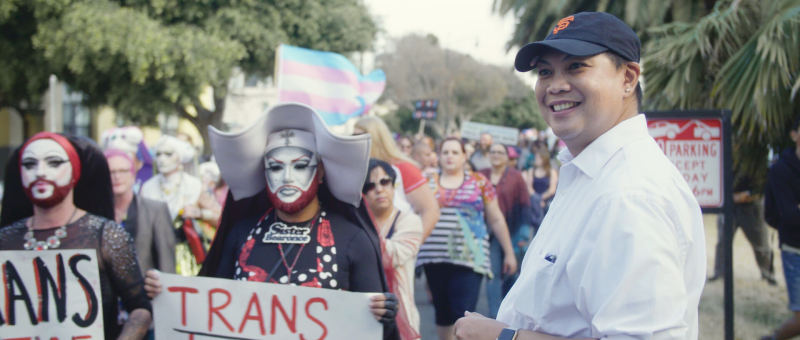
As a young person in Palawan, Sydney Loyola found herself the victim of toxic masculinity and a fiercely patriarchal culture. She recalls that her father once made her fight a neighbour’s son and threw her into a lake in what she then felt to be a rejection of her femininity. This feeling of being unloved by her father and responsible for the breakdown of her parents’ marriage has left a permanent scar on her life that continues to haunt her even as she begins the steps towards embracing her authentic self.

Shot over several years, Benito Bautista’s documentary follows Sydney through her transition having moved to the United States where she encounters a different kind of rejection and discrimination. A dancer and choreographer well versed in the traditional dance of Palawan, Sydney nevertheless had a survival job in San Francisco working for a property management company. When she told her boss that she needed medical leave to recover from surgery and that, on her return, she would be known as Sydney, he was apparently supportive. When she returned to work, however, the situation was quite different and her employers seemed to seize on any chance to dismiss her. Despite having sought advice from former fire fighter Mia who had undergone a successful transition in the fire service and assured Sydney that transgender people already enjoyed workplace protections in San Francisco she is eventually let from her job, forcing her to move out of her apartment, too.

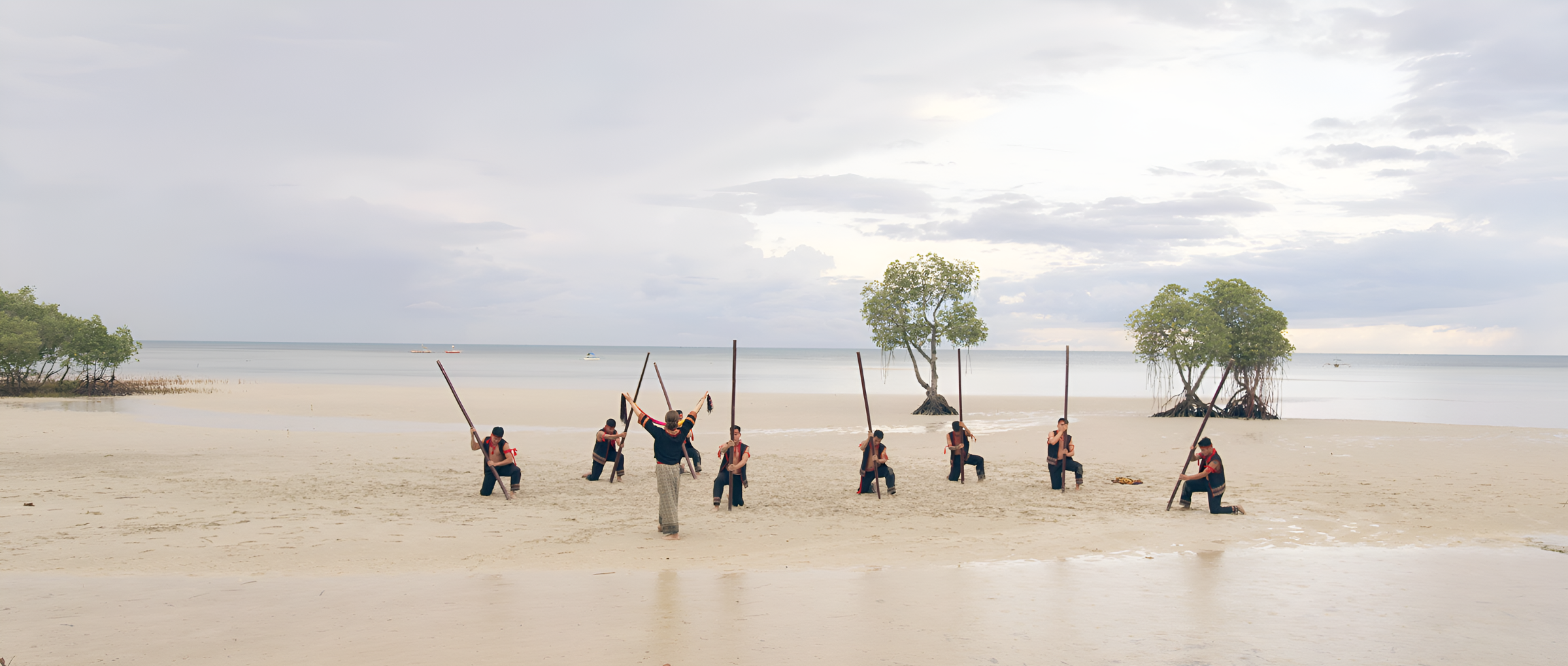
But in another way, being forced out of her apartment is only another migration that acts as a fresh start at the beginning of her new life as Sydney. On reconnecting with her dance background, Sydney returns to the Philippines to choreograph a new routine inspired by a local folksong about a man who swore he would return for a woman. Sydney has done something quite similar, returning to reclaim not only her authentic self but her culture as rooted in the history of Palawan by choreographing a routine that incorporates traditional elements and western-inspired dance. Performed on the shores of a local beach, hers is a dance of migration inspired by the nomadic Batak people that reflects her journey toward becoming Sydney, embracing her authentic self, and eventually coming home.

Even in the US, Sydney had said that dance was the only place she felt truly safe while those who remember her from her youth in Palawan state that she was already able to express her authentic self even if she was too afraid of her parents’ reaction to do so openly. She recalls that she repressed herself and did everything she could not to stand out and be noticed, though the other children at school called her effeminate and bullied her. Even as an adult, she breaks down in tears wondering why people look down on others. Several of the other interviewees, some of whom are also from the Philippines, recall similar stories of being rejected by their families for not conforming to rigid gender roles.

Sydney says that she never felt loved by her father and suspects that his rejection of her was born of a feeling of inadequacy, that her femininity brought his own manhood into question. On reuniting with him, it seems as if her feelings toward her father may have been due to a lifelong misunderstanding, or at least, he doesn’t seem to remember her childhood in the same way she does and though the meeting is more of a positive experience than she feared it might be, she’s left feeling shortchanged for a lack of acknowledgment for all she suffered. Though she describes her mother as more supportive, Sydney also waited until after she died to pursue her transition fearing that it should be too difficult or her understand and cause further strain near the end of her life. Despite having gone to America to be free of this patriarchal culture, coming back to Palawan allows Sydney to come full circle by reclaiming her authentic identity and overcoming a past sense of rejection. Resolving her situation in the US and rediscovering old friends in Palawan, she finally arrives at herself and a moment of serenity having become the person she always knew herself to be.


The Road to Sydney screenedas part of this year’s San Diego Asian Film Festival Spring Showcase.
Diamond Diplomacy (Yuriko Gamo Romer, 2025)

Perhaps it’s strange to think of a sport as a national pastime, given that many transcend borders with global networks and shared histories that span centuries. Yet American-born sports are largely played only in America and perhaps it’s the relatively small scale of their most successful export, baseball, that makes it such a rich source of cultural exchange. There might therefore be a mild contradiction that both the US and Japan think of baseball as a national game as if it could belong only to one, though they don’t so much tussle for the soul of the sport as bounce it back and forth in a continual process of exchange. 

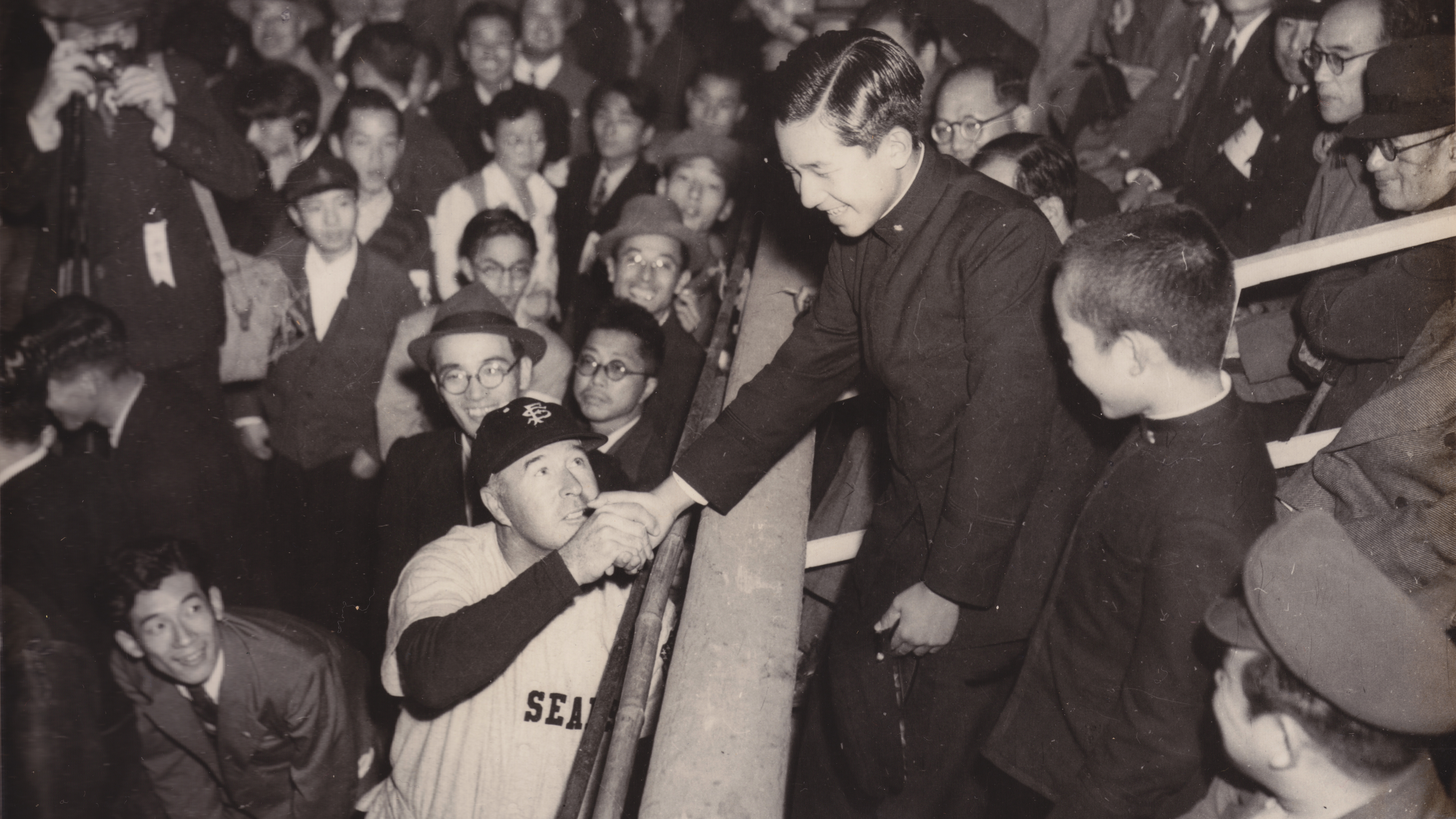
Yuriko Gamo Romer’s documentary Diamond Diplomacy explores the way in which baseball has fostered a relationship between the two nations that has survived severe strain. As a historian points out, baseball predates judo in Japan and became a symbol of its modernisation during the Meiji era. As soon as they began to play, Japan was beating the Americans at their own game as teams of schoolboys triumphed over elite squads from local warships leaving the sailors with a degree of wounded pride to have lost at a game they created. 

A video montage likens the equipment worn by the catcher to that worn by kendo players with its chest armour and grilled visor, while other interviewees wonder if it doesn’t play into a cultural mindset in which the individual sublimates themselves into a collective and commits themselves to a higher goal as a member of a team. Others describe it as Japan’s first purely recreational sport and suggest that it adopted samurai traits and martial arts philosophy which gave it a seriousness and a rigour that was at odds with the way the game was played in the US. American players who later came to play in Japan report consternation with the training regime, explaining that in general they only practised for a couple of hours before hitting the golf course while Japanese players trained 10 hours a day. This intensity may have contributed to the team spirit, but also, according to some, reflects a fundamental difference in cultural philosophies, While American players believe one is born with talent and can sharpen it only to a certain extent, in Japan they believe that it’s hard work that produces results and the more you train the better you can get regardless of innate talent.

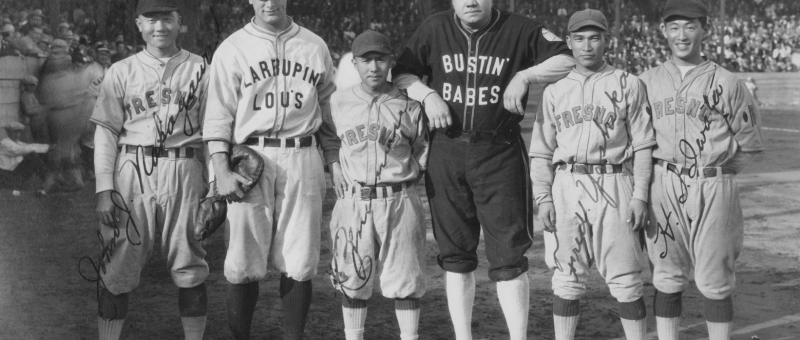
Nevertheless, according the documentary, Japanese baseball fans continue to look up to the American leagues and it was the process of bringing over top stars such as Babe Ruth and Lou Gehrig during the 1930s that fostered a sense of connection between the two nations. These sporting relationships became a way of staving off conflict and brokering peace, though endured even once war had broken out. Internees in America describe finding hope and purpose in self-built diamonds, while the resurgence of baseball also contributed to the post-war recovery and a restored sense of national pride. In America, however, Japanese players were prevented from joining the major leagues and faced discrimination until Mashi Murakami was signed to play in the US in the mid-1960s. No other Japanese players were allowed to go play in America until Hideo Nomo exploited a loophole by retiring to accept a transfer only to be viewed as a traitor in Japan.

Nevertheless, the nation soon came round and Nomo’s games were later broadcast live on television making him a national hero. The film positions Ichiro Suzuki and Shohei Ohtani as the inheritors of this legacy, continuing the cross-cultural interplay between the two nations into the present day. An interviewee charts changing attitudes to the US and finds a correlation between the presence of Japanese players in America, suggesting that they fell to their lowest in the post-war period during the economic conflicts of the 1980s in which the US feared the newly dominant force of Japan in the bubble era, but improving with the arrival of Japanese players in US leagues in the lost decade of the ‘90s. Baseball continues to be a more isolated sport than some with each nation mainly focussed on their domestic game with no formal infrastructure for international competition outside of special organised matches, but perhaps that’s what makes this unique relationship possible in the push and pull of cross-cultural interaction through the shared love of sport.


Diamond Diplomacy screens 25th April as part of this year’s San Diego Asian Film Festival Spring Showcase.
Trailer (English subtitles)

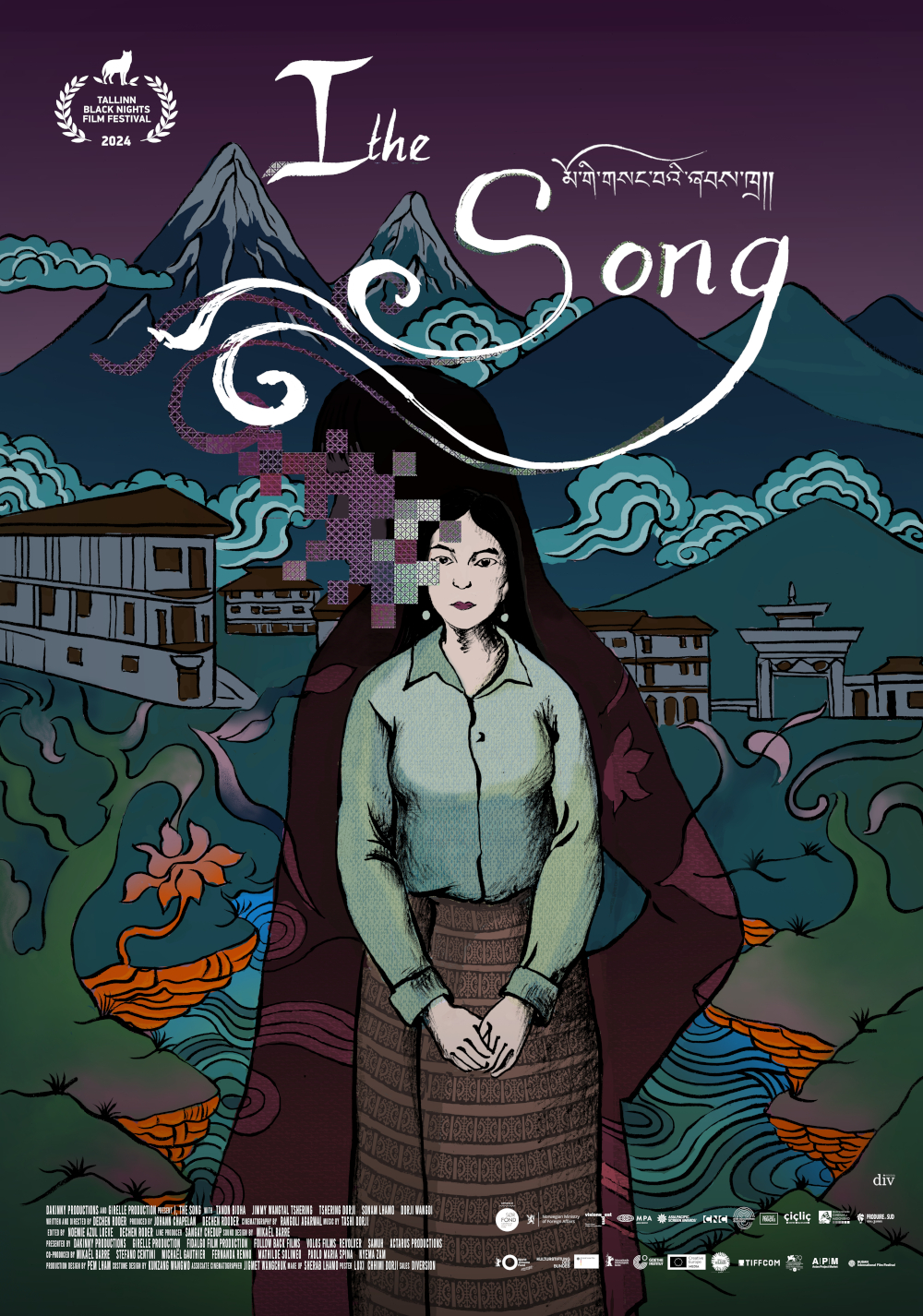
I, the Song (མོ་གི་གསང་བའི་ཞབས་ཁྲ, Dechen Roder, 2024)

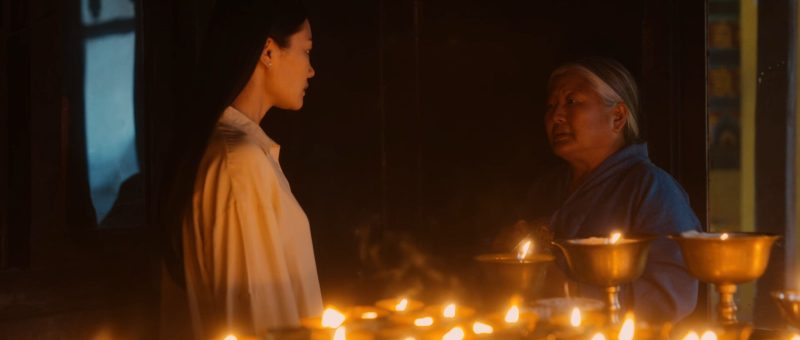
Nima’s (Tandin Bidha) boyfriend Penjor tells the tourists who come into his restaurant to experience the local culture that Bhutan is one big happy family where everyone knows everyone. This will turn out not to be the case, as Nima finds herself mistaken for someone else and struggling to affirm her own identity when everyone begins to tell she is someone she knows she is not. Dechen Roder’s I, the Song (མོ་གི་གསང་བའི་ཞབས་ཁྲ) paints a slightly less rosy vision of the so-called happiest nation of earth in which women like Nima are oppressed by patriarchal standards that are so deeply ingrained she had barely noticed them before.

Nima’s outrage runs slightly deeper than the frustration of being accused of something she hasn’t done partly because of the shame and embarrassment involved with being associated with an erotic video, but also because of its inevitable consequences. She’s let go from her job as a schoolteacher when parents complain after identifying her as the subject as a viral “blue video,” one clearly shot and uploaded to the internet without the woman’s consent. No matter how much Nima protests that it isn’t her, nobody believes her. Not only is she fired from her job, even her boyfriend distances himself from her. He scoffs a little resentfully that she’s always so proper, yet has apparently done something like this with another man. Nima is indeed quite “proper”, a little stiff and repressed. She lives her life in a conservative way, always demure and polite. It is difficult to believe that she would have had a one night stand with a man who filmed their encounter, but despite the incongruity, everyone assumes she must be lying to protect her reputation. Nima determines that the only thing to do is find the woman in question and get her to confess so she can prove to them that it really isn’t her.

But that proves a little more difficult than she first assumed it would, because every lead she turns up turns cold. Meto has disappeared into the ether like a ghost. Some say she went to America, as Nima herself apparently once did, though she doesn’t seem particularly worldly. In any case, many remark that people change after they go abroad, almost as if they were equating it as a kind of death or transition to another world. One of Meto’s old friends even suggests Nima actually is Meto having returned from America with a new identity and changed personality. The more she investigates Meto, the less certain Nima becomes of herself. What was so wonderful about your life, Meto’s former boyfriend Tandin (Jimmy Wangyal Tshering) asks her when she explains why she’s looking for Meto and Nima has to admit that maybe she doesn’t have an answer.

In looking for Meto, is she of course really looking for herself but Meto has been a lot of people too. Nima discovers that Meto came from a small village to reclaim a song that stolen by the city. Meto’s grandmother says that bad things will happen in the village if they don’t get it back, but how exactly can you return a song? In the end, Meto has become a song to Tandin who struggles to accept her sudden absence assuming she must have just left him and decided to move on without a word as she apparently had from other lives before this. In a way, Nima is returning the song of Meto in learning to sing it, bringing it home to her grandmother as if closing a loop.

What she eventually realises is that it shouldn’t matter if it was her in the video or not. The shame wasn’t Meto’s to bear, and investigating her fate she uncovers a dark history of sexual harassment and exploitation. Using her newfound identity, Nima tries to get justice for Meto by reporting the man who did this to her as a means of standing up for herself and the other women of Bhutan held to unfair double standards while men like Meto’s abuser are free to continue abusing their authority. She has in a way learned to become herself while sort of becoming someone else and reclaiming an identity that should have been hers all along in the discovery of a newfound freedom.


I, the Song screened as part of this year’s CinemAsia Film Festival.

Trailer (English subtitles)

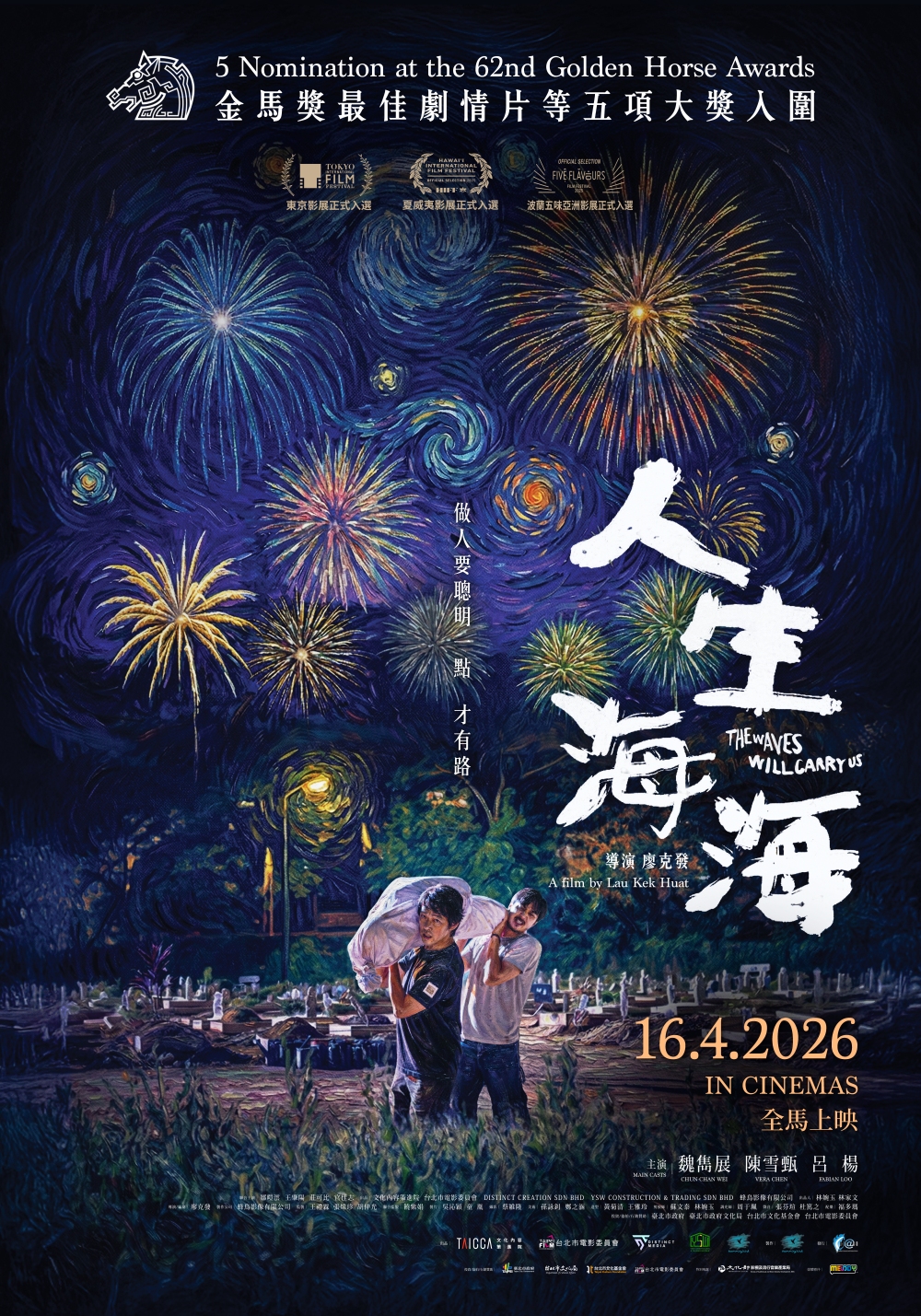
The Waves Will Carry Us (人生海海, Lau Kek-huat, 2025)

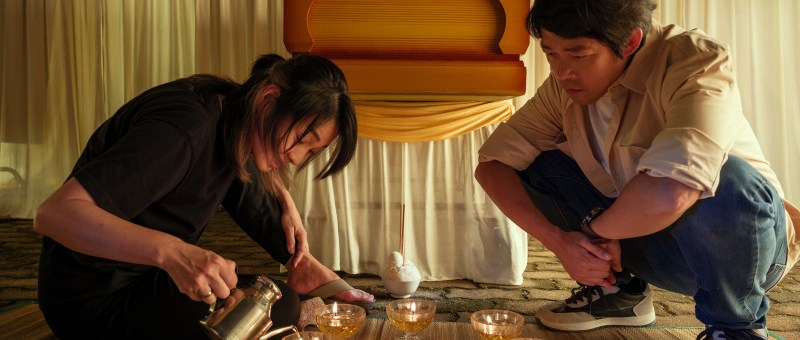
Yao explains to a wealthy couple in Taiwan how they can change their nationality to preserve their wealth, “investing” in another country in order to buy citizenship to a place that has a taxation system that is more advantageous to their circumstances. But the people he’s talking to remark on his accent and after learning he came from Malaysia jokingly tell him that he passes himself off as Taiwanese quite well with the implication being he’s deceived them in some way, while it’s ironic that someone who’s immigrated to Taiwan is helping them “emigrate” from it.

This seems to upset Yao a little bit. Just as it does when he goes to donate blood with some Taiwanese friends, but is refused because he comes from a “high-risk area”. He points out that they might not reject someone from Europe or America in the same way as someone from South East Asia, while this very denial of his blood seems to suggest that it’s not possible for him to ever be “Taiwanese” no matter no long he might have lived there. Any children he might have would not really be either. Lau Kek-huat’s The Waves Will Carry Us (人生海海, rénshēnghǎihǎi) jumps back over a hundred years to ask what really is a “homeland” and what meaning there is in this world of borders and documentation that take questions of identity and belonging out of the individual’s hands.

Yao came from Malaysia, but as a member of the ethnic Chinese community, he isn’t completely accepted there either. His grandfather came as a child from China, but when independence was granted, he was excluded from citizenship applications because he did not speak Malay and risked losing his land and farm as an undocumented person. He had come there with his uncle who dreamed of untold riches in South East Asia, but found only hard work and dire conditions. Before they left, their relatives had performed a ritual which taught them never to become “barbarians” or risk losing their way home. Quan and his uncle keep their hair in pigtails despite the mocking of those around them and are discouraged from eating the local durian fruit which becomes a favourite of Yao’s father. 

Yet when government officers march into his father’s funeral for which his sister has splashed out on a traditional Taoist burial suit, he learns his father secretly converted to Islam and must be laid to rest in the Muslim burial ground having undergone an Islamic funeral. As he says to his brother Cai who is an activist protesting the corrupt government, it is easier to be a Muslim in this society. You can get cars and loans more easily, not to mention have multiple wives. The government officer looks at him with similar suspicion to the Taiwanese couple, claiming that he understands the “Chinese mindset,” and is sick of people who convert to Islam for purely cynical reasons and never practise the religion. This is what you get, he seems to say as he rejects Yao’s attempts to bribe him and confiscates his father’s body.

It turns out that the reason may not have been so cynical after all, but nevertheless the family is forced through the farce of burying a doll in order to complete the Taoist funeral rites without which they cannot really lay their father to rest. Yao’s and Cai’s mad decision to exhume him from the Muslim burial ground is then an attempt to bring him “home,” though the concept is one that’s in other ways constantly shifting. Yao’s niece asks her mother where Yao’s “home” is now, though the answer they come up with is only that home is wherever he is. That the body ends up getting lost is an indication of its statelessness but also a restoration of freedom in being uncoupled from the notion of national identity. 

Still, young Quan wondered if the stars here were the same as they were back home or if they’d travelled so far the ancestors could no longer protect them. Everyone must find a way to survive, Yao’s father had told him, though his brother Cai may think he’s coward for going to Taiwan rather than staying in Malaysia and trying to make things better like he is with the protest movement. The irony is that their father died on Independence Day draped in a Malaysian flag, while they later use it as a bandana to cover their faces when confronting the police as they try to rescue their father’s body only to enter another kind of in between space, if one in which they are freer to claim their own identity.


The Waves Will Carry Us screened as part of this year’s CinemAsia Film Festival.

Trailer (English subtitles)

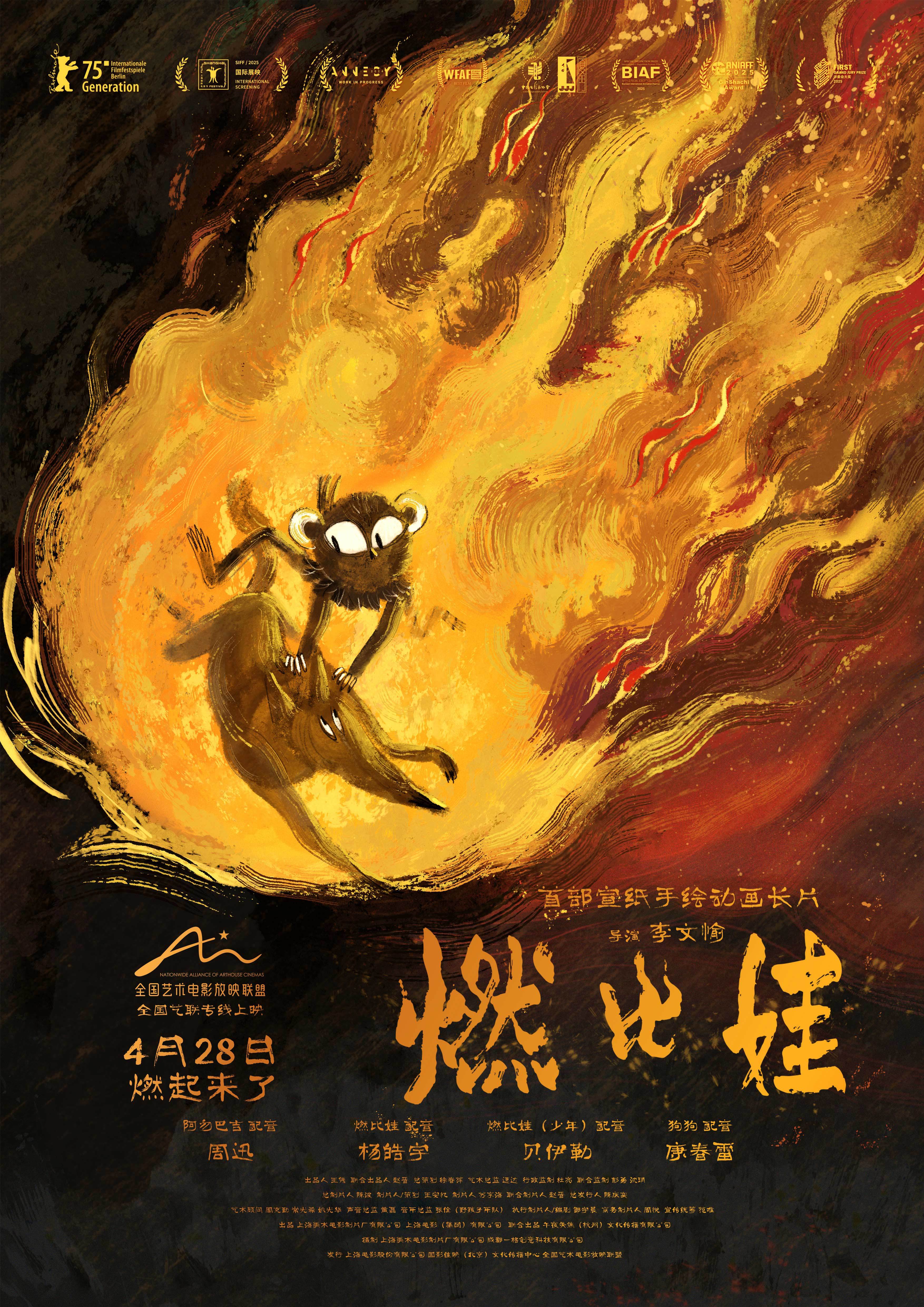
A Story About Fire (燃比娃, Li Wenyu, 2025)

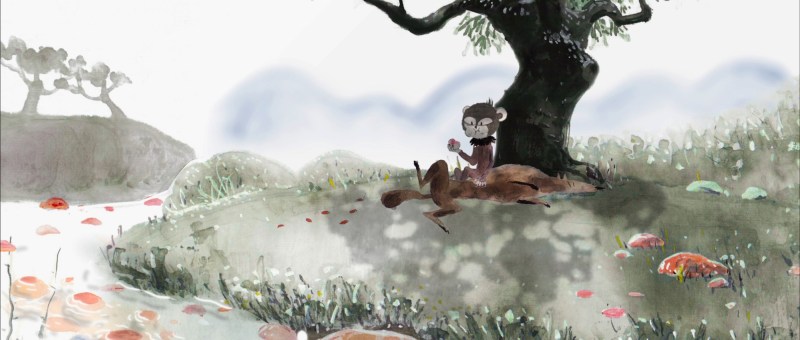
A young monkey sets off on a journey to claim fire from the gods and also discover the secrets of his origins in Li Wenyu’s poetic indie animation A Story About Fire (燃比娃, ránbǐwá). Loosely based on the classic Qiang legend Ranbiwa Steals Fire, the film is also a tale of human enlightenment and coming of age as the hero and his trusty wolf friend Doggie traverse an icy, barren land looking for the so-called Holy Mountain in order to return warmth to the earth.

Animated in a style reminiscent of classical ink paintings, the tale is told along parallel lines as we follow Ranbiwa and Doggie intercut with the original journey of the AWUBAJI, the chief of the human tribe, who travelled to the mountain but brought back only the baby Ranbiwa and a white stone. As an adolescent, Ranbiwa is told that it is now his turn to journey to the mountain as a kind of rite of passage, which is to say he’ll become a man in all senses of the word, yet none who were sent have ever returned let alone brought fire back with them. As Ranbiwa gets closer to the mountain, he learns to walk standing upright like a human and finally has his tail bitten off by the monster that guards the cave of fire marking his transition into the world of adulthood and also the enlightenment of mankind as he unlocks his own future and banishes the cold.

To get there, however, he must traverse difficult terrain with little to nothing to eat and with only his best friend Doggie, a friendly wolf, to help him. Together they learn to survive by killing and eating other animals, which is both a kind of fall and also an example of the necessity of working with the natural world. This is truly nature red in tooth and claw as the pair inhabit this very primal world where violence and survival are synonymous. Nevertheless, even in this cold place, Doggie often gives Ranbiwa warmth by curling around him and protecting him from predators. When sources of food begin to decline as they approach the mountain, Ranbiwa is able to eat the fruit from the trees but Doggie is not. Ranbiwa gives him the meat he’d been saving as an act of true friendship and appreciation. 

On their travels they also rescue a young girl and eventually help her reunite with her family who have a large herd of woolly mammoths. Though they agree to give Ranbiwa and Doggie a lift to the mountain, they, by contrast, are heading towards where the sun rises in search of the same thing but on the plains rather than the mountain. Ranbiwa is happy the girl has found her family, but also sad to part with her even if this, the first of two partings, also marks the beginning of a transition from one state to another. Ranbiwa has never seen fire, but he’s never seen the rain either and each of things is necessary to return balance to the world.

Having studied under the legendary Ma Kexuan who worked as an animator on Havoc in Heaven and Nezha Conquers the Dragon King, Li spent six years completing the project alone while working as a professor of animation at the University of Sichuan, the area where the Qiang resided. The minimalism of the opening sequences eventually gives way to beautiful pastoral imagery of plum trees in bloom and the fiery battle in the cave of darkness in which Ranbiwa achieves Nirvana and receives enlightenment, the complexity mirroring Ranbiwa’s own path towards sophistication. At one point, images of civilisations throughout history fly by at breakneck speed lending Ranbiwa’s quest an elegiac quality as if all of human history stemmed from this one moment in which a little monkey toppled the oppressive holy mountain and liberated fire from the gods to return it to the people. Sparse narration adds to the mythical feel while lending a personal dimension to Ranbiwa’s story as he struggles to uncover his past and find out who he really is while finding solace in the warmth of friendship even in the harshest of winters.


A Story About Fire screens in Chicago 11th April as part of the 20th edition of Asian Pop-Up Cinema.

Trailer (English subtitles)

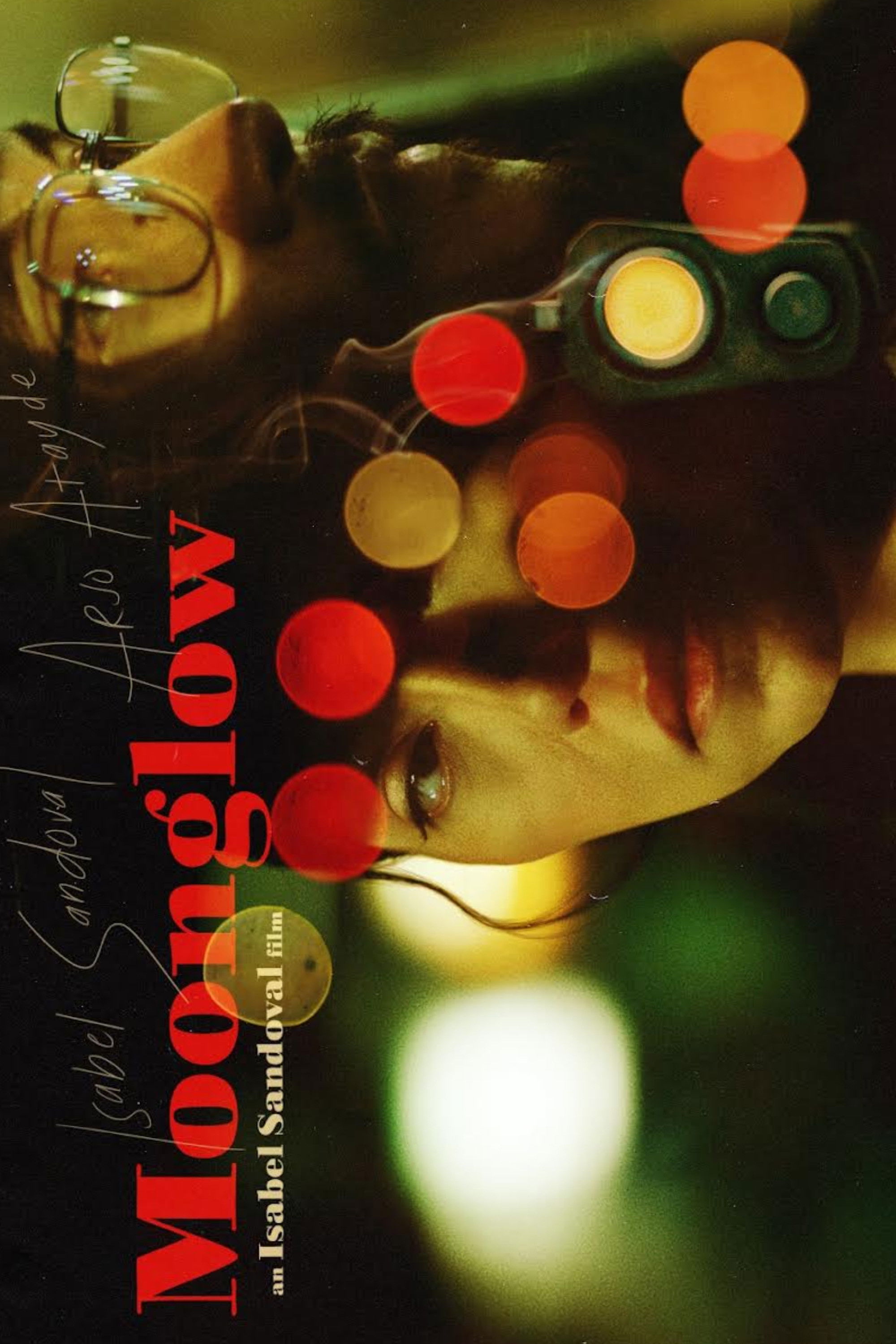
Moonglow (Isabel Sandoval, 2026)

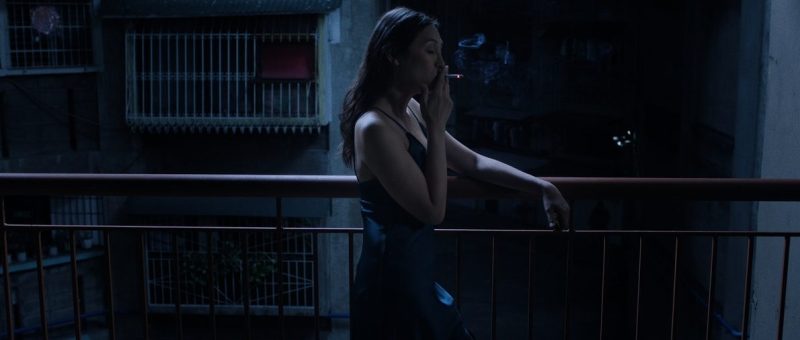
A conflicted policewoman is placed in charge of investigating a crime that she herself committed in Isabel Sandoval’s moody noir, Moonglow. In many ways about the deadening quality of life under authoritarianism, the film contemplates complicity and resistance along with the “paradise of progress” that is touted as the modern Philippines though it faces many of the same problems as in 1979. You may think of yourself as some kind of moral crusader, Dahlia’s aunt warns her, but you’re no match for them.

Sister Therese may have a point. The news is full of stories of abandoned bodies and mysterious fires. Dahlia (Isabel Sandoval) characterises her theft as an act of rebellion and retribution. She does not keep this large sum of money taken from her corrupt boss’ safe for herself, but gives it to her aunt, a nun, with the instruction that it’s to be used to help the victims of a slum fire that later turns out to have been orchestrated by the police chief who is getting kickbacks from construction firms and envisions a bright future for himself in politics. 

Going into politics seems to be the ultimate goal for many. Charlie (Arjo Atayde) was also being groomed for office, but chose to emigrate instead after being confronted by the ugly side of his family’s elite status. The nephew of police chief Bernal, he’s just returned from America to look after his ailing father having become a lawyer rather than law enforcement official. Nevertheless, Bernal appoints him to the investigation presumably assuming he’s a safe person to ask because he’s family and therefore no threat to him. Old flame Dahlia, however, remarks on meeting him again that he now wears glasses, as if signalling Charlie’s ability to see things with more clarity than those around him whose vision has been blurred by continued exposure to life under the Marcos regime.

Dahila, who chose to stay rather than leave with Charlie, has indeed been compromised and is to an extent at least complicit as an agent of authoritarian power and according to some Bernal’s right hand woman. She says herself that she’s summoned in ghost in Charlie’s return and is haunted by the person she was before along with that of lost love. Each of them have repeated flashbacks to a lavish party shortly before Marcos took power which seems to hint at the coming future as Bernal introduces a man soon to be governor who echoes the contemporary radio broadcasts speaking of an era of prosperity hovering the horizon.

Alvaro manipulates Bernal with promises to make him his political successor, while it’s clear that any “prosperity” to come will only be for some. They burn slums to seize the land for shopping malls and luxury apartments leaving hundreds of people homeless and others of them dead. Alvaro later implies that some of the stolen money has been used to get the victims legal representation to challenge the government, a power that he also believes to have been “stolen” in that they have no right to it. Indeed, the authorities silence contrary voices without compulsion offing an investigative journalist reporting on the fires and later coming after Dahlia. Charlie reminds her that Bernal would sacrifice anyone, and indeed later implies he may do so with him when he starts asking the wrong questions about how much money went missing from the safe. 

Yet Dahlia’s tragedy is that in the end she can’t escape herself or her past. She can’t make all of this right through her act of rebellion, but neither can she accept the ways in which she did not resist or leave as Charlie had. That other life is also haunting her. Sandoval’s frequent use of dissolves signals the foggy quality of life under authoritarianism in which it becomes impossible to think or see clearly when every moment is self preservation or active complicity. Past, present, and future come to co-exist with Dahlia stuck somewhere in between, longing for a return to an elusive past while fearing that the future is no longer possible. She and Charlie are now, as she says, different people. Their romance belongs to another era which has now become inaccessible, or perhaps existing only in the realms of memory as a painful reminder of that which could have been.


Moonglow screens in Amsterdam 11th/12th April as part of this year’s CinemAsia Film Festival.

Trailer (English subtitles)

Mag Mag (禍禍女, Yuriyan Retriever, 2025)

The funny thing is, Mag Mag is only visible to the man she’s currently in love with, though what she seems to represent is the grudge of the unrequited lover whose gaze is never returned. The first release from K2 Pictures, a new production company launched in 2024 with the intention of shaking up the Japanese film industry by moving away from the production committee system, comedienne Yuriyan Retriever’s first feature sets out as if it’s asking why women become fixated on terrible men, only to eventually subvert its central premise with a series of unpredictable twists.

It’s true enough that (almost) all of Mag Magis targets deserve exactly what they get. The men are selfish and insensitive, bullying or abusive. Shunsuke (Fuku Suzuki), the first victim, appears meticulously doing his hair in the bathroom mirror as if bearing out his vanity and self-obsession. Many of the men are popular and handsome, but the attention they get has only made them cruel and arrogant. Takuya (Junsei Motojima), the original victim said to have given birth to the curse of Mag Mag, is beloved of half the school but can’t resist punching down by making fun of a girl considered to be unattractive who had left him a love letter. Yurika Yoshida (Marina Mizushima), whose name is very similar to that of the director, is believed by some to have become Mag Mag after taking her own life and cursing Takuya in the process, but most of all represents the ugliness of the male gaze in being constantly berated for her appearance. The other kids tell her to lose weight and get plastic surgery, while Takuya takes her love letter as an insult to his status as king of the school. Mag Mag is described as being “freakishly tall” which also hints at ideas of monstrous femininity.

Perhaps this is one reason why Mag Mag rips out the eyes of her victims, though the point is that they were always pointed in the wrong direction anyway. Sanae is obsessed with an artist named Hiroshi (Oshiro Maeda), though he’s made a nude statue of another girl named Rumi apparently from his imagination and without her consent, which hints again at the self-involved nature of male desire. He does not appear to really notice Sanae (Sara Minami), though Rumi (Mai Fukagawa) may not be lying when she says he found her creepy. After Hiroshi’s death, Sanae begins investigating Mag Mag in attempt to unmask her and avenge Hiroshi, only to ultimately see herself in the vengeful spirt’s sinister cries of “I love you” which aren’t so different from those expressed for Hiroshi while essentially stalking him from her shrine lair. 

Nevertheless, this misdirected gaze is going in both directions as we, the viewers, too do not really see the person we should have been looking at all along. Deep-seated senses of inadequacy can provoke the jealously and resentment of unexpected and seriously inappropriate targets, and perhaps what we’re looking at here isn’t the societal urge to mock an “unattractive” woman who dares to ask for love, but rather the toxic rage of an invisible man who loathes those who seem to be unfairly popular with women despite being terrible human beings and unpleasant to be around. Perhaps in the end, it’s Sanae’s “delusional” fixation pitted against the passivity of a man who believes himself to be unattractive and in fact becomes so because of his intense self-loathing.

But then, there does appear to be a real ghost and unflinching embrace of the arcane with its Shinto priests, lines of prohibition, and apparently magic trees whose ability to end bad relationships is potentially more than just psychosomatic, or just little psycho. Yuriyan Retriever’s absurdist humour blends perfectly with the grimness of the Mag Mag curse and the world it seems to mirror. With an overt reference to Guard of the Underground, she celebrates and subverts J-horror tropes while skewering contemporary entertainment trends in her house share fantasia of hopeful youngsters that turns out to be a quasi-incestuous nest of betrayal and misplaced desire. Influencers too are a one-way relationship, and you only see what they you want you to. Mag Mag, however, just might let you go if only you’re brave enough to say you love her too rather than, like her unfortunate victims, spurning her affections and thereby invoking an ancient curse born of the suffering of an unreturned gaze.


Mag Mag screens in Chicago 10th April as part of the 20th edition of Asian Pop-Up Cinema.

Trailer (English subtitles)

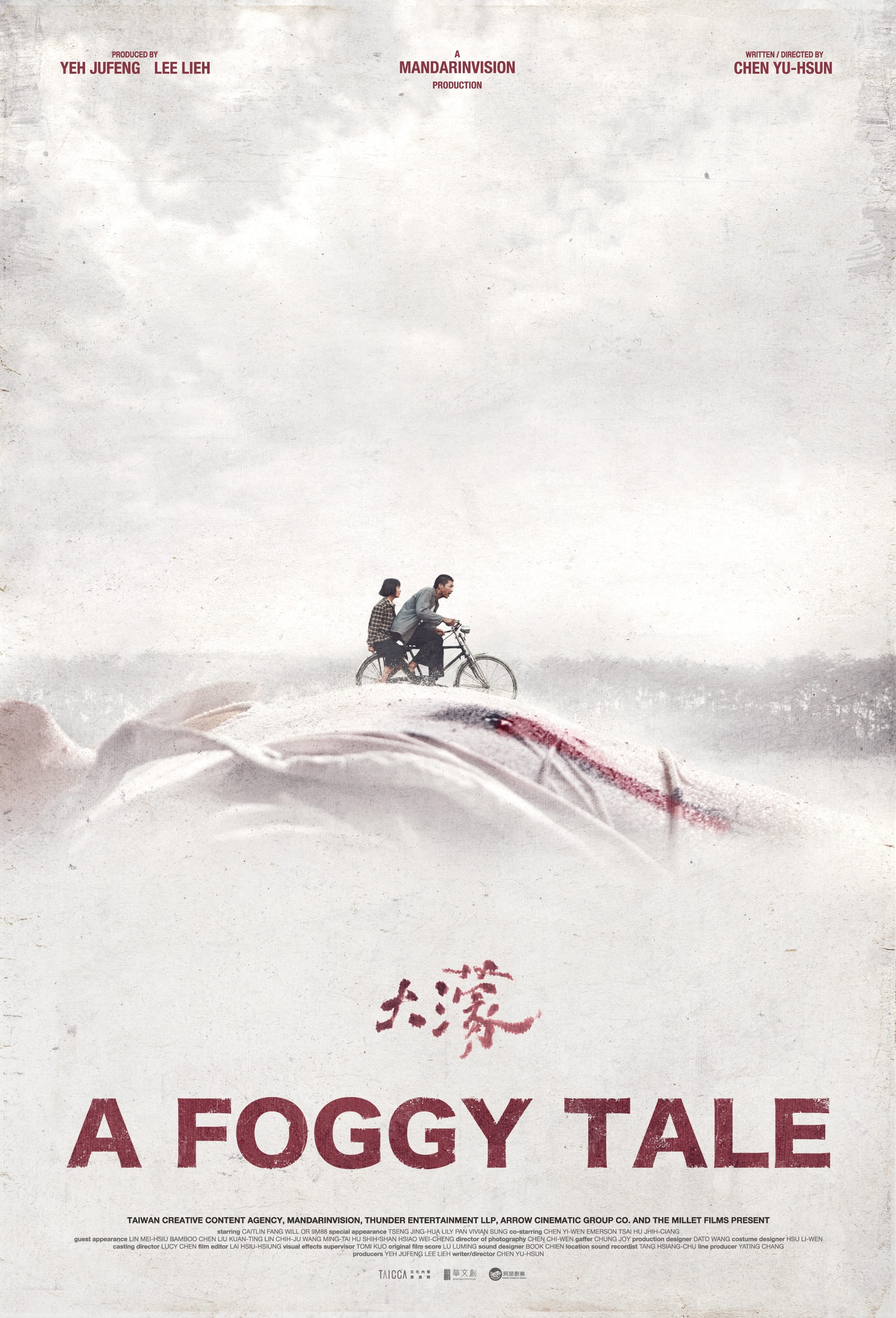
A Foggy Tale (大濛, Chen Yu-hsun, 2025)

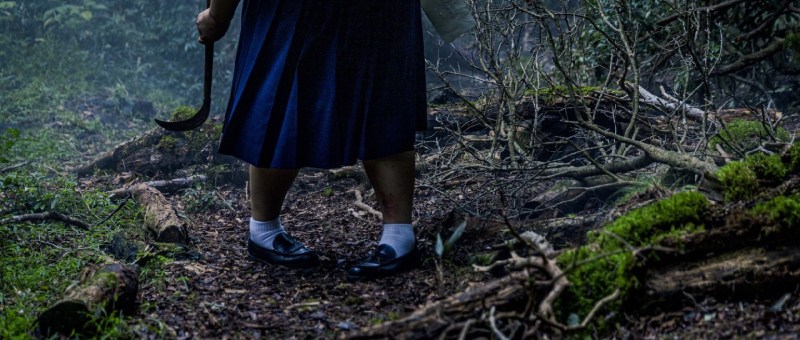
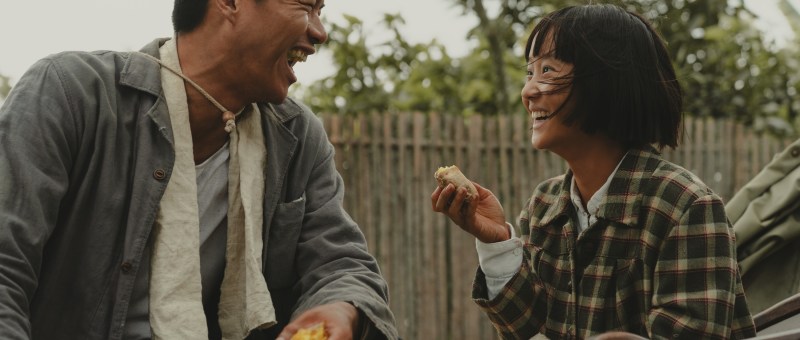
A young girl witnesses the horrors of the White Terror when she travels from her rural hometown to retrieve the body of her brother who has been executed by military police in Chen Yu-hsun’s otherwise light-hearted odyssey through 1950s Taipei, A Foggy Tale (大濛, dà méng). The title refers to a story the heroine’s brother Yun (Tseng Jing-hua), whose name means “cloud”, tells twice. First, it’s a metaphor for a resistance movement as two drops of water join many others to form a cloud that then descends on a patch of land that makes it farmable. Secondly, the second water droplet never makes it to the cloud, but instead becomes trapped half way and dissolves into the mist.

It is, however, into a foggy town that Yue (Caitlin Fang) arrives after leaving alone when her uncle, who has taken over her parents’ house following both of their deaths, explains that he can’t pay to retrieve Yun’s body. Their aunt is already resentful of the money they spent trying to save, and in truth does not want the extra mouths to feed of her niece and nephew. She would much rather have the house, which she regards as her husband’s rightful inheritance anyway, to herself for her sons to be the masters of. While he was in hiding, Yun had approved of Yue’s desire to become a teacher though she’s been taken out of school and, as he says, women in the country generally have little other choice than to become wives and mothers working the land. 

To add to the sense of displacement, Yue has an older sister in Taipei whom she’s never met because she was fostered out as a future daughter-in-law before Yue was born. Hsia (9m88) has since left the family who brought her up after refusing to marry the man she was betrothed to because they had been raised like siblings, though he remains somewhat resentful and badgers her to return. She had been acquainted with Yun while he was a student in the city, but has no idea that he has been killed after being arrested as a possible “communist” for protesting against the regime. 

Though she may not have felt it in the country, the forces of oppression are all around Yue in the city in the very presence of the military police. After being caught sleeping in the street, she’s taken in and beaten up by a policeman for talking back, while they also push her to “explain” where she got her money as a prelude to confiscating it for themselves. A kind yet flawed rickshaw driver (Will Or Wai-lam) who saves her from being kidnapped and sold into sex work, explains to her that the funeral home even charges for the bullets that were used to shoot her brother and she likely needs two or three times as much as she thought or they’ll throw him in a mass grave with the other victims of the regime.

Years later, an older Yue who has fulfilled most of her dreams though she no longer speaks Taiwanese with her adult daughter but Mandarin, sees a news report about the discovery of a mass grave and checks the names of those identified looking for someone she lost. This unearthing of the buried is past of symbolic of the desire to expiate this history, though Yue does not find the answers she’s looking for and the question is left hanging. When times where unbearable, Yun had told her to wind his watch forward and think of the Taiwan years to come that would be better where people could be free from oppression and exploitation. It took longer than expected, but some of that world has come to be, the film seems to say, if not completely and still with this mist hanging in the air that is the victims of the White Terror. Still, Yue’s story has its share of whimsy as she chases through the backstreets of a labyrinthine city. She encounters both kindness from the justice-loving rickshaw driver who tries to help but also scams her out of her brother’s watch only to return it years later as a means of assuaging his guilt, and cruelty from the men who tried to sell her, the secret policeman who apparently went into business, and unforgiving detectives. But in other ways, what she finds is a kind of peace and her place as a part of this nation and society as time continues its eternal march forward.


A Foggy Tale screens in Chicago 10th April as part of the 20th edition of Asian Pop-Up Cinema.

Trailer (English subtitles)

Republic of Pipolipinas (Republika ng Pipolipinas, Renei Dimla, 2025)

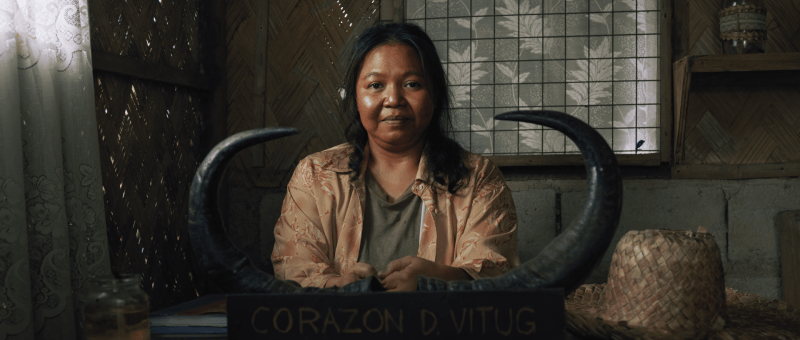
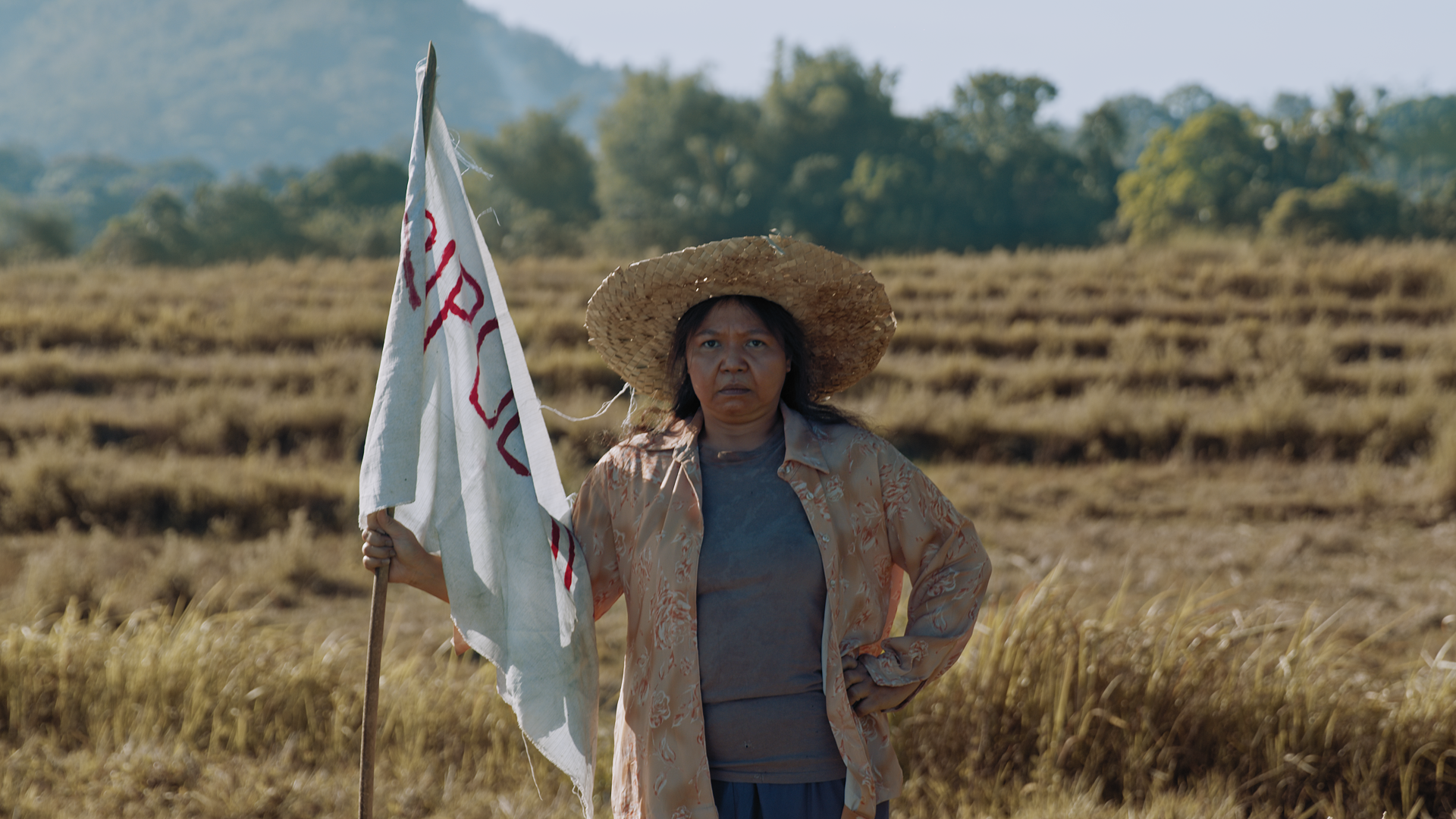
Declaring herself sick of being a Filipino, disillusioned farmer Cora decides to secede from the Philippines and start her own nation which she calls the “Republic of Pipolipinas”. She chose this name, she says, in memory of the People Power Revolution in 1986 which showed her that anything is possible when people work together for the nation. She may have spelled “people” in a non-standard way, but really what does that matter if it sounds right and you know what she means?

A mocumentary shot in the style of Parks and Rec, Renei Dimla’s deadpan satire uses its heroine’s zany idea to explore the contemporary reality of the Philippines in which many others are also sick of being Filipino and want to start again. What Cora most objects to is that the local authorities are trying to take her land which her family have been farming since the days of her great-great-grandfather. They say they have deeds going back to the Spanish colonial era saying the land is theirs, but Cora points out that’s really just neocolonialism. How can they tell a Filipino woman that this land doesn’t belong to her? Her children are buried there, and so she refuses to move, sending letters from the office of the President of the Republic of Pipolipinas to the mayor telling them that if they come on her land she’ll charge them with trespassing which incurs a fine to be paid in ducks, chickens, and cows.

In a way, that might demonstrate that Cora is living in the past, but she has a point when she says that she doesn’t want money in the Republic of Pipolipinas because that’s when you start getting corruption. Most of her neighbours think she’s a bit mad, but see her as a local eccentric, except for the few who think she might have killed her abusive husband with rat poison. Nevertheless, many of them are mired in poverty. The lady at the local shop lets Cora pay in eggs, but another woman comes and asks to add to her tab because there’s nothing to feed the children and her husband hasn’t been paid again. Local boy Ogie has dropped out of school because his mother’s ill. She’s refusing to see a doctor because they can’t afford it. Cora puts back some of her purchases and asks for the money instead which she gives to Ogie so his mother can get medicine. 

Many of the people who later join the Republic of Pipolipinas have similar problems. One woman has lost a son to extrajudicial killing. A man working as a tour guide hates himself for greeting people so warmly when he knows the country is in a bad way and the vision they sell to tourists is a lie. But once the Republic of Pipolipinas starts to grow, the same kind of issues appear. Led by actress Alessandra de Rossi playing a version of herself, the new citizens become frustrated with Cora’s lack of sophistication and begin talking about constitutions and what kind of nation they want the Republic of Pipolipinas to be while vying for power.

Cora asks herself why they’re expected to die for the nation when the government’s job is to keep people safe from harm. After discovering that her farm is to be bulldozed to build a waste treatment centre, or really a landfill site filled with rubbish imported from Korea and other wealthy nations, she discovers corruption in the local government and tries to expose it only to end up being accused of embezzlement herself, which is ironic because she consistently rejected the presence of money precisely because it leads to corruption. Even a local official who refuses to believe Cora would do something like that sheepishly admits that it’s difficult to avoid temptation once in power, as if corruption is an inevitability that can’t be resisted. But even collaborators aren’t exempt from the wrath of the regime. The mayor believes he’ll weather this storm just fine and continue to “serve the people” while throwing his underlings under the bus.

At heart, Cora isn’t really sick of being Filipino, she just wants the Philippines to be a better place for the children to grow up. She can’t stand the flag ceremonies and enforced patriotism, the expectation that they must serve a nation which no longer serves them. What she holds onto is a lesson that her father taught her during the People Power Revolution, that the nation is not abstract concept but collection of people who can still turn this thing around no matter how hopeless it might seem now.


Republic of Pipolipinas screens in Amsterdam 10th/11th April as part of this year’s CinemAsia Film Festival.

Trailer (English subtitles)