Kekkon Annai Mystery (結婚案内ミステリー, Yoshikuni Matsunaga, 1985)

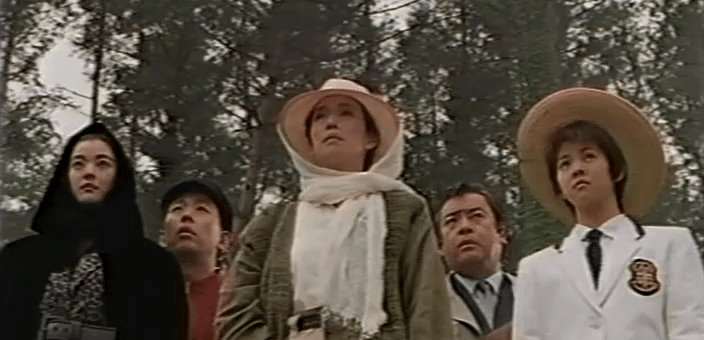
Selected via a talent competition held in conjunction with the search for a new actress to play the leading role in Kosei Saito’s Ninja Wars, Noriko Watanabe became the second of the new “Sannin Musume” alongside the future star of The Little Girl Who Conquered Time, Tomoyo Harada, and Kadokawa’s top idol Hiroko Yakushimaru. Her career with the studio was however comparatively short-lived affording her only three leading roles before she eventually left the agency and went independent after turning down a lead in Koibitotachi no Jikoku because of its explicit nude scenes. Again adapted from a novel by Jiro Akagawa, Kekkon Annai Mystery (結婚案内ミステリー) was her final leading performance as a Kadokawa idol (though she would also play a supporting role in Obayashi’s His Motorbike, Her Island) and saw her playing a slightly more mature role as a young woman working for a matchmaking agency who finds herself mixed up in a country house mystery after accepting an unusual proposal from a client. 

At 19, Hiroko (Noriko Watanabe) is the sole employee at the Fukada Marriage Consultation Agency owned and operated by her boss Mr. Fukada (Bengal). As we first meet her she’s deep undercover at a rival firm which has already shifted into a new era of computer-assisted matchmaking whereas Mr Fukada prefers to do things the old-fashioned way which is presumably why he has no business. It comes as something of a shock therefore when he receives a call from Mrs. Sekine (Aiko Nagayama), the temporary CEO of a major company who apparently wants to find a match for her son Masakazu (Ken Watanabe) who is shortly to return after graduating from Harvard in order to take over the family business following the death of his father six months previously. At the initial consultation, however, Mrs Sekine scandalises Mr Fukada by immediately selecting Hiroko as a potential bride. Seeing as it’s only an initial meeting, which would earn them a bonus payment, Hiroko agrees but when they drive out to the Sekines’ creepy gothic mansion in the middle of nowhere they discover all is not quite as it seems. Masakazu has a fiancée already, but unfortunately she was involved in a traffic accident and is currently in hospital which is a problem because for undisclosed reasons they need to hold the wedding right away. Hiroko is to act as a proxy seeing as no-one who’ll be coming to the ceremony has met Masakazu’s girlfriend and so will be none the wiser. 

Perhaps somewhat naively, Hiroko agrees and ends up staying in the house posing as Masakazu’s intended which includes sharing a room. Briefly shifting genres, a training montage sees Hiroko undertaking a crash course in how to be posh, adopting the correct deportment, using cutlery elegantly, and learning to walk downstairs in massive heals or up while wearing an inconveniently long dress. Which is all to say, the fabulously wealthy inhabit a different world of which Hiroko was hitherto ignorant. This is further brought home by the apparent cracks in the foundations of the Sekine family which is also a corporate entity with the other board members largely favouring other candidates more closely connected to the themselves to take over as chairman while apparent liability uncle Masao (Tamio Kawaji), whose creepy crossbow-carrying young son Mamoru is for some reason being raised by Mrs Sekine, is in some kind of trouble with yakuza loansharks. The other main issue is that Mrs Sekine is a second wife and longtime mistress of the late CEO. Masakazu was born out of wedlock and Mrs Sekine will do anything and everything she can to ensure he assumes his birthright. 

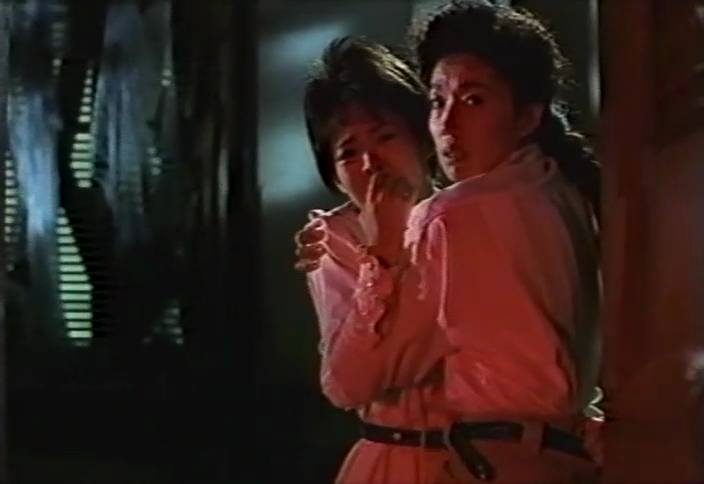
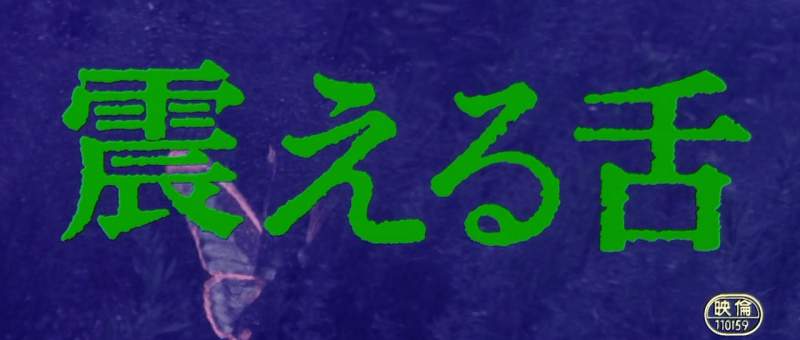
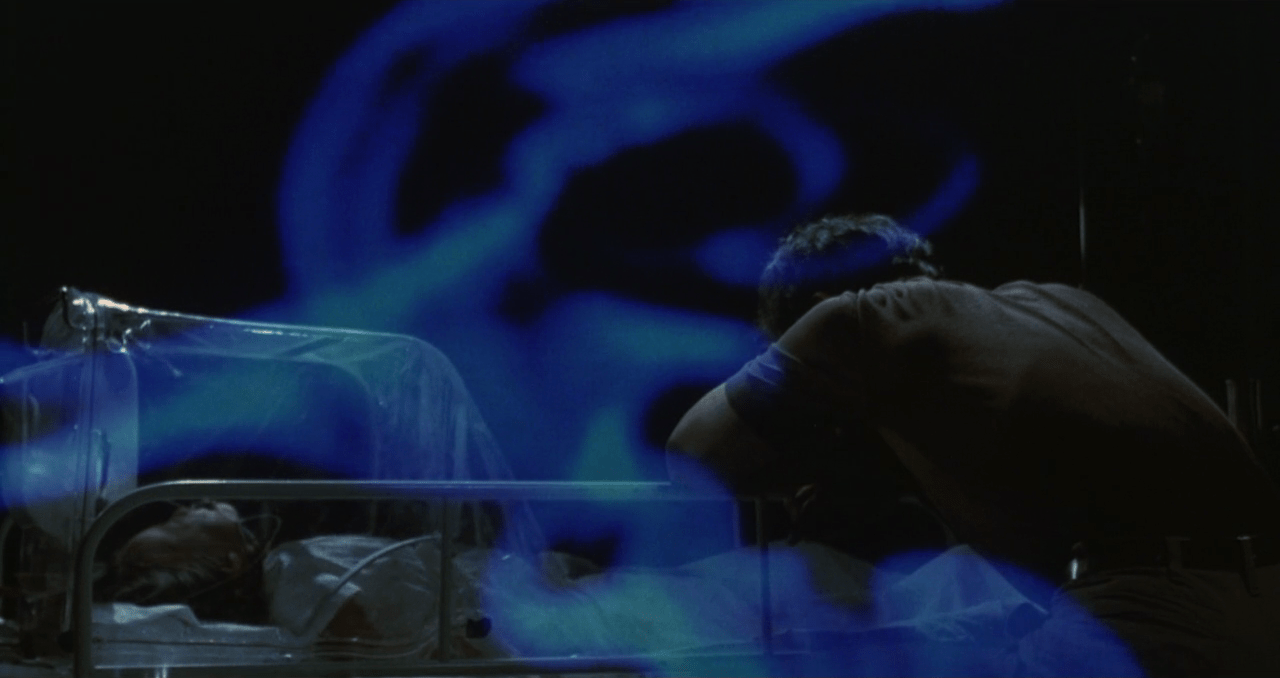
Counter-intuitively succession intrigue has little to do with the central mystery which begins to unravel when Hiroko is attacked on the eve of her wedding by a strange woman who had previously tried to warn her off Masakazu and kills her in self-defence. The body, which we can identify as that seen buried in the snow in the solarised green-tinted opening sequence, is taken care of by Mrs Sekine’s right hand man Kinoshita (Hayato Tani), but Hiroko begins to have her doubts after catching sight of a woman who looks exactly like the one she killed at the local ski resort. 

“Rich people are like that. They’d lie about anything in order to keep their wealth” Hiroko is told, realising she may be at the centre of an infinitely complex plot and becoming aware of Mrs Sekine’s tendency to throw money at people to get them to play along with her plans. Like any good gothic mystery, however, the house holds a dark secret in a hidden room which perhaps hints at the corruptions of the Bubble era along with those of the super rich elite and the undue pressure it puts on its young while uncomfortably suggesting that Mrs Sekine herself is the source of the corruption in her attempt to integrate into a higher social class into which she was not born. Atmospheric in its chilling vistas of the freezing snow, Kekkon Annai Mystery’s twisting tale of greed and manipulation may end in tragedy but ironically lives up to its name as its heroine finds a potential match in her accidental co-conspirator. 


Fire Festival (火まつり, Mitsuo Yanagimachi, 1985)

By 1985 the Japanese economy was approaching its zenith yet along with increasing economic prosperity had come social change of which small-town Japan was either casualty or sacrificial victim. “Nigishima will stay as it is” declares the last holdout of an increasingly obsolete way of life in Mitsuo Yanagimachi’s intense modernity drama, Fire Festival (火まつり, Himatsuri), a manly mountain man and animalistic force of nature by several metrics unsuited to life in the contemporary society into which he is ultimately unable to progress. 

There are many things which it seems have not changed in Nigishima for generations, one being the animosity between the cohorts of its bifurcated community, those who live by land and those who live by sea. Rural depopulation may have forced them to come closer but it has also increased their sense of mistrust while both industries continue to suffer in an economy which no longer prizes their humble rural output. Despite being catapulted into a promised modernity by the advent of the railway to great fanfare in 1959, it now seems that Nigishima cannot survive without a new road which could be paid for by the development of a marine park only mountain man Tatsuo (Kinya Kitaoji) owns the property right in the middle of the earmarked area and has hitherto refused to sell further increasing the tension between the two communities. 

Tatsuo is thought of, and thinks of himself, as a big man in the area quite literally it seems as part of the reason he enjoys this status is down to his being unusually well-endowed. He believes himself to have a special relationship with the mountain goddess, often joking to the other men about having a sexual relationship with her while sometimes describing her as his girlfriend. Several times he is mistaken for an animal, firstly by the boatman bringing his childhood sweetheart and sometime mistress Kimiko (Kiwako Taichi) back to the island who assumed he was a monkey crawling along the cliff edge thoughtlessly throwing rocks at them, while he often gambols through the forest whooping like some kind of Tarzan. Entirely unreconstructed, his worldview is patriarchal and misogynistic. All of his banter with the other men is sexual, constantly referring to his penis while greeting his friends with lewd hand gestures thrusting his fist into his pocket as if waving with an erection. The cure for offending the goddess he tells his young protege Ryota (Ryota Nakamoto) is to drop his trousers and display his manhood, Tatsuo strangely believing this would appease her for taking wood from a sacred tree or killing without permission. 

Smearing the blood of a sacrificial animal over his chest and forearms he dedicates the death to the goddess, a gesture he will repeat in the film’s violent and tragic conclusion yet there is also arrogance in his conduct as if he believes himself above natural law, protected as the goddess’ favourite even as he describes himself as “suffocated” by the women in his life from his mother and five older sisters all of whom indulge him to his wife, kids, and mistresses. He has trained his dogs to hunt wild boar without the use of guns in a method he admits even other hunters describe as “cruel” while breaking a local taboo shooting monkeys in the forest well aware of nature red in tooth and claw. As such, there is little nobility to be seen in his determination to preserve this already obsolete way of life. His virility maybe contrasted with that of the ageing land broker Yamakawa (Norihei Miki) and his failed attempts to bed sex worker Kimiko who tricks him into paying off her debts, but he at least knows the way the wind is blowing explaining to her that towns such as Nigishima survive only through things like marine parks or hotels or even nuclear power plants. Without the road, the town will die. 

Yet in 1959 they were told the railway would save them and it seems it did not. Tatsuo’s love making with Kimiko in a boat borrowed from a treacherous fisherman who later agrees to sail it transgressively into sacred waters is intercut with memories of the rail line’s opening ceremony, two teenagers who might have been them or at least of around the same age ride an elephant on the jetty while the townspeople arrange themselves into the formation of the character for “celebration” captured by the aerial photographer above. For Tatsuo as a boy, was this a rebirth of Nigishima or the beginning of its demise as the coming modernity began to eat away at its foundations? 

The fire festival is “for men”, according to Tatsuo, “to drive out evil spirits”, his manliness getting the better of him as he disrupts the proceedings to attack a man he accuses of having brought “false fire”. These are the lessons he teaches to surrogate son Ryota whose devotion to him borders on the homoerotic, Tatsuo cradling him during the climactic rain storm and he seeming to develop a fascination for Kimiko as a kind of indirect fixation. Ryota has learned Tatsuo’s chauvinism mimicking his lewd hand gestures and swaggering walk, his cruelty in sacrificing 1000 yen to trick Yamakawa into injuring his hand in a bear trap, and his arrogance ensuring that his problematic masculinity will survive into another generation presumably no more capable of halting the march of modernity than he has been. Tatsuo poisons the waters with fuel oil which as one of the greek chorus of fish wives points out does not catch fire, Tatsuo himself smouldering until an inevitable explosion. Receiving some kind of epiphany during a mystical congress with the goddess in the middle of a storm, he knows what he must do and accepts that he cannot progress into the modern society. Smoulderingly intense in its small-town animosity and primeval sensibilities, Yanagimachi’s poetic tragedy of futility and the broken promises of a badly distributed modernity may accept the the sacrifice but mourns it all the same. 


Fire Festival screens at the BFI on 20/27 December as part of BFI Japan.

Clip (English subtitles)

Choji Snack Bar (居酒屋兆治, Yasuo Furuhata, 1983)

Beginning his career at Toei, Yasuo Furuhata is most closely associated with tough guy action films forging a strong and enduring relationship with the genre’s key star Ken Takakura through their work on the New Abashiri Prison series. From the late ‘70s however he began to transition further towards the realms of manly melodrama with a series of films which often starred Takakura as a man struggling to adapt to life in modern Japan such as the guilt-ridden policeman of Station or the conflicted former yakuza of Yasha. Arriving between the two and adapted from a novel by Hitomi Yamaguchi, Choji Snack Bar (居酒屋兆治, Izakaya Choji) is in someways much the same casting a typically stoic Takakura as an intensely noble man whose values are increasingly at odds with the world in which he lives while shifting away from the realms of manly action towards a more somber contemplation of the broken dreams of post-war youth. 

Eiji (Ken Takakura), known to all as “Choji”, is a happily married father of two who gave up his job in shipping to open a bar selling small eats in a Hakodate. He and his wife Shigeko (Tokiko Kato) have been planning to expand the business by opening a larger location near the docks but Eiji is dragging his feet largely it seems because the place found for him by childhood friend Kawahara (Juzo Itami) is too close to another bar run by an old man who helped him when he first started out so he’s loathe to risk infringing on his livelihood. Meanwhile, the central drama in town in the mysterious disappearance of Choji’s childhood sweetheart, Sayo (Reiko Ohara), who married a wealthy ranch owner but has long been trapped in an unhappy marriage she has several times failed to escape. Sayo’s disappearance coincided with a fire at the ranch which is suspected to have been started deliberately the assumption being that Sayo is responsible. 

The ironic disappearance of Sayo forces Choji into a reconsideration of his life choices, something his middle-aged friends also find themselves experiencing if for various different reasons. Choji was once a high school baseball star dreaming of turning pro but his hopes were dashed after an injury forced him to leave the sport thereafter working in an office at the docks but later resigning rather than accept a promotion that would mean he’d suddenly be the boss to his former friends. The bar is his way of being his own man, no one’s boss but his own, though his decision was not universally respected among his friends and in fact came as something of a shock to Shigeko who consented to an arranged marriage partly in search of the typical salaryman life. Most of the other men in town, however, struggle to keep their youthful dreams alive or to find accommodation with the way their lives are now. Inoue (Eiji Misato), for example, is obsessed with cabaret singing, spending all his time in karaoke bars often wearing elaborate costumes and makeup. Childhood friend Iwashita (Kunie Tanaka) even wonders if he’s gone “mad” after taking him to task for neglecting his family on discovering that he’s converted a docked boat into a tiny private cabaret space complete with a sound system and lighting as well as a small seating area for spectators who presumably have not yet materialised. 

This is perhaps in a way a symbol in itself of Japan’s new economic prosperity, later thrown into stark contrast by Choji’s explanation that he and Sayo broke up because of their mutual poverty he nobly pushing her to marry a wealthy man so at least one of them could be happy. Happy is however something Sayo has never been, later paying a short visit to Choji during which she blames him for his “cowardice” suggesting that he is largely responsible for the misery of her life in failing to fight for their love, giving up too easily on a distant happiness which is something he later cautions a young baseball player not to do. The police meanwhile accuse him of complicity, implying the pair knew Sayo’s husband had TB and thought he’d die soon enough after which they’d inherit his money and stay together, consequently assuming the “arson” was an attempted murder. 

The irony is that Choji is far too noble to have ever considered such a thing, something demonstrated by his continuing righteousness in refusing to take up Kawahara’s offer of cheap and lucrative new premises because it would mean betraying his former mentor, refusing to condemn his former teacher’s shock marriage to a woman 30 years his junior, and eventually taking Kawahara to task for his callous comments over the death of friend’s wife. Rival cabbie Akimoto (Masao Komatsu) was forever joking that his wife would die before him and sleazily flirting with young women, but went into debt in order to buy her an elaborate funeral altar and is completely devastated by her loss while living with his three children in a noticeably rundown apartment. As Choji puts it, Kawahara’s broken dream is in no longer being the big boss among the boys as he was in their high school days, fuelling his sense of middle-aged male frustration into embittered drunken violence. Yet everyone is always telling Choji he is being unnecessarily “good”, that he should stop thinking about doing the right thing and put himself first by accepting the offer to relocate the bar because business is business. 

Sayo too is trapped in the past unable to accommodate herself with the way her life turned out, an ironic casualty of Choji’s goodness clinging to her broken dream of youth. These now middle-aged teens of the post-war era are in a sense victims of their age, denied the sense of possibility the youth of today might enjoy but equally unable to step fully into the contemporary era of economic prosperity which some feel has become increasingly amoral and unkind. Nevertheless, as Shigeko puts it “no one can take away what a person carries in their heart”, Choji manfully retaining his nobility while literally burning the image of the past but perhaps carrying it with him as the other men carry the shards of their broken dreams some with more nobility than others.  


Original trailer (no subtitles)

Muddy River (泥の河, Kohei Oguri, 1981)

The post-war era refuses to die in Kohei Oguri’s heartbreaking exploration of childhood friendship and the costs of experience, Muddy River (泥の河, Doro no Kawa). Adapted from the novel by Teru Miyamoto and situating itself in the Osaka of 1956, Oguri’s realist drama takes place at a moment of transition not only in the life of the young hero but also of the nation which was at long last beginning to leave post-war privation behind thanks to increasing economic prosperity. Yet for men like young Nobuo’s father Shinpei (Takahiro Tamura), the traumas not only of the war itself but its aftermath will not be so easy to escape. 

A shy child who often wets the bed, 9-year-old Nobuo (Nobutaka Asahara) lives with his parents Shinpei and Sadako (Yumiko Fujita) above a small riverside noodle bar mainly frequented by sailors and workmen such as Shioda (Gannosuke Ashiya), a regular who pulls a horse and cart for a living. Nobuo can’t stop staring at Shioda’s ruined ear, presumably a battlefield injury though the avuncular gentleman tries to raise his spirits with false cheerfulness explaining that he’s seen the writing on the wall and the days of cart pullers are coming to an end. He jokes about giving his horse to Nobuo as a pet though obviously he has no need for or ability to keep a horse, explaining that he’s going to buy a second-hand truck so he won’t be left behind in the race for modernity. Unfortunately, however, as Nobuo follows him out Shioda’s cart gets stuck in the mud. Somewhat bluntly he violently beats the horse to make him free it, but the cart ends up blocking the bridge and the horse is spooked by oncoming traffic. Crushed by his falling load, Shioda is pulled under the wheels and killed, his hopes for the future dashed while his wife and child are left without economic support. 

Emulating the visual imagery of silent cinema, Oguri frames this sequence perfectly with an inescapable anxiety that captures the inevitability of the moment. This is Nobuo’s first glimpse of death, running confused back to his father to tell him that the cart man’s dead, Shinpei at first not quite comprehending but later reflecting that he was like him another casualty of the post-war era as if his death were merely delayed remembering that he’d once said the war had already killed him and so he’d never die again. On an awkward train journey Shinpei opens a newspaper and reads that “the post-war period is over”, but of course for him it isn’t and perhaps never will be. Reflecting on the last 10 years of his life, he wonders if it was worth it, there must be many people who think it would have been better to die in the war than suffer as they did afterwards. Young Nobuo, born to him in his 40s, is his only achievement. Sadako meanwhile harbours her own guilt in feeling as if she wronged another woman with whom Shinpei had previously been involved after the war by stealing him away and building this life together in burned out Osaka which, while far from perfect, is comfortable enough and happier than most. 

That Nobuo learns for himself when he befriends another boy staring at the abandoned cart. 9-year-old Kiichi (Minoru Sakurai) and his sister Ginko (Makiko Shibata) live on a houseboat recently moored opposite, something which Nobuo finds unusual and mysterious but not itself bad. Still innocent and too young to have incorporated moral judgement, Nobuo simply befriends the other boy bonding over a strange tale of a monstrous carp in the river though perhaps also feeling sorry for him on noticing his ragged clothes and the holes in his shoes. On visiting their houseboat, he only hears only the voice of Kiichi’s mother Shoko (Mariko Kaga) a mysterious disembodied presence who lives in a separate area of the boat accessible only via a different entrance. When she instructs Kiichi to give him some raw sugar and tell him not to come back too often, he takes it that he’s unwanted later confused when his father tells him that it’s fine for his new friends to visit but he shouldn’t go near the boat after dark. 

Understanding people, neither Shinpei or Sadako, instantly grasping the situation, reject the family because of the stigma of sex work realising that people do what they have to to survive and in any case it isn’t the children’s fault or responsibility. On hearing Kiichi enthusiastically singing an old imperial song about losing friends in Manchuria, Shinpei begins to feel a kinship with his late father as another old soldier claimed by the muddy river of the post-war society. Like the cart man, and an old fisherman Nobuo witnessed “disappear” from his boat never to be seen again, he was simply a casualty of the times one of many unable to enter the new society promised by rising economic prosperity. Shinpei fears he may also be one of these men, left behind unable to break free of wartime survivor’s guilt and the traumas of what came afterwards. He also disappears from his son’s life abruptly and without warning if only temporarily, but accidentally deserts him at the time he needs him most allowing his fragile new friendship to fracture as the two boys fatefully return to the boat after dark and Nobuo encounters a loss of innocence on several levels Kiichi realising that something is now broken between them. 

Something is perhaps broken in the times, the end of Nobuo’s childhood coinciding with the the dawning of a new era free of post-war privation but one that also threatens to leave those who can’t catch up to it behind Kiichi’s boat bound for further down the river while Nobuo remains firmly on land his own foundation perhaps more secure now that his father has exorcised some of guilt over the recent past. Shot with a nostalgic realism in black and white and in academy ratio, Oguri’s quietly devastating drama sets one boy’s loss of innocence against the lingering affects of another as the adults all around him struggle to acclimatise themselves to a changing society but all he sees is the muddy river flowing past him taking his friend away because he saw something he shouldn’t have leaving him with nothing but sorrow and loneliness on the other side of an unbreachable divide. 


Muddy River screens at the BFI on 12/23 December as part of BFI Japan.

Opening sequence

Fancy Dance (ファンシイダンス, Masayuki Suo, 1989)

Thematically speaking, the films of Masayuki Suo have two main focuses either dealing with esoteric ways of life in contemporary Japan such as sumo wrestling in Sumo Do Sumo Don’t, ballroom dancing in Shall We Dance?, and geisha in Lady Maiko, or pressing social issues such the operation of the justice system in I Just Didn’t Do It or euthanasia in A Terminal Trust. After making his debut with pink film Abnormal Family: Older Brother’s Bride, Suo’s first mainstream feature Fancy Dance (ファンシイダンス) belongs to the former category as a Bubble-era punk rocker finds himself entering a temple to honour a familial legacy. 

As the film opens, Yohei (Masahiro Motoki) is onstage singing a very polite and respectable version of a classic song, Wakamonotachi (lit. the young), made popular as the theme to a television drama in the mid-1960s, before suddenly turning around, the other half of his head already shaved continuing with the same song but now in an anarchic punk rock arrangement. The son of Buddhist temple, he is expected to become a monk and take over the family business but he’s also a young man coming of age in the ultra-materialist Bubble era raised in the city and with little inclination towards the ideals of Zen. In fact, we learn he’d long resisted the idea of entering a monastery and has only recently given in intending to stick it out for a year in order to please his parents and then return to to his Tokyo life. 

His hair reflects an inner duality, torn between his duty to take up Zen and his desire for personal freedom. Yet as he’s repeatedly told by his razor-wielding office lady girlfriend Masoho (Honami Suzuki), in the end he’s going to have to choose which from her point of view means choosing between her and the temple. Though there is obviously no prohibition on monks getting married, Yohei is the son of a monk after all, girlfriends are one of many things not really allowed during his initiatory period though as we’ll see the monastic life is often more about knowing how to game the system than it is about actually sticking to the rules. It’s a minor irony that temples, Buddhist or Shinto, are actually one of the most lucrative businesses in Japanese society and despite apparently rejecting material desire many monks are fantastically wealthy. Yohei’s fellow noviciate Eishun (Hikomaro) is dropped off by a young woman in a bright red sports car who turns out to be the daughter of a monk, Eishun only entering the temple to please her family so that he can marry her, committing himself out of love but also admitting it’s nice work if you can get it. 

Yohei’s brother Ikuo (Ken Ohsawa) is also fine with the idea of becoming a monk, describing it perhaps surprisingly as an “easy life”. Ikuo’s presence is initially a little irritating to Yohei, he only agreed because he was under the impression Ikuo had also declined to enter the temple and feels that he’s been tricked when he could have just let him train to take over the family “business”. The treatment they receive is often surprisingly harsh with a high level of physical violence administered by their superiors, in particular the more experienced Koki (Naoto Takenaka) who has it seems figured out how to break the rules in an acceptable fashion carrying on a secret romance with a young woman who often attends the temple while visiting hostess bars in the town in disguise, wearing a wig to cover his distinctive monastic hairstyle. Meanwhile, even the supposedly austere master of asceticism Shoei (Miyako Koda) has a secret stash of sweets in their room. The message seems to be that once you “graduate” from the junior ranks you too are free to interpret the tenets of a Zen life however you see fit. 

Yet despite himself, Yohei comes to appreciate the trappings of monasticism most particularly in its graceful movements and the aesthetic quality of the outfits. The temple may not be free of the consumerist corruptions of the Bubble era, but perhaps there is something it for a man like Yohei, a different kind of “freedom” than he’d envisioned but freedom all the same even within the constraints of a superficial asceticism. Masoho meanwhile rejects her own fancy dance in refusing to play the part of the conventional office lady no longer smiling sweetly cute and invisible but dressing in her own individual style and defiantly taking command of the room. The strains of Wakamonotachi recur throughout hinting at Yohei’s youthful confusion as he tries to decide on his path in or out of the temple while finding himself “swimming in a sea of desire between Masoho and Zen”, perhaps concluding that his own endless journey has only just begun.


Fancy Dance streams in the US Dec. 3 to 23 alongside Suo’s 2019 Taisho-era drama Talking the Pictures as part of Japan Society New York’s Flash Forward series.

Wakamonotachi TV drama theme by The Broadside Four (1966)

Music video for the updated theme from the 2014 TV drama remake (known as All About My Siblings) performed by Naotaro Moriyama

The New Morning of Billy the Kid (ビリィ★ザ★キッドの新しい夜明け, Naoto Yamakawa, 1986)

“Isn’t this style called surrealism?” a little girl asks, watching a WWII GI giving John Ford’s Monument Valley a post-modern makeover depicting John Lennon and a Martian in preparation for a live concert by hip girlband ZELDA. Arriving at the beginning of the Bubble era, Naoto Yamakawa’s 35mm commercial feature debut The New Morning of Billy the Kid (ビリィ★ザ★キッドの新しい夜明け, Billy the Kid no Atarashii Yoake) was the first film to be produced by the entertainment arm of department store chain Parco (along with record label Vap) which also distributed and draws inspiration from several stories by genre pioneer Genichiro Takahashi who at one point appears on screen proclaiming singer-songwriter Miyuki Nakajima, a version of whom appears as a character, as one of the three greatest Japanese poets of the age. What transpires is largely surreal, but also a kind of post-modern allegory in which the world is beset by the “anxiety and destruction” of salaryman society. 

Yamakawa opens in black and white and in Monument Valley in which only the figure of a young man in a cowboy outfit is in vivid colour while a voiceover from the American President warns that a savage band of gangsters is currently holding the world to ransom. Yet “Monument Valley” turns out to be only an image filling the wall of Bar Slaughterhouse, the cowboy, Billy the Kid (Hiroshi Mikami) stepping out of the painting having lost his horse and apparently in search of a job. The barman (Renji Ishibashi) is reluctant to give him one, after all he has six bodyguards already ranging from the legendary samurai Miyamoto Musashi to an anthropomorphism of Directory Enquiries, 104 (LaSalle Ishii). Nevertheless, after threatening to leave (through the front door) Billy asks for a job as a waiter instead in return for food and board while collecting the bounty for any gangsters he kills in the course of his duties. 

The bar is in some senses an imaginary place, or at least a space of the imagination, the sanctuary of “construction and creation” where half-remembered pop culture references mingle freely. In that sense it stands in direct opposition to the salaryman reality of Bubble-era Japan where everyone works all the time and the only interests which matter are corporate. Billy takes a liking to a young office lady, “Charlotte Rampling” (Kimie Shingyoji), who complains that she’s overcome with a sense of anxiety in the crushing sameness of her life, often woken by the sound of herself grinding her teeth that is when she’s not too tired to fall asleep. The “gangsters” which eventually crash in (literally) are businessmen and authority figures, one revealing as he raids the till that he’s a dissatisfied civil servant who determined that in order to become the best of the salarymen you need an “interesting” hobby so his is being in a gang. Another later gives a speech remarking again on this sense of inner anxiety that in their soulless desk jobs they’re moving further and further away from this world of “creation and construction”, and that the sacrifice of their individuality has provoked the kind of violent madness which enables this nihilistic “terrorist” enforcement of the corporatist society against which Miyuki (Shigeru Muroi), another of the bodyguards dressed as a retro 50s-style roller diner waitress, rebels through her poetry. 

Envisioned as a single set drama (save the bookending Monument Valley scenes apparently filmed on location in Arizona) Yamanaka’s drama is infinitely meta, in part a minor parody of Seven Samurai featuring a Miyamoto Musashi inspired by Kurosawa’s Kyuzo who was himself inspired by Miyamoto Musashi as the seven pop culture bodyguards stand guard over a saloon-style cafe bar beset by the forces of “order” turned modern-day bandits intent on crushing the artistic spirit in order to facilitate the rise of a boring salaryman corporate drone society. Yet for all of its absurdist humour, Harry Callahan (Yoshio Harada) telling a strange story about being a race horse, there is something quietly moving in Yamakawa’s ethereal transitions, the camera gently pulling back as a little girl who wanted to travel is suddenly surrounded by snow or the face of anxious young office lady fading into that of a prairie woman telling a bizarre tale of her life with a venomous snake. Equally a vehicle for girlband ZELDA whose music recurs throughout, the first stage number a hippyish affair set in a summer garden and the second an emo goth aesthetic more suited to what’s about to happen, Yamakawa’s zeitgeisty, post-modern drama is an advocation for the importance of the creative spirit if in another meta touch itself a rebellion against the corporate and consumerist emptiness of Bubble-era Japan. 


The New Morning of Billy the Kid streams worldwide 3rd to 5th December with newly prepared English subtitles alongside two of Yamakawa’s earlier shorts courtesy of Matchbox Cine.

Original trailer (English subtitles available via CC button)

Miyuki Nakajima’s debut single, Azami-jo no Lullaby (1975)

ZELDA’s Ogon no Jikan

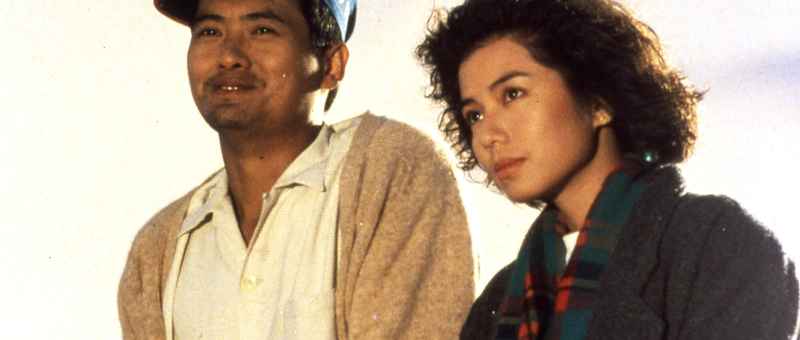
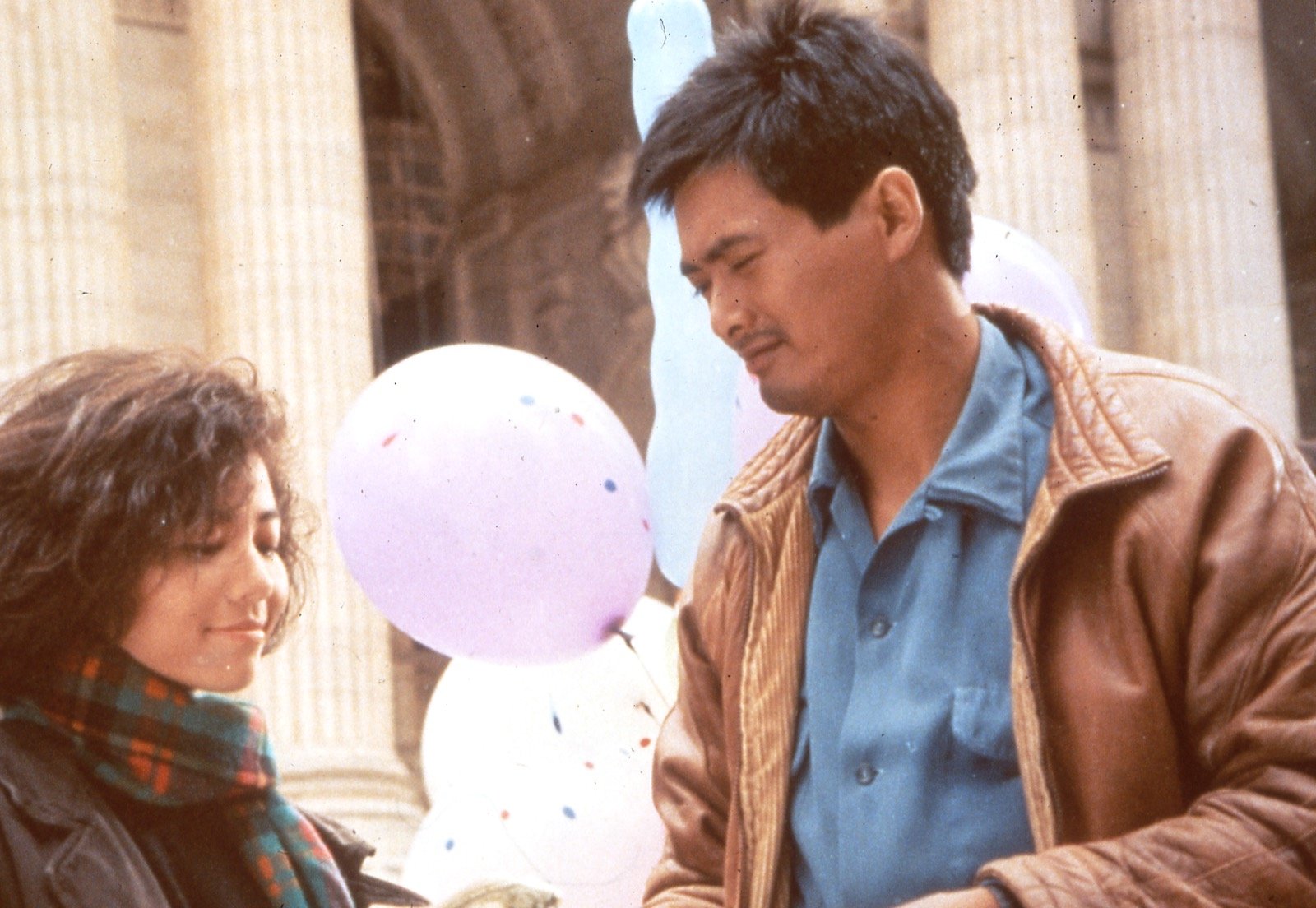
Taipei Story (青梅竹馬, Edward Yang, 1985)

“Just a fleeting hope. The illusion that you can start over” the hero of Edward Yang’s melancholy drama of the costs of modernity, Taipei Story (青梅竹馬, Qīngméizhúmǎ), eventually laments. Yang apparently chose the English title himself in a deliberate echo of Yasujiro Ozu’s equally pessimistic drama, yet the original title literally translated as “childhood sweethearts” also has its poignancy in hinting at the loss of innocence and hopeless impossibility of the fracturing love between its twin protagonists. 

Yang begins and ends in an empty room, for an empty room is always a possibility. As the film opens, high-flying career woman Chin (Tsai Chin) is buying her own apartment, already envisioning her life there in pointing out to her boyfriend Lung (Hou Hsiao-hsien) where they’ll put the TV and VCR so they can watch movies in bed hinting at a new level of consumerist success. More practically minded, he points out that the place needs a little work but Chin is confident she can manage it, saving up and paying in instalments having no immediate anxiety about her income. 

Yet Yang seems to suggest that this burgeoning economic powerhouse is built on shaky ground. The construction firm at which Chin works has recently been hit with a potential lawsuit about a lethal building error, while Chin’s mentor has already moved on and the firm has been bought up by another company presumably intent on some shady business of its own. This Chin discovers to her cost on hearing the not entirely unexpected news that the new bosses don’t understand her job title and want to demote her to the role of secretary which, she suspects, is just a way of pushing her to resign (which she then does). 

Shoddy business practices are also it seems responsible for her father’s present moment of financial insecurity though he only further alienates his daughter by talking entirely with Lung when the pair come to visit stopping only to ask awkward questions about marriage and children. Later we realise that part of Chin’s resentment towards her father is due to a long history of domestic abuse, her mother later crying silently prompting Chin to withdraw some of her savings something she would not have done had her father asked it. Yet Lung, old-fashioned in many ways and not least in his filiality, feels duty bound to help his not-quite father-in-law provoking a row between the pair when he gives him money he’d saved in the forlorn hope of going into business with his brother-in-law in America. 

Once childhood friends and now seeking a new start, the couple begin to dream of a new life though as Lung later says, America, like marriage, is not a panacea. Chin is in a sense torn between past and future neither of which have much possibility, in a committed relationship with Lung yet jealous over his past with a mutual childhood friend, and also carrying on an affair with an unhappily married man at work. A high-flying executive and independent career woman, she is determined to keep moving forward while Lung is stuck in the past hung up on baseball glory and morally righteous to a fault, helping out Chin’s feckless father while knowing it will do no good while his attempt to help a friend sort out his complicated family life leads only to tragedy. It’s obvious that he does not fit in with Chin’s yuppie friends, one particularly obnoxious male colleague describing him as having the face of a yam farmer and needling him to the point that it eventually leads to an altercation in a karaoke bar. Chin doesn’t seem particularly upset about the fight, comforting Lung as he confesses that he ends up in fights in order to stick up for himself or else because of his love of justice, but continues hanging out with her unpleasant friend for otherwise unclear reasons. 

But it’s less a love of justice than frustrated masculinity that eventually seals Lung’s fate, unwisely picking a fight with a young tough not so much in order to protect Chin as to preserve his own sense of wounded male pride. Realising the futility of his situation, he is unable to move forward into the new society, whereas Chin eventually finds herself substituting his role as her former mentor shows her around a potential new office space just as she had him her apartment envisioning how they will exist within it, where their offices will be along with the state of the art computer room. “It’s actually nice here,” she assures her, “now we have a big American company right in our hometown. Why go abroad?”. Yet Chin perhaps remembers her dejected colleague lamenting that all the new buildings look the same and he can’t even remember which ones he worked on so anonymous has the landscape become. In this Taipei story, the city is devoid of life or character a highly corporatised arena of increasingly dehumanising capitalism where everyone dreams of escape abroad to America or Japan, yet all Chin can do lowering her sunshades is to gaze from the window of her new office onto the lonely streets below and ask herself where it is she thinks she’s going. 


Taipei Story streamed as part of this year’s Taiwan Film Festival Edinburgh.

Trailer (English subtitles)

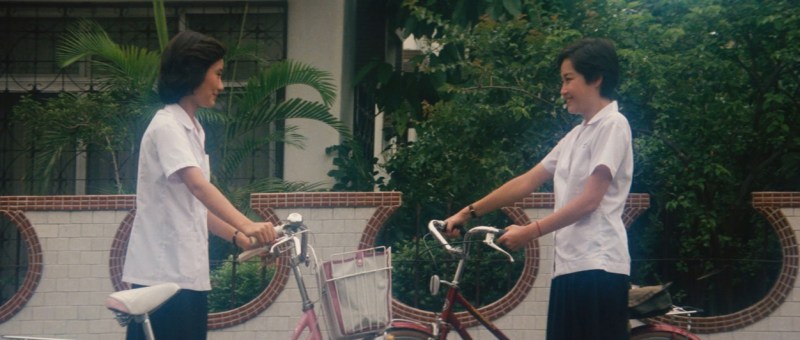
Dust in the Wind (戀戀風塵, Hou Hsiao-hsien, 1986)

Geographical dislocation and changing times slowly erode the innocent love of a young couple in Hou Hsiao-Hsien’s nostalgic youth drama, Dust in the Wind (戀戀風塵, Liànliàn Fēngchén). Hoping for a better standard of life, they venture to the city but discover that the grass is always greener while their problems largely follow them and the young man finally alienates his childhood love with his stubborn male pride, imbued with a general sense of futility in the inability to better himself because of the constraints of a society which is changing but unevenly and not perhaps in ways which ultimately benefit. 

Opening with a long POV shot of a train emerging from darkness into the light, Hou finds Wen (Wang Chien-wen) and Huen (Xin Shufen) travelling home from school she bashfully admitting that she didn’t understand their maths homework while he automatically shoulders the heavy rice bag her mother has asked her to collect on the way. Their relationship is indeed close and intimate, almost like a long-married couple, yet there’s also little that tells us they are romantically involved rather than siblings or merely childhood friends. Given his family’s relative poverty and the lack of opportunities available in the village, Wen decides not to progress to high school but move to Taipei in search of work while studying in the evenings. Some time later Huen joins him, but they evidently struggle to reassume the level of comfort in each other’s company they experienced at home, Wen permanently sullen and resentful while Huen perhaps adapts more quickly to the rhythms of urban life than he expected if also intensely lonely and fearful, no longer confident in his ability and inclination to care for her. 

Huen clearly envisions a future for the both of them of conventional domesticity, eventually writing to Wen after he is drafted for his military service that a mutual friend spared the draft because of a workplace injury is moving back to his hometown to get married and is planning to sell off land to build houses one of which will be for them. But Wen is still consumed with resentment, frustrated that he can’t make headway in Taipei and in part blaming Huen for highlighting his failure while also holding her responsible when the motorbike he’d been using for work as a delivery driver is stolen after he gives her a ride to town to buy presents for her family. They only seem to speak through the bars of a small window in the basement tailoring room where Huen works as if something is always between them while she complains of her loneliness, Wen apparently ignoring her for long stretches of time while studying for exams though ultimately electing not to apply for colleges. While he’s away in the army, Huen’s letters to him become increasingly infrequent until Wen’s start coming back return to sender, the other soldiers mocking him for his devotion to his hometown girlfriend while suggesting that she has most likely moved on, a supposition which turns out to be correct in the extremely ironic nature of her new suitor. 

Yet it’s not quite true that everything is rosy in the country and rotten in the city. On a visit home, Wen overhears his father and some of the other coal miners discussing a potential strike action feeling themselves exploited and under appreciated, while later that evening a group of boys who also left for Taipei lament their circumstances afraid to explain to their parents that things aren’t going well and that they’ve been physically abused by their employers. Ironically enough it’s Wen who can’t seem to gel with city life, becoming frustrated by Huen’s ability to go with the flow having a minor patriarchal tantrum when she accepts a drink from his male friends at a going away party for a man about to enlist. She responds by voluntarily removing her shirt for an artist friend to decorate, staring at him with scorn while waiting around in her vest. In the village everyone is disappointed, feeling as if Huen has betrayed Wen in failing to fulfil their romantic destiny though it is often enough he who has alienated her in his prideful stubbornness, continually cold towards her, leaving her lonely and afraid. Had they stayed, perhaps they would have married, had children, grown old and done all the expected things together and in that sense “modernity” has indeed come between them but then again they were children and what teenage lovers don’t assume they’re “supposed” to be? “What can you do?” come the words from stoical granddad (Li Tian-lu), explaining that his transplanted potatoes haven’t fared well in the recent storm. 

While Wen’s father can only lament the toll changing political realities took on his future prospects, literally moving rocks around in drunken bouts of frustrated masculinity, Wen must struggle with his familial legacy while wondering if perhaps it’s better in the village after all ensconced in the beautiful rural landscape far from the consumerist corruptions of increasing urbanity. But then according to granddad, the potatoes only accept the nutrient when severed from the vine, much harder to look after than ginseng, apparently. You have to wander in order to find a home, life is hard everywhere, sometimes painful and disappointing, but what can you do? Like dust in the wind, try your best to ride it out.


Dust in the Wind streams in the UK 25th to 31st October as part of this year’s Taiwan Film Festival Edinburgh.

Trailer (Traditional Chinese / English subtitles)

To Sleep So as to Dream (夢みるように眠りたい, Kaizo Hayashi, 1986)

“I feel so well, as though I am dreaming” a ghostly old woman exclaims, having dealt with her unfinished business or perhaps merely becoming one with the silver screen. Released in 1986 but set ostensibly sometime in the 1950s and recalling the golden age of the silent movie, Kaizo Hayashi’s postmodern odyssey To Sleep So as to Dream (夢みるように眠りたい, Yumemiru Yoni Nemuritai) sends a pair of detectives on the hunt for a missing reel, voyaging through an ethereal dreamscape of mysterious magicians, kidnap and conspiracy, in search of the solution to the “Eternal Mystery”. 

Opening in total darkness, Hayashi pans across to a gas lamp and then to the figure of a woman watching a silent film projected on a screen in her living room. We see only her gloved hands, one wearing an ostentatious ring, somewhere between Miss Havisham and Norma Desmond, while the movie seems to be part of an early serial revolving around the Black Mask ninja who is trying to rescue the kidnapped Bellflower (Moe Kamura) only the princess always seems to be in another castle, as detectives Uotsuka (Shiro Sano) and his sidekick Kobayashi (Koji Otake) will discover. In any case, the film bursts into flames and dissolves at the moment of climax just as Black Mask confronts the kidnappers and declares the mystery “solved”. The old lady, Madame Cherry-blossom (Fujiko Fukamizu), then telephones the Uotsuka Detective Agency and requests their help with a kidnapping, sending her manservant Matsunosuke (Yoshio Yoshida) to the office with a tape recording of the kidnappers’ message which includes the clues to a scavenger hunt the pair must solve if they are to arrive at the drop off point with the money in order to retrieve Bellflower. 

Filming in black and white and in academy ratio, Hayashi maintains a silent film aesthetic adding selected sound effects but rendering all dialogue other than recordings as intertitles. We hear the phone ring and the radio playing, but “live” human speech is presented only as text save for that of the Benshi who appears at the film’s conclusion though even he may also be “on tape”. Meanwhile, he adds in random gags at the guys’ expense such as the “hardboiled” detective’s obsession with hard boiled eggs, while his sidekick Kobayashi is forever riding a rocking horse in the corner of their office while wielding a lasso and wearing a cowboy hat. A live chicken completes the home on the range feel while a series of horse shoes decorate the wall. The two men feel as if they emerged from a 20s noir farce, their slapstick antics eventually leading to a confrontation in which Kobayashi proves himself an unexpectedly skilled martial artist.  

Their world is already absurd even as they head into the abstract in order to chase Bellflower while, just like Black Mask, the kidnappers leave them irritating messages at each checkpoint revealing another clue and that the ransom has now doubled. They are plagued by a series of magicians who turn up in different guises from a man performing a kamishibai version of the Black Mask story for children to some guys running a shell game and posing as a trio of “scientists” led by Prof. Jerowski “of the British Empire” showing off their new gyroscope technology. Yet it’s no coincidence that the kidnappers go by the name Pathé & co, having essentially trapped Bellflower inside the celluloid realm and refusing to set her free. 

While Uotsuka falls for the beautiful, elusive image of Bellflower who begs to be released from “this endless story”, fantasy and reality begin to merge as he finds himself cast in the role of Black Mask. The ironically named “Endless Mystery” is a film with no end, the apparently incomplete debut of a faded star not so much ready for her closeup but desperate for closure and the release of her younger self from 50 years of torment in the reassurance that Bellflower will certainly be rescued by Black Mask at the film’s conclusion which is, after all, how such serials are supposed to end. While others slip ghostlike into the darkness, Uotsuka is left behind another prisoner of cinema chasing the romance of the silver screen yet finally saving his princess by extracting her from it. Operating on several levels, Hayashi expertly recreates both the grainy serials of the early silent era and crafts an absurdist, postmodern homage to its more recognisable evolution as his detective becomes wilfully lost in the labyrinths of cinema. 


To Sleep So as to Dream streamed as part of this year’s Japan Cuts.

Restoration trailer (no subtitles)

Robinson’s Garden (ロビンソンの庭, Masashi Yamamoto, 1987)

By 1987 Japanese society was at the height of Bubble-era consumerism. Everything was bright and exciting, money flowed freely, and everyone worked all the time. Meanwhile, there was also a flourishing of avant-garde subcultures among young people who actively rejected the salaryman straitjacket and sought for more individualistic freedoms in their lives. Masashi Yamamoto had begun his career with explorations of counter-culture life such as his 1982 debut Carnival of Night but shifts into a more metaphysical gear with his trippy 1987 tale of nature’s revenge and the costs of life in a solo commune, Robinson’s Garden (ロビンソンの庭, Robinson no Niwa). 

Two years later, Junichi Suzuki would also draw inspiration from the tale of Robinson Crusoe in the Bubble-era farce Robinson on the Beach which is in many ways an inversion of Robinson’s Garden in which a low-level salaryman’s life is upended when he wins a brand new house in the suburbs but becomes the subject of class-based resentment from his bosses while expected to play act the “model family” as part of the developer’s ideal homes marketing campaign. Kumi (Kumiko Ohta) by contrast is a floating bohemian living at the beginning of the film in a multi-cultural commune and supporting herself by selling drugs of which she is also a user. Drunk and stumbling around in the darkness, she accidentally comes across an abandoned industrial complex and is bewitched by the garden growing inside its walls as nature begins to reclaim its own. Selling most of her possessions in a yard sale, she leaves the commune and begins squatting in the factory attempting to return to the land by growing her own produce and living entirely alone. 

The bohemian, internationalist Tokyo that Kumi inhabits stands in direct contrast to that often seen in contemporary mainstream cinema, her eventual decision to leave this globalised communal society for ultra isolationism an intense irony. Then again, there is something of a negative judgement towards the aimless way she lives her life which extends to the wider world around her. Meeting up in a cafe with a friend recently released from prison, an extremely drunk man continues to have significant difficulty understanding where he is and what’s going on eventually picking up a table but unsure what to do with it. She and her friends are often described, and sometimes describe themselves, as “wacko” in their attempts to live outside of accepted social norms and it’s when Kumi invites her friends into her new private utopia that it first begins to betray her as a prayer circle and a pointless argument somehow provoke a mass brawl while Kumi remains on her sun lounger feeling the first pangs of an illness which will continue to plague her throughout the rest of the film. 

This may in part be down to a strange painting placed on her wall by an intruder, but nature also begins to take against her best efforts as the seasons change and her large crop of cabbages, for some reason all she appears to plant, is destroyed by heavy rainfall which later leads to flooding. Best friend Maki (Cheebo) ventures into a basement and finds tree roots growing through it, listening intently to rumbling behind a wall she attributes to the presence of the subway but is later implied to echo the scrabbling of a ghostly otter looking for its family. A casual boyfriend who stays the night appears to have an episode of mental instability while exploring as if the environment has driven him mad while Kumi becomes progressively sicker with debilitating stomach pains and fever. 

Yet the only lesson that we see her learn is that we are not the masters of our environment. With her help, nature gradually reclaims this previously industrial space filling halls with flowers and covering the walls with greenery. Even her pink moped lies rusty and half-buried while she furiously digs a hole with seemingly no way of climbing out unassisted. Meanwhile, a mean little girl that for some reason always hung around the factory, even at one point eating KFC in the rain, flies a model aeroplane around a sacred tree and trashes a toy birdcage as if playing in the ruins of a post-industrial world. Called to something older and earthier, Kumi retreats fully from the highly corporatised, consumerist society of the Bubble era but the jury seems to be out on whether her experiment in isolationism is success or failure. Yamamoto’s famous distain for logical narrative progression lends an absurdist air to Kumi’s continuing desire to return to the garden but captures the mystifying allure of nature in all its ethereal, if perhaps sinister, glory. 


Robinson’s Garden streams in the US until Sept. 2 as part of this year’s Japan Cuts.

Restoration trailer (no subtitles)