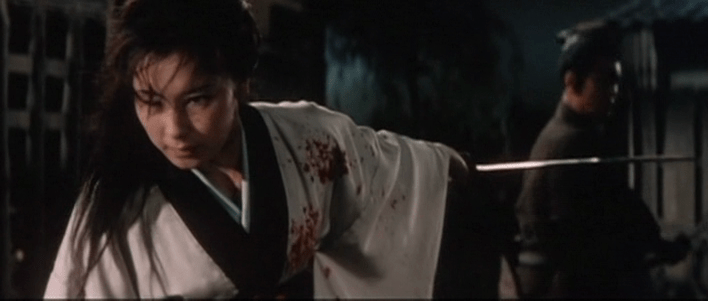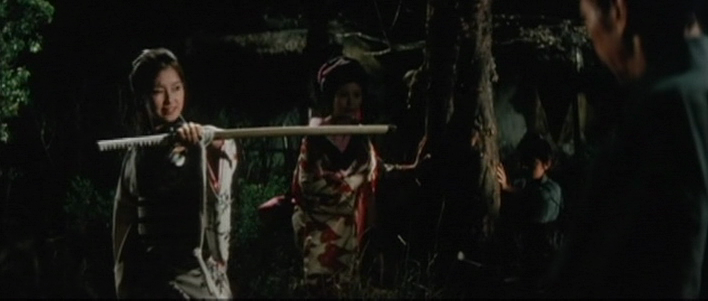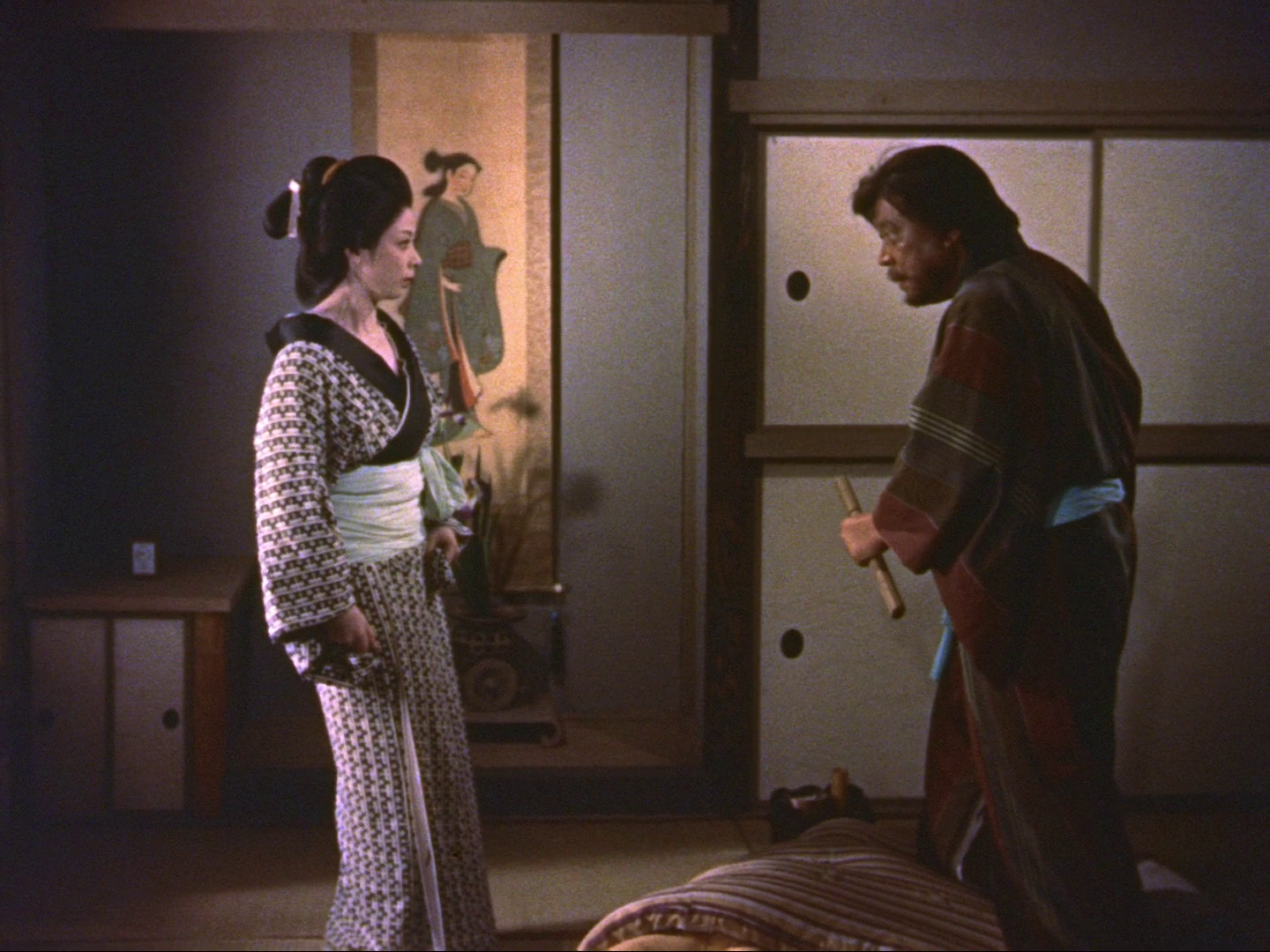
Gosh!! (THE オリバーな犬、(Gosh!!) このヤロウ MOVIE, Joe Odagiri, 2025)

The world is full of strange things, according to the canine hero of of Joe Odagiri’s surreal comedy. GOSH!! (THE オリバーな犬、(Gosh!!) このヤロウ MOVIE, THE Oliver na Inu, (Gosh!!) Kono Yaro MOVIE) Edited down from a TV series, the film takes place in a kind of Lynchian dream space in which once can embrace one’s inner desires, while in the ostensibly “normal”, everyday world, Odagiri himself stars as a foul-mouthed, lecherous police dog burdened by the legacy of his legendary father whose disappearance remains unsolved. 

In another way, perhaps Oliver’s animalistic antics are a mirror for his handler Aoba’s (Sosuke Ikematsu) repressed desires or rebellion against his straight-laced personality. Describing himself as someone with a strong sense of justice, Aoba’s initial attempts to find his feet as an ordinary street cop were hamstrung by his clumsiness. He became a police dog handler hoping to find the perfect partner with whom he could find the “firmest trust,” only to be saddled with Oliver. Nevertheless, his ability to see him as a middle-aged deadbeat in a dog suit he can converse with in human language suggests a kind of synchronicity between dog and handler as is later praised by trainer Hagoromo (Eri Fukatsu).

The disappearance of Oliver’s father Rudolph, however, is one of the film’s central mysteries and linked with that of “Super Volunteer” Konishi (Koichi Sato) who has gone missing while looking for missing persons. Konishi seems to have been a regular salaryman before being struck by some kind of cosmic force that linked him with Rudolph and causes him to occasionally behave like a dog, in contrast to Oliver’s behaving like a human. He also ends up lost in a kind of other world with Rudolph’s former handler Mizoguchi (Masatoshi Nagase) who has become a freelance reporter and is recruited by his niece to investigate a sighting of a “little old man fairy” a boy she runs into is trying to catch. 

Each of these incidents is linked by the sound of glass smashing which echoes that in the Red Room-like cabaret of the dream space and acts as a means of breaking the spell. Playing out as a series of surreal episodes connected by the presence of strange red doors leading to other worlds, there is a definite blurring of the real world and that of dreams along with a meta dimension that allows those trapped within it to question their reality. A policewoman (Kumiko Aso) wonders why the whole room suddenly embarked on an elaborate dance routine when she arrived to confront her father but has no real answer, abruptly returning to a more concrete reality. 

Her father, meanwhile, had wanted to share a part of himself hitherto hidden from her that we later see fulfilled in the dream space. While this dream world appears to be somewhere that repressed desires are fulfilled, it seems that it may not have a wholly positive effect and as Oliver warns us at the film’s conclusion, there may be some doors that are best left closed. Nevertheless, making several homages to David Lynch including the discovery of a severed ear, Odagiri conjures an atmosphere of strangeness and mystery that goes beyond the weirdness of humanoid of dogs and alternate realities in which everything is the same but everyone is obsessed with takoyaki.

To that extent, Aoba becomes a kind of straight man frustrated by all this weirdness but unable to restore order to the world around him or accept the parts of himself that Oliver reflects. In his opening interview, he refuses to accept his fate, disrupting the interviewer’s questions by stating that he does not believe that his destiny is to be a dog handler, not because he is being modest about his abilities, but fundamentally because he resents his present reality and thinks he deserves better than being shackled to Oliver. There is, however, more to this world than we can fully understand with its various absurdities in which everything is strangely connected and “distortions in spacetime” can have profound effects on us all. Though some of its obscurity may stem from the film’s TV series origins with several seemingly pivotal characters appearing only for a few moments, there is a genuine sense of mystery and unease to be found within the noirish world that exists beyond a door some may wish they had never opened.


Gosh!! screened as part of this year’s JAPAN CUTS.

Trailer (no subtitles)
The Origin of Ultraman (Yu Nakamura & Kazuki Yoshida, 2026) [Fantasia 2026]

Ultraman is one of Japan’s most recognisable cultural phenomena. Loved by generations of children, the landmark special effects-heavy drama has proved incredibly influential. Despite its title, Yu Nakamura and Kazuki Yoshida’s documentary The Origin of Ultraman isn’t actually as much interested in the franchise’s history as it is in its reception, focusing on the recollections of filmmakers and creatives from Japan and beyond discussing what Ultraman meant to them.

In fact, the film is largely structured around a discussion between directors Hirokazu Koreeda and Guillermo Del Toro who find unexpected commonality in the reception of Ultraman in Japan and Mexico respectively. Nevertheless, one of the drawbacks of this approach is that it unwittingly adopts a US-centric sensibility in contrasting the lack of cultural impact the series has had in America with that in other areas of the world, while later somewhat contradicting itself in featuring discussions with the American directors of the Netflix-produced US animation Ultraman: Rising.

Though the insights provided by Del Toro in particular are often interesting, the film is at its best when focusing on those who actually worked on the series and were involved with its original run in the mid-1960s. One of the reasons for the franchise’s success seems to have been the determination of everyone involved to create something that felt real and authentic. No one was interested in writing the show off as disposable entertainment for children, but rather precisely because it was aimed largely at a younger audience, the creative team were universally focused on providing high-quality entertainment. 

Nevertheless, despite Eiji Tsuburaya’s admiration for the stop motion techniques he so admired in the Hollywood movie King Kong, the decision to use humans in suits was born of the realities of television production in Japan. Incredibly tights budgets and production schedules simply would not allow for a complex and time-consuming process such as stop motion. Instead, they used Tsubuyara’s iconic talent with miniatures to provide a sense of reality.

The film suggests that this sense of conviction in their work stems from the fact that, Eiji Tsuburaya aside, most of the creatives behind the creation of Ultraman were born in 1930s and had spent their childhoods against the backdrop of the war. They were interested in sending a more idealistic vision to the next generation of children that was about goodness and harmony. Nevertheless, despite their experiences and anti-war stance, they still had an admiration for the machinery of warfare and were attracted to the “coolness” of guns, tanks, and aeroplanes.

This contradiction is apparent in the Buddhist underpinnings of Ultraman’s design and the world that surrounds him. Ultraman then takes on a kind of divine presence representing “cosmos” in a constant battle with the “chaos” of the kaiju to maintain peace and balance in the universe. This duality is also reflected in his merging with the human Hayata and willingness to give up his own life to save him, eventually along with all mankind. Ultraman does not actually like fighting the kaiju and rarely kills them, while kaiju are not necessarily evil so much as just being what they are.

Del Toro suggests these themes as a reason why the show found an audience in Catholic Mexico it evidently didn’t in the predominantly Protestant United States. Monsters in American movies, he says, tend to be unnaturally oversized animals, in contrast to kaiju which often have more complex personalities and humanlike thought patterns. Which is to say they too have a quality of divinity or innocence. On discovering a kaiju graveyard, the decide to hold a Buddhist funeral for the fallen kaiju out of respect for their lives.

In other ways, however, the show was also a counter to the optimism represented by EXPO ’70 reflecting a degree of anxiety about scientific progress and the responsibilities that come with it. These dualities and contradictions seem to have struck a chord with post-war children who were drawn to the sense of safety and certainty Ultraman provided. Hideko Anno describes his encounter with the series as a kind of “curse”, realising that most of his work has just been in one way or another a reflection of Ultraman and that he is creatively unable to escape its influence. This may perhaps go someway to explaining the origin of Ultraman’s appeal as a force of unambiguous good in world that can, in other ways, seem random and chaotic.


The Origin of Ultraman screened as part of this year’s Fantasia International Film Festival.

Trailer (English subtitles)

You Are the Film (君は映画, Makoto Ueda, 2026) [Fantasia 2026]

What if you went to see a film, but it was actually just a Zoom meeting with another person who thought they were there to see a film about you? That isn’t quite what happens in Makoto Ueda’s directorial debut You Are the Film (君は映画, Kimi wa Eiga), but it does take the protagonists longer than one would expect to stop suspending their disbelief, convinced that “a film” is conversing with them, and consider that they’re actually just watching a live feed of another person who is also watching them. 

But then again, the image reflected back at them from the screen is also a kind of wilful fantasy designed as both an escapist flight from an unsatisfying “reality” and a means of reframing their current dilemmas so that they can think about them more clearly. Effectively, it’s a way of realising what you might advise someone else to do in this situation, but wouldn’t actually consider doing yourself until you’re given this external vision of your own life. Ueda hints at this subtlety in the film’s opening sequence as he has playwright Madoka (Marika Ito) walk past a forked road representing a bifurcated reality, just as the film she’s going to see takes place directly adjacent to where she’s currently watching it, which is also the environment in which she spends the majority of her life. 

Both she and struggling musician Kazuma (Kai Inowaki) have enough in common to see themselves in the protagonist of the other film, and not just because Kazuma also inhabits this physical space too just on the other side of Madoka. He has a strained relationship with a band member and is so far failing to sell enough tickets for their upcoming concert. Madoka, meanwhile, has been offered the opportunity to put on a play at a larger, more prestigious venue but is feeling the pressure and struggling to complete her script. Despite what originally seems to be a very weird and uncanny situation, they eventually realise that they are able to help each other in a more direct way such as feeding back information about their respective “films” from the pamphlets they sell at the cinema.

But at the same time, the film seems to be in a way satirising these kinds of indie dramas or at least the sci-plot that develops on Madoka’s side is not that far away from the kind zany fringe theatre that troupes like hers often perform. In fact it’s even foreshadowed in the opening sequence as her co-stars seemingly play princess and retainer from another world mystified by the existence of a thermal tumbler, an apparent symbol of corporate oppression. Kazuma’s meanwhile spirals into an unlikely crime drama when his bandmate steals some money from a pair of counterfeiters which eventually exposes that the rock cafe he frequents is a front for an illegal gambling den run by an undercover gangster.

Despite these seemingly apocalyptic scenarios, what they learn is that they are able to change the script and eventually escape their own movie by transcending it, leading to the creation of a third movie starring those they left behind. It turns out that their friends are also yearning for escape in one way or another as Madoka’s friend Shiho has been offered a promising opportunity and secretly wants to move on, while the other actress sort of longs to escape by staying with the troupe but says she wants to leave as her parents have finally found out that she hasn’t been studying for the civil service exam after all. While watching these dramas play out Kazuma comes to his own realisations about his relationships with his bandmates, just Madoka begins to realise that all these desires must also be respected. If she wants to escape her movie, so does everyone else, and in order to be free she will have to let them go.

Nevertheless, each of them learn to embrace their status as the protagonist of their own lives with full authorial power to change the script, rejecting the meddling interference of some kind of engineer sent to rectify the “entanglement in filmspace” and get everyone back inside the right movie again. It turns out that you really are the film, and so is everyone else, but our realities aren’t as separate as they first seemed and we can still help each other out as we go along rather than remaining passive spectators within our own lives and those of others.


You Are the Film screened as part of this year’s Fantasia International Film Festival.

Trailer (English subtitles)

The Specials (スペシャルズ, Eiji Uchida, 2026) [Fantasia 2026]

Times are hard for yakuza these days. Nevertheless, it seems there’s still a little of the old spirit left in Eiji Uchida’s light-hearted caper The Specials (スペシャルズ) as an underling’s desire to make his boss’ dreams of ruling the city come true sees him enter the world of competitive dance. It’s a compelling hook, but at the same time a slightly mystifying one seeing as it’s never really explained why the assassins would need to form a dance troupe to knock off their target as opposed to just purchasing a ticket for the competition. Nor does it it explain why they want to shoot him from the stage rather than discretely injecting him with something from behind to make it look like a heart attack. And all of that aside, couldn’t they just kill him during his granddaughter’s dance rather than actually having to perform as part as part of the show?

Granted, it doesn’t make a lot of sense, but as the gang are repeatedly told it’s not all about skill, passion counts for something. The main problem is that elderly rival boss Honjo seems to have an endless supply of henchmen who kind of look like him and are prepared to die in his place. The only time they can be sure it’s the real Honjo is when he attends his adult granddaughter’s dance competitions, which is why Kumashiro hits on the improbable idea of hiring a trio of assassins he believes has dance experience and getting them to enter in return for a huge reward. 

It doesn’t all quite go to plan, mainly because two of the assassins he picks are dealing with dance-related childhood trauma. The main man, Daiya, has retired from the hitman game and is currently working as a helper at an orphanage. He only agrees because the landlord’s trying to evict them so he can build luxury apartments there instead and they need money to buy the building back. The ironic thing is that one of the little girls there, Asuka, dreams of becoming a dancer. After the gang is kicked out of every dance school in the area due to their gloominess and emotional volatility, Asuka ends up becoming their coach. While there is something endearingly funny about the idea of these ice-cold tough guys being bossed around by a 10-year-old girl, there’s also an ethical issue that no one’s really considered yet given they’ve been lying to her about their true nature as killers for hire. Asuka will obviously want to be there if they make the final, and they don’t want to let her down but nor do they want her to witness them firing bullets from the stage to murder an old man and possibly a few others on the way given that this isn’t the most precise assassination plan.

Nevertheless, dance proves a liberating experience for all and as time moves on, most of the guys have sort of forgotten about their mission and are focussed instead of competition-winning glory. Even Kumashiro’s ambitious boss remarks that he seems different these days, somehow happier having traded his stern yakuza expression for something more friendly, which might not altogether be a good thing for his working life. The various assassins, who were accustomed to working alone, have now warmed to the idea of being part of a team and to a certain extent at least, it’s no longer purely about the money or achieving any of their singular goals. 

Then again, it says something that the ones who suffer most are old-school yakuza like Kumashiro and his prison buddy Murasame (played by V-cinema yakuza movie star Hitoshi Ozawa) who can literally only dance to old tunes and unlike the youngsters find it difficult to adapt to this more modern world in which things like loyalty have become “old-fashioned,” in the words of sullen hitman Kiryu. Though the tonal shift of the film’s unexpected final sequence may undercut the feel good quality of what is essentially a zany post-yakuza comedy that as much as possible glosses over the bloody reality, it does at least allow the gang to fulfil their mission in a more satisfying way that suggests loyalty may not be such an outdated idea after all.


The Specials screened as part of this year’s Fantasia International Film Festival.

Trailer (English subtitles)

Tokyo Burst: Crime City (TOKYO BURST-犯罪都市-, Eiji Uchida, 2026) [Fantasia 2026]

Ma Dong-seok’s popular Roundup series has a rather convoluted history in terms of its titling. The first film was screened under the literal translated title “Crime City” before being retitled with the ironic “The Outlaws” while all subsequent instalments in the series have adopted the title of the first sequel. Nevertheless, this Japanese spin-off set in 2015 which is two years before the first film’s release, comes with the subtitle “Crime City” and though a Korean co-production does not actually feature Ma Dong-seok but rather attempts to tell a similar story set in the world of Kabukicho.

Which is to say that it takes its equally from delinquent high school manga such as Be Bop High School which is name checked within the film rather than the maverick cop hamstrung by bureaucracy trope that lies at the centre of the Korean series. Though The Roundup may itself have become increasingly less gritty as the series continues to expand, it largely remains grounded within a more concrete reality which is not really something you can say about Tokyo Burst: Crime City even if does hint at the ways in which the crackdown on yakuza has accidentally led other kinds of organised crime groups flourishing.

In this case, that would the incongruity of a crime syndicate led by a greedy host who heads the club Dreaming and presses those who work for him into petty crime if they can’t make their onerous quotas. In general, the stereotypical image of a “host” who earns money by drinking with women in dedicated bars, is of someone slightly effeminate and sensitive. Their livelihood depends on at least appearing non-threatening while providing the illusion of unconditional love and acceptance to their customers while also perhaps coming across as young, vulnerable, and in need of looking after. Though legislation has now been brought in to help stop hosts exploiting women financially until the point that they force them into sex work, the kind of masculinity they present is gentle and non-violent, which makes them a surprising presence in the ruthless world of organised crime.

Yet as is explained to Korean detective Si-won the major difference between the two nations is the extent to which police build relationships with underworld figures in order manage rather than eradicate crime in order to prevent large-scale violence breaking out, though Ma had also been doing something similar in the first Roundup film. The political corruption angle so common in Korean films in which the sons of chaebol families are effectively above the law plays a less well in the Japanese setting while a subplot about a land rights for casino construction,  and upcoming election, the thuggishness of the Deputy Prime Minister’s son, and their collaboration with organised crime facilitated by the familiar face of Ma’s sometime sidekick Jang Yi-soo, seems underdeveloped and impossible to take seriously given the film’s cartoonish tone.

Nevertheless, The Roundup’s uncomfortable tendency to make light of police brutality is fully carried over as violent cop Shiro actively covers up security cameras to interrogate suspects, while the police are also guilty of making use of connections to speed up or frustrate justice. They are otherwise a comically bumbling bunch as is yakuza boss hold-out Iwaki frustrated at the loss of his turf to the host club upstarts. Shiro stands somewhere in the middle as a bruiser cop with a strong sense of justice but perhaps not so much ethics. Nevertheless, he eventually bonds with his new Korean partner through singing Linda, Linda at karaoke while becoming invested in his quest to catch those responsible for his late partner’s murder before they return to the safety of Korea where they are otherwise above the law. Despite the overarching silliness, there is an endearing sense of lived-in community in the Kabuchiko environment of which Shiro is at the very centre and even if the film refuses to take anything else to seriously, it does at least commit to the ferocity and carnage of its intermittent action scenes.


Tokyo Burst: Crime City screened as part of this year’s Fantasia International Film Festival.

Trailer (no subtitles)
The Mouths (口に関するアンケート, Takashi Shimizu, 2026) [Fantasia 2026]

“Do you think the mouth is the source of the trouble?”  A survey asks at the end of Takashi Shimizu’s haunting horror, The Mouths (口に関するアンケート, Kuchi ni Kansuru Anketo). Assuming for the moment that we’re talking about the human mouth, they can indeed get you into a lot of trouble, but at the same time that trouble starts somewhere much deeper down, so perhaps it isn’t really the mouth that’s to blame either, rather its owner who unwisely chose to make their unspoken thoughts spoken. 

According to the editor of a mystery magazine (Tokio Emoto), that really might be the curse. We project our negative emotions onto an object and grant it a kind of supernatural power that might in other ways be entirely manmade. People have decided a creepy old tree in a cemetery is “cursed”, but it’s become fashionable among young people to challenge themselves by walking up to it. Though the tree once signalled good fortune, people soon started using it to curse others by voicing their petty resentments, but perhaps it’s putting all these dark thoughts into the tree that’s made it a kind of repository for human fear and loathing. All those we meet who went to see the tree took someone with them that they wanted to suffer, though they also of course ended up suffering themselves.

A group of students sets out to see it full of bravado expecting a spooky night where nothing will actually happen, or at least nothing that they don’t make happen for themselves. But beneath the camaraderie, there are cracks in their relationship with what amounts to a complicated love square in which Tatsuya (Keito Tsuna) has started dating Shota’s (Rihito Itagaki) ex An (Ai Yoshikawa), but Shota wants her back. Mirei (MOMONA), meanwhile, whose name contains a sound that is associated with the supernatural, resents An mostly for disrupting the dynamics of the group and her relationships with both men though without really declaring any kind of romantic allegiance. An is not altogether a sympathetic presence and brands Mirei’s potentially psychic abilities as “lame”, but nevertheless falls victim to the tree, loses her mind, and then eventually disappears. 

The left-behind trio do their best to find her, but are really searching themselves questioning their relationships, desires, and what they really wanted out of visiting in the tree. Shota first heard about it from his colleague, Kawase (Tomoki Nishiyama). Who visited with a “friend” (Shoot Mori) who appears to be bullying him in the hope that he would get his comeuppance only for both of them to be left haunted, constantly fearing the reappearance of the tree’s animalistic woman who threatens to devour them. In some ways, the monstrous woman stands in for the dark heart of nature, seemingly in tune with cicadas and their strange humming, not different from An’s, which characterises a Japanese summer. The summer is also, of course, when this world and the other are at their closest.

Another question the survey asks is if you would share this story with a friend. Kawase, after all, shared it with Shota almost as if tempting him toward the tree, prodding him to act on his basest emotions. As the magazine editor says, perhaps the real villains are people like him who irresponsibly spread this kind of information and help to create urban legends that unwittingly draw people towards the darkness in their own hearts. He and a police detective (Shido Nakamura) nominally looking into An’s disappearance search for more concrete answers, but in the end come to no real conclusions wondering what it was these people saw in the tree that eventually took them to such a dark place.

Shimizu maintains the episodic structure of the source novel with several different chapters recounting the events from one person’s point of view in a theatrical monologue that at first seems as if it must be testimony for the detective, but later turns out not to be even if the detective listens to the stories they’ve recorded on his dictaphone. The survey also asks us why we think they recorded them themselves on their phones, which is a question often left unasked in genre films in which we gloss over these kinds of practical questions knowing that they do so as a storytelling device. Sooner or later they all declare that they have said all that they had to say, if as they were a kind of ghost in the machine about to dissipate as soon as the tale is told. But really, it’s the same question as why they talked to the tree. They needed some means of releasing all these dark thoughts, but releasing them didn’t really help. In fact, it seems to have made things quite a lot worse. Perhaps if they’d been able to talk to each other in a healthier way, there’d no be no need for cursed trees or the supernatural dread that comes with having transgressed on something no human is supposed to see. But then again, this darkness is a part of human nature as much as its part of a strange and arcane world. Perhaps it is your own mouth that will damn you in the end.


The Mouths screened as part of this year’s Fantasia International Film Festival.

When You Open the Door (とびらをあけたら, Eriko Katagiri, 2026) [Fantasia 2026]

Maybe mankind wasn’t really supposed to live indoors. Miki (Serena Motola) has a job at an architectural firm that mainly seems to involve drawing straight lines with a ruler and pencil. Her boss praises her for her “distinctive” drawing style. Yet Miki seems out of place at the office, as if her consciousness were somewhere else and only her body physically present. She is mostly silent, and does not accompany her colleagues when they all head off for lunch, preferring a solitary bun which in itself leads her to a strange destination. 

In Eriko Katagiri’s haunting drama When You Open the Door (とびらをあけたら, Tobira ow Aketara), it’s never quite clear how much is actually happening within an objective reality, and how much only inside Miki’s mind. She seems to be called back to the past and a childhood memory that is both comforting and nostalgic, but somehow ominous. Miki often appears to be slightly behind those around her, giving vague answers to questions after a long pause, such as when she tells her colleagues that the reason she’s late back from lunch is that she was bitten by a wolf. Her colleagues are confused, but they take what says at face value and set about trying to treat the “wound” though they can see no evidence of a wolf bite at the spot Miki points out. 

Nevertheless this “wolf bite”, echoing an incident in her childhood, seems to awaken something within her that has a deeper connection to the natural world. But this abrupt change in her character seems to worry her live-in boyfriend who explains that wolves are extinct in contemporary Japan. He takes her to a psychiatrist, but even he seems to entertain the idea that she is actually possessed by a wolf spirit. Meanwhile, this apparent possession introduces her to a community of older women, apparent devotees of an ascetic cult who howl at the moon in praise of “Toya-sama”. This secret society seems to offer her a refuge, a place where she can be supported by those like herself while communing with the natural world.

Her boyfriend’s desire to “cure” her is then perhaps an attempt to force her back into a more urban modernity and conventional femininity. Nevertheless, following the advice from the psychiatrist is in reality little different to the ascetic practice of the Itako spirit mediums who hid themselves away in caves without food and sleep in order to invite the wolf spirit in. His own lingering fear of abandonment seems to play a part in his isolation of her which also turns violent, while she in turn struggles with the decision of whether to open the door to whatever is waiting on the other side or spend her life in the comparative safety of a closed-off space.

But letting the wolf in, or perhaps out, also seems to return Miki more fully to the world. Though she is hungrier, devouring chicken drumsticks, she speaks less haltingly and has more to say. She seems to move with purpose and is no longer restricted to repeating conversations she’s had with others. Werewolves, a mother explains to her young son, look like people but eat human hearts. Perhaps this is what Miki has always been, but it’s not clear whether this is a largely metaphorical desire for human connection or romantic domination or a literally bloody act of dismemberment as implied by the fate of her childhood dolls.

Shadowy presences seem to pound on the walls of Miki’s consciousness requesting entry, and the film appears to take its cues from J-horror in exploring the pressing anxiety of darkened corners and lonely places while leaning in to darkness inherent in nature and things too ancient for us to fully understand. Even so, there is something quite captivating about the embracing of traditional female dance that brings about Miki’s transformation, engendering a liberation from the constraints of contemporary civility and acceptance of her authentic self as reflected back at her. Dream or reality, Miki’s consciousness seems to have undergone a change that leaves her happier, less alone, and more present if in what may be a purely subjective reality having learned to embrace her inner wolf.


When You Open the Door screened as part of this year’s Fantasia International Film Festival.

Break Free (オドレ!ヤクザ, Yu Nakamoto, 2026) [Fantasia 2026]

The yakuza as an institution has long been on the decline in Japan, if not on the brink of extinction, thanks to the various anti-organised crime laws that have come into play over the last few decades. The laws are so stringent that members of the yakuza are unable to open bank accounts, rent property, or even take out a mobile phone contract, making their daily lives almost impossible. Meanwhile, dwindling manpower and changing times have meant that the yakuza cannot make a living from its traditional lines of business and has to look for other ways to earn its keep.

It’s this very problem that’s plaguing the heroes of Yu Nakamoto’s warmhearted comedy Break Free (オドレ!ヤクザ, Odore! Yakuza!) who are all doing various other unsatisfying jobs such as working as takeaway delivery drivers, shopping mall mascots, or running low level romance scams online which seems like a more innocent nod to the reality that the actual yakuza’s main new line of business is scamming the elderly and vulnerable. Then again, most of them are really a little young to have joined the yakuza in its heyday and the film really takes place within the context of more recent straight-to-video yakuza movies. Though it makes frequent nods to the darker side of yakuza life, often for comic effect such as the silhouette of Kunio’s (Akio Fujii) colleague Yama (Shigeo Osako) beating a guy with a baseball bat appearing behind him as he shoots a dance video, our heroes are mainly good guys and hapless fools whose problem is that they can’t let go of their old lives nor can they adapt to the modern society.

The inability to get a legitimate phone is perhaps one reason why 38-year-old Kunio is completely unaware of social media and apps like “TikTak” that are dominated by dance videos. Another thing that yakuza really can’t do any more is harm a member of the public, which is why one slimy guy in a suit thinks it’s a good idea to try and show off to his girlfriend by taunting a yakuza knowing he can’t do anything to him. But Kunio unexpectedly fights back through the medium of improvisational street dance and goes viral for his pains. The clan begin to spot a new, less problematic line of business, but the plan is once again complicated by the fact that yakuza are technically banned from having accounts on those kinds of services as well appearing on television. Kunio, while still a yakuza, has to cosplay as one by pretending that the yakuza thing is just a gimmick to give his dance videos more of an edge. 

Deciding to hone his skills, he ends up in a dance class surrounded by little kids and run by a woman who used to be a backup dancer, but decided she liked teaching more and opened a school. In a way, this echoes Kunio’s journey. Marie’s decision to quit being a backup dancer wasn’t a moment of defeat but its opposite as she actively chose the kind of life she thought would suit her better. Kunio’s friend has already left the yakuza because he wanted to get married but didn’t want his girlfriend to become a gangster’s wife. He is still subject to some of the restrictions placed on yakuza so his life isn’t easy, but he makes a good living with his yakiniku restaurant and is very happy in his marriage. 

The pun of the English-language title refers to Kunio’s efforts to “break free” of the moribund yakuza world through the power of break dancing which not only reconnects him with the unfulfilled desires of his late brother but offers him a path to discovering his true self as he realises that in dance he’s finally found something he actually wants to do. Thanks to an unexpectedly supportive new community around him from Marie at the dance school to a pint-sized aspiring idol and veteran influencer Ririko, Kunio begins to see new possibilities for the future, but the yakuza proves harder to escape than one might first expect. Whether he can ever really “break free” remains to be seen, but even while otherwise imprisoned, dance can be liberating. Trading heavily on the incongruities of its concept, the film is nevertheless warmhearted and sympathetic of its gangster heroes who find themselves cast adrift in a world that no longer has much place for them.


Break Free screened as part of this year’s Fantasia International Film Festival.

Trailer (no subtitles)
White Flowers and Fruits (白の花実, Yukari Sakamoto, 2025)

The abrupt suicide of a young woman at a protestant Christian boarding school causes those around her to reassess their reality in Yukari Sakamoto’s poetic drama White Flowers and Fruits (白の花実, Shiro no Kajitsu). Perhaps done a disservice by the literalness of its English language title, the film is on one level as the Japanese title implies about the disconnect between form and content, or the extent to which we project ourselves onto others and see only what we want or expect to see.

Anna (Miro) is someone who says she can see “what others can’t”. This most obviously refers to her ability to see ghosts, though of course we can’t be sure whether she is telling the truth or hallucinating reflections of her own anxieties. In any case, she has a rebellious streak which is why her mother has transferred her to a Christian boarding school. “It’s your last chance,” she tells her, implying that Anna has already been expelled from several other institutions for her refusal to conform. Anna, however, promptly discovers an angry ghost hovering directly behind her new roommate Rika (Nico Aoto) and thereafter refuses to the “pointless” rules of the school including wearing her ribbon necktie.

She and “lovely” Rika are then contrasted as model student and its reverse. It’s Rika who remarks that being at odds with everyone all the time must be exhausting and her life might be easier if she made more of an effort to get along with people, but Anna claims that she is simply unlike Rika and this is something she is unable to do even if she wanted to. “Why don’t you try being me?” Rika asks after putting her own ribbon around Anna’s neck, as if she were lifting a burden from herself and placing it onto Anna in a moment of forced conformity if also a well-meaning rather than oppressive gesture. When Rika takes her own life by jumping from the bell tower not long after, it provokes a degree of soul-searching among everyone at the school but most especially Anna and Rika’s best friend Shiori (Anji Ikehata).

After reading Rika’s diary, Anna begins seeing a blue orb she believes to be Rika’s spirit which eventually settles in her chest and begins to alter her personality to become a little more malleable and conformist as expressed by the Edwardian-style high collars of her uniform and newly deferent personality. It’s never quite clear if this is “real”, Anna’s delusion, a manifestation of her attempt to come to terms with grief, or deliberate subterfuge as she begins to develop a friendship with Shiori in part based on the notion that she has been possessed by Rika. The pair are both trying in one sense to get a handle on the sides of Rika that they didn’t have access to in order to understand why she died. 

But Rika’s diary is full of insecurity. She feels herself under pressure training to train for the school’s traditional dance show and is paranoid that she makes those around her worry when she doesn’t perform well enough. The dance itself is strangely sensual and witchy, earthy and rooted in nature in contrast to the religious setting of the school. On reading the diary, Shiori realises that shortly before she died Rika tried to confess her feelings for her, but Shiori simply didn’t understand and worries this accidental and insensitive rejection may have contributed to her desire to take her own life. It is not especially the religiosity of the school that is repressive, however, so much so as the enforced conformity of their social class. 

Aside from their association with “Class S” lesbian romance literature, these kinds of boarding schools are associated most closely with upper-class women who are being trained to become wives of important men. As such it is important that they learn to be, unlike Anna, meek and obedient. On a return home, Shiori attends a dinner party at which only her sister is dressed in red and seated across from a man to whom she has evidently been betrothed for an arranged marriage. Shiori is mildly horrified, but her sister just seems to stare on vacantly as if resigned to her fate. But it’s also this image of properness that may have prevented Rika getting the help she needed before she died as her animosity towards her family and fear of her father were ignored because of their social standing. Rika’s apparently distraught father is determined to retrieve the diary presumably because he fears what might be written inside it. Rika’s role as a model student might then have been a persona that marked her attachment to alternate familial home and a desire to escape sexual abuse at the hands of her father.

A video is leaked showing a young girl smoking in one of the school’s bedrooms with many believing it to be Rika, though it isn’t really clear who is it just as it is often unclear whether Anna is Rika or a version of herself. A final moment of rebellion, Anna challenges the enquiry into Rika’s death accusing them of using Rika’s death for their own ends to explore questions about themselves rather than directly confronting their own realities, though perhaps this is what she too has been doing. In an ironic way, it’s through letting Rika go that Anna and Shiori are able to move forward with their lives, but in other ways they take her with them as if she really had settled somewhere in Anna’s chest. Anna has learned how to dance for herself and come to some kind of accommodation with the world, while Shiori has been presented with a picture of herself that is also a picture of Rika in its reflected gaze. Sakamoto leans into J-horror territory in capturing the gothic atmosphere of the school, though as Anna later says, the ghosts themselves are not really frightening so much as an expression of that which remains unknown an acceptance of which defines adult enlightenment.


White Flowers and Fruits screened as part of this year’s JAPAN CUTS.

Trailer (no subtitles)

Street Kingdom (ストリート・キングダム 自分の音を鳴らせ, Tomorowo Taguchi, 2026)

Tomorowo Taguchi is probably best known to international audiences for his starring role in Tetsuo the Iron Man, but he started his career as an illustrator and theatre actor while also active in Japan’s underground punk music scene as a member of the band Bachikaburi. For the last few decades, he’s been a fairly ubiquitous presence in mainstream Japanese films as a jobbing actor turning up in small supporting roles in all sorts of unexpected places, but Street Kingdom (ストリート・キングダム 自分の音を鳴らせ, Street Kingdom: Jibun no Oto wo Narase) is a look back to the early years of the punk movement and the creation of Telegraph Records.

Scripted by Kankuro Kudo, most of the names in the film have been slightly altered to reflect the fictionalisation of the narrative and so we follow Yuichi Hibiki (based on Yuichi Jibiki and played by Kazunobu Mineta), a struggling photographer who feels lost in an increasingly consumerist Japan. Like many of his generation, he spent his formative years in the student movement and is looking for a way to fill that void following the movement’s collapse in the wake of the Asama-sanso Incident. Japan’s economy had improved quite markedly by then and many former student protesters simply moved on into more mainstream lives as regular salaryman men and women, much as Yuichi’s friend has done by joining a record label and becoming obsessed with Pink Lady, the epitome of the disposable contemporary pop music topping the charts and making them money. Inspired by Yuichi, the friend later also jacks in his corporate career and becomes a punk rocker because he too discovers he wants more than the emptiness of a salaryman existence.

After a trip back to his family pig farm, Yuichi’s epiphany comes after hearing the Sex Pistols on the radio, though he is dismayed to find out that they have already broken up. Nevertheless, he determines to go Tokyo and find the real Japanese punk as opposed to that imported from New York or London. It’s inside this world that finds freedom outside of the Japanese mainstream as an independent artist, vowing to create a Street Kingdom with Momo (Ryuya Wakaba), the lead singer of influential band Tokage, and zine publisher Sachi (Riho Yoshioka). An out-of-touch journalist at one point tries to offer them expensive champagne and shames the band members for still living at home with their parents, and there is something a little bit incongruous about Momo’s lovely mother asking him what he wants for his tea before he goes off to play one of his anarchic gigs. But in another way, this is exactly the essence of punk in the sense of domesticity, friendships and solidarity that existed between the members of this community.

It all only begins to go wrong when the music labels start getting involved and commercial decisions conflict with artistic ones. Yuichi becomes a de facto manger because he’s a “decent” sort, which is to say he’s a bit of a square existing to one side of the movement which is a designation he resents at times, but also allows him a more privileged position of guiding it. He’s the one who advises they quit on a high after their “Tokyo Rockers” multi-band tour threatens to get too big and provoke rivalries and discord in what had been a fairly non-competitive, collegiate scene. He also helps Momo overcome some of his artistic conflicts by starting a parallel indie label so they can release songs the label rejects, such a nonsense tune about fish and pollution that the suits deem “too political”. What he can’t fully help with, however, is Momo’s descent into depression and drug abuse when the label pushes the band into debt, refuses to help financially after their band members are involved in a crash while on tour, and finally suggests they were only really interested in Momo as a potential solo artist doing more mainstream pop. Nevertheless, it’s Yuich’s friendly intervention encouraging Momo to get his act together that finally convinces him that something has to change.

To that extent, the film may be a fairly sanitised and nostalgic exploration of the director’s youth, but it’s also an advocation for dancing to one’s own tune which, it argues, has not necessarily become any easier in an age when anyone has access to the tools to become an artist. The punk spirit lives on in those who are prepared to be fully themselves in a culture that can be oppressively conformist and as the film would have it, the greatest legacy of the punk rock era was the sense of community between young people who wanted to build their own utopia which is something that in itself will never die.


Street Kingdom screens as part of this year’s New York Asian Film Festival.

Trailer (English subtitles)