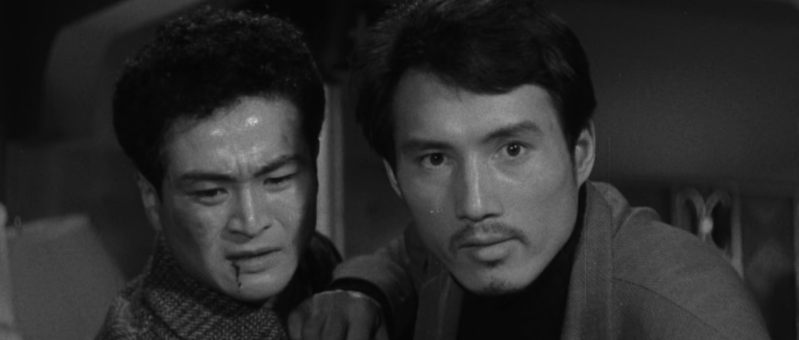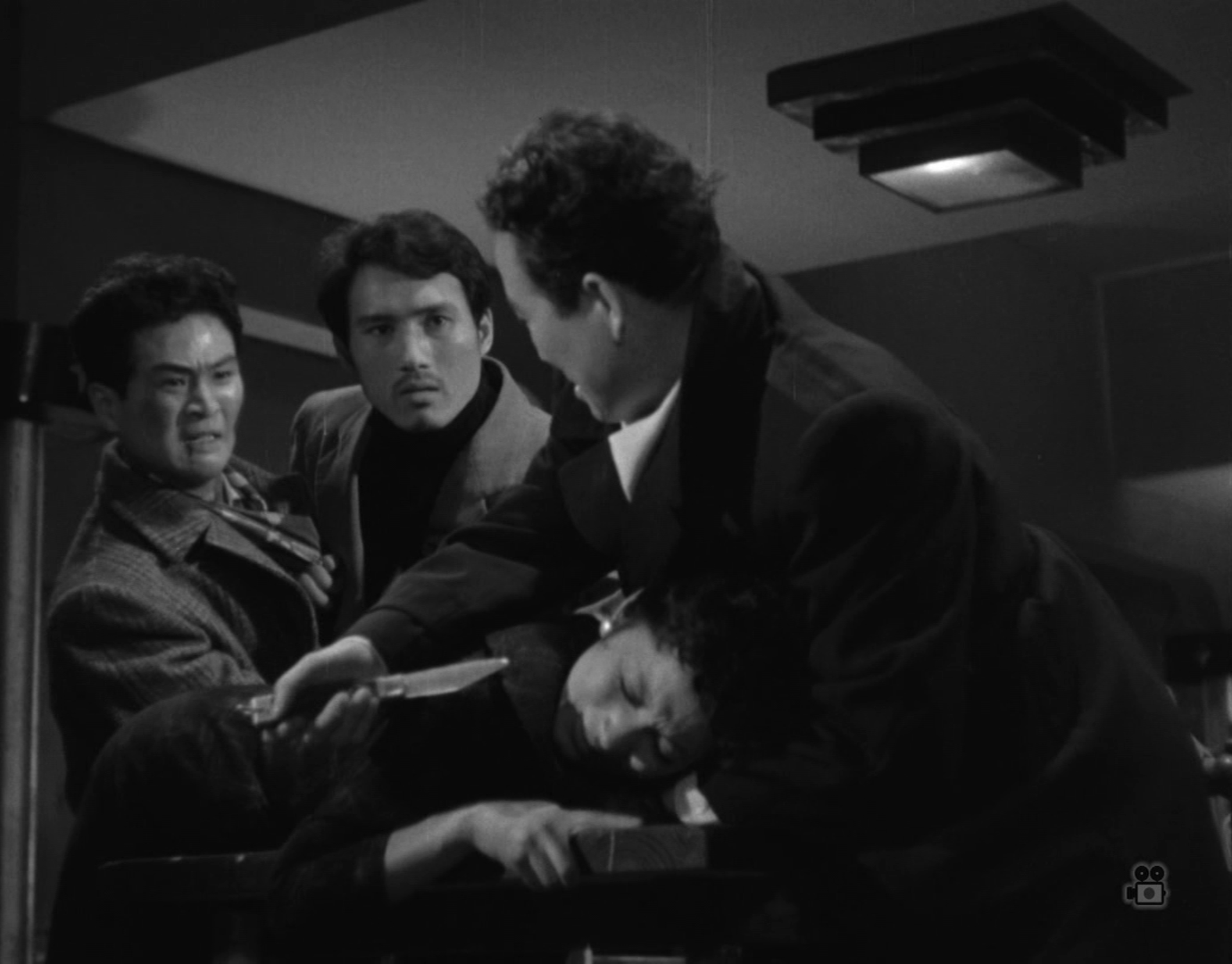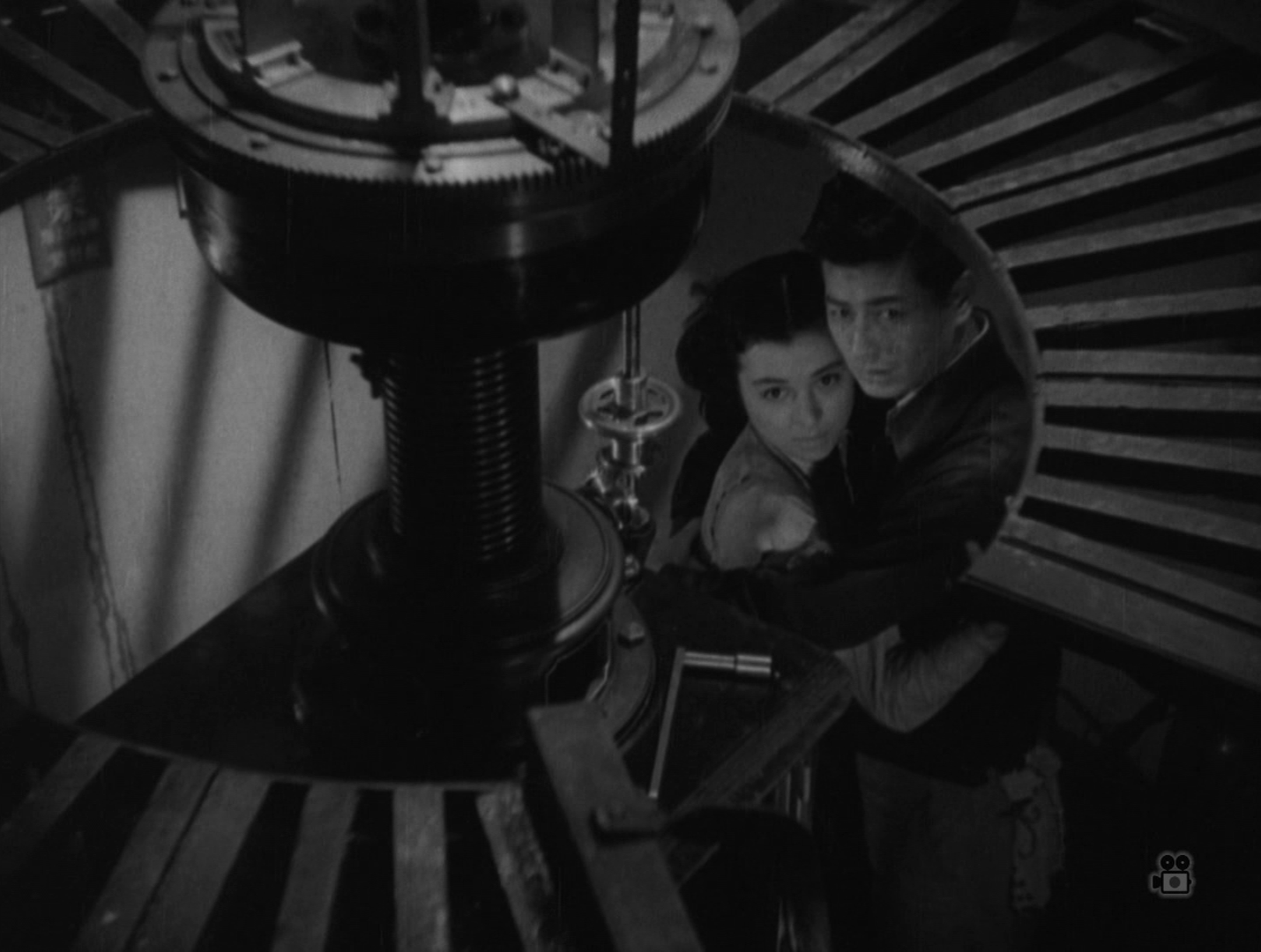
Murder on the Last Train (終電車の死美人, Tsuneo Kobayashi, 1955)

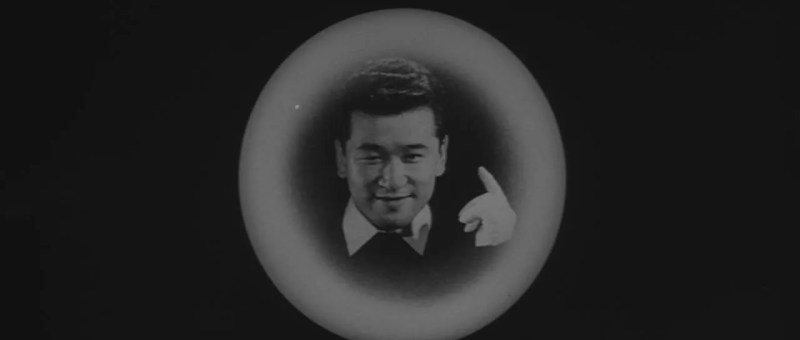
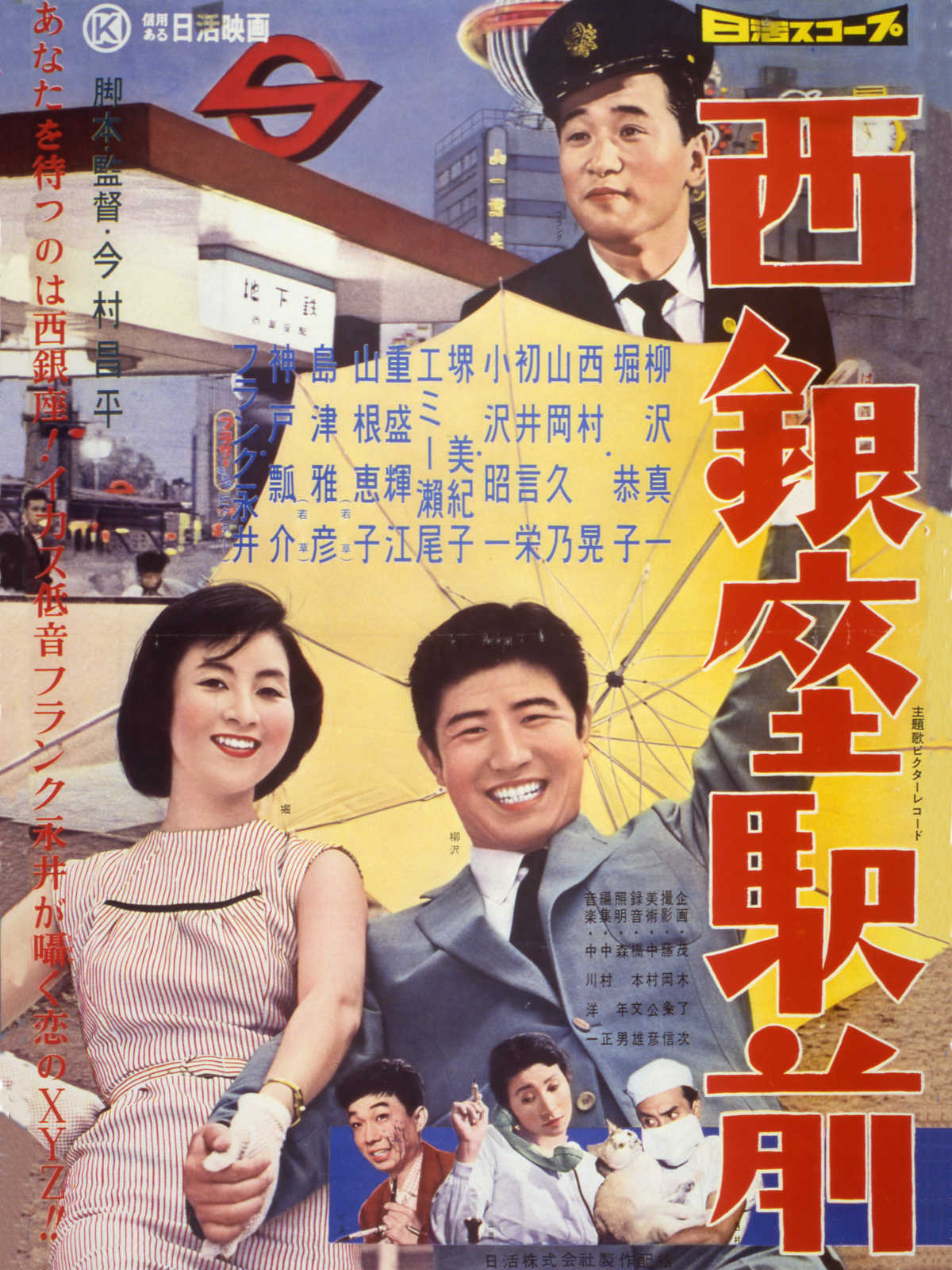
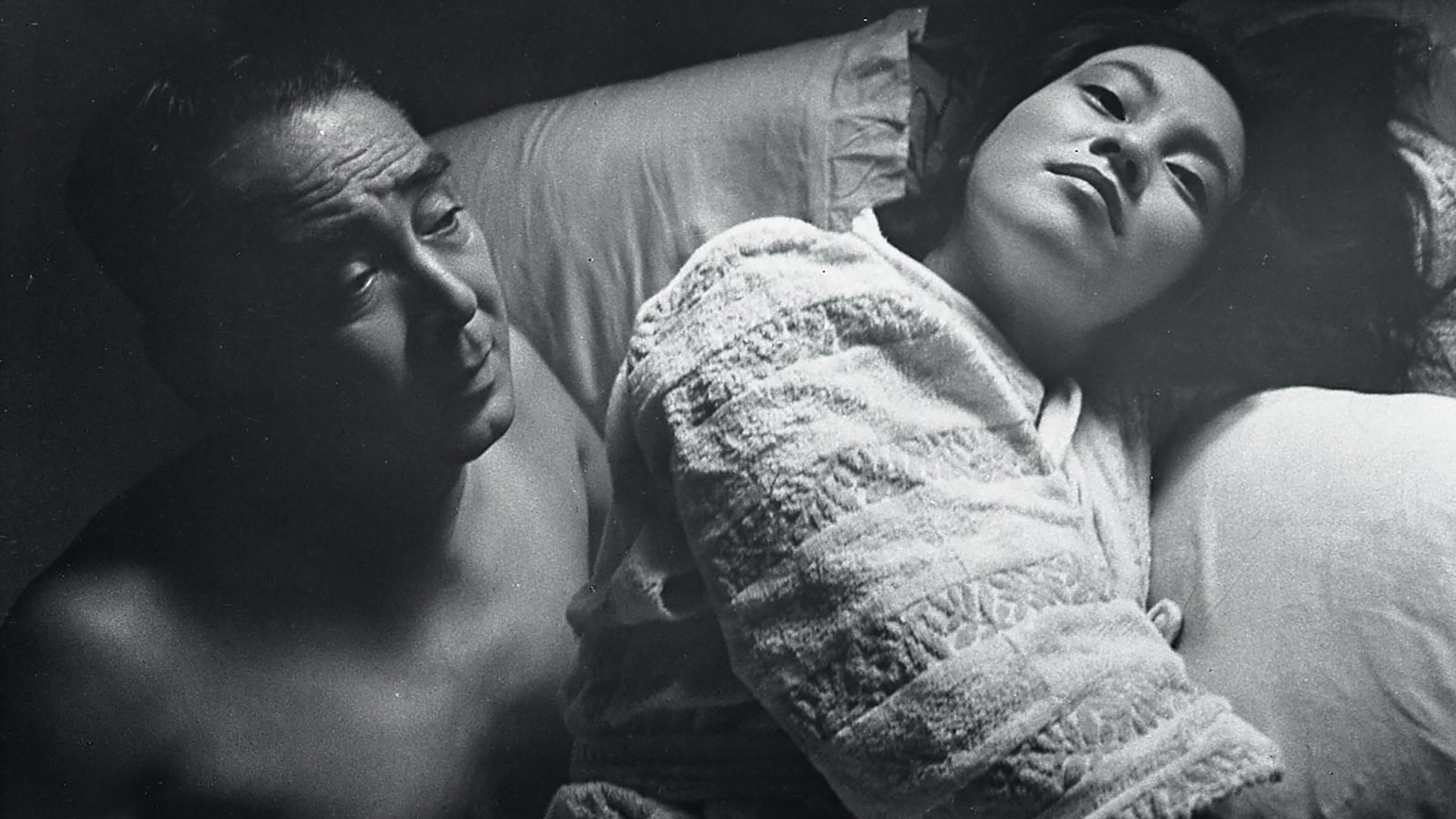
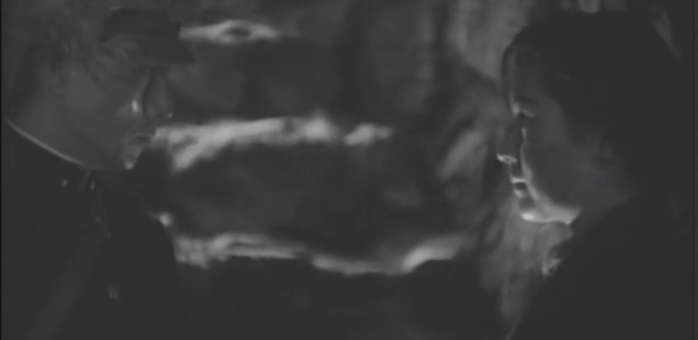
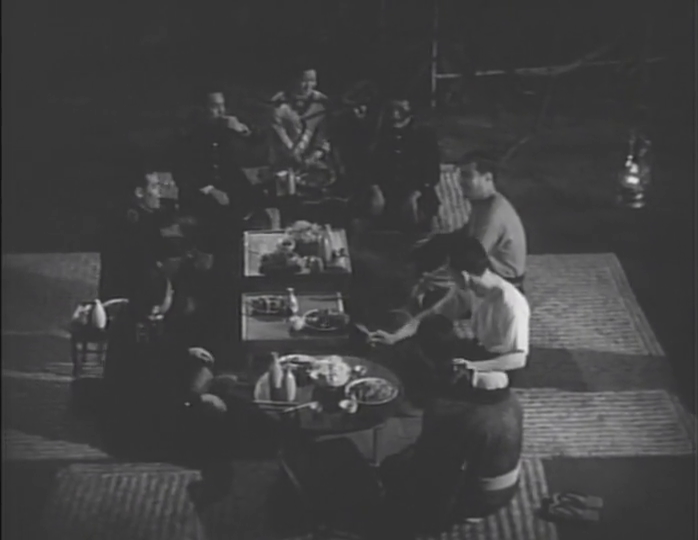
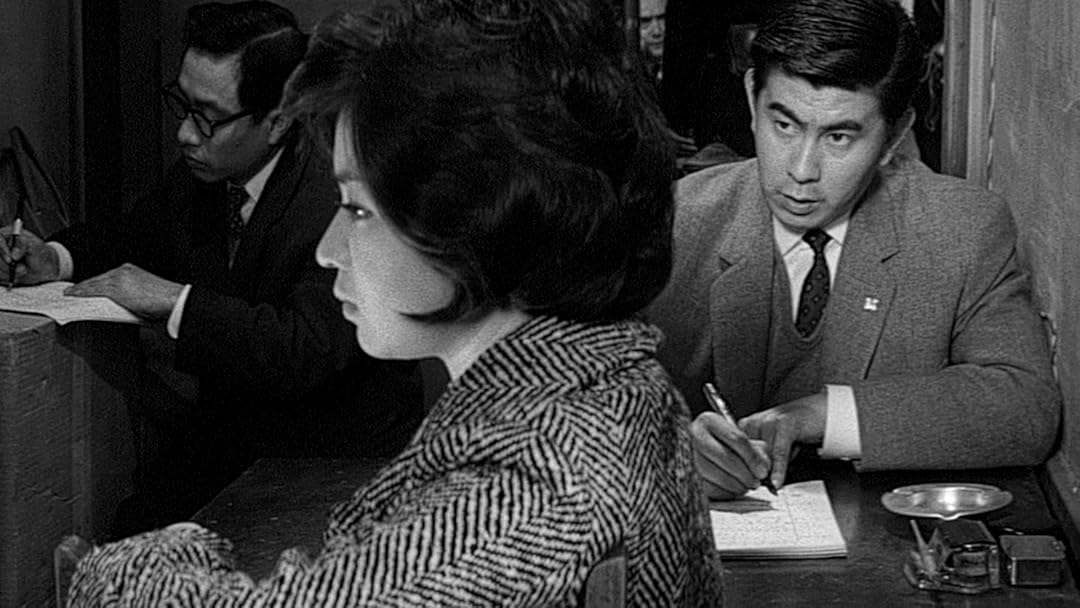
Rather than the hard-boiled tale the title may suggest, Murder on the Last Train (終電車の死美人, Shudensha no Shi Bijin) seems to be one of a number of films made in the early post-war era designed to improve the reputation of the police force. Just as in Bullet Hole Underground, we’re shown several scenes showcasing police technology and depicting detectives as men of science rather than an authoritarian force extracting confessions and pressuring suspects. The film went on to inspire a long-running series of police procedurals, and is shot in the style of a documentary lending an air of realism to its tale of murder, desperation, and spiralling debt.

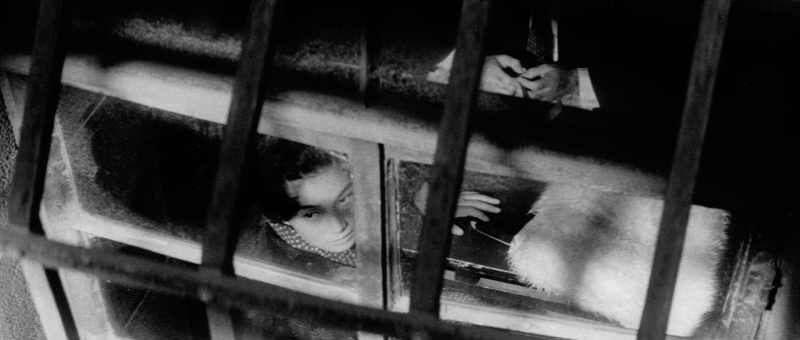
Yet all the police know in the beginning is that a young woman has been found dead on the last train out of the city at its final stop of Mitaka. Times being what they are, they don’t even know who she is, and have only slim leads to go on such as the possible sighting of a middle-aged man running away across the tracks, though it was dark and raining so no one can be quite sure. Nevertheless, we quickly see the law enforcement machine spring into action. The call centre is alerted and arranges for detectives from the top murder squad to attend the scene. The narrator tells us that they are ready to respond at any time of day or night, and that, like a pack of wolves after their prey, they will not rest until they’ve apprehended the guilty party. The way this and the closing statement are phrased makes it sound a little like the squad is sort of eager for a murder to occur to have something to do, which probably isn’t the intention but does make them seem a little blood thirsty. Especially as one of the policemen we’re introduced to is said to care about nothing other than murder. 

Nevertheless, the narrator introduces us to all of the squad members who each have their quirks from the henpecked husband to the former monk. There’s a running gag that they can’t get anything done at their office because of constant noise outside from advertisements, festivals, and children singing. Despite all of their technological advances, all they can really do to begin with is wander round Mitaka with photos of the victim along with one of a man found inside a locket she was carrying, asking local people if they know them. They can only assume the woman must have lived in Mitaka because she was presumably killed between the previous stop and the train’s final destination, but there are other reasons she may not have alighted earlier. 

The trail eventually leads them to a land broker, Hayakawa (Eijiro Tono), who has a solid alibi but is acting in an incredibly suspicious way. He also turns out to be in mountains of debt, and may have been acting recklessly trying to right himself financially, while a young man he’s acquainted with, Saburo, may have equally been hooked on the idea of living the high life on stolen money. Another man has been embezzling from his company with no real explanation given as to why save possibly trying to get himself into a financial position appropriate for marriage. The implication that this economy is still a crime factory filled with desperate people who do anything they can either to escape their straitened circumstances or protect what they have.

That might be one reason the police, who all seem very nice and, in general, treat suspects and witnesses kindly and with respect, are keen to get away from the idea the murder may have been a random crime perpetrated by someone trying to ease their frustration or strike back against society. People can feel reassured that this young woman’s death can be explained because it means they are in less danger from a threatening world. The policemen are also there to provide that reassurance, suggesting that any crime that occurs will be swept away neatly, without really dwelling on the other implications of a super-powered police force. The narrator explains that most crimes are committed simply, and for simple reasons, which is comforting, in a way, but also not. In any case, the central message is that modern law enforcement is scientific and compassionate, and the police force a well-oiled machine designed to protect all citizens from the threat of crime wherever and whenever it may arise.


The Last Blossom (ホウセンカ, Baku Kinoshita, 2025)

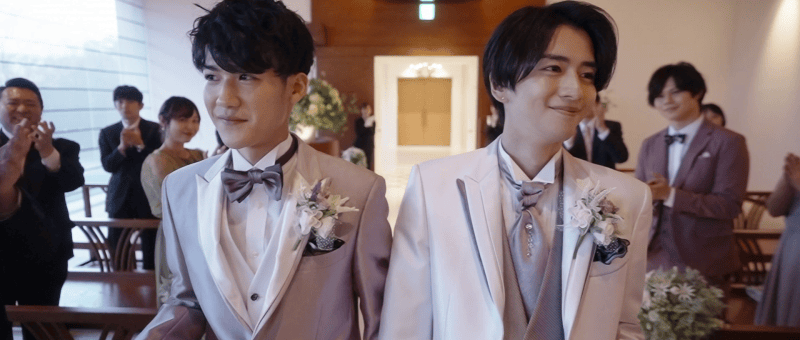
Seen from above, balsam flowers look like an arrangement of leaves, yet when viewed from the side, the pretty flower within becomes visible. It’s an apt metaphor for the “pathetic” life of Minoru (voiced by Junki Tozuka / Kaoru Kobayashi), an elderly gangster apparently drawing close to death all alone in a prison cell except for a talking plant whose voice he is only now able to hear. Created by the team behind the charmingly surreal Odd Taxi, The Last Blossom (ホウセンカ, Honsenka) is an oddly affecting tale in which the hero remains convinced that he can still turn it all around, if only with his final move.

Back in 1986, Minoru had taken in a bar hostess, Nana (Hikari Mitsushima / Yoshiko Miyazaki), who was already pregnant with another man’s child. Emotionally insecure, he could never quite find it within him to tell her that he loved her and their family, and instead began to push her and her son Kensuke away in fear of losing them. Though Nana suggested getting married, he refused saying that he did not wish to bring her into his yakuza life and was worried that it would only cause problems for her if his name was in the papers or he had to go to prison. When he was eventually sentenced to life behind bars, not being married ironically meant that she couldn’t get access to see him, while his applications for parole were always turned down given that he had no one to vouch for him on the outside.

Nevertheless, there are moments of blissful domesticity such as the pair noticing that the ping on the microwave sounds exactly like the bell in the song Stand By Me, which becomes sort of their tune. Yet Minoru’s life is intertwined that of the bubble era, as if his brief years of happiness were a just a bubble that was always destined to burst. During the 1980s, the yakuza was also in a moment of transition and as an underling who feels he owes a debt to his sworn brother Tsutsumi (Hiroki Yasumoto), Minoru is also trapped in another era. Tsutsumi is wary of a young recruit, Wakamatsu (Soma Saito), who is a new yakuza of the corporate age in which the street thugs of the post-war era are slowly becoming legitimate businessmen. Wakamatsu has a good nose for business and has realised that land will be the money spinner of the age, prompting Minoru to engage in a spot of property speculation of his own.

But Tsutsumi is increasingly resentful, knowing that Wakamatsu has supplanted him in the boss’ affections. Old-school yakuza are no longer welcome in a world of boardroom gangsters. It’s clear that Wakamatsu doesn’t like Tsutsumi either, but seems well disposed to Minoru. Ironically all his mannerisms are reminiscent of those of the balsam flower, even down to his slightly sarcastic way of speaking. Nevertheless, Minoru begins to lose himself amid bubble era excess, spending all his time and money on clubs and rarely coming home to Nana and Kensuke. Only when he learns that Kensuke has incurable heart disease and needs a transplant does he begin to step up and assert himself as a father, willing to do whatever it takes to get the money for Kensuke to go to the US for a new heart as the surgery isn’t legally permitted in Japan. 

Minoru has a deep-seated sense of himself as a loser and is always saying that he’s going to turn things around. The irony is that he leaves it so late, but it is indeed with his final move that he gives his life meaning in making clear his feelings for Nana and Kensuke. Maybe it looks like a “pathetic” life when seen from above, but when you look from the side you can the beautiful flower blossoming underneath, a sentiment that could equally stand for Minoru’s quiet nature and buried feelings. Though he allowed himself to be corrupted, starting to drink when he never had before not because he wanted to but because Tsutsumi did, becoming obsessed with work and losing sight of what really mattered to him, he really did manage to turn it around in the end. With a gentle sense of magical realism in the talking plants and occasional moments of surreality, The Last Blossom is a poignant tale of regret and redemption beautifully expressed by the stillness broken by brief explosions of fireworks to be found in Baku Kinoshita’s beautifully simplistic aesthetics. 


The Last Blossom opens in UK cinemas 27th March courtesy of Anime Limited.

Trailer (English subtitles)
Images: ©Kazuya Konomoto /The Last Blossom Production Committee

The Lost Alibi (黒い画集 あるサラリーマンの証言, Hiromichi Horikawa, 1960)

“What did I do to deserve this?” the hero of Hiromichi Horikawa’s The Lost Alibi (黒い画集 あるサラリーマンの証言, Kuroi Gashu: Aru Sarariman no Shogen) ironically asks himself, as if he assumed the answer to be “nothing at all”. Adapted from one of Seicho Matsumoto’s “Black Album” novellas, as in much noir fiction even small transgressions can have drastic consequences and even a step out of line can seriously derail an otherwise ordinary life. Ishino’s (Keiju Kobayashi) dilemma is that he knows if he speaks the truth he may damn himself and ruin the “boring, routine” life he’d built, but if he says nothing another man may pay with his life for a crime he didn’t commit. 

The film’s Japanese title is “testimony of a salaryman,” and that’s really want Ishino is giving in his opening voice over. He explains that he’s a high-ranking executive on a good salary living a fairly successful life working not at the top company in his field but the second best, which he’s fine with. He gets on with his boss precisely because he’s not interested in his job and is even hopeful he could stay on past retirement if he wanted to for that exact reason. But on the other hand, he’s 42 and has 13 years until he’s able to retire. He has no more ambition and his life is essentially on autopilot. All he has to do is stay the course for the next decade or so and everything will be fine.

But when he leaves the office, Ishino doesn’t go straight home as he tells his colleague he will when refusing an invitation, but hangs out in the city drinking and playing pachinko before going to see his mistress, Chieko (Chisako Hara), one of the secretaries working in his office. The affair may be a way of rebelling against his ordinary life or of playing with fire knowing that he could lose everything if his sexual transgression were exposed. Then again, he tells his wife he’s been to the cinema on his own, which in some ways isn’t all that different from having an affair seeing as he’s still skipped out on his domestic responsibilities and left her home alone to look after the children.

The film is mildly critical of this modern salaryman tendency in drawing a direct link between a series of murders of women who were home alone, as if their men had left them vulnerable by vacating the domestic space. Ishino’s wife Kuniko (Chieko Nakakita) even says that she feels a little afraid seeing as she’s home on her own all day while the children are at school and Ishino at work. Ishino suggests they get a dog and in the back of his mind wonders if he should get one for Chieko too. It’s not immediately clear what she is getting out of this affair, though it seems fairly likely that Ishino is paying for her upkeep which is why it’s so easy for him to force her move after they’re unwittingly dragged into the spotlight when the accused man, Sugiyama (Masao Oda), tries to use Ishino as an alibi after bumping into him in the street leaving Chieko’s apartment.

Sugiyama is his neighbour and Ishino only knows him on nodding terms, but he’s immediately worried that he may expose him. After all, he regards this as a low-class area he had no real reason to visit and does not want to have to explain what he was doing there. It doesn’t occur to him that his neighbour may not have wanted to either, if he not been accused of murder. The situation looks quite bad for Sugiyama given that the police have a lot of circumstantial evidence against him, though Ishino alone knows that Sugiyama didn’t do it because he really did see him at a time that makes it difficult to place him at the scene of the crime. But Ishino denies that he was ever there. Those around Ishino seem to condone the idea that he should just keep quiet. He’s under no obligation to help Sugiyama and it’s really nothing to do with him, anyway.

But the irony is that as things spiral out of control even Ishino seems to believe in the absolute power of a confirmatory witness. When he imagines himself talking to the police, the policeman doesn’t believe him because he lied the first time and the information is inconvenient to his case. He tells Ishino that his confession isn’t worth anything without a secondary witness to back it up, meaning he’d have to produce Chieko. It doesn’t really occur to Ishino that if he had told the truth to begin with the police might have been discreet about it. After all, admitting you were with another person whose reputation you do not wish to compromise seems to work well in crime novels. When he finds himself blackmailed by a student living in Chieko’s building, he too tries to get the student’s friend to come as a witness, bizarrely thinking that having someone else there ought to provide security seeing as he could also go to the police and accuse him of extortion if something went wrong never quite thinking that the friend might simply lie just as he did. 

A kind of comparison is indeed being drawn between Ishino and Matsuzaki (Tatsuyoshi Ehara), the student, who is painted as someone with a bad character who has got himself into debt not solely because of his economic circumstances but greed and an irresponsibility with money. Matsuzaki also behaves in an inappropriate way with Chieko in making passive-aggressive romantic overtures and becoming angry when she brushes them off, later basically forcing himself on her having just threatened blackmail. They are each in their way symptoms of post-war moral decline in their intense selfishness. Ishino has achieved the salaryman dream, but now he feels hemmed in by it and empty inside. Matsuzaki, meanwhile, is greedy and amoral, desperate enough to resort to loan sharks and blackmail while chasing the dream that Ishino has already achieved all too easily. 

But the truth is that Ishino had done a lot to deserve this, and got off fairly lightly in the end. A single moral transgression can snowball, and it’s true enough that none of this would have happened if he hadn’t had the affair in the first place. If he’d only told the truth about it, Sugiyama may not have had to go to trial and it would never have come out. If Sugiyama had been executed for this crime, Ishino would be a murderer, and maybe twice over as the person who killed the woman, and maybe several others, may have gone on to kill again until someone finally caught them, if ever. He’s endangered his wife and family, quite literally in physical terms, but also their future and wellbeing given the possibility of his reputation being ruined leading to losing his job while his children would suffer the stigma of his disgrace. He felt conflicted, chased to the brink and even considering suicide knowing his cowardice could condemn Sugiyama to death, but still chose the path of extreme selfishness which seems to be that which defines the post-war era. Even when all’s said and done, he can’t help thinking it’s all a little unfair. All he did was cheat on his wife and lie about it, why is he the one losing everything? But in the end, that’s exactly why. He cheated the salaryman dream, and the retribution was swift. Only too late did he realise the value of his “boring, routine” life of easy comfort in the increasingly compromised post-war society.


Trailer (no subtitles)

Seaside Serendipity (海辺へ行く道, Satoko Yokohama, 2025)

As we follow the road that leads down to the beach in the presence of a black cat, there’s a sign at the beginning of Satoko Yokohama’s Seaside Serendipity (海辺へ行く道, Umibe e Iku Michi) that lets us know that this town welcomes artists. Adapted from the manga by Gin Miyoshi, the film is another in the idyllic summer adventure genre with its tranquil, almost magical setting that even one of its temporary residents describes as somehow different from other places, but also contemplates the nature of art and its ability to influence the environment. 

This is certainly a very creative place where strange things happen and people mostly seem to do their own thing. Then again, Risako (Ayame Goriki) rents out apartments to artists looking for quiet retreats to practise their art in a peaceful environment but mainly ends up with those arriving for other reasons whose “art” is more like subterfuge. A young couple arrive running a bizarre scam selling fake knives that won’t even cut tofu after a couple of days. A stone sculptor she ends up dating is on the run from a loan shark, who just happens to be an old friend who said her job was in “sales” rather than admit she works as a debt collector chasing failed artists who always have an excuse as to why they can’t pay or haven’t yet produced anything.

A mysterious man gives Megu (Koharu Sugawara) a canary-shaped whistle that’s supposed to chirp in the presence of a true artist and make an unpleasant noise in the case of a false one. But as the kids eventually put it, all artists are self-proclaimed. The only requirement for calling oneself and artist is that you make something you consider to be “art” even if others disagree. Art can take many forms, as in the weird structure Ryoichi (Toma Nakasu) constructs made out of all the spoons he’s bent in his life. Sosuke (Kōnosuke Harada), meanwhile, attracts the attention of another mysterious man calling himself “A” who commissions him to make a model of a mermaid from a painted scroll. Sosuke dutifully makes it with a few additions such as the ability to remove the mermaid’s left breast and extract her heart. A interprets this as an expression that one cannot hide anything in art, whether things about themselves the artist wanted to conceal or things that they simply did not know. 

But Sosuke’s friend Teruo (Shun Aoi) also lets him in on the idea of mimesis, that they aren’t trying to reproduce something exactly as it appears but understand its true essence and recreate that. Teruo uses the art of mimesis to create a realistic mask modelled after the late husband of an elderly woman who says that it was foretold to her in a dream that he would come to her on her birthday. Though it might be a questionable gesture, he did it out of a desire for her dream to be true and to bring comfort to a lonely person whose family were unable to communicate with her, perhaps because they did not have the ability to lipread as Teruo apparently does. Nevertheless, they accuse him of stealing her money, insulting the purpose of his art. 

The art club’s art is also misused in a way when Ritsuko bizarrely asks them to create a hole she can say her boyfriend used to escape, like in a cartoon. This appears to be the sort of place where one can get away with such a ridiculous conceit. Trying to tell the truth, meanwhile, backfires for an aspiring journalist who uncovers suspect goings-on at the local nursing home where a nurse forces elderly people to sing songs out in the summer heat and prevents them from eating lunch as a means of staving off dementia. When her teacher leaks the video she recorded to social media, she’s annoyed to have missed the scoop and also that the teacher didn’t investigate properly opting for mob justice instead. The young woman worries the nurse may kill herself because of what she uncovered which is perhaps only a version of the truth. Meanwhile, everyone else is hot on the trail of mysterious animals appearing in the town that are somehow repelled by Teruo’s mystery art project. Even so, everything continues as normal in this strange little town as Sosuke pursues his artistic dreams painting tranquil visions of peaceful destruction from the deserted jetty, seemingly paying it no mind.


Seaside Serendipity screens in Chicago March 22nd as part of the 20th edition of Asian Pop-Up Cinema.

Trailer (English subtitles)
Scarlet (果てしなきスカーレット, Mamoru Hosoda, 2025)

A gender-flipped take on Hamlet, Mamoru Hosoda’s latest feature animation Scarlet (果てしなきスカーレット, Hateshinaki Scarlet) seems to be a rebuttal of contemporary isolationist politics and authoritarian governments. His Otherworld is peopled by those from all places and times who, for the main part, co-exist peacefully aside from the odd marauding bandit. Even if there’s suspicion and division, people are also kind and try to help others. The recent arrivals from the world of Elsinore, however, are not really like that and are seeking to bring their particular brand of fascistic, war-wondering authoritarianism all the way to heaven itself. 

In this version of the tale, Scarlet (voiced by Mana Ashida) unwittingly takes the cursed drink while dithering over killing her uncle, Claudius (Koji Yakusho), who has usurped the throne and married her uncaring mother Gertrude (Yuki Saito) who has a little of Lady Macbeth about her and switches allegiance to Amleth’s brother because she only cares about power. Amleth (Masachika Ichimura) had wanted to stop a potential war and build better relationships with neighbouring nations, while Claudius is hellbent on conquest and domination. Amleth is well aware that it’s the people who will suffer, and his subjects are very much not on Claudius’ side, protesting loudly at Amleth’s public execution. Having failed in her revenge and been resurrected in the Otherworld, Scarlet eventually discovers her father’s final word was “forgive,” only she doesn’t quite know what he meant by that and is conflicted in her quest for revenge while certain that she cannot let Claudius get away with his authoritarian coup. 

On her travels, she meets a man from contemporary Japan. Hijiri (Masaki Okada) is a paramedic who insists he’s not really dead and must be here by mistake. He represents human kindness as a healer, though his ability to ride a horse and proficiency with bows and arrows is rather surprising. Coming from a world that’s not at peace, but not quite as unsettled as 16th-century Elsinore either, he begins to convince Scarlet that another world might be possible. If only she had inherited the throne, she might have proved most royal and created a better environment where her subjects were free to live happily without the threat of war or oppression, where those from other nations were thought of as friends rather than as enemies. Hosoda is clearly targeting a Japan which has slid to the right, becoming increasingly intolerant of residents from other parts of the world while far-right parties with fringe views make worrying gains in elections. 

Nevertheless, he paints contemporary Japan in softer tones that the Otherworld. Though Hijiri may have become a victim of the latent violence in society while trying to protect others, it’s this world that becomes Scarlet’s benchmark for what a better society could be as she watches another version of herself dance joyfully at a street party with Hijiri. She begins to wonder what sort of person she could be if she weren’t so obsessed with revenge. While contemporary Japan is animated in a style familiar from Hosoda’s previous work, the hyperrealistic backgrounds of the Otherworld lend it a stark and frightening quality that simultaneously recalls the painted matte backdrops of classic anime. Whenever violence is about to occur, a giant dragon appears in the sky and roars, raining lightning on the world below as if issuing divine punishment for this basic moral transgression and turning the sky a blood-red scarlet.

In any case, Scarlet later reaches the conclusion that what her father intended was that she forgive herself, give up on revenge, and live her own life to its fullest. She may not be able to find it within herself to forgive Claudius, or her mother who never joins him in the Otherworld as he assumed she would, but it’s no longer her concern because her duty is to protect her people, so the only thing that matters is deposing him. Claudius and his goons had tried to block off the path to the Infinite Land so that only they, well really just Claudius and Getrude, could enter heaven leaving the ordinary people starving and miserable below. This is really Scarlet’s revenge. Creating a world without war where her subjects are able to lead happy, peaceful lives with no need to fear those from outside nor their own governments.


Trailer (English subtitles)
Fusa (その木戸を通って, Kon Ichikawa, 1993)

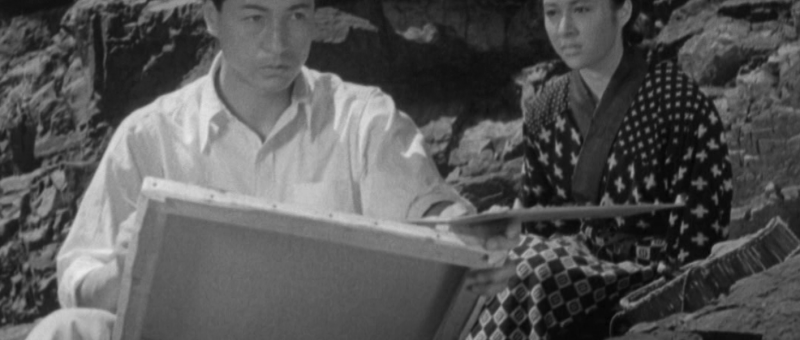
Kon Ichikawa’s Fusa (その木戸を通って, Sono Kido wo Totte) opens on a note of artifice. Misty rain and the verdant green of the forest give way to total darkness in which leaves appear, followed by the hero, Seishiro (Kiichi Nakai) tending a bonsai tree. As light brightens the scene, we see that he is seated beyond the veranda of his home which has taken on the appearance of a proscenium arch framed by the open shoji. It’s almost as if this space, in which Seishiro will enter his own reverie, is one of unreality as distinct from the interior which is busy with the preparations for the marriage of Seishiro’s only daughter, Yuka.

17 years previously, however, it was his own marriage he was preoccupied with when a mysterious woman arrived at his home claiming to have lost her memory and knowing only his name while he was away doing the annual audit. This is a little ironic, because “Seishiro Hiramatsu” hadn’t  been his name for very long and, in fact, he struggled to remember it or answer when called. The second son of an Edo lord, Seishiro had been adopted into the Hiramatsu clan and has made an advantageous match with the daughter of a lord, Tomoe. The presence of the mysterious woman threatens Seishiro’s position and path to advancement when Tomoe happens to catch sight of her, assuming she’s an old flame from Edo trying to rekindle things with Seishiro.

He, meanwhile, assumes the woman’s arrival is part of a plot to discredit him and ruin his engagement, presumably perpetrated by a jealous rival. For those reasons, he instructs his retainer Yoshizuka to have the girl sent away, but he and his wife (Kyoko Kishida) feel sorry for her and wish to take her into the household. Seishiro comes up with the ingenious plan of throwing her out and following her to see if she meets up with whoever sent her, but becomes protective when she is nearly assaulted by a pair of local louts. Despite himself, he becomes absorbed in the mystery, but at the same time both he and the woman, whom they name “Fusa” (Yuko Asano), become worried that if she did in fact regain her memory, she would have to leave.

Fusa sometimes enters a kind of trance state, staring at the mystical forest behind the house in way that gives her a supernatural air. That she arrives so suddenly aligns her with a tradition of ghost story and folklore, suggesting that she may be some kind of forest spirit that like the Snow Woman would have to leave once the spell was broken. She describes herself as feeling as if he had been possessed or were trapped within a dream. As Seishiro learns later, she may not have known his name at all, but only taken it from one of his servants, while her past remains opaque. Nevertheless, they are blissfully happy and conceive a daughter together before Fusa suddenly disappears with the same suddenness as she arrived. She had often had visions of a bamboo path and a wooden door beyond which seem to lurk the secrets of her past, but it may not be possible to return after passing through.

Seishiro continues to believe she will one day remember them and return, but at the same time knows to treasure the small bubble of happiness they once had no matter how long it lasted. The truth is only that she was here and then gone, which isn’t so much of an unusual story and requires little explanation, though Seishiro never really solves the mystery as he had vowed to do. Perhaps like Fusa, he didn’t really want to risk breaking the spell. Based on a story by Shugoro Yamamoto, the film was produced by Fuji TV as a test feature for NHK’s “Hi-Vision” high-definition television channel with the consequence that it was shot on hi-def video tape and later transferred to 35mm for international festival screenings. For those reasons, it’s not a particularly handsome film and obviously low budget, but even so Ichikawa makes the most of the medium, leaning into its soft focus to create an ethereal and mysterious atmosphere. Playing with colour and light, he often frames Fusa as the only one in colour in an otherwise monochrome scene as if perhaps suggesting that it’s Seishiro’s world that lacks reality rather than hers. An ominous violet light seems to emanate from the misty forest, but in truth perhaps all here are ghosts looking for a way to go beyond the wooden door but, at the same time, hoping they won’t find it.


The Heart of Hiroshima (愛と死の記録, Koreyoshi Kurahara, 1966)

Sayuri Yoshinaga was the top female star at Nikkatsu in the mid-1960s. Together with her regular co-star Mitsuo Hamada, she starred in a series of hit youth romances such as The Mud-Spattered Pure Heart, The Sound of Waves, and Gazing at Love and Death which was Nikkatsu’s biggest box office success at the time. The Heart of Hiroshima (愛と死の記録, Ai to Shi no Kiroku) was intended as the latest in the series, but Mitsuo Hamada was attacked by a drunk customer at a bar shortly before filming after which he needed surgery to save his eyesight. Normally, the film would be postponed, but Nikkatsu was having financial difficulties at the time and refused to wait despite pleas from Yoshinaga and even from the actor who replaced him, Tetsuya Watari, who was a good friend of his. 

At the same time, Yoshinaga was now 21 years old and uncertain how long she could convincingly go on performing in Nikkatsu’s typical teen dramas. The studio was also worried about the possibility of losing their top star if she decided to move into more serious dramatic roles while they did not believe they had a suitable replacement. They were currently on bad terms with Ruriko Asaoka who ended her exclusive contract that year and moved to Ishihara Pro, and were worried that their other popular actresses such as Chieko Matsubara weren’t ready to take on that kind of responsibility. To try to convince Yoshinaga that the film would be more artistic in nature they hired New Wave director Koreyoshi Kurahara rather than studio stalwarts like Buichi Saito who’d directed Gazing at Love Death, but when she again tried to refuse insisting they wait for Hamada, they forced her hand by simply beginning to shoot the film on location in Hiroshima without her. Casting Tetsuya Watari may have also been an attempt to shake up the franchise as at that point he was known more for action and hadn’t really played this kind of very intense, romantic role before.

Though it follows a familiar pattern in exploring a doomed romance between a boy and a girl whose pure love is obstructed by social division, the film does deal with some quite controversial themes in touching on the discrimination faced by those who were affected by the atomic bomb. Yukio (Tetsuya Watari) lost his whole family in the blast and was taken in by Mr Iwai (Asao Sano) after being released from a long-term hospital stay. He’s doing well working at Mr Iwai’s print shop and has no current health worries when he has a meet cute with Kazue (Sayuri Yoshinaga) knocking into her on his bike and smashing some records she was carrying which he insists he compensate her for, though he doesn’t know she works in a record shop so it doesn’t really matter. After a comical misunderstanding in which Yukio mistakenly thinks Kazue is dating his friend, and she thinks he’s a creep who’s coming on to her while dating another girl from the shop, they fall in love and want to get married.

However, Yukio’s symptoms start to resurface and he asks himself if he really has a right to start a romantic relationship and get married, especially as there’s a risk any children he may have could be born with genetic abnormalities. Because of the stigma directed towards those who were affected by radiation from the bomb, he feels he can’t explain any of this to Kazue and continues to blow hot and cold, while she too is close to a young woman (Izumi Ashikawa) who seems to have had a romantic past with her brother but once tried to take her own life because she has a large radiation scar on her face. She has since resigned herself to living for her parents, suggesting that she will not marry. When Yukio eventually has to tell Kazue, he does it inside the dome at the Hiroshima Peace Memorial Park where she, of course, says it doesn’t matter and is only hurt and upset that he suggested they break their engagement.

The underlying suggestion is that those who were affected by the atomic bomb are being denied love by an unforgiving society that has avoided fully processing its traumatic past. Though it’s strongly suggested to her that Yukio will not survive his leukaemia, Kazue remains devoted to nursing to him but is also placed into an impossible position. She tells Yukio that she is already his wife and will stay with him, but is persuaded to leave by her mother and sister-in-law who tell her it’s “improper” for her to be with him overnight in the hospital despite the fact he’s in a communal ward with several other people there all the time as well as the medical staff. Her friend advises her to leave permanently, but then also calls her heartless knowing Yukio has no one else when Kazue begins to waver and suggests he may give in to the pressure given the emotional toll the whole experience is already taking on her. Nevertheless, she never really gives up on Yukio and is ultimately unable to reconcile herself to a world in which he would become “a man that no one could love”. The film ends on a rather bleak and ghostly note as a group of school children walk past the dome, suggesting that to some these comparatively recent events have already become history rather than a living memory and lingering trauma hanging over a rapidly changing society.


Sisters (姉妹, Miyoji Ieki, 1955)

Two sisters find their paths diverging amid the changing society of post-war Japan in Miyoji Ieki’s adaptation of the autobiographical novel by Fumi Kuroyanagi, Sisters (姉妹, Kyodai). Updated to the present day and co-scripted by Kaneto Shindo, the film paints the sisters as representing a generational divide with the older, much more conservative of the girls is drawn to a traditional lifestyle while equally corrupted by the city in her conversion to Christianity, while the younger is a truth-telling free spirit deciding that she doesn’t want that kind of life and will find a husband for herself if indeed she ever decides to marry.

The Kondo family is evidently quite progressive in that they are not wealthy but have chosen to send both of their older daughters to study at middle and high school in the town where they lodge with their mother’s sister (Yuko Mochizuki). They also have three younger brothers who have stayed with their parents in the village, while their father (Akitake Kono) works at a hydroelectric dam. The fact that he works at a power plant aligns him with the post-war recovery which is largely built on the back of these new engineering endeavours, but there is little discussion of the ways in which they’ve changed and disrupted rural life. 

As New Year approaches, everyone is looking forward to them meeting their end of the year challenge so they’ll get a 1000 yen bonus only for a sudden outage to occur on the deadline day. The older sister, Keiko (Hitomi Nozoe), becomes fond of a worker named Oka (Taketoshi Naito) who is part of the labour movement and often sings Russian songs but is an economic migrant from another town living frugally while sending most of his pay back to his mother and siblings. He is already supporting a family, and therefore has no prospect of marriage for the foreseeable future. Even if he and Keiko have taken a liking to each other, they each accept the practical reality and agree that it is better that Keiko accept an arranged match her parents have set up for her with a young man who works in a bank. The groom’s occupation echoes the increasing urbanisation of the nation, as the parents clearly believe the marriage will buy Keiko a much more comfortable life in a higher social class even if Keiko seems to want to stay in the village.

While they lived in the town, Keiko converted to Christianity out of loneliness because she could talk to God any time she wanted. Toshiko (Hitomi Nakahara), the younger sister, points out it might have been a better idea to make friends who were a bit more local, but despite appearances Keiko seems better suited to a more old-fashioned way of life. Christianity reinforces her conservatism in that she hopes to always be pure and correct and takes against those she does not think to be. On their visit home, the girls witness a young woman they know be beaten by her husband who is much older than her. Keiko takes against the woman and rudely leaves her home. Later the woman is beaten again because her husband discovers a young man in their home. No additional explanations are sought, the woman is assumed to have been involved with another man more her own age, but surprisingly some of the villagers speak in her defence telling her husband he’s being unreasonable and raising the double standard that men do this sort of thing all the time. The woman tells Keiko to be careful whom she chooses for a husband. She came to this village never having met the man she would marry, and now she’s stuck here with a child. Her only ray of light is that she will raise her son to be a better man than his father. 

Keiko’s future happiness depends entirely on the nature of a man she doesn’t know. In the town, the girls had been somewhat disillusioned when their long-absent uncle Ginzaburo (Jun Tatara) returns home from working away and they catch him drunk in the street cavorting with geisha. This is really a double betrayal, not only stepping out their aunt, but selfishly spending what little money they have on trivial pleasures for himself. But like an inverted picture of village life, their aunt seems not to mind and accept it as just something men do. The same uncle is also picked up for illegal gambling, which is more of problem in a practical sense aside from additional evidence of this moral failings. 

All of these experiences have certainly soured Toshiko’s view of marriage, and most particularly of arranged ones which are something that belongs to the older Japan that Keiko still inhabits. A worker at the plant asks Keiko if she’ll be going to university, but she replies that girls in her family don’t and that she’d rather be married. Toshiko, meanwhile, on witnessing the suffering of those around her and most particularly the poor decides she’d rather be a doctor or politician to try and change society. She supports the strikers at the plant who are protesting against job cuts, but also says they should have resisted more when the protests fail as if they were somehow at fault in their lack of commitment. Her father’s reaction to failing to stop the lay-offs is to stop Toshiko going on her school trip because the other workers’ children can’t even go to school now their fathers have been let go, which doesn’t really make sense and is not really fair, though he is also worried about his job amid this very changeable society. 

For Toshiko’s part, she remains staunchly of the village but is ironically more suited to life in the town, which is to say the future. People are always telling her that she speaks her mind too often and that people in the town aren’t as forgiving as those in the village, but she continues to speak as she finds and indifferent to censure. Keiko criticises her for behaving like a boy, wearing rustic work clothes and chopping wood while they’re home for New Year and not helping out with the domestic work like cooking and cleaning which she thinks of as a daughter’s duty. Toshiko develops a friendship with a wealthy girl from school who apparently likes her more than a friend and asks her to be her first kiss, lending a queer-coded dimension to Toshiko’s rejection of traditional gender roles and desire for a more independent life in the town. 

She recognises both that greater class disparities exist in the urban environment than they did in the village, but also feels sorry for her friend who shares the same name but is trapped by her privilege. When Toshiko visits their home, it’s clear the girl’s mother looks down on her because she’s not of their social class, while Toshiko’s friend has an older sister and younger brother with apparent disabilities that the family keeps hidden away in shame. Meanwhile, the sisters become aquatinted with an elderly couple who are both disabled themselves while their daughter is ill with TB. Without thinking, Toshiko uses a slur word to describe a disabled person when talking about her friend’s family without thinking about the fact that the father is also blind. They don’t mind at all, but if even Toshiko is thoughtless enough to use a word like that it only reinforces the prejudice of the world around her.

The implication is that if the old couple lived in the village, there would be people around to help them, but in the town everyone is anonymous and indifferent. The state should be filling in for the community, but it isn’t and there’s no one to help the vulnerable in the increasingly capitalistic post-war society. The irony is that Uncle Ginzaburo says everything was better in the war and that Japan can’t survive without conflict, while the fact the economy is improving in the mid-1950s is entirely due to the stimulus of the Korean War. Even so, Toshiko remains generous of spirit. She doesn’t agree with her sister’s decision and is worried for her, but also agrees that they can only be true to themselves and follow their own paths. This is what Keiko has chosen, no matter how it might turn out, while Toshiko has rejected it, insisting she’ll find her own husband if she wants one and vowing to be useful and fight injustice in the wider world whatever form that may take. She wishes her sister good luck as she watches her disappear over the horizon, and sets off on her own path into a future that’s equally of her own choosing.


The King of Minami: Special Ver.50 (難波金融伝 ミナミの帝王 スペシャル Ver.50 金貸しの掟, Sadaaki Haginiwa, 2004)

More than twenty years after the first instalment, Ginjiro Manda (Riki Takeuchi) is still collecting debts in Minami and busier than ever as a stagnant economy and increasingly amoral form of capitalism begins to take hold on the area. Manda likes to think of himself as an ethical loan shark, though he too charges obscene mounts of interest and is not above using threats and manipulation to get his money back even if he stops short of actual violence. 

Hoping to get restaurant owner Sugawara to pay up at least the interest on his loan, Manda’s associate Shin (Kenta Kiritani) goes to the trouble of hiring a hearse to scare him into honouring his debts, while Manda suggests he kill himself and pay them back with the life insurance money. Once again, Sugawara’s woes appear to be caused by what Manda sees as personal failings such as a gambling addiction and inability to knuckle down and focus on honest work. Nizato, meanwhile, is more a victim of circumstance if also his own poor business acumen and what Manda may see as a weak character in his tendency to continue taking out one loan just to pay another in the mistaken conviction that his business will magically turn around. 

Manda advises him to get a divorce because he married into his wife’s family to take over the factory and could apply for more legitimate business loans under his birth name. Spinelessly, he considers it, until his wife shuts him down. The problem is that both he and Sugawara have is that they can’t look past the present and will do anything just to get the money without thinking about the consequences. That’s one way they’re suckered in by a new network of yakuza-backed loan sharks run by moody gangster Domoto (Daisuke Ryu) who is in a permanent bad mood because ever since his boss died, his widow, Yukino, has been running the show rather than appointing him as the new leader. 

Annoyingly for him, Yukino is actually quite good at leading a yakuza clan and is well respected by the other men with only Domoto complaining. His attitude towards her bears out the misogyny of the surrounding society in which it is assumed women always have ways of making money. Another of Manda’s clients, bar hostess Mayumi, is having trouble paying him back because her clients welch out on their debts. Manda and Shin tell her to do sex work instead because it pays faster, in a tactic not dissimilar from the hearse they hired for Sugawara. Despite agreeing to pay the interest, Mayumi eventually dodges the debt because her yakuza boyfriend Kawatani starts throwing his weight around forcing a confrontation between Manda and the yakuza encroaching on his turf.

Though he may not be actually all that much better, Manda is at least more principled Domoto who is only using his debt collecting business to fuel his illegal organ transplant trade. Scamming desperate people by encouraging them to take out impossible loans and then saddling them with even more through nefarious guarantor schemes, he traps them in debt then forces them to use their organs as collateral. A minor subplot explores the precarious position of organ transplantation in Japan due to cultural notions to do with the nature of death and a fear of exploitation which make such procedures much more difficult than in other areas of the world. Yukino, the defender of old-school yakuza values, doesn’t approve of Domoto’s actions, either aligning her with Manda as a guardian of a down-to-earth working-class Minami rather than those like Domoto who think only of money and their own position.

Then again, Ginjiro does otherwise take on a kind of supernatural quality in his insistence that a debt must always be repaid and he will reclaim his money come hell or high water. Though his primary reason for saving Sugawara and Nizato is that they can’t pay him back if they’re dead, he’s not entirely indifferent to their fate and does try to give sensible financial advice such as it being inadvisable to take out one of his high-interest loans especially if you have several existing debts already. He is, however, still a part of this system and wilfully taking advantage of people’s weakness in the pursuit of riches even if he does have, as he says, a code and his own brand of righteousness no matter how compromised it might otherwise seem to be.


The King of Minami: Ginjiro Manda (難波金融伝 ミナミの帝王1 トイチの萬田銀次郎, Sadaaki Haginiwa, 1992)

“The one holding the money calls the shots,” according to a particularly sticky debtor in Sadaaki Haginiwa’s The King of Minami, though that turns out not quite to be the case. After all, though the money may be in his possession, technically it belongs to Ginjiro (Riki Takeuchi) and when they don’t return it to him, he begins to feel offended. Reflective of a kind of post-bubble malaise, the film has a rather cynical take on money and finance, but at the same time a weird kind of wholesomeness.

Ginjiro may be the King of Minami, but he sees himself as a saviour of the poor. Questioned by new underling Ryuichi, he brushes off concerns that people can be driven to suicide over debt by claiming that the loans he offers may save their lives. But though Ginjiro may claim to be somehow better than his yakuza counterparts in refusing to resort to violence, he’s ruthless in other ways and certain that debts must be repaid. Once he’s cheated by an old man, Tokugawa, who refuses to pay the interest on his loan, Ginjiro knows theres’s no point pressing him and decides to go after his daughter instead. She, however, has already maxed out all her card trying to save her dad’s business. 

For his righteousness, explaining that he’ll never end up with sometime love interest Asako because a loan shark has no room for relationships, Ginjiro’s world is essentially misogynistic. Sent after a runaway bar hostess, Ginjiro tells Ryuichi that women always have ways of making money with a note of envy in his voice as if he resented this essential unfairness on behalf of impoverished men. Of course, this way of making money is open to them too, though they wouldn’t consider it and no one would put it forward as an option or view their body as a commodity that should be traded away when one has debts. He says something similar to Tokunaga’s schoolteacher daughter Machiko too, agreeing that night work is the way to make a lot of money relatively quickly. Machiko has, however, already been forced into sexual slavery by Narita, a rival yakuza loanshark, who extorts sexual favours in lieu of money. 

Young Ryuichi is quite touched by her story and even falls in love with her a little bot despite Ginjiro’s warnings that a loanshark can’t afford to let his emotions overcome his reason. Even if he remains willing to make Machiko pay for her father’s transgressions, Ginjiro is equally angry with Tokunaga for rejecting this essential law that money should always find its way to its point of origin. Taking him to task for his immoral vices such as a gambling addiction that’s ruined his business, finances, and relationships, Ginjiro tells him that he ought to pay his debts himself rather than push them on his daughter. He seems to have contempt for people who do this to themselves through what he sees as their own poor choices, but less so for those like Machiko who end up needing his services through no fault of their own or an ironic sense of indebtedness to someone else.

In any case, he stands a kind of counter to those like Narita who only want to exploit people’s weaknesses and use violence to get their way. The two of them end up in a financial sparring match as Narita sets Girjio up with a deliberately bad debt, while he, in turn, masterminds a counter scam under the tutelage of his “financial teacher” who knows all sorts of underhanded ways to make money like selling land that doesn’t belong to you. One could say that he’s teaching Ryuichi all the wrong lessons, but then his behaviour is more roguish than dangerous and he’s obviously more morally righteous than the sneering Narita who seems to feed off human pain so it’s satisfying to see him win and humiliate the predatory yakuza. Ginjiro agrees that it’s a sad world in which people die over money, but, at the same time, has a healthy disregard for it. He tells Ryuichi that he should think of money in the same as a greengrocer thinks of vegetables and that he needs to lose his reverence for it if he’s to make it as a loanshark. That might, after all, be how he became the king of Minami, laughing at the ridiculousness of a world in which those with money call the shots while simultaneously holding all the cards himself.