
Night Flower (ナイトフラワー, Eiji Uchida, 2025)

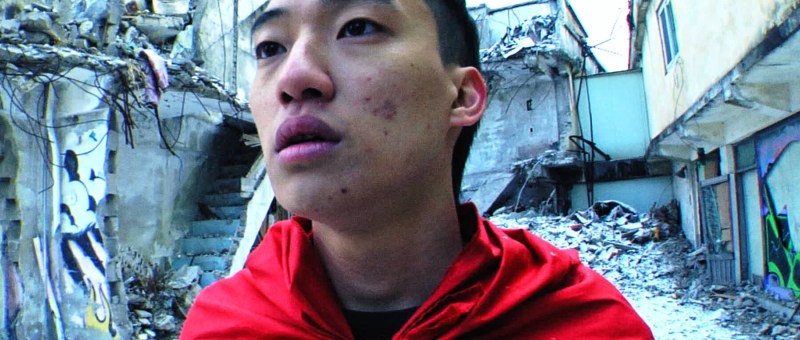
The first thing we see in Eiji Uchida’s elliptical crime thriller Night Flower (ナイトフラワー) is a sign reading “Paradise” that’s ironically positioned in the bathroom of a hostess bar staffed by middle-aged women that has the Japanese equivalent as its name. In a moment of dark foreshadowing, the sign tells us exactly where we’re headed while suggesting that the kind of familial utopia the heroine is seeking will always be just out of reach. 

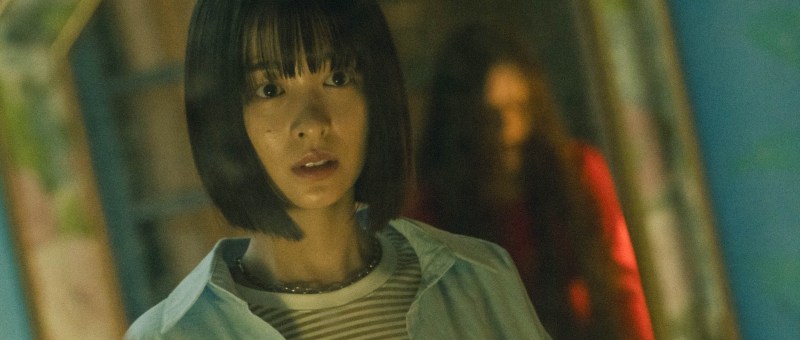
This is largely due to circumstances beyond Natsuki’s (Keiko Kitagawa) control. As hard as she tries to provide for her two young children, the fact is that the odds are stacked against her in this rather patriarchal society. The film opens with her boss shouting at her for having fallen asleep on the toilet, but it’s obvious that Natsuki exists in a permanent state of exhaustion. She’s already working multiple jobs and failing to make ends meet after having been abandoned by her husband who ran off after accruing massive debts. Even after moving from Osaka to Tokyo to try and escape them, she’s being hassled by loan sharks and is already at the end of her tether. It’s not surprising then that when she happens to come across a drug dealer who’s been mugged by his client she steals his remaining stash with the intention of selling it on. 

The real villain is, of course, the society that fails to come to the aid of women like Natsuki and leaves them with little choice other than to turn to crime. None of her part-time jobs pay enough to live on and when she approaches the town hall, they tell her she can’t claim any more benefits for another month despite being down to her last few coins. The jobs Natuski does are those available to people with few qualifications where the pay is low and disproportionately done by women. There seems to be an implicit assumption still in place that a woman will to some degree have a man to rely on for financial security, though all of the men we see are unreliable from Tamae’s trainer (Ken Mitsuishi) whose gambling problem endangers the gym to Mrs Hoshizuki’s (Reina Tanaka) husband who refuses to take any responsibility for the domestic sphere and treats his wife as a glorified housekeeper.

To that extent, there is a direct line being drawn between wealthy housewife Mrs Hoshizuki, who is effectively a single mother because her husband is functionally absent from the domestic space yet provides financially, and Natsuki that suggests money is not the central issue. Natsuki’s young daughter Koharu is earnest and considerate. She well understands how difficult her mother’s life is and does her best to make it easier. Mrs Hoshizuki’s daughter, meanwhile, falls in with a bad crowd at school and begins using drugs. Her mother is powerless to help her and her father refuses to get involved. When she first hires a detective who discovers Natsuki and Tamae pushing drugs on the streets, Ms Hoshizuki asks if they have families too as if she understood on some level that they’re not necessarily bad people and were reluctant to get them into trouble, but also perhaps wondering how they can do this to someone else’s child if they have children of their own. 

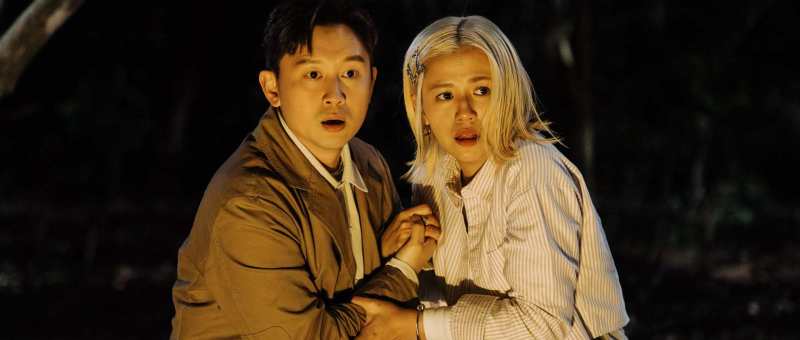
Natuski can’t really afford to think about the customers, and when earning more money through drugs continues her other part-time work and lives modestly wanting to provide for her children if something were to go wrong. She even asks her partner, aspiring MMA fighter Tamae, to look after them as if she were already resolved to pay the price if caught. Tamae is in this because she wanted to get out of sex work which she’d been doing to fund her career in the absence of a sponsor. It’s never quite clear if there is a romantic dimension to their relationship, but it’s certainly incredibly close as Tamae becomes an essential part of the family, dying her hair to match Natsuki’s and beginning to speak with an Osaka accent just like they do. For a time, they find the kind of paradise they’re looking for, but also seem to know that it can’t last.

It seems that Tamae was also abandoned by her mother, while the androgynous gang boss Ms Sato gives them a little leeway precisely because she admires the way Natsuki fights for her kids when theirs did not. Most of the other gangsters also report having bad or no relationships with their mothers, which circles round to a rather conservative viewpoint of blaming mothers for everything. But no matter how hard Natsuki and Tamae fight, the fact is they always lose and the odds are forever stacked against them. All they have is the solidarity they’ve found together as a family unit, but it’s not enough to protect them against the harshness of the world they’ve entered. Night flowers bloom when they feel like it, but it seems like this one only blossoms in an impossible paradise.


Night Flower screens as part of this year’s Nippon Connection.

Trailer (English subtitles)

Images: © 2025 “Night Flower” Film Partners

Tiger (Anshul Chauhan, 2025)

At 35 years old, Taiga (Takashi Kawaguchi) is beginning to tire of city life and thinking of settling down, but as a gay man in contemporary Japan, there are limits to how much that is possible for him. Inspired by real life stories from the LGBTQ+ community, Anshul Chauhan’s Tiger is more character study than issue drama, but explores the ways in which Taiga’s horizons are constrained by the way society receives his sexuality to the point that he finds himself considering entering a platonic marriage as the only real way to ensure a full domestic life with the possibility of raising children.

As someone from the “Friendship Marriage” organisation points out, even the recently introduced partnership system available in some areas of Japan is a long way from a legal marriage and is geared more towards housing provision and hospital visits. It doesn’t confer inheritance rights for those who own property, or even the right to attend a funeral if the other relatives object. Child adoption is relatively rare in Japan in any case and not generally available to same sex couples while even costly options such as IVF and surrogacy could be bureaucratically difficult given the way the family register system works. 

Though the woman giving the presentation seems incredibly angry about the weakness of the partnership system legislation, labelling it “a disgrace”, it can’t be denied that Friendship Marriage is essentially complicit with the heteronormative views of mainstream society in which it is still socially and in some cases practically difficult not to be married. After signing up for the service, Taiga meets a woman who is half-Iranian and grew up in Tehran. It doesn’t occur to him that her decision to come to Japan was not made entirely freely and that she cannot safely return there without the threat of violence. Taiga may feel himself constrained, but he won’t be arrested or tortured solely for existing as a gay man. Nevertheless, he faces reduced options when it comes to employment and has never revealed his sexuality to his father fearing that he will reject or disown him.

Tensions come to a head, as they so often do, when the matter of inheritance is raised. Taiga’s sister Minami (Maho Nonami) is aware of his sexuality though does not seem altogether accepting and is resentful of his life in Tokyo which she assumes to be aimless and free of responsibility while she has had to shoulder the burden of caring for their ageing father alone. It’s obvious that she has been banking on inheriting the family home and is resentful on hearing their father has suggested leaving it to Taiga on the condition that he marries and has children, knowing that this is something that is not possible in contemporary Japan. The implication is that Taiga had no choice but to leave his home town in order to lead a more authentic life and essentially develops two opposing personas, that of “Tiger” the aspiring porn star and “Taiga” the would-be-family man. 

Minami later wields this duality against him, asking him to baby-sit her daughter Kaede to whom he is especially close, while threatening to out him to their father if he doesn’t agree to give up his right to the domestic space represented by their family home. His former lover, Koji (Yuya Endo), has entered a conventional heterosexual marriage without disclosing his sexuality to his wife and is riddled with regrets over not leaving with Taiga and trying to start a domestic life in the city as a gay couple. The Friendship Marriage system removes the element of betrayal, but also elides authenticity in providing a mechanism for each partner to fulfil social and parental expectation while avoiding disclosing their sexuality, and equally prevents them from enjoying a full and loving domestic relationship with a same-sex partner.

The film never particularly suggests that there is anything wrong with the way Taiga is living in Tokyo nor with his desire to get into gay porn, but merely highlights the sense of emptiness he feels as someone denied the possibility a full domestic life. There is after all a kind of age cap involved in his life as a sex worker working at a men-only massage parlour which he may fast be approaching even aside from the clients who like to exorcise their own sense of powerless by paying money to abuse and humiliate him. In the end, all he’s left with is an uncertain liminal space living as a literal stand-in marooned on the sidelines with no place to call his own.


Tiger screens as part of this year’s Nippon Connection.

Trailer (English subtitles)

Images: © Tiger Production Partners

Suzuki=Bakudan (爆弾, Akira Nagai, 2025)

At first glance, the English-language title of Akira Nagai’s adaption of the novel by Katsuhiro Go, Suzuki = Bakudan, might seem a little strange, even aside from the incongruity of leaving “bakudan” (bomb) untranslated. But there is something to be said of the idea that there are little bombs everywhere, and each person is also powder keg waiting to explode given the right trigger. That might play in to the rather cynical view of the Hannibal Lector-like presence at the film’s centre who seems to be leading the police a merry dance with his various riddles and determination to play the part of a man whose mind has been ruined by alcohol and hopelessness.

The first thing about Suzuki (Jiro Sato), arrested for busting up a convenience store, is that he gives a name that at least sounds fake and attempts to brazen it out. Detective Todoroki (Shota Sometani) tells him that the store owner doesn’t want to press charges and will settle for compensation to fix the damage, but Suzuki says he’s broke ad offers to help the police instead. He claims to have psychic powers and knows that a bomb is about to go off, but the police assume it’s an obvious delaying tactic and take no notice, until there’s actually an explosion in the middle of the city. 

The obvious conclusion that occurs to Todoroki is that Suzuki is the bomber, but at the same time he seems to think there’s something innocent about him. He is indeed as Todoroki and later Ruike say childish in his playfulness and means of expression, though there’s also a sinister edge to the way he speaks that suggests it’s all an act. He quotes poetry and and appears to ramble like a madman but while Ruike becomes convinced he’s dropping them arcane clues, others think he’s just manipulative and deliberately wasting their time. “Not every word has meaning,” one insists though it seems as if it really might for Suzuki who seems to list not being listened to by society as one of his grudge points.

The point that he makes frequent digs at the homeless despite identifying as one hints at this paradoxical sense of injustice in the contemporary society. In one of the traps he sets for the police, he sets them up with a binary choice of whether to save schoolchildren or the homeless community. The detectives don’t realise that’s what they’re doing, but still didn’t really think to much about the people who live in the park while desperate to find a potential bomb threat in a school. Later Suzuki lists off a series of people he can’t stand from the homeless to pregnant women, families, and lawyers, in fact pretty much everyone which itself seems to be more a reflection of an absurd social prejudice than his own feeling. 

He might, however, have a point about social indifference and the arrogance of the police with Todoroki’s superiors rolling their eyes and refusing to take Suzuki seriously while the bombs keep going off. Everything seems to link back to a disgraced police officer, Hasebe, who took his own life by jumping in front of train and was not supported by his colleagues aside from Todoroki who only utters that he’s not insensitive to his feelings which seems like a lukewarm advocation for the police brotherhood. Suzuki seems to have resented not being accorded one of the group, and holds the police in contempt for the way they treat their own. Yabuki (Ryota Bando) is also forever trying to get his foot on the ladder as a detective, but is only exploited by those above him which is one reason he’s willing to take so many risks to catch the bomber.

Suzuki tries to guess the shape of people’s hearts, and finds those of the policemen largely warped by office politics and backstabbing. Selfishness is the sad truth of humanity, he intones. And he might be right, people only really want the bombs not to go off near them and they’re less bothered by the idea of them hurting other people than they’d like to think. After all, Hasebe’s family’s lives imploded too when they were sued by the railway company after Hasebe’s suicide, hounded by the press, and ostracised by former colleagues. Acceptance by the group, it seems, is only ever really temporary. Still, Suzuki leads the police by the nose exploiting all their weaknesses and affecting the persona of a sane madman claiming to be psychic and to have been hypnotised to erase his memory but keeping all his cards close to his chest as the cat and mouse game between him and Ruike ratchets up in tension and finally reaches its ironic conclusion.


Suzuki=Bakudan screens as part of this year’s Nippon Connection.

Trailer (English subtitles)

Images: © Katsuhiro Go/KODANSHA Ltd. All Rights Reserved © 2025 FUJI TELEVISION NETWORK, INC./Warner Bros. Japan LLC/ KODANSHA LTD. All rights reserved

New Group (Yuta Shimotsu, 2025)

If all your friends went and formed a giant human pyramid, would you go and form a giant human pyramid too? Parents used to caution against such dangerous group think, but it has to be said that perhaps they only complained when the group activity didn’t suit them or required some additional expense they didn’t really want to pay. If the group activity was studying hard at school to get into a good university and become a successful member of society rather than buying the later must have fashion item to fit in at school, then they’d hardly complain about that.

Yuta Shimotsu’s absurdist satire New Group is in many ways about the deeply ingrained patterns of thought that exist within a society to the extent that they are rarely ever questioned. Ai (Anna Yamada) is coming to an age in which she is beginning to feel hemmed in by a conformist society but at the same time does not have the courage or confidence to challenge it. When she sees another girl being bullied, she wants to step in to defend her but all she manages to do is give the bullies a hard stare. Her friend Haru asks her what university she’s thinking of applying to to, but Ai only says she’ll apply to the same one as her and study the same thing. She can’t even answer when she’s put on the spot about what she wants to do for the school festival for fear of picking the wrong one and being ostracised from a particular faction, so she just goes along with the first person who asked for her vote.

As her teacher says, though there is a strong groupthink in play, everything comes to a binary. It’s always “uchi-soto”, us and them. But what does it mean to be a member of the main group? Ai isn’t convinced she wants to give up her autonomy just to fit in and increasingly feels herself to be an outsider. Her name is of course reminiscent of the English pronoun “I”, though it’s true meaning is “love”. She’s pulled out of inertia by a boy named “Yu” who nevertheless is later pulled into the pyramid and tells her that “ai” is here, meaning both that the group is love and Ai, the individual, belongs with in it. She replies that he’s wrong, that isn’t love, and it isn’t her. There is no room for the individual within the pyramidic structure of the group.

Yu has recently returned from abroad and is living alone free of parental authority which is why he doesn’t fit into the carefully controlled harmony of the school. He is out of step at marching practice and less afraid to voice his true opinions. He intervenes to save the other girl from the bullies and chastises Ai that just watching makes you complicit. Yu might as well be one of the space aliens they keep talking about on TV, a subversive force out to destabilise the harmonious society. Yet Ai’s doubts seem to have arisen because of a personal trauma. As a child, she chose the group over her younger sister who was then killed in an accident. She feared being excluded and essentially sacrificed her sister for approval while also denying her affiliation to the group that is her family.

The quest of Ai and Yu is then to maintain their selfhoods while operating in a society that demands conformity. Controlled by the maniacal headmaster, their schoolmates all immediately start marching to the beat of the PE teacher’s whistle and dutifully take their place in the pyramid in which all they do is uphold the structure of the group. As the pair are chased by the zombie-like figures, Ai has to confront the fact that it might just be easier to go with the flow, even if that too comes at a price. Even so, in her efforts to resist, is Ai not just creating another group of her own that can only exist because of its opposition to the first? If there is “I” there must also be “you” and never the twain shall meet. A TV commentator played by the director Takashi Shimizu tries to speak out about the nonsense groupthink being conveyed through the innocuous medium of daytime television but is dragged off air while shouting at everyone to wake up and think for themselves. It seems that few are brave enough to switch off and think for themselves while the only path to freedom lies in loneliness and exile even if in the end it is “love” that saves us after all.


New Group screens as part of this year’s Nippon Connection.

Trailer (English subtitles)

Images: ©2025 “NEW GROUP” Film Partners

Open Endings (Nigel Santos, 2025)

Is it acceptable to be friends with your exes? Charlie’s (Janella Salvador) bond with her friendship group made up of women who’ve all been romantically entangled at one point or another becomes a problem for her new relationship. Rafa (Rachel Coates) finds the situation altogether too weird, and even goes so far as to ask Charlie to cut her friends off. It might not be a good idea to date someone who tries to isolate you from friends and family, but Rafa claims these are just her boundaries and she can’t help feeling uneasy with Charlie spending so much time with women she’s previously slept with.

Then again, it’s not easy to be gay in the Philippines and this community is quite small. Can you really afford to cut people off just because of potential awkwardness? Each of the women is struggling in their own way, but tries to support her friends and is supported in return. The group only really formed as the exes banded together to look after Hannah when her partner passed away. Sundays have now become sacred to them as a time they can all come together and share their fears and worries no matter the various unresolved feelings that exist between them.

These relationships are often messy and ill-defined, but genuine and heartfelt. For Kit (Klea Pineda), friendship is most the beautiful of gifts and she fears acting on her feelings for Charlie because she doesn’t want to ruin what they have. Still closeted not wanting to upset her parents are religious and conservative, Kit is in an awkward non-relationship with a married woman who is also the mother of one of her pupils at the school where she teaches. Alexa (Yesh Anne Burce) is trapped with a heteronormative relationship she cannot escape because divorce is still not legal in the Philippines. Constrained by her own circumstances, she becomes possessive of Kit who is the only path back to her authentic self and the only person with whom she can be free. In other ways, however, perhaps the impossibility relationship suits Kit because she cannot be her authentic self either while unable to reveal her sexuality to her parents. 

The impossibility of divorce is also a factor when Hannah (Jasmine Curtis-Smith) suddenly drops the bombshell that she’s become engaged to a man. The group’s only bisexual, Hannah faces prejudice from her family who express relief that she’s finally got over her lesbian phase and rediscovered the right path, while the friends also see it as a kind of betrayal though perhaps only because she kept her new relationship secret from them for several months. Charlie is also subjected to homophobic violence when a man barges into the gay bar where she’s drinking and propositions her, insisting that she is “alone” because he’s only seen her with another woman. When he finally figures it out, he sees it as a challenge and quickly becomes violent. 

These kinds of petty aggressions remind the women of their precarious position within a hostile society that enforcers heteronormativity and traditional gender roles. Their friendship is a small bubble of resistance that gives each of the women additional confidence to continue being who they are. This atmosphere of hostility plays into Mihan’s insecurities, her far of commitment and inability to clearly declare her feelings. She resents Hannah for choosing to marry a man as if she were doing it because of social expectation rather than personal desire, while also forced to accept that this is all her fault. She had plenty of time to try and patch things up with Hannah, but never did. 

The open-ended nature of these relationships leaves Mihan with anxiety, but it also allows these women to continue being friends and supporting each other. The friendship doesn’t have to end just because the romance did. But at the same time, she has to accept that the risk of heartbreak is something that has to be actively embraced and her tendency to skip out on relationships the moment they become serious leaves her only with a lack of resolution. Painting a warm and funny portrait of contemporary queer life in the Philippines which nevertheless does not shy away from its difficulties, Open Endings celebrates most of all the joyousness and power of female friendship in the face of social hostility.


Open Endings screened as part of this year’s Queer East.

Trailer (English subtitles)

Girlfriends (女孩不平凡, Tracy Choi Ian-Sin, 2025)

Now in her mid-30s, Lok (Fish Liew) feels as if she were perpetually standing at a crossing waiting for the light to turn green. She made her first film five years ago, but hasn’t been able to make another one since. A producer likes her script, but tells her that with this kind of content they won’t be able to release it in Mainland China or Malaysia, so they won’t be able to recoup their investment. As he says though, the script can always be tweaked and if she rewrote it including a role for an actress looking for a comeback they might be in business.

But Lok doesn’t really want to compromise. Tracy Choi Ian-Sin’s semi-autobiographical Girlfriends (女孩不平凡) is in many ways about the of fear of being railroaded into something that’s not what you really want. After an argument with her girlfriend Bei (Jennifer Yu), Lok begins to look back on her life in reverse chronological order inching towards the source of her insecurity in her Macao childhood. At 17, she faced intense pressure to conform. As a member of the debate team, she’s tasked with making an argument for something she doesn’t believe in and resents being forced to say what’s expected of her rather than how she really feels. Her parents expect her to go a local university and become a civil servant without really giving her much choice in the matter. The older sister of a classmate, Faye (Eliz Lum) is the first person who asks her what it is she really wants. 

Lok finds herself watching 2004 Hong Kong drama Butterfly and trying to sort out her confusing feelings for Faye while secretly taking the exam to study at a university in Taiwan in the hope of living a freer life, if only for four years. There seems to be a part of present-day Lok that still thinks she’s on an extended holiday and will one day have to return to Macao and become a civil servant after all. She’s incapable of thinking of the future and seems to be mothered, to a certain extent, in all her relationships as her respective partners take on the burden of practical considerations like financial planning. Each time things start to get serious, she begins to back away, even ghosting her Taiwan girlfriend to return to Macao alone without saying goodbye.

Both the Taiwan girlfriend and Bei seem to want move back to Macao with Lok without even really considering if she actually wants to go. This assumption seems to further fuel her desperation and send her looking for an escape route. Returning to Macao with a girlfriend does not seem to be an option for her because Macao represents conventionality and the life she doesn’t really want but still deep down thinks she is unable to escape. Never having fully addressed her lost love for Faye, she lacks the courage to commit or to believe in a long-term future. Her apartment seems to be full of reminders of old lovers, while she remains uncommunicative and insecure. Using sex as a means of avoiding confrontation, she has a tendency to storm out rather than have a conversation and has never fully accepted herself. When her long-term girlfriend Bei starts talking about serious things like marriage and children, she tells her that she wants her to have a “normal” life, as if she were preventing Bei from having one.

Bei is indeed under the pressure of conventionality, nagged by parents who still haven’t accepted her relationship with Lok to settle down and marry a man. Lok’s family in Macao seem to have already accepted Bei as her wife, but still Lok can’t get over the mental hurdle of believing that she has a right to a future of her own choosing. After her script is turned down, she goes to the cinema to see The Lyricist Wannabe and over identifies with a line in which the heroine is bluntly told that if she’s spent all this time waiting and still not got anywhere, perhaps it’s time to consider another career. Her lack of success further deepens her insecurity as Bei practically points out that they do actually need some money coming in, and perhaps they might have to compromise their artistic dreams as an actress and a director under the pressure of living in difficult economic circumstances while planning for their long-term financial future. It doesn’t sound very romantic, but in a way it is. It’s only by looking back over her life and failed relationships and returning to Macao to put her past to rest, that Lok is finally able to stop chasing the ghost of Faye and gains the courage to seize the future that she really wants.


Girlfriends screened as part of this year’s Queer East.

Trailer (Traditional Chinese / English subtitles)
Y Vân: The Lost Sounds of Saigon (Khoa Hà & Victor Velle, 2025)

How can it be that someone can be universally renowned, famous beyond their wildest dreams, but seemingly forgotten only fifty years later? Filmmaker Khoa Hà moved to the US at 17 and never met the grandfather who passed away before she was born leaving behind a forgotten musical legacy. Other family members have told her various things about him, but the one that fascinated her was that Y Vân had been one of the foremost composers before the war through none of his work apparently survives.

Y Vân: The Lost Sounds of Saigon is partly a mystery as Khoa decides to try retracing her grandfather’s steps, trying to bring his music back into the modern era. But it’s also an exploration of family, legacy, and the brutality of the war during which most of Y Vân’s work was either deliberately or otherwise destroyed. Not only does Khoa struggle to find anything of her grandfather’s music, but is repeatedly told that nothing much survives of music made before 1975 due wartime destruction and/or the new regime who destroyed anything they deemed to be decadent. 

The totality of the destruction seems shocking. That an entire era could just be erased as if it never existed is somehow chilling in its implications. Y Vân was one of a handful of major songwriters whose work was known by all. In those days, publishers sold sheet music for songs on a similar level to records so people could learn the song by following as they listened, and you’d think that something like this would stick in the collective memory as people keep the songs alive by singing them. The problem is, however, that without any of Y Vân’s records, Koha isn’t left with much to go on, not really knowing who any of her father’s collaborators might have been to try asking them for their thoughts and recollections. 

All she really has to rely on is family, though Y Vân himself had said that’s all you really need. Looking for her grandfather’s legacy enables Khoa to reconnect with her family in Vietnam including her great-aunt and uncle as well as Y Vân’s first wife from whom he eventually separated. After a while, he mother joins her on her quest, deepening their own connection as they delve into family history and travel all over Vietnam trying to track down Y Vân’s music.

It’s a family connection that eventually puts them on to a collector who, like Khoa, has been trying to reclaim something of the past. Before the war, his family owned a music cafe, and so he’s been collecting records to recreate his childhood. His desire to restore this lost past is a means of trying to heal the trauma of the war and push past this dividing line to reclaim the lost Vietnam that lies behind it just as Khoa is attempting to reconnect with the cultural roots she felt herself in danger of losing in the US. 

Y Vân himself seems to have been a casualty of these changing times. He was temporarily sent for re-education and prevented from using his stage him with the consequence that he gave up writing music while many of his songs were banned. He passed away at a comparatively young age with his musical legacy all but forgotten. The singers who performed his music went to the US where they were unable to continue their singing careers and had to focus on making new lives for themselves. Through uncovering and archiving her grandfather’s music with the help of the collector who agrees to help her digitise his tapes and LPs so that everyone can hear them, Khoa is helping to preserve this history for future generations. As she says, art has the ability to heal old wounds and bring people together, enabling her to reconnect with her family and restore something of what was lost. Told with true visual flair, the film’s soundtrack mainly uses 60s covers of American songs, while animated sequences help to recreate the pre-war society in which Y Vân became famous, though ironically his actual dream was to study maths rather than becoming a musical superstar. Chapter markers see Khoa walking through a desert searching for Y Vân’s music and eventually finding her way toward accepting herself and culture through the preservation of her grandfather’s legacy.


Y Vân: The Lost Sounds of Saigon screened as part of this year’s San Diego Asian Film Festival Spring Showcase.

The Road to Sydney (Benito Bautista, 2025)

As a young person in Palawan, Sydney Loyola found herself the victim of toxic masculinity and a fiercely patriarchal culture. She recalls that her father once made her fight a neighbour’s son and threw her into a lake in what she then felt to be a rejection of her femininity. This feeling of being unloved by her father and responsible for the breakdown of her parents’ marriage has left a permanent scar on her life that continues to haunt her even as she begins the steps towards embracing her authentic self.

Shot over several years, Benito Bautista’s documentary follows Sydney through her transition having moved to the United States where she encounters a different kind of rejection and discrimination. A dancer and choreographer well versed in the traditional dance of Palawan, Sydney nevertheless had a survival job in San Francisco working for a property management company. When she told her boss that she needed medical leave to recover from surgery and that, on her return, she would be known as Sydney, he was apparently supportive. When she returned to work, however, the situation was quite different and her employers seemed to seize on any chance to dismiss her. Despite having sought advice from former fire fighter Mia who had undergone a successful transition in the fire service and assured Sydney that transgender people already enjoyed workplace protections in San Francisco she is eventually let from her job, forcing her to move out of her apartment, too.

But in another way, being forced out of her apartment is only another migration that acts as a fresh start at the beginning of her new life as Sydney. On reconnecting with her dance background, Sydney returns to the Philippines to choreograph a new routine inspired by a local folksong about a man who swore he would return for a woman. Sydney has done something quite similar, returning to reclaim not only her authentic self but her culture as rooted in the history of Palawan by choreographing a routine that incorporates traditional elements and western-inspired dance. Performed on the shores of a local beach, hers is a dance of migration inspired by the nomadic Batak people that reflects her journey toward becoming Sydney, embracing her authentic self, and eventually coming home.

Even in the US, Sydney had said that dance was the only place she felt truly safe while those who remember her from her youth in Palawan state that she was already able to express her authentic self even if she was too afraid of her parents’ reaction to do so openly. She recalls that she repressed herself and did everything she could not to stand out and be noticed, though the other children at school called her effeminate and bullied her. Even as an adult, she breaks down in tears wondering why people look down on others. Several of the other interviewees, some of whom are also from the Philippines, recall similar stories of being rejected by their families for not conforming to rigid gender roles.

Sydney says that she never felt loved by her father and suspects that his rejection of her was born of a feeling of inadequacy, that her femininity brought his own manhood into question. On reuniting with him, it seems as if her feelings toward her father may have been due to a lifelong misunderstanding, or at least, he doesn’t seem to remember her childhood in the same way she does and though the meeting is more of a positive experience than she feared it might be, she’s left feeling shortchanged for a lack of acknowledgment for all she suffered. Though she describes her mother as more supportive, Sydney also waited until after she died to pursue her transition fearing that it should be too difficult or her understand and cause further strain near the end of her life. Despite having gone to America to be free of this patriarchal culture, coming back to Palawan allows Sydney to come full circle by reclaiming her authentic identity and overcoming a past sense of rejection. Resolving her situation in the US and rediscovering old friends in Palawan, she finally arrives at herself and a moment of serenity having become the person she always knew herself to be.


The Road to Sydney screenedas part of this year’s San Diego Asian Film Festival Spring Showcase.

Diamond Diplomacy (Yuriko Gamo Romer, 2025)

Perhaps it’s strange to think of a sport as a national pastime, given that many transcend borders with global networks and shared histories that span centuries. Yet American-born sports are largely played only in America and perhaps it’s the relatively small scale of their most successful export, baseball, that makes it such a rich source of cultural exchange. There might therefore be a mild contradiction that both the US and Japan think of baseball as a national game as if it could belong only to one, though they don’t so much tussle for the soul of the sport as bounce it back and forth in a continual process of exchange. 

Yuriko Gamo Romer’s documentary Diamond Diplomacy explores the way in which baseball has fostered a relationship between the two nations that has survived severe strain. As a historian points out, baseball predates judo in Japan and became a symbol of its modernisation during the Meiji era. As soon as they began to play, Japan was beating the Americans at their own game as teams of schoolboys triumphed over elite squads from local warships leaving the sailors with a degree of wounded pride to have lost at a game they created. 

A video montage likens the equipment worn by the catcher to that worn by kendo players with its chest armour and grilled visor, while other interviewees wonder if it doesn’t play into a cultural mindset in which the individual sublimates themselves into a collective and commits themselves to a higher goal as a member of a team. Others describe it as Japan’s first purely recreational sport and suggest that it adopted samurai traits and martial arts philosophy which gave it a seriousness and a rigour that was at odds with the way the game was played in the US. American players who later came to play in Japan report consternation with the training regime, explaining that in general they only practised for a couple of hours before hitting the golf course while Japanese players trained 10 hours a day. This intensity may have contributed to the team spirit, but also, according to some, reflects a fundamental difference in cultural philosophies, While American players believe one is born with talent and can sharpen it only to a certain extent, in Japan they believe that it’s hard work that produces results and the more you train the better you can get regardless of innate talent.

Nevertheless, according the documentary, Japanese baseball fans continue to look up to the American leagues and it was the process of bringing over top stars such as Babe Ruth and Lou Gehrig during the 1930s that fostered a sense of connection between the two nations. These sporting relationships became a way of staving off conflict and brokering peace, though endured even once war had broken out. Internees in America describe finding hope and purpose in self-built diamonds, while the resurgence of baseball also contributed to the post-war recovery and a restored sense of national pride. In America, however, Japanese players were prevented from joining the major leagues and faced discrimination until Mashi Murakami was signed to play in the US in the mid-1960s. No other Japanese players were allowed to go play in America until Hideo Nomo exploited a loophole by retiring to accept a transfer only to be viewed as a traitor in Japan.

Nevertheless, the nation soon came round and Nomo’s games were later broadcast live on television making him a national hero. The film positions Ichiro Suzuki and Shohei Ohtani as the inheritors of this legacy, continuing the cross-cultural interplay between the two nations into the present day. An interviewee charts changing attitudes to the US and finds a correlation between the presence of Japanese players in America, suggesting that they fell to their lowest in the post-war period during the economic conflicts of the 1980s in which the US feared the newly dominant force of Japan in the bubble era, but improving with the arrival of Japanese players in US leagues in the lost decade of the ‘90s. Baseball continues to be a more isolated sport than some with each nation mainly focussed on their domestic game with no formal infrastructure for international competition outside of special organised matches, but perhaps that’s what makes this unique relationship possible in the push and pull of cross-cultural interaction through the shared love of sport.


Diamond Diplomacy screens 25th April as part of this year’s San Diego Asian Film Festival Spring Showcase.

Trailer (English subtitles)

BAKA’s Identity (愚か者の身分, Koto Nagata, 2025)

What does a name really mean? Can you really start over just by swapping your current identity for a new one, and what would that actually mean for the rest of your new life? Two young men who’ve been failed by adults and authority figures become involved with yahoo boy-style cyber crime, only in this case the aim of their romance fraud is to trap men they already know are poor and desperate and convince them they can turn their lives around by lending their identities to “someone in trouble”. 

It’ll only be for two years, they say. Just lie low, try not attract attention from the authorities. Though the targets also get a new identity in the form of a driving license with another name, they’re told not to use it for driving because the police will run checks on it if they have an accident. But the truth is that despite the widespread believe that it’s easy to disappear in Japan, it’s actually quite hard to live without a formal proof of identity through the family register system. You can’t rent an apartment or get a regular job, because on paper you don’t exist. The fake ID they’ve been given is only good enough to pass as proof of age. It’s not going to stand up if someone actually does more than glance at it.

But even if the idea of being able to wipe everything clean and start again might be attractive, the reality it not quite so easy. You can’t just wipe away your existing fears and traumas, and they’ll follow you even into your new life. Takuya (Takumi Kitamura), who’s been doing this sort of thing longer, is conflicted on realising their latest mark, Egawa (Yuma Yamoto), is a broken man who can’t get over the death of his daughter at the hands of his wife. Though Takuya, and the young woman they have assisting them with the scam, don’t want to do something like this to someone who’s already suffered so much, this world is pretty brutal and in reality they no longer have much choice.

Kisara (Mizuki Yamashita) is only involved in the scam because her mother stole her scholarship fund and she needed money for university, but she’s since dropped out and seems to be doing this kind of thing full-time. Takuya too seemingly had no parental support and sold his own identity to pay for medical treatment he hoped would save his brother, but he died anyway. That might be why he feels so protective of Mamoru (Yuta Hayashi), a young man he met in a homeless shelter run by the yakuza for the purpose of getting them to apply for benefits and then stealing them all. Mamoru was also abandoned by his mother and suffered physical abuse in his familial environment. Takuya brings Mamoru in on the scam and his life in the criminal underworld thinking it would help him, only to later feel guilty when events spiral out of control.

Takuya may look to his boss, Sato (Goichi Mine), as a kind of big brother figure, but also knows that he most likely plans to throw him under the bus while plotting to rob gangland kingpin Joji (Kazuya Tanabe) of a windfall gained through gold smuggling. Various people warn Takuya that it’s best to get out now, because if you go too deep you never will, but Takuya knows his bid for escape is likely to fail even when he turns to former mentor Kajitani who convinced him to sell his identity in the first place. The irony is that Takuya sold his name without a second thought and doesn’t really think his identity’s worth anything, which might be why he thought it was worth rolling the dice just to see if he could change his situation. The film’s Japanese title might ask us who we thought was being “fooled,” the men whom Takuya scammed who convinced to give up their identities for what seemed to them at the time a lot of money, or Takuya and Mamoru deluded both by the opportunities of a life of crime and by the allure of escape. In the all end, all any of them really have is each other and the unexpectedly genuine connections that arise between them in opposition to a society that has already discarded them and a hellish underworld in which an identity is just another commodity to be bought, sold, or sacrificed at will.


Trailer (no subtitles)