The Brightest Sun (時には懺悔を, Tetsuya Nakashima, 2025)

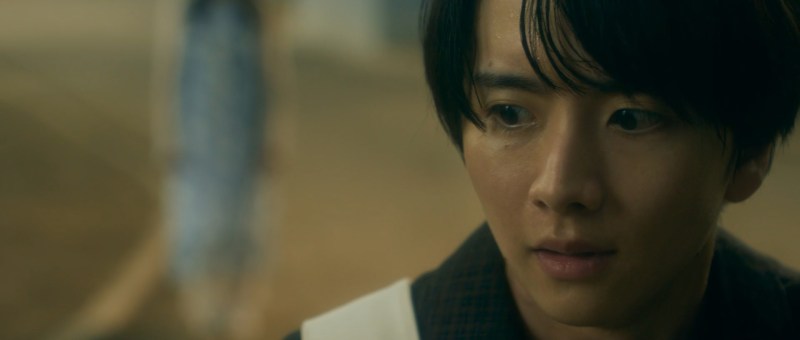
Tetsuya Nakashima’s more recent films have often dealt with more controversial subjects. His latest, Brightest Sun 時には懺悔を, Toki ni wa Zange wo), adapted from the novel by Bunzo Uchiumi and delayed from last year due to allegations made by an actress on World of Kanako that nude footage was used without her consent, is not so much a film about disability as the taboo of parental selfishness or a sense of disconnection from one’s biological children.

Nevertheless, the way the film approaches it subject matter may seem insensitive to some in that it often reduces the existence of disabled children to a burden that must be born by someone and preferably by a biological parent. Though rookie detective Satoko (Hikari Mitsushima) raises the issue of the child’s subjectivity and quality of life, others struggle to see him as anything more than an object for which someone must accept responsibility. This is doubly true for her reluctant partner, Satake (Hidetoshi Nishijima), who has taken to drink and is riddled with guilt over his ambivalent feelings regarding his own disabled son who has since passed away. His wife (Ko Shibasaki) has fallen into depression and is living in a psychiatric facility while he is seemingly incapable of caring for their teenage daughter who has become resentful of both parents, feeling as if they were unable to care for her because all their attention went to her brother while she too now feels guilty that she did so little for him and left his care entirely to her mother.

At times, the film is critical of this tendency to force women to accept full responsibility for childcare while men remain otherwise absent from the domestic space, but seems to walk this back in the closing moments. In any case, Satake’s rejection of his son is mirrored in that of Tamie’s (Haru Kuroki) husband who openly declares that it would have been better if Taku had not been born, blaming Tamie for giving birth to a disabled child. His embarrassment makes plain a lingering stigma towards disability or difference in the wider society, as if having a child he sees as imperfect reflects badly on him personally. Tamie, meanwhile, seems as if she may have been suffering from a kind of post-natal depression and is clearly affected by her husband’s resentment along with her own inability to bond with the baby. Though she witnesses her child being kidnapped, she does nothing to stop it with implication being that perhaps she is glad to be relieved of the burden. 

Satoko too has become estranged from her young daughter who struggles with the trauma of witnessing her stab her abusive husband. The implication is that this resentment is born of having seen through her mother and realised that she did not do this out of a desire to protect her, but merely out of selfish rage. The fact is that her desire to protect Shin/Taku is a displacement activity. Everyone’s actions are to one extent or another a vicarious attempt to atone for something they are otherwise unable to address in their own lives. 

This appears to have been true for the man whose murder they are supposed to be investigating, Yonemoto (Jiro Sato), who is said to have been the worst of the worst. Someone who really was “better of dead” as Satoko puts it, though we never really find out why exactly everyone had such a low opinion of him and the detective company itself does not actually seem as sleazy as one might expect. Satake suspects he may have planned to blackmail Tamie, who has since remarried and has two step-children, over the discovery of her son, but in fact he was apparently quite moved by the tender care the kidnapper provided to Shin/Taku all these years and though knowing that he should turn him in, wanted to ensure the child would continue to be well cared for. 

This is apparently where Yonemoto found the redemption centred in the Japanese title and explained in an opening title card. Satake similarly is forced to face his complicated emotions towards his son and family, trying to do the best for Shin/Taku as means of assuaging his guilt much as Satoko shifts her maternal anxiety onto Tamie. The film’s conclusion seems to undercut the idea presented by the policeman that blood ties may not be that important, having witnessed the care and devotion the kidnapper showed to a child that was not his by blood and had complex needs, in its concerted efforts to force Tamie to accept her maternity. Nevertheless, the film does its best to extend sympathy and understanding to all, suggesting that the best thing to do in this situation might have been to leave well alone, but for various reasons that won’t be possible. Opting for a noirish aesthetic, Nakashima abandons his pop aesthetics for something a little more subdued but maintains his fast-paced editing style, drip-feeding us the mystery while pondering the nature of the bonds between parents and their children.


The Brightest Sun screens as part of this year’s New York Asian Film Festival.

Trailer (no subtitles)

The Curse (ザ・カース, Kenichi Ugana, 2025)

Could it be fair to say that sometimes we curse ourselves, or perhaps more accurately that the only true curse is morbid curiosity? Those at the centre of Kenichi Ugana’s J-horror inspired The Curse (ザ・カース) have the option to simply stay off social media, but they find themselves unable to do so. Be careful what you post about yourself online, the film seems to say, as if an Instagram profile were basically opening a portal to your soul through which any evil entity pass.

But at the same time, a priest cautions that one may do harm to others without even realising it and it transpires that even the most innocuous of posts can be enough to push someone over the edge. The versions of their lives that people post online are obviously idealised or perhaps aspirational, but they can still provoke a sense of jealousy or envy to the extent that saying “I am having a lovely day” can upset someone who is not and perhaps has not for a long time but continues to hate follow these kinds of accounts. This in itself is a kind of curse, the film argues, as a deepening sense of self-loathing is projected outward towards those apparently living better lives the unhappy obsessive feels they may not deserve.

Still, there is an extent to which the curse is also “real”. When Riko (Yukino Kaizu) spots a creepy photo posted by a friend, Shufen, which is accompanied by the caption “Drop dead already, all of you” and seems to contain the image of a malevolent entity, she is of course immediately concerned. Her anxiety is compounded by the fact that her friend is Taiwanese and posts in Mandarin, so she uses the auto translate feature but has no way of knowing if the translation is accurate. When Shufen fails to reply to messages, Riko decides to get over her sense of awkwardness and contact her ex in Taiwan, a mutual friend. Confused, Jiahao (Yan Yu Teng) tells her Shufen died six months previously in circumstances so strange and disturbing her family preferred to keep it quiet. “Curses are very real, in Taiwan at least,” he tells her. People die from them. 

Riko then faces another barrier in trying to navigate her away around the ritual beliefs of another culture. When her friend Airi began exhibiting strange symptoms after watching a video online, she took her to a doctor who was unable to help. After her Taiwanese friends recommend an exorcism, she begins to feel guilty. Perhaps if she’d contacted a priest instead of a doctor, she could have been more help to Airi. The Japanese-speaking priest in Taiwan isn’t necessarily that much help either, though. He demands payment up front, which reduces his credibility and opens the door to the suggestion that the rituals he provides are more placebo effect than anything else. Nevertheless, it seems he really does have the power to intervene with spirits, only this one is a little beyond his capabilities.  

There’s an essential irony in the fact that Riko is only able to detect the ghostly presence through its reflection in images while otherwise unable to see it lurking in the shadows or under her bed. This embodiment of resentment seems to affect her offline life too as the manager of the upscale hair salon where she works begins to act strangely towards her and a homeless man he warns her about arrives to advise she deal with her ghost problem before it gets out of hand. Ugana frequently cuts back to the ranks of disembodied mannequin heads that line the salon as a kind of foreshadowing lending the place an ominous quality and perhaps playing into the anxieties of the antagonist with its elitist vibes and unwelcoming atmosphere. Perhaps the real villains are unfair female beauty standards, ageism, and lookism, or equally perhaps we’re back at the figure of a witch who doesn’t want to grow old and is cursed with vanity, resentful of those who possess a beauty she believes herself to have lost. Turning unexpectedly bloody in final moments, the film suggests that this particular curse will never be lifted in part because it has become its own reward as this this particular malevolent entity dances cheerfully in her garden, secure in the knowledge that no one is watching.


The Curse is on UK, Ireland, Australia and New Zealand digital platforms 13 July

Trailer (English subtitles)

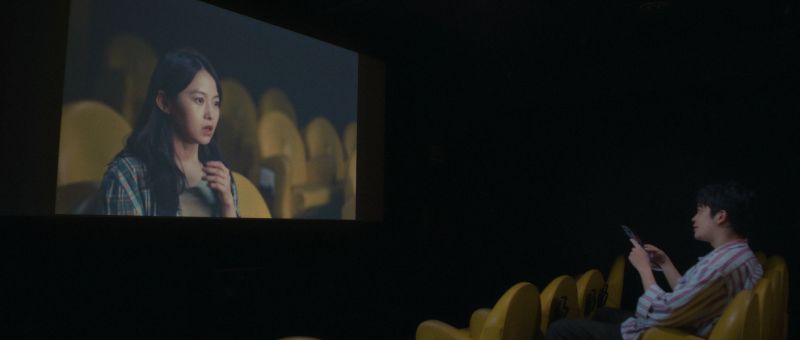
Numb (しびれ, Takuya Uchiyama, 2025)

At 11-years old, Daichi (Anji Kato / Tsukasa Enomoto / Takumi Kitamura as a child, teen, and adult respectively) is mostly living alone as his bar hostess mother is absent for days at a time leaving him with only a small amount of money to feed himself until the next time she returns. Rendered mute by the childhood trauma of his father’s domestic violence, he lives an almost entirely isolated experience, shying away from contact with adults and no longer attending school.  Given his circumstances, he has become used to shoplifting and pilfering from neighbours, but even this is perhaps partly born of his desire to avoid potentially dangerous interactions.

Unlike similar Japanese dramas, Takuya Uchiyama’s semi-autobiographical film Numb (しびれ, Shibire) is less interested in the ways that a boy like Daichi has been failed by society than his subjective experience. It is, however, notable how easy it seems to have been for him to fall through the cracks. No one ever seems to get in contact to ask why he hasn’t been in school nor does anyone appear to investigate his living standards. The landlord of his building takes advantage of the situation to extract sexual favours from his mother, Aki (Rie Miyazawa), who grants them in order to ensure they can stay in their home, a prefab shed on the roof where the water is often cut off because she hasn’t paid the bill. Though just a child, Daichi drags a canister that would normally hold kerosene down to the river, fills it, then has to carry it home and up the stairs to the roof all alone. He washes his mother’s clothes and dries them in the stairwell. Despite having no money, he spends his last coins on beer and cigarettes from a vending machine for her.

Yet at the same time, his mother’s circumstances are also caused by her trauma of suffering domestic abuse at the hands of his father (Masatoshi Nagase) who seems to have at point abandoned them. Working as a bar hostess necessarily means she is often absent at night, though her increasing dependency on drugs and alcohol along with their precarious living situation forces her into acts of casual sex work. To that extent, the course of her life is directly contrasted with that of her older sister with whom the pair later move in. Tomoko has become a Jehovah’s Witness and religious obsessive who does not exactly treat the pair with kindness or compassion. A line of red tape divides the apartment with Aki and Daichi occupying the living area but forbidden from crossing the threshold into Tomoko’s religious sanctuary. She appears judgemental of her sister and is at least party to her signing a Do Not Resuscitate order, though she insists that has nothing to do with her religious beliefs and was entirely Aki’s decision. Nevertheless, she coldly tells Daichi to get out of town once his mother dies and implies she finds his existence an embarrassment.

Denied any kind of emotional connection with parental figures, Daichi’s only source of positive input comes from a Russian labourer who discourages him from hanging around near the construction site which he says is dangerous due to the high levels of Russian drug users. Ivan gives him fatherly advice and comfort despite their apparently only meeting twice, but at the same time it’s clear that by virtue of his presence in Japan he has at least physically been absent from the life of his son back in Russia. Nevertheless, he presents an image of positive paternity to counter that from each of the men Aki becomes involved with who are violent towards her and tell Daichi that they’ve always hated his eyes, presumably because they are filled with contempt and remind them of what utter failures they have become. 

Forced into an early adulthood, the older Daichi makes ends meet covertly dealing drugs as a barman and appears to be trapped in a state of inertia by unresolved childhood trauma. A violent confrontation with his father solves nothing, though a kind of release arrives in finally letting go of his mother and taking her advice to move on. Shot on 16mm, the film captures the bleakness and isolation of Daichi’s life in snowy Niigata where it always seems to be Christmas for everyone but him as he slowly embarks upon a path towards recovering his voice.


Numb screens as part of this year’s JAPAN CUTS.

Female Prisoner #701: Scorpion (Intro)

Text of an intro given at the Prince Charles Cinema, 5th October 2023

There can be few faces in Japanese pop culture as iconic as that of Meiko Kaji. Contemporary Western audiences may have been first introduced to her indirectly through her undeniable influence on Quentin Tarantino’s Kill Bill which not only featured the song, performed by Kaji herself, which appears the beginning and end of each instalment in the Female Prisoner #701 Scorpion series that launched her into stardom but also drew inspiration in particular from her role as another vengeful heroine, Lady Snowblood. 

Kaji had begun her career at Nikkatsu under her birth name of Masako Ota where she generally played a supporting roles in the studio’s signature output of rebellious youth films. By the early 1970s, however, the studio system that had dominated the Japanese cinema industry was in terminal decline with attendance figures falling drastically in the face of competition from television. In response, Nikkatsu shifted its approach wholesale into what it termed “Roman Porno”, essentially softcore sex films that were nevertheless screened in ordinary cinemas and were intended for a mainstream audience as opposed to “pink film” which was a more rigorously defined genre screened in dedicated venues and aimed quite squarely at male viewers.

Kaji was one of many actresses who didn’t fancy joining the Roman Porno revolution and so jumped ship, firstly for television but then accepting an offer to join rival studio Toei which then had a giant hole to fill as its major star, Junko Fuji who had led the Red Peony Gambler series and more or less bankrolled the studio, had retired from acting to marry a kabuki performer, though she would later resume her career under the name Sumiko some years later. Kaji was considered a potential replacement but Toei really had its thinking back to front. The studio’s stock-in-trade at that time had been the ninkyo eiga, tales of gangster chivalry usually set before the war, but audiences had already become tired of the genre and were looking for something more contemporary which was certainly something Kaji could provide if she were allowed to create her own space rather than attempt to fill that left by Junko Fuji. 

Unlike rival studios such as Nikkatsu, Toei had a reputation for churning out very cheap period and contemporary action dramas that were largely aimed at a younger male audience and were, in that sense, already heading towards the same territory as Nikkatsu’s Roman Porno in their salacious taste for sex and violence. Now, we have to be a bit careful in using the term “pink film” which is itself something clearly defined by an adherence to a certain set of rules and was generally independently produced not put out by a studio, but we also have to acknowledge that the retrospective term “pinky violence” which was coined later rather than something actively used by Toei’s marketing department takes its from name the erotic associations of pink cinema coupled with the violence inherent in Toei’s exploitation films. 

Just as Nikkatsu had shifted into Roman Porno, so Toei pushed its line of female-led revenge and girl gang movies largely built around its roster of stars which aside from Kaji included Reiko Ike and Miki Sugimoto who were often played off against each other as studio rivals at times even appearing in the same film bringing that offscreen baggage with them as in the first instalment of the Terrifying Girls’ High School series or the genre highlight Criminal Woman: Killing Melody. Kaji was however largely uninterested in this kind of cinema and reluctant to take on the role of Female Prisoner #701 Nami Matsushima especially after clashing with neophyte director Shunya Ito who made no secret of his lack of confidence in her ability to play it while she objected to his demands for nudity which was after all what she’d left Nikkatsu to avoid.

Nevertheless, the pair later developed a fruitful working relationship bonding over their shared desire to move beyond the confines of the studio’s exploitation cinema into something with more artistic weight. More than any other of the films later tagged with the Pinky Violence label, the Scorpion series undermines the problematic “male gaze” inherent in the genre and found a strong female following who saw in Matsu an embodiment of their own silent rage towards a patriarchal society.  

Even so, as much as the Pinky Violence films can be seen as empowering they were also largely made for male titillation and structured in ways men can enjoy the transgressive qualities of female rebellion and aggression. Many of them are rape revenge dramas which necessarily feature scenes of sexualised violence that are sometimes presented in salacious rather than harrowing terms if otherwise sympathising with the heroine’s desire for revenge which is generally successful though it may incur further cost or moral ruin. The contradiction reaches its height in Norifumi Suzuki’s visually stunning, psychedelic foray into nunspolitation School of the Holy Beast which sees a liberated young woman enter a convent to gain revenge for the death of her mother who was killed by repressed nuns during a sexualised punishment session. The confines of the convent are styled like a prison and the film plays out like a women in prison film yet just as in the Female Prisoner #701 Scorpion series, it’s only really a metaphor for the patriarchal superstructure under which all women are imprisoned. 

One of the key directors of the genre, Norifumi Suzuki’s films are often highly stylised though in general like most of Toei’s output at the time most pinky violence movies often aim for a kind of heightened realism If one tempered by the hallmarks of 70s exploitation. By those standards, the film you’re about to see tonight is highly unusual in its bold visual style which incorporates elements of surrealism along with composition influenced by that of manga and the gothic overtones of the classic horror movie. By the end of the original Scorpion series, Matsu has taken on a mythical, supernatural quality of her own as an embodiment of rage and vengeance even at times rising from the water like the iconic long-haired ghosts most familiar to contemporary audiences from films like The Ring. Kaji would eventually move on from the series, but Toei could not, attempting to reboot it on more than one occasion though without the original incarnation’s striking visuals nor the intensity of Kaji’s unearthly glare. More than fifty years on from its original release Female Prisoner #701: Scorpion continues to resonate in an age where not nearly enough has changed.


Burn (炎上, Makoto Nagahisa, 2026)

“You may not be okay, but neither is anyone else,” a well-meaning young woman advises neatly encapsulating the world of the Toyoko kids in Makoto Nagahisa’s second feature, Burn (炎上, Enjo). A little less anarchic than his debut We Are Little Zombies, the film is one of several exploring the fate of these displaced teens the media has often liked to demonise as means of deflecting the fact that society has largely failed them and the adults who should be helping often only make things worse.

This contrast is clear in the opening scenes in which Jurie’s (Nana Mori) Christian parents sing a hymn about the world being full of light, but Jurie’s father (Kanji Furutachi) is a crazed authoritarian who beats her and her sister with a belt while insisting that Jurie’s persistent stammer is a reflection of her “tainted soul”. Ironically, asking her sister if she believes in God, Jurie starts to pray for her father’s death. “If God exists, He took his fucking time,” she quips when her father finally drops dead a few years later. But the abuse doesn’t end. Her mother takes her father’s place and begins to beat them just as she was beaten. 

Shinjuku, is one sense, a place full of light given its brightness and shining signs, but in the real world you can’t have light without shadow. After running away, Jurie is taken in by a community of similarly displaced teens led by an adult Fagin-like character known as Kami (Wataru Ichinose), which is ironically the same as the word for “God”. He describes himself as a guardian angel who whose job it is to make everyone feel safe, yet there’s something disingenuous about his warm-hearted claims that this is a place that accepts everyone and that no matter what society may choose to reject, he is glad that they were born. His golden fangs seem to hint at something cruel and greedy echoed in his reluctance to left Jurie leave, insisting that she won’t make it in the real world despite having told her she needs to become independent.

Mitsuba (Aoi Yamada), who has a disability stemming from a traumatic childhood incident, similarly finds her attempt to find escape through a relationship with a host foundering. Ironically named “Hikari” which means light, he justifies himself to her in insisting that he’s a victim too having been abused by his mother as a child, though in the end Mitsuba’s need to be loved can only be satisfied transactionally as she deludes herself into thinking her relationship with Hikari is “real” even as he continues to exploit her. To earn the money pay him, she ironically takes to sex work and encourages Jurie to join her in an effort to earn a million yen and then go back to save her sister. One of their clients presents them with a strange-looking dildo that sort of resembles a wand used by magical girls in anime which they wave as though transforming, but later describe themselves as performing an exorcism after meeting clients.

The men that buy their services are just another symptom of an exploitative society. When Jurie almost overdoses and is taken to hospital, the police don’t send her back to her family but do place her in a childcare facility where she feels imprisoned. The implication is that society would rather hide these children away rather than attempt to help them. Jurie longs for the freedom of the city and escapes to return, but in the end discovers only darkness. The film shares its Japanese title with Kon Ichikawa’s adaptation of Mishima’s The Temple of the Golden Pavilion, Conflagration, which is also about a young man who decided to burn it all down in protest against a profane world, though Jurie seeks escape from the collective punishment of the contemporary society along with the traumatic legacy of her father’s abuse. Nagahisa mixes iPhone social media footage capturing the kids’ world from their perspective with dreamlike imagery and a video game aesthetic as Jurie looks for a way out of the labyrinth of her trauma while setting the world ablaze in her mind. What she discovers in the ashes, however, maybe a renewed hope for the future and the possibility of a different kind of salvation.


Burn screens as part of this year’s JAPAN CUTS.

Trailer (Engliish subtitles)

Magical Secret Tour (マジカル・シークレット・ツアー, Chihiro Amano, 2026)

When her husband falls into a coma and she discovers he’s left them in huge amounts of debt due to an undisclosed gambling problem, an ordinary housewife finds herself at the mercy of an already strained society in which it seems everyone is struggling to the extent that they have no capacity to listen to other people’s troubles. Inspired by a real-life case in which a group of women was arrested for smuggling gold into the country in 2017, Chihiro Amano’s lighthearted crime drama Magical Secret Tour (マジカル・シークレット・ツアー) is a condemnation both of a society ruled by money and the various ways that women are still expected to clear up the messes of irresponsible men.

Wakako (Kasumi Arimura) is quickly made to feel guilty for not having noticed anything wrong with her husband or their family finances while also expected to shoulder the burden of the repayment plan to his former employer to cover the money he embezzled on top of his hospital fees which must now be paid in full because he was unemployed and had no insurance. When she tries to turn for her own family for her help, her mother is not happy to see her and seems put out that she’s turned up unexpectedly. It seems their family garage business is in trouble while they are already under strain due to needing to pay for their bedridden grandfather’s medical treatment. Her mother leaves abruptly before Wakako has the chance to explain the situation denying her the possibility of both financial assistance and emotional support. 

Apparently ineligible for any kind of government assistance, Wakako’s attempts at job-hunting fail because she is a mother of two with one only an infant and has also been out of the workforce for too long for any career experience to count. Even when her husband does eventually make a partial recovery, he blasts her for neglecting her responsibilities and overburdening his mother by asking for help with childcare. Despite having let her down so badly, he insists he’ll get a job once he’s better and discourages her from continuing to work even though she tells him that she enjoys it and finds it fulfilling. To that extent, her experiences have shown her that she did not really need to be dependent on a man for money as society somewhat encouraged her to be and could also look for fulfilment outside the home as an independent woman. 

Nevertheless, the only work she can find means turning to criminality, first by agreeing to a loan shark’s dodgy gold-smuggling scheme by taking the kids to Singapore for a few days and then returning laden down by gold bars they smuggle through customs to avoid importation taxes. While there she meets two other women in similar situations. Kiyoe (Haru Kuroki) is a scientific researcher in her early 40s who faces persistent sexism at work where her boss steals credit for her discoveries and faces no consequences for fiddling his expenses. Unable to find a new position thanks to a poor publication history, she wants the money to provide for her future. Mayu (Sara Minami), meanwhile, is trying to escape her toxic mother while pregnant herself and working as a bar hostess. 

The women justify themselves that what they’re doing is basically a victimless crime and just really a bit sneaky rather than morally wrong even if aware it’s illegal. A disclaimer at the end of the film implies the law has been tightened since 2017, but the stakes are also fairly low as it seems they’d mostly likely just be asked to pay the tax if they got caught, so trying to smuggle it seems like a no-brainer to them. Even so, the film skirts around Wakako’s involvement with the criminal gang from whom one would expect some sort of payback after she runs off with some of their gold after her own attempt to run a similar business inevitably runs into trouble. Instead it focuses on her sense of isolation in which the mother can end up being pushed out of both families, disregarded and taken for granted while expected to pick up her husband’s slack even if he hasn’t kept his part of the bargain by providing financial stability while otherwise absent from the domestic space. The only way to make a man play his part in child-rearing might ironically be divorce, though it seems likely it might just be him overburdening his mother this time. In any case, Wakako’s magical secret tour does seem to have led her to a more fulfilling place even it may in other ways be bittersweet. 


Magical Secret Tour screens as part of this year’s New York Asian Film Festival.

Trailer (English subtitles)
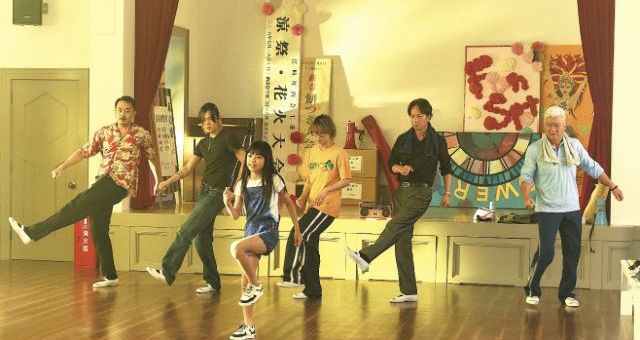
HIGUMA!! The Killer Bear (ヒグマ!!, Eisuke Naito, 2025)

Last year Japanese society was sent into an existential panic due to a severe increase in the number of bear attacks as the creatures were forced to venture beyond their natural habitat due to climate change and the impacts of human behaviour on the rural environment. Eisuke Naito’s Higuma!! The Killer Bear (ヒグマ!!) then arrives at an apt time, though in this case, the bear seems to symbolise something else acting as a kind of karmic supernatural entity attacking those encroaching on its territory while drawn away from the safety of the city by greed and desperation.

The cities are, it seems, in quite a bad way. Eighteen-year-old Sora (Fuku Suzuki) is an aspiring game developer, though the complaints that his retro 3D-platformer is too hard with janky character design might equally apply to the challenges of modern life. He’s just got into university, but his happiness is short-lived as his father takes his own life shortly afterward having been scammed out of all his savings and therefore unable to pay his son’s tuition fees. While his mother tries to make the best of the situation and insists she’ll figure something out so he can continue with his education, Sora is resentful and angry until unwisely agreeing to a shady job ad promising a large amount of money for delivering “an envelope” to an unspecified location. It’s after this that he’s plunged into a confusing world of backstreet crime, scams, and exploitation that he cannot otherwise escape.

Yet at the same time, this otherworld feels oddly like a video game and is often framed like an old-school arcade scroller, classic first-person shooter, or RPG as Sora is dragged further into this morally compromised sector of society. After being witness to his boss scamming an old lady out of her cash card and ink stamp, he’s charged with retrieving a precious gem from an agent turned rogue that looks a bit like a rupee from the world of Zelda and feels like a video game MacGuffin. The young woman, a former SDF member, decided to keep it for herself having been offered only 30,000 yen to steal it though it’s apparently worth ten million. It turns out that she’s a kind of victim too. Not only was she kicked out of the SDF for punching a superior officer who was sexually harassing her, but has become hooked on a live-streaming host and fallen into financial ruin. This has become such a common problem lately that legislation has been introduced specifically to stop hosts exploiting women and forcing them into sex work. Though Wakabayashi (Wan Marui) knows intellectually that this relationship is entirely one-sided and not actually real, she feels compelled to keep supporting him in part because he was the only person who listened to her worries and accepted her as she was even though she knows this is just part of his job.

That her desire for connection and acceptance can only be fulfilled through a transactional arrangement speaks of an increasing sense of disconnection and alienation just as Sora is dragged into this hellish world through an online ad, never having met his handler who goes by the ironic handle of “Angel”. It’s the need to get rid of Wakabayashi that forces the gang out of their natural habitat and into the bear’s territory of the forest where the human civility that marks urbanity is largely dissolved. Yet there’s a sense of human solidarity that emerges between Sora and Wakabayashi in which they call each other by their own names as they try to battle the bear even if they also give in to their greed by staying in the mountains longer than they need to in order to retrieve the gemstone which the bear has swallowed.

Another kind of human connection is brokered by Sora’s interaction with a young boy who is playing the game he designed. The boy has been told not to talk to strangers or his games will be taken away, but decides to trust Sora and ironically gives him some bear-shaped snacks. He ends up fulfilling the role of a wizard in an RPG, gifting Sora some much needed special items after he manages to beat his own game. This newfound senes of achievement allows Sora to regroup and decide to do the right thing, not only calling his mother to explain what’s going on honestly, but going back to confront the bear and save Wakabayashi. On his way back to the mountain, he passes a collection of elderly people who are running an anti-scammer drill which seems to be organised much like the bear catching drills being run various cities, only in that case, Sora would also be a kind of bear. Filled with darkly absurd humour, the film seems to say man is the most deadly predator and the cities are the place of real danger, but allows Sora to overcome his sense of despair in using his unique and specialist knowledge along with a sense of human solidarity to finally beat back the existential threats of an exploitative society. 


HIGUMA!! The Killer Bear screens as part of this year’s New York Asian Film Festival.

Trailer (English subtitles)
Rainbow Hill (虹立つ丘, Toshio Otani, 1938)

The cheerful life of a brother and sister in Hakone is disrupted by an unexpected revelation in Toshio Otani’s heartwarming drama, Rainbow Hill (虹立つ丘, Niji Tatsu Oka). In some ways, displaying an affluent quality of life perhaps unrealistic for the Japan of the late 30s, the theme is really family is and the importance of blood relations as one family is broken so another can be restored in a moment of healing and reconciliation with the traumatic past.

Shot predominantly on location at the luxury Gora Hotel in Hakone, the film revolves around a young girl, Yuri (Hideko Takamine), who works in the hotel’s shop while her bother Yatahachi (Akira Kishii) is also works at the hotel as a porter. The pair are incredibly close and would do anything for each other, though Yatahachi is also forced to conduct a romance somewhat clandestinely. He generally waits for Yuri to go to sleep before meeting his girlfriend, Fuji (Chizuko Kanda), who works in a local amusement centre. Yuri, however, is getting older and doesn’t always want to go to sleep early, which is the first note of discordance in their relationship in implying that Yatahachi’s childcare responsibilities stand in the way of marriage. Fuji, however, is also very fond of Yuri and sometimes looks after her when Yatahachi is not able to. 

The second note of discordance is when Yatahachi is dismissed from the hotel for having deserted his post after hearing that Yuri has fallen off a cliff and running off to save her. Though this is quite a valid reason for abruptly leaving work without permission, Yatahachi does not explain to his boss but only accepts his fate stocially while accepting that it was wrong of him to leave and that his actions caused the hotel reputational harm. Important guests were due from Manchuria and were apparently forced to carry their own bags. 

Another hotel guest who has become friendly with Yuri, Mrs Hayakawa (Sachiko Murase), who is staying at the hotel to recover from an illness, complains to the manager and gets Yatahachi reinstated with a promotion. Frequent guests the Hayakawas have some clout at the hotel, as perhaps do their friends the Mizutanis whose bag Yatahachi ends up tearing when asked to open it after the little boy loses his key. The film doesn’t really draw much of a contrast between the worlds of the people who stay in this luxury hotel and those who work in it, save that Yuri is full of tales of Mrs Hayakawa’s Western-style Tokyo home where she apparently has two dogs the size of Yatahachi. The pair, by contrast, live in quite a nice, if humble, traditional home and appear to have a good standard of life. 

Yuri is, however, somewhat drawn to Mrs Hayakawa who seems to fulfil the missing maternal role in her life by giving her gifts and taking her on outings. It’s not until Mrs Hayakawa visits her home and sees a familiar doll that she begins to suspect she could be the daughter from whom she was separated during the Great Kanto earthquake of 1923. The question then becomes whether it is right to disclose Yuri’s true identity and take her away from the brother with whom she has been so close. In another sign of his goodness, Yatahachi presumably found Yuri amid the chaos. Lacking any means of identifying her and believing that her parents were likely dead, he raised her himself as his sister. Though sensitive to the situation, the Hayakawas want her back. With them Yuri would have more opportunities and a better quality of life as a wealthy young woman in the capital, but it would also break Yuri and Yatahachi’s hearts. That Yuri agrees to go with them while Yatahachi accepts he must let her go to her biological parents hints at the importance of bloodlines and the necessity of familial restoration that acts as a means of laying the traumatic event of the earthquake to rest. Mrs Hayakawa’s malady is cured on having found her missing daughter, though she still vows to return to the hotel in the spring so Yuri and Yatahachi can be reunited. This also paves the way for a marriage between Fuji and Yatahachi as the pair look forward to welcoming Yuri’s return together.

An early leading role for Takamine, the film also features cameos from a series of other Toho stars as the hikers who rescue Yuri after she falls off the cliff, while Akira Kishii performs a few songs including a Japanese version of Home on the Range enhancing the film’s international feeling. It is perhaps unexpectedly breezy for the time period and basks in the lives of the super rich at a time when others are struggling to get by, but nevertheless offers a bittersweet and heartwarming tale of familial reconciliation and renewed hope for the future.


Mysterious Thirteen Nights: Chapter 2 – The Dish Mansion at Hell’s Bancho (怪奇十三夜 第二回 番町皿屋敷, Teruo Ishii, 1971)

Class differences and the arbitrary codes of the samurai society come between a couple in love in Teruo Ishii’s take on the classic ghost story The Dish Mansion at Hell’s Bancho (怪奇十三夜 第二回 番町皿屋敷, Kaiki Jusan Ya Bancho Sarayashiki). Produced as part of the Mysterious Thirteen Nights TV series, this version of the tale focuses more on love across the class divide and general unfairness of the world around the lovers rather than the lord’s rashness and unforgiving cruelty.

At least, the real issue is that Hatamoto Harima has refused an offer of marriage from the influential Abe family because he is still clinging to the impossible idea of marrying Okiku, a young woman working as a maid at the estate. As she says, the class difference between them is too great. No matter how much Harima may say that they are the same and all that matters is that they love each other, he is not actually free to make this decision. Even if he wanted to go so far as to renounce his samurai status, his family would likely not allow it and use any means possible to stop him, including murder.

What they do instead is frame Okiku for breaking one of a set of precious plates gifted to the family by Ieyasu after the battle of Sekigahara. Okiku counts the plates as instructed, only to realise that there is one missing. Two of the other servants say she broke it, though Okiku swears she has no knowledge of whatever happened to the plate. Harima is shaken, believing the testimony of the two servants who were particularly close to him, yet thinking that Okiku has done this deliberately as a means of reducing the status of the Aoyama family and thereby dissolving the class difference between them so they can be together.

He does not seem to mind this kind of manipulation and even appears grateful that Okiku has forced his hand, planning to give up his status to be with her. When his scheming retainer Jinnai, however, tells him that it was all a trick Okiku has played to test his affections because she doesn’t really trust him, Harima loses his temper at this apparent act of betrayal. Despite saying that, at the end of the day, it’s a just plate and he’s not the sort of person who would let someone die over it, Harima ends up killing Okiku in a fit of range. Her body falls into the nearby well where she is said to have broken the plate. 

The fact is that this is a plot put in motion to force Harima into accepting the proposal from Abe for the good of the clan who fear refusing him will only ensure his rage. Okiku had become an obstacle to Harima’s marriage in drawing him away from his duty to the clan in favour of his personal feelings, so they removed her by trying to split the couple up. As a member of the samurai society, Harima is actually less than fishmonger’s sister to decide his romantic destiny. Even Okiku’s brother Iwakichi extends a degree of understanding to Harima on learning that he has killed his sister after telling him that Okiku meant to leave the castle because she too thought he would be happier with Abe’s daughter and no longer wished to stand in his way. Iwakichi understands that it was the samurai world that wielded the sword that killed Okiku, telling Harima only that he should live in Okiku’s memory as this is doubtless what she would have wanted.

Harima, however, goes on a rampage avenging her death, killing off most of the retainers that betrayed him, though he is not driven “mad” by Okiku’s vengeful spirit as in many similar films but makes a righteous decision to attack the corrupt samurai society. Even so, the film ends in a climatic sword fight taking place during a thunderstorm in which Okiku’s ghost appears among the men Harima is trying to kill. Ishii’s use of slow motion and surreal imagery such as the plates bleeding as Harima destroys them further add to a sense of supernatural dread, The conclusion then takes on a poetic quality as Okiku and Harima become a pair of butterflies, suggesting that their love was only possible outside of the human world free from the barriers of social class. That this classless society has not quite come about suggests that the film is also talking to a contemporary audience facing similar issues during the era of high prosperity while leaning in to a tragic tale of frustrated romance rather than condemning the hero’s rashness or the inherent cruelty of samurai society outside of its obsession with status.


The Fang in the Hole (穴の牙, Seijun Suzuki, 1979)

After killing a suspect in a shootout at a bar, a policeman finds himself haunted by the dead man’s vengeful spirit in Seijun Suzuki’s made for TV noir Fang in the Hole (穴の牙, Ana no Kiba), adapted from a story by Takao Tsuchiya and scripted by Atsushi Yamatoya who also wrote Branded to Kill. Undergoing a process of transformation, a once earnest cop slowly takes on the persona of the man he killed while driven out of his mind by his ironic transgression.

Shida (Yoshio Harada) is a sleazy yakuza wanted for killing his boss. With his face splashed across the papers, he takes refuge in a bar with an old girlfriend, but for whatever reason she declines his requests stay with him. In any case, the bar’s owner (Yasuyo Matsumura) contacts police detective Togura (Makoto Fujita), also a regular of the bar, who arrives to arrest Shida. Shida, however, draws a gun on Togura who shoots him in the head leading him to become impaled on a nearby stained glass window, spraying blood all over har hostess Miyuki (Junko Inagawa).

There may be a central irony in the idea of a policeman shooting a suspect, not least because it makes him the same as Shida. It’s this kind of transgression that hangs over Togura as he struggles to deal with the aftermath of having killed a man and is haunted by Shida’s vengeful spirit. Suzuki bathes the entire film in an eerie green that lends it a supernatural air, as if Togura had entered a slightly different world as he falls deeper into this barbed hole that leads all the way to hell. He slowly seems to take on some of Shida’s characteristics, becoming fixated on Miyuki and later being caught with a series of erotic photos that make him seem sleazy and exploitative. Both Miyuki and the bar owner paint him as a dirty cop and sex pest misusing his authority to intimidate and exploit.

Yet to begin with, Togura had seemed to be an ordinary family man, reminding Miyuki that he doesn’t want to do anything to jeopardise his career and pension. He calls his wife from the bar and lies that he’s working late so likely won’t be home, but perhaps there’s something in Togura that also resents his ordered life and is looking for an escape from conventionality. The more he tries to beat Shida’s curse, the deeper he falls into the trap that’s been set for him only to exclaim that he’s climbed out of Shida’s hole at the very moment of his downfall.

Togura’s transformation is completed when he considers taking the missing money from a case he’s been investigating rather than reporting its whereabouts having already been kicked out of the police force. Losing the cigarette lighter with his name engraved on it that had been given to him by sympathetic colleagues is symbolic of a less literal kind of lost identity. He comes to believe that it fell into the hole with the bodies of the dead criminals and that he will now be implicated in their deaths. The conclusion, however, hints at cosmic irony as the film’s title takes on a new meaning in the presence of a neighbour’s magpie dog.

Nevertheless, whether the haunting is real or a manifestation Togura’s guilt and suppressed desires, Suzuki’s eerie ghost effects take on a theatrical quality as the kuroko open the shoji behind Togura to expose a hellish space resembling a dank basement with water pouring from above while Shida’s ghost towers over a defeated Togura foreshadowing his eventual fate. The fact that the police never found the bullet that killed Shida which is said to have rattled around his brain and then exited from the same hole it entered by suggests that in reality it was always heading straight back at Togura. Surreal and haunting, Suzuki’s noirish tale has a stickiness about it as Togura sinks deeper into madness and discovers that he cannot, in fact, climb out of the pit of his moral transgressions.