Kiss Me My Ghost Friend (啵me之我的青春住了鬼, Chen Ta-pu, 2026)

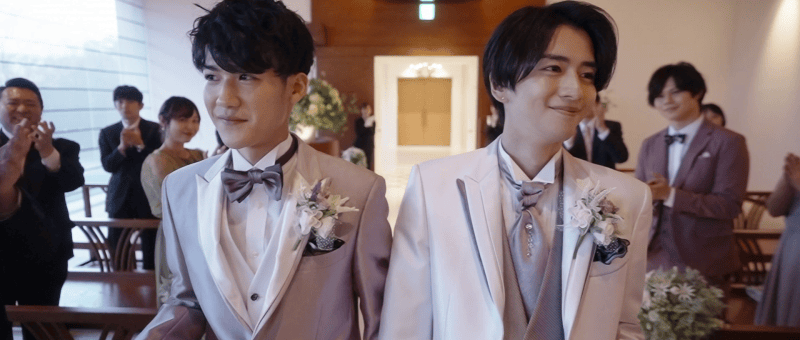
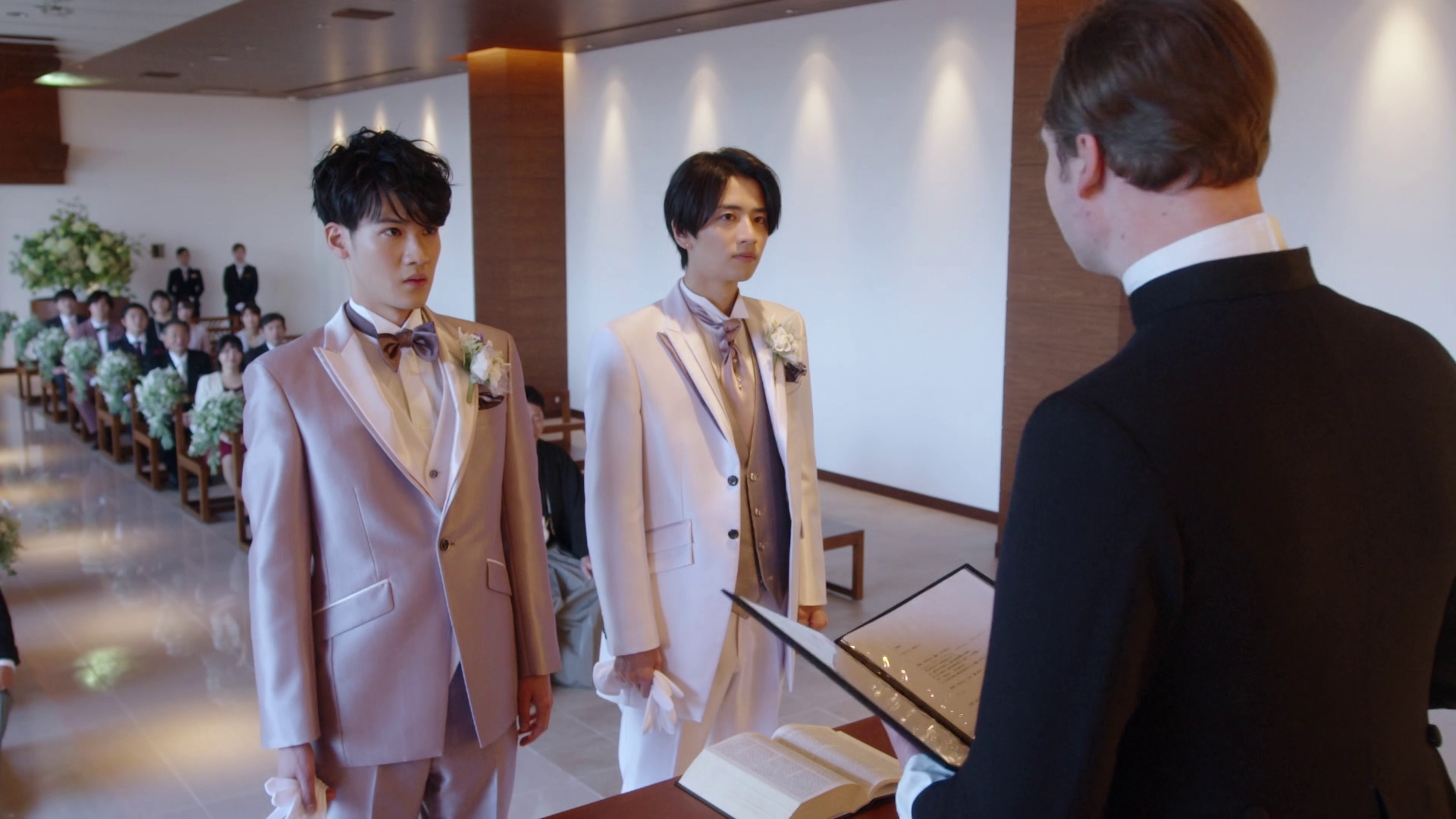
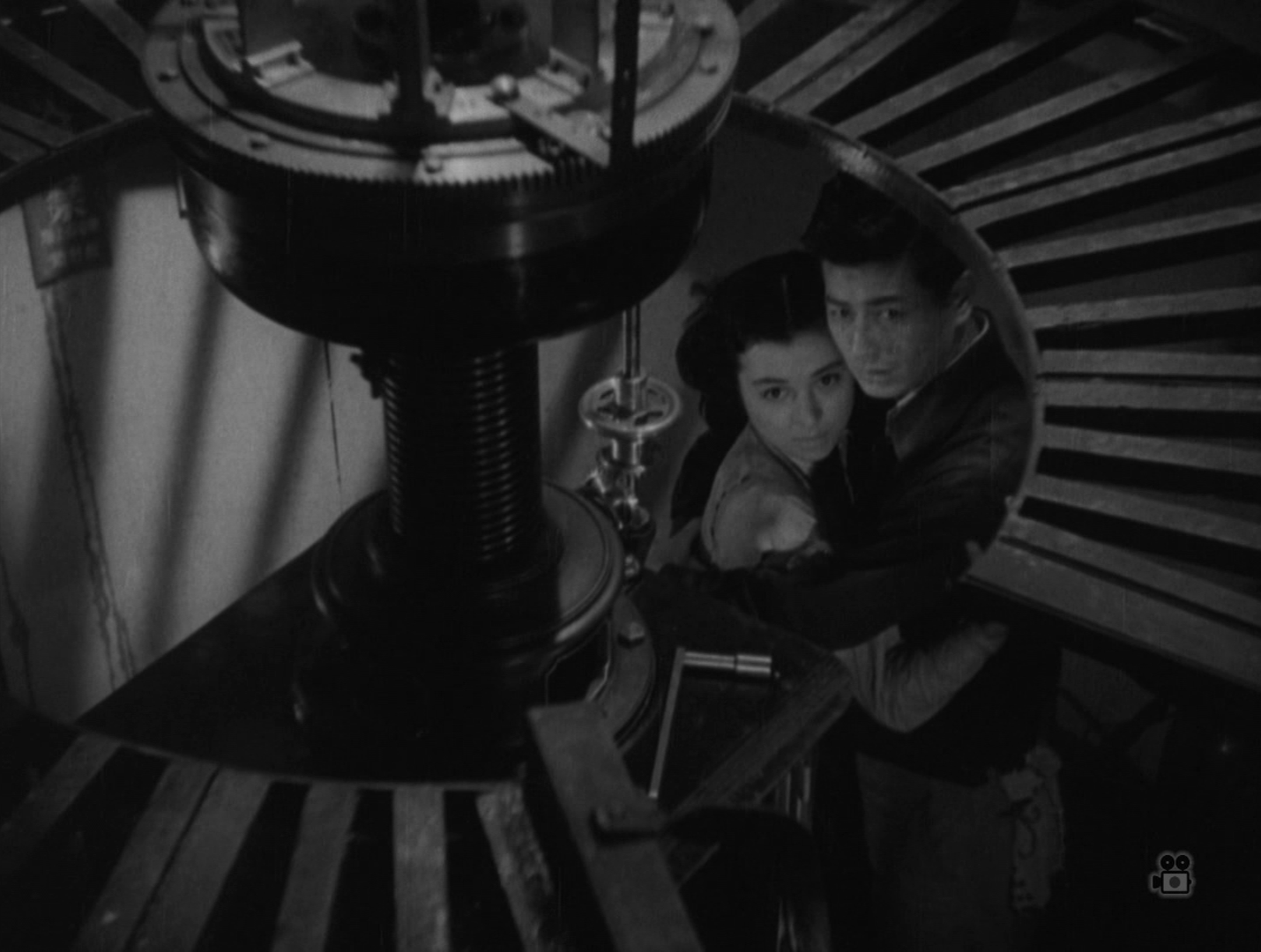
A young director finds himself unwittingingly bonding with a ghost after agreeing to stage a performance in a disused theatre in Chen Ta Pu’s romantic dramedy, Kiss Me, My Ghost Friend (啵me之我的青春住了鬼, bō me zhī wǒ de qīngchūn zhù le). The theatre in question turns out to be haunted, not just by its past and legacy but by young woman betrayed in love whose story dovetails neatly with the tale he has been asked to tell.

To that extent, Jim is also haunted though only by the spectre of his father, a once prominent playwright who has become a recluse. His Bo-Chuan was to be a new and revolutionary kind of theatre updating traditional opera for a new age. It was, however, never staged and following the death of his grandfather, Jim’s mother wants to have the ASI theatre torn down. Jim is less than keen on accepting the job, in part because he is embarrassed by his privilege and prefers to keep the fact that he has a financial safety net in coming from a wealthy and prominent family secret, and because he does not really want to reckon with his family legacy.

The irony is that Jim’s previous show was an interactive ghost experience set in a disused building. Unfortunately, it failed to find an audience and the last performance had to be cancelled. After a year with no success, Jim’s theatre troupe is forced to disband and he’s dumped by his girlfriend, formerly the troupe’s lead actress. He wanted to explore the meaning of life through a ghost story, but laments that the audience just wanted entertainment. He has no idea that Shi is a ghost and originally believes her to be the assistant managing the theatre, but it’s true enough that she has a connection to the story of Bo-Chuan, not just in her involvement with the original production but the ways in which it mirrors her own life as a woman left in limbo, haunted by the spectre of lost love.

Bo-Chuan too waited 18 years for the man she loved to return, though while alive Shi had her doubts about the story. She thought this tale of love and sacrifice was too old-fashioned and bound to destructive patriarchal mores. If it were her, she says, she’d spend the 18 years looking for value in her life rather than waiting around for man. She and Jim’s father decide to change the end of the play, but still, Shi became a lonely ghost trapped in the theatre that itself became a relic of the past. Though she can no longer play a leading role, helping Jim stage another Bo-chuan with an ending of his own allows her to restore the theatre to what it once was, purifying it of its evil spirits and overcoming her romantic trauma.

Jim too gets a second chance at his artistic career having previously decided to give up the theatre after his repeated failures. Though a potential romance with Shi never gains traction, she does however lead him towards artistic fulfilment in the acceptance of his legacy as his father’s son as they finish the play together. The other members of Jim’s troupe too all come to accept Shi even after realising that she is a ghost. They too had all be financially inconvenienced by Jim’s failure, though unlike his girlfriend his troupe chose to stand by him and return for this gig in an apparently haunted theatre which nevertheless offers huge financial rewards. Unlike Bo-chuan, Ying Ying wouldn’t wait, but her place is quickly taken by Shi who patiently teaches Jim’s actors how to work with this more classical material. Though Jim’s mother may want to tear the theatre down because it reminds her of a past she’d rather forget and symbolises her guilt, in the end it becomes a place of healing that allows all to move on from the past while giving Jim’s theatre troupe a new place to belong along with a brighter artistic future rooted firmly in the past.


Kiss Me My Ghost Friend screens as part of this year’s New York Asian Film Festival.

Trailer (Traditional Chinese / English subtitles)

Street Kingdom (ストリート・キングダム 自分の音を鳴らせ, Tomorowo Taguchi, 2026)

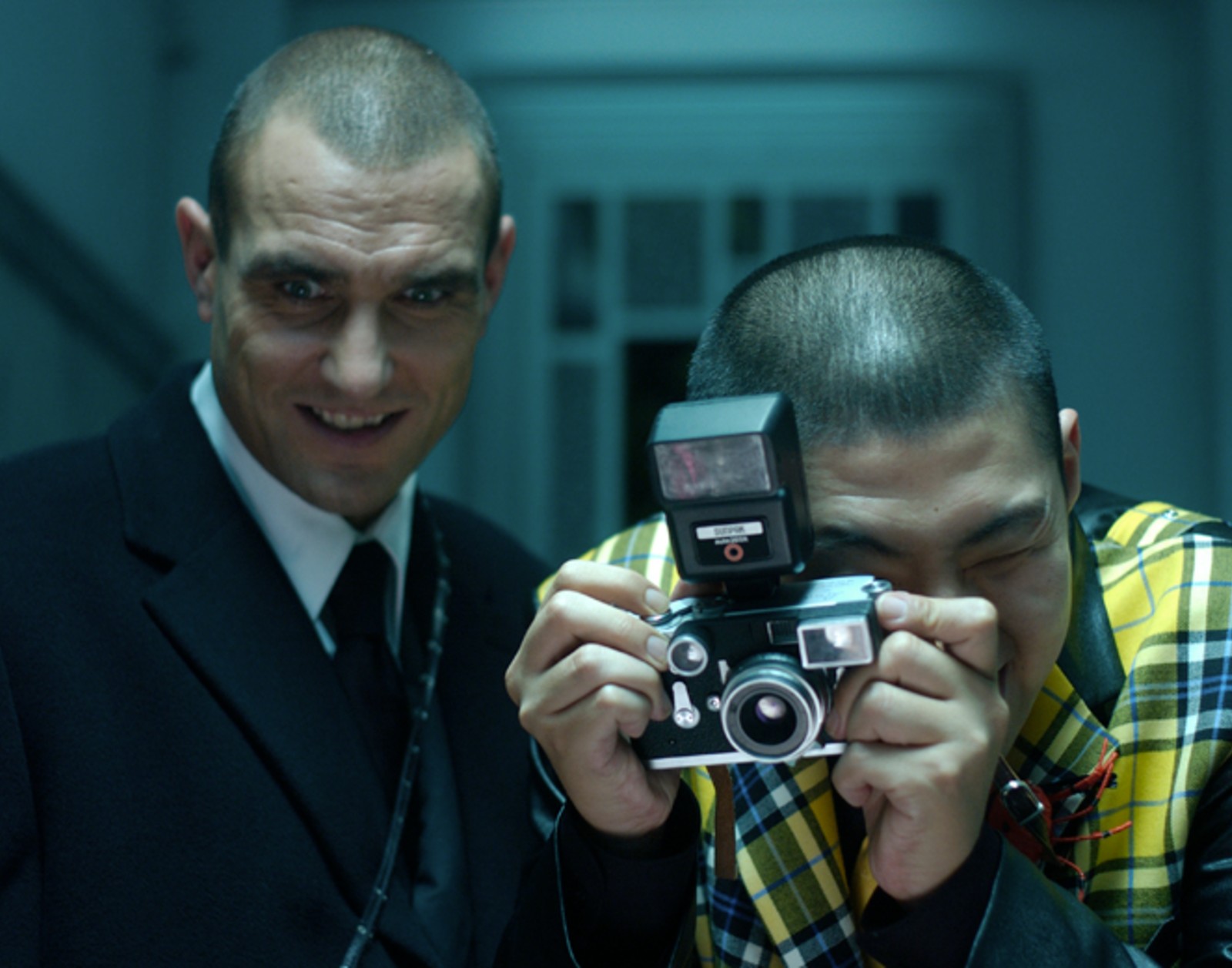
Tomorowo Taguchi is probably best known to international audiences for his starring role in Tetsuo the Iron Man, but he started his career as an illustrator and theatre actor while also active in Japan’s underground punk music scene as a member of the band Bachikaburi. For the last few decades, he’s been a fairly ubiquitous presence in mainstream Japanese films as a jobbing actor turning up in small supporting roles in all sorts of unexpected places, but Street Kingdom (ストリート・キングダム 自分の音を鳴らせ, Street Kingdom: Jibun no Oto wo Narase) is a look back to the early years of the punk movement and the creation of Telegraph Records.

Scripted by Kankuro Kudo, most of the names in the film have been slightly altered to reflect the fictionalisation of the narrative and so we follow Yuichi Hibiki (based on Yuichi Jibiki and played by Kazunobu Mineta), a struggling photographer who feels lost in an increasingly consumerist Japan. Like many of his generation, he spent his formative years in the student movement and is looking for a way to fill that void following the movement’s collapse in the wake of the Asama-sanso Incident. Japan’s economy had improved quite markedly by then and many former student protesters simply moved on into more mainstream lives as regular salaryman men and women, much as Yuichi’s friend has done by joining a record label and becoming obsessed with Pink Lady, the epitome of the disposable contemporary pop music topping the charts and making them money. Inspired by Yuichi, the friend later also jacks in his corporate career and becomes a punk rocker because he too discovers he wants more than the emptiness of a salaryman existence.

After a trip back to his family pig farm, Yuichi’s epiphany comes after hearing the Sex Pistols on the radio, though he is dismayed to find out that they have already broken up. Nevertheless, he determines to go Tokyo and find the real Japanese punk as opposed to that imported from New York or London. It’s inside this world that finds freedom outside of the Japanese mainstream as an independent artist, vowing to create a Street Kingdom with Momo (Ryuya Wakaba), the lead singer of influential band Tokage, and zine publisher Sachi (Riho Yoshioka). An out-of-touch journalist at one point tries to offer them expensive champagne and shames the band members for still living at home with their parents, and there is something a little bit incongruous about Momo’s lovely mother asking him what he wants for his tea before he goes off to play one of his anarchic gigs. But in another way, this is exactly the essence of punk in the sense of domesticity, friendships and solidarity that existed between the members of this community.

It all only begins to go wrong when the music labels start getting involved and commercial decisions conflict with artistic ones. Yuichi becomes a de facto manger because he’s a “decent” sort, which is to say he’s a bit of a square existing to one side of the movement which is a designation he resents at times, but also allows him a more privileged position of guiding it. He’s the one who advises they quit on a high after their “Tokyo Rockers” multi-band tour threatens to get too big and provoke rivalries and discord in what had been a fairly non-competitive, collegiate scene. He also helps Momo overcome some of his artistic conflicts by starting a parallel indie label so they can release songs the label rejects, such a nonsense tune about fish and pollution that the suits deem “too political”. What he can’t fully help with, however, is Momo’s descent into depression and drug abuse when the label pushes the band into debt, refuses to help financially after their band members are involved in a crash while on tour, and finally suggests they were only really interested in Momo as a potential solo artist doing more mainstream pop. Nevertheless, it’s Yuich’s friendly intervention encouraging Momo to get his act together that finally convinces him that something has to change.

To that extent, the film may be a fairly sanitised and nostalgic exploration of the director’s youth, but it’s also an advocation for dancing to one’s own tune which, it argues, has not necessarily become any easier in an age when anyone has access to the tools to become an artist. The punk spirit lives on in those who are prepared to be fully themselves in a culture that can be oppressively conformist and as the film would have it, the greatest legacy of the punk rock era was the sense of community between young people who wanted to build their own utopia which is something that in itself will never die.


Street Kingdom screens as part of this year’s New York Asian Film Festival.

Trailer (English subtitles)

The Brightest Sun (時には懺悔を, Tetsuya Nakashima, 2025)

Tetsuya Nakashima’s more recent films have often dealt with more controversial subjects. His latest, Brightest Sun 時には懺悔を, Toki ni wa Zange wo), adapted from the novel by Bunzo Uchiumi and delayed from last year due to allegations made by an actress on World of Kanako that nude footage was used without her consent, is not so much a film about disability as the taboo of parental selfishness or a sense of disconnection from one’s biological children.

Nevertheless, the way the film approaches it subject matter may seem insensitive to some in that it often reduces the existence of disabled children to a burden that must be born by someone and preferably by a biological parent. Though rookie detective Satoko (Hikari Mitsushima) raises the issue of the child’s subjectivity and quality of life, others struggle to see him as anything more than an object for which someone must accept responsibility. This is doubly true for her reluctant partner, Satake (Hidetoshi Nishijima), who has taken to drink and is riddled with guilt over his ambivalent feelings regarding his own disabled son who has since passed away. His wife (Ko Shibasaki) has fallen into depression and is living in a psychiatric facility while he is seemingly incapable of caring for their teenage daughter who has become resentful of both parents, feeling as if they were unable to care for her because all their attention went to her brother while she too now feels guilty that she did so little for him and left his care entirely to her mother.

At times, the film is critical of this tendency to force women to accept full responsibility for childcare while men remain otherwise absent from the domestic space, but seems to walk this back in the closing moments. In any case, Satake’s rejection of his son is mirrored in that of Tamie’s (Haru Kuroki) husband who openly declares that it would have been better if Taku had not been born, blaming Tamie for giving birth to a disabled child. His embarrassment makes plain a lingering stigma towards disability or difference in the wider society, as if having a child he sees as imperfect reflects badly on him personally. Tamie, meanwhile, seems as if she may have been suffering from a kind of post-natal depression and is clearly affected by her husband’s resentment along with her own inability to bond with the baby. Though she witnesses her child being kidnapped, she does nothing to stop it with implication being that perhaps she is glad to be relieved of the burden. 

Satoko too has become estranged from her young daughter who struggles with the trauma of witnessing her stab her abusive husband. The implication is that this resentment is born of having seen through her mother and realised that she did not do this out of a desire to protect her, but merely out of selfish rage. The fact is that her desire to protect Shin/Taku is a displacement activity. Everyone’s actions are to one extent or another a vicarious attempt to atone for something they are otherwise unable to address in their own lives. 

This appears to have been true for the man whose murder they are supposed to be investigating, Yonemoto (Jiro Sato), who is said to have been the worst of the worst. Someone who really was “better of dead” as Satoko puts it, though we never really find out why exactly everyone had such a low opinion of him and the detective company itself does not actually seem as sleazy as one might expect. Satake suspects he may have planned to blackmail Tamie, who has since remarried and has two step-children, over the discovery of her son, but in fact he was apparently quite moved by the tender care the kidnapper provided to Shin/Taku all these years and though knowing that he should turn him in, wanted to ensure the child would continue to be well cared for. 

This is apparently where Yonemoto found the redemption centred in the Japanese title and explained in an opening title card. Satake similarly is forced to face his complicated emotions towards his son and family, trying to do the best for Shin/Taku as means of assuaging his guilt much as Satoko shifts her maternal anxiety onto Tamie. The film’s conclusion seems to undercut the idea presented by the policeman that blood ties may not be that important, having witnessed the care and devotion the kidnapper showed to a child that was not his by blood and had complex needs, in its concerted efforts to force Tamie to accept her maternity. Nevertheless, the film does its best to extend sympathy and understanding to all, suggesting that the best thing to do in this situation might have been to leave well alone, but for various reasons that won’t be possible. Opting for a noirish aesthetic, Nakashima abandons his pop aesthetics for something a little more subdued but maintains his fast-paced editing style, drip-feeding us the mystery while pondering the nature of the bonds between parents and their children.


The Brightest Sun screens as part of this year’s New York Asian Film Festival.

Trailer (no subtitles)

The Curse (ザ・カース, Kenichi Ugana, 2025)

Could it be fair to say that sometimes we curse ourselves, or perhaps more accurately that the only true curse is morbid curiosity? Those at the centre of Kenichi Ugana’s J-horror inspired The Curse (ザ・カース) have the option to simply stay off social media, but they find themselves unable to do so. Be careful what you post about yourself online, the film seems to say, as if an Instagram profile were basically opening a portal to your soul through which any evil entity pass.

But at the same time, a priest cautions that one may do harm to others without even realising it and it transpires that even the most innocuous of posts can be enough to push someone over the edge. The versions of their lives that people post online are obviously idealised or perhaps aspirational, but they can still provoke a sense of jealousy or envy to the extent that saying “I am having a lovely day” can upset someone who is not and perhaps has not for a long time but continues to hate follow these kinds of accounts. This in itself is a kind of curse, the film argues, as a deepening sense of self-loathing is projected outward towards those apparently living better lives the unhappy obsessive feels they may not deserve.

Still, there is an extent to which the curse is also “real”. When Riko (Yukino Kaizu) spots a creepy photo posted by a friend, Shufen, which is accompanied by the caption “Drop dead already, all of you” and seems to contain the image of a malevolent entity, she is of course immediately concerned. Her anxiety is compounded by the fact that her friend is Taiwanese and posts in Mandarin, so she uses the auto translate feature but has no way of knowing if the translation is accurate. When Shufen fails to reply to messages, Riko decides to get over her sense of awkwardness and contact her ex in Taiwan, a mutual friend. Confused, Jiahao (Yan Yu Teng) tells her Shufen died six months previously in circumstances so strange and disturbing her family preferred to keep it quiet. “Curses are very real, in Taiwan at least,” he tells her. People die from them. 

Riko then faces another barrier in trying to navigate her away around the ritual beliefs of another culture. When her friend Airi began exhibiting strange symptoms after watching a video online, she took her to a doctor who was unable to help. After her Taiwanese friends recommend an exorcism, she begins to feel guilty. Perhaps if she’d contacted a priest instead of a doctor, she could have been more help to Airi. The Japanese-speaking priest in Taiwan isn’t necessarily that much help either, though. He demands payment up front, which reduces his credibility and opens the door to the suggestion that the rituals he provides are more placebo effect than anything else. Nevertheless, it seems he really does have the power to intervene with spirits, only this one is a little beyond his capabilities.  

There’s an essential irony in the fact that Riko is only able to detect the ghostly presence through its reflection in images while otherwise unable to see it lurking in the shadows or under her bed. This embodiment of resentment seems to affect her offline life too as the manager of the upscale hair salon where she works begins to act strangely towards her and a homeless man he warns her about arrives to advise she deal with her ghost problem before it gets out of hand. Ugana frequently cuts back to the ranks of disembodied mannequin heads that line the salon as a kind of foreshadowing lending the place an ominous quality and perhaps playing into the anxieties of the antagonist with its elitist vibes and unwelcoming atmosphere. Perhaps the real villains are unfair female beauty standards, ageism, and lookism, or equally perhaps we’re back at the figure of a witch who doesn’t want to grow old and is cursed with vanity, resentful of those who possess a beauty she believes herself to have lost. Turning unexpectedly bloody in final moments, the film suggests that this particular curse will never be lifted in part because it has become its own reward as this this particular malevolent entity dances cheerfully in her garden, secure in the knowledge that no one is watching.


The Curse is on UK, Ireland, Australia and New Zealand digital platforms 13 July

Trailer (English subtitles)

Fantasia International Film Festival Confirms Complete 2026 Programme

The Fantasia International Film Festival returns for its 30th edition taking place once again in Montreal from July 16 to Aug. 2. As usual this year’s programme includes a host of new and classic features from East Asia:

China

Hong Kong

Indonesia

  • Levitating – Supernatural drama in which a young man dreams of becoming a shaman.
  • Sleep No More – Darky comic supernatural thriller from Edwin.

Japan

  • AnyMart – Bloody combini life satire starring Shota Sometani.
  • Beasts Clutching at Straws – Crime thriller directed by Hideo Jojo and adapted from the novel by Keisuke Sone previously adapted in Korea as Beasts Clawing at Straws.
  • Break Free – Zany comedy in which a yakuza’s tiktok dance goes viral.
  • Captured! – Quirky horror in which a young woman starts a horror blog only to find herself haunted for real.
  • Cherry and Virgin  – Animation exploring the relationship between a commercial illustrator and an erotic manga artist.
  • Cocoon – One Summer of Girlhood  – Animated adaptation of the manga by Machiko Kyo recounting the story of the Lily Corps during the Battle of Okinawa.
  • Gozu – Surreal gangster drama from Takashi Miike.
  • GROTESQQQUE – Three part anime anthology from Atsushi Nishigori. World Premiere.
  • The Mouths – Horror from Takashi Shimizu in which university friends investigate a haunted tree.
  • Nameless – A man who can kill with a seemingly invisible weapon goes on the rampage after being harangued by a religious woman in a cafe, leaving police and witnesses baffled in Hideo Jojo’s adaptation of the manga by actor and comedian Jiro Sato. Review.
  • Never After Dark – Horror from Dave Boyle following a spirit medium who guides wandering souls to the afterlife.
  • A New Dawn – Anime in which childhood friends reunite and two brothers face the closure of their family fireworks factory.
  • The Origin of Ultraman – Documentary exploring the origins of the classic tokusatsu series overseen by Hirokazu Koreeda.
  • Redline – Takeshi Koike’s classic 2009 racing-themed anime.
  • The Samurai and the Prisoner – Mystery period drama from Kiyoshi Kurosawa.
  • Sekiro: No Defeat – Anime set in the Sengoku era in which a ninja must rescue a kidnapped child.
  • The Specials – Comedy from Eiji Uchida in which yakuza must post as a dance troupe to assassinate a rival.
  • Suzuki=Bakudan – Cat and mouse game between a mass bomber and a brainy policeman. Review.
  • TOKYO BURST: Crime City – Japanese spin-off of Ma Dong-seok’s Roundup series directed by Eiji Uchida.
  • Village of Eight Gravestones – Adaptation of the classic novel by Seishi Yokomizo directed by Takashi Shimizu.
  • When You Open the Door – Horror starring Serena Motola as a young woman drawn to a woodland shrine.
  • Wind Breaker – High school fighting drama from Kentaro Hagiwara.
  • You Are the Film – Directorial debut from screenwriter Makoto Ueda in which a screenwriter and musician somehow end up watching each other’s experience on the big screen.

Philippines

  • Hayop Ka! – Steamy grown-up animation following the romantic adventures of a shopworker.
  • Zsazsa Zaturnnah – LGBTQ+ themed superhero animation.

South Korea

  • Colony – Latest from Yeon Sang-ho in which a professor is trapped in a building with a mysterious virus.
  • The Eyes – Korean take on Julia’s Eyes.
  • The Journey to Gyeong-Ju – A mother sets out to get revenge against the man who killed her youngest child.
  • The Mutation – A man discriminated against because of his skin colour and a gay woman whose partner took her own life after being forced into a heterosexual marriage embark on a road trip.
  • Niko – A broke screenwriter suddenly disappears in Seoul.
  • The Seoul Guardians – Documentary focusing on Yoon Suk-yeol’s declaration of martial law.
  • Tristes Tropiques – Children trained to be assassins turn against each other in this action thriller from Park Hoon-jung.

Taiwan

Thailand

  • God Skin – A desperate young man agrees to fight in a tournament in which rich people can send booster shots to their favourite players through VR tattooes.

Vietnam

The Fantasia International Film Festival runs in Montreal, Canada, July 16 to Aug 2. Full details for all the films along with scheduling and ticketing information are available via the official website, and you can also keep up with all the latest news via the festival’s Facebook pageBlueskyInstagram, and Vimeo channels.

Numb (しびれ, Takuya Uchiyama, 2025)

At 11-years old, Daichi (Anji Kato / Tsukasa Enomoto / Takumi Kitamura as a child, teen, and adult respectively) is mostly living alone as his bar hostess mother is absent for days at a time leaving him with only a small amount of money to feed himself until the next time she returns. Rendered mute by the childhood trauma of his father’s domestic violence, he lives an almost entirely isolated experience, shying away from contact with adults and no longer attending school.  Given his circumstances, he has become used to shoplifting and pilfering from neighbours, but even this is perhaps partly born of his desire to avoid potentially dangerous interactions.

Unlike similar Japanese dramas, Takuya Uchiyama’s semi-autobiographical film Numb (しびれ, Shibire) is less interested in the ways that a boy like Daichi has been failed by society than his subjective experience. It is, however, notable how easy it seems to have been for him to fall through the cracks. No one ever seems to get in contact to ask why he hasn’t been in school nor does anyone appear to investigate his living standards. The landlord of his building takes advantage of the situation to extract sexual favours from his mother, Aki (Rie Miyazawa), who grants them in order to ensure they can stay in their home, a prefab shed on the roof where the water is often cut off because she hasn’t paid the bill. Though just a child, Daichi drags a canister that would normally hold kerosene down to the river, fills it, then has to carry it home and up the stairs to the roof all alone. He washes his mother’s clothes and dries them in the stairwell. Despite having no money, he spends his last coins on beer and cigarettes from a vending machine for her.

Yet at the same time, his mother’s circumstances are also caused by her trauma of suffering domestic abuse at the hands of his father (Masatoshi Nagase) who seems to have at point abandoned them. Working as a bar hostess necessarily means she is often absent at night, though her increasing dependency on drugs and alcohol along with their precarious living situation forces her into acts of casual sex work. To that extent, the course of her life is directly contrasted with that of her older sister with whom the pair later move in. Tomoko has become a Jehovah’s Witness and religious obsessive who does not exactly treat the pair with kindness or compassion. A line of red tape divides the apartment with Aki and Daichi occupying the living area but forbidden from crossing the threshold into Tomoko’s religious sanctuary. She appears judgemental of her sister and is at least party to her signing a Do Not Resuscitate order, though she insists that has nothing to do with her religious beliefs and was entirely Aki’s decision. Nevertheless, she coldly tells Daichi to get out of town once his mother dies and implies she finds his existence an embarrassment.

Denied any kind of emotional connection with parental figures, Daichi’s only source of positive input comes from a Russian labourer who discourages him from hanging around near the construction site which he says is dangerous due to the high levels of Russian drug users. Ivan gives him fatherly advice and comfort despite their apparently only meeting twice, but at the same time it’s clear that by virtue of his presence in Japan he has at least physically been absent from the life of his son back in Russia. Nevertheless, he presents an image of positive paternity to counter that from each of the men Aki becomes involved with who are violent towards her and tell Daichi that they’ve always hated his eyes, presumably because they are filled with contempt and remind them of what utter failures they have become. 

Forced into an early adulthood, the older Daichi makes ends meet covertly dealing drugs as a barman and appears to be trapped in a state of inertia by unresolved childhood trauma. A violent confrontation with his father solves nothing, though a kind of release arrives in finally letting go of his mother and taking her advice to move on. Shot on 16mm, the film captures the bleakness and isolation of Daichi’s life in snowy Niigata where it always seems to be Christmas for everyone but him as he slowly embarks upon a path towards recovering his voice.


Numb screens as part of this year’s JAPAN CUTS.

Female Prisoner #701: Scorpion (Intro)

Text of an intro given at the Prince Charles Cinema, 5th October 2023

There can be few faces in Japanese pop culture as iconic as that of Meiko Kaji. Contemporary Western audiences may have been first introduced to her indirectly through her undeniable influence on Quentin Tarantino’s Kill Bill which not only featured the song, performed by Kaji herself, which appears the beginning and end of each instalment in the Female Prisoner #701 Scorpion series that launched her into stardom but also drew inspiration in particular from her role as another vengeful heroine, Lady Snowblood. 

Kaji had begun her career at Nikkatsu under her birth name of Masako Ota where she generally played a supporting roles in the studio’s signature output of rebellious youth films. By the early 1970s, however, the studio system that had dominated the Japanese cinema industry was in terminal decline with attendance figures falling drastically in the face of competition from television. In response, Nikkatsu shifted its approach wholesale into what it termed “Roman Porno”, essentially softcore sex films that were nevertheless screened in ordinary cinemas and were intended for a mainstream audience as opposed to “pink film” which was a more rigorously defined genre screened in dedicated venues and aimed quite squarely at male viewers.

Kaji was one of many actresses who didn’t fancy joining the Roman Porno revolution and so jumped ship, firstly for television but then accepting an offer to join rival studio Toei which then had a giant hole to fill as its major star, Junko Fuji who had led the Red Peony Gambler series and more or less bankrolled the studio, had retired from acting to marry a kabuki performer, though she would later resume her career under the name Sumiko some years later. Kaji was considered a potential replacement but Toei really had its thinking back to front. The studio’s stock-in-trade at that time had been the ninkyo eiga, tales of gangster chivalry usually set before the war, but audiences had already become tired of the genre and were looking for something more contemporary which was certainly something Kaji could provide if she were allowed to create her own space rather than attempt to fill that left by Junko Fuji. 

Unlike rival studios such as Nikkatsu, Toei had a reputation for churning out very cheap period and contemporary action dramas that were largely aimed at a younger male audience and were, in that sense, already heading towards the same territory as Nikkatsu’s Roman Porno in their salacious taste for sex and violence. Now, we have to be a bit careful in using the term “pink film” which is itself something clearly defined by an adherence to a certain set of rules and was generally independently produced not put out by a studio, but we also have to acknowledge that the retrospective term “pinky violence” which was coined later rather than something actively used by Toei’s marketing department takes its from name the erotic associations of pink cinema coupled with the violence inherent in Toei’s exploitation films. 

Just as Nikkatsu had shifted into Roman Porno, so Toei pushed its line of female-led revenge and girl gang movies largely built around its roster of stars which aside from Kaji included Reiko Ike and Miki Sugimoto who were often played off against each other as studio rivals at times even appearing in the same film bringing that offscreen baggage with them as in the first instalment of the Terrifying Girls’ High School series or the genre highlight Criminal Woman: Killing Melody. Kaji was however largely uninterested in this kind of cinema and reluctant to take on the role of Female Prisoner #701 Nami Matsushima especially after clashing with neophyte director Shunya Ito who made no secret of his lack of confidence in her ability to play it while she objected to his demands for nudity which was after all what she’d left Nikkatsu to avoid.

Nevertheless, the pair later developed a fruitful working relationship bonding over their shared desire to move beyond the confines of the studio’s exploitation cinema into something with more artistic weight. More than any other of the films later tagged with the Pinky Violence label, the Scorpion series undermines the problematic “male gaze” inherent in the genre and found a strong female following who saw in Matsu an embodiment of their own silent rage towards a patriarchal society.  

Even so, as much as the Pinky Violence films can be seen as empowering they were also largely made for male titillation and structured in ways men can enjoy the transgressive qualities of female rebellion and aggression. Many of them are rape revenge dramas which necessarily feature scenes of sexualised violence that are sometimes presented in salacious rather than harrowing terms if otherwise sympathising with the heroine’s desire for revenge which is generally successful though it may incur further cost or moral ruin. The contradiction reaches its height in Norifumi Suzuki’s visually stunning, psychedelic foray into nunspolitation School of the Holy Beast which sees a liberated young woman enter a convent to gain revenge for the death of her mother who was killed by repressed nuns during a sexualised punishment session. The confines of the convent are styled like a prison and the film plays out like a women in prison film yet just as in the Female Prisoner #701 Scorpion series, it’s only really a metaphor for the patriarchal superstructure under which all women are imprisoned. 

One of the key directors of the genre, Norifumi Suzuki’s films are often highly stylised though in general like most of Toei’s output at the time most pinky violence movies often aim for a kind of heightened realism If one tempered by the hallmarks of 70s exploitation. By those standards, the film you’re about to see tonight is highly unusual in its bold visual style which incorporates elements of surrealism along with composition influenced by that of manga and the gothic overtones of the classic horror movie. By the end of the original Scorpion series, Matsu has taken on a mythical, supernatural quality of her own as an embodiment of rage and vengeance even at times rising from the water like the iconic long-haired ghosts most familiar to contemporary audiences from films like The Ring. Kaji would eventually move on from the series, but Toei could not, attempting to reboot it on more than one occasion though without the original incarnation’s striking visuals nor the intensity of Kaji’s unearthly glare. More than fifty years on from its original release Female Prisoner #701: Scorpion continues to resonate in an age where not nearly enough has changed.


Bird of Paradise (媽樣年華, Wu Chui-yi, 2026)

Feeling trapped in her marriage to a dull and patriarchal husband, a middle-aged woman finds a new lease on life after taking up pole dancing in Wu Chui-yi’s lighthearted drama Bird of Paradise (媽樣年華). Having lived only for her husband and son, Yeun begins to crave self-fulfilment, yet knows that her new hobby won’t go down too well with her family and is forced to keep it a secret even as her newfound confidence begins to grow.

After realising she’s actually taking the same class as her teenage son’s crush Shan, Yuen ends up using a different name at the studio further compounding the fracturing of her identity and echoing her assertion that pole dancing allowed to see another version of herself that was beautiful, amazing, and free. Ironically, Shan seems to have a lot of the confidence that Yuen has lost and perhaps bears out the advice she receives from a supportive shop assistant that the projection of beauty is largely a matter of conviction. Believe yourself to be beautiful, and others will too. 

Her husband Ming-lam, however, who happens to be Shan’s high school teacher, constantly tries to suppress the new version of herself that she’s becoming. He complains that she’s getting “further and further out of line” by coming home later in the evenings, dismissively telling her that if she wants to gossip, play mahjong, or talk K-dramas with her friends she can do that in the afternoons. Yuen’s making the “wrong” breakfast and going out of sync with the meal calendar seems to signal the beginning of her rebellion as she begins to look for new sources of fulfilment when Ming-lam rejects unscheduled intimacy and otherwise treats her as little more than a glorified housekeeper. Despite criticising her for neglecting her household duties, he later suggests her life is easy with only the need to put a cloth round every now and then as he otherwise provides her with a materially comfortable life while entirely rejecting her emotional needs.

At the school too, Ming-lam is a strict disciplinarian who runs the morning outfit patrol and tells the children off for minor uniform infractions while making his son pretend they aren’t related. During their careers survey, Shan quips that her plan is to marry a wealthy man, and Ming-lam criticises her for a lack of ambition in wanting such an “empty and meaningless” life despite being exactly the one to which he’s condemned his wife not entirely to her will. Shan later turns this criticism back on him, telling Yuen that his need for control over his students is probably a means of compensating for a dull life that he internally resents. 

Yet Ming-lam is really just a depressing embodiment of an outdated idea of masculinity and an obsession with middle-class properness and respectability. He tells Yuen he just wants her to be a “normal wife”, which is to say subservient to him and confined within the domestic space. He genuinely thinks he’s helping his pupils by keeping on the straight and narrow without considering that he’s stifling their the creativity and individuality. When Shan practices her pole dance at school, he sees it only and lewd and bans it in part for “giving the boys dirty thoughts.” He can’t see that Shan dances for herself and resents Yuen’s growing confidence along with her desire for an identity outside of wife and mother. 

Yuen’s free-spirited mother Feng Mei too decides to look for fulfilment alone rather than relying on a man to accompany her to fulfil her late husband’s wish to take her up in a hot air balloon. Though Ming-lam’s sudden change of heart may seems improbable, Yuen’s transformation also reminds him of the romantic young man he once was and that his wife’s happiness is the most important thing. It is not for him to decide what sort of happiness she might want, but only to support her in chasing it. Yuen’s newfound self-confidence begins to improve the world around her, making her home a brighter, airier space rather than one ruled by oppressive routine and encouraging others to be more of themselves too rather than being confined by social expectation or the desires of others.


Bird of Paradise screens as part of this year’s New York Asian Film Festival.

Trailer (Traditional Chinese / English subtitles)

Ip Man: Kung Fu Legend (宗师叶问2, Li Liming, 2026)

Ip Man returns once again to fight injustice in colonial Hong Kong as a corrupt fixer tries to intimidate the local Martial Arts Society out of its headquarters in order to open a Western-style boxing gym. Ip Man: Kung Fu Legend (宗师叶问2, zōngshī Yè Wèn) is technically a sequel to 2019’s Ip Man: Kung Fu Master, though only in that it is directed by Li Liming and stars Dennis To Yu-Hang in the title role.

This outing for the folklore hero has a little more story to it than most as Ip Man returns to Hong Kong from Foshan to open a martial arts school to find himself a little less than welcome given that interest is martial arts is declining, schools have closed, and the last thing many of those remaining want is more competition. In order to be accepted by the local Martial Arts Society, Ip Man has to pass three trials, though it’s clear the current head, Hong, has begun to veer from the path of righteousness as he deliberately makes things difficult for Ip Man and even tries to cheat before the trial is interrupted by the arrival of the real villain, Pike, a corrupt British businessman valued by the colonial authorities who are dependent on his money to fund their election campaigns. 

Thus the enemies Ip Man is fighting are the forces of imperialism and capitalism as represented by Pike. Realising that they share a common enemy, Hong eventually teams up with Ip Man to defend the dock workers led by Ip Man’s friend Jinsong whose livelihoods are under threat if Pike manages to take over the port. Martial artists and workers are the foundation of the Chinese people, Hong intones while pledging to reject foreign influence in fear that allowing the British in will only lead to a total takeover. His underling, Yihu, meanwhile feels differently and tries to persuade Hong to work with the British believing that he would still be able to maintain management of the Zhonghua building. The fact is that the society is broke and can no longer support its members. Yihu’s mother is seriously ill and needs expensive medical treatment that the society can no longer fund while he also feels resentful and under valued by Hong after being passed over for promotions and generally ignored.

Yihu’s resentment and sense of inferiority make him the perfect target for seduction by Pike after which he undergoes a total personality transformation in becoming a rather flamboyant gangster with a fashionable haircut and sunglasses which generally seem to be used as a symbol of evil within the film. A crazed henchman sent after Ip Man who uses meat hooks as weapons also wears distinctive sunglasses and is driven by greed rather than righteousness. He tells Pike that his initial investment only covers knocking off Ip Man, which he has so far failed to do, and that taking out Yihu once he’s served his purpose is going to cost extra. 

Nevertheless Pike seems to have half the police station under his thumb though we only ever see Chinese officers. Though the first is pragmatic, he also tries to mitigate Pike’s influence while female officer Mei attempts to directly oppose it even while told that Pike is effectively above the law. She is also battling entrenched sexism as her superior advises her going against Pike might be doubly dangerous as there are already those who do not like the idea of women serving in the police force and may use her obstinacy as a reason why they shouldn’t. The martial arts world, by contrast, is depicted as much more egalitarian with the first of the masters Ip Man is asked to fight a woman skilled in unarmed combat. Likewise, when Ip Man eventually opens his school, two little girls excitedly ask to join so that they too can protect their community with their fists if necessary. 

IP Man subversively suggests that one might have to use their fists for justice. But at the same time, there is an awkwardness involved in that Mei and the police force that has resisted corruption become justice’s arbiters at the same time as she commits what might actually be an extrajudicial execution even if in self-defence. Nevertheless, the encroaching forces of capitalist imperialism have been beaten back with Ip Man installed as the leader of the Martial Arts Society. Though the film’s most impressive action scene may be its first as Ip Man faces off against a female master while trying to keep a candle alight, its does its best to live up to the expectations of its name while paying homage to classic fights from the franchise’s history.


Ip Man: Kung Fu Legend is released on Digital, 4K Ultra HD, Blu-ray & DVD July 14 courtesy of Well Go USA.

Trailer (English subtitles)

Dear You (给阿嬷的情书, Lan Hongchun, 2026)

Flat broke and under pressure from a loan shark, Hiou-u (Zheng Runqi) decides there’s only one thing to do. Track down his no-good grandpa who apparently abandoned the family and became rich in Thailand to demand his share of the inheritance. Of course, by the end of the film, he’ll have realised the error of his ways and grown up a little, much like the protagonist of Thai megahit How To Make Millions Before Grandma Dies, by which Lan Hongchun’s tear-jerking melodrama Dear You (给阿嬷的情书, Gěi Āmà de qíngshū) is clearly inspired. It even features Usha Seamkhum in a small role as the older Lamgi at the film’s conclusion. 

Shot almost entirely in Teochew, the film is, in other ways, a tale of distance and diaspora which in some ways suggests that a Chinese citizen never really leaves “China” but continues to exist within it even while abroad. Though most of the film takes place in Thailand, it is largely unconcerned with the political and social situation of the nation in the mid-1950s or with the wider geopolitical realities of the era. Remaining largely within the Teochew community, it does not really explore the complicated position of the Chinese community in Thai society either, preferring to focus on their poverty and rootless as the source of their marginalisation. After eloping with a young woman from a wealthy family, Den Bhagseng (Wang Yantong) is forced to flee leaving his three children behind to avoid being drafted into the KMT during the Chinese Civil War. After arriving in Thailand he is unable to return home firstly because of the difficulty of doing so once the Communist regime gained power, though the film also skirts around this, and secondly because he sends almost of all the money back to his wife Sogriu (Wu Shaoqing) meaning he never manages to save enough for his return passage.

The film largely revolves around the qiaopi remittances, letters sent home to family declaring that the sender was safe and often including money. Aside from the sentimental dimension, these letters also reinforce the diaspora community’s ties to the Mainland and the inclusion of several real letters at the film’s conclusion seems intended to act as a mild suggestion that perhaps those living abroad could also send more of their money home, while the film’s themes of yearning and homesickness also seem primed to encourage those living away to return or at least put in a call to their loved ones before it’s too late.

But on the other hand, the fact that the letters were never written by Bhagseng, as he was largely illiterate, but firstly by a series of scribes and then by a heartbroken Lamgi who pens the heart wrenchingly romantic verses that bring so much comfort to Sogriu adds a note of poignancy while perhaps undercutting their sincerity. That these are, in effect, a series of love letters exchanged between two women, though mediated through the absent figure of a man, leads the film an unexpectedly queer undertone complimenting the accompanying messages of female solidarity. Though Sogriu originally harbours resentment towards Lamgi mistakenly believing her to have been Bhagseng’s mistress, she later gains respect for realising not only all that she did for them but they way in which she continued to honour Bhagseng’s memory.

Once of the reasons that the family had believed Bangseng had become rich was that there were several schools with his name on them, leading them to conclude he had sponsored them in some way. This turns out not to be case, but was rather a kind of tribute to his role within the local community having convinced Lamgi to allow a Chinese school to operate within her inn during a time in which the language was actively suppressed. Bangseng had shouted at her, pointing out that these children will be condemned to a life of poverty and exploitation if they, like him, cannot read and write. He also argues that without knowing how to read, write, and speak Chinese, they will lose their cultural roots and connection with the Mainland. This seems to already be true of Lamgi who did not herself know how to read Chinese and felt disconnected from Chinese culture having grown up in Thailand. After learning with the children at the inn, the necessity of writing the letters also encourages Lamgi to become fully literate. The ability to read and write not only allows her to earn an income as a single woman by running her own business and later becoming a teacher, but also reinforces her Chinese roots and sense of cultural identity. 

While it therefore presents a bittersweet tale of a love lost and then regained when the truth is revealed, the film also subtly issues a message to the diaspora community about the importance of their links to the greater Chinese community and responsibility towards the Mainland. Repeated references are made to the need to support each other in a foreign land with the Teochew community determined to protect each other against an often hostile environment in which they face exploitation and discrimination, while Lamgi’s sense of responsibility toward Sogriu could also be seen the same way as she willingly takes on the need to provide for Bangsen’s family despite her unrequited feelings for him. Nevertheless, what the film offers most is a sense of catharsis in its tear-jerking tale of young lovers separated by forces outside their control and symbolically reunited through the emotional truths contained within the letters.


Trailer (English / Simplified Chinese subtitles)